The Free-Range Bookclub
Bookclubbers without boundaries in Nelson, New Zealand
Nip The Buds, Shoot The Kids – Kenzaburo Oe
 READ FOR BOOKCLUB
Chosen by Rachel
Nip The Buds, Shoot The Kids tells of a group of boys from a Japanese reform school who are evacuated to a remote mountain village during wartime. They are forced to cope with hostile villagers, fight a breakout of the plague and endure horrendous conditions while constantly wanting for sustenance.
Like The Lord of The Flies, the boys must establish a method of survival, with their childish demeanours clashing with the requirements for adult decision making. However, it is the adult villagers who succumb to savagery more than the boys who are simply trying to survive. The title refers to the extents to which the villagers try to control the boys, nipping a bud of one of the boys to keep the rest of the group under control.
Time doesn’t move at all, I thought in irritation. Like a domestics animal, time doesn’t move without human beings’ strict supervision. Like a horse or a sheep, time won’t move a step without grown ups’ orders. We are a steady state in the stagnation of time.
☁ “This book is gut-wrenchingly raw and darkly truthful, so much so it is almost too much to bear. But this is a book designed to test one’s nerve and, after all, such atrocities were all too common in WWII, so I appreciated it for its honesty. Plus, I want books to stir up the deepest emotions in me, good or bad and this certainly does that. You’d struggle to find a story more grim and beautifully written than Nip The Buds, Shoot The Kids. It was haunting and incredibly moving and I think it will stay with me forever.” – Rachel
☁ “This book is filled to the brim with misery which to me was made worse by the age of the group of boys. They were afflicted by various calamities – violence, rejection, isolation, plague, death etc and I have to say I felt totally aggrieved by the end at having suffered through such awful subject matter. The writing may be admirable but it was a grim book for me and I can’t say I would recommend it to anyone.” – Jo
Published in Japanese 1958
Translated into English by Maki Sugiyama 1996
Grove Press
189 pages
Back Booker 2003

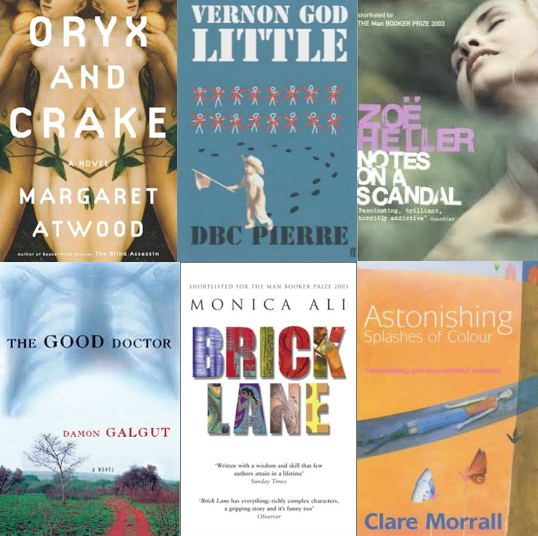 The 2003 Man Booker shortlist was another where we thought there was a stand out winner, however the judges didn’t see it the same way.
Oryx & Crake is a life-changing book. Margaret Atwood not only has a hugely creative imagination, she is a visionary. Perhaps that’s the advantage of reading this book a few years down the track, when some of the grotesqueness in the story is actually beginning to penetrate real life. We cannot stop talking about this novel or the characters. We are blown away by the moments of reality Atwood is able to select, then grow and further fictionalise, only for snippets of those predictions to make their way into reality. For that reason, it would definitely have been our pick for winner had we been Bookerthoning in 2003.
Interestingly, after reading the entire shortlist, we felt there were a couple more books that fit this visionary branding, which made the other three finalists pale in comparison. It was a year of opposites for us, visionary vs good.
The other two on our visionary list were Vernon God Little and The Good Doctor.
Vernon God Little is a grounding story about school shootings and raises many issues around gun control, violence, religion and cause and effect of events in the US. Its satirical vernacular is cutting, and to be honest we don’t begrudge it the win.
The Good Doctor focuses on the South African psyche, especially what the people have put up with and how much more they can take. All of this consideration is led by Frank Eloff, a young doctor working in a basic rural hospital, and his experiences and observations are affecting to say the least. Again, it could have won and we would have been okay with it.
Brick Lane (Bangladeshi woman living in London), Notes on a Scandal (female teacher has an affair with a male student) and Astonishing Splashes of Colour (woman loses a baby and maybe her sanity) are good reads and worth the investment of time – don’t let us put you off them – but to us they were in stark contrast to the other three outstanding nominations.
Best book 1st-6th: Suzy:
Oryx And Crake
Vernon God Little
The Good Doctor
Brick Lane
Notes On A Scandal
Astonishing Splashes of Colour
Best book 1st-6th: Rachel:
Oryx And Crake
The Good Doctor
Vernon God Little
Brick Lane
Notes On A Scandal
Astonishing Splashes Of Colour
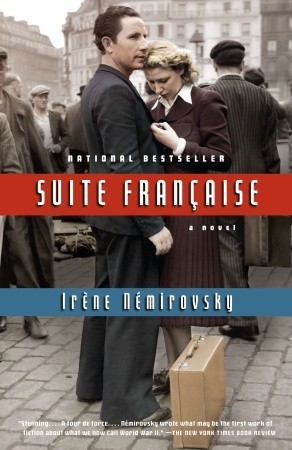
Suite Francaise – Irene Nemirovsky
 READ FOR BOOKCLUB
Chosen by Suzy
The story of the mass exodus from Paris on the eve of the Nazi invasion
☁ “Suite Francaise is the first two parts of a planned five part novel about the Nazi invasion of France and the mass exodus in which families and individuals were thrown together in circumstances beyond their control.
“Irène Némirovsky was a Ukrainian-born writer living in France pre war. She fled Paris and the Nazis in 1940 to a small village where she began writing this work. Ironically it contained content of which she herself would fall victim to only two years later, for she was Jewish and was eventually arrested and sent to Auschwitz. She died there, aged 39, never seeing the completion of her novel. The handwritten first two parts were hidden in a suitcase and her daughters took them into hiding and eventually into freedom. Sixty four years later, the pages were published.
But what is certain is that in five, ten or twenty years, this problem unique to our time, according to him, will no longer exist, it will be replaced by others…Yet this music, the sound of this rain on the windows, the great mournful creaking of the cedar tree in the garden outside, this moment, so tender, so strange in the middle of war, this will never change, not this, this is forever.
“The first part, A Storm in June, opens in the chaos of the 1940 exodus from Paris. Those fleeing share the harsh demands of survival—some trying to maintain lives of privilege, others struggling simply to live—but soon, all together, they are forced to face the awful truth of displacement.
“In the second part, Dolce, the complex life of a German-occupied provincial village is detailed. Co-existing uneasily with the soldiers billeted among them, the villagers—from aristocrats to shopkeepers to peasants— cope as best they can. Some choose resistance, others collaboration, but all reveal the very essence of humanity.
“Because of the real life nature of the story, this book feels less like a novel and more like an experience. It is emotive and graphic and portrays the startling reality of many Parisians with tenderness and sympathy. This cleverly constructed and honest story was a hit with all the freerangers.
Written 1940s
Published in French 2004
Translated into English by Sandra Smith 2006
Vintage
434 pages
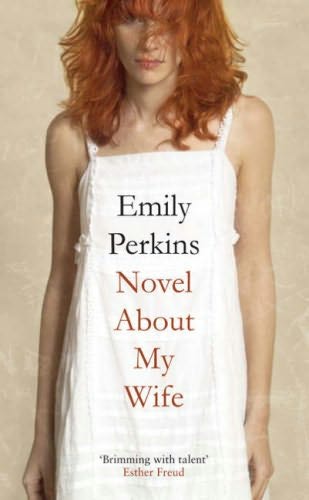
Novel About My Wife – Emily Perkins
 READ FOR BOOKCLUB
Chosen by Jo
The lives of a London couple unravel after the wife survives a train derailment and notices a man following her.
☁ “Novel About My Wife is the story of a couple’s complicated relationship from the husband’s perspective. It’s a meander through his mind; his recollections with no chapter breaks. He is madly in love with her; she is nearing forty and pregnant.
“Though life should be settling into family life, Ann is perturbed by the strange smells and noises the home emits. Plus a homeless man seems to be following her.
“Novel About My Wife is Tom’s effort to understand this woman he has been so blindly in love with, and to peel back the past to discover what the real threats in their lives are.”
That first pregnancy is a long sea journey to a country where you don’t know the language, where land is in sight for such a long time that after a while it’s just the horizon – and then one day birds wheel over that dark shape and it’s suddenly close, and all you can do is hope like hell that you’ve had the right shots.
☁ “The tension builds slowly in this well-written, thought-provoking novel. Can we really rely on our narrator? There are many gaps and questions left unanswered in this book which adds to the mysterious allure for me. The worsening mental stability of Ann tightens the tension even more and the unexpected ending had me pondering for days – proof to me of a good book!” – Jo
☁ “The story of an unhappy man and his even unhappier wife – dismal but beautiful. Cleverly written and full of simple detail that I wanted to question or second guess on every page. Characters are expertly drawn and evoked much care and sympathy from me, but also a little bit of suspicion. There are clearly a few things going on and I wanted to examine every piece of new information. Loved the twists and turns along the way.” – Rachel
☁ “I felt uncomfortable reading this book. I found some characters’ behaviours yuckily relatable. But it does pull you into the story beautifully and despite reading it years ago I can still easily conjure up many mental images from the pages. Emily Perkins you are a treasure and FYI I miss The Good Word a lot.” – Suzy
—–
Published 2008
Bloomsbury
288 pages
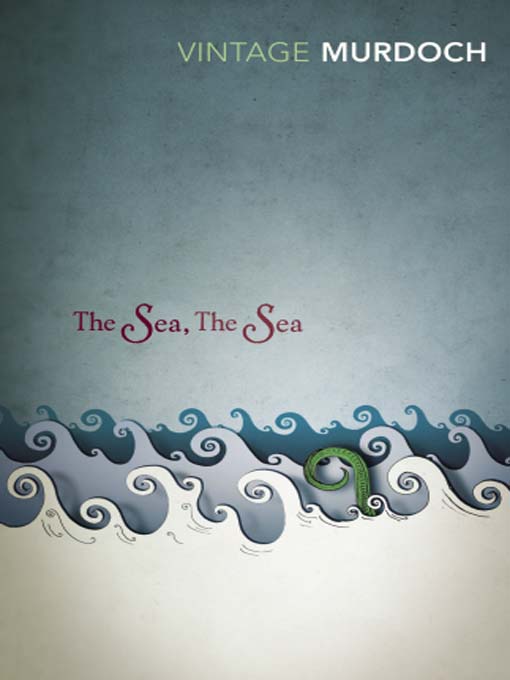
The Sea, The Sea – Iris Murdoch
 READ FOR BOOKCLUB
Chosen by Suzy
Charles Arrowby retires to the seaside to write his memoirs but is constantly under visitation by ex-lovers and friends
☁ “Published in 1978, The Sea, The Sea is the story of an eventful summer late in the life of Charles Arrowby, a famous man of the British theatre. He is the loveable, despicable anti-hero of this book.
“Having retired to a tower by the sea to write his memoirs, he is instead side tracked by a constant stream of visitors but more importantly by his own mental wanderings, imaginings and delusions. His focus becomes his childhood sweetheart Hartley and reclaiming her attentions while destroying her current relationship.
“This satirical look at the lengths to which this inconsistent, contradictory man will go to satisfy his egotistical cravings is Shakespearean in its drama. The freerangers discussed his many personality markers. We adored Arrowby! We despised him! We worried sick about him! We agonised over Hartley’s safety! Each page provoked new sentiments and proved to never be predictable.
Jealousy is perhaps the most involuntary of all strong emotions. It steals consciousness, it lies deeper than thought. It is always there, like a blackness in the eye, it discolours the world.
“Despite his kooky behaviour and self-delusional thoughts, or perhaps because of them, Arrowby made everything anomalous and outrageous, but somehow expected and acceptable too. His ability to manipulate everyone, including the reader, is thrilling, and we agreed reading this book was like being on an emotional rollercoaster.
“The other stand out personality in this character study was the turbulent sea. A moodiness was instantly created, with the tower on the cliffs and the frothing sea, that injected so much energy into the novel, aping the turmoil in Arrowby’s life.
—–
Published 1978
Chatto & Windus
502 pages
2010 – Character Development
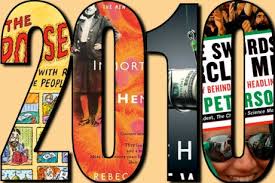 As in any good story, characters come and go, they fall pregnant, they embrace new friends and they introduce ideas and thoughts often contrary to our own.
We have all of this bookclub, and like good literature, we wish it was all laughs and consistency but yes, people come and unfortunately go and there is little one can do about it, except to embrace change.
And we are definitely embracing at the moment, absolutely hugging it out, for we’ve had a few changes in our membership and so move forward into an exciting new chapter of our story.
We have said goodbye to one of our founding members, Nadine, who has crossed the Strait and settled in Wellington with her family. Also Ros has returned to her native homeland of Great Britain.
It’s not all doom and gloom however, for we were very happy to welcome the lovely Jo, who joined us mid 2009 and has quickly became firmly entrenched in Bookclub ethos.
We are sticking with four weekly meets and again have a varied schedule ahead of us. War stories, children’s books, feminism readings, American greats and even horror are all on the cards this year. What a line up!
The Sea, The Sea – Iris Murdoch
Novel About My Wife – Emily Perkins
Suite Francaise – Irene Nemirovsky
Nip The Buds, Shoot The Kids – Kenzaburo Oe
Pride & Prejudice – Jane Austen
The Adventures of Huckleberry Finn – Mark Twain
White Noise – Don DeLillo
She Came To Stay – Simone de Beauvoir
Nineteen Eighty Four – George Orwell
Coraline – Neil Gaiman
2009 – End Of Year Thoughts

 We were back at our old favourite Stoneridge this year for Sunday lunch and agreed it had been a diverse year as far as bookclub reading goes.
One thing was for certain though, Xas was loved and adored by us all. There were a few other characters who struck chords with us too, the sweet Anne of Green Gables and Frankie from The 10pm Question.
Book of the year:
Nadine: The Vintner’s Luck
Jo: The Vintner’s Luck
Suzy: The Vintner’s Luck
Rachel: The Vintner’s Luck
Runner up:
Nadine: The 10pm Question
Jo: The 10pm Question
Suzy: The 10pm Question
Rachel: Oooooo…!!
Netherland – Joseph O’Neill
 READ FOR BOOKCLUB
Chosen by Suzy
In Netherland, we follow immigrant Dutchman Hans van den Broek, a financial analyst and cricket enthusiast, across a period of social turmoil following the 911 terror attacks on New York City.
At the same time, Hans’ wife Rachel leaves him, taking their son, Jake, with her. The novel focuses on how Hans copes on his own, primarily by taking part in amateur cricket leagues and befriending a mysterious man named Chuck Ramkissoon whose body is pulled from a river early on in the novel.
Despair busies one, and my weekend was spoken for. I was going to lie down on the floor of my apartment in the draft of the air conditioner and spend two days and nights traveling a circuit of regret, self-pity, and jealousy.
❚ “All appears straightforward and simple on the surface in this book, but actually it has a dark and perplexing layer to it that had me engrossed. We are told up front that Chuck’s body is going to end up being pulled from the river, which rather than giving it all away, is great incentive to read on and discover how everything goes so horribly wrong as Hans struggles for meaning in his life.” – Rachel
❚ “I found this book to move quite slowly. The main character Hans was somewhat morose especially in comparison to Chuck and as he was the narrator this contributed to making the story tedious. Not my favourite.” – Jo
—–
Published 2009
Harper Prennial
340 pages
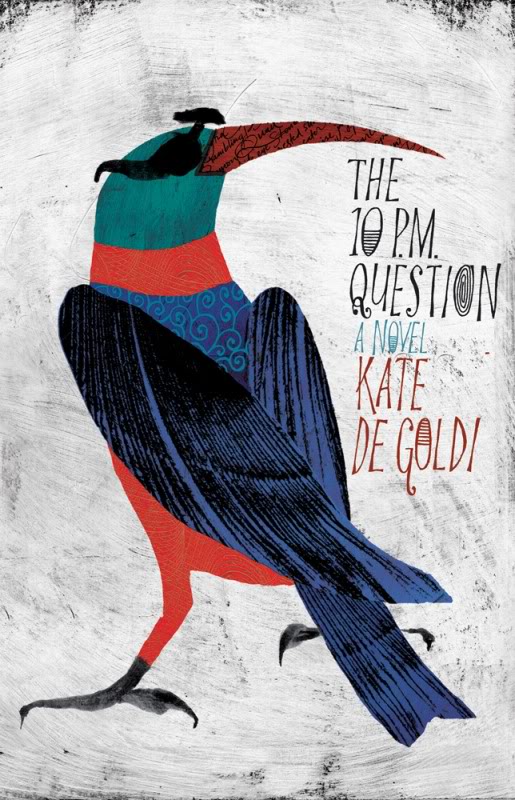
The 10pm Question – Kate de Goldi
 READ FOR BOOKCLUB
Chosen by Nadine
Twelve year old Frankie Parsons worries about many things. His mother, who never leaves the house, is the only person who takes his concerns seriously. He develops the habit of posing a serious question to her at 10pm every night.
He was a funny guy, and a smart one, and the smartest thing about him, in Frankie’s view, was that he never, ever, ever worried.
❚ “My daughter has read this book too. What a lovely read! We loved the characters in this book and the way it made us feel both happy and sad. Very real.” – Nadine
❚ “I enjoyed this book especially for the actual 10pm question and how the mum was always able to soothe her son’s anxieties despite having fairly substantial issues herself. A wonderful heart-warming book.” – Jo
❚ “One of the best youth novels I’ve read. Tackles traditional child anxieties in a unique way. I was drawn to Frankie, perhaps just in a motherly way – whatever the case, great book.” – Rachel
❚ “I truly judge approximately monthly whether or not my children are old enough yet for this book. It is written with so much empathy and humour and I can’t wait to have a mini bookclub with my 2 kids and discuss all of the loveliness. This book was the inspiration for me harassing, whoops I mean kindly entertaining, Rach every night with a 10pm question text. Sorry for this Rach and quite frankly sorry Kate de Goldi.” – Suzy
*Long live the 10pm question, Suzy. The highlight of my evening!* -R
—–
Published 2011
Templar
252 pages
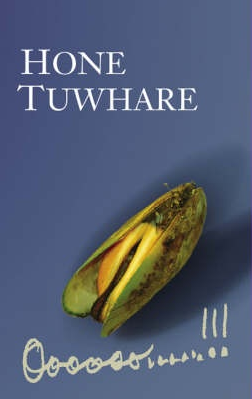
Oooooo…!!! – Hone Tuwhare
 READ FOR BOOKCLUB
Chosen by Rachel
A collection of poetry from Hone Tuwhare (Nga Puhi iwi, hapu Ngati Korokoro, Ngati Tautahi, Te Popoto and Te Uri-O-Hau).
❚ “This book has been collated from a large collection of Māori poet Hone Tuwhare’s writing, discovered sprawled over countless pieces of paper, envelopes, bank statements and the backs of shopping lists.
“It provides an insight into Tuwhare’s mind, as he looks out upon all the things that he loves and has loved, and upon 82 years of life with brutal honesty.”
I feel like a vulnerable
pa-site, sacked, by
an unforgiving enemy
force & razed to a level
unbecoming, to a warrior-force,
but – freed at last,
to accept – with humility –
the earth-smelling pungency
of that Grand Dame – mother,
of us all: Papa-tū-ā -Nuku:
our Earth-mum.
❚ “Traditionally I haven’t been a huge poetry fan, only from a lack of understanding on my behalf, not because I don’t value it. But every piece in Tuwhare’s book affected me and it has made me re-think the lack of poetry in my reading pile.” – Rachel
❚ “I don’t usually read poetry but I enjoyed this. It made me smile. Raw, honest and a wee bit naughty!!!” – Nadine
❚ “Hone Tuwhare, I ❤ you so much. Beautiful poetry. Yes okay I felt like maybe I got more insight into haemorrhoids than what I was expecting, but it is what it is. One the best parts of this bookclub was how authentically everyone said the title when referring to the book.” – Suzy
❚ “I’m not a poetry reader normally but I loved Hone’s poems – they were clever, interesting and thought provoking. I especially enjoyed reading about unexpected topics, e.g. Haemorrhoids!” – Jo
—–
Published 2005
Steele, Roberts & Assoc
96 pages

We're
currently
reading
 The Free-Range Bookclub
Recent Comments