The Free-Range Bookclub
Bookclubbers without boundaries in Nelson, New Zealand
2012 – Critical Review
 Any entity with five years’ history should be open to review: analysis and self review to continue with realised successes, and a thick-skinned willingness to shoulder the opinions and expectations of others.
For example, when we ask ourselves what are we doing right, we realise the answer is everything and we get back to reading 😉 What else would you expect when a group of A-type personalities get together?!
On the flipside there are a few comments from outsiders that pop up with regular frequency. There’s the ‘an excuse to get out of the house, eh?’ from the ladies, and the ‘oh, bookclub‘, with speech marks fingered in the air, from the guys. And from less enthusiastic bookclubbers: “do you never finish your books either? We just drink wine and talk all night”.
Hmmmm, actually we discuss books in depth, keep up to date with award nominees and get excited about new releases. We talk books all night and squeeze in a quick catch up before it gets too late and we all turn into pumpkins. While some consider such banter excessive or punishing, for us, bookclub is the highlight of the month.
As such, the four of us have settled into a wonderful rhythm and we continue to head in the right direction. This year we have chosen to continue to theme our book choices. Rachel’s looking into Banned and Controversial Books, Suzy has chosen New Zealand Writers, Jo will investigate the work of Iris Murdoch and Sophia introduces us to Poetry.
Rangatira – Paula Morris
Slaughterhouse Five – Kurt Vonnegut
Under The Net – Iris Murdoch
Poetry (Sophia’s NZ Favourites)
The Parihaka Woman – Witi Ihimaera
Tropic Of Cancer – Henry Miller
The Bell – Iris Murdoch
Poetry (Ways To Be A Successful Woman)
The Angel’s Cut – Elizabeth Knox
Of Mice & Men – John Steinbeck
A Servered Head – Iris Murdoch
2011 – End of Year Thoughts
The end of the year already!
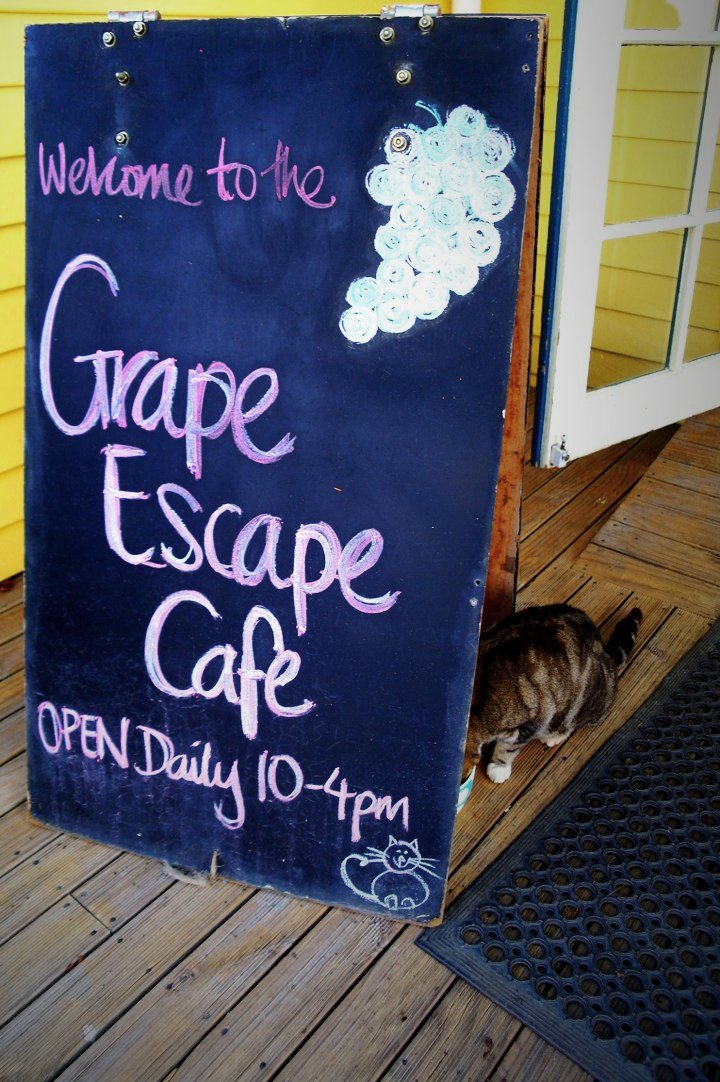
This year we chose to lunch at The Grape Escape in Appleby and discuss the who, whys and whats of the year. We agreed it’s been a tumultuous year with the Christchurch earthquake and the Japanese tsunami and we were very pleased to have our feet on solid ground over the months.
At year’s start we agreed theming our book choices would be stabilising and connecting and after a year of shaky grounds, and friends and family severely impacted, we needed that stabilising force more than ever.
Theming our choices resulted in a reading list primarily of classics and home-grown works which resonated with us and reminded us about the importance of recording history. Even though we are living through traumatic times, the reaction to it, the learnings from it and the survival stories will one day be noted down as history for others to absorb and gain greater understanding of.
With our reading, we found the Russian classics heavy but rewarding; we relished the opportunity to learn more about Pacific writers, and agreed the entire content of Lolita was the most shocking reading moment of the year! There were a lot of punchy novels this year and here are our favourites:
Book of the year:
Sophia: Lolita
Jo: Lolita
Suzy: Freedom
Rachel: Lolita
Runner up:
Sophia: The Pregnant Widow
Jo: Sons For The Return Home
Suzy: Sons For The Return Home
Rachel: The Pregnant Widow
Lolita – Vladimir Nabokov
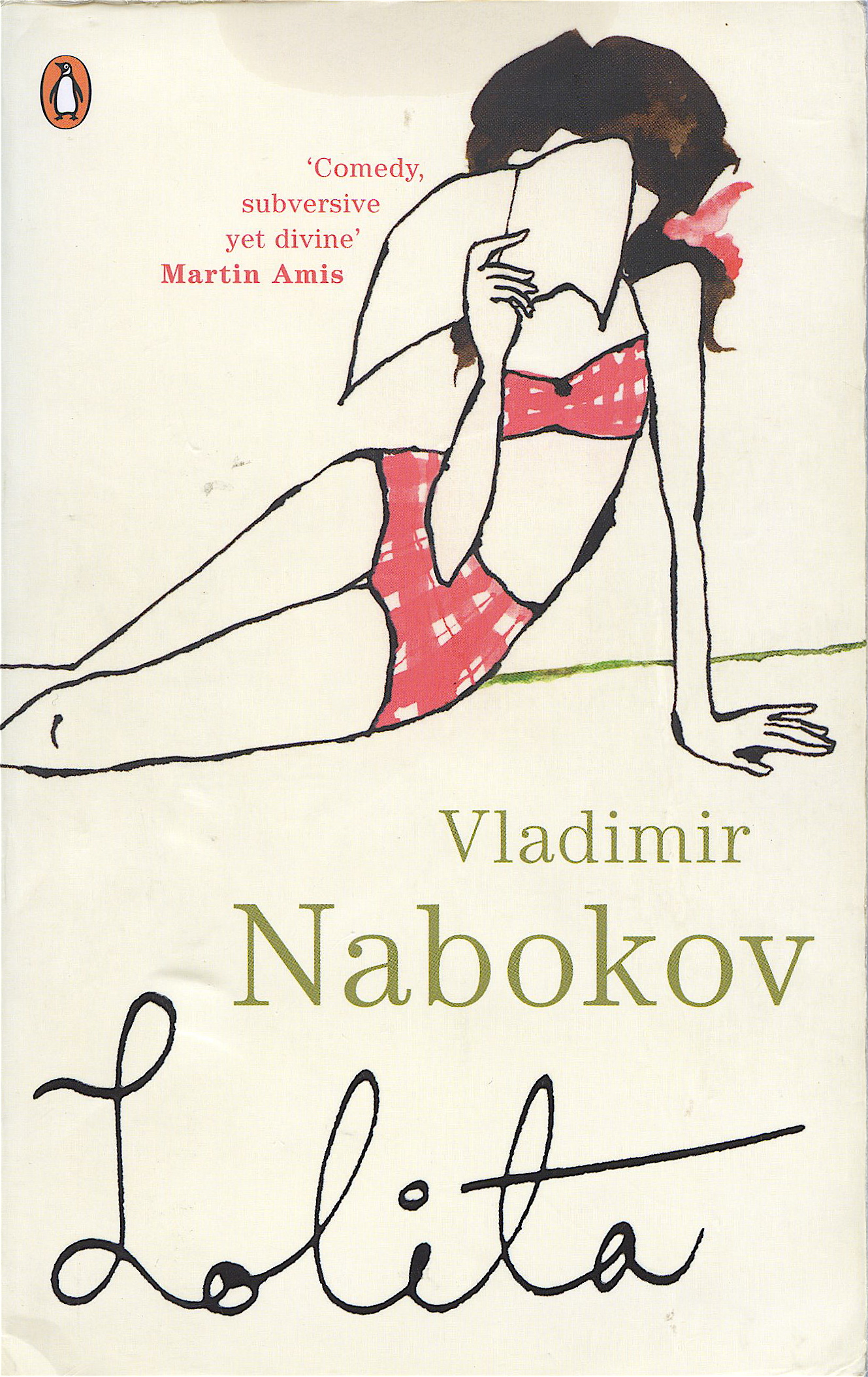 READ FOR BOOKCLUB
Chosen by Jo
Lolita is the story of a European scholar named Humbert Humbert who confesses to being obsessed with ‘nymphets’, ie young girls. He travels around America with his new wife and her pre-teen daughter Lolita and slowly becomes more and more obsessed with the 12 year old.
Humbert Humbert is a perpetrator but considers himself a victim and a wild romantic in his obsession with the young girl. Whereas most readers would find him a lecherous pervert. Yet somehow the author has brought this tragic character to life without causing the upset you’d expect.
When it was first published in 1955 in Paris, Lolita was banned for its controversial content. Critics described it as a pedophile’s ideal. Fans applauded the work’s originality and wit. The mixed-genre classic has since become widely read, accepted and championed.
Author Vladimir Nabokov argues that “what makes Lolita something more than either a case study of sexual perversion or pornographic titillation is the truly shocking fact that Humbert Humbert is a genius who, through the power of his artistry, actually persuades the reader that his memoir is a love story.”
The road now stretched across open country, and it occurred to me – not by way of protest, not as a symbol, or anything like that, but merely as a novel experience – that since I had disregarded all laws of humanity, I might as well disregard the rules of traffic. So I crossed to the left side of the highway and checked the feeling, and the feeling was good. It was a pleasant diaphragmal melting, with elements of diffused tactility, all this enhanced by the thought that nothing could be nearer to the elimination of basic physical laws than deliberately driving on the wrong site of the road.
✔ “I was fully prepared to hate this book given its awful theme, however I was pleasantly surprised at how beautifully told this story really is. It’s very clever with Humbert being our unreliable narrator and Delorus or Lolita’s voice is effectively silenced – the reader needs to read between the lines to understand the true nature of their relationship which is wholly ambiguous. A must read.” – Jo
✔ “It was Sophia who introduced me to Lolita years ago so I have her to thank for this perturbing read! The thing with Lolita though, is that it is the disturbing nature of it which makes it so grotesquely spectacular. It’s hard to know whether to love it or hate it, but there is the feeling that your emotions are being toyed with, by Humbert Humbert or by the author, or perhaps both. This is a book that messes with your mind – and that’s why it’s worth it.” – Rachel
—–
Published 1955
Penguin
368 pages
The Pregnant Widow – Martin Amis
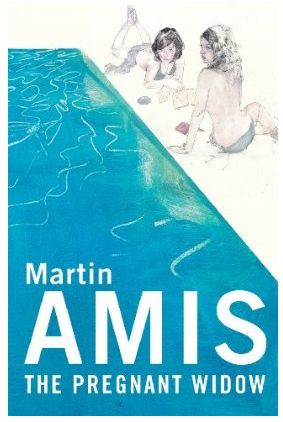 READ FOR BOOKCLUB
Chosen by Rachel
The setting for The Pregnant Widow is a pastoral Italian castle in a hot dry summer. Here, beautiful young people are draped around the pool, smoking cigarettes, drinking wine, discussing literature, sex and freedoms. It is 1970, the start of the sexual revolution and characters are barely dressed, eyeing one another up, and thinking about who they’d like to have intercourse with.
It a sensual and decadent setting with fervent, hot-blooded characters designed to draw the reader directly in. Martin Amis has referenced the book as being autobiographical so perhaps he is the book’s main character Keith.
Keith is one of three students from the University of London who have come to stay in the Italian country side. He is an aspiring poet who drops literary references as a means to impress, not only his girlfriend, Lily but also one of the other guests, a beautiful 20-year-old blonde named Scheherazade who he becomes obsessed with.
Critics lambast Keith’s objectification of the female characters, but apparently the point is that men’s sexual desires did not change in the revolution, they had always and continue to look at women lustfully with a desire to bed them, but it was at this time when females began to pursue their desires, too and be aggressive in their yearning for sexual pleasure, just like men.
The title of the book is borrowed from the Russian writer Alexander Herzen and refers to an old structure being replaced by a new one: “The departing world leaves behind it not an heir but a pregnant widow.”
And Keith felt it again (he felt it several times a day): the tingle of license. Everyone could swear now, if they wanted to. The word *fuck* was available to both sexes. It was like a sticky toy, and it was there if you wanted it.
The sensual and decadent setting of The Pregnant Widow, with its fervent, hot-blooded characters, its freedoms and its care-free air made this a real page turner. Our overall views on the characters and their behaviours differed but there is no doubt that Amis has a beautifully crafted writing style and the ability to create real atmosphere and capture a slice of a history.
—–
Published 2011
Vintage
480 pages
2011 – Bookerthon

A year in the life of a Booker judge must be such a challenge. What is the best book of the year? Is it one that represents the past 12 months on a global scale? Is it one that tackles serious topics, or one which brings a light heartedness to proceedings? Should the shortlist lead the way in literary talent or be an indication of the tried and true?
And, what is the most palatable level of readability? Pushing the boundaries too much might deter readers but not providing some intellectual challenge could be a mistake too.
After reading this year’s shortlist, we are under the distinct impression that these finalists are all sitting someone amongst the middle of all these criteria. Each and every one is readable and attainable and any reader could safely pick up one of these books and not be overwhelmed nor bored.
Whether this was intentional or not we are not sure, perhaps there was a conscious decision to sway away from the more scholarly books, or perhaps this year’s judges just prefer a good, rollicking read.
We are not complaining as we read every book with gusto, enjoyed them all, and felt able to recommend them all to fellow bookies. However, we are slightly disappointed that we didn’t discover some miraculous literary talent that would change our lives. But we found the books approachable and enjoyable and can’t really complain, though they probably won’t sit atop any of our all time favourites’ lists.
Jamrach’s Menagrie is a startling story of men lost at sea during the Victorian era, The Sisters Brothers a hilarious Western parody, and Pigeon English is a shocking mystery based around a poor immigrant family.
The Sense Of An Ending is a touching look at memories and the loss of them, Half Blood Blues covers some serious post war issues in an entertaining way while Snowdrops studies personal relationships in a frozen Moscow winter.
While we may disagree on what should top the list, we both agree that are all worthy of recommendation. You couldn’t go wrong with this year’s shortlist if you want to add some safe bets to add to your TBR pile.
Best book 1st-6th: Suzy:
The Sisters Brothers
Snowdrops
Pigeon English
Jamrach’s Menagerie
Half Blood Blues
The Sense Of An Ending
Best book 1st-6th: Rachel:
The Sense Of An Ending
Jamrach’s Menagerie
The Sisters Brothers
Snowdrops
Half Blood Blues
Pigeon English
Pigeon English – Stephan Kelman
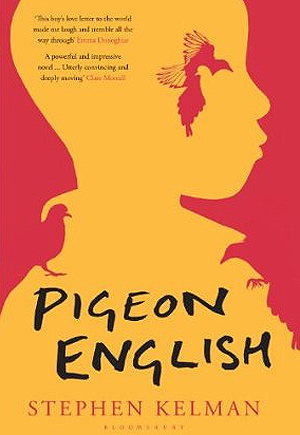 READ FOR BOOKERTHON
Ghana migrant Harrison Opoku unbalances the hierarchical balance in his community when he speaks out about the murder of school mate.
✔ “Harri Opoku is 11 years old when he moves from Ghana to a London housing estate with his mother and sister. The estate is filled with gangs and violence and routines unfamiliar to an immigrant. But more troubling to Harri is the usual trauma of simply growing up, of who will be his friend and whether he can remain the fastest runner at school.
When a boy in his class is murdered, Harri and his new friend Dean decide to play detective, hunting down clues from around the estate and observing people who seem suspicious, in a search for the killer. But their investigations start to draw some unwanted attention.
As well as the obvious reference to the Pidgin English spoken by many immigrants, the title also refers to an actual pigeon which Harri thinks is watching over him, and guiding and protecting him during his dangerous pursuit.
What your problem is, you’re all just a raindrop. One of an endless number. If only you’d just accept it, things would be so much easier. Say it with me: I am a drop in the ocean. I am neighbour, nation, north, and nowhere. I am one among many and we all fall together. Or maybe I’m just a rat with wings and I don’t know what I’m talking about.
Suzy and Rachel ended up with different views of Pigeon English.
The story of desperate immigrants told from the point of view of a young protagonist who is seeing and experiencing a new world for the first time was appealing to Suzy. It was heart-warming, harrowing and deeply personable.
Rachel agreed but found the narrative wandered a bit of course sometimes. Plus the narrative wasn’t always convincing as being from an 11-year-old boy. Or a pigeon. But still very readable.
—–
Published 2011
Bloomsbury Publishing
288 pages
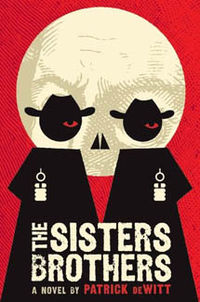
The Sisters Brothers – Patrick de Witt
 READ FOR BOOKERTHON
Set in the American west coast in 1851, this book is a Western parody
✔ “Eli and Charlie Sisters are brothers and assassins living on the West Coast of America in 1851 during the Nevada Mountain gold rush. They are hired by a wealthy businessman called the Commodore’ to kill a man by the name of Hermann Kermit and steal his formula which will apparently make gold easier to find.
The brothers set off across the state, through Oregon and down to San Francisco in pursuit of their target. Their Odyessian adventure may sound like a typical Western but actually this novel dips into several genres including Western, parody, satire and is full of comedic value.
Eli is the dominant partner in the killing business. Charlie isn’t as keen and begins to question their chosen profession, but is put in place by his older brother. The men bicker like brothers do all the way through their journey, while plodding along on their sad horses.
Unsurprisingly for a Western and a comedy, the men find themselves in all sorts of predicaments along the journey. They are constantly running from people, losing things, finding things, stealing things, meeting eager ladies and suspicious men. As such there is a big cast of characters from all walks of life and the narrative steers through all the emotions of living in the Old West as well as those of two people bound by blood.
Returning his pen to its holder, he told us, ‘I will have him gutted with that scythe. I will hang him by his own intestines.’ At this piece of dramatic exposition, I could not hep but roll my eyes. A length of intestines would not carry the weight of a child, much less a full grown man.
This book was such a surprise on the shortlist. Neither of us expected something so hilarious being recognised by the Booker Prize, an award synonymous with serious literature. We both admitted we were captured instantly by this one and laughed out loud from the first page. The lyrical and easy flow of the narrative and its satirical humour made reading the book effortless. Woven amongst the hilarity was a strongly structured story with themes of humanity, faithfulness and morality. A pleasant surprise in the shortlist.
—–
Published 2011
Ecco
225 pages
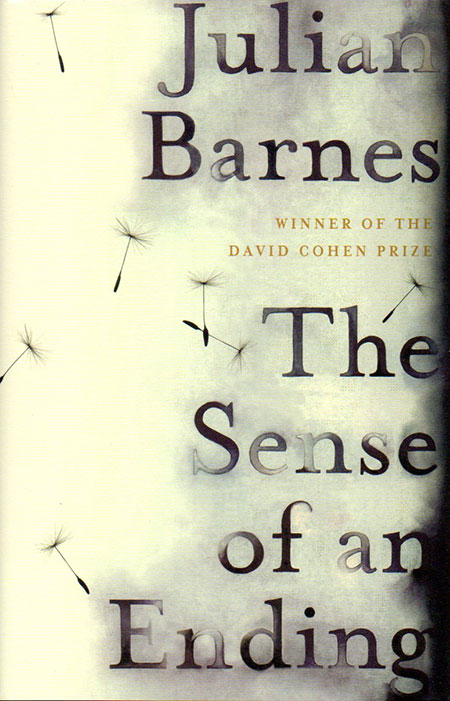
The Sense Of An Ending – Julian Barnes
 READ FOR BOOKERTHON
An English retiree challenges his fading memory with the arrival of a lawyer’s letter
✔ The unreliability of memories are often fictional fodder. Feeding out snippets of truths and half truths and making the reader work out who is reliable and who is not is a great way to engage the reader.
The Sense of an Ending is quite upfront about its unreliability. The protagonist, Tony Webster, has a reasonable life behind him and is nonplussed about ageing and his fading memories.
That is until he receives a lawyer’s letter informing him he has been left the diary of a man whom he barely recalls from his school days. He must search his memories, and learn what memories to trust, in a bid to understand why he has been left the diary.
How often do we tell our own life story? How often do we adjust, embellish, make sly cuts? And the longer life goes on, the fewer are those around to challenge our account, to remind us that our life is not our life, merely the story we have told about our life. Told to others, but—mainly—to ourselves.
The first part of this book is about Tony’s younger years, his loves and lust and first marriage. All the “truths” are offered to the reader here. The second part of the book goes about undermining that information.
Rachel found it a nicely constructed novel. “I was totally invested in the fear of lost memories and constantly attempting to establish the truth.” However, despite the interesting premise, Suzy found the layers of truths and untruths messy and did not connect with the characters.
—–
Published 2011
Jonathan Cape
163 pages
Jamrach’s Menagerie – Carol Birch
 READ FOR BOOKERTHON
Eight-year-old Jaffy Brown escapes the Victorian slums and sets sail for a better life.
✔ A 19th Century street urchin named Jaffy Brown is at the heart of his book. In search of a better life, he works for Mr Charles Jamrach, an importer of exotic animals. Jaffy and another working boy Tim become close friends and allies.
The two boys are convinced to undertake a three-year whaling expedition in order to capture a spectacular ocean beast for their boss.
It is hard to say much more about the plot without giving everything away, but what occurs is not only a sea-faring adventure story the likes of Moby Dick, but ends up somewhere readers would not expect. Taffy and Tim only have each other and their sense of friendship and survival depends on them confronting and mastering their own existence as animals.
It was the first smile of my life. Of course, that is a ridiculous thing to say; I had been smiled at often, the big man had smiled at me not a minute since. And yet I say: it was the first smile, because it was the first that ever went straight into me like a needle too thin to be seen.
The 19th Century London setting and the protagonist Jaffy are both well established from the outset. The smell of the slums, the lonilness of Jaffy and the desperation to get by are all felt intently. This makes the contrast of the pages at sea more glaring.
However it’s this contrast in the stories and the settings that helped form our final opinions of the book. Rachel was left shocked by the dramatic change and suggests not reading the back cover blurb if you too like a bit of shock factor. Suzy found the shock change a little jarring and though not inkeeping with the original premise of the book, would still recommend it.
—–
Published 2011
Canongate Books
348 pages
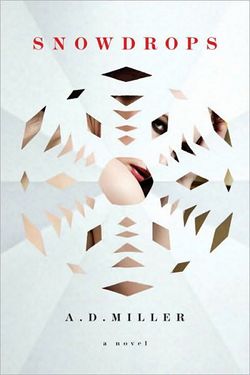
Snowdrops – A D Miller
 READ FOR BOOKERTHON
British lawyer Nick is seduced by the dangerous Masha while working in Moscow and ends up finding himself buried in secrets.
✔ Nicholas is a single, 38-year-old British lawyer working for banks lending money to Russian corporations. His time in Moscow is full of luxuries and excesses.
With no intention of becoming attached to anyone, he meets by chance the alluring Marsha and is besotted. However, Marsha’s glamour and bewitching nature belie the secrets and the danger that surrounds her. She encapsulates what we have come to know of 1990s Russia: corruption, sleaze and desperation. And corpses.
That’s what I learned when my last Russian winter thawed. The lesson wasn’t about Russia. It never is, I don’t think, when a relationship ends. It isn’t your lover that you learn about. You learn about yourself.
Snowdrops a psychological drama that blends two people’s contrasting worlds with such pace and energy that they soon appear as one big muddle.The snowy setting provides great atmospheric scene setting for drudgery and hidden secrets, ‘snowdrop’ being Moscow slang for a corpse hidden by snow, revealed only when the ice melts.
This is a love story and a crime story, and we couldn’t help but be pulled into the wonderfulness and the despair. Rachel called it “a really satisfying read”, Suzy rated it highly, calling it “spellbinding”.
—–
Published 2011
Atlantic Books
288 pages

We're
currently
reading


Recent Comments