The Free-Range Bookclub
Bookclubbers without boundaries in Nelson, New Zealand
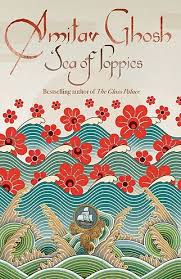
Sea of Poppies – Amitav Ghosh
READ FOR BOOKERTHON
Set in 1838, at a time of colonial upheaval and shortly before the outbreak of the Opium Wars in China, Sea Of Poppies tells the story of the ship Ibis and her interesting collection of passengers making the journey from India to Mauritius.
Amongst the personalities on board are a fallen raja, an American freed man, a French Orphan, a Chinese Opium addict, and a cross-dressing reincarnated saint to name a few. As they sail away from their pasts they become ship mates and family, each relaying their story with colour and vitality.
How was it that no one had ever told her that it was not love itself, but its treacherous gatekeepers which made the greatest demands on your courage: the panic of acknowledging it; the terror of declaring it; the fear of being rebuffed? Why had no one told her that love’s twin was not hate but cowardice?
The narrative is brimming with accents and dialects, stories which are personal but also factual, historical and political. Each character’s story is moving and significant. For Rachel the vast array of languages and slang was difficult to keep on top of. For Suzy the sample of stories from around the world were mesmorising. Either way it’s clear they are authentic stories that needed to be told.
—–
Published 2008
John Murray
528 pages
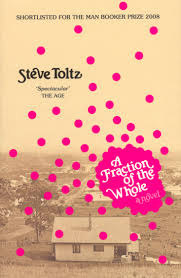
A Fraction Of The Whole – Steve Toltz
 READ FOR BOOKERTHON
From his prison cell, Jasper Dean tells the unlikely story of how he, his scheming father Martin and his crazy Uncle Terry upset an entire continent
♥ “For most of his life, Jasper Dean couldn’t decide whether to pity, hate, love, or murder his paranoid father, Martin, a man who overanalysed everything and liked to force his self-absorbed opinions on his only son. But now that Martin is dead, Jasper can reflect on the man who raised him in intellectual captivity, and what he realises is that, for all its lunacy, theirs was a grand adventure.
“As he recollects the events that led to his father’s demise, Jasper recounts a boyhood of outrageous schemes and shocking discoveries—about his infamous outlaw uncle, Terry and his mysteriously absent European mother.
“The story takes them from the Australian bush to the cafés of Paris, from the Thai jungle to strip clubs, asylums, labyrinths, and criminal lairs, always with a set of good intentions which usually end up catastrophically. Each tale is so full it could be a novel in itself, and the result is a wild rollercoaster ride.
He pointed the gun at me. Then he looked up at my hand and tilted his head slightly.
– Journey, he said. I had forgotten I was still holding the book.
– Céline, I said back in a whisper.
– I love that book.
– I’m only halfway through.
– Have you got to the point where —
– Hey, kill me, but don’t tell me the end!
We both found the book raucously funny. It’s not what we were expecting from a Man Booker shortlister but we were pleased it made the cut as it added some light-heartedness to the proceedings. There are loopy characters and purposefully overworked plot lines and everything spirals together until it is all so ridiculous you just have to read on to find out what’s going to happen. We both really enjoyed it as a read for a read’s sake and would widely recommend it, but as Suzy said: “I can’t see it winning the prestigious Man Booker Prize.”
—–
Published 2008
Hamish Hamilton
711 pages
Back Booker 2005

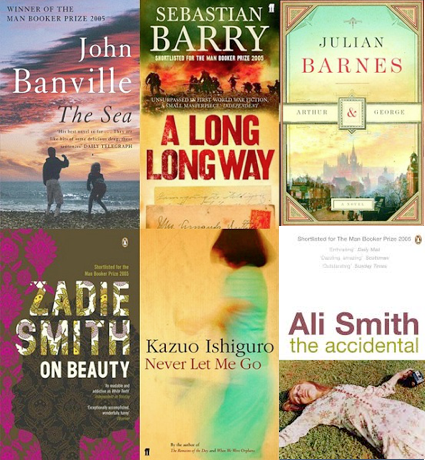 We decided to sneak in another Bookerthon before our regular Bookerthon in 2008. Can you tell this is our new favourite pastime?!
This time we took on 2005 as we’d recently read two of the shortlisters, plus heard great things about the other four finalists.
Our thoughts?
There seemed to be quite a hark to classics or classical styling in these novels. Tried and tested themes or links to popular works of literature were apparent. These features eased us into these new works and allowed us to accept the brave twists and new paths the authors took. The start of each new book felt like slipping into something tried and true, something reassuringly comfy. But by the time each was completed, we realised we had been challenged thematically and opened up to new stylistic points of view.
Arthur & George reveals a section of the life of Arthur Conan Doyle who created Sherlock Holmes, the world’s most famous detective. It includes the time he took on a case of mystery himself, fighting for a pardon for a man named George Edalji who was charged and imprisoned for mutilating livestock.
On Beauty is Zadie Smith’s nod to the E M Forster classic Howard’s End. Set on both sides of the Atlantic, it is an honest analysis of family life, the institution of marriage, intersections of the personal and political, and a study of the deceptions that loved ones can act out upon one another.
The Accidental takes the time-honoured plot driver of a stranger entering the lives of a family or community and through their actions or just presence forces the inhabitants to closer inspect their own lives or relationships. In this, a barefoot woman shows up at the door of the Norfolk cottage the Smart family is renting for summer. She talks her way in. And she stays.
The Sea is said to recall such masters as Proust, Beckett and Henry James in its prose as it tells of a widower retreating to a familiar place in which to remember his wife. It is a book about memories but more about memories that could be lost if effort is not exerted to ensure they stay present.
Never Let Me Go is set at Halisham, an exclusive English boarding school in the country. This familiar setting and sense of ease is soon smashed when readers realise the students are part of an organ harvesting operation that caters to the rich and ill-treats the vulnerable and different in our society.
A Long, Long Way deals with the realities of war. In 1914, 18-year-old Willie Dunne leaves Dublin, his family and girlfriend to enlist and face the Germans on the front lines. Dealing with personal struggles and the overwhelming consequences of war this book details a horror of violence no solider could ever have imagined.
In the end we came to love this selection of reading material, though we found The Sea, while clever and with charming characters, a bit contrived and neither of us would have guessed it would win had we Bookerthoned that year.
As with the last Back Booker, we were swayed by our pre-existing attachment to one of the contenders. In this instance it was Never Let Me Go for its dystopian/science fiction nature but also its foundations in realism that made us feel like this very thing could happen. We were surprised this did not get the nod!
Best book 1-6: Rachel:
Never Let Me Go
A Long Long Way
On Beauty
Arthur & George
The Accidental
The Sea
Best book 1-6: Suzy:
Never Let Me Go
The Accidental
Arthur & George
On Beauty
A Long Long Way
The Sea
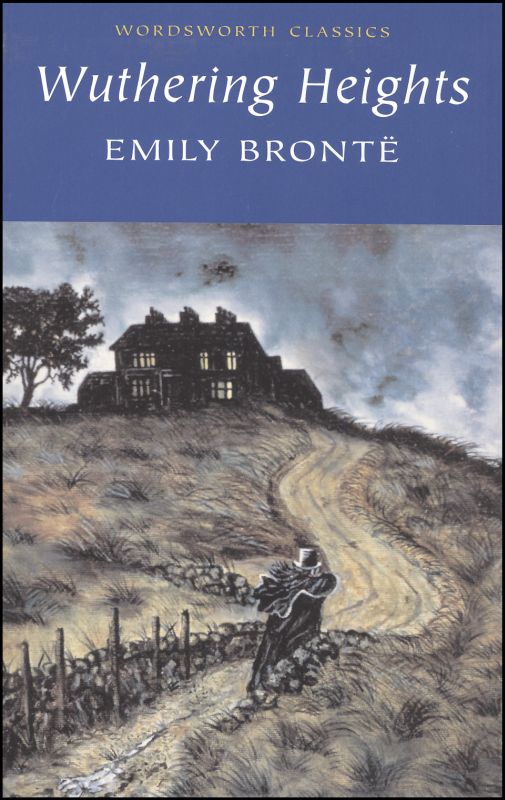
Wuthering Heights – Emily Bronte
 READ FOR BOOKCLUB
Chosen by Nadine
A brooding tale of passion and revenge set in the Yorkshire moors
♥ Emily Brontë’s 1847 novel details the arrival at Wuthering Heights of a man named Heathcliffe and the close bond he forms with his benefactor’s daughter, Catherine Earnshaw. Class status divides them, and a saga of frustrated yearning and destruction follows, culminating in Catherine refusing to marry Heathcliff after her brother’s meddling. Heathcliffe departs the property only to return years later both educated and wealthy.
A second generation of family dramas and love interests abound, all the time with both Heathcliffe and the married Catherine at the periphery interferring with events.
We learnt that the novel was not well-known or liked initially and it took until after the author’s death for its true genius to be discovered. What was at first considered Victorian fiction was beginning to be re-classed as a combination of gothic and romantic fiction, unheard of at the time. The key question asked at this time was: who or what is Heathcliffe?
Expecting Victorian fiction, we were surprised to find something more in-depth and contemporary in nature and the gothic undertones almost went unnoticed until we pondered that very question at bookclub. Who or What is Heathcliffe? Heathcliffe and all the characters were more nuanced than Victorian characters. Rather than being able to categorise them as simply good or evil, characters had elements of both and were likeable even when nasty.
Breaking away from these traditional genre markers is what made the book feel contemporary due to mixed genre narratives being not uncommon these days. Perhaps this is what has given the book long-lasting appeal. Plus there is an exciting plot, moody settings and unique characters that break all past rules of characterisation. The ending (no spoiler) was once called the ‘most powerful and daring climax in English Literature’ and we agreed it was fitting.
—–
Published 1847
Thomas Cautley Newby
214 pages
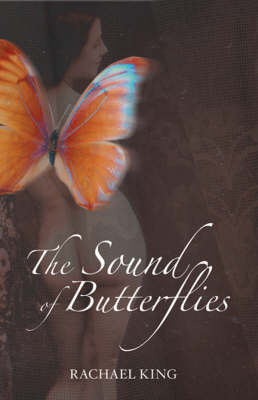
The Sound of Butterflies – Rachael King
 READ FOR BOOKCLUB
Chosen by Rachel
In 1904 lepidopterist Thomas Edgar arrives home to England from a collecting expedition in the Amazon. He is emaciated and cannot or will not speak. As his wife wonders what has happened, the book takes us back to the Amazon and details the wild events that Thomas experienced during his search for a mysterious butterfly.
♥ “A sensory book in which every person, action and location is well captured. The Amazon is a fascinating setting, the perfect place for an exciting string of events, and as such I learnt a lot while being completely entertained.” – Rachel
♥ “Ever since a slightly terrifying book read at school as an 8 year old I have been slightly edgy around moths and even butterflies. The story ended with thousands of evil moths beating their wings against a door trying to reach the person inside. My kid overactive imagination (not improved by adulthood actually) went a step further – *obviously* the the moths beat down the door and ate the person. THIS BOOK BY RACHAEL KING DID NOT HELP. But all is forgiven as this is a beautiful book. I was there alongside the characters, feeling exhilarated and sweaty in the jungle and also then repressed and sad in the stuffiness of England. A great read.” – Suzy
—–
Published 2008
Picador
386 pages
In Cold Blood – Truman Capote
 READ FOR BOOKCLUB
Chosen by Suzy
Considered the original non-fiction novel, In Cold Blood details the 1959 murders of Kansas farmer Herbert Clutter and his family who were found bound and shot in their home. Capote follows the search for the killers, as they travel the length of country, interacting with strangers who closely escape their next crime. The capture, confession, and trial of the two men responsible are detailed, providing a full cycle of events surrounding the murders.
♥ “A chilling story that kind of crept up on me. Chilling because it was a true story. But also I think knowing the events that took place at the beginning of the book left me unprepared for almost feeling empathy for the killers at the end of it!” – Nadine
♥ “Aside from biographies, I don’t read a lot of non-fiction. But this is the kind of non-fiction I do like. A nail-biting, well-built plot made all the more astounding by knowing it actually happened and what’s more was the first of its kind in format. I enjoyed hearing the story behind the story, too, in regards to Capote’s subsequent interaction with the murders while in prison.” – Rachel
—–
Published 1994
Vintage
343 pages
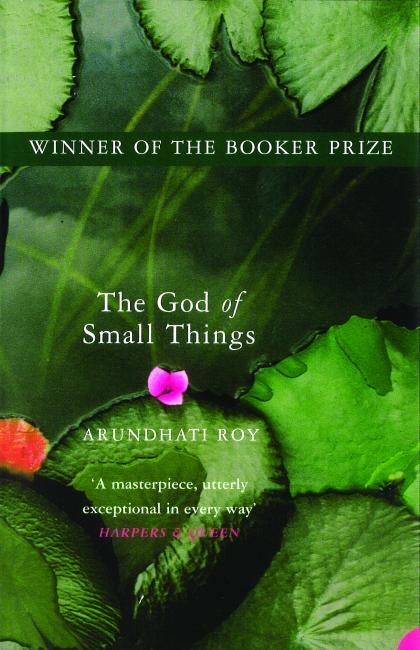
The God Of Small Things – Arundhati Roy
 READ FOR BOOKCLUB
Chosen by Nadine
This novel discusses who should be loved, and how. And how much. It describes how small things affect people’s behaviour and lives
♥ “The God of Small Things details the lives of fraternal twins Rahel and her brother Estha. The narrative alternates between two time periods from the present to the of the time of the twins’ greatest trauma, which occurred upon the childhood visit of their cousin Sophie Mol.
“Separated for twenty-three years with no contact, the twins are now adults. Rahel had travelled to America, where she suffered a failed marriage. Estha went mute willingly.
“In the present they meet at their family home in Ayemenem, where the trauma that separated them occurred. During the course of the novel, Rahel unravels her memories of what happened to them and their family. The perspective also moves to other family members’ lives to provide an understanding of the family dissolution.
“The story revolves around the way different family members’ choices and attempts to escape their culture or class impacts them. Abuse and betrayals are passed down from generation to generation. There is much marital discord, abuse, and rejection by the family members from whom they most the need love.
“Yes there is a lot of sadness, but Roy’s portrayal of innocence is touching. The characters are relatable and likeable from the first page. The many changes in narrative perspective proved a bit of a distraction but ultimately the characters’ believability transcended the confusion.”
—–
Published 1997
IndiaInk
368 pages
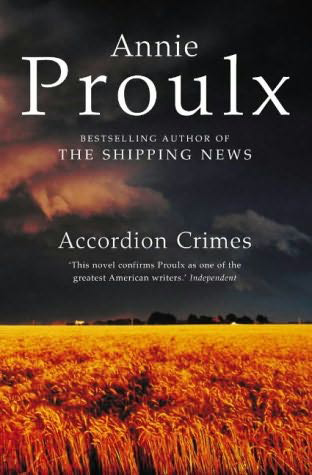
Accordion Crimes – Annie Proulx
 READ FOR BOOKCLUB
Chosen by Rachel
The history of America’s founders is told by the travels of an accordion, and the hands it passes through.
♥ “An accordion is handmade by a Sicilian in 1890 and changes owners several times throughout the novel, ending up in Florida in 1966. Each owner belongs to a nation of people new to the Americas. Each chapter tells their story, not only their personal story but how their people came to America, their successes, their adversities and importantly how they helped shape and grow the country into what it is today.
“It acknowledges the contributions of the various nationalities from the music and song of the French and Sicilians to the railroad construction techniques of the Germans. At the same time it demonstrates how the memories of these nationalities’ contributions are being erased, instead labelling the Sicilians as criminals and mobsters and causing German families to change their surnames due to fear of persecution.
“Amongst the seriousness is the beauty of the accordion. The reader is educated on the intricate detailing required to build the instrument, but also how they are played and how each generation, and each nationality of people, played and enjoyed it and how it formed part of their history.
“At the end of each extended chapter, (small spoiler alert but you’ll still enjoy the book having read this) all the characters you have been introduced to and became familiar with, die in the short space of a page or two. Some are gorily detailed, others are merely recorded, some are hard to read, others are amusing, but by the end, we have learnt of everyone’s ultimate demise.
“Proulx to her credit has been quite inventive with her deaths. It gets to the point where you wonder how she could possibly find ways to kill off the next bunch of characters. But of course there is a serious side too, with their deaths showcasing the violence and injustice often experienced by immigrants.
“Despite knowing everyone is going to die in the final paragraphs, the reader is presented with characters who are full and highly detailed in the pages prior, with their stories concluded before the dying begins, so the sudden reporting of their fates doesn’t leave you in the lurch with an unfinished story. It’s an interesting feature though, that drew different reactions amongst us from bemusement to horror.”
—–
Published 1996
Scribner
544 pages
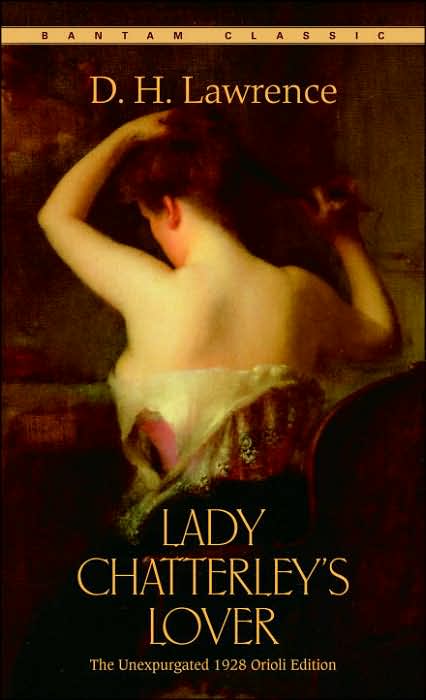
Lady Chatterley’s Lover – D H Lawrence
 READ FOR BOOKCLUB
Chosen by Suzy
D.H. Lawrence wrote Lady Chatterley’s Lover in 1920 amidst much controversy over its content, mainly an upper class woman’s affair with her gardener in order to give her war-paralysed husband an heir. This type of love and passion in posh society was not looked upon favourably in the 1920s. Neither was Lawrence’s choice of four-letter words, resulting in the privately published book being censored in both the UK and US.
Ours is essentially a tragic age, so we refuse to take it tragically. The cataclysm has happened, we are among the ruins, we start to build up new little habitats, to have new little hopes. It is rather hard work. There is now no smooth road into the future: but we go round, or scramble over the obstacles. We’ve got to live, no matter how many skies have fallen.
“We agreed the controversy over this book was its appeal, but obviously reading this book for the first time nearly 90 years after it was written, when such stories are now commonplace, meant the shock factor as we imagined was not present. However, we appreciate how this content was risqué for its time, and that its mere existence paved the way for writers that followed Lawrence.
“But it was a great romance, filled with angst and passion; a story we did all enjoy.”
—–
Published 1928
Tipografia Giuntina
352 pages
The Child In Time – Ian McEwan
 READ FOR BOOKCLUB
Chosen by Nadine
In a dystopian future a child is snatched during a routine supermarket visit.
♥ “Stephen Lewis takes his three-year-old daughter to the supermarket one morning. He turns his back for just moments and she is gone. When she cannot be found he must head home to give his wife the news.
“The couple search in agonising fashion. Readers do not need to be parents to feel the acute pain of these parents poured out on the pages. Their marriage and their lives are ruined.
“At the same time Stephen is involved with politics in a slightly dystopian future, responsible for writing a book about child care. There is some kind of subtle time travelling event, which links into the title of the book: examining the timelessness of passing hours spent between a parent and a young child, about the innocence, about the sentimentality of remembering a child at a certain time of their life. About a kidnapped girl who now belongs to that moment of time.
He had been back a thousand times, seen his own hand, a shelf, the good accumulate, heard Kate chattering on, and tries to move his eyes, lift them against the weight of time, to find the shrouded figure at the periphery of vision, the one who was always on the side and slightly behind, who, filled with a strange desire, was calculating odds, or simply waiting.
“It is a very difficult book to read for the searing possibilities of ‘what if’. But it is the haunting nature of it which makes it outstanding. All of us as mothers of young children were affected by this. Especially the line “‘she was a lovely daughter’. There were tears shed! The dystopian future is constructed well, London is a city of unemotional, faceless crowds, and various wars are underway, but it is not too far-fetched so as to distract you from the real story, which is Stephen’s anguish over the abduction. This was an emotional read but one which we can all recognise as a work of genius.”
—–
Published 1987
Jonathan Cape
250 pages

We're
currently
reading


Recent Comments