The Free-Range Bookclub
Bookclubbers without boundaries in Nelson, New Zealand
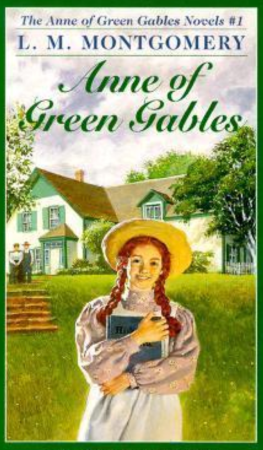
Anne of Green Gables – L M Montgomery
 READ FOR BOOKCLUB
Chosen by Suzy
A coming-of-age novel about a talkative orphan called Anne Shirley who is sent to a farm in Avonlea
❚ “Siblings Marilla and Matthew Cuthbert plan to adopt a young boy to help out on the family farm, Green Gables. However a young, talkative, redhead girl called Anne arrives instead. Though initially reluctant to take on the girl, her precocious nature endears her to the brother and sister.
“Anne’s life is never dull, with her imagination, impulsiveness and tendency to talk too much leading her on one adventure after another. Still, through a combination of resourcefulness and good luck, Anne manages to avoid any dire consequences.
“Montgomery captures the happy side of childhood: the excitement of finding a best friend, creating a romantic fantasy world, and receiving small privileges. However, the loneliness of being the outsider, the sense of considering oneself unattractive, and the grief of losing someone are also apparent.
“Anne of Green Gables addresses social problems of the early 20th century, some of which remain relevant today. Written before most women even had the right to vote, Montgomery reiterates that boys and girls are equally intelligent and talented. Although she does portray gender roles that could be considered stereotypical today, her ideas were progressive for 1908.”
People laugh at me because I use big words. But if you have big ideas, you have to use big words to express them, haven’t you?
❚ “Who wouldn’t love a re-read of this classic? Anne Shirley, with her joy for life and her encouragement for young girls to come out of their shells and be their own person, is an infectious character. I love that she’s outspoken and forthright, what we want every girl to be today, yet so few had that opportunity when this book was written.” – Rachel
—–
Published 1908
158 pages
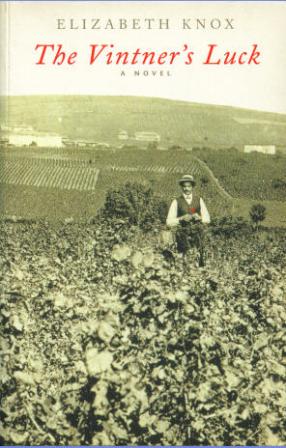
The Vintner’s Luck – Elizabeth Knox
 READ FOR BOOKCLUB
Chosen by Nadine
The unorthodox story of a French winemaker and his homosexual love affair with an angel.
❚ “One summer night in 1808, Sobran Jodeau sets out to drown his sorrows in his family’s vineyard when he stumbles upon an angel. Once he gets over his shock, Sobran decides that Xas, the male angel, is his guardian sent to counsel him on everything from marriage to wine production.
“But Xas turns out to be far more to Sobran. The Vintner’s Luck explores an unexpected love story as Sobran starts a sexual relationship with the angel and falls in love with him.
“The story falls somewhere between fantasy and allegory and despite its unorthodox nature elicits a high level of acceptance in the reader. Perhaps it is the inclusion of details on winemaking, wars, progress, passion and death in the small Burgundy village, as well as Jodeau’s midsummer trysts. Perhaps it’s the ideal cast of characters who have been structured incredibly well to be appealing and believable.”
Every day time stopped and Sobran saw Xas, the sun reflecting off his raised wings, white chest watermarked by tears dried in fine dust; bare skin and colourless nipples, as innocent as a child’s; the double signature, seagreen and vermilion, awake and vivid; a whitelipped white face and eyes, abysmal, inimical, like the sea seen through holes in an icefield. It was like being in love, this remembering, because Sobran couldn’t put Xas out of his mind. And it was like shame. Because he grew so tired defending himself from the pain of this one recollection, Sobran forgot everything else he knew about the angel.
❚ “This is not just a phenomenal love story, it is a beautiful work of art, totally outside of the square and completely riveting. Despite it’s far-fetched plot, it is believable and magical in every way. It’s the kind of book where I would stop mid paragraph to declare ‘OMG that was a beautiful sentence.’
“The contrast of Knox’s imaginary heaven and hell vs the characters’ reality adds another level of beauty to the novel. And Xas is a wonderful guide through all of these lands. I have been in love with Xas ever since my first reading of this book, for he is perfect, and not in a cliched or expected way. Aurora is also a magnificent character, strong and assured but again never trite.
“This is a book that deeply moved me and features on my top ten faves of all time. What’s more, it was the book that Suzy and I formed our friendship over.” – Rachel
❚ “Whenever this book has come up in a random conversation and someone has said “what is it about” I have never been able to completely do it justice. “A beautiful love story where a gay angel meets married French winemaker”? It is most definitely an utterly gorgeous and evocative book. At the time I was first reading this book I met Rach – she said it was one of her all time favourites and I knew then we’d be BFFs 4evs. (Rach I’m sorry that I wrote BFFs 4evs in a paragraph about The Vintner’s Luck).” – Suzy
—–
Published 1998
Victoria University Press
256 pages
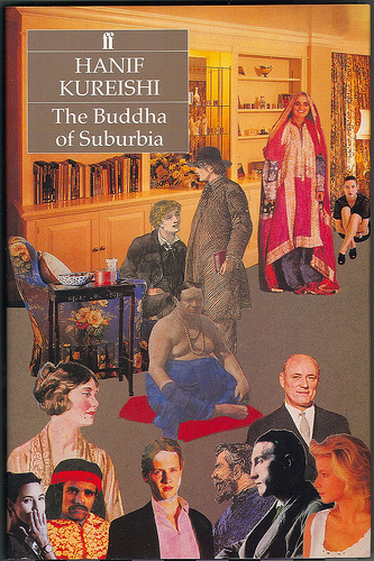
The Buddha of Suburbia – Hanif Kureishi
 READ FOR BOOKCLUB
Chosen by Rachel
The Buddha of Suburbia is a satirical coming-of-age story that deals with class, race, and identity. Haroon, is a first generation immigrant who begins a relationship with a woman named Eva who shares his interest in Buddhism. Eva encourages Haroon to share his outlook with others, turning him into the Buddha of Suburbia. Karim, half Indian, half English, accompanies his father to the early meetings because he has a crush on Eva’s son, Charlie. Herein starts Karim’s introduction to an adult world full of renegade theatre directors, punk rock stars, fancy parties, and all the sex a young man could desire.
Maybe you never stop feeling like an eight-year-old in front of your parents. You resolve to be your mature self, to react in this considered way rather than that elemental way, to breathe evenly from the bottom of your stomach and to see your parents as equals, but within five minutes your intentions are blown to hell, and you’re babbling and screaming in rage like an angry child.
❚ “A contemporary story that strikes a chord on many levels. There is no great plot, or surprise ending but Kureishi poignantly details British attitudes towards foreigners, as well as strongly held opinions on race, politics and sexuality. As a non-Brit I enjoyed the ’70s UK education, especially the pop culture and politics. This story was a real journey.” – Rachel
—–
Published 1990
Faber & Faber
288 pages
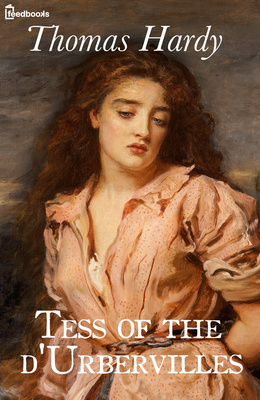
Tess Of The D’Urbervilles – Thomas Hardy
 READ FOR BOOKCLUB
Chosen by Ros
In this 1891 book, a poor young woman discovers she may be descended from nobility and goes in search of a better life
❚ “Tess Durbeyfield is a complex character considered by some a hopeless victim and by others an archetype of feminine strength. Either way her actions and those forced upon her can make or break readers in their attachment to her and the book in general. We felt these conflicting emotions too in bookclub.
“Tess is the eldest of seven children with peddlers for parents. News that they may be descendants of nobility causes her parents to send Tess off to the D’Urberville Estate in hope of financial aid. Herein begins a spate of ill-fortunes.
“She is betrayed by religion, by social conventions of the time and by men who exploit her. Her virtue is destroyed and her life is shaped by continual suffering for crimes that are not her own. She is cast out by a morally hypocritical society but remains hardworking and steadfast under adversity. It is hard not to feel anguish and frustration at the unfairness of her life.
“We learned that at the time of the book’s release the author’s depiction of sex, criticism of religion and dark pessimism was heavily criticised. However modern critiques praise the novel as a courageous righting of many of the ills Hardy found in Victorian society.
A strong woman who recklessly throws away her strength, she is worse than a weak woman who has never had any strength to throw away.
“Like many readers before us we too were torn between sympathy for Tess but also frustration at her being typecast as the ultimate victim. Every turn of events was bleak and frustrating and a bit of a downer. It didn’t feel like she had feminine strength because nothing ended up going her way, she didn’t get results for her good qualities. However she makes for a fascinating character study and kind of lived beyond the page. She is the reason for reading this book – if you can bear it.”
—–
Published 1891
McIlvanie & Co
592 pages
2009 – Chapter Three
 Chapter three, or otherwise known as the spot between the intro and the rest of the story, when things can stall, when reader investment is at the make or break point. Yes it’s all or nothing from this point on.
Luckily we’re all in the firm belief that it’s ALL for us.
We may have a couple of third year itches to scratch (in terms of frequency) but are all still eager and passionate about bookclub. Look out chapter four!
We’re growing too. We have secured a fourth bookclubber – the lovely Ros – who adds a new dimension to our readings which we welcome with open arms.
As mentioned above, our frequency seems to have petered out a little and we have moved to four weekly (yes we have husbands and families to consider in our time management!) Nonetheless we have a varied reading list for the year which includes fabulous classics, New Zealand fiction & poetry and some new releases which everyone is talking about so we thought we better read them and be able to contribute to the many conversations which are circulating.
Tess of The D’Urbervilles – Thomas Hardy
The Buddha of Suburbia – Hanif Kureishi
The Vintner’s Luck – Elizabeth Knox
Anne of Green Gables – L M Montgomery
The Outcast – Sadie Jones
Twilight – Stephanie Meyer
Great Expectations – Charles Dickens
The Potato Factory – Bryce Courtenay
Ooooooo…!!! – Hone Tuwhare
The 10pm Question – Kate de Goldi
Netherland – Joseph O’Neill
2008 – End Of Year Thoughts

 At the end of the year we again headed out for a meal to discuss the year’s readings. This time to Bouterey’s Restaurant. So engrossed were we in our literary discussions we did not notice the restaurateur performing the heimlich manoeuvre on a fellow diner who was choking and in fact did not realise anything was amiss until the ambulance arrived!
Again we discussed our favourite scenes, literary devices, characters and fictional love interests. Though we all agreed Lady Chatterley and Oliver Mellors certainly provided the most interesting romance.
Book of the year:
Rachel: Disgrace
Suzy: And Then There Were None
Nadine: The Child In Time
Runner up:
Rachel: The Child In Time
Suzy: In Cold Blood
Nadine: Middlesex
Favourite character:
Rachel: Cal from Middlesex
Suzy: Kahu from Whale Rider
Nadine: Heath from Wuthering Heights
The Plague – Albert Camus
 READ FOR BOOKCLUB
Chosen by Rachel
The story of an Algerian city swept by a plague. The plague begins as a series of portents, unheeded by the people, and gradually becomes an omnipresent reality, obliterating all traces of the past and driving its victims to extremes of suffering. It raises questions relating to destiny and human psychology and warns us that when one plague is beaten another raises its ugly head.
Each of us has the plague within him; no one, no one on earth is free from it. And I know, too, that we must keep endless watch on ourselves lest in a careless moment we breath in someone’s face and fasten the infection on him. What’s natural is the microbe. All the rest – health, integrity, purity (if you like) – is a product of the human will, of a vigilance that must never falter.
♥ “This book’s references to war and plagues of all kinds were significant, as was the author’s dissection of the human condition. There is so much that can be taken from this novel’s warnings. It was a bleak story with no hope of redemption, and I had to ensure I did not let that overshadow the story’s importance. It wasn’t the most rip-roaring read ever but I am pleased to have read this masterpiece.” – Rachel
Published in French 1947
Translated into English by Stuart Gilbert 1991
Vintage
304 pages
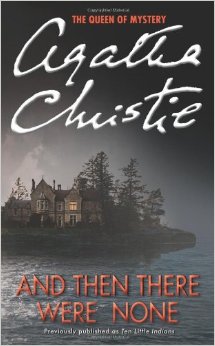
And Then There Were None – Agatha Christie
 READ FOR BOOKCLUB
Chosen by Suzy
Considered Agatha Christie’s masterpiece, this whodunnit is set on an island where the invitees of a party must work out who is killing off the guests.
♥ “An interesting assortment of strangers are summoned as weekend guests to a private island off the coast of Devon. Their host, an eccentric millionaire unknown to all of them, is nowhere to be found. All ten guests have something in common however, and that is a wicked past they’re unwilling to reveal, and a secret that will seal their fate.
“A famous nursery rhyme is framed and hung in every room of the mansion:
Ten little boys went out to dine; One choked his little self and then there were nine. Nine little boys sat up very late; One overslept himself and then there were eight. Eight little boys traveling in Devon; One said he’d stay there then there were seven. Seven little boys chopping up sticks; One chopped himself in half and then there were six. Six little boys playing with a hive; A bumblebee stung one and then there were five. Five little boys going in for law; One got in Chancery and then there were four. Four little boys going out to sea; A red herring swallowed one and then there were three. Three little boys walking in the zoo; A big bear hugged one and then there were two. Two little boys sitting in the sun; One got frizzled up and then there was one. One little boy left all alone; He went out and hanged himself and then there were none.
“When the guests realise that the murders are occurring as described in the rhyme, terror mounts. One by one they fall prey.
“As the inspiration for many murder mysteries since, this Agatha Christie classic is a must read.”
♥ “An absolute classic of the genre! My Dad recommended this to me when I was a young teenager and now my own son is reading it. My favourite ‘whodunnit’ ever. I’ve read it a few times now and even though I know what’s coming up I still get the chills. This novel has two former titles that are terrible – you’ve been warned…” – Suzy
♥ “As the book cover says, Agatha Christie is the queen of mystery, and I certainly couldn’t work out exactly who was up to what. Nothing like going back to the original Mr Green-in-the-library-with-the-candlestick murder mystery. Loved it.” – Rachel
♥ “I’m a bit of an Agatha Christie fan, so it was never going to disappoint.” – Nadine
—–
Published 1939
Collins Crime Club
272 pages
2008 – Bookerthon
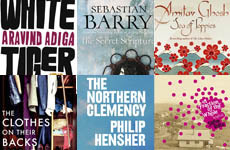
The anticipation levels for Bookerthon 2008 has fluctuated for us both. Our love of Bookerthon has increased due to our Back Bookers but our inability to pick the winner last year has frayed our nerves. Plus, the couple of massive tomes shortlisted this year meant we had to read at least 60 pages per day for five weeks to keep up, so timing and persistence were key.
But we got there. Six books that would be considered diverse but which highlight a particular time and place well. They provide a portrait of an era, taking the reader on a journey around the world and through time, showcasing the importance of capturing history.
From the Opium Wars of China, to 1970s Sheffield, the Australian penal system, India’s class system, a remembered life for a 100 year old Irish woman and the persecuted life of a Hungarian Jew, each finalist brings to life a snippet of time that has gone down in history and shaped the future. Alongside the entertainment provided by these novels, there is a sense of importance and education too.
A Fraction of the Whole is so incredibly laugh-out-loud funny and so unusual it would be a long shot for the prestigious Man Booker prize, though a deserved winner if the judges went in this direction.
The Secret Scripture is profound but touching and startling too and could be a strong contender to win. So too The Northern Clemency – this 736-page epic novel deserves some kudos.
The Clothes on Their Back is interesting and very readable though not as polished as the other five.
In the end, Suzy is choosing Sea Of Poppies as her pick for winner, a historically significant and beautiful book.
Rachel is going for The White Tiger for its poignant and entertaining way of highlighting societal injustices.
Best book 1-6: Suzy:
Sea Of Poppies
The White Tiger
A Fraction of The Whole
The Northern Clemency
The Secret Scripture
The Clothes On Their Back
Best book 1-6: Rachel:
The White Tiger
The Secret Scripture
A Fraction Of The Whole
Sea Of Poppies
The Northern Clemency
The Clothes On Their Back
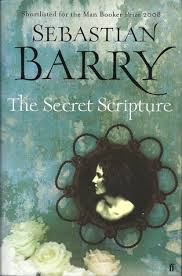
The Secret Scripture – Sebastian Barry
 READ FOR BOOKERTHON
Nearing her 100th birthday, Roseanne McNulty faces an uncertain future, as the Roscommon Regional Mental hospital, where she’s spent the best part of her adult life, prepares for closure.
♥ “Set in an Ireland besieged by conflict, The Secret Scripture is a tale of a 100-year-old woman’s life, and a vivid reminder of the stranglehold the Catholic church had on individuals throughout much of the 20th century.
“In the weeks leading up to the closure of the Mental Hospital, Roseanne McNulty speaks with her psychiatrist Dr Grene, who must decide who of his patients are to be transferred, and will be released into the community. He is particularly concerned about Roseanne, and attempts to discover her history.
“Told through their respective journals, the stories that emerge are refracted through the haze of memory and retelling. Roseanne’s story becomes an alternative, secret history of Ireland’s changing character and the story of a life blighted by terrible mistreatment and ignorance.
It is very difficult to be a hero without an audience, although, in a sense, we are each the hero of a peculiar, half-ruined film called our life.
Irish conflict usually doesn’t hold either Suzy or Rachel’s attention, but the centenarian, Roseanne McNulty, in The Secret Scripture stole the limelight here and helped build the poignant tale about loss and broken promises. Rachel found her voice both compounding and personable, revealing much in her story fragments. Suzy wondered what additional layers could have been added to truely convey the female experience at the heart of this story.
—–
Published 2008
Faber & Faber
312 pages

We're
currently
reading


Recent Comments