The Free-Range Bookclub
Bookclubbers without boundaries in Nelson, New Zealand
2026 Bookerthon
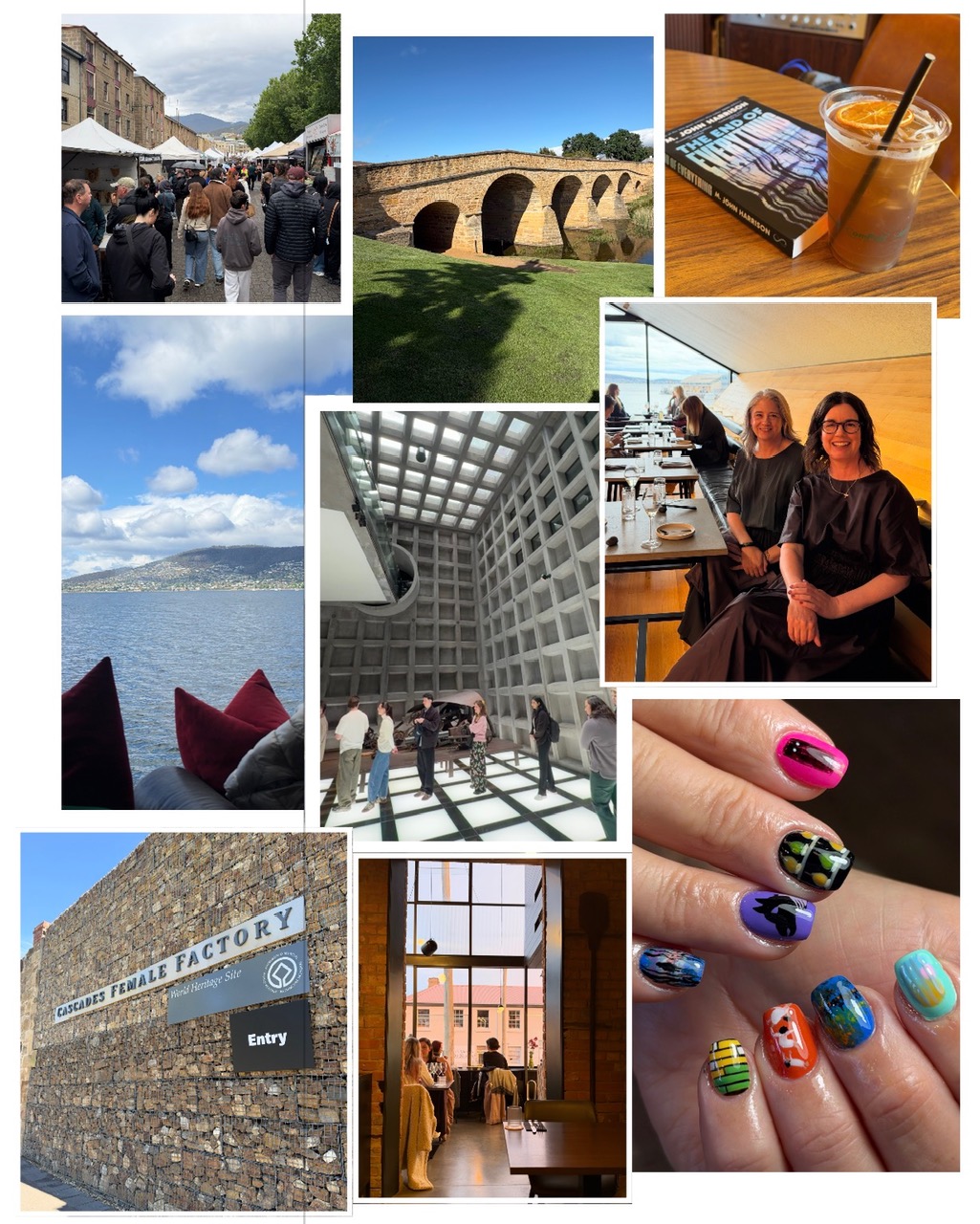
2026 was the 20th year in which we, Suzy and Rachel, have met to discuss that year’s Booker Prize shortlist (though we have completed 26 shortlists in total over that time). We decided to venture further and wider this year in celebration of our 20th Booker anniversary, so off to Tasmania we went, with its NZ-esque scenery, stunning food and friendly people. Amongst (and even during) the museum visits and restaurant bookings, we completed our reading and discussed the Booker finalists in detail.
It felt like the judges stepped things up a notch in this year’s selection, with books that were unconventional in form and structure. Via strong opinion, ambiguity and challenges to what we thought we knew, the authors seemed to want the reader to join the narrative and contribute to the interpretation of it. (Though some gave us more freedom than others.) It was an honour to be given that trust, and we enjoyed the layers of understanding, ie how we felt immediately upon finishing each book, how it sat with us and ruminated in our thoughts over days, and how our interpretations developed when we discussed the books in detail and helped one another find new meaning.
The point of any human life is to be found acceptable by as many people as possible. We die for the lack of it. It is equally important to be absolutely yourself. This is something they say about any artist at the top of their game: the thing that’s good about them is that they are absolutely themselves. But as an actor I must be absolutely not myself. A whirling void.
Black Bag
What sat with us the most was that feeling of being invited in. We had to make an effort to understand Black Bag, to speculate on what the catastrophe and aliens were in The End Of Everything, wonder how accurate history books are, and consider how unspoken histories and secrets affect communities. Elizabeth Strout says she left space for the reader to enter her story but we didn’t agree, feeling that she suffocated the reader with her opinions.
No one is superior to anyone else in this world.
The Things We Never Say
This invitation to the reader also highlighted the difference between being seen and being understood. Black Bag is visible but unknowable, the men in The Disappearers and Cal in John of John struggle to live authentically, Artie Dam hides his true feelings as he searches for connection, and the historical figures in May We Feed the King can only be understood through someone else’s interpretation.
The helicopter … had filled him with the raw excitement you always feel in early adolescence when you think some family disaster is going to break the monotony, or when the TV announces another war. Things are going to change now, you think. Whatever happens, they’ll never be the same again. You can’t quite communicate to anyone how different things are going to be.
The End of Everything
Identity was a recurring theme, particularly masculinity and queer life. The novels examined the pressures placed on men and the consequences of failing to conform to societal expectations. Black Bag approaches maleness through anonymity, Rebecca Perry’s king is quite unkingly, and Strout’s Artie Dam carries the weight of the world on his broad shoulders. In The Disappearers and John of John, sexuality and social acceptance are central to the characters’ lives.
I have to have something to show at the end of this life. If I’m for hell, then I deserve a love that was worth it.
John of John
We also noticed the importance of objects. Not just on the shortlist but in several of the longlisted books too. In Black Bag, The End of Everything and May We Feed the King, for example, physical things had layers of meaning, as a representation of a time, or to shine light upon a person or concept. What they represented depended on who was looking at them, and we were often left to decide for ourselves what significance to attach to them.
The rule is this: it must appear as if the person or people have just left the room. The viewer must feel as if the air is alive with their energy, that they only just missed them, that they will be back at any moment. If this isn’t the case, the scene is no more than an arrangement of objects. The scene is dead.
May We Feed The King
For our best-ofs, we agreed on several categories.
Best cover: Black Bag
Best character: Black Bag
Worst character: Artie Dam
Most shocking moment: The attack in The Disappearers
Most disappointing outcome: The Things We Never Say
See below for more of our best and worst-ofs.
RACHEL
● The books on this year’s longlist and shortlist intrigued me, flummoxed me, and challenged me, and I loved the opportunity to seek greater understanding of them. It was a perfect shortlist to mull over and deep dive into, and my feelings for each book grew as time went on.
The book that rose in my estimation most was The End Of Everything. I actually read this twice and everything came together for me on the second reading. I know you shouldn’t have to read a book twice to get it, but that is often the case with classics and I could see this becoming one. I loved how the messaging opened up to me on that subsequent read, and I’m not averse to one day undertaking a third read.
The book that stood out most to me from the outset was Black Bag. Its look at masculinity and how people act/react when normal behavioural markers are removed, was captivating. The humour was a welcome relief amongst tough subject matter in the other titles. Luke Kennard demonstrated so much restraint in his character development of Black Bag and as such I felt both that I knew him intimately and also didn’t know him at all. He is a character who will stay with me forever.
Best couple: Black Bag and Justine, for how awkward it was
Best setting: Island life in John of John
Best metaphor: The artefact in The End of Everything being whatever the reader wanted it to be
Best ending: Black Bag
Rachel’s ranking of shortlisted books:
1. Black Bag
2. The End Of Everything
3. John Of John
4. The Disappearers
5. May We Feed The King
6. The Things We Never Say
SUZY
● What an incredibly special year! How unbelievably wonderful to have undertaken 20 Bookerthons with Rach. So many illuminating conversations, with lots of laughs and hearty debates. I look forward to another 20 years of Bookerthons with Rach! 🥂💫
In this year’s shortlist, there were a couple of books that tried to get important points across but did so in a way that made me feel like I was being spoonfed, ie May We Feed the King and The Things We Never Say, with the latter being the biggest offender. The End of Everything was the obligatory wacky book that I didn’t understand but upon hearing Rach’s research was completely wowed. The final three (The Disappearers, John of John and Black Bag) were all stunning books but in very different ways. The standout read for me was The Disappearers. It was powerful and very necessary.
When people do cruel shit to you it never stops being a current event. Get hit by a car or shot in the belly or struck by your husband—it’s the same thing, because nothing freezes you in time like violence. It leaves a mark inside and outside that slams the door shut on the past because in the past you did not have this mark. It arrests the future, stagnates it because wherever you go you take that mark with you.
The Disappearers
Most joyful moment: The simple pleasure Black Bag got from buying new curtains
Best setting: The ravaged countryside in The End Of Everything
Best revelation: Learning about mere exposure after researching Black Bag
Best ending: The Disappearers
Suzy’s ranking of shortlisted books
1. The Disappearers
2. Black Bag
3. John Of John
4. The End Of Everything
5. May We Feed The King
6. The Things We Never Say

We're
currently
reading


Recent Comments