The Free-Range Bookclub
Bookclubbers without boundaries in Nelson, New Zealand
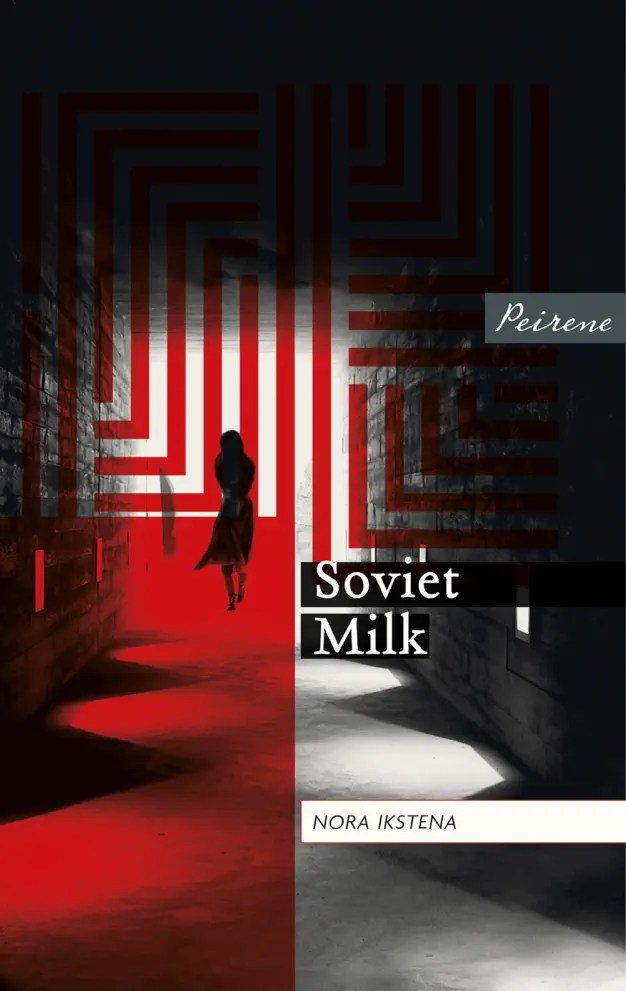
Soviet Milk – Nora Ikstena
READ FOR BOOKCLUB
Chosen by Rachel
Set in Soviet-occupied Latvia between 1969 and 1989, Soviet Milk is the story of an unnamed mother and daughter struggling under Soviet rule. The mother, a gifted doctor unwilling to compromise with the regime, falls foul of the state and is banished to the countryside. The dual narrative details her growing despair and troubled relationships with motherhood, her daughter and her country.
The prisoners, crowded into tiny airless rooms with naked bulbs overhead, had waited either for death or to be deported to Siberia. Such were those times. Crimes against the regime were an everyday occurence. I had to go through the formatity of this circle of hell.
Click the arrow to read each person’s full review
RACHEL: clearly defined personalities — gaps and omissions tell their own story — intimate and deeply human 4.5⭐️
I read Soviet Milk some years ago and it was a book that stayed with me so I decided to revisit it via bookclub. It was just as good the second time around. I loved that the mother, daughter and grandmother had clearly defined personalities and were representative of the different stages of occupation. The grandmother remembers life before Soviet rule, the mother is shaped and thwarted by it, and the daughter doesn’t realise she’s a prisoner having grown up inside it and knowing nothing else.
The generational analysis is cleverly done within a dual narrative. Sometimes both mother and daughter give us a version of the same event and sometimes one tells of events for the other because clearly they cannot. The gaps and omissions tell their own story. The pacing is excellent and it’s easy to be drawn into the next fragment, and the next and the next and then realise you’ve read half the book in one sitting. Soviet Milk is a book that is important historically but also intimate and deeply human.
TESSA: beautiful book to read — a political novel and an intimate family tragedy — moving without being overly sentimental 4.5⭐️
I found Soviet Milk a beautiful book to read and became fully immersed in the story. The writing is simple and understated, yet the subject matter is complex and deeply affecting. Spanning the period from the end of the Second World War to the fall of the Berlin Wall, the novel is told through the alternating voices of an unnamed mother and daughter. I particularly liked this structure because it allowed me to experience their lives, feelings and struggles from two very different perspectives.
The relationship between the mother and daughter is at the heart of the novel. Their bond is complicated by the mother’s depression and by the difficult political and social circumstances of Soviet Latvia. The mother, a talented doctor, is clearly struggling with mental illness throughout the book even before she is forced to move from Riga (the capital of Latvia) to a rural location after she confronts the abusive husband of a childless women who seeks her help. The daughter spends much of the novel trying to understand her mother. I found this particularly sad as she grows up attempting to reach someone who seems increasingly unable to connect with life. Despite this there are still moments of tenderness between them, but these become fewer as the novel progresses.
The mother is perhaps the most tragic figure in the novel. She is intelligent, independent and passionate about her work, but the circumstances in which she is forced to live gradually erode her sense of hope. At times I found her behaviour difficult to understand. At the same time, I felt great sympathy for her because it is clear that she is battling with her own suffering.
I saw Soviet Milk as both a political novel and an intimate family tragedy. The Soviet occupation of Latvia is an ever-present force in the story, shaping the choices, opportunities and emotional lives of the characters. Yet the politcal circumstances never overwhelm the personal story. Instead the two are closely connected, making the mother and daughter’s struggles ever more poignant. The grandmother, step-grandfather and the mother’s friend Jessie bring warmth and stability to the family. Their love and generosity add hope to the story.
I found the novel moving without being overly sentimental, with underlying themes of family, motherhood, isolation and the awful circumstances of living under Soviet rule. Overall, Soviet Milk was a quietly powerful and memorable read. It also made me think about the world’s existing climate that we live in at present.
BRIDGET: why does a name feels so vital to emotional connection — tragedy creates a quiet silver lining — deeply thought-provoking 3.5⭐️
Soviet Milk is the second book we’ve read this year where the primary characters are intentionally left unnamed. Neither the daughter, her mother, nor her grandmother are given a name, leaving three generations of women defined only by their family roles. I’ve discovered that this significantly alters my connection to them. It creates a distance between myself and the protagonists. It made me reflect on why a name feels so vital to emotional connection even though the novel itself is a deeply thought-provoking read.
The story forces you to consider impossible questions: What would you do under a regime where the government can make you disappear for failing to comply with their rules?
I also found myself wondering how I would have coped with a mother struggling so acutely with her mental illness. At times, the daughter clearly suffers from compassion fatigue, frustrated and unable to understand why her mother isn’t trying harder to survive. Yet, this tragedy creates a quiet silver lining: it pushes the daughter toward her grandmother, allowing them to build a warm, deeply comforting bond.
SALLY: enjoyed Ikstana’s use of metaphor — great job of portraying how crushed and powerless the characters felt — not exactly a cheery read 3⭐️
This was a grim read about life in the communist block between the end of WW2 and the fall of the Berlin Wall. Not exactly a cheery read.
Set in occupied Latvia, the story dwells principally on a mother and daughter (both unnamed) and their stories are delivered in a tag-team format. The mother is a brilliant and dedicated doctor whose patients worship her, but the same drive which has made her a successful physician, sees her fall foul of the communist regime. I liked how we learned about an event from one protagonist and then immediately were given the same event from the perspective of the other. Their personalities differ and we get an insight into how each handles the suffocating challenges of oppression.
I enjoyed Ikstana’s use of metaphor, most especially that of milk, which appears several times in the novel and represents the ideology the Latvians are expected to swallow but which the two main protagonists resist. There are many wonderfully drawn characters here and while descriptions of life under a Communist regime were not surprising, the novel does a great job of portraying how crushed and powerless the characters were made to feel.
Like other books we have read this year, this is a study in how some people can find the strength to resist persecution, some crumble and others manage to just grind through until their freedom is granted. I recommend it.
JODIE: political system filtered into ordinary family life — loved the complicated relationship between mother and daughter — sad at times, but there’s humour and warmth too 4⭐️
I really enjoyed Soviet Milk. What I found most interesting was the insight into everyday life for women living in Soviet Latvia. It shows how women were expected to work, raise children and keep going, while having very little freedom to choose the life they wanted. There’s a real sense of how the political system filtered into ordinary family life and affected relationships, opportunities and mental health. I also loved the complicated relationship between the mother and daughter. It’s sad at times, but there’s humour and warmth too. For me, the novel brought the reality of life under Soviet rule to the surface in a very personal and human way.
Published in Latvian in 2015
Translated into English by Margita Gailitis in 2018
Peirene Press
192 pages

We're
currently
reading


Recent Comments