The Free-Range Bookclub
Bookclubbers without boundaries in Nelson, New Zealand
The Frozen River – Ariel Lawhon
READ FOR BOOKCLUB
Chosen by Bridget
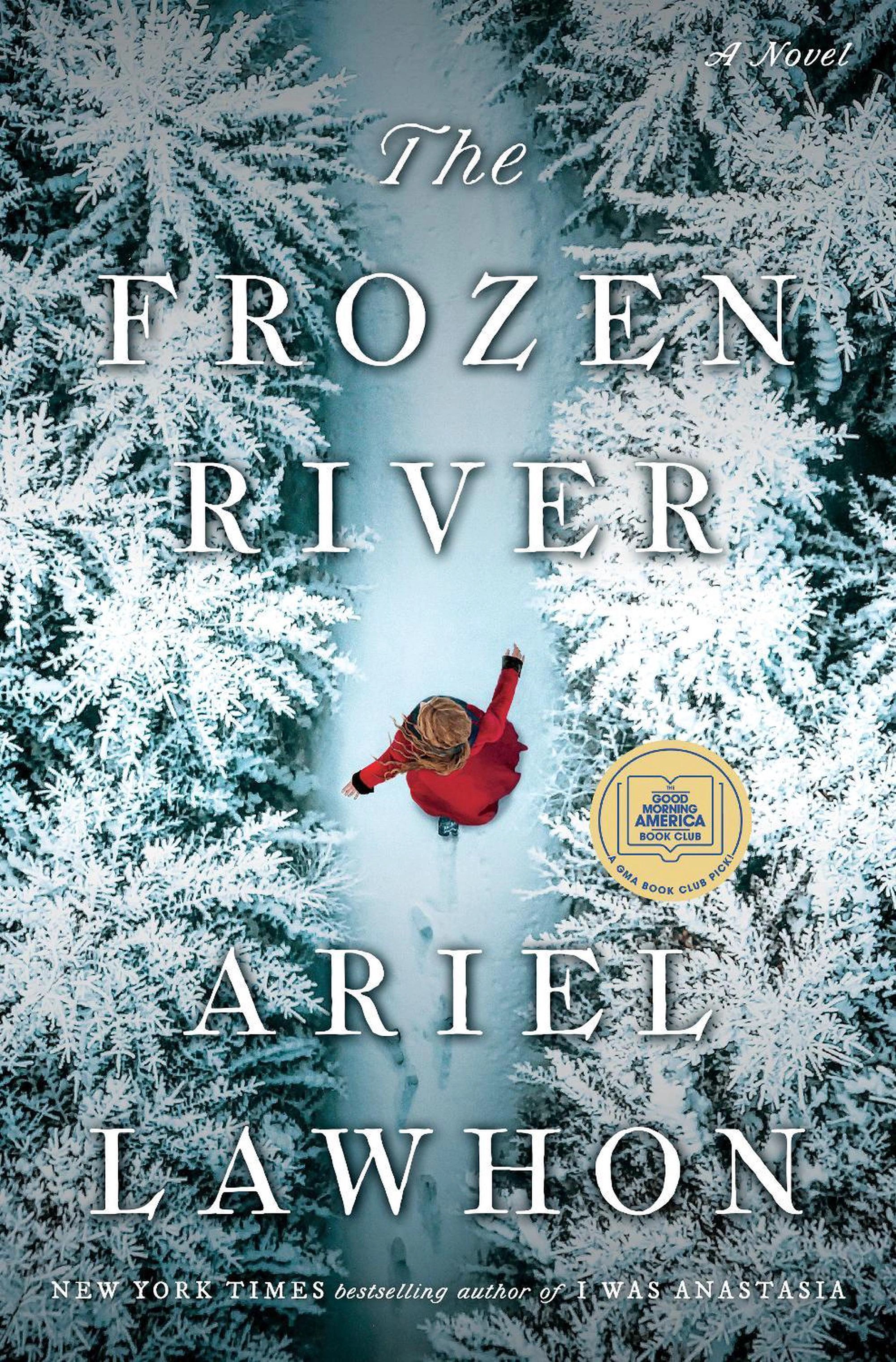
In Maine, 1789 real life midwife Martha Ballard delivered babies and kept daily notes of her work, community and surroundings. As an advocate for women she spoke up on behalf of a local woman at a rape trial. In The Frozen River Lawhon has brought the midwife to life, fleshed out her diarieis and placed her in the midst of a murder mystery after a body appears from a thawing river. A historical, feminist thriller.
I am fifty-four years old, and that boy is my last. This knowledge is both a relief and a sadness—I have brought nine children into this world, after all, and only six are still living. Like all mothers, I have long since mastered the art of nursing joy at one breast and grief at the other.
Click the arrow to read each person’s full review
BRIDGET: I wish the author had leaned into the historical realities of women’s lives a bit more — adversaries were satisfyingly nasty antagonists — I did enjoy uncovering the identity of the killer 3.2⭐️
This book started out like it could have been a great read, but the further I got, the less believable the narrative became. Lawhon took several creative liberties while building this novel around the real-life diary entries of Martha Ballard, an 18th-century midwife and healer.
The plot centres on a true-to-life rape accusation and had the potential to offer deep insight into the struggles women faced during that era. While it did touch on these themes, I wish the author had leaned into the historical realities of women’s lives a bit more. Instead, elements like the symbolic fox and falcon, along with a horse that only the Martha could control, shifted the tone from believable historical fiction inspired by true events into a pure fictional (or made-up) novel.
That said, I did enjoy uncovering the identity of the killer. Lawhon executed that reveal well. Her primary adversaries were satisfyingly nasty antagonists. However, the character development for the rest of the cast fell flat. Everyone related (or soon-to-be related) to Martha was portrayed as morally superior to everyone else, which felt unrealistic.
Overall, it was an enjoyable, easy read that didn’t require too much deep thought. While decent, I wouldn’t recommend to everyone.
RACHEL: slow, boring and overwritten — done the real Martha a huge disservice — ending sounds ridiculous 1⭐️
I ended up DNFing The Frozen River. I thought it was slow, boring and overwritten, but what annoyed me most was the characterisation of midwife Martha Ballard. In the lengthy, self-congratulatory afterword Lawhon explains that Martha was a real person who kept extensive “day books” of fact that contain “little or no editorialising”. Lawhon admits she has therefore invented Martha’s personality for the novel. In doing so, I think she’s done the real Martha a huge disservice.
The fictional Martha is preachy, self-righteous and disparaging about most people she meets – both men and women – but ironically is heavily heroised. She has “a list of men she hates”, often says she is “unable to disguise her contempt”, and on one occasion brutally chastises a group of women for gossiping, then shortly afterwards speaks ill of someone herself and thanks a visitor “for the gossip”. When I tapped out, Martha was on her way to single-handedly solve a murder and avenge a rape …
What frustrates me is that the real Martha sounds remarkable enough. She appears to have been a humble and effective advocate for women, as well as an accomplished midwife who attended a thousand births and had an extraordinary survival rate. In 1789 that competence was feminist in itself, and an honest portrayal of her would have been inspiring enough. Instead Lawhon imposed a modern kind of angry morality onto Martha, making her unbelievable and unlikeable. This poor characterisation was a distraction from any historical merit the book might have.
At bookclub I learned how the novel ends, and it sounds ridiculous so I was glad I never made it that far!
SALLY: setting and the season are paramount to the way the story unfolds — several strong female characters who I loved — some over-egging of other characters 3.5⭐️
The novel is set over a hard winter in late 18th century Massachusetts, and the central character is midwife, Martha Ballard. It is principally a murder-mystery although other themes include racism, sexism, sexual violence, illiteracy and poverty.
The time frame of the novel flips between current and previous events to give you an insight into Martha’s life and family and how she came to be a midwife. Lawhon blends supposition with historical fact about society, midwifery and the law of the period to create a really rounded portrait of Martha’s life.
The setting and the season are paramount to the way the story unfolds, with the weather playing a key role in events. The onset of a harsh winter with severe snow fall and plummeting temperatures heightens the feeling of isolation and entrapment in the town of Hallowell. More of a chillybin of suspicion than a cauldron but you get the picture. I loved the feeling of claustrophobia. No-one can easily leave town, bodies cannot be buried because of the frozen earth, townsfolk are snowed in, travel becomes difficult and dangerous, and supplies are not arriving because of the eponymous frozen river. The town is split in two by the river, but it also serves as a metaphor for division on so many other levels.
There are several strong female characters who I loved apart from Martha. Rachel Foster who speaks out about being raped by two of the town’s luminaries but also an itinerant Black healer known only as The Doctor. The mutual respect and collegial relationship between Martha and The Doctor was plausible and laudable as they both struggle to advocate for women’s health in a society prejudiced by gender and by race.
So far so good but unfortunately there was some over-egging of other characters for my taste. Martha’s husband Ephraim was just a bit too perfect to feel authentic. The author must have been channelling Charles Ingalls from The Little House On The Prairie when she dreamt him up. I suppose men like him could have existed in frontier America, but it wasn’t just his character but also their marriage which was a little too Mills and Boon for me and possibly too modern for the period. Likewise, I couldn’t make sense of the roles the animals made in the book. A silver fox and a peregrine falcon are significantly involved but seemed a little unnecessary.
Although I enjoyed the book, it was really brought alive for me by the author’s notes at the end where Lawhon explains exactly how much of the content is documented historical fact (a surprisingly large amount) and how much she has invented to flesh out the story. In some areas, where she has supposed material, she has based it on statistical likelihood. Standout fact is that the real Martha Ballard never lost a mother during childbirth. That is an incredible statistic for the times.
The ending is preposterous, but the baddy is so foul, I enjoyed him getting the comeuppance he deserved. I read this as a feminist text, about proto-feminists battling systems stacked against them, both legal and medical.
JODIE: historical setting appealed to me — found the plot repetitive — never felt connected to the fictional Martha 2.5⭐️
I really liked the idea behind The Frozen River, especially knowing that Martha Ballard was a real person. Her story and the historical setting were what appealed to me the most, and I enjoyed learning about the life of a midwife and the role women played in the community at that time.
Unfortunately, I struggled with how the story was told. I found the plot repetitive and, for me, it became a too same-same throughout. I often felt like we were going over the same ground and I wanted the story to move forward.
I also didn’t feel that the characters were particularly well developed. Even though the real-life Martha was fascinating, I never really felt connected to the fictional Martha or the other characters.
TESSA: atmosphere of the period portrayed particularly well — bit slow and mundane in places — author’s notes at the end of the book were particularly interesting 3.5⭐️
I enjoy historical fiction based on real-life people and events, so was eager to read The Frozen River. The protagonist, 18th century healer and midwife Martha Ballard, is a character who has seen and experienced much throughout her long career.
The story is set in Hallowell, Maine in 1789, during a particularly brutal winter. When the Kennebec River freezes, entombing a man in the ice, Martha is summoned to examine the body and determine the cause of death. When a local doctor declares the death an accident, Martha is determined to investigate for herself. As a woman in her profession, she knows much of what goes on behind the closed doors of Hallowell.
I found the author’s notes at the end of the book particularly interesting. Lawhon explains that the novel is “inspired by real-life events as opposed to based on them.” She says “roughly 75 percent closely follows the historical record”, while the rest is her “version of what could have happened”. I appreciated her honesty about where fact ends and fiction begins.
Martha herself kept an extensive diary, but it didn’t record her inner thoughts and feelings. Instead, it was more of a record of the births she attended, daily life and court cases. Lawhon has therefore created a version of Martha that she felt could be plausible.
One thing I thought Lawhon portrayed particularly well was the atmosphere of the period, particularly the attitudes towards women and how difficult life was for them at the time. They had very little power, and their voices and experiences were often dismissed, especially when powerful men were involved.
This wasn’t a five star read for me. I found it a bit slow and mundane in places. It also dealt with heavy themes, with several assaults I found hard to read.
Overall, I found The Frozen River engaging. I was curious about the central mystery and what had really happened. After finishing the book I watched a documentary on Martha Ballard which I found really interesting and I think, for me, the book would have been better served if Lawhon had made it more true to her actual life (however it is a work of fiction). This isn’t an author who I would rush out to read more of her books.
Published 2023
Doubleday
448 pages

We're
currently
reading


Recent Comments