The Free-Range Bookclub
Bookclubbers without boundaries in Nelson, New Zealand
2018 – End of Year Thoughts

 Our reading this year was characterised by a string of strong personalities. Though unintentional and though the books were written and published over many different decades, it was curious that we should chose such a line-up, at a time when personality hype abounds.
The international world was certainly influenced by powerful and strong willed personalities this year – both socially and politically. Is it the way of the future or is it more the social media hype that surrounds them that highlights their supposed unyielding tenacity?
Whatever the case, our reading list tended to replicate this reality.
From abusive and neglectful husbands (When I Hit You, Five Sons) to the egotistical traveling companions in On The Road, through to the power hungry in Oryx & Crake, there were many types of domination on display.
Cassandra Mortmain in I Capture The Castle, Frances Wray in The Paying Guests and Holly Golightly in Breakfast at Tiffanys all also had ultimate control in mind as they manipulated those around them. Even the settings in these books were strong and character-like in their influences.
However, there was plenty of balance and so while sometimes overwhelming and disconcerting there was often a strong sense of reason; the personalities suited the plots and gave us strong sentiment to share at bookclub meets.
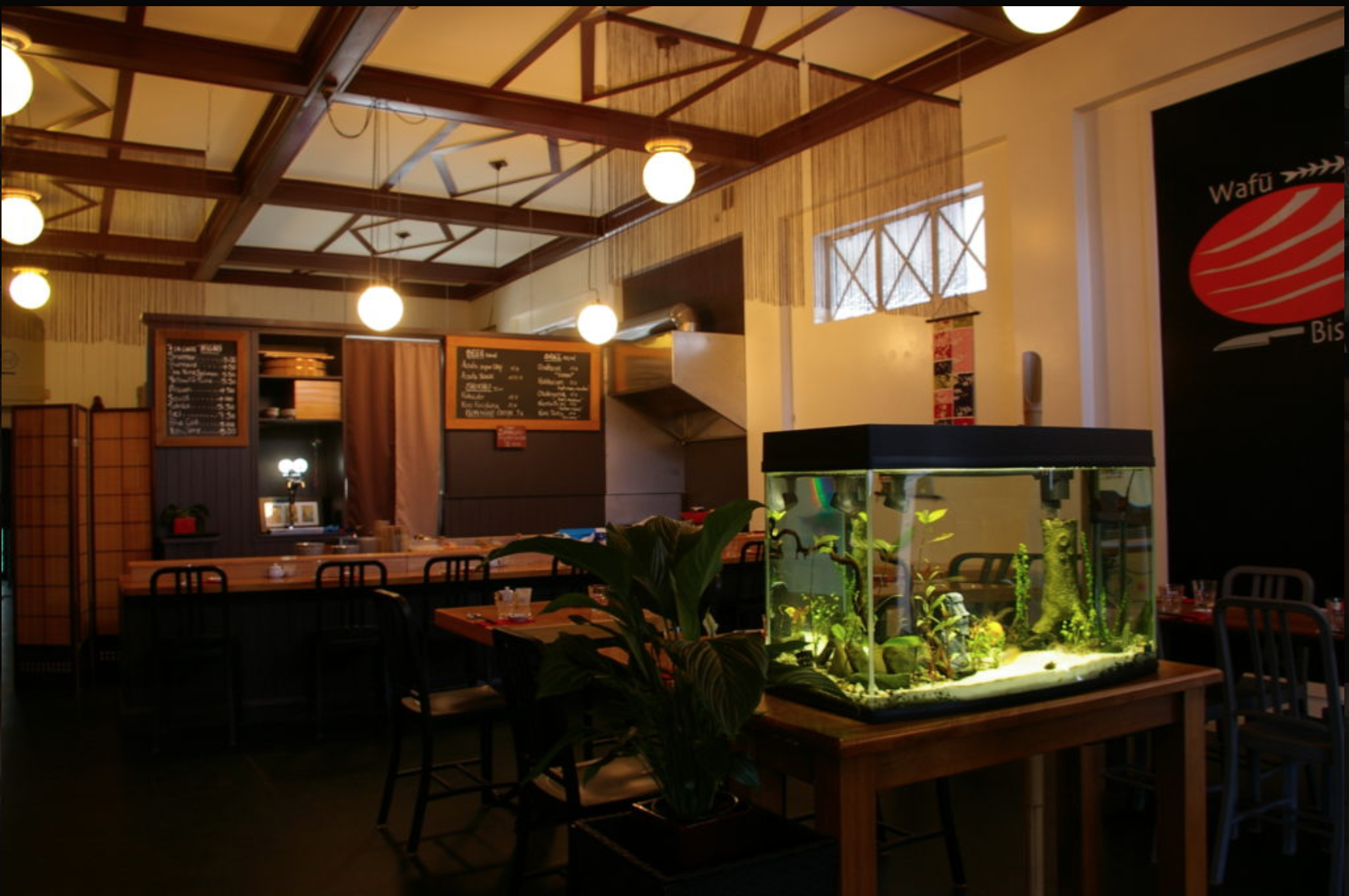
Our end of year get-together was held at sushi bar Wafu, where we shared in our love of raw fish and good books!
There were some commonalties in our thoughts: The Paying Guests had the most disappointing outcome and The Bridge of San Luis Rey had the best one liner: “On Friday noon, July the twentieth, 1714, the finest bridge in all Peru broke and precipitated five travellers into the gulf below”.
But suffice to say the least liked character list was complex and fraught with discussion!
Here are a few more of our thoughts from the past 12 months:
Most memorable setting:
Sonya: The apartment in Breakfast at Tiffanys
Jodie: The castle in I Capture The Castle
Jo: The house in The Paying Guests
Rachel: The castle in I Capture The Castle
Becks: The bridge in The Bridge of San Luis Rey
Best character:
Sonya: Sunja in Pachinko
Jodie: Cassandra Mortmain in I Capture The Castle
Jo: Cassandra Mortmain in I Capture The Castle
Rachel: Cassandra Mortmain in I Capture The Castle
Becks: Unnamed narrator in The Nine Chambered Heart
Runner up best book:
Sonya: The Bridge of San Luis Rey
Jodie: The Bridge of San Luis Rey
Jo: Oryx & Crake
Rachel: When I Hit You
Becks: When I Hit You
Book of the year:
Sonya: Pachinko
Jodie: I Capture The Castle
Jo: I Capture The Castle
Rachel: I Capture The Castle
Becks: The Bridge of San Luis Rey
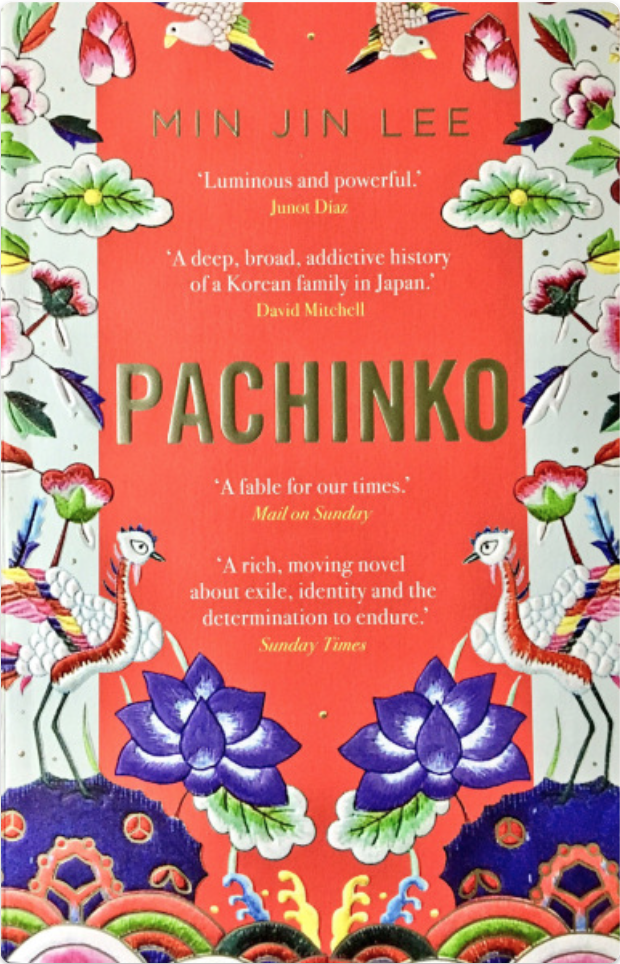
Pachinko – Min Jin Lee
 READ FOR BOOKCLUB
Chosen by Jodie
The story of life for Koreans in Japan, told through four generations and eight decades.
➽ “I found Pachinko a deeply engrossing story about the burdens of a Korean family living as immigrants in Japan during the 20th century. The research Lee conducted to pull the story together was thorough and took her many years. I enjoyed learning about a part of history that was new to me; I gained a huge appreciation for the complex historical relationship between Korea and Japan. Lee has managed to write this historical novel in a beautiful and easy style with lots of plot and events occurring; the writing is calm so you don’t feel overwhelmed by all the action. It’s a beautifully constructed novel with characters who feel quite real and vivid. I really enjoyed it!” – Jodie
➽ “Pachinko is a multi generational narrative of family bonds and struggles, detailing the complex lives of immigrants in a foreign land. That the story began post WWII and the immigrants were unable to return to their homeland made the story more poignant. I had not understood the Korean-Japanese relationship of this time so appreciated the education as well as the entertainment the book provided. Sacrifice is a common theme, often underpinned by each character’s place as a second class citizen in a foreign land. The female characters are strong but not cliched and work tirelessly to keep their families alive. A really enjoyable read.” – Rachel
➽ “An education on Korean and Japanese social relationship history is given throughout this book which I found fascinating and deeply saddening. It’s a long saga of a story with some very distressing events which the writer skilfully expresses with subtlety. It’s clever and interesting with characters that gradually sharpen into being as their story unfolds. I loved it and feel enriched for having learnt about a topic I had no idea about – the plight of Koreans in Japan.” – Jo
—–
Published 2017
Grand Central Publishing
496 pages
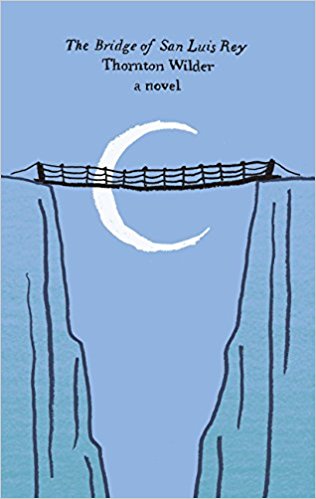
The Bridge of San Luis Rey – Thornton Wilder
 READ FOR BOOKCLUB
Chosen by Rachel
After five Peruvians perish in a bridge collapse, a friar attempts to determine why it was those individuals who should die.
➽ “The Bridge of San Luis Rey appealed to me for its philosophical exploration, asking, but never answering: are fates part of some pre-ordained course or do we live our lives by chance? Five people are ‘precipitated’ into a gulf after a hand built bridge collapses in Peru. Brother Juniper examines the lives of the dead, in order find some reason, Godly or otherwise, for their demise. That the question over fate/chance is never answered was the distinctive appeal of the book for me. I do not want all the answers in literature, but rather ideas to stretch my thinking, and The Bridge of San Luis Rey certainly offered this.
“Its central theme of how we give and receive love is timeless, and was examined via a number of different types of relationships, a refreshing take on the love story. With the ability to be read on a number of levels, The Bridge of San Luis Rey is accessible to all and I’m so pleased to have read it.” – Rachel
➽ “The Bridge of San Luis Rey captivated me from the start with the opening sentence: ‘On Friday noon, July the twentieth, 1714, the finest bridge in all Peru broke and precipitated five travellers into the gulf below.’
“Brother Juniper witnesses this tradegy and is left pondering the theory: were these people victims of chance or deliberately targeted as part of Gods plan?
Some say…that to the gods we are like the flies that the boys kill on a summer day, and some say, on the contrary, that the very sparrows do not lose a feather that has not been brushed away by the finger of God.
“The novel delves into the lives of the five exotic characters, and it feels to me you are reading five short stories. The common theme running through their lives, and extending into the future, is love in many forms. Wilder purposely leaves the ending open for interpretation. The only certainty is that one way or another love brought those five people to the bridge at the exact same moment. It is a beautifully written novel that captures many emotions in such a small amount of pages. A very enjoyable read.” – Jodie
➽ “This book had a unique perspective with a commonly wondered theme: is there a plan or do we live by accident? I was drawn in by this question and enjoyed the beautifully way it was written with multiple stand out parts that are too numerous to mention. A clever, concise book involving multiple angles with religious and philosophical references most obvious. I feel as if I missed some of the underlying messages and surprisingly I’m looking forward to re-reading this book. (I never usually want to for some reason). I can see why it won the Pulitzer Prize in 1928. It is definitely a book that should be savoured.” – Jo
➽ “I can give lots of reasons for why I loved “The Bridge of San Luis Rey“. It’s a book that I belive deserves its critical acclaim and timeless appeal. The book structure, being insights into the lives of five characters leading up to the point where they were killed with the collapse of a bridge, was clever and gave punchy accounts of life and love in the fashion of short, interconnected stories. I liked this a lot. As did I the philosophical premise: “Do we die according to God’s grand plan for us, is it somehow deserved, or is our fate random?” This book is a real gem, and even if at times I struggled with the language and my understanding of what was being said, it is something I shall remember and recommend to others.” – Sonya
—–
Published 1927
Albert & Charles Boni
138 pages
2018 Bookerthon
 The 2018 Man Booker shortlist was a surprise, with many followers declaring it an unusual list with glaring omissions. We, too, were shocked at who wasn’t present: Sing Unburied Sing by Jesmyn Ward, Warlight by Michael Ondajtee, Crudo by Olivia Lang, Normal People by Sarah Rooney. We could go on.
But reading the Man Booker shortlist is not an exercise in favouritism, it is a literary peregrination that gives us the chance to read six excellent books, and to proclaim their fabulousness or pick merciless holes in them!
This year we holed up in idyllic Akaora and considered the judges’ announcement that the list was chosen as such because of its contenders’ “miracles of stylistic invention”. Surprise list or not, what else was there to do but embark upon a journey to embrace newness.
And newness there was, experimental fiction for sure. Look at The Long Take, a poem in novel form, with its protagonist like a camera, wandering the streets recording the suffering of veterans trying to assimilate back into real life.
Washington Black subverted a story of marginalisation by putting a black gentleman in the centre of the story and the white men as support cast on the periphery. Then tied in adventure tales of the 19th century to a story that drags you from one side of your thematic understanding to the other.
Milkman has a dense, report style of narrative where no one has a name for fear of identification. The vernacular of over describing things is clever and effective.
Despite its lack of chapter headings, Everything Under has a simple story line, moulded by myths and fairy tales we know well. The use of second person narration adds another dimension to this uniquely told tale.
The Overstory combines in-depth character analysis and a strong moral focus with fascinating scientific studies in a 500-page tome that is never dull.
And The Mars Room is probably the most believable prison system story out there. There is no cushioning here but an extensively researched novel about lower socio-economic women who end up on the wrong side of life.
So yes, experimental fiction, miracles of stylistic invention, notable books worth recognising.
Do either of us think they are six best books of the year? No.
Are we glad we read them? Yes. For what kind of bookies would we be if we didn’t tackle the unexpected, and embrace newness and duly report back with our thoughts!
So, who took it out in our opinions?
For Suzy it was The Overstory. “This shortlist showcases a line up of gutsy publishers, producing literature we haven’t seen before and I applaud them for it. This is one year where I honestly wouldn’t mind if any of the six won, but Richard Powers changed my life, yes, changed my life. I feel like I understand climate change properly and am more ecologically aware from reading his book – so The Overstory is my pick.”
And, Rachel chose The Long Take. “What I admired most about The Long Take was its brevity:effect ratio. I know that basically describes poetry, but it takes on new meaning in Robertson’s middling take on both the novelistic and poetry form. He created a novel with rhythm yet sharpness. Five or six words could shock me. It was like nothing I’ve ever read, and I was deeply impressed with the style and deeply moved by the story. I actually read it twice in the same week, and I’m already planning on reading it a third time.”
Suzy’s favourites 1st-6th
The Overstory
The Long Take
Everything Under
The Mars Room
Milkman
Washington Black
Rachel’s favourites 1st-6th
The Long Take
Everything Under
Milkman
The Overstory
The Mars Room
Washington Black
Washington Black – Esi Edugyan
 READ FOR BOOKERTHON
An 11yo plantation slave becomes a personal servant to his master’s brother.
➽ “George Washington Black is the name of an 11yo plantation slave who is whisked out of his doomed life and given a fresh start as a personal servant for a rich white gentleman.
“His name is a hint at the political undertones of the novel – I think Edugyan is showcasing that the US is in danger of revisiting, philosophically, the bad old days.
“Washington is educated by his new master and their race for freedom takes them around the world and to London, with hints of Jules Verne’s Around The World in 80 Days and Charles Dickens’ Great Expectations apparent.
“It is an exciting and easy read, with a moral to discover between the lines, though the beginning of the book is more relatable than some of the outrageous and convenient tales that occur as you progress through the story. Though, I guess what the author is trying to say is that the world is your oyster when you start life as underprivileged and poorly treated as some minorities are.” – Rachel
We must all take on faith the stories of our birth, for though we are in them, we are not yet present.
➽ “Washington Black is a rip-roaring yarn with a real sense of adventure. Initially based in a setting of a Barbados plantation with a brutal slave master wreaking havoc and fear, the story takes a very different turn when Wash and the master’s brother escape one night.
This is where the adventure begins, however Washington remains shaped by his slavery experiences despite Titch’s attempts to show him a new life. I found this to be a sad book where despite Washington breaking free from slavery and achieving great things, he remained shaped by society’s expectations of him.” – Suzy
—–
Published 2018
Knopf Publishing Group
352 pages
The Overstory – Richard Powers
 READ FOR BOOKERTHON
An epic story of trees, ecological activism and US logging history.
➽ “It’s no exaggeration to say that they novel has genuinely changed my life. It’s a very solid work of fiction that has given me an awareness of our environment that I had previously not been able to glean from non-fiction reading.
“Trees are solidly the main characters of this novel and humans gravitate around them in various storylines that generally end up intertwining and impacting on one another .
“The novel had moment so of triumph but ultimately left me feeling saddened and desiring. Is there such a thing as environmental anxiety. I think I have that now.” – Suzy.
To solve the future, we must save the past. My simple rule of thumb, then, is this: when you cut down a tree, what you make from it should be at least as miraculous
as what you cut down
➽ “After reading The Overstory I gather that Powers is deeply concerned about the state of the world’s forests. But rather than use writing as a medium from which to lecture the masses, he has incorporated his fears and dreams into a quality work of literature that educates and challenges the reader.
“The story follows several characters who share a love and childhood memories of trees, and a desire to halt ecological destruction. Each character and their history is indepthly explored and is so fascinating that by the time their paths cross I was heavily invested in their plans.
“It did get a little preachy near the end, but I forgave Powers his taking of liberties for he had so entertained me for the many previous hours.
“What I found particularly interesting was the research on how it is believed trees, in their natural environment, are able to “communicate” with one another and how they assist one another in growing as a community. The book is worth reading for this information alone. I really hope it was all true, otherwise Powers’ credibility is shot!” – Rachel
—–
Published 2018
W. W. Norton Company
502 pages
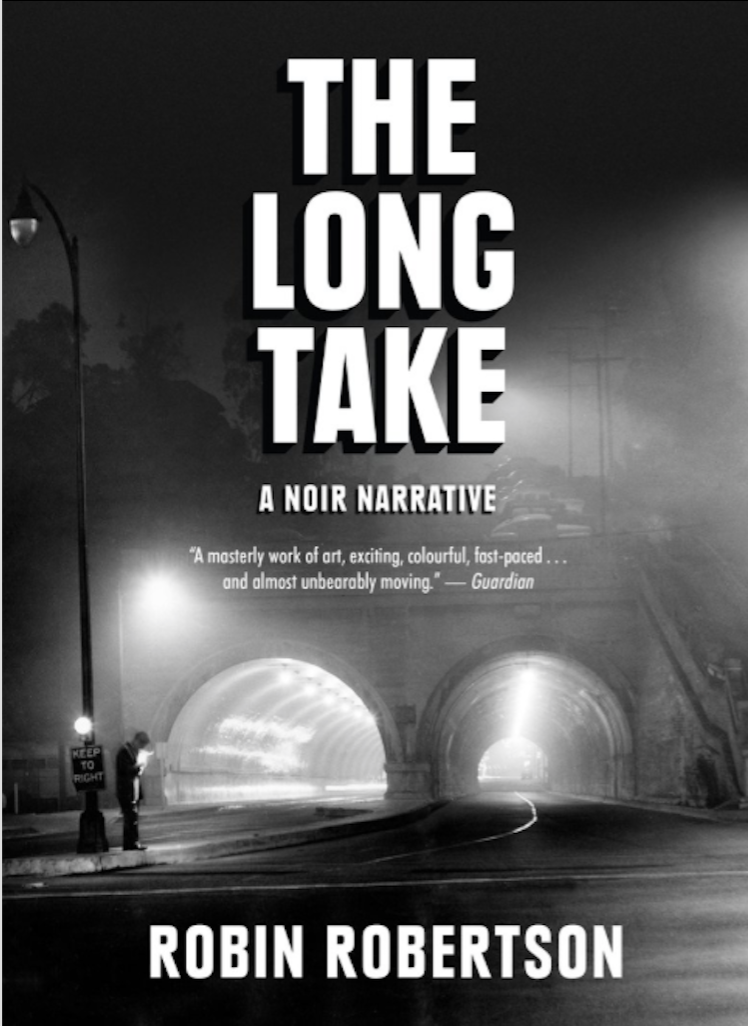
The Long Take – Robin Robertson
 READ FOR BOOKERTHON
A war veteran tries to assimilate back into every day American life post war.
➽ “I was completely consumed by The Long Take and while the storyline and themes were far from uplifting I felt captivated by the events that were occurring.
“Initially I baulked at the style of this novel – it’s written in almost poem form and I thought I would be enduring rather than enjoying it. Using the characteristics of film noir to help shape the narrative, the story quickly drew me in and had me hooked.
“The main character Walker is aware of the cause of his suffering and actively works to try and diminish it, and as a reader I wanted nothing more than for him to be able to succeed. A unique and mesmerising read. ” – Suzy
➽ “The Long Take (Or A Way To Lose More Slowly) is a sad title, referring to the suffering of war veterans that is particularised in this novel. I say novel but it’s really a novel-poem hybrid: it has the breadth and ease of reading of a novel, but the rhythm and sharpness of a poem.
“Whatever it is, it is deeply affecting. The hero, Walker, wanders the streets of New York, LA and San Fran post war, in a daze, reliving the atrocities of his war experience and trying to assimilate back into normal life. As the title suggests there are many long takes, which Walker must endure.
“In the book, Robertson does what poets do best, burns imprints into your mind with glimpses of time and place and memories; these few words far more impressive than a page of prose could be in its place. And had these half lines and well-comma’ed phrases been converted to proper sentences, they would have lost their rhythm and their beauty.
“I see why Robertson felt this was the only way to present his story.” – Rachel
—–
Published 2018
Picador
256 pages
The Mars Room – Rachel Kushner
 READ FOR BOOKERTHON
A study on institutional living, via prison inmate Romy Hall who is serving two life sentences.
➽ “There has been a LOT of hype about The Mars Room so I went in with high expectations. Having just binge-watched the latest series of Orange is the New Black on Netflix meant that the content of The Mars Room didn’t feel as fresh for me – this is no fault of the author of course!
“I deeply felt the struggles of the mothers in prison with their children either being removed from them or being completely inaccessible.
“While there were the occasional funny situations and lines this book overall conveyed an enormous sense of helplessness and despair which seems accurate based on anything I’ve ever heard about the American justice system. I just wanted there to be a nugget of goodness in this novel, something uplifting that gave me hope, but it just wasn’t to be.” – Suzy
No Tank Tops, the sign said at Youth Guidance. Because it was
presumed the parents didn’t know better than to show up to court
looking like hell. The sign might have said Your Poverty Reeks.
➽ “The Mars Room is less about Romy Hall and more about the premise of institutional living and a commentary on your increased chances of ending up there if you are on the poor side of working class.
“It’s an intense, totally immersive read, retelling incidents and tricks of the trade that have obviously been well researched. What appealed to me was the no-hold barred reveal of tension-building tales.
“There is a late charge on plot, but I guess this is a true reflection of prison life, the mundane and the habitual making up your day until one day something outrageous happens.
“I certainly liked The Mars Room (though I would have named it differently), but at this stage in my shortlist reading, it hasn’t blown me away as something I think will win.” – Rachel
—–
Published 2018
Scribbler
338 pages
Everything Under – Daisy Johnston
 READ FOR BOOKERTHON
A reunited mother and daughter delve into their troubled past.
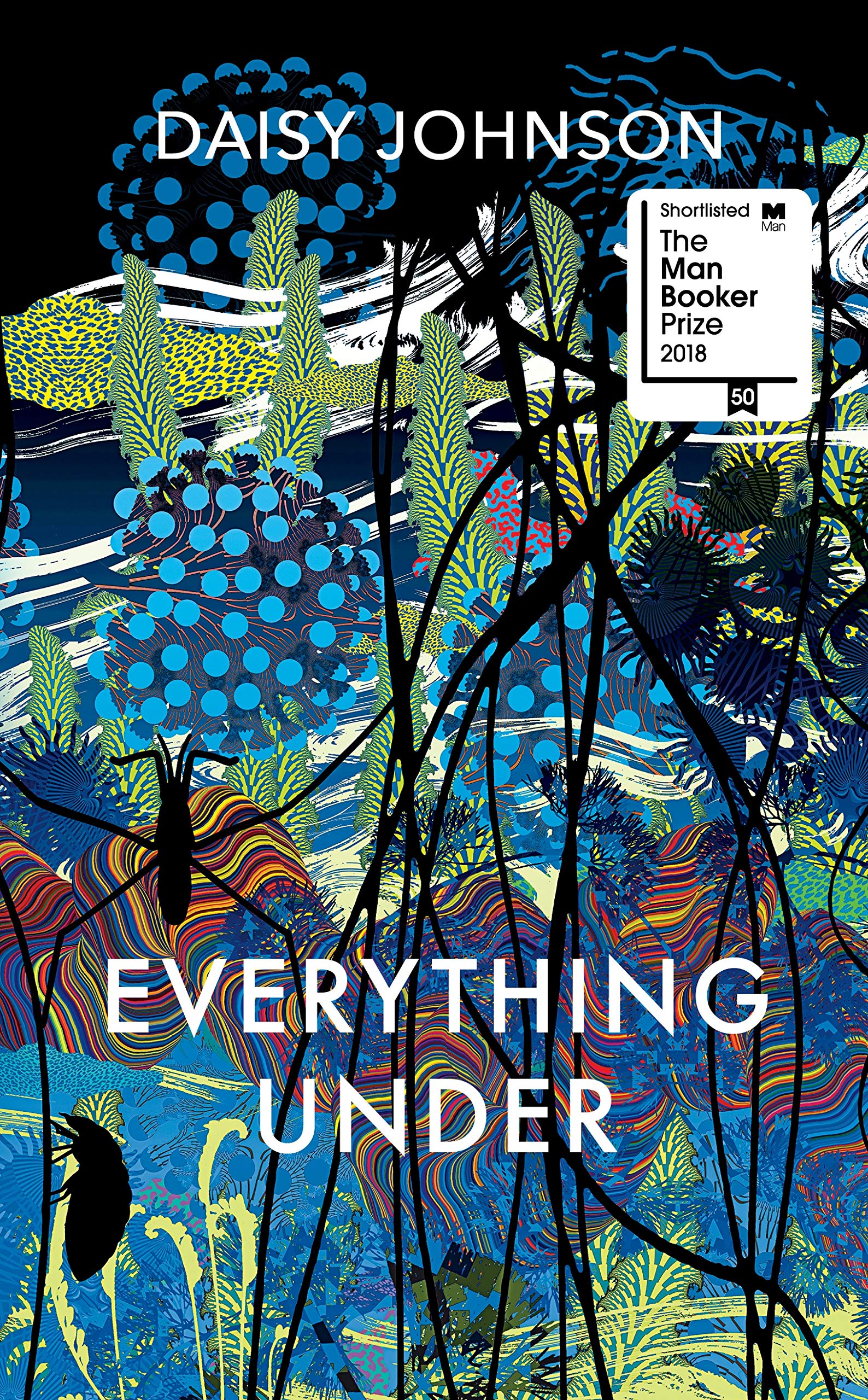
➽ “First things first: this book has a beautiful cover. All publishers should put in this much effort!
“Everything Under is a debut novel by a 27-year-old Brit. Knowing this and seeing that cover, it’s hard not to be impressed without even reading a word!
“Delving into the text doesn’t disappoint. It has a complex web of relationships where gender lines are blurred but there is a clear focus on femininity. And family ties make or break people.
“With the main character named Gretel and various Opedial predictions it is clear that fairy tales and myth played a large role in creating this book. And as well as being clever in every regard, there is certainly a great tale too. Definitely worth reading.” – Rachel
The places we are born come back to us. They disguise themselves as words, memory loss, nightmares. They are the way we sometimes wake with a pressure on our chests that is animal-like or turn on a light and see someone we’d thought was long gone standing there looking at us.
➽ “I don’t think I have ever read a book where the reveal has been so massive and intense that I have had to put the book down and give myself a break from reading for a few minutes! The threading and weaving of the storylines all of a sudden came together and I was shocked.
“For a novel that dealt with some unusual and difficult themes there was also a very large dose of ordinariness and relatability. This book was clever, haunting, distracting, and deceptively simple.
“And yes I agree with Rach, the cover is absolutely beautiful.” – Suzy
—–
Published 2018
Jonathan Cape
264 pages
Milkman – Anna Burns
 READ FOR BOOKERTHON
A young woman is pursued by a renouncer terrorist in 1970s Northern Ireland.
➽ “The unnamed narrator in Milkman is the glue that holds the book together. She is the apolitical in a political novel, the every day logic amongst the absurdity of strife. Middle sister, maybe girlfriend, whatever you want to call her, is generous with her thoughts and observations of her environment, which is The Troubles in Northern Ireland during the 1970s. Car bombs and telephone bugs are part of life yet so are the bizarre relationships she has with several characters. I liked her and her voice. A lot.”
“However, the real point of difference in this book is its vernacular. The prose is strikingly descriptive – sometimes things are described four or five or 20 times over, with as any synonyms as possible, and these parts were particularly fascinating. Burns uses some wonderful words in creative ways and I was just as intrigued by how this book was written as by the story itself.” – Rachel
Next came abortions and I had to guess them also, from ‘vermifuge, squaw mint, Satan’s apple, premature expulsion, being failed in the course of coming into being’ with any doubt dispelled by, ‘Well, daughter, you can’t disappoint me anymore than you’ve already disappointed me, so tell me –what did you procure and which of them drab aunts did you procure it of?
➽ “Whheewwww is how I felt when I finished this book. I think I would have enjoyed it a lot more had I not been in a rush to finish it alongside the other short-listers. It was a unique read and a massive eye-opener for me in terms of what life was like in a country with terrorism and very strong religious beliefs.
“It felt claustrophobic and oppressive and terrifying. It felt like I was wading through this novel rather than enjoying it – if wading was then intent of the author then goal achieved.” – Suzy
—–
Published 2018
Faber Faber
352 pages

We're
currently
reading


Recent Comments