The Free-Range Bookclub
Bookclubbers without boundaries in Nelson, New Zealand
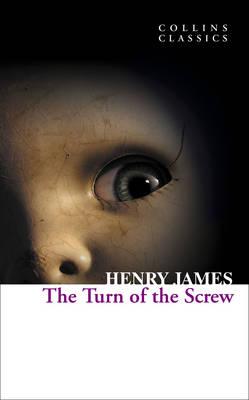
The Turn Of The Screw – Henry James
 READ FOR BOOKCLUB
Chosen by Rachel
The Turn Of The Screw is a gothic ghost story from 1898 set in an old English house on a sprawling estate.
The novella is a first person account of a governess who, caring for two children at a remote estate, becomes convinced that the grounds are haunted.
She has been hired by a young man to take care of his niece Flora and nephew Miles. The governess is told she must never trouble the man, even with concerns about the children, and so she attempts to care for the children on the eerie estate without support.
There are other staff and personalities but the ghostly nature of the story provides ambiguity about each character’s true existence. Unsurprisingly there are many mysterious events in the plot, set amongst the dark passageways of the home and the tall, spindly trees of the woods. Several directly involve the children.
Though originally considered simply a ghost story, critics have over the decades, discovered hidden depth to the story and there are now several opinions as to what genre the story actually represents.
Of course I was under the spell, and the wonderful part is that, even at the time, I perfectly knew I was. But I gave myself up to it; it was an antidote to any pain, and I had more pains than one.
✎ “Spine-chilling and riveting from the outset. There were so many possible outcomes and I liked that a couple still remained after the last page. The characters are either ethereal or arresting, or sometimes both just to confuse you, but whatever the case, they are so perfectly written they evoke a real sense of the ghost story. A wonderful book to discuss. I want to read it again immediately!” – Rachel*
✎ “I love the mysterious ambiguity of this novel – is there an evil presence getting closer and closer (figure in the tower, face at the window, ghosts by the lake)? Or is our lovely governess losing her mind? The characters are distinct and the story is eerie and disturbing … although I needed to read this slowly and carefully I want to read it again. An impressive piece of literature.” – Jo
—–
Published 1898
William Heinemann
78 pages
*In May 2015 Jo and I went to see A Turn Of The Screw on stage and it was just as fabulous as the book, invoking a few more discussions about the whys and hows of the plot. What’s more it was held in the (apparently) haunted Theatre Royal in Nelson. I was on the lookout for an additional cast member on stage but thankfully did not see one!! – Rachel
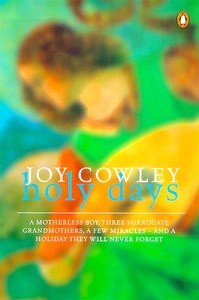
Holy Days – Joy Cowley
 READ FOR BOOKCLUB
Chosen by Suzy
A motherless boy seeks solace in an old convent and the three nuns who reside there.
✎ “Joy Cowley is one of New Zealand’s best known authors, her children’s books widely published for use in our primary schools. But as Holy Days demonstrates, she can also turn her hand to adult fiction.
“Brian’s mother has died and he misses her terribly. He finds refuge at the local convent and forms an unlikely friendship with the remaining three nuns. They enjoy the relationship of a young person in their lives and seek to make his deepest wish come true.
✎ “A novel built with skill and grounded with goodness, tinged with sadness and hard family realities. Paired with Navigator, Joy Cowley’s memoir, Holy Days is an even more beautiful.” – Suzy
✎ “The imagery is well developed in this book and I found myself able to see the village and the convent straight away. A heartwarming story of a young boy’s deepening relationship with three nuns and the adventure they plan for him. This book is beautifully written and filled with the warmth of love and affection. A feel good story that leaves you smiling.” – Jo
✎ “This adult novel has the same accomplished style of Cowley’s children’s books. With a wonderful plot and the gorgeous Brian, I couldn’t help but fall in love with it.” – Rachel
—–
Published 2001
Penguin Books
184 pages
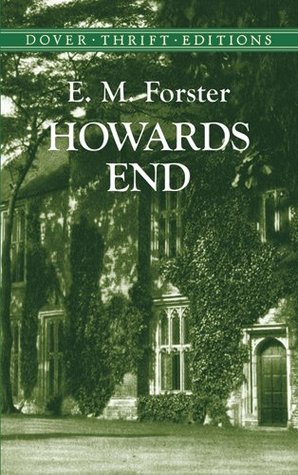
Howards End – E M Forster
 READ FOR BOOKCLUB
Chosen by Sophia
The disregard of a dying woman’s bequest, an impulsive girl’s attempt to help an impoverished clerk, and the marriage between an idealist and a materialist all intersect at an English country estate called Howard’s End. Here, many interactions and controversies between the characters occur.
The main characters come from three families: the wealthy Wilcoxes, half-German Schlegel siblings (Margaret, Helen and Tibby), and the Basts, a poor, young couple from a lower-class background.
The alternating classes among the characters create interesting story lines, as do their varying view points, prejudices and social understandings, which are representative of the time and well captured.
To trust people is a luxury in which only the wealthy can indulge; the poor cannot afford it.
Set during the Edwardian era when industrialisation was on the rise, the book has a focus on homes and architecture, which are well detailed, as are the fashions and traditions of the time. At the various settings characters engage in deceptions, affairs, conversations and friendships that propel the reading experience.
Each of the free rangers had a lot to say about the characters, all with attributes and flaws, all a product of their class and upbringing though many striving to understand life outside their own experiences. From them we learnt more about this time and place, and considered what we could take from their learnings into our own realities.
—–
Published 1910
Edward Arnold
343 pages
A Thousand Splendid Suns – Khaled Hossieni
 READ FOR BOOKCLUB
Chosen by Jo
Written from the perspective of two Afghan women trapped within their country’s strict regime, this book focuses on the friendship between Mariam and Laila who are wives of the same man.
Mariam is an illegitimate child to a wealthy man and at 15 years old is given away in disgrace to Rasheed, an old shoemaker. She disappoints him by failing to produce a child, and so he takes on another wife, an orphaned 14 year old from within the neighbourhood who is already pregnant.
Set over a 30 year period, from the 1960s to the 1990s, the narrative covers the Soviet occupation to the Taliban control – a country always in turmoil. Rasheed mimics the violence and uncertainty of Afghanistan in his home and the reader is embroiled in stories of domestic abuse, the brutally of war and the oppression of women. However, redemption, hope and friendship are also strong themes which give the reader optimism for the people who have survived these conflicts.
That summer, Titanic fever gripped Kabul. People smuggled pirated copies of the film from Pakistan- sometimes in their underwear. After curfew, everyone locked their doors, turned out the lights, turned down the volume, and reaped tears for Jack and Rose and the passengers of the doomed ship. If there was electrical power … the children watched it too. A dozen times or more, they unearthed the TV from behind the tool-shed, late at night, with the lights out and quilts pinned over the windows.
✎ “Harrowing but addictive. You need to be ready for a book like this – the abuse, oppression and violence will cause a few tears to be shed. But at the heart of the story are two feisty, inspirational women who evoke a sense of hope and heroism. If you do decide to proceed, you won’t regret it.” – Rachel
—–
Published 2007
Riverhead Books
284 pages
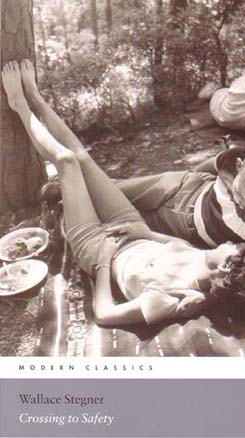
Crossing To Safety – Wallace Stegner
 READ FOR BOOKCLUB
Chosen by Rachel
Crossing to Safety is a 1987 novel about the friendship between two couples and their entwined journeys through the pleasures and cruelty of life.
Sally and Larry Morgan are ambitious, hard-working and poor. Sid and Charity Lang are Harvard graduates, social and full of excesses, with the money to provide all they need. The Langs take the former couple under their wings in friendship, and their money and ability to provide luxuries the Morgan’s couldn’t afford otherwise puts the Langs in a position of power and control over the friendship.
The men are professors and colleagues, vying for some of the same opportunities, the women fall pregnant together. The couples party together, holiday together and share in the same successes and tragedies. The book is a detailed study of the characters and all the life events they share together.
Control vs interdependence is a strong theme, as is being rescued. But this power struggle over who needs rescuing and who has the power is something that changes often, as in real life.
What ever happened to the passion we all had to improve ourselves, live up to our potential, leave a mark on the world? Our hottest arguments were always about how we could contribute. We did not care about the rewards. We were young and earnest.
✎ “For me, there is no description that does this book justice. Ultimately it is a character study of two couples who are so expertly written it’s as if they exist. I know some of the other freerangers were stifled by how suffocating and maddening Charity could be, but for me the characters being either endearing and selfless or opinionated and maddening, just shows how carefully they were crafted. What’s more they reflect the reality of real life situations and friendships. Stegner has a flawless, enchanting writing style and I knew from the first page I was going to fall in love with this story.” – Rachel
—–
Published 1987
Penguin Books
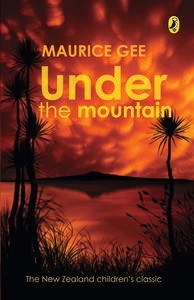
Under The Mountain – Maurice Gee
 READ FOR BOOKCLUB
Chosen by Suzy
Rachel and Theo Matheson travel beneath Auckland’s extinct volcanoes to prevent the destruction of the world
✎ “While vacationing with relatives in Auckland, red-head twins Theo and Rachel discover that they are endowed with special powers to oppose mysterious giant creatures that live beneath the city’s volcanoes and are determined to destroy the world.
“But to do so the twins must follow through with some decisions that are against their nature. Rachel is particular is disturbed by her role and hopes to find an alternative to eliminating the evil shape-shifting Wilberforces, such as reasoning with them But their ability to change from humans into giant slugs overwhelms them.
“Written in 1979, the story was made into a televised series in 1981 and as such many New Zealanders of this age bracket cannot look at Auckland’s prominent extinct volcanoes without thinking about world-destroying slugs!”
✎ “One of the best children’s books ever. The joy of such recognisable landmarks when I read this as a child was just as strong when I read this as an adult. Lake Pupuke was never the same to me after this book. Wonderfully paced with just the right amount of terror. A must read for all red-heads, you are powerful beings you know!” – Suzy
✎ “There are many moralistic considerations to glean from this story, one of the reasons why it is a fantastic book choice for readers of all ages. And of course the adventurous, humanity saving story line is another!” – Rachel
—–
Published 1987
Oxford University Press, USA
164 pages
2014 – The Plot Thickens
 There are many variances which denote a thickening of the plot. A dense and detailed history add substance, solidifying friendships and character relationships bring emotion, and unexpected reactions to outside influences add the element of surprise.
The Free Range Bookclub can tick off all these categories as we head into our seventh year. First of all there’s a history that incorporates more than 150 book titles and the continual element of surprise as we each turn the opening page on a book we may not have heard of, nor considered reading before.
But none of that would matter if it weren’t for the strong friendships we’ve formed, friendships that began as a shared loved of literature but which have grown into something bigger. So it was a shame that we lost Nicole to the hustle and bustle of life, but the remaining four of us are all long term bookclubbers and will press on!
We have decided against theming this year but our choices have still resulted in some big gun authors in the reading list. Here’s how it looks:
Under The Mountain – Maurice Gee
Crossing To Safety – Wallace Stegner
A Thousand Splendid Suns – Khaled Hossieni
Howards End – E M Forster
Holy Days – Joy Cowley
The Turn Of The Screw – Henry James
The Shadow of the Wind – Carlos Ruiz Zafon
On Beauty – Zadie Smith
2013 – End Of Year Thoughts

2013:
In which New Zealander Eleanor Catton becomes the youngest person to win the Man Booker prize with her book The Luminaries, and the literary world of little old Down Under is immensely proud of her, and hopeful for a resurgence in the sales of Kiwi Lit.
In which Penguin and Random House merge to create the “world’s first truly global book trade”, with supporters celebrating increased potential in sales and marketability and critics worry about the demise of the paperback.
In which The Freerange Bookclub members chose to re-read their favourite novels of all time, and found it unsurprising that their own choices won their Book of The Year choice, but agreed on what an epic year of book reading it was.
Favourite character:
Rachel: May Kasahara from The Wind-Up Bird Chronicle
Jo: Atticus Finch from To Kill A Mockingbird
Suzy: Holden Caulfield from The Catcher In The Rye
Sophia: Atticus Finch (Mockingbird) & Frankie Addams (Member of the Wedding)
Nicole: Atticus Finch from To Kill A Mockingbird
Least liked character:
Rachel: The mother in Flowers In The Attic
Jo: The mother in Flowers In The Attic
Suzy: The mother in Flowers In The Attic
Sophia: The mother in Flowers In The Attic
Nicole: The mother in Flowers In The Attic
Most memorable scene:
Rachel: Boris the man skinner in The Wind-Up Bird Chronicle
Suzy: Toru contemplating life at the bottom of a well in The Wind-Up Bird Chronicle
To Kill A Mockingbird – Harper Lee
 READ FOR BOOKCLUB
Chosen by Jo
The classic which saw the creation of lawyer Atticus Finch, his precocious daughter Scout, protective son Jem, and neighbourhood “monster” Boo Radley. This 1960 novel details Atticus’ defence of a black man wrongly accused of raping a white woman. The children observe the case and the day-to-day societal prejudices of the time, and Scout narrates to us life as she sees it.
A tomboy clad in overalls, Scout maintains an innocence and an innate sense of right and wrong that makes her a perfect observer of events, particularly because she doesn’t always understand them and therefore ruminates on ideas or events, encouraging the reader to do the same.
You never really understand a person until you consider things from his point of view. Until you climb inside of his skin and walk around in it.
I think there’s just one kind of folks. Folks.
The book raised many important topics at the time, which still remain important today. Prejudice vs tolerance, and guilt vs innocence are clear themes but deeper still is the discussion about lawfulness vs justice, ie does a decision of the law mean justice has been served? And whose responsibility it is to determine the difference between the two or to encourage change in mindsets?
It was a re-read for all the freerangers and it was apparent that the themes and morals of the book not only remain valid all this time later but seem to evolve in relation to what is happening in real life. Whatever decade you read it in, there is a new set of circumstances, prejudices and human rights have both progressed in some areas and fallen back in others, and the way in which you consider the book’s morals alongside the current issues makes it like reading a new version of the book each time.
Clearly it has earned its title as one of, if not the most important book ever written. Interesting that Harper Lee never wrote another book.
—–
Published 1960
Grand Central Publishing
384 pages
2013 Bookerthon
Novels of note are often a response to societal influences. Either what happens in the world and how humanity responds to it, or bringing light to events of years past to reveal hidden truths. Readers respond to societal and cultural references they recognise, and placing a barometer upon them to understand the level of importance others place upon them is an important exercise in awareness.
This year we responded to the Man Booker shortlist with such cognisance and felt we understood a little more about the world at large.
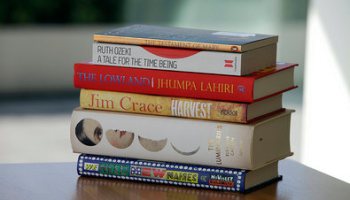
The Lowland has an engaging composition about life in Calcutta and the riots that swept the nation when US tanks rolled in. We learn about the tracks two Indian brothers take, with some shocking outcomes. A Tale For The Time Being is an epic story about a shared humanity between a woman who finds a diary washed up on the beach and its author, after the 2011 tsunami. Harvest is an historically important consideration about effects of modernisation on the agricultural sector. We Need New Names is a tear-jerker, about a young girl trying to escape the violence of Zimbabwe to start a new life in the US. The Luminaries is a mystery set in the goldfields of Hokitika and portrays an accurate portrayal of the mid-nineteenth-century gold rush in New Zealand. The Testament Of Mary is a unique take on one of the oldest stories in history – the mother-son relationship between Jesus Christ and his mother Mary.
Confession, neither of us have yet finished The Luminaries – it is 800-odd pages and quite indepth in a number of ways, so not something to rush. Despite this we are both overwhelmingly in the belief this will win this year.
All the other shortlisters have commendable attributes and we were really pleased to have discovered them, but The Luminaries has epic scope that the Booker judges seem to love.
So, in the end, we just have to say: Go Kiwi!
Best book 1st-6th: Suzy:
The Luminaries
Harvest
We Need New Names
The Lowland
A Tale For The Time Being
The Testament of Mary
Best book 1st-6th: Rachel:
The Luminaries
The Lowland
A Tale For The Time Being
Harvest
We Need New Names
The Testament Of Mary

We're
currently
reading
 The Free-Range Bookclub
Recent Comments