The Free-Range Bookclub
Bookclubbers without boundaries in Nelson, New Zealand
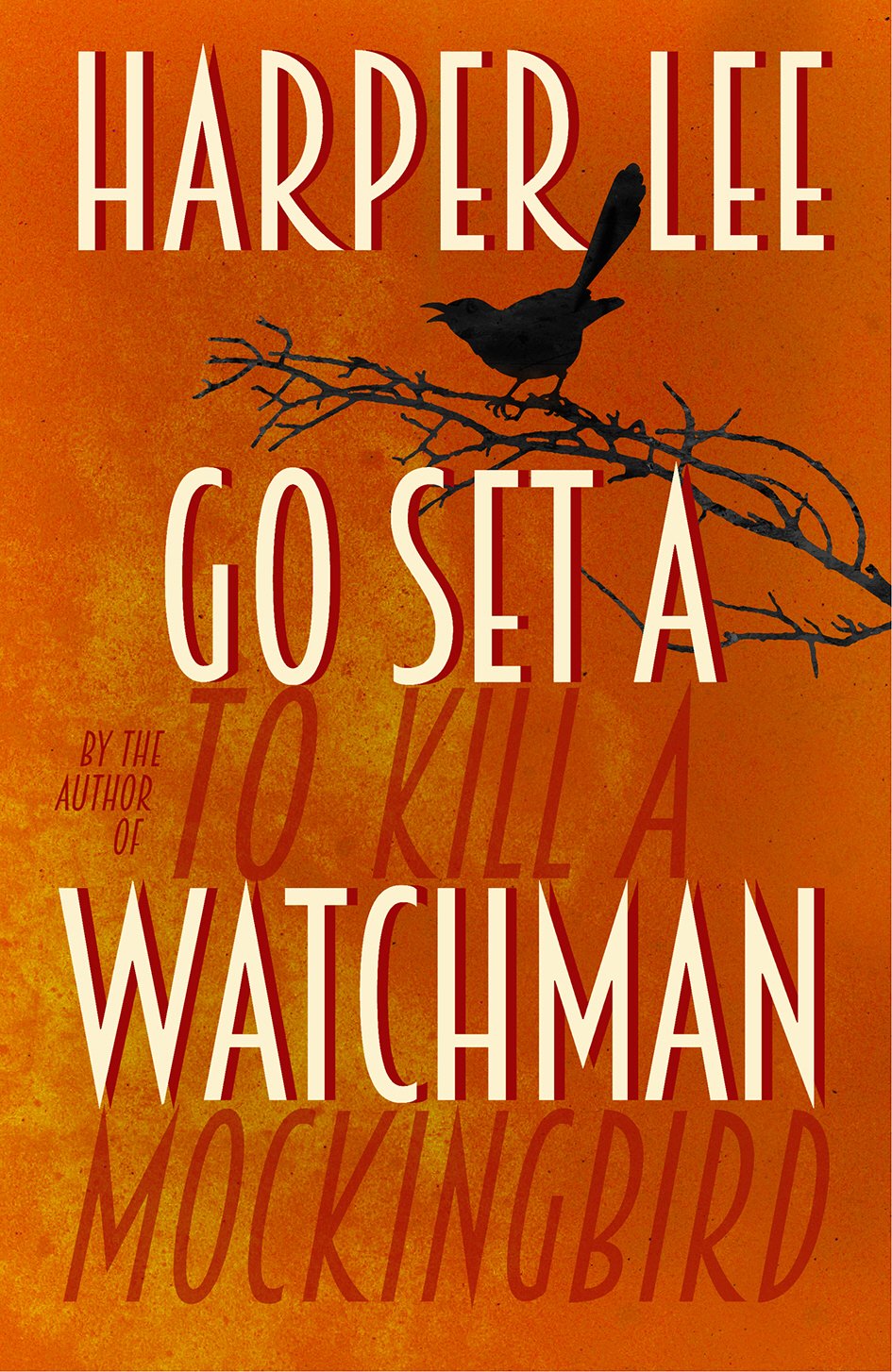
Go Set A Watchman – Harper Lee
 READ FOR BOOKCLUB
Chosen by Becks
Apparently the first draft of To Kill A Mockingbird, discovered more than 50 years after the release of Mockingbird. Published in its draft form, it follows Scout as an adult and observes her relationship with her father, Atticus, and her painful yet necessary transition out of the illusions of the past.
Prejudice, a dirty word, and faith, a clean one, have something in common: they both begin where reason ends.
❍ “I struggled to get into this book. However, learning a bit more about the interesting stories around its publication inspired me to keep reading. I am left wondering about the way in which fictional characters, especially one as loved as Atticus Finch, can take on a life of their own beyond the pages of the novel. Does his depiction in one novel necessarily affect him in the other?” – Sophia
❍ “I was in emotional turmoil after reading this. At first I was in denial (‘the pages in which all of this is sorted out are missing from my copy!’), then I became angry at Atticus; at Harper Lee; at the publishers. I tweeted about how poorly written it was and how neither the characters nor the plot was inkeeping with the original. (Then I deleted my knee-jerk reaction!) I wanted to throw the book out the window in frustration! A few days later, once I moved onto acceptance, I thought about how this ‘first draft’ published 50 years post had devastated so many ardent fans – and so perhaps was actually a tremendous book. Hmmm. I am still considering the many suggested origins of the manuscript … but the afterthought I enjoy the most (whether accurate or not) is Harper Lee sitting around for 50 years thinking: ‘how can none of you get it?!'” – Rachel
❍ “As a stand alone book it’s pretty dismal – it’s clunky, there is poor character development, the one childhood memory recall is boring and the theme is unpalatable. Go Set a Watchman is marketed as a first draft for To Kill a Mockingbird so how it turned into a beloved Pulitzer Prize winning novel is somewhat extraordinary. Of particular interest to me is the change in character of Atticus Finch. Was he always this way, and considerably toned down for Mockingbird? Have most of us completely missed this? It feels like the destruction of a hero and that makes this book particularly hard to swallow. It’s not a good read but it provoked an interesting and prolonged discussion at our bookclub and in some ways that is what makes a good book.” – Jo
❍ “This book was a bit of a struggle for me, I think in part as I was aware that I was missing so much of the complexity of the story. I have a poor understanding of American politics, history and society, and this made it difficult to follow. I also felt that to read it felt like an “Author’s rant”, without the subtlety of storyline and character development that To Kill a Mockingbird had. On the positive side, I enjoyed and understand the feminist thread that weaved through the storyline, I suppose because I could relate to it. I would like to read it again with more care and focus, with a view to understanding it better.” – Sonya
—–
Written 1957; published 2015
Harper Collins
288 pages
2015 Bookerthon
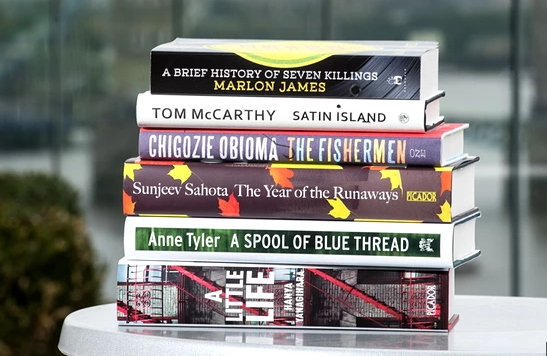
For Bookerthon 2015 we have ventured to beautiful Northland to complete our reading and discussion of the six eclectic books that make up this year’s shortlist. With Suzy having moved out of Nelson (sob!) we felt we needed to be in the same location for a weekend of sun, beach, wine and a stack of books to reveal our thoughts.
Our discussions began with the announcement from Booker judge Michael Wood that this year’s shortlisters contained “a lot of violence. They are pretty grim”. Yes, this comment put a little fear into us from the outset, but overall we found the violence integral to the stories and a valuable part of each book’s journey. There were a couple of exceptions. The endless misery in A Little Life became difficult to deal with and the violent gang activities in A Brief History of Seven Killings while not traumatising did get tiresome.
That said, each of the six books is unique, with its own considered focus, and our discussions have centered around this diversity. Of course this results in both harsh and pleasing assessments from the reviewers but upon indepth discussion, debate and consideration, we can appreciate why each book was shortlisted, even if they didn’t all rate highly in our own pleasurable-reading stakes.
Tom McCarthy has sought to write the epitomy of intelligence with Satin Island; A Little Life is the ultimate case study of suffering (but, we agreed, could have been so much better if it hadn’t been as far-fetched as it was); A Spool of Blue Thread is a brilliantly realistic portrayal of family life and very moving; The Year of the Runaways captures the honour, pride and dignity of a group of people not often written about; The Fishermen is a deeply metaphorical book that examines many different types of storytelling at once, seamlessly; and A Brief History of Seven Killings, we’ve concluded, is an important part of Jamaican history that needed to be told, albeit in various tongues by 15 different people.
So, while they all have their place in the lineup and in the bookshelves of history, we agree there is one that combines all of these aforementioned attributes more than the others. The Fishermen is the ultimate story, it is meaningful, full of history, with loveable, well-written characters. It is intelligent and witty, moving and sad. There is no emotion you don’t experience while reading The Fishermen. Chigozie Obioma – our pick for winner of the 2015 Man Booker Prize.
Suzy’s favourites 1st-6th
The Fishermen
A Spool of Blue Thread
The Year of the Runaways
Satin Island
A Brief History of Seven Killings
A Little Life
Rachel’s favourites 1st-6th
The Fishermen
A Spool of Blue Thread
The Year of the Runaways
A Little Life
Satin Island
A Brief History of Seven Killings
Satin Island – Tom McCarthy
 READ FOR BOOKERTHON
U, a corporate anthropologist, spends his days procrastinating over endless buffer-zones of information and becoming obsessed by images of the world.
❍ “It’s difficult to describe this book. It’s almost as if it doesn’t have a plot, rather it is made up of a number of fascinating sub-plots and stories narrated by various people. It is a book of ponderings and observations and insights which suddenly ends without any of that emotional rollercoaster ride usually associated with fiction reading.
The insights and observations are thought provoking and the prose intelligent and often beautiful, but I wasn’t moved by this book and I think that is an important consideration for a Man Booker shortlister.” – Rachel
You all want to be the hero in the film who runs away in slo-mo from the villain’s factory that he’s just mined, throwing himself to the ground as it explodes. But the explosion’s taking place already—it’s always been taking place. You just didn’t notice.
❍ “This novel leaves me in a bit of a quandary. It’s a bit mad really. We never quite find out what the main character is doing, however we are privy to many of his thoughts and musings. So what’s it about? Um… parachutes, cancer, anthropology, buffering, oil spills, Turin. And some other stuff.
Despite the the novel having little clarity at times, by completely giving in to the ridiculousness of it I appreciated the beautifully human and humane vignettes when they did appear. The pacing of this book is all over the place and would oscillate from being completely manic to considered, thoughtful and calm. This uneven rhythm somehow worked perfectly.
Novels that are this unusual often leave me with the sense of the ‘Emperor’s New Clothes’. By this I mean that they unsuccessfully push the boundaries of traditional writing leaving everyone confused. However not wanting to be left out, we behave as though we are amazed and wowed while having no actual idea what the author is on about. (Yes I need to add that this is most certainly a reflection on my own abilities (or lack thereof) rather than those of a forward thinking and visionary author.)
Perhaps I am just grateful to get to the end of six Man Booker shortlisters. However for me the completely bewildering, yet deeply grounding, storytelling by the main character was enjoyable and overall Satin Island was a satisfying and uplifting read. – Suzy
—–
Published 2015
Knopf
192 pages
A Brief History of Seven Killings – Marlon James
 READ FOR BOOKERTHON
Spanning decades and continents with a wide range of characters, A Brief History of Seven Killings is the fictional exploration of the attempted assassination of Bob Marley.
❍ “I’m embarrassed to say I didn’t finish this book. It’s no offence to the author, I have attempted The Luminaries three times to no avail. I was very interested in the storyline, however I will just put my cards on the table and say this was at times an intellectually challenging book and I wasn’t up to the task.
With other shortlisters such as The Fishermen or A Spool of Blue Thread I was able to completely lose myself in the story, to be transported into other people’s lives and worlds. With A Brief History of Seven Killings I had to concentrate so hard on the different threads on the storyline I was unable to fully immerse myself in the book. Again, this is a reflection on me rather than any fault of the author’s. I will attempt this book again when I’m holiday-ing and not under the pressure of speed-reading all of the short-listers in a few weeks. Wish me luck!” – Suzy
People stupid. The dream didn’t leave, people just don’t know a nightmare when they right in the middle of one.
❍ “Any book that has to include a long cast of characters in the opening pages is an immediate put off for me. And as expected it was the who’s who that slowed me down in my reading. However, the book has an interesting premise, re-living the time Bob Marley was ambushed and shot by intruders. But there were a lot of different styles of narrative used to tell the story and while I enjoyed/understood some of the character’s tales, others I was equally uninterested in/confused by. I do however appreciate what a mammoth task this book must have been to write and enjoyed learning more about Jamaican history.” – Rachel
—–
Published 2014
Riverhead Books
688 pages
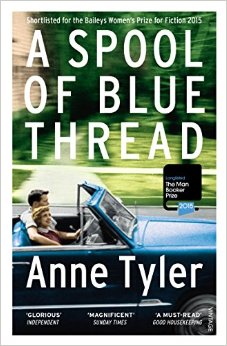
A Spool Of Blue Thread – Anne Tyler
 READ FOR BOOKERTHON
The lives of four generations of Whitshanks unfold in and around the sprawling, lovingly worn Baltimore house that has always been their anchor.
❍ “Though this is Tyler’s 20th (and apparently her last) novel, it’s the first of hers I’ve read. And it is apparent she’s had considerable experience in perfecting story telling around the family dynamic. Rather than using exaggerated plot lines and melodramatic characters, Tyler surprises and intrigues the reader with subtly and nuances in this realist story. It’s as if it’s your own family you are reading about, such is the emotional pull for the characters. There is much talent and complexity in producing such simplicity.” – Rachel
Houses need humans,” Red said. “You all should know that. Oh, sure, humans cause wear and tear—scuffed floors and stopped-up toilets and such—but that’s nothing compared to what happens when a house is left on its own. It’s like the heart goes out of it. It sags, it slumps, it starts to lean toward the ground.
❍ “When I think about the cliches of the classic American novel, A Spool of Blue Thread has all its bases covered – generational family dramas, check. Blatant racism, check. Kindly and enlightened white woman on the coloured folks’ side, check. Big porch and swing! Check! I could go on….
I have no idea how Anne Tyler has done it but this novel manages to incorporate all of these tired old ideas into a fresh and rather lovely story that had me nodding alongside the character’s when they had their own moments of realisation and growth. Class is an issue that is addressed many times in English novels and it was interesting to read about this from an American perspective.
Some novels, when they are mired with controversy and arguments, can leave me feeling almost exhausted and I am pleased to get a break from the pettiness and drama when I put the book down. Anne Tyler’s book had the opposite effect. I cared deeply about the characters and at times felt more invested in the resolution of their issues than they were. Like I said, a lovely story.” – Suzy
Published 2015
Bond Str Books
358 pages
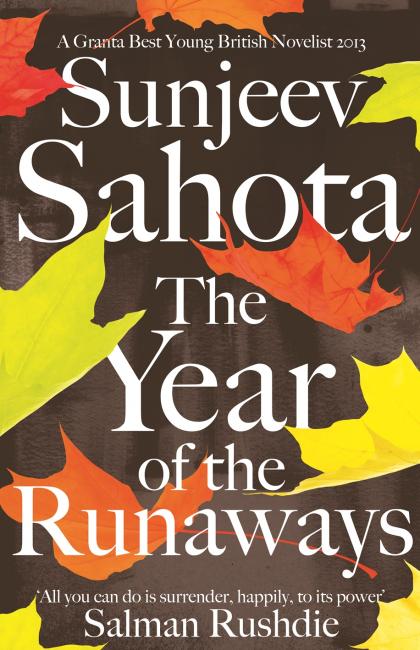
The Year Of The Runaways – Sunjeev Sahota
 READ FOR BOOKERTHON
Three Indian men and a British-Indian woman are linked by chance in Sheffield, England, as they run the full gamut of experiences that come with being a migrant worker in Britain.
❍ “I was *very* heavily immersed in this book recently when I was dragged into the Tokoroa Subway for lunch by my daughter. Sitting there at a table enjoying their sandwiches were four people – who to me right then – looked exactly like this book’s main characters. They were happily interacting and enjoying each other’s company. “Hurray,” I thought, “everyone is okay!” A split second later I realised I had been A LITTLE BIT TOO INVOLVED in this book. I am a sane person okay – I HAVE JUST BEEN READING A BIT TOO MUCH LATELY.
For every chapter, page and scene of this book I was right there alongside the characters, experiencing their triumphs and despair. It gave insight into a culture I had little familiarity with and the individual character’s struggles with duty versus personal ethics and belief systems was written comprehensively without being laid out too obviously for the reader. I am delighted to have had the opportunity to read this book.” – Suzy
❍ “The Year Of The Runaways uses four main characters to explore every possible experience for illegal migrant workers in Britain, from sham marriages, to the long, exhausting days of work, to the satisfaction of counting out piles of hard-earned money to send home. Generally, it is a book full of sad situations, of nerve-wracking escapes from the authorities and the mis-treatment of migrants by employers and landlords.
But amongst all this is an overwhelming sense of personal pride and dignity ingrained into the migrants as they seek to better themselves and their families. It was this, and the well-written relationships between the four main characters, which made the story a standout for me. A vivid and significant book.” – Rachel
—–
Published 2015
Picador
468 pages
The Fishermen – Chigozie Obioma
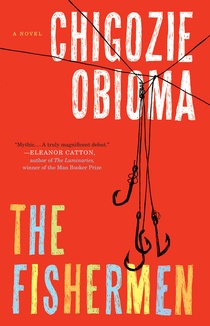 READ FOR BOOKERTHON
Four brothers encounter a madman whose mystic prophecy of violence threatens the core of their close-knit family.
❍ Four middle-class Nigerian brothers with a proud and strict father decide to sneak out of the house one day to go fishing. They do this each day during their father’s absence, hiding evidence from their mother. One day at the river they meet a local madman who prohesises that the eldest boy will be killed by one of his brothers, “the fisherman”. This prophecy unleashes a tragic chain of events onto the family.
Listen, days decay, like food, like fish, like dead bodies. This night will decay, too and you will forget. Listen, we will forget.
❍ “This is a powerful account of four brothers, their run in with the local madman, and the moral and social choices they make as a result of his omen hanging over their heads.
Actually, it’s more than that. It’s a well-constructed combination of contemporary fiction, of mythological beliefs and ancient storytelling, and a Nigerian history lesson. This immense structure does not impede the pace or readability however, in fact it provides a perfect riverbed for the desired flow and for the twists and turns of the plot.
The brothers are definitively built characters, each with their own presence and impact. They draw you into their lives within a few pages, and quickly their passions and woes become yours.” – Rachel
❍ “After reading the longlisted Sleeping on Jupiter by Anuradha Roy recently I was left with that feeling you get when a book doesn’t quench your reading thirst – you are left wanting more, but not in a good way. The Fishermen however is a perfectly full and satisfying, well-rounded story and I loved it.
Writing a book from the perspective of a child surely adds another layer of difficulty for a writer. It’s what left unsaid in this story that I found the most troubling. It allows the reader to come up with their own interpretation of major events and in this novel this is done subtly but powerfully.
Rather embarrassingly the sum total of my knowledge of Nigerian politics to date has come from both Half of a Yellow Sun and Amerincanah by Chimamanda Ngozi Adichie, and now I can add The Fishermen to that list. Hmmm, I think it’s probably time to look for some non-fiction information about the situation there.
I’m really looking forward to reading more of Chigozie Obioma’s work as the years go by.” – Suzy
——-
Published 2015
Little, Brown & Co
297 pages
A Little Life – Hanya Yanagihara
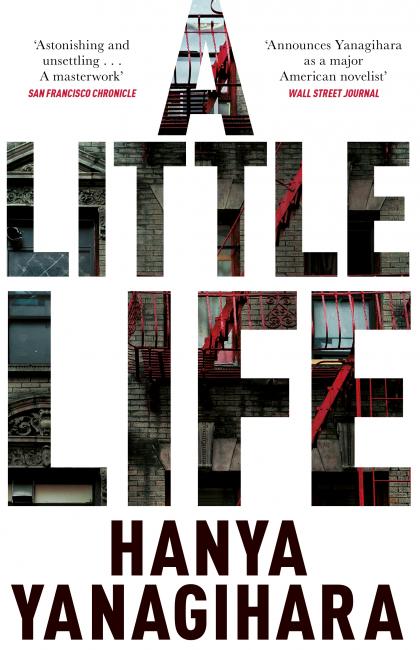 READ FOR BOOKERTHON
Child abuse survivor Jude St Francis moves to New York with three friends, all ready to make their way in life. Yet their greatest challenge, each comes to realise, is Jude, a talented litigator but an increasingly broken man who is haunted by traumas he fears he’ll be unable to overcome.
❍ “I had very high hopes for this novel as the reviews have been amazing. I was apprehensive about the almost gleeful hype around the ‘suffering’ but I have read lots of grim stories before and coped so I steeled myself and dived in.
The strongest theme is that people are forever defined by the abuse that they have experienced. Despite what may be done to personally overcome abusive situations people are unable to ‘escape’ what happened and the best that can be done is to try and reconcile horrible events of the past with current life experiences. A Little Life illustrated cleverly that this can be done with varying degrees of success.
I can’t begin to imagine the difficulty of writing about abuse and its effects in a way that is authentic and credible. Did the author do this well? I guess that is up for individuals to decide.
What really disappointed me about this book was the storyline around the main characters’ lives. It felt more at times like a Flowers in the Attic or the latest Jodi Picoult rather than a piece of literature worthy of a Man Booker shortlist. In this sense it was very ‘readable’ but I would have preferred a lot less of the overwrought plot. The last third of the book was almost comical and unfortunately did not do the weighty theme any justice.
It’s not an author’s job to give readers a happy ending and tie everything together. We don’t need to feel as though justice has been served to enjoy a novel. Bad stuff happens to good people, we all know that. However, an author should not be celebrated for tackling such a difficult topic if the storyline supporting that topic is weak and laughable.
I’m not saying I could’ve done a better job! Kudos to Hanya Yanagihara. I just expected more from a Man Booker shortlisted novel.” – Suzy
Why wasn’t friendship as good as a relationship? Why wasn’t it even better? It was two people who remained together, day after day, bound not by sex or physical attraction or money or children or property, but only by the shared agreement to keep going, the mutual dedication to a union that could never be codified.
❍ “This book has received a lot of media coverage about its themes of abuse and redemptive friendships. And yes those big themes are present. They are well-explored, evocative and all-consuming. Everything a theme should be.
But I question what’s missing from this book. For a start, Jude is not a complete character – in fact none of them are. Instead he is simply a victim; a caricature of a victim, to be violated in every way you probably can’t imagine. This does not make Jude a convincing or realistic character, rather the violence seems gratuitous and convenient; 700 pages of misery for misery’s sake.
Usually I appreciate (and actually revel in!) book misery for its potent ability to transcend the literary experience but this misery is not only the theme, it is also the plot, and as the plot, it is over done to the point of ridiculousness. Less would definitely have been more. I ended up becoming immune to the constant plot horrors and starting rolling my eyes when things took another far-fetched turn. There are not really any sub-plots either as every occurrence is used as another angle from which to examine Jude’s suffering.
The positives are the consistent pace, the reveal of information, the readability of the writing style, albeit a little waffly at the start, plus the timelessness created by a lack of details about the outside world. And, if you want to look at it as a case study of abuse, you’d say it’s perfect – it is entire and unabridged and overwhelming. (Maybe there’s a reason the characters are flat …)
I don’t know if I would recommend A Little Life. Some people may be touched by it, like the several sobbing reviewers quoted on the back cover, but I wouldn’t like to be the one to recommend something when I’m unsure if it would move you, distress you, or annoy you.” – Rachel
The Colour Of Water – James McBride
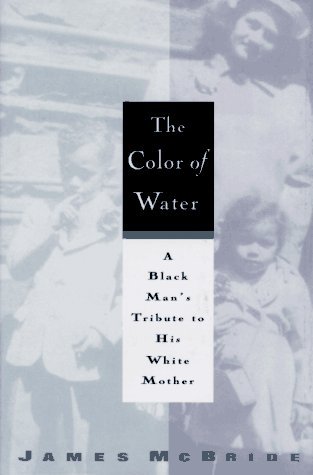 READ FOR BOOKCLUB
Chosen by Sonya
The memoir of a white woman written by her black son. The book details Ruth’s difficult childhood but her ability to turn things around for her own children.
❍ “The Colour of Water was a great read, and I was moved by James’ account of his childhood and his mother’s life. Ruth was indeed an incredible woman! I doubt I would have the strength and tenacity to overcome the challenges she faced. I was most fascinated by the Jewish-Christian threads in the story, and in the way Ruth navigated the apparent chaos to succeed in raising 12 well-educated, multi-racial children. Kind of mind-blowing actually. Humbling.” – Sonya
❍ “I loved The Colour of Water for being so heart-achingly vivid, and for the way the memoir was so eloquently structured as if memories and recollections were bubbling up.” – Sophia
I asked her if I was black or white. She replied “You are a human being. Educate yourself or you’ll be a nobody!
❍ “A moving tribute from a son to his mother. The pieces of James memories come together to give an often heart-breaking account of his mother’s life as well as his grandmother’s. I was left wanting to know more but the nature of an autobiography is that there will be gaps – this adds to the book’s appeal for me though. Ruth is an amazing woman and I thought this was a great story which had me fully immersed. I haven’t read a book this quickly for years! Thoroughly enjoyable.” – Jo
❍ “Ruth was an amazing women, who was willing to sacrifice everything for her husband and her 12 children. It’s easy to see why her son considered her worthy of a memoir. A touching story.” – Rachel
—–
Published 1995
Bloomsbury
320 pages
The Age Of Innocence – Edith Wharton
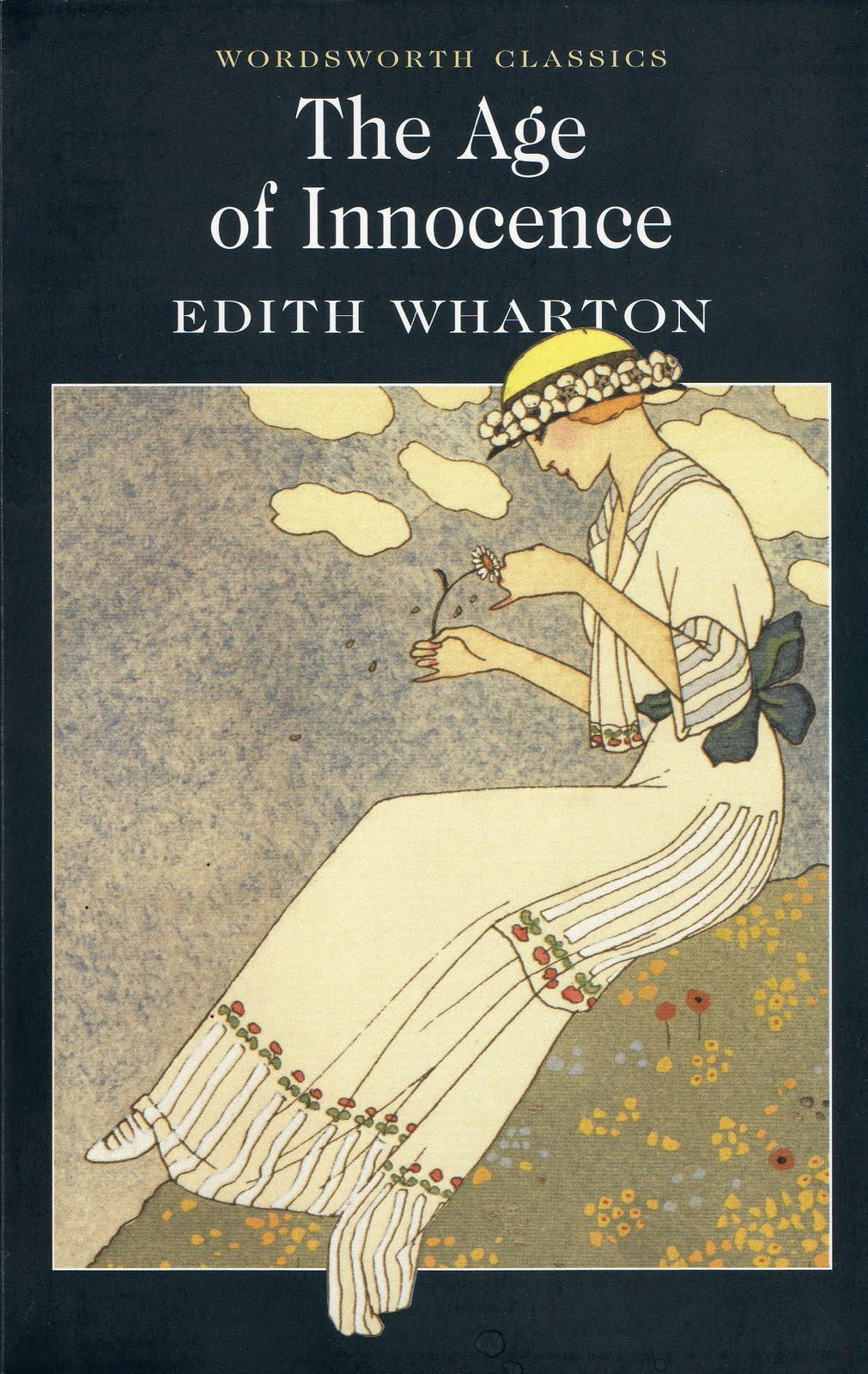 READ FOR BOOKCLUB
Chosen by Jo
An upper-class couple’s marriage is threatened by the arrival of the bride’s cousin. The Age Of Innocence won the Pulitzer Prize in 1921 making Edith Wharton the first woman to receive the prize.
❍ “The Age Of Innocence was a dense slow read – there are many references I didn’t understand. They were explained at the back of the book, but I find constantly flipping to the back laborious and a stilted way to read. However, I did enjoy the story. It has a tragic love story at its core with the friction of New York’s societies’ ideals being challenged for Newland Archer and other characters by Ellen Olenska. The way Wharton mocks these ideals is darkly humourous, her writing is beautifully precise and this book is thick with quotable quotes, e.g. (Society people) “dreaded scandal more than disease”, and from Ellen “the real loneliness is living among all these kind people who only ask one to pretend” – keeping me smiling throughout. The characters are cleverly portrayed with profound details emerging near the fabulous ending. It is easy to see why this book rates so highly with many people. Definitely one of the greats.” – Jo
I want – I want somehow to get away with you into a world where words like that -categories like that- won’t exist. Where we shall be simply two human beings who love each other, who are the whole of life to each other; and nothing else on earth will matter.
❍ “An interesting commentary on high society in New York around the turn of the century, about a man’s hopeless love affair with a beautiful women and the life he isn’t brave enough to have. A beautifully written book that felt very slow to me at times, that is possibly to be expected with this type of novel and it maybe is a good reflection of how it felt to live within the social constraints of ‘Old New York’ at the time.” – Becks
❍ “An evenly paced book which is thick with detail and analysis, as, it seems, Manhattan society was pre-war. The pretence of innocence is spread among the characters, and I enjoyed discovering who was innocent and who was covertly in control behind their angelic facade. A book of social tragedy where sympathy is elicited for all the characters, all of whom have the best intentions even if they do succumb to temptation occasionally!” – Rachel
—–
Published 1920
D Appleton & Co
293 pages

We're
currently
reading


Recent Comments