The Free-Range Bookclub
Bookclubbers without boundaries in Nelson, New Zealand
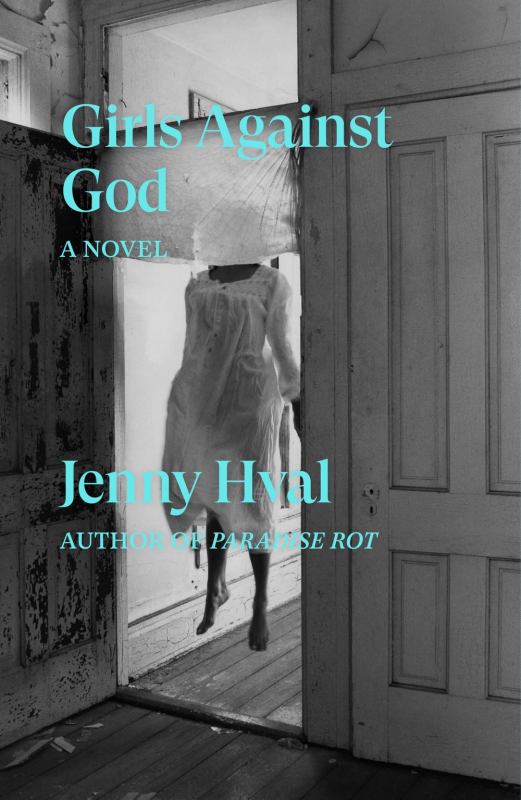
Girls Against God – Jenny Hval
READ FOR BOOKCLUB
Chosen by Rachel
Described as a radical fusion of feminist theory and experimental horror, Girls Against God is a stream of consciousness narrative on censorship, magic, gender, art and rebellion against power systems.
I don’t know why I feel I have to be able to justify my actions … maybe it’s because it’s important to me that what we do should mean something, that language should be able to find different strategies and be something other than a machine for shame and denial … that we have to find society’s boundaries and transgress them in as many ways as possible, that we must highlight, study, analyse them, all the way down to the even the most low-minded crap.
Click the arrow to read each person’s full review
RACHEL: provocative new way of looking at the female coming of age experience — philosophical, political, grotesque and radically feminist — enjoyed the way conventional thinking was challenged 3.5⭐️
Girls Against God follows an unnamed narrator who grows up in 1990s Norway amongst strict Christian conservatism. She feels alienated and angry, and is drawn to black metal, gothicism and taboo ideas as a way to rebel and define herself. It is an abstract, stream-of-consciousness novel and I found it a provocative new way of looking at the female coming of age experience. It moves between topics like art, language and religion and more visceral ones like menstruation, pornography and bodily functions as the narrator and her friends replace religion with ritual, music and “witchcraft” ie collective identity. As the book progresses the boundaries between imagination, art and reality become increasingly surreal, with women imagined and real violently confronting the forces that seek to control women.
The multi genre book is philosophical, political, grotesque and radically feminist. Everything is vividly portrayed and deliberately provocative to make a point. I found parts uncomfortable or baffling to read but ultimately was happy to ride the wave of the main character’s meandering mind. I enjoyed the way conventional thinking was challenged and stopped often to underline beautifully written prose or to ponder the author’s controversial ideas and metaphorical intentions. I guess the book felt like a study project as well as a unique reading experience and I was okay with that.
JODIE: interesting in concept — deliberately trying to shock or unsettle the reader — ended up DNFing 1⭐️
I picked up Girls Against God but ended up DNFing it because I found it really hard to follow. The stream-of-consciousness style made it feel quite scattered, and I struggled to stay grounded in what was actually happening. That said, once I realised that was the intention, I could at least appreciate what the author was trying to do on a stylistic level. The book leans heavily into a very direct, almost confrontational feminist perspective. At times it felt a bit hard-nosed, like it was deliberately trying to shock or unsettle the reader rather than ease them into its ideas. I can see how that approach might resonate with some people, especially if you enjoy experimental writing, but for me it made the reading experience more frustrating than engaging. Interesting in concept, but not one I connected with.
SALLY: a bleating form of feminism — controversy does not equal quality — neither enjoyed nor understood 0⭐️
I neither enjoyed nor understood this book. I put it down halfway through with the intention of not finishing it. I ended up skim reading the second half only because it was a bookclub book and I had the guilts. As a stream of consciousness novel, there is no plot to follow. The main character is a particularly angry young woman, although from what I could see she is doesn’t have much to be angry about. The text is heavy with descriptions of bodily fluids, functions and orifices, sometimes surreal, sometimes real. There was so much of this content that it began to lose its impact or significance (although I’m still not sure what half of it was meant to signify anyway).
It has been suggested that this book is a feminist manifesto. Seriously? Well, it missed the mark with 4 out of 5 feminists in our book group. If this is feminism, it is a bleating form of feminism to which I do not subscribe. Complaining that female nudes in classical art are subjugated is just ridiculous. In the book, Munch’s painting “Puberty” is a particular problem for the protagonist. I’ve had a look at that painting and it does feel awkward. That’s how puberty feels. Munch got his message across perfectly if you ask me. Nudes of both genders have traditionally been the bedrock studies of artists in all metiers from the dawn of time, and that’s because the human form is to be celebrated.
You can probably tell I got really irritated with the character (and by extension the author) at this point. Apparently, Hval knew she risked incomprehensibility and controversy with this book. For me, controversy does not equal quality and what’s the point of a book no-one understands? I would not recommend this book to anyone.
BRIDGET: no real story line — distorted, overly exposed or pixelated and never fully developed — did not enjoy 1⭐️
Personally, I had mixed feelings with this one. I enjoyed some of the writing but not the narrative. I did not understand most of this book or pick up on any of the symbolism of which I am sure there was a lot. There was no real story line, instead it jumped about and always went off on some weird path that inevitably produced some sort of virginal orifice that would ooze out some form of black substance or excrement would be smeared somewhere. The location is the same as the narrative, distorted, overly exposed or pixelated and never fully developed. The only thing that did surprise me was that labia was only mentioned once! I did not enjoy this read.
TESSA: Hval aiming for something bold and confrontational — book’s tone felt intensely angry — more draining than rewarding 1⭐️
I found Girls Against God a very difficult novel to get through. Despite pushing myself to finish it, the experience never became any easier or more engaging as I went along. Several times I came close to giving up altogether. I struggled to connect with the narrative, the characters, or the ideas in a meaningful way. The book’s tone felt intensely angry throughout, which, rather than drawing me in, made it hard to stay invested. While I can see that Jenny Hval is aiming for something bold and confrontational, it simply didn’t work for me. In the end, I didn’t enjoy the novel at all and found it more draining than rewarding.
Published in Norwegian in 2018
Translated into English by Marjam Idriss in 2020
Verso
240 pages

We're
currently
reading


Recent Comments