The Free-Range Bookclub
Bookclubbers without boundaries in Nelson, New Zealand
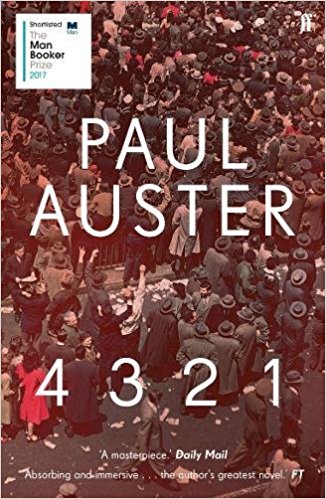
4 3 2 1 – Paul Auster
 READ FOR BOOKERTHON
The adolescent story of one boy, an American of immigrant parents, is told four times, showing how simple choices can set our lives on a new path.
◉ “I was instantly drawn to the premise of this book, as this is something I wonder about myself. How does each particular choice I make change the future? And from page 1, it is totally captivating.
“Ferguson and his family are painted in a lifelike manner and every detail is covered so that discovering Ferguson’s life is like recalling your own. The four re-tellings are interspersed, not told one after the other, so the shock of events, such as someone dying is quickly resolved when they re-appear alive and well in the next chapter!
“Despite this multiple narrative style and the structural complexity, it is actually simply read. It’s quite nostalgic too, not that I was alive for Ferguson’s youth or young adulthood, but there is a sense of the book encapsulating a generation. There is a lot of literature, music and historical moments referenced, adding to the sense of time.
“I know authors despair when readers comment on the length of their brick-like novels, but … this book is massive! 866 pages of tightly packed text. And while I do enjoy totally immersing myself in epic tomes, I knew I was never going to get through this before the winner is announced. I could have rushed it just to say I’d finished it, but I am enjoying it too much and so have decided to continue on at my leisurely pace, well past the moment of decision making.” – Rachel
◉ “Sooooo I didn’t quite get through the extremely long 4321. I felt defeated by the 866 pages right from the start and put off even starting it despite the timing of my reading of the Man Booker shortlisters being my best yet! However, as soon as I started it I enjoyed it and really regretted not getting underway earlier.
“Family backgrounds and the immigrant’s arrival in America has been done many times in novels and while I initially thought ‘oh wow, how original …’, I was quickly immersed in the quirky stories and swift pacing of the writing.
“Just my luck it’ll be Paul Auster for the win and I’ll be exiled from my two-person Man Booker shortlister bookclub for life.
“Previous Man Booker shortlister this book most reminded me of: The Luminaries by Eleanor Catton. Attempted 3 times and yet still unfinished.” – Suzy
—–
Published 2017
Henry Holt & Co
866 pages
Elmet – Fiona Mozley
 READ FOR BOOKERTHON
A man, who lives in an isolated community with his son and daughter, uses bare-fist fighting as his currency.
◉ “I was about three-quarters of the way through Elmet when I thought to myself, ‘there have only been about two things happen in this book’ but somehow it was still a compelling read. It’s very slow moving and the sense of impending doom that is flagged right from the beginning becomes almost unbearable.
“I enjoyed how the simplicity of the character’s existence was conveyed, and it was heartbreaking to see how this simplicity also contributed to their downfall. I read a review (thanks Stella from Volume) that called Elmet ‘rural noir’ and that is a perfect description.
“Previous Man Booker shortlister this book reminded me most of: Lila by Marilynne Robinson (ok yes this was actually a longlister…)” – Suzy
◉ “Elmet is a very primal book; everything is back to basics, back to the land. A man and his children live in a rural community in a house he has built himself on land he does not own. He fights bare-knuckled to make money and to please his landlord and employer. Potatoes are taken to the pot from the land, blood drips from fighting wounds back into the dirt, the heat curls up from the earth.
“This moodiness extends to the drip-feed of information too. It’s a simple storyline, without complex subtext, yet there was always enough to keep me turning the pages.
“I wondered if the father, with his freakish bulk and strength was representative of someone in history, or some kind of past. I guess this book’s themes are universal: the life-force of the land, love and protection, the superhuman.
“All-in-all, I enjoyed the ride that was Elmet, but tbh, I wasn’t blown away by it.” – Rachel
—–
Published 2017
JM Originals
311 pages
History of Wolves – Emily Fridlund
 READ FOR BOOKERTHON
14-year-old outcast Madeline becomes caught up in a scandal with her neighbours across the lake.
◉ “Reading a straight-forward story was a welcome relief after the complex Lincoln in the Bardo. I enjoyed the contrasting worlds that Linda existed in and how these different settings and cultures impacted on each other and the decisions she made. The weird in-between stage of adolescence where you are still a child but also an adult was convincingly conveyed. I felt that being this age meant the main character was not held to account by me as a reader for her unpredictable and odd behaviour.
“However in spite of the unusual events in this novel, there was still a feeling of predictability to the storyline.
◉ “In her debut novel, Fridlund has created a moody, suspenseful book that accurately depicts the angst of a teenager’s life, especially one who is the remnant of a disbanded hippie commune. Madeline’s observations and her queer take on situations was convincing. Her obsession with power was nicely portrayed and reiterated in various sub-plots.
“However, what didn’t work for me was the release of information. We know from page 2 that a boy called Paul dies and there is a trial. Perfect set up: death of a boy, socially inept girl from a hippie commune involved some how – yes I struggled to put the book down.
“But the provision of plot details was such that by the time the trial actually takes place we know well enough what actually happened and there is no great twist that leaves you wanting to re-read the book immediately, as I expected.
“Odd girl as a passive observer – yes, great, read it. Psychological thriller – no, sorry, don’t get your hopes up. Still a good read and a full of atmosphere, but I’ve read many better books this year.” – Rachel
—–
Published 2018
Grove Atlantic
288 pages
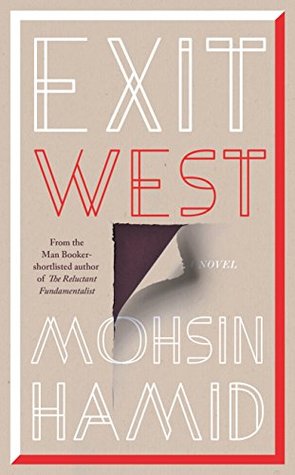
Exit West – Mohsin Hamid
 READ FOR BOOKERTHON
In a country teetering on the brink of civil war, two young lovers hear whispers about doors that can whisk people far away, albeit perilously and for a price.
◉ “If I had to pigeonhole Exit West I would call it a romance, but it also felt dystopian and weirdly like science fiction. It was enough of a love story to elicit tears from me and my cold cynical heart so that’s saying something!
“The absolutely unbelievable aspects of the storyline were completely believable and the challenges the characters faced were so vividly portrayed I felt like I have gained real insight into many modern day crises society is facing (I don’t, but kudos to the author for making me feel like I do).
“Many times when reading this book I reflected on how the hell I got so lucky being born in a country that is politically stable and very safe and where I can believe in whatever I want with no fear of repercussions. The incremental way in which the characters’ freedom slowly disappeared left me feeling very uncomfortable and this was conveyed so simply and matter-of-factly it has genuinely made me more alert for ways in which this is happening in my own life.
“The previous Man Booker shortlister this book reminded me most of: Atonement by Ian McEwan.” – Suzy
◉ “This line in Exit West that sums up the book for me: ‘Everyone migrates, even if we stay in the same houses our whole lives … we are all migrants through time.’ At a time when nationalism and immigration seems to be on the news and on people’s minds worldwide this book is exceptionally well timed. I think it will go down as a text that encapsulates a moment in history.
“Exit West is about movement and belonging and really showcases the point that we are all migrants, that we should not be excluding one another from any land because we are all visitors; who is to say who deserves to be here the most? This is reinforced with the use of descriptors such as natives, refugees, migrants, militants, words used so much we forget who is the native, who is the migrant, until they are all everything. Also, sadly Exit West shows that wherever you go there is conflict of some kind and often people are just resigned to it, which is incredibly sad.
“Mohsin Hamid puts all of this across in an emotionally charged novel that feels like it’s set in a WWII kind of environment, yet the characters have mobile phones and social media, plus they have doors through which they escape and appear in new countries. In new conflicts. The amalgamation of these three contexts is seamless so that as a reader, this reality is acceptable; unquestionable. Plus it is all mimicked in the tested romance that Hamid also manages to integrate! I’m totally in love with this book.” – Rachel
—–
Published 2017
Riverhead
231 pages
Autumn – Ali Smith
 READ FOR BOOKERTHON
A young girl forges an unlikely – but life long –friendship with her elderly neighbour in post-Brexit England.
◉ “It is hard to describe this novel. It is a study of time and of place, as well as ageing and art and death. A Tale Of Two Cities and Brave New World are notably referenced a handful of times.
“Autumn is engaging and balanced, with a wonderful relationship built between the young Elisabeth and the elderly Daniel. And while it is readable and beautiful, it still has an element that makes it a little unobtainable –I’m not sure what that is. Definitely the most enjoyable Ali Smith book I have read, however.” – Rachel
◉ “I am celebrating the fact that I have read an Ali Smith book and almost been able to follow the storyline! I’ve come to the conclusion that she writes for people with a higher intellect than me and, with the exception of Hotel World, I have really struggled through her books in the past.
“The theme of this year’s Man Booker shortlist seems to be displacement/immigration and Autumn certainly fits the bill. Seeing how the main character’s mother in Autumn goes from being disinterested and ‘mumsy’ to a political vigilante when faced with the heavily patrolled border fences shows how even the most mild-mannered people can be pushed out of their comfort zone when faced with such immense change and upheaval.
“Like Exit West this book is ultimately a love story but Autumn’s characters are a little less orthodox. I enjoyed the core of this story, but the Ali Smithification of the writing distracted me too much from it.
“Previous Man-Booker shortlister this book reminded me most of: hmmm I guess another too-hard-to-read Ali Smith.” – Suzy
——
Published 2016
Hamish Hamilton
264 pages
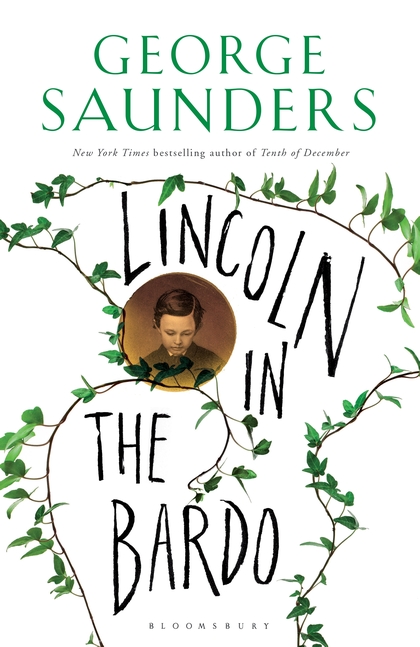
Lincoln In The Bardo – George Saunders
 READ FOR BOOKERTHON
Abraham Lincoln spends a night in his son’s tomb, a place populated by ghosts of the recently passed and the long dead.
◉ “Told through footnoted attribution derived from various texts, speeches or dialogue, Lincoln In The Bardo can be difficult to follow. It requires a type of surrender from the reader, to trust in the author. Because of this narrative style this is unlike any book I’ve read. Saunders has created his own style and this innovation combines with his innate sense for emotional storytelling that is never glib.
“I attended a session with George Saunders at this year’s Auckland Writer’s Festival, and I was blown away by his intelligence and creativity and by how he combined historical context and the supernatural so seamlessly. It was clear he had injected a range of constructions into every word of this book. Someone who paves their own way instead of following in the footsteps of others certainly receives my respect.” – Rachel
◉ “I read the first few chapters of Lincoln in the Bardo and increasingly lost patience with the author as I struggled to understand what the hell was going on. Had this not been a Man Booker shortlister I wouldn’t have persevered.
“I’ve never experienced full grief (other than my cats dying; RIP Jackie, Ben & Watson) so cannot pass judgement on how well this was portrayed, but I found it gut-wrenching and the feeling of the loss and devastation experienced by Lincoln has stayed with me for weeks.
“However I would much rather have read a book that had explored this in a more conventional way, rather than the author trying to be clever and funny with his different writing styles and approaches. The previous Man Booker shortlister this book reminded me most of: Darkmans by Nicola Barker.” – Suzy
—–
Published 2017
Random House
343 pages
Soul Print – Megan Miranda
 READ FOR BOOKCLUB
Chosen by Sonya
Alina Chase has been imprisoned all her life, after it was revealed she has a soul DNA match with a now dead convicted criminal.
◉ “I chose Soul Print because I wanted an easy, entertaining read. I think I succeeded! It was those things, and all of the elements you might associate with a well-written young adult’s fiction book, romance, ethical dilemna, the corruption of grown-ups, futuristic science-technology. And a happy ending. All without being too predictable and giving us ‘grown ups’ some food for thought. A fun book I’ll be recommending to my daughter when she is older.” – Sonya
◉ “Soul Print is a young adult’s book without the usual trappings of cliche and lack of surprise. It works as an adult read too, with the unique story line of a reality where soul DNA matching is possible and supposed innocents can be locked up for the crimes of their past lives. While we have the teenagers on the run defying adult regulation, I enjoyed the unpredictability of the story line as well as the ethical and philosophical questions it raised, designed to allow readers to determine their own opinions rather than have ‘right vs wrong’ forced upon them. I have already recommended this book to my daughter.” – Rachel
◉ “A really enthralling idea which was initially intense and interesting as I tried to figure out what was going on – souls can be identified through spinal cord fluid testing and characteristics are transferred upon death. The story dipped during the middle but this was still a book I had trouble putting down. It definitely had the feel of a young adult book with a few of the romantic parts making me a bit squirmy! Overall an enjoyable book.” – Jo
—–
Published 2015
Bloomsbury
368 pages
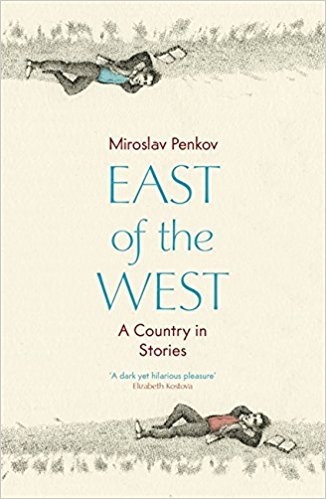
East Of The West – Miroslav Penkov
 READ FOR BOOKCLUB
Chosen by Becks
◉ “I was initially put off reading this book as I don’t particularly like short stories – they usually seem to be too short and I am often left wanting more. However this collection has me converted – a great mix of tragedy, sadness and humour with loads of great historical and cultural references. All of the 8 stories are enjoyable but particularly for me, East of the West is the most memorable.” – Jo
◉ “I’ve never really read short stories. Never really ‘got’ them. But this compilation has shifted my thinking. Not only did I read and relish each one with much pleasure, but I read more than one in one sitting, so taken by them was I! I loved the quirk and twist, the clever characterisation (loved the odd-balls), the socio-political commentary (insights into the communist era) and humour (dark,and twisted or light and quirky). Sometimes, sad, sometimes tragic, somtimes weird, but always surprising, this book is one that I will recommend.” – Sonya
◉ “East of the West is now my favourite short story collection! I’m not usually a fan of this genre – I invest myself so fully into characters that taking leave of them so quickly and starting again with a new set is like a break up! However, Penkov manages to encapsulate all the ups and downs and depth of a novel into each of his short stories. At the completion of each I was satiated and ready to move on to the next. Each tale utilises a different type of humour, is thought provoking and educational. The writer makes clear his separation anxieties about his motherland of Bulgaria and his adopted home of the US, but manages to link the two lives, too. He liberates his emotions in a complete and unforgettable voice.” – Rachel
—–
Published 2012
Picador
240 pages
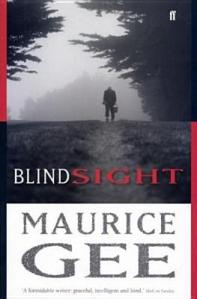
Blindsight – Maurice Gee
 READ FOR BOOKCLUB
Chosen by Jo
The lives of Alice Ferry, a retired Wellington scientist, and her brother Gordon take divergent paths.
◉ “Gee gradually unravels this story building the tension effortlessly as we learn about the siblings’ history, start to understand the nature of Gordon’s condition and in the final shocking twist how he came to be that way. What I found really surprising was the empathy I felt for Alice who upon reflection is utterly horrible! Gee made me like her! This book is completely engrossing and I raced through it. Well worth the read.” – Jo
◉ “The lives of two once-close siblings veer apart unexpectedly. Sounds simple enough, and it reads easily enough, but there is a complexity of character strength in this novel that makes it one of Gee’s best, imho. The observations of family life are astute and compelling. Alice is the kind of character you wish every book had, seemingly innocent and honest, intelligent and kind, but with a veil of secrecy about her that draws you in. What’s more the expertly revealed plot keeps you engaged until the last word. What’s not to love?” – Rachel
—–
Published 2005
Penguin
248 pages
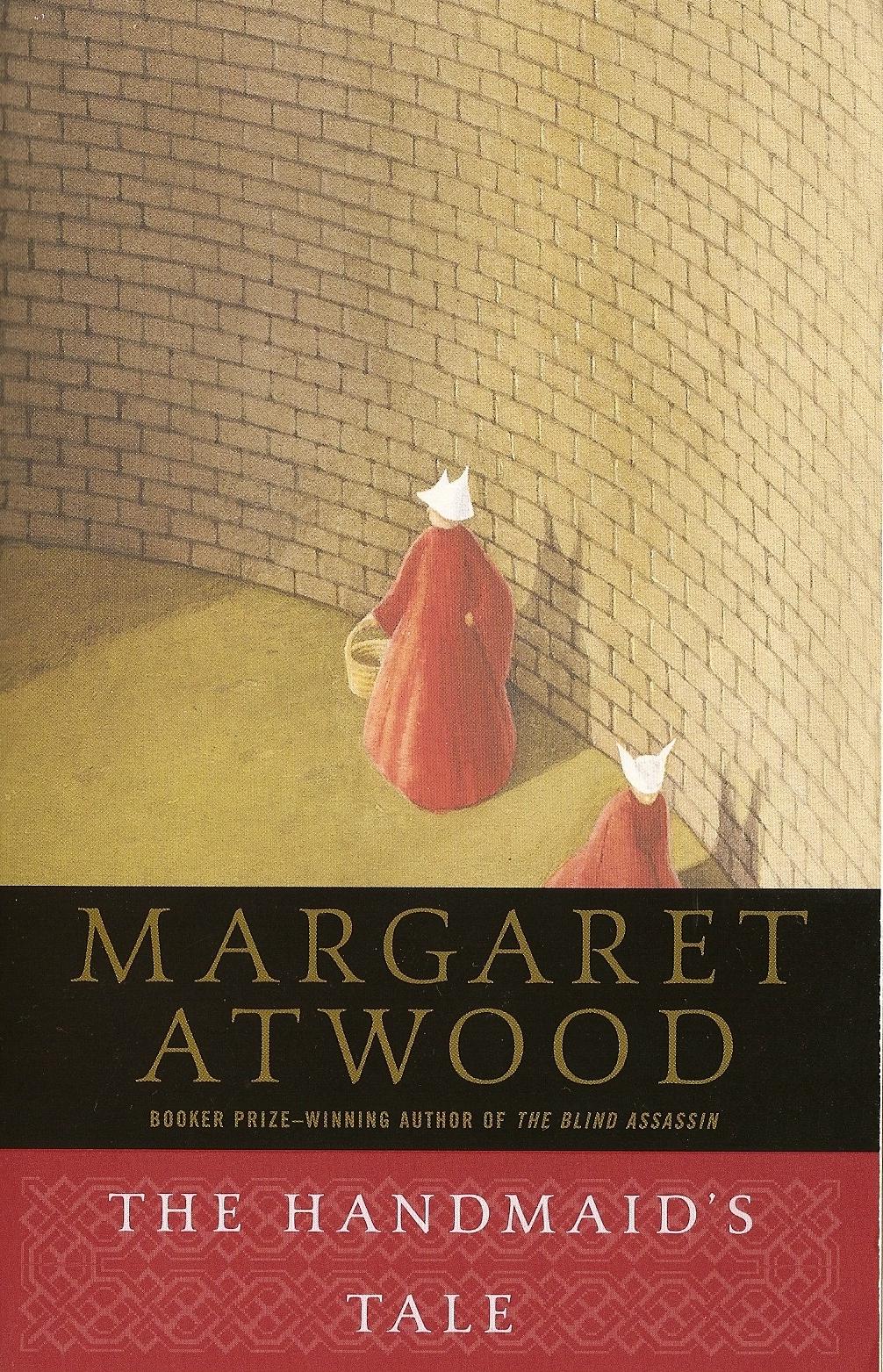
The Handmaid’s Tale – Margaret Atwood
 READ FOR BOOKCLUB
Chosen by Rachel
A class of women, known as handmaids, are kept for reproductive purposes in a reality radically overturned by a theocratic revolution.
◉ “This read was a return to one of my all time favourite books. I wondered would it be as good as the first time, but at this time, with world events what they are, a re-read provided a new perspective. What continues to impress me is Atwood’s ability to combine reality as we know it with acute perceptions of the ever-changing world into a prophecy type writing style. The masterful character and setting construction provides relatable characters whom I cared about deeply from the outset and a place that seems far from fictitious. This is a life-changing book that should act as a warning to all those who worry about humanity and the consequences of nationalised power struggles. But, not only is it important it is also unputdownable, totally riveting and a work of fiction of the highest order. As such I think it should be compulsory reading.” – Rachel
◉ “I couldn’t put this book down – I read it in a day practically. It starts with what I thought was an improbable feminist nightmare which Atwood convincingly persuaded me to believe – fear and mistrust allow the characters to be under the control of mysterious fanatics. This novel is a disturbing tale of terror that gripped me from the start until the end. It’s scary and Atwood’s unnerving ability for prophecy will infect your mind. I still think about this book and I feel regret that I can’t relive reading it fresh again. She’s amazing and I totally loved it.” – Jo
—–
Published 1985
McClelland and Stewart
311 pages

We're
currently
reading
 The Free-Range Bookclub
Recent Comments