The Free-Range Bookclub
Bookclubbers without boundaries in Nelson, New Zealand
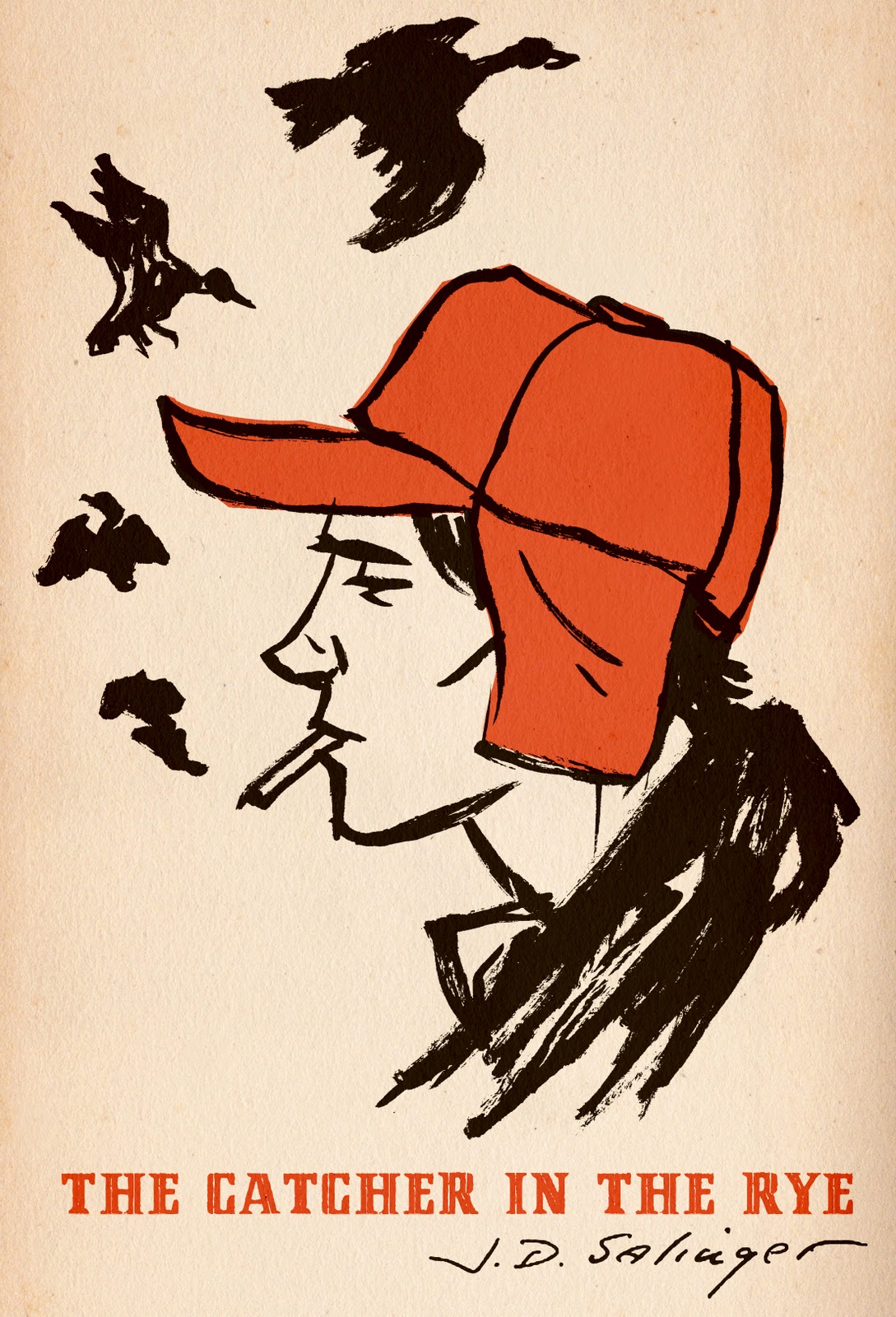
The Catcher In The Rye – J D Salinger
 READ FOR BOOKCLUB
Chosen by Suzy
The Catcher in the Rye tells the story of two days in the life of Holden Caulfield, a 16 year old who, days before his expulsion, leaves school to mill about in New York City.
Published in 1951, the book created a character the likes of which was not really seen in this time period and who instantly became a hit with teenagers and young adults for his carefree and rebellious nature.
An underachiever, Holden drops out of school three times and is about to flunk school for the fourth time. He ends up getting so annoyed with his school and his school mates that he leaves in the middle of the night on the next train home to New York City. Arriving a few days earlier than his parents expect him, he hangs out in the city to delay the inevitable confrontation with his parents.
In a period of time that seems to last days, Holden mingles with all sorts of people and glides through all sorts of interesting encounters some of which were slightly taboo in 1951. His brief period out in the world on his own represents many of the emotions and considerations associated with growing up and moving out of adolescence and into manhood such as considering the future, guilt about family and fear of failure.
I keep picturing an these little kids playing some game in this big field of rye and all. Thousands of little kids, and nobody’s around-nobody big, I mean-except me. And I’m standing on the edge of some crazy cliff. What I have to do, I have to eaten everybody if they start to go over the cliff I mean if they’re running and they don’ I look where they’re going I have to come out from somewhere and catch them. That’s all I’d do all day. I’d be the catcher in the rye and all. I know it’s crazy, but that’s the only thing I’d really like to be. I know it’s crazy.
❖ “This is my all-time favourite book, I rarely re-read but I have read this every 2-3 years since high school. Holden’s observations about people, his surroundings, life in general are perfect. He is literature’s best slacker & cynic – I heart you Holden.” – Suzy
❖ “A book which is ideal for reading and reading again. Holden is uber cool and easy to connect with, despite, or because of, his rebellious nature. It’s easy for any person on the cusp of adulthood to see a part of themselves reflected in Holden, especially that desire to just run away from all the responsibility. Love him. Love his world.” – Rachel
—–
Published 1951
Little, Brown & Co
210 pages
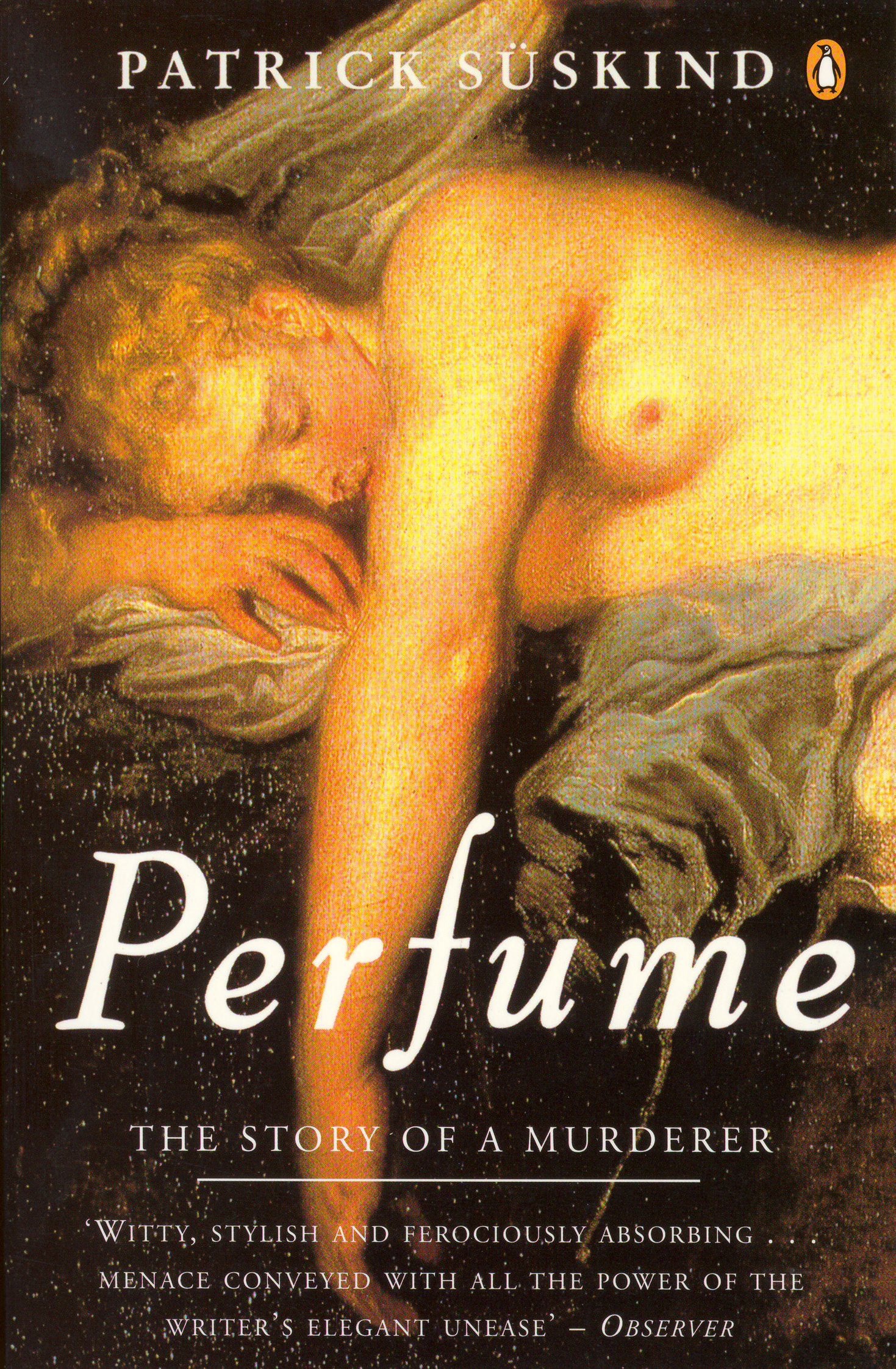
Perfume – Patrick Suskind
 READ FOR BOOKCLUB
Chosen by Nicole
Perfume is a a cross-genre novel about Jen-Baptiste Grenouille, a Frenchman born into eighteenth-century France. Abandoned by his mother, he has a superior sense of smell and no personal odour of his own. In order to both create a scent for himself and create the prefect scent, he turns into a cold and calculating murderer. He is motivated in particular by one young woman whose scent he desires to possess. Jean-Baptiste becomes an apprentice and then a master perfumer in order to fulfill his desires.
This scent had a freshness, but not the freshness of limes or pomegranates, not the freshness of myrrh or cinnamon bark or curly mint or birch or camphor or pine needles, not that of a May rain or a frosty wind or of well water… and at the same time it had warmth, but not as bergamot, cypress, or musk has, or jasmine or daffodils, not as rosewood has or iris… This scent was a blend of both, of evanescence and substance, not a blend, but a unity, although slight and frail as well, and yet solid and sustaining, like a piece of thin, shimmering silk… and yet again not like silk, but like pastry soaked in honey-sweet milk – and try as he would he couldn’t fit those two together: milk and silk! This scent was inconceivable, indescribable, could not be categorised in any way – it really ought not to exist at all. And yet there it was as plain and splendid as day.
The beauty and skill of perfumery is portrayed in such an intoxicating and romantic manner it is a joy to learn about the creation of each and every scent and infact often side tracked us readers from remembering Jean-Baptiste is a murderer and a psychopath.
It sounds gruesome but the story is so well developed we kind of fell into it without realising how obscene it actually was. When you find yourself not only accepting the deeds of a psychopath but seeing the beauty in their skill, you know the book is well written!
Described by the bookclubbers as “totally riveting”, “obscene”, “beautiful” and “gruesome”. Often all at once!
—–
Published 1985
Hamish Hamilton (UK)
263 pages
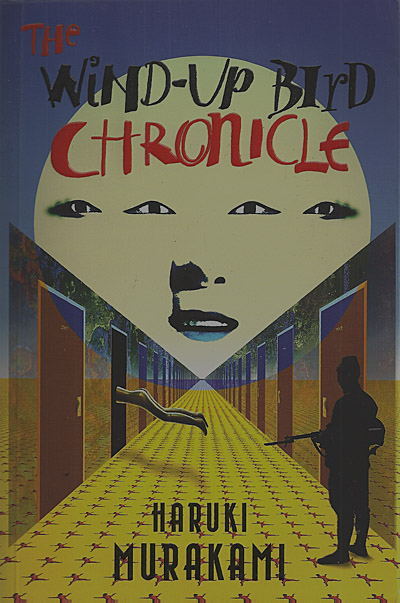
The Wind-Up Bird Chronicle – Haruki Murakami
 READ FOR BOOKCLUB
Chosen by Rachel
This seemingly simple story of a Japanese man whose cat runs away is anything but.
❖ “I couldn’t wait to re-read and share this, my #1 favourite book of all time. I was nervous too, knowing how much of an emotional journey this is, worried the others would not love it as much as I did. But after page one I had settled into it, like a comfy old chair and I once again got lost in Murakami’s genius.
“The dopplegangers, which I did not realise on on my first read, were especially enjoyable to analyse on my second reading. I think this is a book which would keep on giving on subsequent readings as there is so much depth invested into every character and every scene. I am already looking forward to the time when I read Wind-Up Bird for a third time.
“This is an indescribable masterpiece and one I would recommend to anyone and everyone. It may have seemingly limitless depth but its simplistic writing style makes it is accessible to everyone.
“During my second reading, and with a number of other Murakami books under my belt, I also appreciated the work of translator Jay Rubin further. To have translated this epic tome without losing the mystique nor simplicity, makes him the co-author.” – Rachel
You might think you made a new world or a new self, but your old self is always gonna be there, just below the surface, and if something happens, it’ll stick its head out and say ‘Hi.’ You don’t seem to realize that. You were made somewhere else.
❖ “This was the first book of Murikami’s that I’ve read. It was confusing and our bookclub analysis afterwards cleared up a lot of my questions. Murikami has a unique way of writing with characters having two selves and the existence of a parallel world. A complex story written in an easy to read way. Totally fabulous despite the heinous skinning description!” – Jo
Published in Japanese 1994
Translated into English by Jay Rubin 1997
Knopf
607 pages
2013 – Title Favourites
 What’s in a title? I mean, where did Hard-Boiled Wonderland & The End of the World come from? And how would we refer to dilemmas from which there is no escape because of a mutually conflicting condition if Joseph Heller had gone with his first title idea: Catch-11.
Yes, titles take time and are often best formulated once the story has been written and examined from all angles for a period of time.
So, for six years now, we have referred to ourselves solely, and factually, as “bookclub”. While there were occasional discussions about an official name, nothing eventuated; enough time seemed to have not passed. Now we have come to realise that the couple of descriptors we have come to use when we talk of ourselves must be incorporated into titles of some kind.
First there is free range. Free of boundaries and limitations. Free to roam with our ideas and opinions. And then there is the word coined by our husbands but embraced by us: nerdy. Perhaps it is time to incorporate both names. The Free Range Bookclub we will be officially. But amongst ourselves (and our husbands) we’ll always be nerdy bookclub.
🙂
Recently we welcomed a fifth member – we have never been so abundant! – and that is the lovely Nicole. Welcome!
As far as book choices go this year we have opted to each pick two of our favourites of all time, so we can share our true literary loves. Lots of re-reading for some, a luxury we don’t get often enough, which introduces a whole new level of understanding and conversation. Oh yes, what a schedule we’ve got lined up:
The Wind-Up Bird Chronicle – Haruki Murakami
Perfume – Patrick Suskind
The Catcher In The Rye – J D Salinger
The Little Stranger – Sarah Waters
The Member Of The Wedding – Carson McCullers
Catch-22 – Joseph Heller
Flowers In The Attic – Virginia Andrews
To Kill A Mockingbird – Harper Lee
The God Of Small Things – Arundhati Roy
2012 – End of Year Thoughts


What a year with Kiwi new releases lining the bookshelves and winning important accolades. To name just a few; Emily Perkin’s The Forrests, Paula Morris’ Rangatira, Charlotte Grimshaw’s Cool, C K Stead’s Risk and even a posthumous collection of stories by Janet Frame.
It’s no wonder then that Australian publisher Text Publishing has begun reviving lost New Zealand and Australian classics, much to the delight of literary readers Down Under. Classics we love and others we’ve never heard of are now easily accessible.
As we pondered out growing TBR piles, we headed to the Jester Cafe in the Tasman countryside to sit in the sun all day, eat organic delicacies, order refills and talk literature.
Our reading list in 2012 has provided us with much to agree upon. Some years our highlights and low-points are varied, but this year we managed to put together a list of books and poetry that were likeable and meaningful to us all. With the exception of one book, but we all agreed on the unlikeable nature of the story and the autobiographical protagonist too!
Book of the year:
Rachel: Of Mice & Men
Jo: The Bell
Suzy: The Parihaka Woman
Sophia: Slaughterhouse Five
Nicole: The Bell
Runner up:
Rachel: Slaughterhouse Five
Jo: Under The Net
Suzy: The Bell
Sophia: Under The Net
Nicole: Of Mice & Men
A Severed Head – Iris Murdoch
 READ FOR BOOKCLUB
Chosen by Jo
A Severed Head is a 1961 satirical novel about marriage, adultery and deception within a group of civilised and educated people. The six characters are unpleasant, their morals questionable and their actions immoral especially the main character, 41-year-old Martin Lynch-Gibbon.
Martin is having an affair yet becomes upset to learn his wife has also been sleeping around. He becomes crazed and erratic, attempting to keep both his mistress and his wife in his life, to the point that he becomes a kind of errand boy for his wife’s lover.
As the six characters continually swap partners, the study of infidelity, insanity and deception only deepens, keeping the reader on their toes as to who is banging who, and who is telling what level of lies.
“I said, “Your brother is in bed with my wife.” I added, “I just took them up some wine in bed.”
● Despite the fact the characters are all deceptive and undertaking adulterous affairs they are deliciously infuriating, making for a beguiling read. They are stereotypically British, portray little emotion, even when in delicate situations. The level of lies and facade-wearing is realistic in normal human behaviour and I enjoyed attempting to dissect the characters’ complexities. This is a book where the web of lies has been so expertly spun, it was weirdly a complete joy to read about such craziness!” – Rachel
—–
Published 1961
Chatto and Windus
251 pages
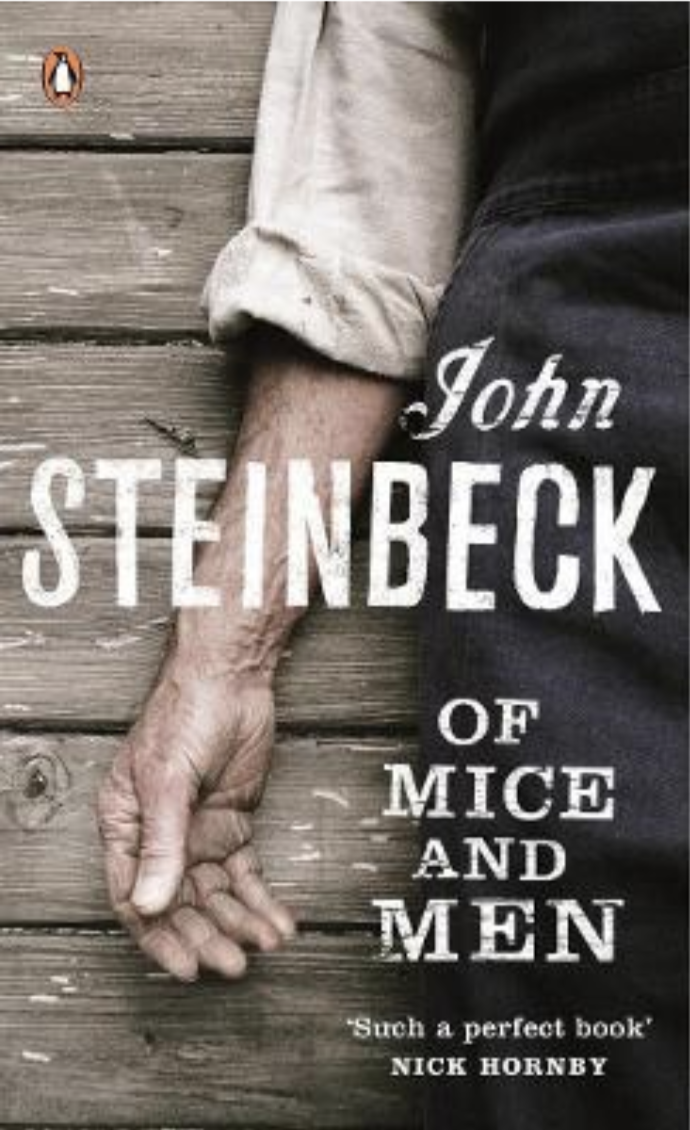
Of Mice & Men – John Steinbeck
READ FOR BOOKCLUB
Chosen by Rachel
A 1937 novella which details the life of George and Lennie, two displaced migrants looking for ranch work in Southern California during a time of drought.
George is the central character. He’s described as small of stature, but a strong-willed man who is in charge and not afraid to speak his mind. He has a firm plan, to save enough money to set up a small stakeholding.
His off-sider Lennie is a large, strong man but is simple and does not understand his strength nor have much self control. He relies on George to look after him and lead him through life. He likes nothing more than to hear George talk of their dreams of owning land, in particular the part where Lennie gets to look after the rabbits.
The pair get work on a ranch and we meet a handful of characters who support the themes of loyalty and compassion, loneliness and ambitions, for they all hope for something more than they have. Yet being in close quarters without much to call your own and when times are hard can bring about unfortunate circumstances.
Of Mice & Men is widely considered a classic though it has been subjected to censorship for various reasons including vulgarity, treatment of women and the close friendship of the men. Bans have been in place off and on since 1937 right up until this century.
I ain’t got no people. I seen the guys that go around on the ranches alone. That ain’t no good. They don’t have no fun. After a long time they get mean. They get wantin’ to fight all the time. . . ‘Course Lennie’s a God damn nuisance most of the time, but you get used to goin’ around with a guy an’ you can’t get rid of him.
© “Of Mice and Men is a tribute to literature and to humanity. It understands the complexities of relationships in a simply told story. It has influenced pop culture and human nature so much that reading the book in this day and age feels like the story is already known. It must have been a shock and a delight to read it upon first publication. One of my favourite all time books. I have thought of this book a lot since I first read it and the joy of a re-read is nearly just as good.” – Rachel
—–
Published 1937
Covici Friede
187 pages
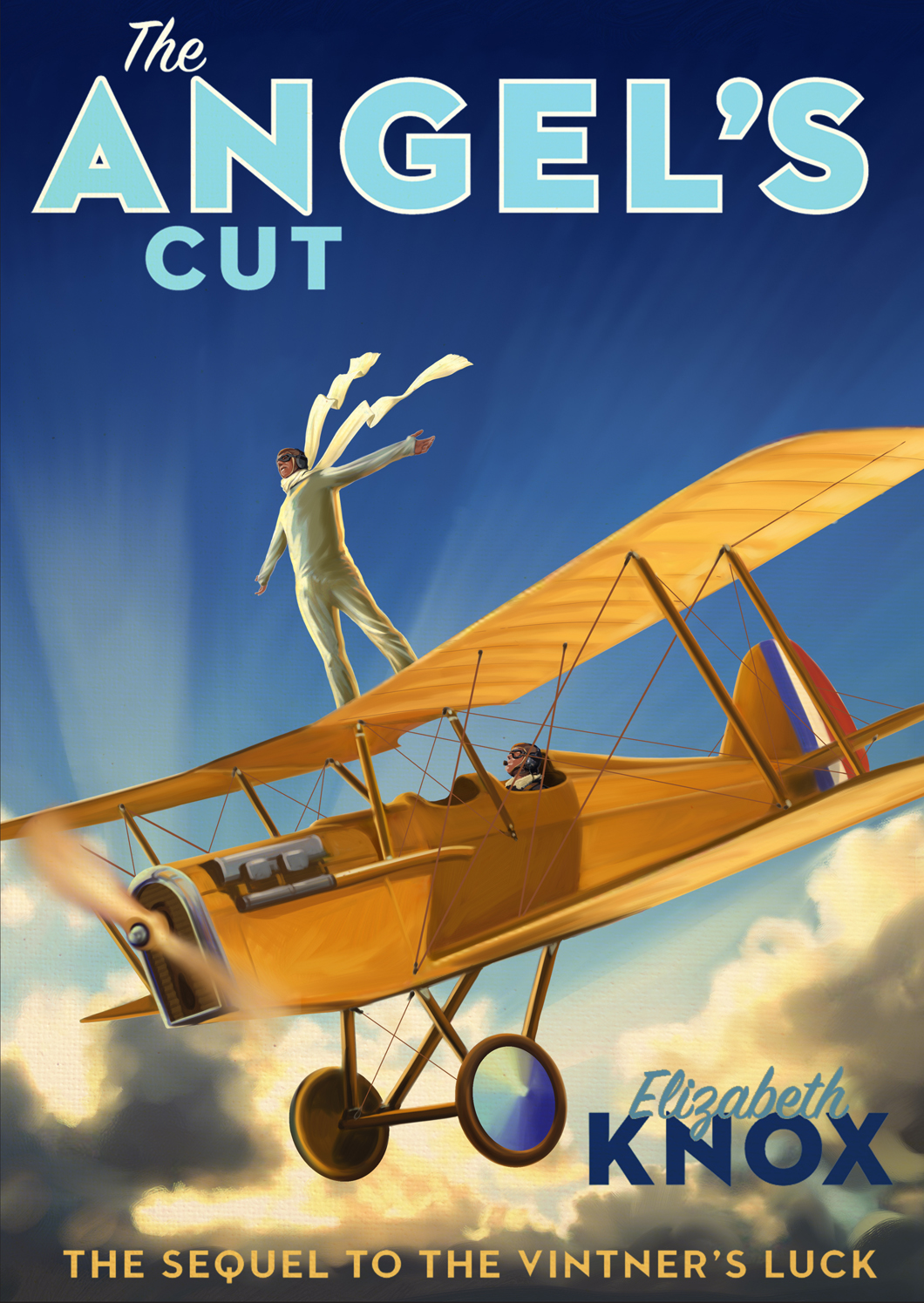
Angel’s Cut – Elizabeth Knox
 READ FOR BOOKCLUB
Chosen by Suzy
The sequel to The Vintner’s Luck in which the angel Xas settles in Hollywood 1929 and becomes involved in the seductive movie industry.
© “Movie director Conrad Cole is working late on elaborate plans for his aeroplanes and his films, when Xas, a mysterious stranger appears at his door.
“The angel ends up involved in the glamorous and treacherous world of movie-making and entangled with both Cole and a young woman who owes her life to the eccentric director. Both of them are drawn to Xas without knowing his secret – that under his shirt he hides the remnants of great snowy wings that set him apart from humankind, and that he is destined to wander the earth forever, always hearing the beating of feathers behind him, threatening him that his dark brother has found him again.
He said, ‘Sooner or later one of Them is going to try to explain Himself to me. God—or Lucifer. But though there may be a reason why my wings were cut off, a reason for doing it, and for letting it be done, the reason is nothing compared to the act. The world of the act is a different one from the world of the reason.
© “I was bewildered by this book after the beautiful setting of The Vintner’s Luck, which was soothing, solid and earthy. Once I settled into the new airy rhythm of The Angel’s Cut I felt privileged to be gaining more insight into Xas’s adventures. I am absolutely delighted to know there is going to be a 3rd installment!” – Suzy
© “After reading The Vintner’s Luck so many times and continually wondering where Xas would go from there, I was super excited to hear about the publication of The Angel’s Cut. A huge deviation in location from the first book, but it needed to be, I think, and of course Elizabeth Knox has done the timing, the setting and the characters justice. I loved re-connecting with Xas and adored the book. Though of course, no sequel could ever rival The Vintner’s Luck!” – Rachel
—–
Published 2009
Victoria University Press
464 pages
2012 Bookerthon
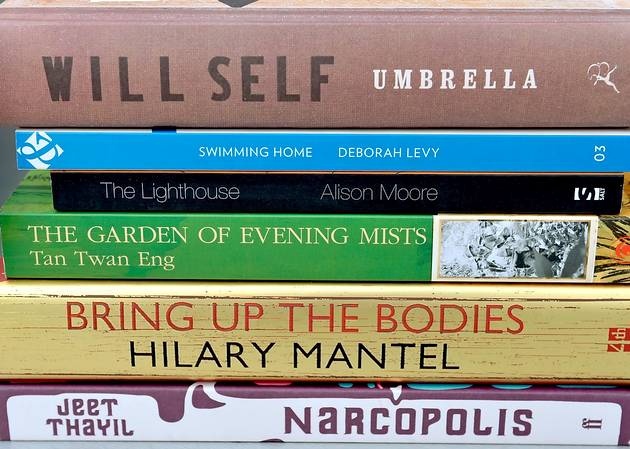
Most people expect the finalists on an awards list to be varied, to encompass a wide spectrum of styles, opinions, and to represent many backgrounds. However often such lists have a common thread or theme running through them, especially in response to world events of the previous years.
It’s not often we think a Man Booker shortlist is truely diverse. But this year we do. Reading the six shortlisters was like and being tossed about in a washing machine for five weeks – the shortlisted books are so contrasting, in style, genre, narrative and even pace, that it took a bit of mental energy to jump from one to the other.
The Lighthouse is deep and mysterious, the style delicious and the events surrounding a man’s memories of childhood abandonment are unfolded with perfect timing; Narcopolis is set in a Bombay Opium den and is atmospheric and meditative, and felt like it provided an experience; Swimming Home is a nicely paced book about a stranger who appears naked swimming in a hotel pool. It is a personality heavy book with characters who are troubled albeit likeable; The Garden of Evening Mists is about an ex POW turned apprentice gardener. It’s interesting, historical story is a real scene setter; Umbrella is a stream-of-consciousness novel based on the true story of a patient being awakened after 53 years with a new drug; Bring Up The Bodies is the sequel to Wolf Hall, the continued story about Thomas Cromwell, advisor to Henry VIII.
Without insight on the judges criteria it’s hard to know what will appeal to them most this year. As far as we are concerned, we’d be happy if any of The Lighthouse, Narcopolis, Swimming Home or The Garden of Evening Mists won. They are well constructed and likely appealing to many people.
As for the other two, both of us agreed that Umbrella was too erudite for us to be able to name it the best of the six, and Bring Up The Bodies, well like it’s predecessor it is so indepthly about a historical time that is neither relevant to us nor part of our history so its hard to find a connection nor joy in the retelling of these events.
Best book 1st-6th: Rachel:
The Lighthouse
Swimming Home
The Garden of Evening Mists
Narcopolis
Umbrella
Bring Up The Bodies
Best book 1st-6th: Suzy:
The Garden of Evening Mists
The Lighthouse
Narcopolis
Swimming Home
Umbrella
Bring Up The Bodies
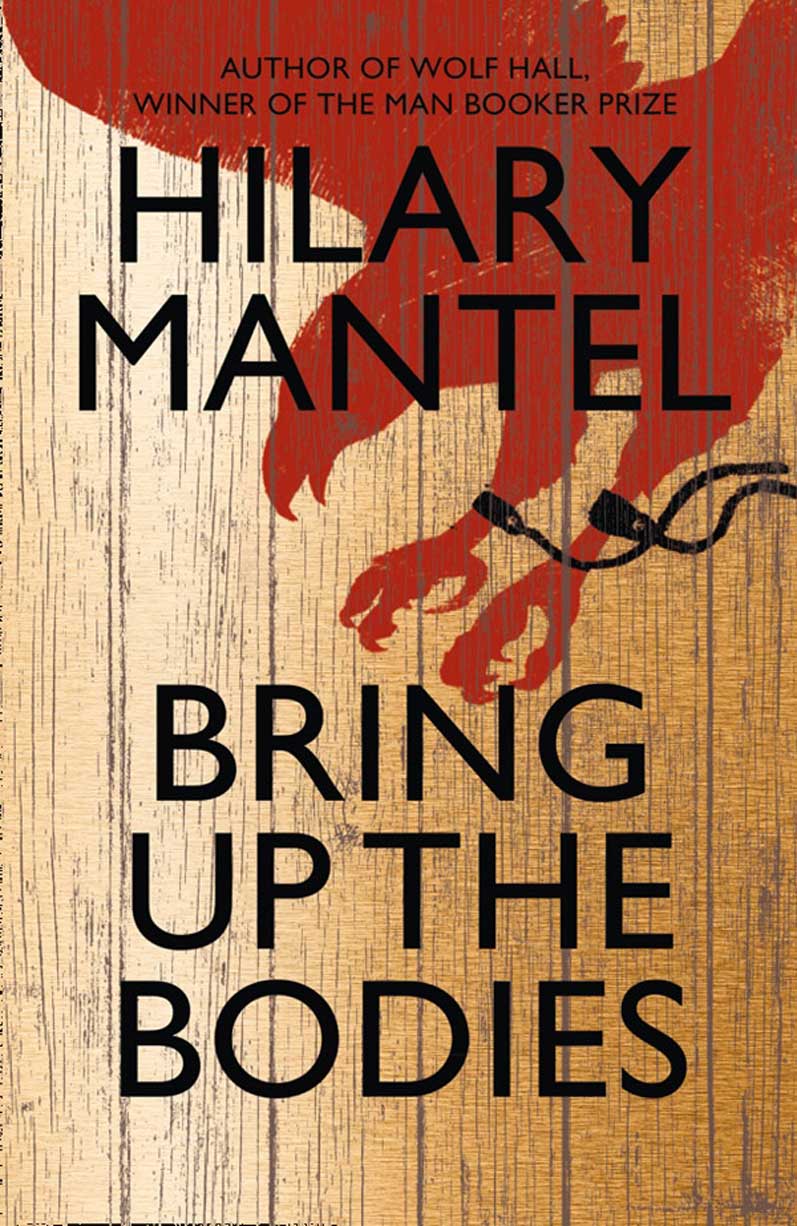
Bring Up The Bodies – Hilary Mantel
 READ FOR BOOKERTHON
The sequel to Wolf Hall, charting the rise and fall of Thomas Cromwell, a minister in the court of King Henry VIII.
© “Bring Up The Bodies is the sequel to Wolf Hall, about the life of Thomas Cromwell who was influential to the decisions of King Henry VIII.
In the first book Cromwell was instrumental in assisting Anne Boleyn become the King’s wife. In the sequel Anne is surrounded by conspiracy and she has not produced an heir to the throne. If Henry dies without an heir a civil war is bound to ensue. With Jane Seymour waiting in the wings for the King’s hand, Cromwell ally’s himself with his enemies in order to defeat Anne’s powerful and protective family.
You can be merry with the king, you can share a joke with him. But as Thomas More used to say, it’s like sporting with a tamed lion. You tousle its mane and pull its ears, but all the time you’re thinking, those claws, those claws, those claws.
We must both come clean, as in this instance neither of was able to do the book much justice. Due to our lack of knowledge and interest in the Tudors and the complexities of ancient English royalty, we did not finish Wolf Hall. Therefore its sequel became impossible and we struggled to get past the preliminary pages. Once again we acknowledge Mantel is a master of her art, its just not our kinda art.
—–
Published 2012
Fourth Estate
432 pages

We're
currently
reading
 The Free-Range Bookclub
Recent Comments