The Free-Range Bookclub
Bookclubbers without boundaries in Nelson, New Zealand
2014 – End Of Year Thoughts


NZ’s literary world was thrown into the headlines this year with the war of words between one of our most recognised authors Eleanor Catton and Prime Minister John Key.
Catton slung about superlatives announcing the Government’s lack of culture; Key said The Luminaries was “pretty good” but he’d “read better”.
And on it went. Like an extravagant, character-driven plot in a quickly hashed out novel. Support characters jumped on board, over-analysing the comments in social media, and hack journalists half reported the comments of each, inciting further debate.
The two antagonists walked away mainly unscathed, though NZ’s international reputation slumped a little with the dagger in it’s side. 😦
As well as this blockbuster, there was a lot of drama in the books we’ve read and reviewed this year. For a start, like NZ, there were many beautiful and memorable settings: the cemetery of forgotten books in The Shadow of the Wind; the English manor in Howard’s End, the lake house in Crossing to Safety, the convent in Holy Days, the old house, Bly, in The Turn Of The Screw.
And like Catton and Key, many brilliant, intelligent and controversial characters graced the pages of our reading this year, too.
Off to Ford’s Restaurant we went, to enjoy dinner and drinks and discuss this all in depth.
Book of the year:
Rachel: Crossing To Safety
Jo: The Shadow Of The Wind
Suzy: Under The Mountain
Sophia: Crossing to Safety
Runner up:
Rachel: The Turn Of The Screw
Jo: Holy Days
Suzy: The Turn of The Screw
Sophia: Howards End
Best character:
Rachel: Charity Lang from Crossing To Safety
Jo: Daniel Sempere from The Shadow Of The Wind
Suzy: Brian from Holy Days
Sophia: Helen Schlegel from Howards End
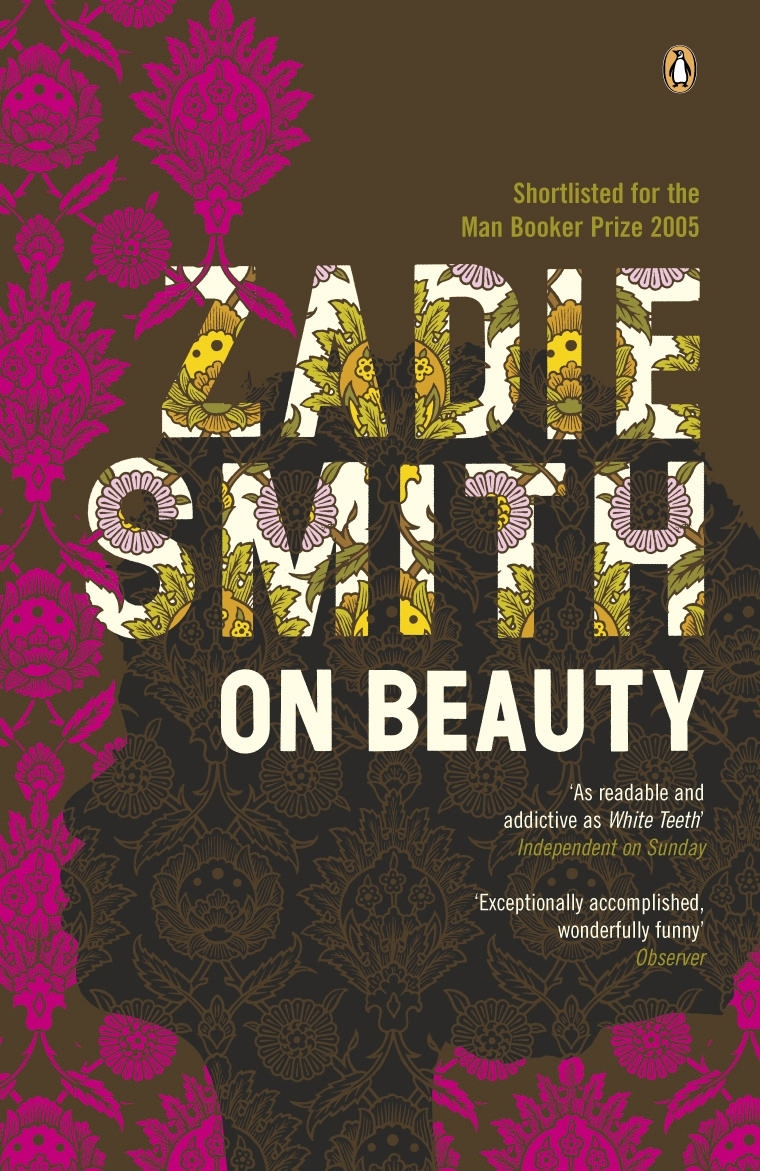
On Beauty – Zadie Smith
 READ FOR BOOKCLUB
Chosen by Sophia
Based on E M Forster’s Howards End, this book follows the lives of a mixed heritage US family, addressing ethnic and cultural issues
✎ Howard Belsey is one of the central characters in On Beauty. He is a professor, and an Englishman living and working in New England. He has been married for thirty years to Kiki, an American woman, and they have three teenage children: Levi, Zora and Jerome.
Howard is undergoing a mid life crisis of sorts and can’t see what there is to look forward to in the second half of his life. However, when his oldest son finds himself a love interest, Howard and his family are thrown together with her family, the Kipps. The two patriarchs are academic rivals and do not see eye to eye morally, intellectually or otherwise and a series of events result which will definitely change the course of Howard’s future.
Set on both sides of the Atlantic, Zadie Smith’s third novel is an honest analysis of family life, the institution of marriage, intersections of the personal and political, and a study of the deceptions that loved ones can act out upon one another. It also has an interesting blend of humour, too.
Stop worrying about your identity and concern yourself with the people you care about, ideas that matter to you, beliefs you can stand by, tickets you can run on. Intelligent humans make those choices with their brain and hearts and they make them alone. The world does not deliver meaning to you.
✎ “While a fantastic book in its own regard, On Beauty‘s nod to E M Forster’s classic provides an additional layer of appreciation. It is a modern classic written in a contemporary vernacular with a bevy of characters who all have a distinct voice. Everything in the book is beautifully described, from the people, to the locations to the execution of everyday events. A thoroughly enjoyable read.” – Rachel
—–
Published 2006
Penguin Books
464 pages
2014 Bookerthon
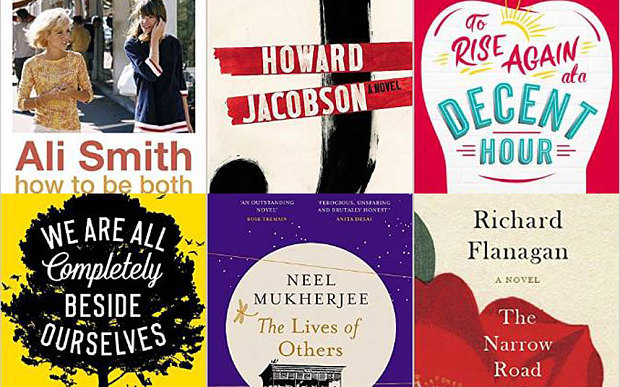 This year marks a big change in the Man Booker Prize. The prize is now open to any novel written in English, published in the UK. This makes a chunk of new US fiction eligible for the honour of being named best book of the year.
The wider net creates more of a global prize but many Brits have voiced their contentment with the prize’s focus being on UK and Commonwealth writers. But the change is made, the brand is growing and the first inclusive longlist was announced with four Americans on it, two of whom made the shortlist.
One of those is We Are All Completely Beside Ourselves by Karen Joy Fowler, which details the life of an average American family, average in all ways but one that concerns the narrator’s sister, Fern. It’s hard to detail the plot without giving everything away, but it was a plot that we both really enjoyed. Its pacing and reveals and emotional pull was great and we both admitted to shedding a tear or two.
The other is To Rise Again At A Decent Hour, which has a very America protagonist. Paul O’Rourke is a dentist, an atheist, a man who has bad habits and loves baseball. When someone begins to impersonate him on the internet, he wonders if online Paul might be a better version of himself. Sounds intriguing but we both admitted that the very American vernacular and humour was not appealing to us.
The other four to make the shorlist are:
How To Be Both by Ali Smith which is a literary response to the influence of art, with two main characters and two ways in which to read the story – it’s luck of the draw on what version you pick up. It was beautiful and clever but an intense read.
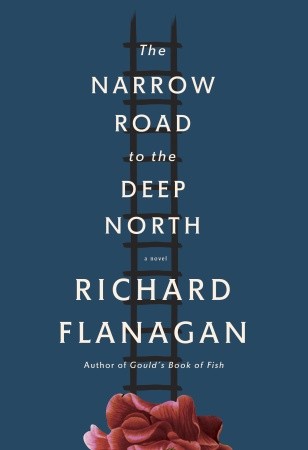
The Narrow Road To The Deep North is from Australian Richard Flanagan. It is based on the true story of POWs being used as slave labour on the Burma Railway. It is harrowing and beautiful all at once.
The Lives Of Others is an historical saga set in 1960s Calcutta detailing the lives and shifting hierarchal sands with the Ghosh family. Likely historically accurate, it required more time than we were able to give it to map the people and places and events that were intricately detailed.
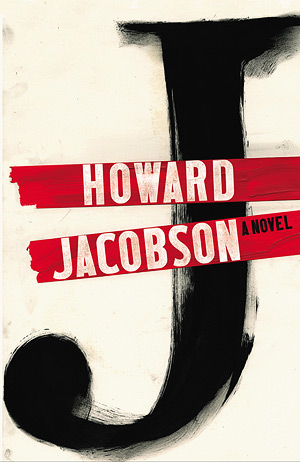
J (the year of the longest and shortest titles!) is a well-constructed, dystopian story set in a time where people refer to a catastrophe of the past as “What Happened, If It Happened”. Innovative and moral, but the synopsis made it sound more exciting than it is.
Rachel: This year I’m picking The Narrow Road To The Deep North by Richard Flanagan. It has everything on its side: readability, emotivity, stunning prose, as well as being plot heavy and character driven – the whole package! I couldn’t put this down and felt like I learnt a lot.
Suzy: Despite struggling with How To Be Both, it quickly became apparent to me that this is a work of pure genius – sigh. Strongly recommended for people with high IQs! This is my pick for winner this year. Though, The Narrow Road to the Deep North would also be a deserving winner in my opinion.
Best book 1st-6th: Rachel:
The Narrow Road To The Deep North
How To Be Both
We Are All Completely Beside Ourselves
J
The Lives Of Others
To Rise Again At A Decent Hour
Best book 1st-6th: Suzy:
How To Be Both
The Narrow Road To The Deep North
We Are All Completely Beside Ourselves
J
The Lives Of Others
To Rise Again At A Decent Hour
To Rise Again At A Decent Hour – Joshua Harris
 READ FOR BOOKERTHON
A New York dentist has his identity stolen via social media
✎ Paul O’Rourke is a New York dentist with a troubled mind. Stemming from the suicide of his father, he constantly questions himself, his actions, the state of the world, his religious beliefs. His ability to interact with others is lacking and his relationships with women are superficial and lust-orientated. His life lacks meaning.
When he creates a website for his business, a stranger steals his identity and engages online as him. At first he is enraged, then saddened to think the online Paul O’Rourke is more interesting and valid than himself, the real Paul O’Rourke.
His investigations lead him to a group called the Ulms, whose history traces back to the Israelites and whose identifying feature is their ability to doubt everything. Unsurprisingly, O’Rourke ends up discovering he is one of them.
Thematically the book is strong, focusing on the power of the internet; the effects of religious belief and the interplay between private and public personas.
Freedom of religion in America is all fine and good until you start believing in nothing, and then it is a crime to be punished.
✎ “This is one of two American novels shortlisted, now that writers from the US are eligible for the award. The plot sounded good, but turned out to be only mildly interesting. For a book that has been compared to one my of my all time favourites, Catch-22, it didn’t raise a single smile from me. I found the humour inconsistent, jumping between satire and pie-in-the-face humour. Some American fiction I love, and some, like this, which are touted as hilarious, just don’t appeal to me. – Rachel
✎ “I felt like I read this book with a fixed & determined grin awaiting the moment where the genuine funnies would start. It was promoted as being hilarious and perhaps my expectations were too high. Yes it was enjoyable and an interesting enough story, but for me it was a lowlight of the Man Booker reads this year.” – Suzy
—–
Published 2015
Back Bay Books
352 pages
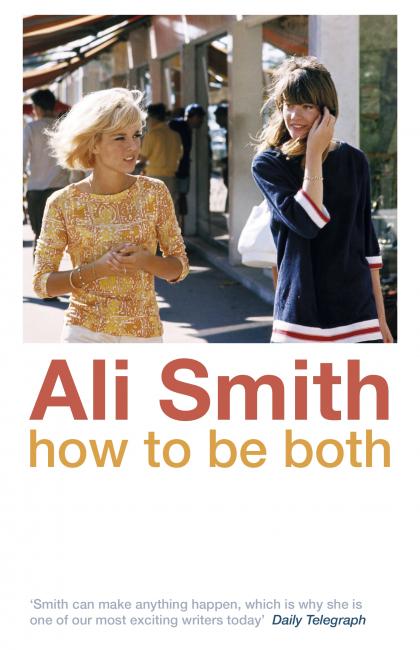
How To Be Both – Ali Smith
 READ FOR BOOKERTHON
Written in two parts, both titled ONE, this is a book about art’s versatility, told by a renaissance painter of the 1460s and a child of the 1960s.
✎ How to Be Both is written in two halves, using both a contemporary and a historical vernacular. The contemporary half recounts the efforts of 16-year-old Georgie (George) to deal with her mother’s recent death. The historical part harnesses the spirit of Italian Renaissance artist Francesco del Coossa returning to Earth from Heaven to consider Georgie’s situation in relation to his own life.
The editions of the novel vary: some feature Francesco’s story first, while others feature George’s story first. It is luck of the draw which version you pick up as to whose story you’ll open with.
In Georgie’s half, she is reflecting on the death of her mother the previous September, and thinks back to a holiday they took to Italy. Her mother wanted to visit the Ferraro Palazzo in order to see the frescoes painted by Francesco del Cossa.
In Francesco’s half of the novel, he is called down from Heaven to exist in modern London. He recognises that there is something important about Georgie that he has been meant to understand.
Both characters not only have gender identity in common, but also the tendency to examine things that once existed and now do not, or things that have a physical presence and an invisible essence. In difference times they are both believers that something can exist at once in two different formats.
Via each other, both Georgie and Francesco come to have a deeper understanding of the world.
There was a lot more world : cause roads that look set to take you in one direction will sometimes twist back on themselves without ever seeming anything other than straight, … many things get forgiven in the course of a life : nothing is finished or unchangeable except death and even death will bend a little if what you tell of it is told right.
✎ “Written in poetry-like prose we discover the two main characters are inexplicably linked and everything comes together at the end. It is very much a product of Smith’s usual cleverness and writing prowess but it does require effort to not miss anything. I certainly did miss stuff!” – Rachel
✎ “If I was cleverer I think would enjoy Ali Smith’s writing more. Not dissing myself, it is what it is! I read this book sometimes in awe, and sometimes not quite following what was going on. Not the first of her novels that I’ve been excited about reading only to swing between ‘argh, I don’t get it’ and ‘this is genius’.” – Suzy
—–
Published 2015
Anchor Books
336 pages
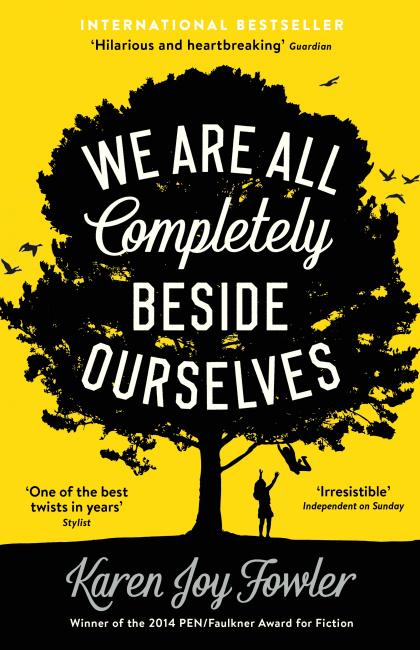
We Are All Completely Beside Ourselves – Karen Joy Fowler
 READ FOR BOOKERTHON
Rosemary Cooke reveals the awful truth about her sister who was sent away aged five
✎ This book opens when the main character is a College student, revealing her strained relationships with her mother, father and brother. A return to the family home for Thanksgiving and news her estranged brother, Lowell, is looking for her causes Rosemary to reflect on the past. In particular about her other sibling, named Fern, who the family gave up when she was five years old.
It is difficult to discuss the plot much more without giving away the surprise details about Fern. However, it’s fair to say most of the rest of the book is about Fern and her five years spent with her family. Rose and Lowell reminisce about the highs and lows of those five years, of the unusual and very public experiment their family was part of, as they seek resolution and explanation for what happened at the conclusion of those five years.
You know how everything seems so normal when you’re growing up, she asked plaintively, and then comes this moment when you realise your whole family is nuts?
✎ “This is not what I expected from Fowler at all, and it really is impossible to talk about the book without giving it all away. What I can say is this book is highly emotive, educational and gripping, with Kafka references. By the end I did think Fowler was using fiction as a platform to push her beliefs, but it was so well done, I forgave her.” – Rachel
✎ “Honestly can’t say much without giving the most important plot twist away. This book really resonated with me – I loved it so much and would recommend it heartily to everybody.” – Suzy
—–
Published 2014
Serpent’s Tail
336 pages
The Narrow Road To The Deep North – Richard Flanagan
 READ FOR BOOKERTHON
✎ This is the story of Dorrigo Evans, an Australian surgeon. It is about his time in a Japanese prisoner of war camp, his loves, his affairs and his old age.
The central event is Dorrigo’s time in the prisoner of war camp, working on the Burma death railway, as it was known. Dorrigo is a colonel and surgeon, and is acknowledged as the leader of the Australian prisoners.
The author’s father was a prisoner in Burma and this book is dedicated to him and acknowledgment of the horrific experiences that make up his past. There were up to 13,000 Australians imprisoned in Burma, who were worked literally to death to complete the Emperor’s dream of a railroad linking Thailand and Burma. The real life atrocities are detailed in this book, as are the medical and surgical care Dorrigo undertakes without the right tools or medications. There are many pages that are not for the faint hearted.
After the war Dorrigo is searching for meaning. He marries one woman, has affairs with others. He has a successful career but an empty heart. There are many revelations about him, his life, his family and even stories about what happened post war to the soldiers who beat them on the railroad.
It was a fabled railway that was the issue of desperation and fanaticism, made as much of myth and unreality as it was to be of wood and iron and the thousands upon thousands of lives that were to be laid down over the next year to build it. But what reality was ever made by realists?
✎ “Evocative, lovely, terrifying, disturbing. Similar to how I felt after reading the about walk to Dunkirk in Ian McEwan’s Atonement, I felt I could hold my own in a conversation with fellow prisoners about life in a Japanese PoW camp after reading this story (“Yes I remember Barry, the medical tent was *very* basic wasn’t it….” etc). As a reader we weren’t observing the story from afar, we were there experiencing every horrible moment.” – Suzy
✎ “What a heart wrenching and deeply moving story. Not only it is beautifully crafted, it was a real pull on the emotions. The raw truth of PoW camps, alongside a touching love story, and education about a moment in history are all contained in this one book. It sounds crazy but I would lift my head from these pages and think “oh that ‘s right, I am here, not in a PoW camp,” my heart thumping, so entrenched in the story. I will never forget this book.” – Rachel
—–
Published 2013
Random House
464 pages
J – Howard Jacobson
 READ FOR BOOKERTHON
A love story set in a dystopian future
Decades in the future Kevern lives in a cottage on sea cliffs near Port Reuben and makes art with wood. He meets Ailinn and falls in love. The two begin a passionate romance, and move in together. Yet neither knows where they have come from or what their plans are because speaking of the past, of historical brutalities is not an accepted thing any longer.
There has been an historical catastrophe but this is referred to only as “what happened, if it happened”. (The catastrophe is presumably the Holocaust and the J word which no one can say any longer: Jew.) This inability to remember or to speak freely shrouds everyone in suspicion, denial and apology.
One day a detective comes to Port Reuben to investigate a triple murder. He and others suspect that the passions of people, long repressed by the government which strives for harmony, are resurfacing in violent ways as a result of being bottled up for so long.
Kevern recalls an interaction with one of the murdered women, causing him and Ailinn to question their love. They aren’t even sure if they have fallen in love of their own accord or if there is some greater force at play that requires them to be in one another’s lives.
He didn’t want to feel better. He owed it to what he’d been told to feel worse. That was what living a serious life meant, wasn’t it, honoring the gravity of things by not pretending they were light? Rozenwyn Feigenblat had told him he was an ethicist, not an artist. He agreed with her. An artist owed a duty to nothing except his own irresponsibility. It was OK for an artist to frolic in the water, no matter how bloody the waves or how high the tide rose. An ethicist had an obligation to drown.
✎ “Murky, confusing, weird, interesting, oddly funny. I enjoyed J but I wish I had read it without the Man Booker pressure, I would’ve enjoyed taking my time a bit more with this one. It felt 1984-ish for me.” – Suzy
✎ “I always admire authors who can create a dystopian future but sometimes I get lost in the details. Which is what happened here. The unnamed catastrophe could have been any of our history’s tragedies and I think Jacobson made many poignant references to them, making this an important story.” – Rachel
—–
Published 2014
Jonathan Cape
426 pages
The Lives Of Others – Neel Mukherjee
 READ FOR BOOKERTHON
Set in 1966 Calcutta, the Ghosh family represents the nation as it battles an imploding business and family battles
✎ The Lives of Others is a big book in every sense of the word. It has many pages, many characters and many plot lines. There are a lot of events, and much historical and social complexities covered.
It is set in Calcutta in the 1960s and focuses on the large and wealthy Ghosh family all of whom live together. Each set of family members occupies a floor of the home, in accordance to their standing within the family. The head of the family is Prafullanath who has made his money via several paper mills. One of the main plot lines involves the eldest grandson, Supratik who has joined the community party and is working secretly to mobilise peasants against landlords.
Entwined with this are the poisonous rivalries and secrets of other family members, a risk to the family business and the unrest of Indian society.
You take away economic security and the whole pack of cards collapses. Everyone is at each other’s throats. All these vaunted bourgeois values that prop up society – love, duty, honour, respect – all rest on power-relations lubricated by economics. They are the gloss people put on the naked truth: self-interest.
✎ “The harrowing opening pages provide the perfect juxtaposition to the petty woes of the Ghosh family whom we are soon introduced to. It is this contrast reiterated throughout which drew me into the story. There is a huge cast of characters, all of whom are well-developed, and sometimes the sheer amount of people and events and detail was overwhelming and difficult to track. Those who love a family saga will love it, but I did start to struggle as the pages went on.” – Rachel
—–
Published 2014
Chatto & Windus
528 pages
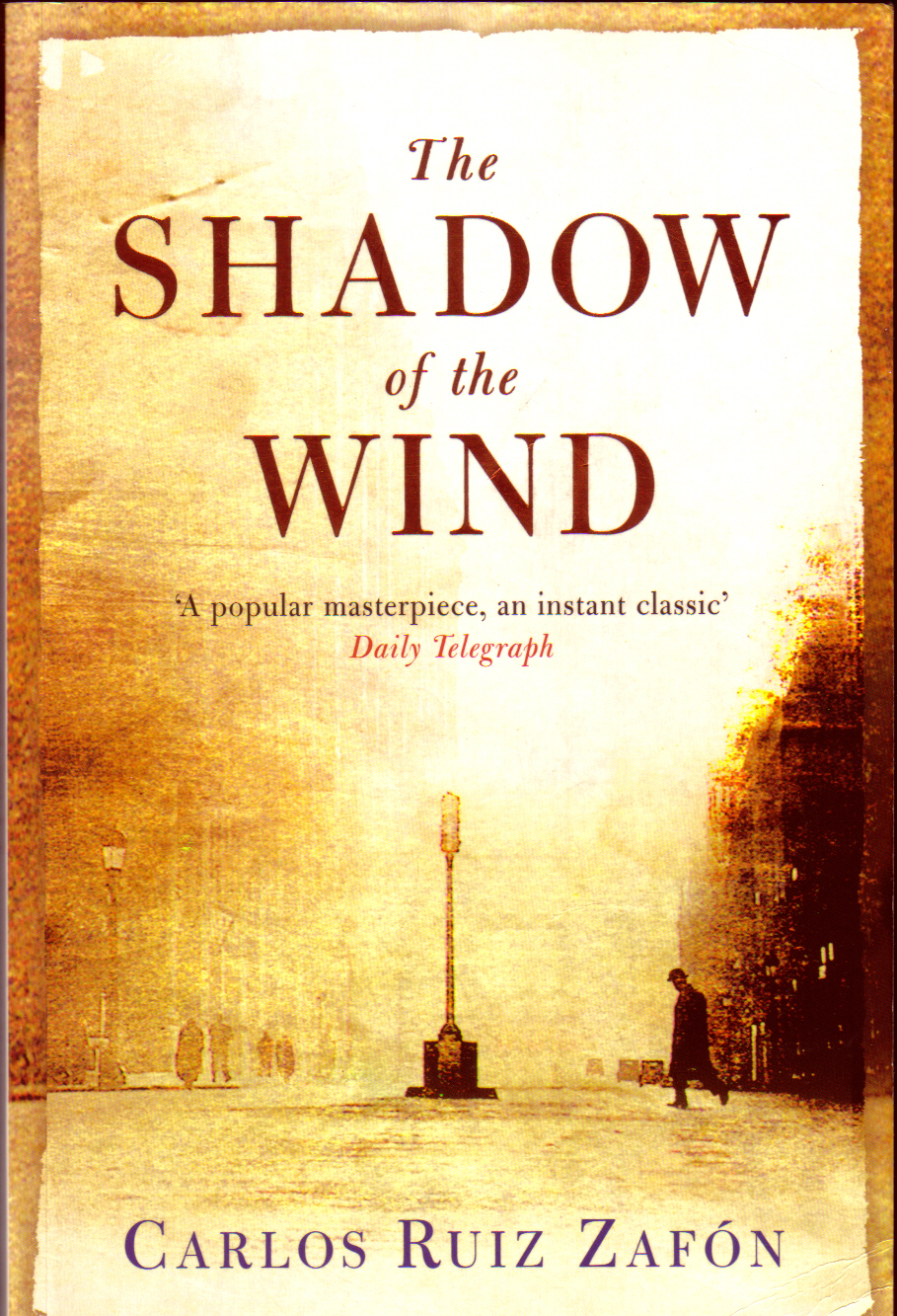
The Shadow Of The Wind – Carlos Ruiz Zafon
 READ FOR BOOKCLUB
Chosen by Jo
In 1940s Barcelona a boy named Daniel lives with his father who owns a bookshop. One day, the father takes his son to the Cemetery of Forgotten books – a secret labyrinthine library that houses rare and banned books.
Daniel is drawn to one called The Shadow of the Wind by Julian Carax and takes it home with him. He reads and falls in love with the story only to discover that Carax has gone missing along with every other copy of the book. He then commits to discovering the mystery behind the missing author and books.
His travels bring him into contact with many interesting characters, including booksellers, beautiful women, an evil, disfigured man and a French spy, some of whom bear uncanny resemblance to characters in the book. It seems Daniel’s seemingly innocent quest will blow open the truth of one of Barcelona’s darkest secrets.
Every book, every volume you see here, has a soul. The soul of the person who wrote it and of those who read it and lived and dreamed with it. Every time a book changes hands, every time someone runs his eyes down its pages, its spirit grows and strengthens.
✎ “This book started with a bang with the main character Daniel visiting a place of pure fantasy. I can still see the place where Julian Carax’s book was hidden: the cemetery of forgotten books. This novel is densely plot driven, the characters are likeable and the prose is beautiful if a little melodramatic at times. I loved this exciting gothic tale, it has everything: mystery, love, death, skullduggery, curses, evil policeman … the list goes on. It has its faults, e.g. revealing the mystery in a letter all in one go, but I didn’t want to put it down and I loved it anyway.” – Jo
✎ “The imagery of the Cemetery of Forgotten Books in the opening setting is a book lover’s dream and a sure bet you’ll want to read on. Tick. Plus, the main character Daniel Sempere is quite spellbinding and the support cost surprising and eerie. Tick, tick. However, for me, the plot quickly became contrived and overdone and I ended up being underwhelmed by this book.” – Rachel
—–
Published 2001
Planeta (Spain)
525 pages

We're
currently
reading
 The Free-Range Bookclub
Recent Comments