The Free-Range Bookclub
Bookclubbers without boundaries in Nelson, New Zealand
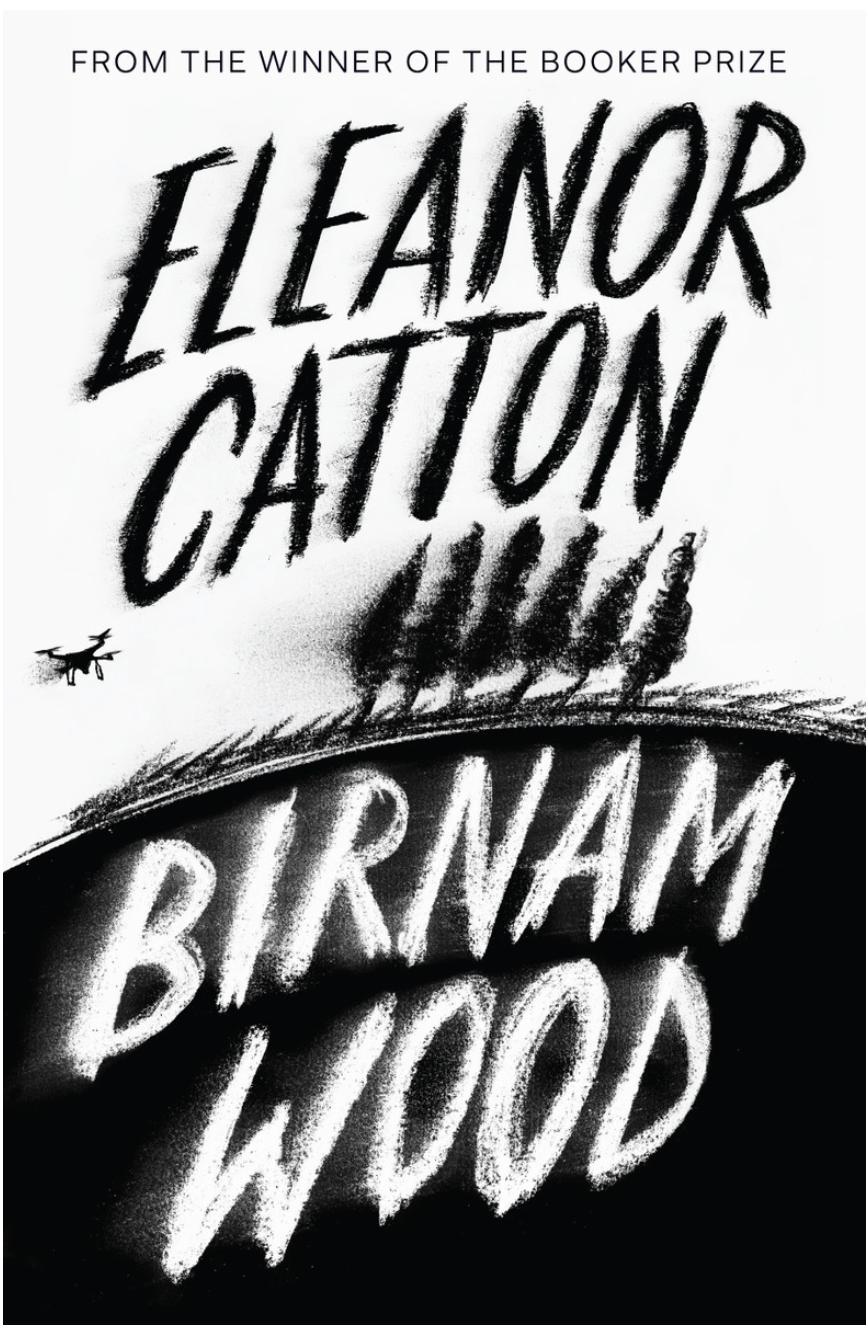
Birnam Wood – Eleanor Catton
READ FOR NZ BOOK AWARDS
A guerilla gardening group and an immigrant billionaire are both using beautiful New Zealand land illegally. Unsurprisingly they discover one another and clash but when trouble strikes there is benefit in them colluding. A political and eco thriller about greed and corruption, influenced by Shakespeare’s Macbeth.
Every little thing now has to be about maximising your potential, and perfecting yourself, and honing yourself, and getting the best deal out of your life, and out of your body, and out of your precious fucking time. Everything’s a corporate retreat now. Everything has utility.
● After not having much success with understanding The Rehearsal nor finishing The Luminaries, I didn’t hold out much hope for Birnam Wood. Therefore I was pleasantly surprised with its readability and humming storyline. Knowing what I do about the author, I’m 100% sure that in enjoying the wonderful twists and turns of the storyline I have missed some very poignant and intelligent points. I am not bothered by this, because on face value Birnam Wood is a bloody rollicking read and at times even got into the unputdownable category. – Suzy
● Birnam Wood is a good read for a read’s sake. It’s fast-paced and action packed, with interesting well-rounded characters, (who sometimes appear as caricatures but the clever Catton doesn’t do anything unintentionally). There’s corruption and greed and murder. There’s a look at class differences and ecological and environmental topics. It is a page turner and I read this quite quickly. This doesn’t mean it doesn’t have faults though. It is somewhat preachy – billionaires bad, left-wing radicals good, NZers anti-intellectualism – but in the end no one is spared the barb of Catton’s sharp tongue. I found it disappointing that for a New Zealand book there wasn’t any inclusion of Māori characters or culture, especially when the book is about the importance of turangawaewae. – Rachel
Published 2023
Farrar, Straus and Giroux
432 pages
Kim JiYoung, Born 1982 – Cho Nam-joo

READ FOR BOOKCLUB
Chosen by Rachel
Kim Jiyoung is a new wife and young mother living in Seoul. One day she begins channelling dead women from her past, speaking eerily. The book is a look at important events in her life and the way in which women are ill-regarded and ill-treated in Korean society. It became a cult classic when it was first published in 2016.
You’re right. In a world where doctors can cure cancer and do heart transplants, there isn’t a single pill to treat menstrual cramps.’ Her sister pointed at her own stomach. ‘The world wants our uterus to be drug-free. Like sacred grounds in a virgin forest’.
● I can see why this became a cult classic amongst women everywhere: a young Korean woman calls out the misogynistic behaviour she sees and is a victim of. It is clever how Jiyoung is a kind of passive observer in her own life and acts as a conduit or a sacrifice for all women to channel their rage. The ending is brilliant/rage-enducing and I have very strong feelings about it but will not provide any spoilers. This should be required reading for all young women and young men. – Rachel
● This cleverly structured short novel really packed some punch relating to the ingrained long history of misogyny in South Korea. This novel plays such an important role in showcasing what woman face in everyday life, from a girl bought up and treated differently to her brothers, sexual harassment through school, university and adulthood, injustice relating to career opportunities … the list goes on. I really enjoyed the structure and the journey of what it is like be to a South Korean woman narrating her way through life. Loved it and would encourage people to read it! – Jodie
● Kim Jiyoung, Born 1982 was more than just frustrating, it was enraging. It made me want to yell at every man I know, just because they are men. To have women’s subjugation laid bare like this was confronting and challenging and I felt quite unsettled after finishing it (and still do). A brilliant book. – Suzy
● This was an educational and deeply frustrating read. As depressing as it was I still felt hopeful with the progress for women being made in Korea. The final chapter was aggravating but somehow darkly humorous to me. Not a relaxing story but I felt more enlightened to the situation for women in Korea which I appreciate. – Jo
Published 2020
Anansi International
163 pages
Pet – Catherine Chidgey

READ FOR NZ BOOK AWARDS
Pet is a psychological thriller, about 12-year-old Justine and her fascination with her glamorous new teacher Mrs Price. She, and many of her classmates, are determined to be the teacher’s pet, clambering to help or do after-school jobs and not blinking an eye when the tasks become questionable.
She was new to town and new to St Michael’s that year, and younger than our parents and prettier than our mothers, who wore fawn slacks and plastic rain bonnets. She made us feel special just by the way she looked at us, as if we had something important to say and she couldn’t wait to hear it. Often she’d rest a hand on our shoulder like an old friend, then lean in and listen. Laugh when we wanted her to laugh. Offer kind words before we knew we needed them. Tell us how bright we were, what original thinkers.
Justine is grieving the recent loss of her mother and so attaches herself to this mother-figure. She is well crafted and it’s easy to feel sympathy for her, even when, in her effort to be accepted by her teacher and her peers, Justine gets drawn down into some insensitive behaviours.
Pet captures ‘80s social dynamics well, particularly the school environment at a time when tamariki didn’t have a voice in the adult world and power struggles were rife. This provides a perfect setting for a story of friendships, bullies, grief and fixation with beauty.
The classic New Zealand setting melds into a plot that bubbles away with intrigue to start with then throws down surprise after surprise. I read it in only a few days, unable to put it down for any length of time. – Rachel
Published 2023
Te Herenga Waka University Press
347 pages
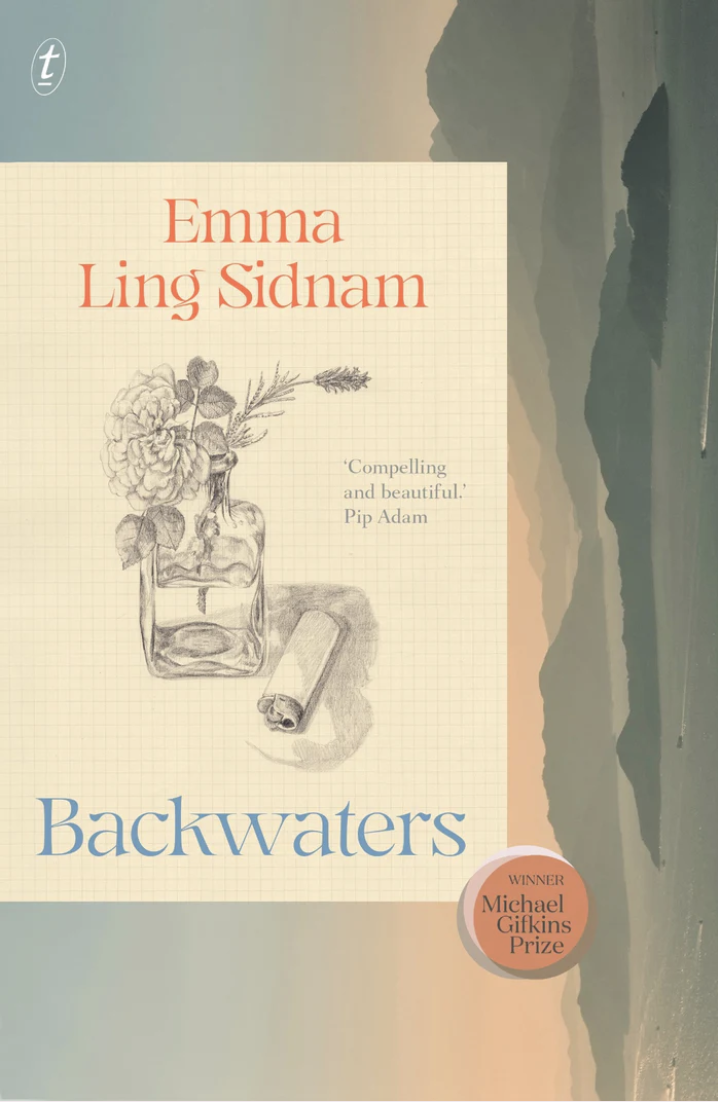
Backwaters – Emma Ling Sidnam
READ FOR NZ BOOK AWARDS
Backwaters addresses the consequences of feeling distant from your ethnic heritage. It starts with fourth generation New Zealander, Laura, being asked “but where are you from from?” New Zealand has been her family’s birth place and home for generations, yet acquaintances and strangers want to pigeon hole her to her great-great-grandparents’ homeland of China. Laura is ambivalent about her heritage so the questioning not only bugs her but guilts her about not knowing more.
My Chinese roots are tangled, messy, unwanted and yet still there. They’re still there, even if I never get over myself, even if I never dig deep enough to find that they’re beautiful. Still there, even if Ken Long isn’t my real great-great-grandfather. Still there, even if there are answers I’ll never find.
When she’s asked to write about the Chinese New Zealand experience for a work project, Laura decides to discover her family’s history via the diary of her great-great-grandfather Ken, a market gardener in the early years of the colony.
A dual narrative follows the journey of Ken’s immigration and Laura’s identity crisis as she undertakes a deeper exploration of her whakapapa and wonders if a closer connection to it will alter her life any.
This is something that happens too often in New Zealand, people born and raised here being asked where they are from, which is surprising when we have such a diverse and multi-cultural society. Ling-Sidham has captured well this moment of recent history and of right now. Plus she has given Asian New Zealanders more of a voice, a group which is under represented in fiction.
I really enjoyed this character and her existential ponderings, not only about her heritage, her identity and her sexual orientation but also about family secrets that come to light. Backwaters is a contemporary exploration of what it means to be a young adult growing up in today’s crazy world and everything felt authentic, especially the characterisation of Laura. – Rachel
Published 2023
Text Publishing
310 pages
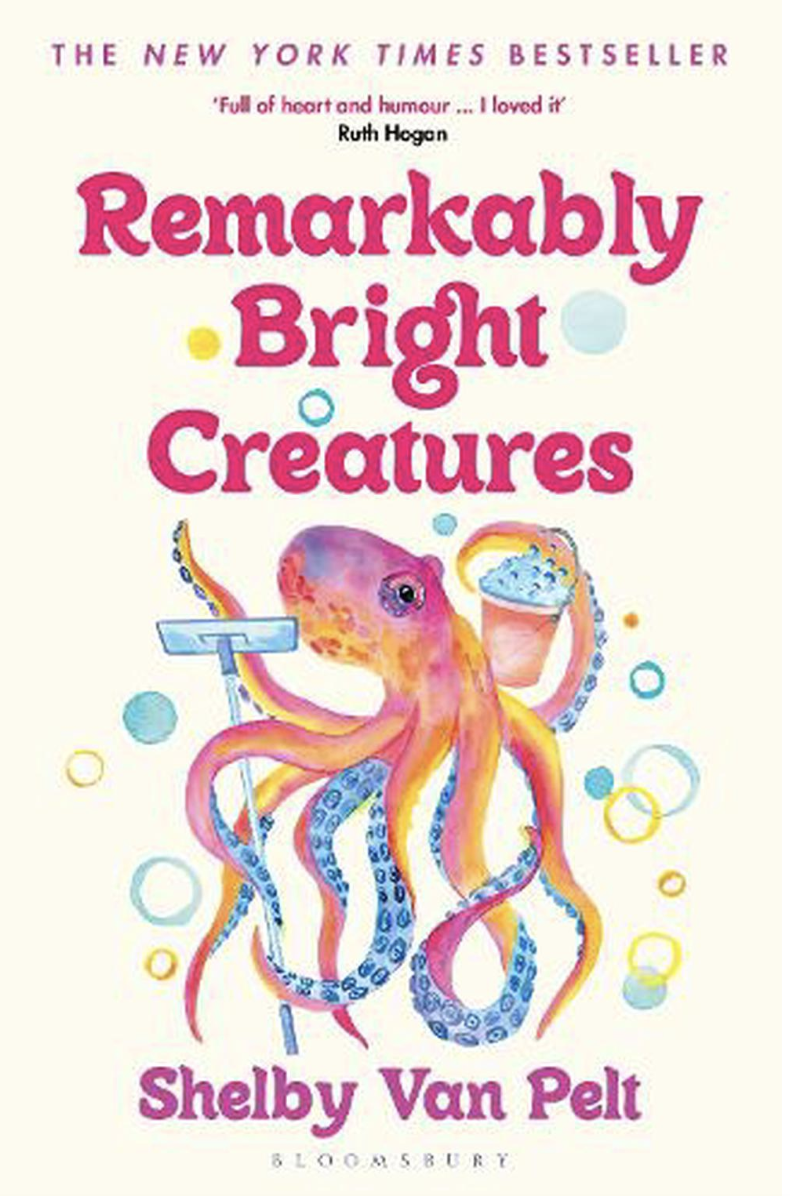
Remarkably Bright Creatures – Shelby van Pelt
READ FOR BOOKCLUB
Chosen by Jodie
Remarkably Bright Creatures features an all-knowing giant Pacific octopus as its key narrator. Marcellus knows only captivity and is astute in his observations of those observing him, which helps connect missing family members.
Day 1,361 of My Captiv- Oh, Let Us Cut the Shit, Shall We? We Have a Ring to Retrieve.
● Marcellus the Octopus was one of the three main narrators and was very cleverly written. He truly made this novel come together. I really enjoyed Marcellus’s observations on the humans in the novel which were laced with humour and wisdom. The novel itself was very character driven. The strength lay in the connection between Marcellus and Tova, one of the other narrators. Although at times I found the writing underwhelming and a little predictable, it was still a enjoyable novel to read. – Jodie
● Remarkably Bright Creatures told a heart-warming story of grief, loss and love. I looked forward to hearing from Marcellus (who provided a unique and often funny perspective) and Tova (practical and emotionally constrained) the most. Cameron was interesting but slightly annoying. He was portrayed as an incredibly clever person however he was unable to hold down a job for long and didn’t have any assets to speak of. He then seemed to make an implausible improvement by holding down a job, working at the aquarium and paying his aunt back – quite the turnaround! The story was predictable and easy to follow which made for a nice change. – Jo
● I ignored the convenient coincidences that were scattered by the author throughout this novel, as nothing could sully my love for a fictitious octopus named Marcellus. This was a light and lovely read and one that I became completely drawn into. – Suzy
● Marcellus the octopus was the star of this book. It took me a while to warm to Cameron and Tova but because I loved that cepholapod so much I didn’t want to stop reading. Rather than have a big reveal of secrets uncovered at the end, van Pelt chose to have the clever Marcellus tell us early on, and the plot driver then became him trying to find a way to alert those involved as to his revelations. I liked this narrative style. A light-hearted read that warmed the cockles of the heart. – Rachel
Published 2022
Ecco
360 pages
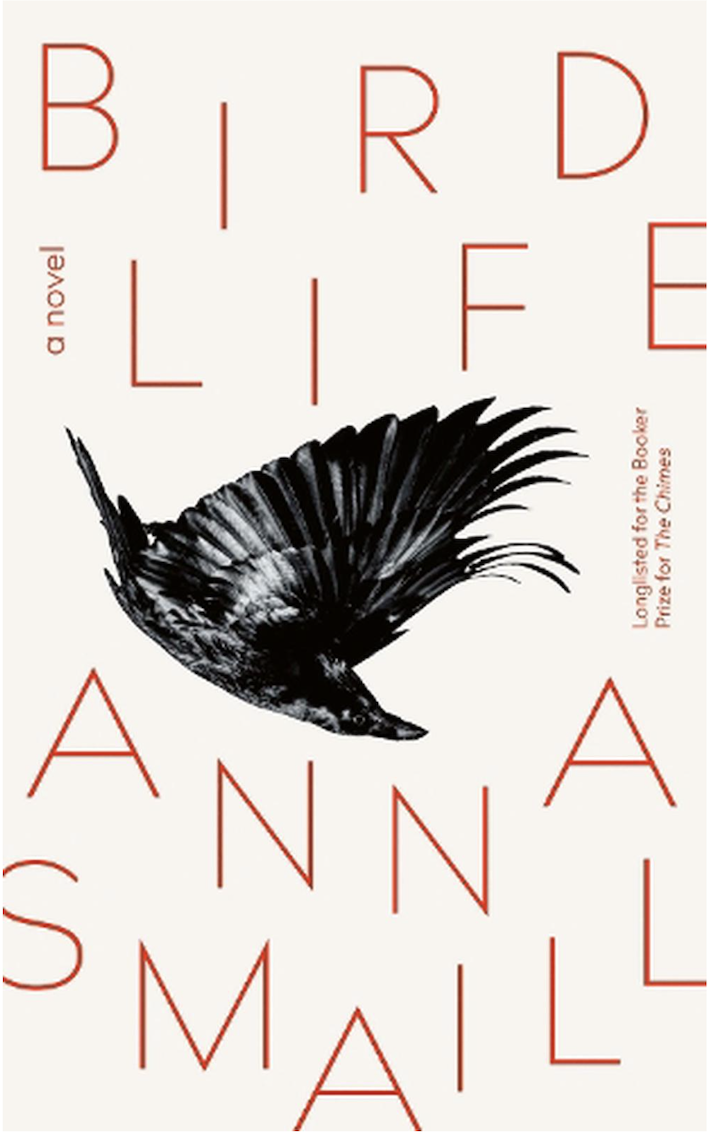
Bird Life – Anna Smaill
READ FOR BOOKCLUB
Chosen by Suzy
Set in Japan with memories of New Zealand, Bird Life is about Dinah, a young Kiwi woman who moves to Tokyo to escape grief only to gravitate towards a colleague who is also in the grip of loss. Both tell their stories of the past and the current, experiencing a spiral into madness as they try to rescue themselves and one another.
“When you are a child, you should have a chance to be a child. That is what I think. There are some kinds of love that are very hungry. It is probably very selfish of me, but I wanted a chance to live without getting eaten up”.
● Previously if someone was to say to me “could you please articulate the madness of grief” I would draw a blank, whereas now I can reply “read Bird Life by Anna Smaill”. The horrible depths of sadness are explored by the author in a somehow very beautiful way which left me feeling wrung out, but also acknowledged. This is a special book that continues to resonate with me. – Suzy
● I felt like I was walking in a fog with this story. It was hard to decipher what was really going on, which I usually find intriguing but this time found annoying. There were so many great passages, it was beautifully written and I can appreciate that talent but I felt frustrated and bored at the same time. I couldn’t wait to finish it. I didn’t emotionally connect with the characters and their pain was lost on me. I would not recommend this. – Jo
● My first thoughts a few pages into this book was how it reads like a work translated from Japanese. It is Murakami-esque with its poetic simplicity, its use of magical realism, and its outlets for other worldliness. But it is unique in its beautiful language and astute observations. Smaill made me stop often to admire the construction of sentences or the presentation of information. I enjoy books that explore different versions of reality and ask the reader to pick where the truth lies, so this did not fail to challenge or impress me. – Rachel
● I found Bird Life a beautifully written novel. At times it is quite poetic and other times blunt and clipped. The two main characters are struggling with grief, a grief so intense it has created mental instability. I did find the novel a little hard to follow at times, devising what was or wasn’t reality, but it was a intriguing read and I would recommend it. – Jodie
Published 2023
Scribe
304 pages
Chain-Gang All-Stars – Nana Kwame Adiej-Brenvah

READ FOR BOOKCLUB
Chosen by Jo
Gladiators fight to the death to win their freedom In America’s private prisons. Loretta Thurwar and Hamara “Hurricane Staxxx” Stacker are the stars of Chain-Gang All-Stars, a televised, profit-making programme. This book is an exploration of the American prison system, asking what freedom really means.
Does disappearing one person from the earth clean it some? I seen men I knew were a danger to the world and they too deserve better than this. A shame for me to hope for better, but I know it’s better that can be done. Ain’t no magic potions for these bleeding human hearts. Ain’t no building full of hurt gonna save the masses.
● I read Chain-Gang All-Stars on my phone and missed all of the footnotes which other members of our bookclub said hindered the enjoyment and confused the nature of the story. So, I think I enjoyed it a whole lot more than the others! I usually enjoy dystopian novels and this did not disappoint. There were many characters to remember which may have diluted the power of the central ones, but its strength was the strange and contradictory idea to punish rapists and murderers by making them kill for their freedom. It was violent but easily readable and not as disturbing as I was led to believe. I enjoyed it. – Jo
● The intent of Chain-Gang All-Stars was fantastic – highlighting the brutality and inhumanity of the American prison system. I was able to feel sympathy for characters who had undertaken horrific crimes due to the maltreatment they were experiencing while incarcerated. There were unfortunately aspects that were distracting, for example the prolific footnotes, and overall this led me to feeling that what could have been a wonderful book was instead a fairly pedestrian one – Suzy
● I struggled a little with the construction of this novel. It jumped around from scene to scene which made it hard to follow sometimes. And the amount of new characters being introduced interrupted my flow of reading and made it hard to be invested in the true horror of the novel. I did enjoy the relationship between the two main characters, Thurwar and Staxx, and the inevitable doom that was constantly lurking. – Jodie
● I understand the author’s intent with this novel and appreciate him highlighting injustices about the American prison system. However, the presentation of these ideas has not made a huge impact on me. The gladiator storyline has been done before, it is overwritten in places and the footnotes (sometimes fact, sometimes fiction, sometimes three quarters of a page!) are an interruption to the narrative flow. The two main characters are distinct and are the glue that holds together the less impressive parts of the book. – Rachel
Published 2023
Pantheon
367 pages
2024: Coming of Age
Bookclub has come of age – it is 18 years old, officially grown up! And what an upbringing it has had. From simple beginnings, it has changed and flourished and developed a life of its own. Now, with a mass of memorable evenings, blog posts, discussions and analysis behind it, bookclub has a unique and distinct identity.
That identity is made up of our club members’ sometimes complimentary, sometimes contrasting opinions and is buoyed by the feedback and thoughts of our friends, whanau and followers. As bookclub comes of age, so too does our evolving literary knowledge, our ability to analyse and our collective appreciation of good books.
In our coming-of-age year we have discovered we are drawn to strong characters and identities. Last year we were introduced to some big personalities and it looks like we are chasing that high again. Interestingly, 2024 includes a bit of wildlife too, with a number of animal references in the the titles. What this means we don’t know yet, but we can’t wait to see how these animalistic personalities present.
Here’s the reading list:
Chain Gang All Stars – Nana Kwame Adjei-Brenyah
Bird Life – Anna Smail
Remarkably Bright Creatures – Shelby van Pelt
Kim Jiyoung, Born 1982 – Cho Nam-joo
I Am Homeless If This Is Not My Home – Lorrie Moore
Bunny – Mona Awad
The Whalebone Theatre – Joanna Quinn
All Fours – Miranda July
Drive Your Plow Over The Bones Of The Dead – Olga Tolkarzcuk
Hamnet – Maggie O’Farrell
Passing – Nella Larsen
Martyr! – Kaveah Akbar
Women’s Prize: 2022
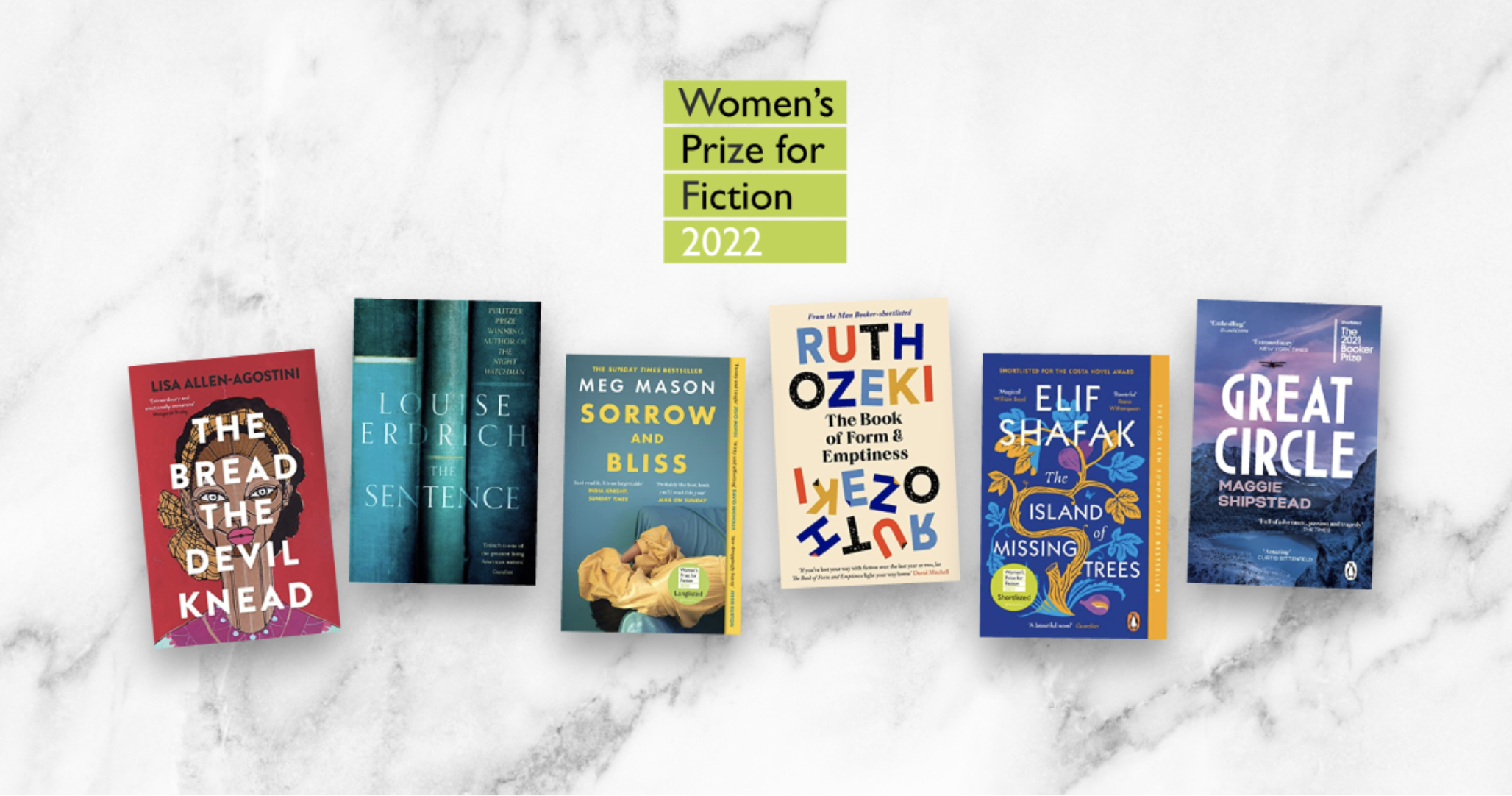
After loving the Women’s Prize shortlist in 2023, we have decided to back read the Women’s Prize shortlists. The finalists for the year we have completed were so readable, meaningful and highlighted the female experience. That’s a winning reading combo we want to chase more, so it’s off to the 2022 shortlist.
Late in 2023 Suzy and Rachel completed the titles they had not already read and over the hot summer shared their thoughts and analysed the six titles, deciding which book they would have picked as winner.
The finalists were:
The Bread The Devil Knead by Lisa Allen-Agnostini. Trinidadian Alethea has an abusive past and present. She is trying to forge a career and make something of herself but her controlling boyfriend and secrets from the past are set to thwart her.
The Sentence by Louise Erdrich. This is a haunted book, starting with a ghost in a bookstore but includes characters haunted by the past, by racism, by Covid and by secrets. Set in Minneapolis, its leading character is a former felon married to the man who arrested her.
Sorrow & Bliss by Meg Mason. A love story about Martha and Patrick and the impact that Martha’s undiagnosed mental illness has on their relationship. It is heartfelt but also funny and dark humoured. As the title says, the book, and the relationships in its pages, are filled with bliss but also much sorrow.
The Book Of Form & Emptiness by Ruth Ozeki. A boy begins hearing voices after the death of his father. Of the objects speaking to him is a book about his life who in part narrates this book to the reader. A study of grief and madness in a surreal setting, with a struggling mother-son relationship at the centre of it.
The Island of Missing Trees by Elif Shafak. A father and daughter struggle after the death of their wife/mother. Dual timelines relay the story of the parents’ controversial love affair in war-torn Cyprus, and their life once reunited in the UK. However, escaping the conflict doesn’t remove the emotional consequences of it.
Great Circle by Maggie Shipstead. Marian Graves is an orphan who becomes a great aviator. She has many obstacles to her dream but is dogged in her determination and finds ways to achieve. A century later Hadley Baxter is examining Graves’ life as she plays her in the movie of her life.
● Suzy: The 2022 shortlist did not f$%k about and was absolutely filled to the brim with violence, addiction and mental illness. Some authors did this more effectively than others and I am at a loss as to why The Book of Form & Emptiness was selected as the winner. I don’t know how I managed to stay fairly unmoved by this family’s tragic circumstances, but the smug narrator (a book) may have had something to do with it.
The rest of the shortlisters all shone, albeit in different ways. It was hard to go past Great Circle as my favourite – it was a breath of fresh air to read a story about a female adventurer and it was just done so well. Sorrow and Bliss and The Island of Missing Trees were also very special and I thoroughly enjoyed them both.
● Rachel: Despair, trauma and mental illness played a big part in the formation of the shortlist in 2022. That may sound miserable but texts that dissect female emotions and the handling of sensitive information are valuable. This honesty gave me a deep sense of connection with (most of) these novels and their characters.
The Island of Missing Trees came out on top for me. The love story, the trauma of war and separation, and a young girl grieving for her mother were powerfully written. I read all 354 pages in one sitting, unable to put it down. Shafak is a very talented writer.
Sorrow and Bliss by Kiwi-born author Meg Mason and Great Circle by Maggie Shipstead came in second and third. The former heart-wrenching, the latter a great adventure. I can’t fault The Sentence but it just wasn’t as captivating for me as the aforementioned titles.
The Bread The Devil Knead was well constructed and written but it had too much traumatic content for me to place it any higher. Like Suzy, I can’t understand how The Book of Form & Emptiness won the prize in 2022. It really took the concept of using metaphors for grief to the nth degree. And there were many subplots shooting off at all angles. The characters felt like characters in a book. I know that sounds weird because they were, but after feeling so much for the characters in the other shortlisted books, I found myself not caring for Benny and his mother.
2023: End Of Year Thoughts

There’s an intriguing stream of literature being published post Covid. That time of constraint and restriction appears to have spurred a greater range of freedoms post pandemic, especially in the way in which writers examine the human psyche and societal change.
Characters we met this year seemed to be strong and oh so convincing but often set in surreal environments to challenge traditional thinking. These alternative realities and magical elements really pushed the character to react, and the reader to examine today’s world, and to re-imagine it. When put under this spotlight, crises of the world and sobering events of the year can be more closely considered and understood; applauded or condemned.
We just wrapped that fog around us like a cocoon.
Cocoon by Zhang Yurean
In our reading this year we explored a diverse assortment of genres that took on all these considerations, pushing us outside of our comfort zones and sometimes right over the edge! It’s no surprise all our Most Shocking Moments came from the same book: Tender Is The Flesh by Agustina Bazterrica, a book where humans are harvested for meat.
Motherhood was one common theme we found to be under examination to measures we had not seen before. The pressure of getting it right; the consequences when its not; the relationships children of all ages have with their mothers; lengths to which a mother will go to protect her young; mothering relationships between strangers. As mothers all of us, we were quick to offer opinion on how mothers were portrayed, and wondered has it even been done right yet? There is still much complexity of motherhood to be explored.
So what did we love from our 2023 reading? There were some commonalties, such as admiration of how the crack in the pool in The Swimmers by Julie Otsaka so cleverly represented Alice’s dementia; that Lauren John Joseph had the most interesting author bio; and Tama winding up Rob produced some of the funniest moments.
‘Tama. Don’t you dare.’
The Axeman’s Carnival by Catherine Chidgey
‘Maybe you’ve had a nose job. Classic whore move, babe. What the fuck’s a peacharine? Can’t you cut up a fucking potato? I’m not an enemy. This was no suicide, Trent. See the spatter patterns? Do you think it’s hormones? Am I just the workhorse?’
‘Obviously we can’t use profanities,’ said Lakshmi.
‘We can’t use profanities,’ I said.
He’s being a dick on purpose,’ said Rob.
‘He’s being a dick on purpose,’ I said.
Here’s a selection of the rest of our faves:
Best Character
Suzy – Ms Shibata from Dairy Of A Void
Jo – Martha from Sorrow & Bliss
Jodie – Keiko from Convenience Store Woman
Rachel – Ms Shibata from Dairy Of A Void
Following the manager’s cue, we repeated the phrases at the top of our lungs. “We pledge to provide our customers with the best service and to aim to make our store the beloved store of choice in the area!”
Convenience Store Woman by Sayaka Murata
Worst Character
Suzy – Rob from The Axeman’s Carnival
Jo – Thomas James from At Certain Points We Touch
Jodie – Miriam Cornell, the piano teacher, from Lessons
Rachel – Shiraha from Convenience Store Woman
Best Relationship
Suzy – Jiaqui & Gong from Cocoon
Jo – Melanie & Ms Justineau from The Girl With All The Gifts
Jodie – Marnie & Tama from The Axeman’s Carnival
Rachel – Marnie & Tama from The Axeman’s Carnival
Most Atmospheric Setting
Suzy – The convenience store in Convenience Store Woman
Jo – The water tower in Cocoon
Jodie – The convenience store in Convenience Store Woman
Rachel – The slaughterhouse in Tender Is The Flesh
Best Ending
Suzy – Sorrow & Bliss
Jo – The Girl With All The Gifts
Jodie – Tender Is The Flesh
Rachel – Dairy Of A Void
Runner Up Best Book Of The Year
Suzy – Convenience Store Woman
Jo – The Girl With All The Gifts
Jodie – Dairy Of A Void
Rachel – Dairy Of A Void
Book Of The Year
Suzy – Tender Is The Flesh
Jo – Tender Is The Flesh
Jodie – Sorrow & Bliss
Rachel – Tender Is The Flesh
After all, since the world began, we’ve been eating each other. If not symbolically, then we’ve been literally gorging on each other. The Transition has enabled us to be less hypocritical.
Tender Is The Flesh by Agustina Bazterrica

We're
currently
reading


Recent Comments