The Free-Range Bookclub
Bookclubbers without boundaries in Nelson, New Zealand
2007 – End of year thoughts

 At the end of the year we decided to head out for lunch and discuss the year’s readings.
We dined at Stoneridge Cafe in the Moutere countryside and discussed our favourite scenes, literary devices, characters and fictional love interests. And, we came up with following:
Book of the year:
Rachel: The Wind-Up Bird Chronicle
Suzy: Catcher In The Rye
Nadine: Life Of Pi
Runner up best book:
Rachel: Atonement
Suzy: Atonement
Nadine: The Wind-Up Bird Chronicle
(Haha and from what I remember, Nadine’s husband made us *awesome* bookclub bookmarks – Suzy)
The Metamorphosis & Other Stories – Franz Kafka
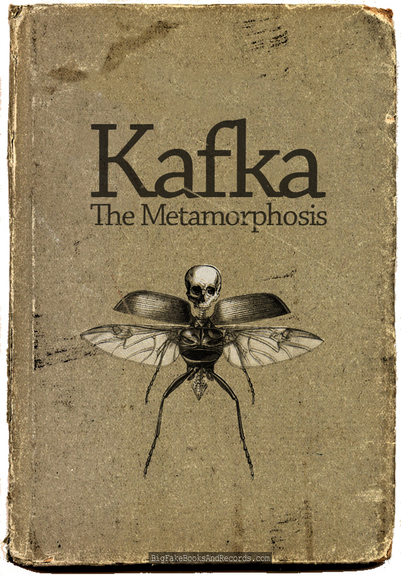
READ FOR BOOKCLUB
Chosen by Rachel
Gregor Samsa awakens one morning to discover he has turned into a giant insect, in this 1915 novella. An establishing story in the existentialism genre.
⚈ “Gregor Samsa one day wakes to find he has turned into a dung beetle. His family is repulsed by him. His sister eventually offers feeble attempts to care for him, but it is clear that his family do not accept him when he is different from the breadwinning and ordinary man he once was. Kafka had a difficult relationship with his own father and this is detailed in the many letters he wrote to him, all of which were subsequently published.
“The unacceptance of a child who is different is a universal theme, but at the time The Metamorphosis was published, it was unheard of to express those emotions in such a metaphorical way. As such this short story become an establishing story in the existentialism genre and remains relevant today in the ways in which society judges groups and individuals for being unique.
“The other short stories we read for this bookclub meet were In A Penal Colony and A Country Doctor.
“In the former an explorer tours an island which has become famous for its capital punishment machine, which tattoos apt words and phrases into the skin until the person dies. Though there is an obvious pointer to the themes of justice and guilt and implementation of the law, In A Penal Colony is considered to be an allegory comparing the Old and New Testaments and therefore a shift in the relationship between human existence and divine law. Whatever the case, an examination of the treatment of people, both just and unjust, can be taken from this text.
“In the latter, a country doctor leaves for an emergency on a winter’s night, only to face a series of surreal and absurd predicaments. His horse dies but a groom appears from nowhere to offer him two magnificent replacements. Without riding them he is suddenly in the patient’s room and at first can find no emergency, only to then discover serious illness and then find himself in place of the patient, the horses with their heads in the window neighing frantically.
“Lacking the ability to assess and react to situations, the doctor allows himself to be manipulated by the groom, the family, and the horses. By submitting he becomes a tool, never, attempting to resist.
As doctor he is a thing, an object, a tool; as man he is nothing.
“None of us had read Kafka before this bookclub meet (shame on us!) and we realised how much these stories make so much contemporary literature make sense. We are indebted to Kafka for his own brilliant fiction but should also be for the influence he’s had on many celebrated modern writers. The stories in themselves are extreme and ask you as the reader to be willing to accept impossible possibilities and look for deeper meaning. If you can do this, these stories are extraordinary.”
Published in German 1915
Translated into English by Stanley Corngold 1972
Bantam Classics
52 pages
Atonement – Ian McEwan
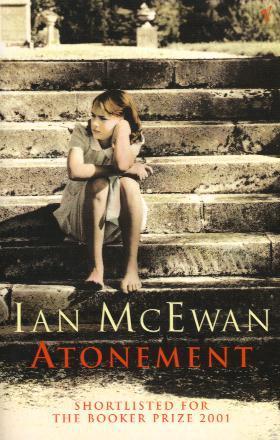
READ FOR BOOKCLUB
Chosen by Suzy
A girl’s half-innocent mistake ruins the lives of those around her, and she spends the rest of her life attempting to atone. The mistake comes in the form of viewing her 9-year-old cousin being assaulted and making presumptions on who the offender is. Her testimony changes the course of everyone’s lives. As a nurse, fixing up soldiers during WWII, she attempts to recant her testimony by putting it on paper in novelistic form.
How can a novelist achieve atonement when, with her absolute power of deciding outcomes, she is also God? There is no one, no entity or higher form that she can appeal to, or be reconciled with, or that can forgive her. There is nothing outside her. In her imagination she has set the limits and the terms. No atonement for God, or novelists, even if they are atheists. It was always an impossible task, and that was precisely the point. The attempt was all.
⚈ “The thing I love about Ian McEwan is his ability to refashion ordinary things into sensory experiences. Reading his work makes me feel as though I’ve been there, met the folk and lived the complexities of their lives. Atonement is no different. And in fact probably better. Robbie and Cecilia are my friends, I can see the vast Tallis mansion behind my eyes and will remember the scene on Dunkirk for a long time to come. I adore this book.” – Rachel
⚈ “This book still haunts me! The retreat to Dunkirk was so evocatively written that I felt I could have sat down with a soldier who was there and genuinely related to him and discussed it as a shared experience (yes I *do* realise how ridiculous that sounds). One of my all-time favourites and one of the few novels where I think the movie has done it justice.” – Suzy
—–
Published 2001
Jonathan Cape
371 pages
The Unconsoled – Kazuo Ishiguro
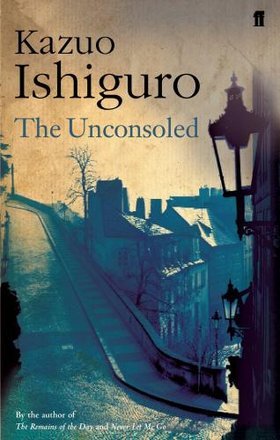 READ FOR BOOKCLUB
Chosen by Rachel
Ryder, a famous pianist, arrives in a European city to perform a concert. However, he appears to have lost most of his memory and finds his new environment surreal and dreamlike. As both hero and anti-hero, he wades through the pages and locations in a sleepy fashion. People appear and disappear, locations morph into one another, storylines up and change without warning.
Although there is little sense of coherent logic, this is a heavy plotted book with well-structured characters and suitable outcomes.
Your wound, your silly little wound! That’s your real love, Leo, that wound, the one true love of your life! I know how it will be, even if we tried, even if we managed to build something all over again. The music too, that would be no different. Even if they’d accepted you tonight, even if you became celebrated in this town, you’d destroy it all, you’d destroy everything, pull it all down around you just as you did before. And all because of that wound. Me, the music, we’re neither of us anything more to you than mistresses you seek consolation from.
⚈ “While some may say this book was baffling, I found the confusion consistent. It made Ryder a believable character and heightened my sense of intrigue. Once I accepted things were not simple, nor offered in a succinct manner, I enjoyed the roller coaster ride. I was happy with the conclusion too, it suited the chaos of the narrative. To have everything spelled out and explained on the final pages would have been a disappointment.” – Rachel
⚈ “I didn’t really enjoy this book – I know a lot of it probably went over my head. Also, I couldn’t relate to the main character so I think it lost me there and then.” – Nadine
—–
Published 1995
Faber & Faber
535 pages
2007 Bookerthon
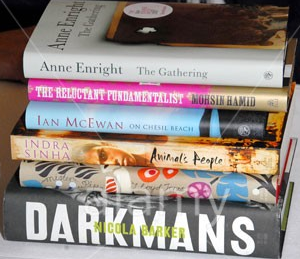 In 2007 we began our Bookerthon journey. We’d kept up to date with Man Bookers of the past and we’d shared thoughts and comments. In 2007 there were a couple of attractions to the shortlist. First of all Lloyd Jones, a New Zealander, featured upon it. Secondly, another of the contenders was one of our favourite authors, Ian McEwan. It seemed logical to keep reading. Someone had the idea to read them all before the winner was announced. The other announced “it will be like a Booker-thon”.
And just like that, history was made!
In picking our winner, we considered the following categories: readability, significance and style. Who knew if that was how the judges based their critiques also, but from our novice point of view, it seemed logical enough.
The thing that hit us in our first Bookerthon was the way in which extraordinary characters took control of the narratives and forced themselves into our lives. It was as if these authors knew a likeable protagonist or lead character of the past was not enough anymore. To be recognised, their book needed an extravagant leading figure, who would entertain, horrify and mesmorise us.
First, in Darkmans there is a jester who haunts the pages and forces the characters to speak unexpectedly and act with comedic or shocking outbursts. In Animal’s People a boy deformed from a chemical disaster walks on all fours and abuses passers by with language like you’ve never heard. On Chesil Beach introduces a privileged, well-to-do young couple on their honeymoon who speak of nothing but their inability to make love. At the other end of the scale is Mister Pip, in which an English teacher wears a red clown’s nose and tows his wife about in a trolley in Bouganville reading Great Expectations to native children during a conflict. Depressed Irishman Liam Hegatry takes his life in The Gathering, but wears a high-vis vest so his body can easily be located in the turbulent waters of the local river. And a nameless American in The Reluctant Fundamentalist questions a Pakistani living in New York who admits he smiled when the Trade Towers came down.
This cast was a brain explosion of character development and relationships, with idiosyncrasies, troubles and societal beliefs not so prevalent in one’s every day reading. The Man Booker Prize delivered in ways we had not predicted, in the expansion of our understanding of people, of types of people, of all people, far and wide. The shortlist might be called the best six books of the year but to us they were the best representation of the state of the world and the state of literature at that moment.
After this appreciation, we knuckled down to our evening of judging. Wine, a cheeseboard, six revelatory books later we concluded: five of the six to have qualities worthy of winning: Mister Pip, The Reluctant Fundamentalist and Animal’s People are all profound and human, set amongst real-life atrocities, and Darkmans is a detailed and unique story. On Chesil Beach is from the master himself, and while we do both respect his genius, we have differing views of where this one sits in the shortlist favourites order.
The book we did not think was a contender was The Gathering. Yes it spoke to families, to mental health, to discovery. And we agreed the misery was complete and all-encompassing and therefore stylistically impressive. However, something so dreary failed our readability criteria and couldn’t make enough gains in the other two categories.
In the end we both picked our favourites for the same reasons: slap-in-the-face reality, highly developed characters, unputdownable readability and the promotion of a cause through a fictionalised truth. So for Rachel it was Animal’s People and for Suzy Mister Pip.
Best book 1-6: Rachel:
Animal’s People
Mister Pip
The Reluctant Fundamentalist
On Chesil Beach
Darkmans
The Gathering
Best book 1-6: Suzy:
Mister Pip
On Chesil Beach
Animal’s People
Darkmans
The Reluctant Fundamentalist
The Gathering
On Chesil Beach – Ian McEwan

READ FOR BOOKERTHON
In this novella a newly married couple reflect on their pasts and as a result question their marriage while honeymooning on Chesil Beach.
⚈ “The opening line of On Chesil Beach sums up the rest of the content: ‘They were young, educated, and both virgins on this, their wedding night, and they lived in a time when conversation about sexual difficulties was plainly impossible.’
“It is 1962, the cusp of the sexual revolution, and two very English characters are contemplating the role of sex in their newly declared marriage. There are many factors that contribute to their differing views, not contained to the time and place, but also societal class systems and other goings on in their familial histories.
“The real-life Chesil Beach in Dorset, on the south-west coast of England, is alive and relevant to the storyline. The beach is one of the few shingle beaches in the UK. Its view of the ocean and rocky composition represent both openness but also difficulty/slippery footing associated with reaching that openness.”
A sudden space began to open out, not only between Edward and his mother, but also between himself and his immediate circumstances, and he felt his own being, the buried core of it he had never attended to before, come to sudden, hard-edged existence, a glowing pinpoint that he wanted no-one else to know about.
⚈ “While I am an Ian McEwan fan of the highest order, On Chesil Beach left me wanting. There was his usual mastery of prose but somehow it seemed too easy. I’m being critical, obviously, because even a bad Ian McEwen book would be better than many texts on the bookshop shelves!, but I guess being the huge fan that I am means I am being extra tough on him. Don’t get me wrong, it is still a great read, I just didn’t feel overwhelmed with fervour and emotion as I have with his other masterpieces. Edit: Now years later, I look back on this book with fondness and admiration. Without a re-read. I’m not sure what changed but it’s funny how hindsight and time to reflect can change one’s opinions.” – Rachel
—–
Published 2007
Jonathan Cape
166 pages
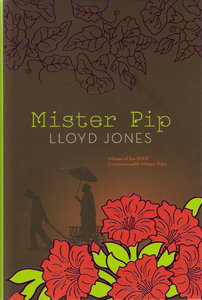
Mister Pip – Lloyd Jones
READ FOR BOOKERTHON
In the world of Mister Pip, reading Dickens represents salvation for a community ravaged by conflict.
⚈ “Lloyd Jones’s novel is set in a village on the Papua New Guinean island of Bougainville during the 1990s civil war. Jones covered it as a journalist, and in his novel he never shies away from the realities of daily life shadowed by violence. Matilda, the 13-year-old narrator, details how the helicopters circle, the generators are empty and all the teachers have fled.
“One white man remains. Mr Watts believes in the power of literature to set minds free. He reads the children Great Expectations and in it they find something just as vital as medicine and kerosene: ‘a bigger piece of the world’. Like many readers before her, Matilda falls in love with the fictional Pip, but ‘Pip’ is mistakenly assumed by soldiers to be a rebel fighter and then the boundary between fiction and reality dissolves.
I had found a new friend. The surprising thing is where I’d found him – not up a tree or sulking in the shade, or splashing around in one of the hill streams, but in a book. No one had told us kids to look there for a friend. Or that you could slip inside the skin of another. Or travel to another place with marshes, and where, to our ears, the bad people spoke like pirates.
⚈ “A clever, enthralling, devastating book.” – Suzy
⚈ “I enjoy books set in real life conflicts, to be educated/shocked and entertained all at once. Here Jones takes a little known conflict and into it inserts fabulous characters. The protagonist, Matilda, and the re-invented Pip are both fully developed characters who bring innocence and a harsh reality to the real-life conflict. I enjoyed not only the harsh differences but also the parallels between story telling and war. A touching and haunting book with snippets I had to read from behind my hands. An important book; one not to be forgotten.” – Rachel
—–
Published 2006
John Murray
256 pages
Darkmans – Nicola Barker
READ FOR BOOKERTHON
A jester haunts this book, possessing the characters at inconvenient moments. They are a collection of interesting folk living in Ashby, England. An erratic, embitted old man; a drug dealer; a chiropodist with mysterious bruises; a man with schizophrenia; a boy building matchstick cathedrals.
The jester is the weight of history bearing down upon them, he is the language that links past and present. He is a prank puller and the instigator of many comedic moments in this book that celebrates life in all its glory, both uneasy and honest.
⚈ “This book was a bit mad but I loved it. It was a massive commitment during a Bookerthon due to the length but definitely worth it.” – Suzy
⚈ “This was an epic read and there was a lot going on, but it was quite different to most novels (right down to the font!) and that made it intriguing. As two families go about their daily business, which is identifiable to us all, there is a ghostly jester who haunts the book, forcing characters to say weird things and moving items about in true supernatural style. You certainly had to be invested in the 800-odd pages to get the most out of it. It was tough to give it the attention it deserved due to time restraints with our Bookerthon reading, so I’d recommend picking up this book when your reading time is ample.” – Rachel
—–
Published 2007
Fourth Estate
848 pages
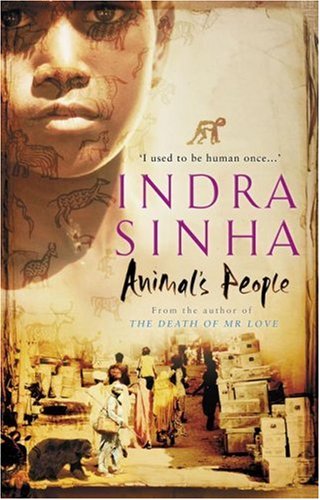
Animal’s People – Indra Sinha
READ FOR BOOKERTHON
In 1984 Union Carbide released 40 tonnes of lethal gas from its pesticide factory into the city of Bhopal in India, killing thousands and contaminating drinking water. Indra Sinha writes of this atrocity in Animal’s People, replacing Bhopal with the fiction city of Khaufpur.
He even creates and promotes in the book a website about “Khaufpur,” to which he allocates Bhopal’s history, where the residents are his characters and the journalist revealing events is a female version of himself.
In the book Animal is a man who has been deformed from the chemical leak and as a result walks on all fours. Though cynical and bitter he retains many enjoyable and relatable characteristics including a romantic side. The history of the city and the people are detailed alongside the story of Animal who attempts to protect the woman he loves and also spy on American doctors whom many do not trust.
At the end of time when God judges us humans, I just hope He remembers to judge Himself as well.
⚈ “This book was so evocative. Years later, when I think of it I still feel overwhelmed with memories of the noise and colour.” – Suzy
⚈ “I had never heard of the Bhopal Disaster before reading this book. And it is so outrageous that even as I read I kept thinking surely this is not real? I appreciated how Sinha relayed the facts in a fictional style to give them more weight. I also enjoyed how he treated Animal as a normal person – with thoughts and desires, friends, enemies and love interests – despite his severe deformities and homelessness. It’s what made this book affecting and memorable. Not only does it educate people about the disaster but it reminds us that whatever our circumstances and outward presentation we are all the same inside.” – Rachel
—–
Published 2007
Simon & Schutster
374 pages
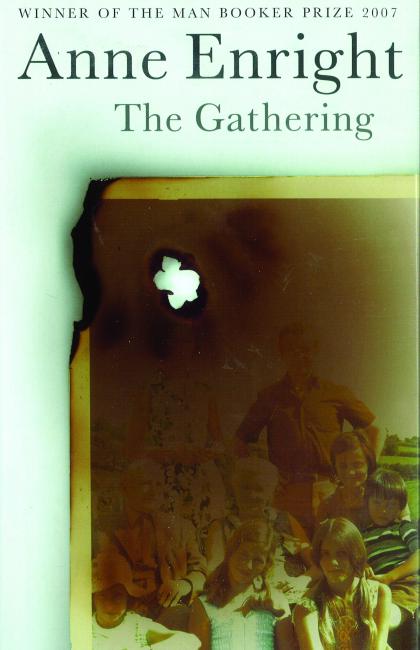
The Gathering – Anne Enright
READ FOR BOOKERTHON
Liam Hegarty has drowned himself a river. He is one of 12 siblings who all like to drink, though he was afflicted more than the rest. His family, a large, Irish kin, come together for the funeral. His sister Veronica narrates events, grieving for her brother but also attempting to unravel the causes of the family’s dysfunction.
There is something wonderful about a death, how everything shuts down, and all the ways you thought you were vital are not even vaguely important… and it is just as you suspected – most of the stuff that you do is just stupid, really stupid, most of the stuff you do is just nagging and whining and picking up for people who are too lazy to love you.
“For us both, the endless misery in The Gathering put a veil over the whole reading experience, making it impossible to see what distinguished this as a book worthy of Booker nomination. There is no sentimentality and no joy. If that’s what Enright was after, she has done well, but that didn’t translate into reader appeal for either of us.”
—–
Published 2007
Random House
272 pages

We're
currently
reading
 The Free-Range Bookclub
Recent Comments