The Free-Range Bookclub
Bookclubbers without boundaries in Nelson, New Zealand
2008 – Bookerthon
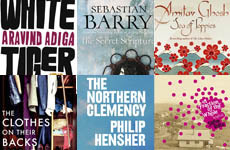
The anticipation levels for Bookerthon 2008 has fluctuated for us both. Our love of Bookerthon has increased due to our Back Bookers but our inability to pick the winner last year has frayed our nerves. Plus, the couple of massive tomes shortlisted this year meant we had to read at least 60 pages per day for five weeks to keep up, so timing and persistence were key.
But we got there. Six books that would be considered diverse but which highlight a particular time and place well. They provide a portrait of an era, taking the reader on a journey around the world and through time, showcasing the importance of capturing history.
From the Opium Wars of China, to 1970s Sheffield, the Australian penal system, India’s class system, a remembered life for a 100 year old Irish woman and the persecuted life of a Hungarian Jew, each finalist brings to life a snippet of time that has gone down in history and shaped the future. Alongside the entertainment provided by these novels, there is a sense of importance and education too.
A Fraction of the Whole is so incredibly laugh-out-loud funny and so unusual it would be a long shot for the prestigious Man Booker prize, though a deserved winner if the judges went in this direction.
The Secret Scripture is profound but touching and startling too and could be a strong contender to win. So too The Northern Clemency – this 736-page epic novel deserves some kudos.
The Clothes on Their Back is interesting and very readable though not as polished as the other five.
In the end, Suzy is choosing Sea Of Poppies as her pick for winner, a historically significant and beautiful book.
Rachel is going for The White Tiger for its poignant and entertaining way of highlighting societal injustices.
Best book 1-6: Suzy:
Sea Of Poppies
The White Tiger
A Fraction of The Whole
The Northern Clemency
The Secret Scripture
The Clothes On Their Back
Best book 1-6: Rachel:
The White Tiger
The Secret Scripture
A Fraction Of The Whole
Sea Of Poppies
The Northern Clemency
The Clothes On Their Back
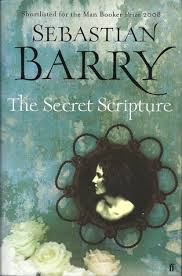
The Secret Scripture – Sebastian Barry
 READ FOR BOOKERTHON
Nearing her 100th birthday, Roseanne McNulty faces an uncertain future, as the Roscommon Regional Mental hospital, where she’s spent the best part of her adult life, prepares for closure.
♥ “Set in an Ireland besieged by conflict, The Secret Scripture is a tale of a 100-year-old woman’s life, and a vivid reminder of the stranglehold the Catholic church had on individuals throughout much of the 20th century.
“In the weeks leading up to the closure of the Mental Hospital, Roseanne McNulty speaks with her psychiatrist Dr Grene, who must decide who of his patients are to be transferred, and will be released into the community. He is particularly concerned about Roseanne, and attempts to discover her history.
“Told through their respective journals, the stories that emerge are refracted through the haze of memory and retelling. Roseanne’s story becomes an alternative, secret history of Ireland’s changing character and the story of a life blighted by terrible mistreatment and ignorance.
It is very difficult to be a hero without an audience, although, in a sense, we are each the hero of a peculiar, half-ruined film called our life.
Irish conflict usually doesn’t hold either Suzy or Rachel’s attention, but the centenarian, Roseanne McNulty, in The Secret Scripture stole the limelight here and helped build the poignant tale about loss and broken promises. Rachel found her voice both compounding and personable, revealing much in her story fragments. Suzy wondered what additional layers could have been added to truely convey the female experience at the heart of this story.
—–
Published 2008
Faber & Faber
312 pages
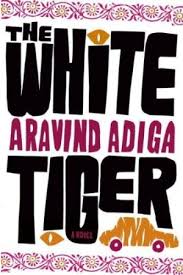
The White Tiger – Aravind Adiga
 READ FOR BOOKERTHON
Born in the dark heart of India, the protagonist Balram gets a break when he is hired as a driver for his village’s wealthiest man. From behind the wheel of their Honda City, Balram observes his employers bribe foreign ministers, barter for girls, drink liquor, and benefit from the poor in society’s unfair class system. Over seven nights he explains how he became a success in life, having nothing but his own wits to help him along.
You ask ‘Are you a man or a demon?’ Neither, I say. I have woken up, and the rest of you are sleeping, and that is the only difference between us.
♥ “At the centre of this book is a touching story about India’s class system and the injustices that come with it. On the surface is Balram Halwai, an amoral, endearing but totally charming protagonist who manages to con his way through life, and into your life as the reader, too. The dark humour ties the reality together and produces a provocative novel. I found this book hard to put down.” – Rachel
♥ “Balram’s outlook and observations provide a look at India that most would not ever see. The dirt, the religion, the prostitutes, the back door politics, ancient and modern cultures colliding. Balram uses the corrupt world to make his own way up in the world, and does so in a charismatic, though not always ethical, way. – Suzy
—–
Published 2008
HarperCollins
318 pages
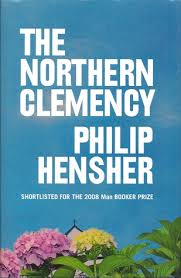
The Northern Clemency – Philip Hensher
 READ FOR BOOKERTHON
Covering 1974 to 1996, The Northern Clemency is a portrait of an era, a novel concerned with the lives of two ordinary Sheffield families, the Glovers and the Sellers, and history on the move.
♥ This book encapsulates an era and follows the lives of two suburban families living in the same street. The true-to-life characters are highly detailed and we hear of their births, marriages, emigration, retirement, illness and deaths, all real life stuff. Okay being eaten by a shark is not all that usual but still, the book is very realistic and addictive – Rachel
♥ There is no surprising plot twist here, instead cooking of meals, gardening, family arguments, gossip and relationships fill the pages. The scene I remember the most, which both shocked me and set the realism tone, was when one of the mothers became so enraged she ran outside with her child’s pet snake and stomped it to death. No this actual act is probably not something most of us can identify with, but the pure frustration of motherhood and being pushed to the edge is. – Suzy
—–
Published 2008
Harper Collins
736 pages
The Clothes On Their Backs – Linda Grant
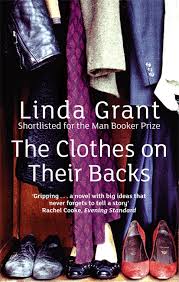
Vivien Kovacs is on a search to reveal the truth to the secrets kept from her by her timid Hungarian refugee parents
♥ “Two Jewish brothers are at the heart of this novel. One escapes Hungary prior to the war, marries and neither parent ever reveals their past to their only child, especially not the fact they are Jewish.
“The other brother, Sandor, stays and suffers life in a slave labour camp. His eventual move to the UK sees him became a criminal and a slumlord who has a desire to wipe the slate clean by revealing all to his estranged niece.
“Vivien’s love of clothes and her hobby of trawling second hand stores for stylish, old-fashioned outfits reveals the theme of the novel: being defined by your appearance, or using clothes as a cover for who you really are.
“Sandor challenges Vivien’s ideas around morality, what he has seen and experienced seems to justify his own behaviours. Though Vivien finds his actions difficult to accept she balances her disgust with the joy that she feels in discovering her family history.
But who can really remember pain? It’s impossible, you don’t remember it, you only fear it returning. These thoughts are like stitches – you see together a memory with them and the flesh heals over into a scar. The scar is the memory.
The relationship between the protagonist and her Uncle holds the story together, but as well as being about appearances it’s also about Hungarian and British history. Other plot lines didn’t seem as developed, nor did many of the support characters. We both found the book an interesting premise but we thought it was a bit of an un-Booker Booker shortlister.
—–
Published 2008
Scribner
293 pages
Sea of Poppies – Amitav Ghosh
READ FOR BOOKERTHON
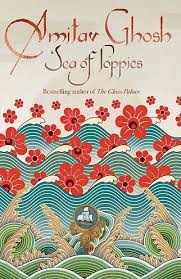
Set in 1838, at a time of colonial upheaval and shortly before the outbreak of the Opium Wars in China, Sea Of Poppies tells the story of the ship Ibis and her interesting collection of passengers making the journey from India to Mauritius.
Amongst the personalities on board are a fallen raja, an American freed man, a French Orphan, a Chinese Opium addict, and a cross-dressing reincarnated saint to name a few. As they sail away from their pasts they become ship mates and family, each relaying their story with colour and vitality.
How was it that no one had ever told her that it was not love itself, but its treacherous gatekeepers which made the greatest demands on your courage: the panic of acknowledging it; the terror of declaring it; the fear of being rebuffed? Why had no one told her that love’s twin was not hate but cowardice?
The narrative is brimming with accents and dialects, stories which are personal but also factual, historical and political. Each character’s story is moving and significant. For Rachel the vast array of languages and slang was difficult to keep on top of. For Suzy the sample of stories from around the world were mesmorising. Either way it’s clear they are authentic stories that needed to be told.
—–
Published 2008
John Murray
528 pages
A Fraction Of The Whole – Steve Toltz
 READ FOR BOOKERTHON
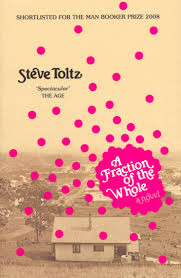
From his prison cell, Jasper Dean tells the unlikely story of how he, his scheming father Martin and his crazy Uncle Terry upset an entire continent
♥ “For most of his life, Jasper Dean couldn’t decide whether to pity, hate, love, or murder his paranoid father, Martin, a man who overanalysed everything and liked to force his self-absorbed opinions on his only son. But now that Martin is dead, Jasper can reflect on the man who raised him in intellectual captivity, and what he realises is that, for all its lunacy, theirs was a grand adventure.
“As he recollects the events that led to his father’s demise, Jasper recounts a boyhood of outrageous schemes and shocking discoveries—about his infamous outlaw uncle, Terry and his mysteriously absent European mother.
“The story takes them from the Australian bush to the cafés of Paris, from the Thai jungle to strip clubs, asylums, labyrinths, and criminal lairs, always with a set of good intentions which usually end up catastrophically. Each tale is so full it could be a novel in itself, and the result is a wild rollercoaster ride.
He pointed the gun at me. Then he looked up at my hand and tilted his head slightly.
– Journey, he said. I had forgotten I was still holding the book.
– Céline, I said back in a whisper.
– I love that book.
– I’m only halfway through.
– Have you got to the point where —
– Hey, kill me, but don’t tell me the end!
We both found the book raucously funny. It’s not what we were expecting from a Man Booker shortlister but we were pleased it made the cut as it added some light-heartedness to the proceedings. There are loopy characters and purposefully overworked plot lines and everything spirals together until it is all so ridiculous you just have to read on to find out what’s going to happen. We both really enjoyed it as a read for a read’s sake and would widely recommend it, but as Suzy said: “I can’t see it winning the prestigious Man Booker Prize.”
—–
Published 2008
Hamish Hamilton
711 pages
Back Booker 2005

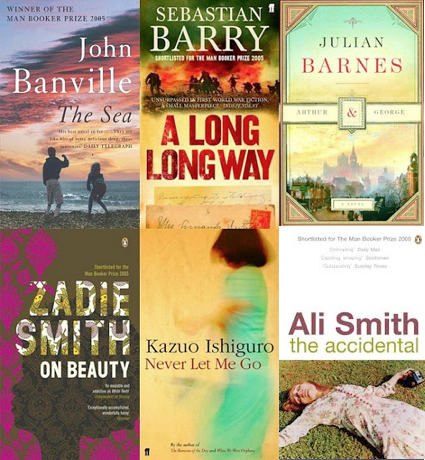 We decided to sneak in another Bookerthon before our regular Bookerthon in 2008. Can you tell this is our new favourite pastime?!
This time we took on 2005 as we’d recently read two of the shortlisters, plus heard great things about the other four finalists.
Our thoughts?
There seemed to be quite a hark to classics or classical styling in these novels. Tried and tested themes or links to popular works of literature were apparent. These features eased us into these new works and allowed us to accept the brave twists and new paths the authors took. The start of each new book felt like slipping into something tried and true, something reassuringly comfy. But by the time each was completed, we realised we had been challenged thematically and opened up to new stylistic points of view.
Arthur & George reveals a section of the life of Arthur Conan Doyle who created Sherlock Holmes, the world’s most famous detective. It includes the time he took on a case of mystery himself, fighting for a pardon for a man named George Edalji who was charged and imprisoned for mutilating livestock.
On Beauty is Zadie Smith’s nod to the E M Forster classic Howard’s End. Set on both sides of the Atlantic, it is an honest analysis of family life, the institution of marriage, intersections of the personal and political, and a study of the deceptions that loved ones can act out upon one another.
The Accidental takes the time-honoured plot driver of a stranger entering the lives of a family or community and through their actions or just presence forces the inhabitants to closer inspect their own lives or relationships. In this, a barefoot woman shows up at the door of the Norfolk cottage the Smart family is renting for summer. She talks her way in. And she stays.
The Sea is said to recall such masters as Proust, Beckett and Henry James in its prose as it tells of a widower retreating to a familiar place in which to remember his wife. It is a book about memories but more about memories that could be lost if effort is not exerted to ensure they stay present.
Never Let Me Go is set at Halisham, an exclusive English boarding school in the country. This familiar setting and sense of ease is soon smashed when readers realise the students are part of an organ harvesting operation that caters to the rich and ill-treats the vulnerable and different in our society.
A Long, Long Way deals with the realities of war. In 1914, 18-year-old Willie Dunne leaves Dublin, his family and girlfriend to enlist and face the Germans on the front lines. Dealing with personal struggles and the overwhelming consequences of war this book details a horror of violence no solider could ever have imagined.
In the end we came to love this selection of reading material, though we found The Sea, while clever and with charming characters, a bit contrived and neither of us would have guessed it would win had we Bookerthoned that year.
As with the last Back Booker, we were swayed by our pre-existing attachment to one of the contenders. In this instance it was Never Let Me Go for its dystopian/science fiction nature but also its foundations in realism that made us feel like this very thing could happen. We were surprised this did not get the nod!
Best book 1-6: Rachel:
Never Let Me Go
A Long Long Way
On Beauty
Arthur & George
The Accidental
The Sea
Best book 1-6: Suzy:
Never Let Me Go
The Accidental
Arthur & George
On Beauty
A Long Long Way
The Sea
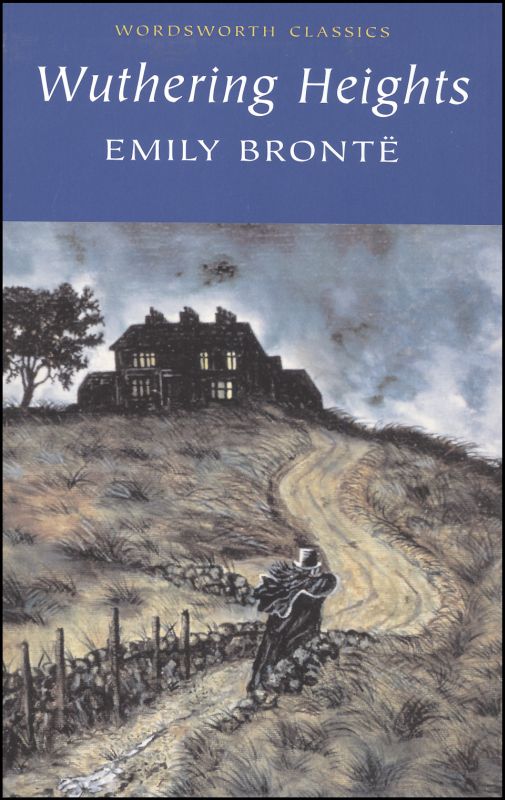
Wuthering Heights – Emily Bronte
 READ FOR BOOKCLUB
Chosen by Nadine
A brooding tale of passion and revenge set in the Yorkshire moors
♥ Emily Brontë’s 1847 novel details the arrival at Wuthering Heights of a man named Heathcliffe and the close bond he forms with his benefactor’s daughter, Catherine Earnshaw. Class status divides them, and a saga of frustrated yearning and destruction follows, culminating in Catherine refusing to marry Heathcliff after her brother’s meddling. Heathcliffe departs the property only to return years later both educated and wealthy.
A second generation of family dramas and love interests abound, all the time with both Heathcliffe and the married Catherine at the periphery interferring with events.
We learnt that the novel was not well-known or liked initially and it took until after the author’s death for its true genius to be discovered. What was at first considered Victorian fiction was beginning to be re-classed as a combination of gothic and romantic fiction, unheard of at the time. The key question asked at this time was: who or what is Heathcliffe?
Expecting Victorian fiction, we were surprised to find something more in-depth and contemporary in nature and the gothic undertones almost went unnoticed until we pondered that very question at bookclub. Who or What is Heathcliffe? Heathcliffe and all the characters were more nuanced than Victorian characters. Rather than being able to categorise them as simply good or evil, characters had elements of both and were likeable even when nasty.
Breaking away from these traditional genre markers is what made the book feel contemporary due to mixed genre narratives being not uncommon these days. Perhaps this is what has given the book long-lasting appeal. Plus there is an exciting plot, moody settings and unique characters that break all past rules of characterisation. The ending (no spoiler) was once called the ‘most powerful and daring climax in English Literature’ and we agreed it was fitting.
—–
Published 1847
Thomas Cautley Newby
214 pages
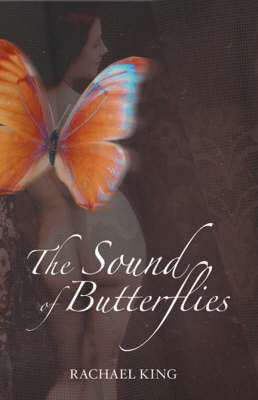
The Sound of Butterflies – Rachael King
 READ FOR BOOKCLUB
Chosen by Rachel
In 1904 lepidopterist Thomas Edgar arrives home to England from a collecting expedition in the Amazon. He is emaciated and cannot or will not speak. As his wife wonders what has happened, the book takes us back to the Amazon and details the wild events that Thomas experienced during his search for a mysterious butterfly.
♥ “A sensory book in which every person, action and location is well captured. The Amazon is a fascinating setting, the perfect place for an exciting string of events, and as such I learnt a lot while being completely entertained.” – Rachel
♥ “Ever since a slightly terrifying book read at school as an 8 year old I have been slightly edgy around moths and even butterflies. The story ended with thousands of evil moths beating their wings against a door trying to reach the person inside. My kid overactive imagination (not improved by adulthood actually) went a step further – *obviously* the the moths beat down the door and ate the person. THIS BOOK BY RACHAEL KING DID NOT HELP. But all is forgiven as this is a beautiful book. I was there alongside the characters, feeling exhilarated and sweaty in the jungle and also then repressed and sad in the stuffiness of England. A great read.” – Suzy
—–
Published 2008
Picador
386 pages

We're
currently
reading
 The Free-Range Bookclub
Recent Comments