The Free-Range Bookclub
Bookclubbers without boundaries in Nelson, New Zealand
2009 – Bookerthon
 What a substantial stack of books on the Man Booker longlist this year! And we don’t just mean in size, but in scope, in ambition and punch. The ideas and importance as well as the number of pages seemed huge and overwhelming to us at first. What an initiation for Jo who decided to join us in Bookerthon fun this year!
A quick calculation informed us we had to read 80 pages per day for six weeks to get through the shortlisters in the allotted time. This might have been a breeze if the content was light and easy. But alas these books had depth, history and characters galore, they took on Tudor royalty, World War I horrors, persecution of the Jews, post war English gentry, South African ethics, incarceration at a mental asylum … see what we mean! #brainexplosion!
We’ll admit it was a struggle to get the pages completed in time with the right amount of commitment and attention and we had to prioritise what we were most compelled by. But despite the huge reading expectations of the judges this year, we got there and had some interesting thoughts on each and every one of them.
(Though, PS: Jo never Bookerthoned again!)
The Glass Room is about an architectural home in Czechoslovakia where the interior room is made entirely of glass. Based on a real villa, this home was abandoned by its original owners when the Nazis were approaching. The book is about the home’s life and all who occupied it. The house as a character is just as appealing as any (most!) of the two legged variety.
There’s another house as a character, this time a dilapidated Victorian mansion which haunts the English gentry that live there. What is really going in The Little Stranger kept us all captivated and we had indepth discussions about all the possibilities for some time!
The Quickening Maze is about a mental asylum run by Matthew Allen at High Beach in the late 1830s and 1840s. The dignity and empathy with which the characters are built, studied and brought to life is quite something and we all agreed it seemed like a book which would remain a part of history.
We were also able to agree Wolf Hall was difficult to read, understand or enjoy. We acknowledge that the story about Thomas Cromwell, chief minister to Henry VIII is an important one to document and probably wilding appealing to Brits, but understanding little of this history in advance, all of us struggled with this one.
The Children’s Book was a massive, multi generational tome set in the lead up to WWI, studying the lives of the many children in the Wellwood family and all their triumphs and woes and secrets. This was one we reacted differently to: Rachel revelled in its complexity, Jo found it tediously long with too many characters and Suzy sat somewhere in between!
Summertime raises the question of why it’s okay to be so obsessed with one man, a writer of fiction, when there are so many ethical and racial problems still rife in South Africa. Coetzee has written a book about a biographer writing a book about Coetzee. A wonderful premise that had us spellbound.
In the end Suzy picked The Quickening Maze as her favourite because of its emotive ability to touch the soul.
Rachel chose Summertime by J M Coetzee, saying no one can phrase a sentence like this man can. “Coetzee takes something ordinary and makes it beautiful and meaningful, and for that reason he deserves what would be his third Man Booker win.”
Jo is going for The Little Stranger because of “the beautifully crafted tension and the author’s ability to keep the reader guessing right to the end”.
Best book 1-6: Jo:
The Little Stranger
Summertime
The Quickening Maze
The Glass Room
The Children’s Book
Wolf Hall
Best book 1-6: Rachel:
Summertime
The Children’s Book
The Glass Room
The Little Stranger
The Quickening Maze
Wolf Hall
Best book 1-6: Suzy:
The Quickening Maze
The Glass Room
The Little Stranger
The Children’s Book
Summertime
Wolf Hall
Summertime – J M Coetzee
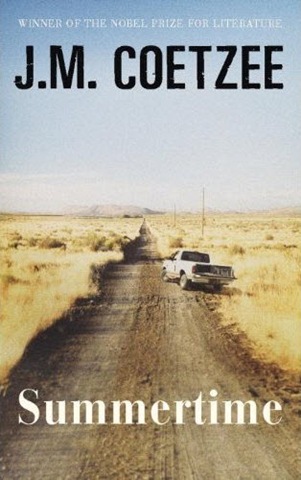 READ FOR BOOKERTHON
A fictionalised memoir detailing the life of John Coetzee written from the point of view of the biographer. Told from the perspective of five people who have known him including a married woman with whom he had an affair, his cousin Margot and a Brazilian dancer whose daughter took English lessons with him.
Perhaps; but I am a difficult person to live with. My difficulty consists in not wanting to live with other people.
❚ “J M Coetzee has created a work of wit. The biographical nature of this book was continually hard to fathom as I realised the author was writing a book from the perspective of a biographer about himself. Once I had grasped the way it was written I thought it was so very clever and often funny. A wholly satisfying read.” – Jo
❚ “J M Coetzee is one of a handful of authors whose work I rush out to buy as soon as it’s on the bookshelves. And as usual I was not disappointed by his latest book. His ability to find a new way to present literature or a new angle to look at something from is astounding. I loved that he was writing about a biographer, writing about himself.” – Rachel
—–
Published 2009
Harvill Secker
224 pages
The Little Stranger – Sarah Waters
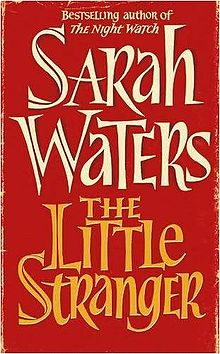 READ FOR BOOKERTHON
The Little Stranger is a mixed genre story set in a dilapidated mansion in Warwickshire, England in the 1940s. It features a country doctor who calls on an old family of declining fortunes who own the old estate that is crumbling around them.Though attending in a professional manner at first, the doctor becomes entwined in the family’s plight and the ghoulish goings on. The historical/gothic novel also delves into many societal interactions of the time: class systems, repression, gender roles and the British way of life.
There’ll be tricks, tonight. I can sense it. I’ve a feeling for it now. I’m like a weather-vane, I start twitching when the wind’s on the turn.
❚ “A very cleverly written ghost story … but is it a ghost story? Nothing is as it seems and with the tension gradually building between the two main characters and the strange happenings at the mansion, you are in for a stimulating read. One of my favourites.” – Jo
❚ “I adore gothic stories, and enjoy Sarah Waters’ works so this was a fantastic combination for me. I was captivated trying to work out what or who was behind the mysterious events. I was pleased things weren’t all completely sewn up and a little was left to the reader’s imagination.” – Rachel
—–
Published 2009
Virago
510 pages
The Glass Room – Simon Mawer
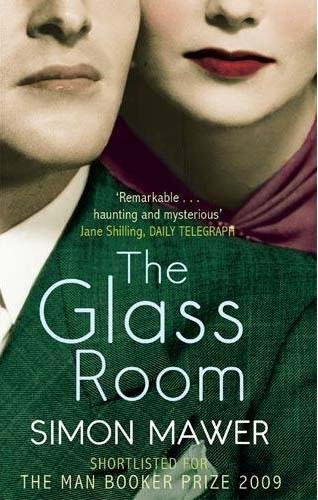 READ FOR BOOKERTHON
Based on a real villa in Czechoslovakia, the house in this book is a minimalist masterpiece with a transparent glass room as its centre. Built for Liesel and Viktor Landauer in the 1920s, the house becomes the central character and the WWII story unfolds through all the people and experiences that pass through the glass room, including the Nazis themselves.
A work of art like this,’ he tells one of the journalists, ‘demands that the life lived in it be a work of art as well. I am certain that Viktor Landauer and his beautiful wife will do the place justice.
❚ “Interesting in the way this story is told with the house being a character so that the plot is seen through the ‘eyes’ of the glass room – all of the major events of the story happen in the house. I loved the characters and the relationships which were expertly embedded in a historical framework. Very enjoyable.” – Jo
❚ “Though the glass room is transparent, it conceals so many secrets and deceits. I loved this thematic aspect of the book, with the room as a character. The architecture, the characters, their relationships, the war as a setting all combined seamlessly. I felt for the house, sorry for it that it was being mistreated, and I have to say I have never felt empathy for a building before as if it was a humanised character! This book was riveting and I did not want to put it down!”
—–
Published 2009
Other Press
406 pages
Wolf Hall – Hilary Mantel
 READ FOR BOOKERTHON
A fictionalised biography documenting the rapid rise to power of Thomas Cromwell in the court of Henry VIII.
❚ “Wolf Hall is primarily about Thomas Cromwell who in real life was a disliked man who worked for King Henry. He orchestrated many of his plans and wishes, such as divorces and political decisions such as the break with Rome and the dissolution of monasteries.
In this book Mantel has brought the man to life, giving him a fictional upbringing and attributes both good and bad to made him appealing to readers. The other real life figures of the time are also brought to life and for Tudor fans I’m sure this is a huge drawcard.
However, because I know next to nothing about English royalty history or the Tudor period, I found this book difficult to read or enjoy. The vast number of characters, who were often referred to by multiple names, and the density of the occurrences in the English courts, politics and history was quite frankly overwhelming.
I have no doubt Mantel is a formidable researcher and writer and has contributed to the history books with the writing of this novel. But I could not keep up with this one myself.” – Rachel
But it is no use to justify yourself. It is no good to explain. It is weak to be anecdotal. It is wise to conceal the past even if there is nothing to conceal. A man’s power is in the half-light, in the half-seen movements of his hand and the unguessed-at expression of his face. It is the absence of facts that frightens people: the gap you open, into which they pour their fears, fantasies, desires.
❚ “The sheer number of characters and confusingly written passages make for a frustrating read. I usually enjoy historical fiction but this story was way too labourious. I only finished it because I didn’t want to let my bookclub friends down and, because it was one of the few books I bought, I had a financial incentive to make the most of it!” – Jo
—–
Published 2009
Fourth Estate
672 pages
The Quickening Maze – Adam Foulds
 READ FOR BOOKERTHON
The true story of poet John Clare’s incarceration in London’s Epping Forest, a mental asylum run on the reformist principles of occupational therapy. Lord Alfred Tennyson had his brother treated there and the book bases its storyline on the speculation of whether Clare and Tennyson ever met.
The world is a room full of heavy furniture. Eventually you are allowed to leave.
❚ “The thrill of a story being based on real people and actual events seems to enhance its power for me and so it happened too with this book. Adam Foulds seems to be greatly adept at unfolding characters in a gentle and sympathetic manner. The story itself is interesting with many layers of detail within each character’s life. Well worth reading.” – Jo
❚ “Sympathetic characters and the merging of the actual and imaginary makes this an interesting and thought-provoking story. Not overly exciting and I probably wouldn’t recommend it, but I did appreciate its construction.” – Rachel
—–
Published 2009
272 pages
The Children’s Book – A S Byatt
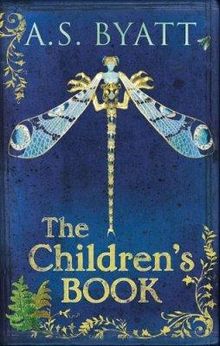 READ FOR BOOKERTHON
Loosely based on the life of E Nesbit, The Children’s Book follows the lives of several inter-related families from 1895 through WWI.
❚ “The Wellwood family consists of Olive, Humphrey, Olive’s sister Violet, and many children. They are Fabians, living in a world amongst artists, writers, and craftspeople, establishing new ways to express art and live an artful life.
“The central character Olive is a writer of children’s literature, loosely based on children’s writer E Nesbit. She supports her large family with her writing, The title of the book refers to the many children in the book, all of whom grow up within the pages. As the years go by, they attempt to define their place in life, whether via fulfilment, evasion or manipulation of opportunities. With World War I looming, survival becomes paramount no matter how each character tackles life.
“Also amongst the pages are insights into the creative processes required to succeed at artistry, plus historical context of arts and politics between the 19th and 20th centuries.
Maybe all steps into the future drew strength from a searching gaze into the deep past.
❚ “This is an epic read, and there is so much packed into it. Fantastic characters, damning relationships based on fact, familial secrets galore, beautiful sensory locations and the horrors of war, too. Highly detailed so as to instil the plot lines into your mind like a memory. At 675 pages it required days of reading and I loved being completely immersed in it over this time.” – Rachel
❚ “Long winded and complex with way too much descriptive narrative. The alarmingly large number of characters made the story hard to follow at times. It was a blur and although I enjoyed parts I would have great trouble finding motivation to re-read which I suspect is a necessary task for me to digest the story properly.” – Jo
—–
Published 2009
Chatto & Windus
675 pages
Back Booker 2006

 Before we get onto this year’s Bookerthon we’ll sneak in another Back Booker.
This time we are looking at 2006 which had a huge variety of narratives and settings, yet each tale delivered the authenticity of a lived experience. Being lost in the story as if you’re there, as if you can hear and see and smell what the characters do imparts the book on your brain like a memory. And such books are expected on award shortlists!
Here’s what we read:
Carry Me Down features John Egan a 11-year-old with a man’s stature and intellectual capabilities that baffle many around him and interfere with his ability to assess the emotional turmoil that is affecting his family. He undertakes drastic action to counter family events and the repercussions of that fill the pages.
In The Night Watch, four characters relive their war time experiences backwards – we meet them in 1947 and the pages work backwards until 1941. There is much more than war time tales in this novel, there are many experiences that are indicative of the era and very moving.
In The Country Of Men is a story about Libya under Gaddafi’s regime. It is told from the perspective of narrater as a child and as such is engaging, emotive and educational. The fluid writing style offers an experience, and many aspects to war and conflict we had not read about before.
The Inheritance of Loss is set both in a dilapidated house in the Himalayas and fancy New York eateries. A retired judge has links to both through his children and recollects his memories in order to accept the two variations of living. Snippets of electric descriptions highlight the discord between the two worlds.
Mother’s Milk is moving book, albeit a bit disturbing. It details a mother’s obsession with her sons to the detriment of her family’s progression and happiness. Patrick Melrose is dealing with the neuroses of both his wife and his mother in a book that deals with big topics like parenting, adultery and assisted suicide.
In The Secret River William Thornhill is transported to New South Wales in 1806 as a punishment for theft. He and his wife set up home but must forge relationships with the natives in order to live a peaceful life. Interesting, but we did agree it was a shallow portrayal of the injustices carried out on Aboriginal People by settlers, compared to the NZ stories we are used to.
In the end, after what felt like a trip around the world in a time machine, we concluded that any could have won it this year and we would have been okay with it. However, for Suzy, her fave was The Inheritance of Loss and for Rachel, her top pick was In The Country of Men. Chosen for the reasons already stated, that they were so evocative and we closed the pages feeling like we’d been there and lived the life of the characters.
Best book 1-6: Rachel:
In The Country Of Men
The Inheritance Of Loss
The Night Watch
Mother’s Milk
The Secret River
Carry Me Down
Best book 1-6: Suzy:
The Inheritance Of Loss
The Night Watch
In The Country Of Men
Mother’s Milk
The Secret River
Carry Me Down
The Potato Factory – Bryce Courtenay
 READ FOR BOOKCLUB
Chosen by Jo
Set in the early 19th century, The Potato Factory explores the lives of London’s thieves, con men, prostitutes, street urchins and lowlife many of whom, suffering from England’s social and political inequalities, are sent to the penal colony of Van Diemen’s Land, now Tasmania.
Ikey Soloman was one such person. A real person who has been fictionalised here, the book is not so much about him, but rather the people who’s lives are changed because of him. After being sentenced to transportation, Ikey’s mistress, Mary Abacus, and also his wife Hannah make the harsh journey from London to Van Diemen’s Land. In the backstreets and dives of Hobart Town, both are set on destroying the other.
Turning to Ann Gower, she smiled. “You’re a good woman, Ann Gower.”
Ann Gower drew back and looked askance at Mary. “Don’t you go ruinin’ me reputation, Mary Abacus. I be a real bad woman, but a bloody good whore, and you knows it!”
❚ “A thrilling story with plenty of interesting twists and turns. Ikey Soloman is a despicable rogue who you can’t help but like. Some scenes of violence seem a bit gratuitous. However, I love a story centred around hardship and poverty and so enjoyed this book thoroughly.” – Jo
❚ “I do like reading about the penal colonies and the stories of individuals who had to work so hard to adjust and survive, so this was an enjoyable read.” – Rachel
—–
Published 1995
832 pages
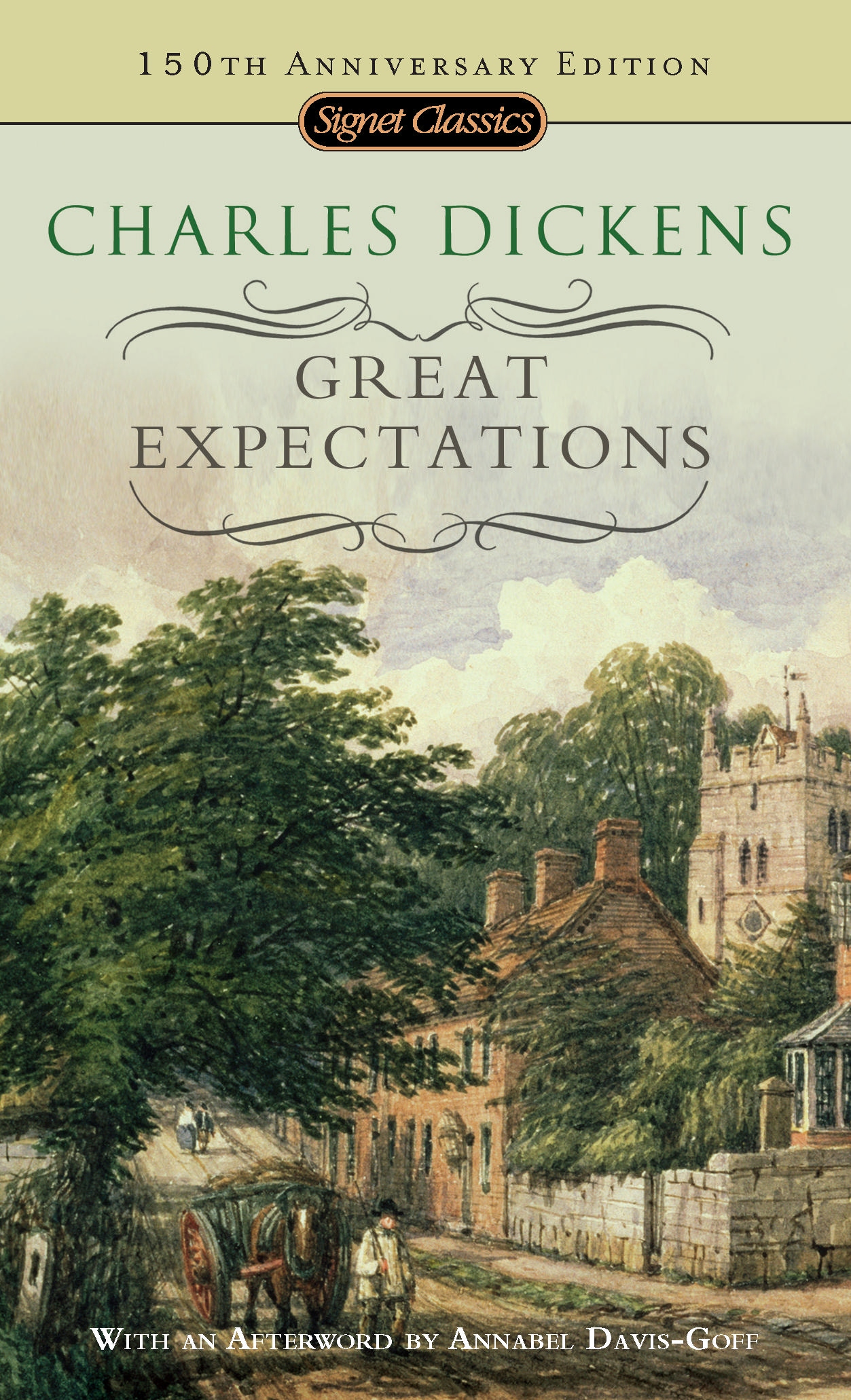
Great Expectations – Charles Dickens
 READ FOR BOOKCLUB
Chosen by Suzy
A coming of age novel where a young man, Pip, has an anonymous benefactor who sponsors him in to becoming a gentleman
❚ “ Great Expectations is a story of a young man who wants more than what he is, only to discover that what he had was not so bad.
“Pip is an orphan who lives with his sister and her family. In the opening pages he interacts with and chooses to assist an escaped convict with the provision of food and a file to break loose of his chains.
“Putting this experience with the lower classes behind him, Pip ends up in the company of Miss Havisham, a rich, eccentric woman, and Estella, her adopted daughter. Spending time in their company makes Pip embarrassed of his poverty and his harshness, and he becomes determined to better himself.
“A lawyer then comes to the village and tells Pip that an anonymous benefactor has decided to bestow property on Pip and turn him into a gentleman. He is whisked away to London to study with a tutor, who is a relation of Miss Havisham.
“His journey into becoming a gentleman is one which has been the foundation for many novels and movies over the years, though none are never as clear cut as simply learning about class and status and living happily every after as such. Pip’s transformation has the predicted ups and downs, with ambition and guilt weighing equally in his life, and in the actions of other characters.”
There was a long hard time when I kept far from me the remembrance of what I had thrown away when I was quite ignorant of its worth.
❚ “A wonderfully complex story which has poverty and hope at its core and the romantic turmoil between Pip and Estella creates perfect tension. A must read.” – Jo
❚ “Yes Pip’s story is one of opportunity but also of appreciating what and who you have in your life whatever your status. This is a book that never leaves me and which pops into mind every so often when certain circumstances occur. Though it was written so long ago, it’s amazing how often I can see the personality traits depicted in people around me!” – Rachel
—–
Published 1861
Chapman & Hall
544 pages

We're
currently
reading
 The Free-Range Bookclub
Recent Comments