The Free-Range Bookclub
Bookclubbers without boundaries in Nelson, New Zealand
The Sense Of An Ending – Julian Barnes
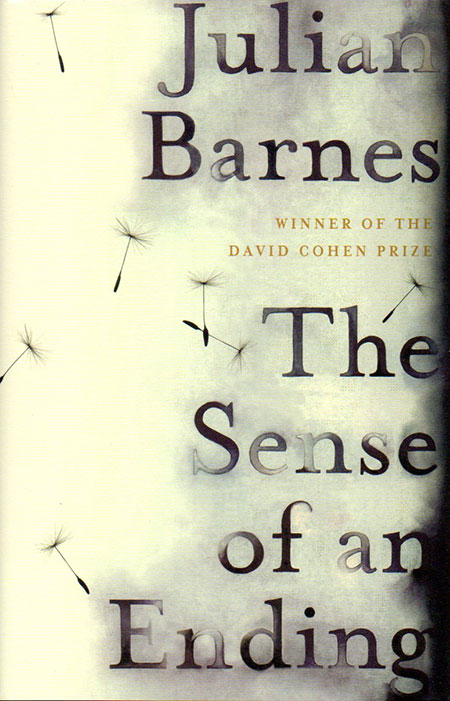 READ FOR BOOKERTHON
An English retiree challenges his fading memory with the arrival of a lawyer’s letter
✔ The unreliability of memories are often fictional fodder. Feeding out snippets of truths and half truths and making the reader work out who is reliable and who is not is a great way to engage the reader.
The Sense of an Ending is quite upfront about its unreliability. The protagonist, Tony Webster, has a reasonable life behind him and is nonplussed about ageing and his fading memories.
That is until he receives a lawyer’s letter informing him he has been left the diary of a man whom he barely recalls from his school days. He must search his memories, and learn what memories to trust, in a bid to understand why he has been left the diary.
How often do we tell our own life story? How often do we adjust, embellish, make sly cuts? And the longer life goes on, the fewer are those around to challenge our account, to remind us that our life is not our life, merely the story we have told about our life. Told to others, but—mainly—to ourselves.
The first part of this book is about Tony’s younger years, his loves and lust and first marriage. All the “truths” are offered to the reader here. The second part of the book goes about undermining that information.
Rachel found it a nicely constructed novel. “I was totally invested in the fear of lost memories and constantly attempting to establish the truth.” However, despite the interesting premise, Suzy found the layers of truths and untruths messy and did not connect with the characters.
—–
Published 2011
Jonathan Cape
163 pages
Jamrach’s Menagerie – Carol Birch
 READ FOR BOOKERTHON
Eight-year-old Jaffy Brown escapes the Victorian slums and sets sail for a better life.
✔ A 19th Century street urchin named Jaffy Brown is at the heart of his book. In search of a better life, he works for Mr Charles Jamrach, an importer of exotic animals. Jaffy and another working boy Tim become close friends and allies.
The two boys are convinced to undertake a three-year whaling expedition in order to capture a spectacular ocean beast for their boss.
It is hard to say much more about the plot without giving everything away, but what occurs is not only a sea-faring adventure story the likes of Moby Dick, but ends up somewhere readers would not expect. Taffy and Tim only have each other and their sense of friendship and survival depends on them confronting and mastering their own existence as animals.
It was the first smile of my life. Of course, that is a ridiculous thing to say; I had been smiled at often, the big man had smiled at me not a minute since. And yet I say: it was the first smile, because it was the first that ever went straight into me like a needle too thin to be seen.
The 19th Century London setting and the protagonist Jaffy are both well established from the outset. The smell of the slums, the lonilness of Jaffy and the desperation to get by are all felt intently. This makes the contrast of the pages at sea more glaring.
However it’s this contrast in the stories and the settings that helped form our final opinions of the book. Rachel was left shocked by the dramatic change and suggests not reading the back cover blurb if you too like a bit of shock factor. Suzy found the shock change a little jarring and though not inkeeping with the original premise of the book, would still recommend it.
—–
Published 2011
Canongate Books
348 pages
Snowdrops – A D Miller
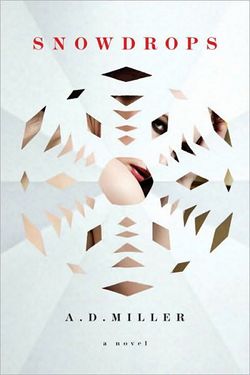 READ FOR BOOKERTHON
British lawyer Nick is seduced by the dangerous Masha while working in Moscow and ends up finding himself buried in secrets.
✔ Nicholas is a single, 38-year-old British lawyer working for banks lending money to Russian corporations. His time in Moscow is full of luxuries and excesses.
With no intention of becoming attached to anyone, he meets by chance the alluring Marsha and is besotted. However, Marsha’s glamour and bewitching nature belie the secrets and the danger that surrounds her. She encapsulates what we have come to know of 1990s Russia: corruption, sleaze and desperation. And corpses.
That’s what I learned when my last Russian winter thawed. The lesson wasn’t about Russia. It never is, I don’t think, when a relationship ends. It isn’t your lover that you learn about. You learn about yourself.
Snowdrops a psychological drama that blends two people’s contrasting worlds with such pace and energy that they soon appear as one big muddle.The snowy setting provides great atmospheric scene setting for drudgery and hidden secrets, ‘snowdrop’ being Moscow slang for a corpse hidden by snow, revealed only when the ice melts.
This is a love story and a crime story, and we couldn’t help but be pulled into the wonderfulness and the despair. Rachel called it “a really satisfying read”, Suzy rated it highly, calling it “spellbinding”.
—–
Published 2011
Atlantic Books
288 pages
Half Blood Blues – Esi Edugyan
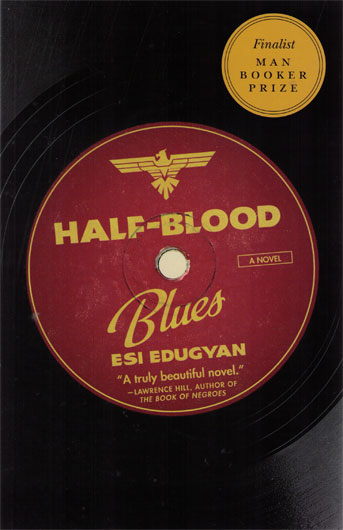 READ FOR BOOKERTHON
In 1940s France a black cabaret singer disappears. Fifty years on, one of his bandmates, Sid, embarks on a journey to discover Hieronymous’s fate.
✔ “Hiero is African German and a member of a jazz band in pre-war Berlin. The Nazis ban their music, and he and his two band mates flee to Paris in 1939 at the outbreak of war. Though in hiding they wander the abandoned streets as a way to pass the time. One night Hiero is arrested and taken to a concentration camp.
The book is narrated by one of the other bandmates, Sid in 1992. His memories of Hiero, of war time and life right up to the book’s present are detailed. His thoughts are pertinent because, as an old man, he discovers an urge to learn of Hiero’s fate. He enlists help from the the third band mate Chip and together they undertake a quest for the truth.
The musings of Sid’s life are ruled by musicality. The effect of the war on music, and freedom of expression and the Nazi’s desire to stamp out anything they regarded as degenerate.
It ain’t fair. Gifts is divided so damn unevenly. Like God just left his damn sack of talents in a ditch somewhere and said, “Go help yourselves, ladies and gents.Them’s that get there first can help themselves to the biggest ones. In every other walk of life, a jack can work to get what he want. but ain’t no amount of toil going get you a lick more talent than you born with. Geniuses ain’t made, brother, they just is. and I just was not.
Going into the book it’s easy to think of this as simply a war story, but it’s much more than that – be prepared for it to take you places you weren’t expecting. Yes the story begins with Hitler’s Germany and no it doesn’t offer detailed passages on the persecution of the Jews, but it does look at another way in which the Nazis harmed people and humanity, via their music. It’s also about failed relationships, redemption and the right to tell your own story. It is told in an authentic slang vernacular, however we found the language sometimes slowed down or stilted our reading pace.
—–
Published 2011
Serpent’s Tail
352 pages
Treasure Island – Robert Louis Stevenson
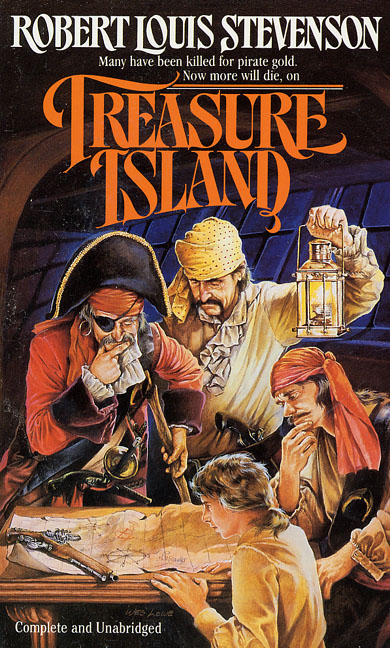 READ FOR BOOKCLUB
Chosen by Suzy
Treasure Island features Jim Hawkins, an inn-keeper’s son, who becomes interested in a guest’s chest. Billy Bones is protective of the chest and concerned about the potential appearance of a one-legged man. When Billy mysteriously dies, Jim looks through the chest and discovers a treasure map. Jim gains access to the ship Hispaniola and along with Long John Silver and other colourful cast members they head off in search of the treasure, marked with an X on the map.
The book is narrated by Jim, who is a naive narrator: young, impressionable and though not stupid, he is being exposed to many new experiences and thus relays events and twists in the plot and character development in a lively and dramatic but simple manner.
Stevenson invented this world of pirates, maps, buried treasure, eye-patches and one-legged sailors after drawing a map for his stepson. It became elaborately filled with harbours and land formations, creating the perfect course for a treasure hunt, hence the setting being highly detailed in the book. Stevenson’s family had a history in lighthouse design and the author’s understanding of nautical elements and seafaring activities adds to the believability of the story.
Amongst the adventure filled pages are thematic constructions of good vs evil, and a coming-of-age story that sees our young protagonist mature after being involved in skirmishes and who must make plans to not only find the treasure but stay alive.
It was Silver’s voice, and before I had heard a dozen words, I would not have shown myself for all the world. I lay there, trembling and listening, in the extreme of fear and curiosity, for, in those dozen words, I understood that the lives of all the honest men aboard depended on me alone.
Despite this being a classic and the origin of the now widely used pirate stereotype, none of the freerangers had read Treasure Island before. Of course the story is known, and there have many iterations of it over the years but none of us had ventured back to the place where it all began. It was a huge adventure to read the book with young Jim Hawkins the perfect guide to bravely lead us through the perilous lands.
—–
Published 1883
Cassell & Co
316 pages
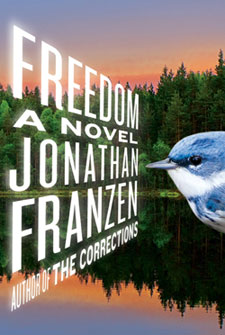
Freedom – Jonathan Franzen
 READ FOR BOOKCLUB
Chosen by Sophia
Freedom by Jonathan Franzen tells the story of the lives of the Berglund family, an upper-middle class family from Michigan. Walter is an environmental activist, his wife Patty is a stay at home mum. They have two children, Joey and Jessica. Patty narrates the majority of the book, sometimes in real time, other times via her memoir entitled Mistakes Were Made.
As a portrayal of modern American at the turn of the century, Freedom details a portion of the Berglund’s life where controversial decisions are made, where suburban life and middle age and teenage years all combine into a perfect storm of realism, humanism, tragedy and comedy. Franzen chucks in other big topics too, politics, liberty, rape culture, mental illness and of course freedom.
People came to this country for either money or freedom. If you don’t have money, you cling to your freedoms all the more angrily. Even if smoking kills you, even if you can’t afford to feed your kids, even if your kids are getting shot down by maniacs with assault rifles. You may be poor, but the one thing nobody can take away from you is the freedom to fuck up your life whatever way you want to.
While the wacky characters and modern thematic considerations made the novel appealing, it was noted that the book is full of well-off white people, and men who describe women in less than respectful ways. Sure these kind of people exist, so if the book is intended to be a portrait of American at the turn of the century then yes it hits the mark. Despite the obviously yuck, we did all appreciate the full gambit of relevant themes and character types and how succinctly all their crazy lives flowed together. There is certainly an art in throwing together all of this content into a book that is nicely paced and easy to read.
—–
Published 2010
Farrar, Straus and Giroux
536 pages
Anna Karenina – Leo Tolstoy
 READ FOR BOOKCLUB
Chosen by Jo
Anna Karenina was written by LeoTolstoy in the 1870s. It reflects many aspects of his own inner turmoil about affairs, spirituality, city vs rural living and peasantry.
The dual story narration introduces two main characters, Anna and Levin. The latter represents Tolstoy, a landowner and pastoral man, who is unlucky in love, so moves to the country, immerses himself in his relationship with the land, writes a book and attempts to work with peasants in order to make their lives better. The beauty of the seasons and the pragmatic work of harvesting absorb Levin as they did Tolstoy.
In contrast is Anna’s enigmatic and destructive passions. Though married she undertakes an affair with wealthy army officer Count Vonskry and is traumatised about how to conduct her activities due to the impact on herself and others.
Anna Karenina is considered an important work because of its exploration of the human psyche and emotions common to all generations. Tolstoy was considered a master at dissecting psychology, observing the smallest changes in consciousness and recording them in detail.
Man survives earthquakes, epidemics, the horrors of disease, and all the agonies of the soul, but for all time his most tormenting tragedy has been, is, and will be the tragedy of the bedroom. – Leo Tolstoy
At 800 odd pages it was a big and sometimes arduous read for all the freerangers. But through all the hard to digest Russian social commentary and historical context are two very personal stories which are easy to connect with: a passionate love affair that becomes overwhelmed by jealousy and societal expectations, and the story of a man’s connection to the land and compassion for those who work it.
Everyone was pleased to have indulged in it but also pleased to have turned that last page.
—–
Published in Russian 1878
First translated into English in 1886
874 pages
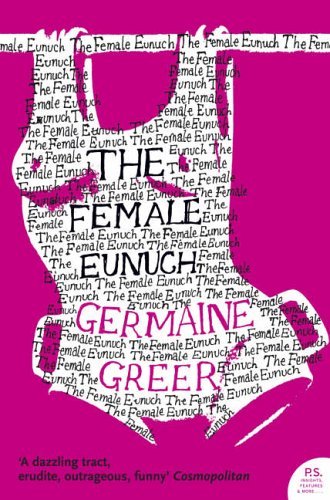
The Female Eunuch – Germaine Greer
 READ FOR BOOKCLUB
Chosen by Rachel
✔ The Female Eunuch is a 1970s book that became of international note for being an important text in the feminist movement. The author’s theory is that the traditional family represses women sexually, and this devitalises them, rendering them eunuchs.
Greer comments on biological differences and historical definitions of the two sexes as well as the psychological differences that result from social conditioning. She examines women’s perception of self and critiques what is considered normal. She also argues that men hate women, though women do not realise this and are therefore taught to hate themselves.
In the popular imagination hairiness is like furriness, an index of bestiality, and as such an indication of aggressive sexuality. Men cultivate it, just as they are encouraged to develop competitive and aggressive instincts, women suppress it, just as they suppress all the aspects of their vigour and libido.
We all agreed this was not our usual kind of bookclub read. Greer is bold, coarse and confronting in her choice of language and subject matter and one must remember the book was written in the 60s, when yes things were much worse for women. We acknowledge there is still progress to be made in accepting women for who they are and not who society wants us to be, and for that reason there were parts of the book that were empowering. But all parts of it were thought-provoking and good conversation fodder, though perhaps not as shocking as it once was.
—–
Published in 1970
Harper Collins
400 pages
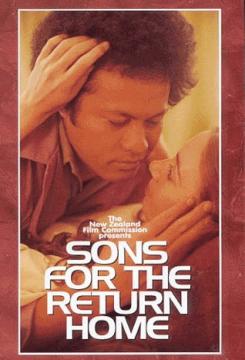
Sons For The Return Home – Albert Wendt
 READ FOR BOOKCLUB
Chosen by Suzy
A Samoan family migrates to Wellington in the 1960s, leaving the sons unsure to which culture or country they belong.
✔ “Sons for the Return Home is a love story set amongst a time and setting of racism. A post-colonial work, it tells the story of a young Samoan who lives in New Zealand and falls in love with a white female university student. The man is expected to become a doctor and one day return to his home but his new love affects his parents’ plans for him.
“Wendt uses several techniques to make the experiences of many Samoan New Zealanders also the experience of the characters. He examines racial prejudices from all angles, especially how it intersects with other factors like education, culture, and religion. Polynesian myths and history sits poignantly alongside contemporary life in New Zealand, providing a real grounding to this story. Importantly, this was one of the first novels ever published by a Pacific Islander – in 1973!
✔ “This book seemed to encapsulate a lot of what NZ & PI societies were experiencing as they slowly merged together. My knowledge of this particular period in NZ’s history was fairly small and I relied, rightly or wrongly, on this book to help me understand what it was like for both ‘sides’. It’s also a love story. I’m not being particularly articulate am I? Anyway I can highly recommend this lovely novel.” – Suzy
✔ “The basic premise of this story is one which many people can identify with, and that’s confusion over identity. This was such a real story with true-to-life characters, it’s impossible to not feel connected to it. I loved it.” – Rachel
—–
Published in 1973
Penguin
228 pages
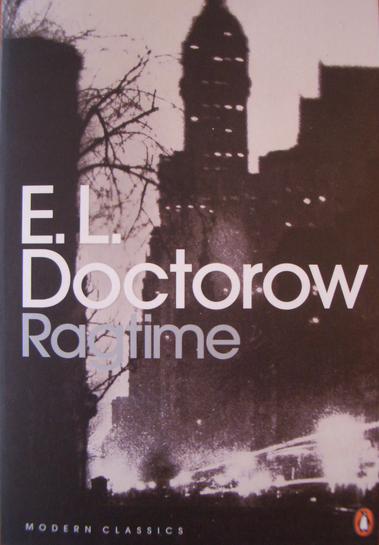
Ragtime – E L Doctorow
 READ FOR BOOKCLUB
Chosen by Sophia
Centering on an unnamed New York family, Ragtime hosts an array of fictional and real characters who seek to find their way at the turn of last century.
✔ Ragtime is a snapshot of life in the US between the turn of the century and World War I when poverty affected many families, racism was rife, and immigrants struggled to integrate into the American way of life.
There is a tapestry of fictional and real life characters introduced to bring this snapshot to life. The primary narrative focuses on a New York family, referred to only as Father, Mother, The little boy, Mother’s Younger Brother, and Grandfather. They feature on the opening pages with Harry Houdini crashing his car outside their house.
From here the family’s life is altered when Mother discovers an abandoned new-born baby in the back yard. The child’s troubled mother, a black woman called Sarah, eventually comes to stay with them. Father returns from an expedition to the North Pole to learn of the new addition to the household and how it has affected his relationship with his wife and family. Younger Brother, meanwhile, is infatuated with the pin-up girl Evelyn Nesbit, and learning to make explosives.
There are immigrant peddlers, ragtime musicians and other notable people such as Henry Ford, Emma Goldman, JP Morgan, Evelyn Nesbit and Sigmund Freud who slip in and out of the pages.
Poor Father, I see his final exploration. He arrives at the new place, his hair risen in astonishment, his mouth and eyes dumb. His toe scuffs a soft storm of sand, he kneels and his arms spread in pantomimic celebration, the immigrant, as in every moment of his life, arriving eternally on the shore of his Self.
The narrative moves with pace at all times, sliding between people, scenes, dialogue and moralities without slowing down. Sometimes this and the sheer number of characters can be too much, but everyone has their story to tell and you just need to accept the hive of activity and roll with it to truly appreciate it. It is a portrait of America at a turning point in its history, but history never stops and it feels like this book and it’s messages won’t either.
—–
Published 1975
Random House
270 pages

We're
currently
reading
 The Free-Range Bookclub
Recent Comments