The Free-Range Bookclub
Bookclubbers without boundaries in Nelson, New Zealand
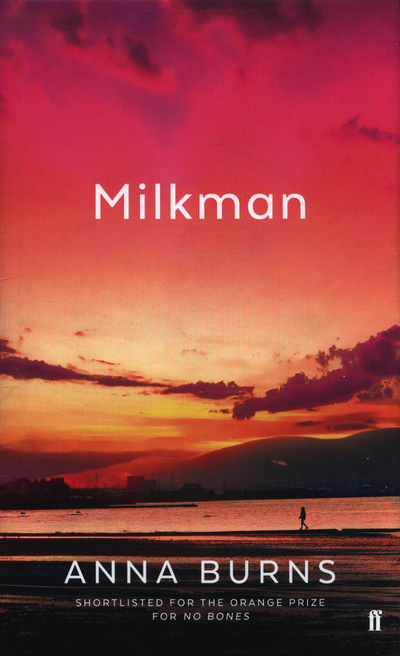
Milkman – Anna Burns
 READ FOR BOOKERTHON
A young woman is pursued by a renouncer terrorist in 1970s Northern Ireland.
➽ “The unnamed narrator in Milkman is the glue that holds the book together. She is the apolitical in a political novel, the every day logic amongst the absurdity of strife. Middle sister, maybe girlfriend, whatever you want to call her, is generous with her thoughts and observations of her environment, which is The Troubles in Northern Ireland during the 1970s. Car bombs and telephone bugs are part of life yet so are the bizarre relationships she has with several characters. I liked her and her voice. A lot.”
“However, the real point of difference in this book is its vernacular. The prose is strikingly descriptive – sometimes things are described four or five or 20 times over, with as any synonyms as possible, and these parts were particularly fascinating. Burns uses some wonderful words in creative ways and I was just as intrigued by how this book was written as by the story itself.” – Rachel
Next came abortions and I had to guess them also, from ‘vermifuge, squaw mint, Satan’s apple, premature expulsion, being failed in the course of coming into being’ with any doubt dispelled by, ‘Well, daughter, you can’t disappoint me anymore than you’ve already disappointed me, so tell me –what did you procure and which of them drab aunts did you procure it of?
➽ “Whheewwww is how I felt when I finished this book. I think I would have enjoyed it a lot more had I not been in a rush to finish it alongside the other short-listers. It was a unique read and a massive eye-opener for me in terms of what life was like in a country with terrorism and very strong religious beliefs.
“It felt claustrophobic and oppressive and terrifying. It felt like I was wading through this novel rather than enjoying it – if wading was then intent of the author then goal achieved.” – Suzy
—–
Published 2018
Faber Faber
352 pages
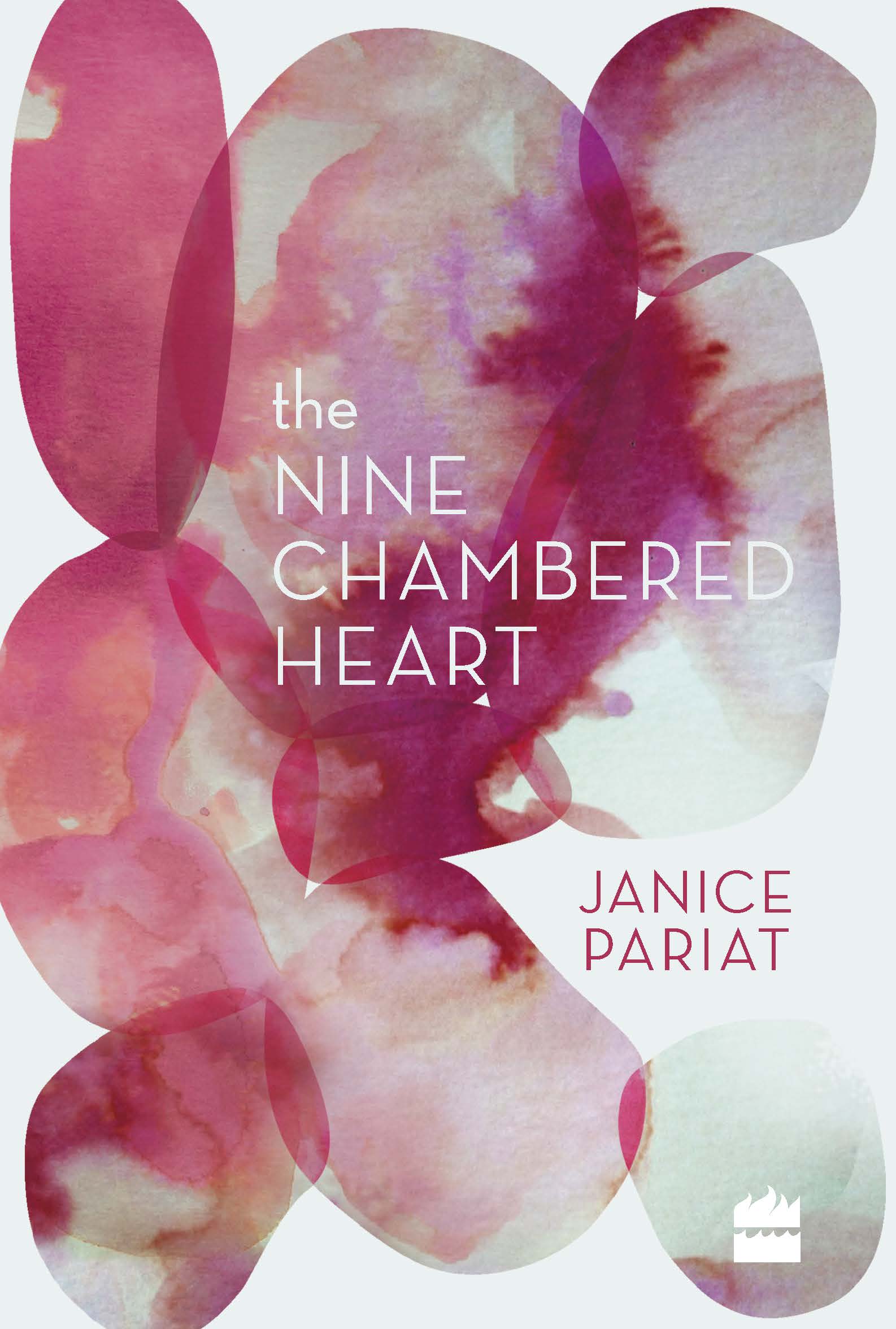
The Nine-Chambered Heart – Janice Pariat
 READ FOR BOOKCLUB
Chosen by Sonya
Nine characters recall their relationship with a young woman – the same woman – whom they have loved, or who has loved them.
➽ “The Nine Chambered Heart was my book, and I’m glad for the choice. The concept of nine different voices speaking of their relationship with the central character, is fresh and new. I loved the way we slowly discovered more about her, one puzzle piece at a time. It was a beautifully written novel, clever and gentle in its manner, easy to read. My only criticism of it at the time of reading it was that it felt incomplete. Although I realise it was the author’s intention to leave much unresolved, I felt that some point of finality would have made the book ‘fantastic’ rather than ‘good’. In reflecting on the book during book club discussion, my other issue was although there were nine different voices, these voices spoke in the same way. The writing style did not reflect the characters’ differences. This affected how authentic the voices were in my head. Overall however, a really engaging read I would recommend as a great book club title.” – Sonya
➽ “I loved how this novel offered a different concept to anything else I have ever read. It was a beautifully written story of love and loss. The premise of the book was unique, nine different people describe the same girl they loved at different points of her life. Throughout the novel there are no names or places mentioned, suggesting that these stories/memories can happen to anyone, anywhere in the world. Its a novel that you can’t really sink your teeth in but one you can sit back and enjoy it for what it is.” – Jodie
➽ “The Nine Chambered Heart is a work of experimental fiction, where nine people, over the stretch of a few decades, recall their experiences and relationships with the same woman. Written in the second person it certainly felt as though I was reading something quite special. At first I felt I was learning more about the associates’ lives but by the end I realised I understood the (nameless) woman on an emotional level rather than one based around her activities and opinions, and therefore the text had done its job. Even, what I felt was, objectification of the woman became a moral standpoint on topics relevant in today’s society. My only gripe was that the associates’ voices had a similarity to them but it was not enough to cloud my view on the book, and in fact had me pondering the potential relevance! Lovely book. Lovely cover. I recommend it.” – Rachel
—–
Published 2017
Fourth Estate India
216 pages
The Paying Guests – Sarah Waters
 READ FOR BOOKCLUB
Chosen by Jo
A love affair and a crime amongst landladies and their tenants, set in post-war Britain.
➽ SPOILER ALERT “Sarah Waters wonderfully sets the scene with her detailed and easy-to-absorb descriptions of the physical and social environment. I really felt as if I was in that house watching in a ‘fly on the wall’ sort of a way. She slowly develops the desire between Lillian and Frances culminating in passionate sex scenes which were eye opening and so very convincing. The detail and angst involved after Leonard’s accidental killing with moving the body, the aftermath of discovery and police investigation and the subsequent trial of an innocent man were thrilling. I would say though that the book moves so slowly in the first half and then picks up considerably in the last that it seems a bit discordant – too much detail in the cleaning and relationship building between Lillian and Frances I think. The ending I have to say is a let down. There’s so much tension towards the end and then it ends in a boring, lame way. I did enjoy this story but the ending tarnished that enjoyment unfortunately.” – Jo
What did she want? Frances couldn’t tell. She wasn’t sure she cared any more. There had been too much dancing back and forth. The night had been over-stretched: it had lost its tension
➽ “The Paying Guests exhibits Waters’ usual mastery of telling a personal tale in such depth its as if the characters are living beings. It details the day-to-day interactions of a widow and her daughter with their new lodgers – ‘paying guests’ a requirement after the deaths of their menfolk in the war. There is a scandalous affair and a crime and a trial, all explored in a manner accurate for the 1922 British setting. I enjoyed the plot in the body of the work, infact I felt emotionally invested in the character’s lives every step of the way, but I did feel that Waters normally delivers more in meaning and message. And, I have to say (SPOILER ALERT) I was extremely disappointed in the ending. I had all these wild imaginings about what scandalous eventuality could occur in the final sentences, yet it was the most routine and colourless ending possible and I was hugely frustrated, especially as the book weighs in at nearly 600 pages and therefore involved some input of time and energy. I have read and loved several of her other works, but don’t know if I’d recommend this one.” – Rachel
➽ “The Paying Guests is a novel set in 1922 after World War 1. I found this novel by Sarah Waters very slow paced and a bit of a chore to read. The first half is very long and arduous with a lot of floor scrubbing and boring domesticity. During the second half we are rewarded with a taboo love affair, a murder, a courtroom drama, a lot more exciting than the fist half, albeit it still never becomes compelling enough to hook me in.” – Jodie
—–
Published 2014
Riverhead Books
564 pages
I Capture The Castle – Dodie Smith
 READ FOR BOOKCLUB
Recommended by Sophia
A coming-of-age novel written as diary entries by a 1930s teenage girl living in poverty in an English castle.
➽ “What at first appears as a simple coming-of-age story is actually a cross-genre mediation on the history of the British novel. Sometimes Austen-esque, sometimes farcical, but ultimately modernistic, Smith’s characters break the norms of reader expectation to transcend the mere love interest plot line to be young women in charge. Cassandra, the main character not only portrays this in her romantic life but in her capturing of the castle, capturing it in words for the reader to enjoy, but capturing control of the family and its destiny. The descriptions of the castle’s many nooks and crannies are beautifully and often hilariously done within a complex narrative that is pure genius on the author’s behalf. Like no other book I have read before, I immediately felt the need to call this one of my favourite books. Thank you Sophia for introducing it into my life, someone who never fails me with recommendations.” – Rachel
➽ “I read this book totally believing I was reading a book written by a contemporary writer, written recently. So I was completely taken aback to find it was a story written during the period it was set, in the 1930s. It made me love it more! Yes, I loved it, from start to finish, although the romantic in me wanted a romantic happy ending and so was slightly unsatisfied … but would it have been as good if it had ended any other way? Probably not. I loved the romantic tension, the humour and the gentle philosophical meanderings about God and life and happiness, and the feminist undercurrent. It was also an easy read, so all in all a top book, and highly recommended reading.” – Sonya
➽ “I absolutely loved this book with a passion! I felt like Cassandra Mortmain was a dear friend and she could have told me about anything and I would have listened with rapturous delight. The writing was beautiful, the characters interesting, the story unpredictable and captivating with truly funny parts littered throughout. Dodie Smith was incredibly talented and I’m wondering how I had never heard of this book until a friend suggested we read it for book club – how is it not more widely (popularly) known as a classic? I feel grieved that I’ve finished it and can’t read it for the first time again – I’m actually getting truly sad (again) thinking about that!” – Jo
—–
Published 1948
William Heinemann
343 pages
Five Sons & A Hundred Muri of Rice – Sharyn Steel
 READ FOR BOOKCLUB
Chosen by Jodie
The true life story of Kharika Devkota, a five-year-old bride in rural Nepal.
➽ “While the subject matter of this book is extraordinary and quite an education, I felt the story had been done a disservice by the authors. The text is more a literal translation of what Kharika has said rather than a shaping of the information into something more affecting. Kharika’s story is incredible and worth knowing but I did struggle with the simple and at time’s waffly narration. I know many other books which detail stories half as incredible but are more powerful due to the author’s talents. For me, the highlight of our discussions was Jodie’s research and perspective on the subject matter as someone who has spent time in Nepal.” – Rachel
➽ “The woman at the centre of this semi biographical book is extraordinary – she has lived an incredible life filled with poverty, hardship, violence and loss. This book certainly provided a very interesting education into rural Nepalese life, a life for Kharika that is shadowed by sexist and oppressive customs. Women are second class citizens and although they seem to carry out most of the heavy work as well as running the home and looking after the children, daughters are largely regarded as burdens. One of the most disturbing parts of this book for me was Kharika’s marriage when she was left with complete strangers at the age of five. The book did plod along at times and seemed more like a record of her life which was quite repetitive at times – an opportunity lost to make the most of telling this amazing story.” – Jo
—–
Published 2014
Paua Publishing
428 pages
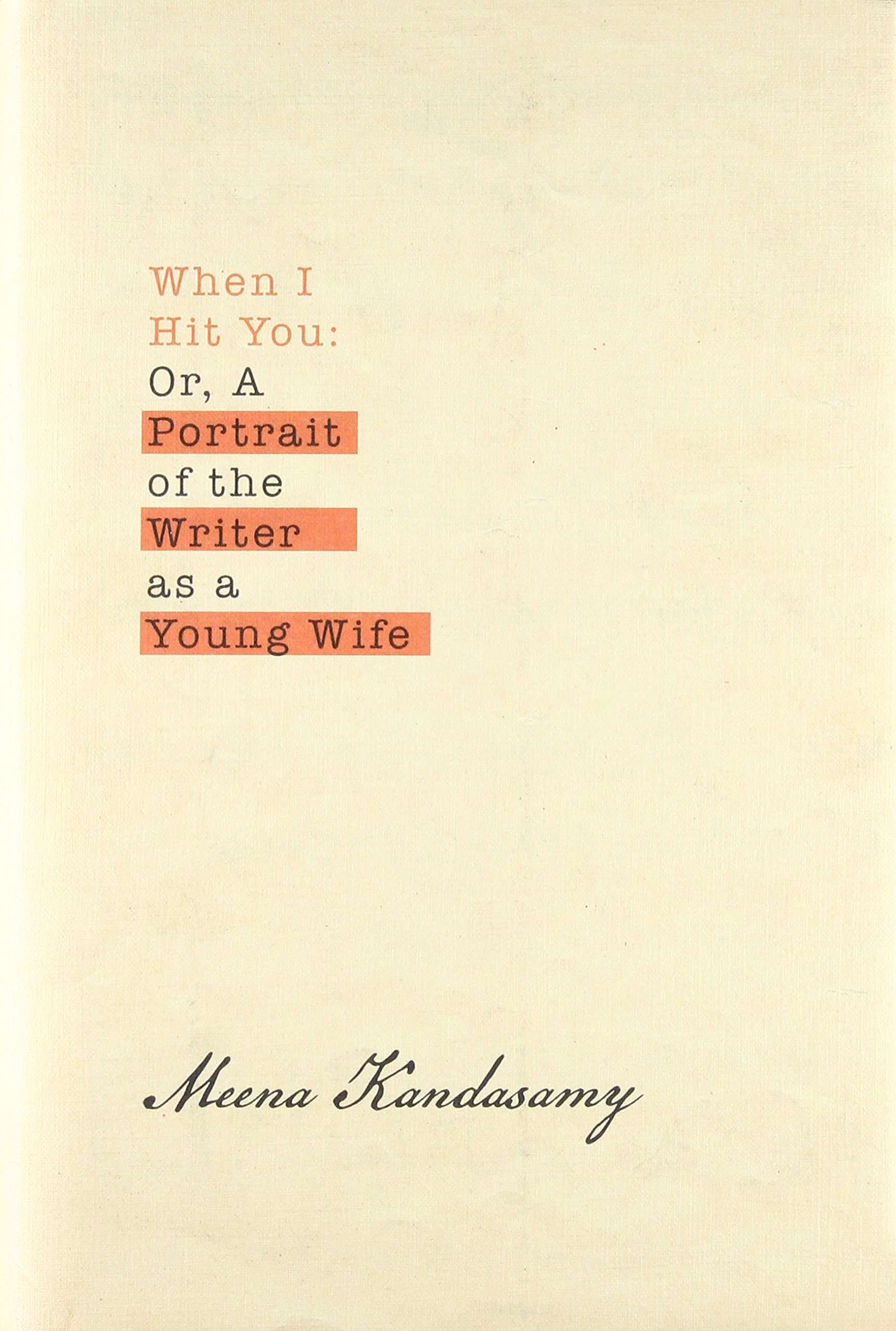
When I Hit You: Or A Portrait Of The Writer As A Young Wife – Meena Kandasamy
 READ FOR BOOKCLUB
Chosen by Rachel
An unnamed narrator tells a story of domestic violence and modern marriage in India through the beauty of literature.
➽ “Named for James Joyce’s debut novel, this book examines modern Indian marriages and brutality in a way not done before. It is not simply a novel about domestic violence, it is an analysis on the art of writing about abuse. Kandasamy’s narrator does not perform victimhood but rather lays the facts bare in a banal, expected kind of way. In doing so she demonstrates how women of all walks of life suffer as such, and that they are women of intellect and ability, with hopes and dreams, not just “battered women”. I think the author has done here what so many writers have attempted before but failed at. She has written an exposé on domestic violence without using shock value, empowered others in the same position and created a work of art. It was a deeply satisfying read.” – Rachel
➽ “The poetic writing style of this suspected (not overtly confirmed by the author) autobiographical story makes for a beautiful read despite the horrific violence recounted. I feel educated about domestic violence – I always thought I understood why women stayed in abusive relationships but after reading her account my comprehension has deepened considerably. The survivor in this story needed to make sure others could see what she had been through in order to successfully escape without bringing further shame on herself and her family. A truly disturbing reveal of domestic violence and societal expectations and prejudice in India.” – Jo
➽ “When I Hit You is a raw and powerful novel about a young Indian women’s abusive and oppressive marriage. Kandasamy reveals what can happen behind closed doors of a marriage, a scary look into what some woman have to endure. Kandasamy has written a harrowing account of domestic violence in a beautifully artistic way – I thoroughly enjoyed her way with words. An incredible piece of writing I highly recommend.” – Jodie
—–
Published 2017
Atlantic Books
256 pages
2018 NZ Book Awards
 Social commentary is a traditional feature of literature, but with Millennials coming of age, outspoken hypothesising on the state of the world looks to become a staple of modern story telling.
This year’s Ockham’s shortlist highlights this.
A solipsistic tale of youth and immediacy, an immigrant’s lot in today’s NZ and Gen Xers pitted against Millennials make up three quarters of the shortlist. Salt Picnic breaks the mold with a highly academic look at two years of Janet Frame’s life written by a stronghold in the NZ fiction world. However, it’s complexity and bravado keeps it under the indulgent umbrella.
However, with time and contemplation, us couple of Gen Xers were able to see through the decadence and accept where these novels had hit the mark, even when we felt they were slightly annoying or unconnected to us.
Our summations: Salt Picnic is a very literary book that should be recognised but has a limited audience. Sodden Downstream portrays a slice of NZ that people may or may not agree with, but no one can deny the book’s haunting atmosphere.
Our views differed on the remaining two books, Suzy was more captured than Rachel by both. Though we did agree The New Animals had two parts (one which was superb) that didn’t really connect with one another. And that Baby was either brilliant or brilliantly annoying. We wondered if this surmounted to the same thing … but what we did agree on was that Jochems is someone to watch.
In the end it came down to two books: Baby and Sodden Downstream.
Baby hits all the checkpoints in a vernacular which young adult readers in particular will gravitate towards.
Sodden Downstream paints a gritty, moody picture of NZ’s social climate that advocates for the dispossessed in particular will love.
It depends whether you like your books perfected, as VUP books tend to be, or something less highly polished.
Suzy and Rachel concluded in this instance we preferred the rawness of Sodden Downstream and as such have earmarked it as our preference for the win at this year’s Ockham Book Awards. But we wouldn’t be surprised if the new talent of Annaleese Jochems takes it out.
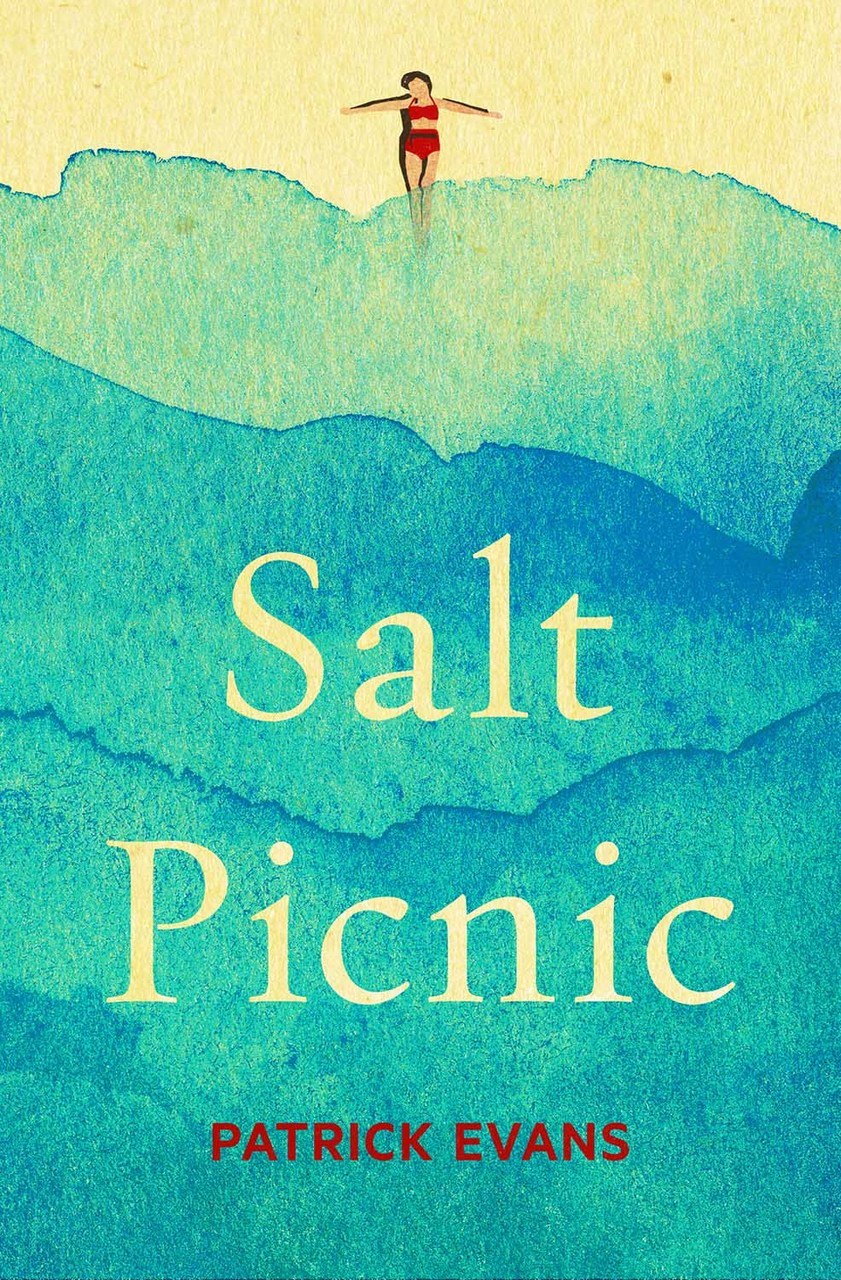
Salt Picnic – Patrick Evans
 READ FOR NZ BOOK AWARDS
Mimicking Janet Frame’s travels, a young woman arrives on the island of Ibiza in 1956 and falls into a relationship with an American photographer.
➽ “Patrick Evans is an accomplished writer and obviously has a lot of intelligent thoughts swirling around in his head and just as many different ways available to him of offering that information. Unfortunately not all his readers share his intellect. By that I mean me.
“Salt Picnic is his ‘imaginative response’ to the time Janet Frame spent in Ibiza in 1956-57. The protagonist is not Frame, he is at pains to point out, but perhaps she should have been, for Iola Farmer is bland and unconvincing imo. The book wants for plot lines and unfortunately this is not countered with any type of character study.
“What the book does offer is a history lesson, with the Island’s status post-war heavily referred to, and intensely detailed commentary about things and places and ideas and historical occurrences. There were some wonderful monologues, but there were also periods of time where I had no idea what was happening. It certainly lacks Evans’ dry humour I enjoyed in The Back Of His Head.
“This is not a book for everybody, and in fact I would say it has a limited audience.” – Rachel
—–
Published 2017
Victoria University Press
351 pages
The New Animals – Pip Adam
 READ FOR NZ BOOK AWARDS
Current and last generation fashion designers compete for fame on the streets of Auckland.
➽ “Ugh this book made me hate myself quite frankly, but once I moved past my self-loathing I was able to enjoy it in all of its glory. It was the Gen Xers working alongside the Millennials that felt awfully recognisable to me and this part especially was a killer:
‘She was wearing the same type of clothes as them, she listened to the same music, she knew exactly what they were talking about, but right now she knew she was old. Not cute, cool old, just very old…‘
“Anyway I am determined not to turn this review into an introspective psychological assessment so let’s move on.
“This novel started as a superficial, typically Auckland novel and I was not having it, but once I was into the rhythm of the characters’ lives I felt deeply invested in what was happening.
“The last part of the novel is stunning, confusing, beautiful, weird and in marked contrast to everything else prior. Is Pip Adam a genius? Perhaps.
“However, while this is a must-read novel of 2018 but I’m not sure if it’ll take out the Ockhams.” – Suzy
➽ “At first I was put off this book because of its superficiality. The narrative seemed merely observational and didn’t delve deeper into the real issues it mentioned in passing.
“As with Baby this was a book aimed at Millenials and I wondered: is this what that generation want to read about? Sex. Porn. Bodily Functions. Masturbation. Superficiality. Garishly presented without meaning or subtly? Pip Adam was losing me.
“Then the last third of the book arrived. Amongst what I took as references to Maori myth was a truly emotional and beautiful psychological awakening. Though I’m still unsure if it was metaphorical or literal, it was easily the highlight of the novel and I actually couldn’t tell what the connection was between that and the rest of the book.
“My recommendation – read Kirsten McDougall’s Tess off the longlist instead.” – Rachel
—–
Published by 2017
Victoria University Press
224 pages
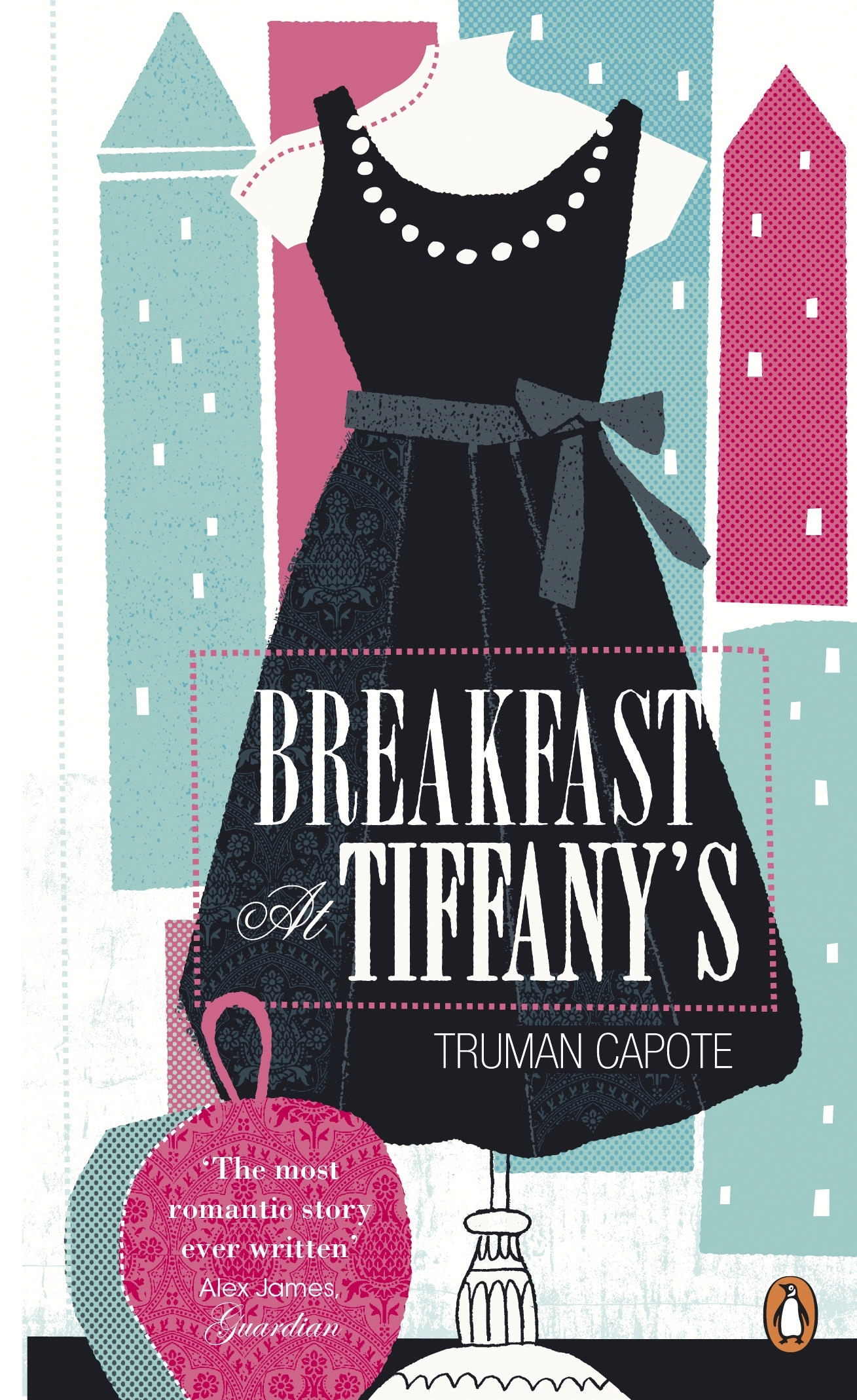
Breakfast at Tiffany’s – Truman Capote
 READ FOR BOOKCLUB
Chosen by Sonya
The unnamed narrator writes of his experiences with Manhattan socialite Holly Golightly. A famous American Classic.
➽ “Breakfast At Tiffany’s was a fun, easy read. It had plenty of depth and character and I enjoyed dipping into post-war America and the the life of what other reviewers had described as “An American Geisha”. I loved Holly Golightly, her character, her clothes!, her quirkiness and unapologetic lifestyle. Unfortunately, however, I have seen the movie more than once, and so I struggled to shake that adaptation, the characters and their portrayls from my mind. As such, it didn’t feel like an honest read on my behalf. I felt like I probably missed some of the metaphors, messages and meanings behind characters and events that you get when you read a book and absorb it in the way that is intended.” – Sonya
➽ “The American classic Breakfast at Tiffany’s remains a favourite of mine. Its depth despite its simplicity is a drawcard as is the construction of the enigmatic Holiday Golightly, a country girl turned New York cafe society girl and part time escort. Set during the post war sexual revolution it is highly readable, more so for the beautifully flawed protagonist. Her manner with men is appropriate for a person with her past and I enjoy the narrator’s relationship with her, like a standoffish friend who knows so much he almost knows nothing. I loved her cat-like nature, sidling up to people from whom she can see herself gaining advantages, and her unbreakable resolve. A wonderful book.” – Rachel
➽ “It’s hard for me to understand how Breakfast at Tiffany’s is a classic. It’s an interesting story and Holly Golightly is quite a piece of work however I was left thinking ‘is that it?’ A bit underwhelmed I’m afraid by this one.” – Jo
—–
Published 1958
Random House
142 pages

We're
currently
reading
 The Free-Range Bookclub
Recent Comments