The Free-Range Bookclub
Bookclubbers without boundaries in Nelson, New Zealand
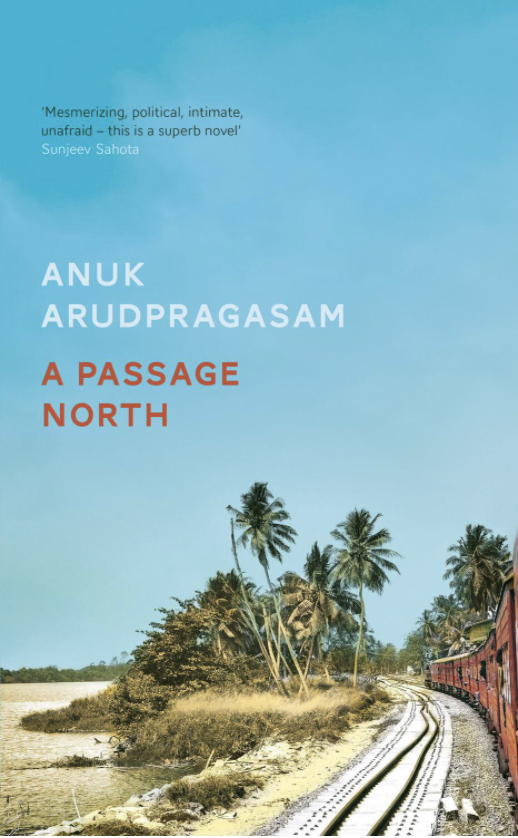
A Passage North – Anuk Arudpragasam
READ FOR BOOKERTHON
Sri Lankan man Krishnan receives two messages, the first informing him his grandmother’s caretaker Rani has died, found in the bottom of a well with her neck broken. The second is from Anjum an activist Krishnan loved years ago, which stirs up memories and desires in him. As he makes the journey by train into the war-torn Northern Province for the funeral, so begins analysis of Sri Lanka’s 30 year civil war.
He couldn’t help thinking, as the train hurtled closer toward his destination, that he’d traversed not any physical distance that day but rather some vast psychic distance inside him, that he’d been advancing not from the island’s south to its north but from the south of his mind to its own distant northern reaches.
⫸ “I am in NO position to be saying the things I’m about to say as, well, it’s not like I have had a book shortlisted for the Booker Prize: I really like books that have interwoven fiction and non-fiction – for example last year’s shortlisted The Shadow King looked at the Italian invasion of Ethiopia.
“I felt like A Passage North was a half-hearted attempt at this. While the base storyline held my interest I felt like the author’s interspersing of factual information was done in a strange way. Often there were pages and pages of information on the history of Sri Lanka that was just the main character recalling a book he had read or a documentary he had watched. It felt like a lazy tool to educate the reader on information that, while undoubtedly important, would have been more impactful if it was blended more with the characters that I was emotionally invested in as a reader.
“Maybe I am not appreciating the creativity? What right do I have to demand important information to be fed to me in a way that I prefer?
“Overall I felt like these factual asides, while interesting and informative, were a distraction from the main storyline rather than nicely flowing alongside it. In saying that I was very invested in the storyline of the main character, his experiences and relationships.” – Suzy
⫸ “A Passage North is set in Sri Lanka at the conclusion of its long civil war. Tamil Krishan is back from studying overseas and is contacted by his former girlfriend, an activist called Anjum, whom he still loves. The book is a study of not only Tamil and Anjum’s relationship but of Sri Lanka’s war-torn past and Tamil’s experience of it and in it.
“While I appreciate the author’s investment into recording an important part of history, I found the prose too over-written for my liking. The protagonist tells his stories with such detail and passion and some of those moments are poignant and affecting, but others are not, like when two men on a train simply look at each other for paragraphs on end, and every assessment of the look is discussed, and the ways in which the look could be interpreted are drawn out. Sometimes this kind of intensity is profound and sometimes it’s distracting. Tamil’s narration was very observational too so while the plot was moving along I felt a little removed from it.
“Arudpragasam is clearly a talented writer. He has produced meticulous characters and provided them rich and layered experiences. I can see why the book was an attractive pick for the Booker judges as the author has pushed out the traditional scope of a novel, but the style of prose means it pushed me out too.” – Rachel
—–
Published 2021
Hogarth Press
304 pages
No One Is Talking About This – Patricia Lockwood

READ FOR BOOKERTHON
A woman with new online prominence grapples with the reality of the cyber world and real life
⫸ “The internet, referred to as ‘the portal’, is given a life of itself in this novel, a place where the unnamed protagonist is constantly experiencing huge fluctuations in emotional response. In the opening pages she laughs at bodies being flung from a carnival ride at the Ohio State Fair …
“Such is the state of play in this no-genre book, where a woman is made internet famous for tweeting ‘can dogs be twins?’ The content and her reactions are shallow and superficial, conveyed in unlinked fragments, and as such a realistic portrayal of modern screen time and the often inane and pointless content we get sucked in by.
“But there is also a lot of hidden social commentary amongst the online space junk: climate change, economic woes, the rise of an unnamed but laughable dictator all cause her to delve deeper and face being consumed by the overwhelming onslaught of imagery and texts. But isn’t this also a true to life example of how we now gather our information and knowledge? Wading, drowning, surfacing, siphoning off the sand and hoping we spot the gold.
“Amongst the trials and travels accorded by the woman’s internet fame, is the story of her sister giving birth. But when there is bad news about the health of the baby, the women’s reality and the absurdity of the portal collide causing her to confront her thoughts and fears about the real and fake worlds which she exists in.
“This book adeptly portrays so many elements of the modern world, it is a snapshot of our times and an interesting form of the novel. I loved it.” – Rachel
Previously these communities were imposed on us, along with their mental weather. Now we chose them—or believed that we did. A person might join a site to look at pictures of her nephew and five years later believe in a flat earth.
⫸ “For me as a reader, what started as utter confusion soon gave way to an appreciation of the deep sense of the love that the author so convincingly conveyed for her niece. The juxtaposition of something so visceral with the empty and vacuous social media experience felt a bit forced at times but was ultimately effective.
“I’m unsure if it was the author’s goal to get readers to reflect on their own social media usage but if so it was certainly successful with me.” – Suzy
—–
Published 2021
Riverhead Books
210 pages
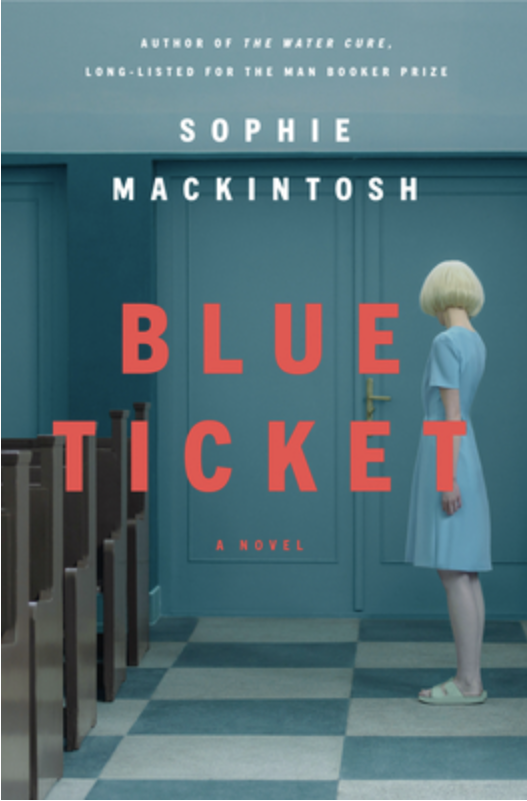
Blue Ticket – Sophie MackIntosh
READ FOR BOOKCLUB
Chosen by Jo
Set in a dystopian future, all women, on the first day of their menstruation, are allocated a future at random: a white ticket grants marriage and children; a blue ticket grants a career and freedom. Women are told this is to relieve them of the terrible burden of choice.
Calla receives a blue ticket but after questioning her fate, and taking matters into her own hands, she finds herself on the run, with the system and other women pitted against her.
MackIntosh has placed Calla in a system that deliberately withholds basic information about her body, and then focuses the story on that body and its denied physicality, creating an enquiry into free will, social expectation, and motherhood.
Having a child is both the most rational and irrational decision possible, in this world. This fucking awful, beautiful world, which I can’t stop loving, though I have considered it, I have evaluated and counted the ways.
⫸ “Blue Ticket has a fascinating premise, raising a central theme of free will. It made me wonder which ticket I would hope to get and why. Would I want another life if told I could not have it? The detail around the society, the country and the ruling government was limited and I found this frustrating, I really wanted to understand Calla’s world more. The men in that world had virtually no redeeming features either, and there seemed to be little trust between the women. It was truly a dark patriarchal society and I was captivated from the start. I really enjoyed following Calla’s journey, and the ending was satisfying despite not being a joyous one.” – Jo.
⫸ “Blue Ticket is a dystopian novel but executed in a more subtle way than other alternative realities I have read about. We weren’t drawn into the complexities of the society and so were able to totally focus on the main character, Calla, and her plight, on the run rebelling against her life as a blue ticket. Calla was a highly relatable character who did not want what was being forced upon her, and I’m sure most of us would have wished to rebel too if this was our life. I was totally engaged in the novel and would recommend it.” – Jodie
⫸ “We read Blue Ticket at around the same time the horrific anti-abortion laws in Texas were being put into force so I felt quite uneasy to be reading something fictional where the lives of women were so controlled and the right to procreate (or not) was such an overwhelmingly large part of their existence. I was so invested in the storyline of Blue Ticket and the outcomes for the characters, however at times I just could not shake the feeling like this was like fan-fiction for The Handmaid’s Tale. It must be incredibly hard to approach a genre that has such a revered and well-established classic.” – Suzy
⫸ “Mackintosh’s prose matches her plot. It is often dreamy and spiritual but also brutal and earthy, much like motherhood itself. It drives home Calla’s inability to make her own choices but also the conflict many woman feel over the motherhood-career decisions they have to make. There is a familiarity to the story. Maybe because it deals with fertility in a dystopian setting it reminded me strongly of The Handmaid’s Tale. However it has unique and beautiful prose with an intriguing storyline and satisfying conclusion – I would definitely recommend it.” – Rachel
—–
Published 2020
Doubleday Books
304 pages
The Blue Flower – Penelope Fitzgerald

READ FOR BOOKCLUB
Chosen by Jodie
Penelope’s Fitzgerald’s last novel, written in 1997, details the early life of the German romantic poet Friedrich von Hardenberg who used the pseudonym Novalis and his love for 12-year-old Sophie von Kuhn. Set in provincial Saxony in the 1790s, the title of the book comes directly from Novalis’ own unfinished novel: Heinrich von Oftterdingen, in which the blue flower is something unattainable and unreachable. Thought of by some as a ‘writer’s book’ it acts as an introduction to the Romantic era combining artful intelligence, political upheaval, intense friendships, innocence as well moral ambiguity.
Sink, he told his hopes, with a kind of satisfaction, sink like a corpse dropped into the river. I am rejected, not for being unwelcome, not even for being ridiculous, but for being nothing.
⫸ “The Blue Flower is a work of historical fiction and its emphasis seems to be largely focused around recounting historical facts. And yes, Fitzgerald does fit in a lot of what happened in Novalis’ early life as a Romantic poet into The Blue Flower. However, this focus on fact came across as too stilted and matter of fact for me. Fitzgerald’s use of traditional language and German phrasing made it a hard novel to become attached too. The choice to use Fritz’s deep love for 12-year-old Sophie as a main thread of the novel was a little disturbing as the author invested so much effort into making it sound beautiful and natural, which clearly it is not.” – Jodie
⫸ “When reading a fictional recount of a genius there is a certain level of intellect and creativity expected. I’m pretty sure The Blue Flower has all the right elements to convey the life of this Romantic writer. However as I am not schooled in either Romanticism, Novalis or 1700s Germany, I imagine I missed a lot of the relevance. I did enjoy sections of the plot and the characters’ stories but did, as always, struggle to get engaged with a work of historical fiction.” – Rachel
⫸ “I felt uneasy about a few of the comments made by the characters in this book, eg something along the lines of how do you get your housework done with no females in the home, but it was the main character’s obsession with a 12-year-old girl that finished me off. I couldn’t accept that this was a reflection of the times – authors can write about anything they want and Penelope Fitzgerald is clearly a capable writer. I feel like it was an unforgivable focus for her to have.” – Suzy
—–
Published 1997
Mariner Books
226 pages
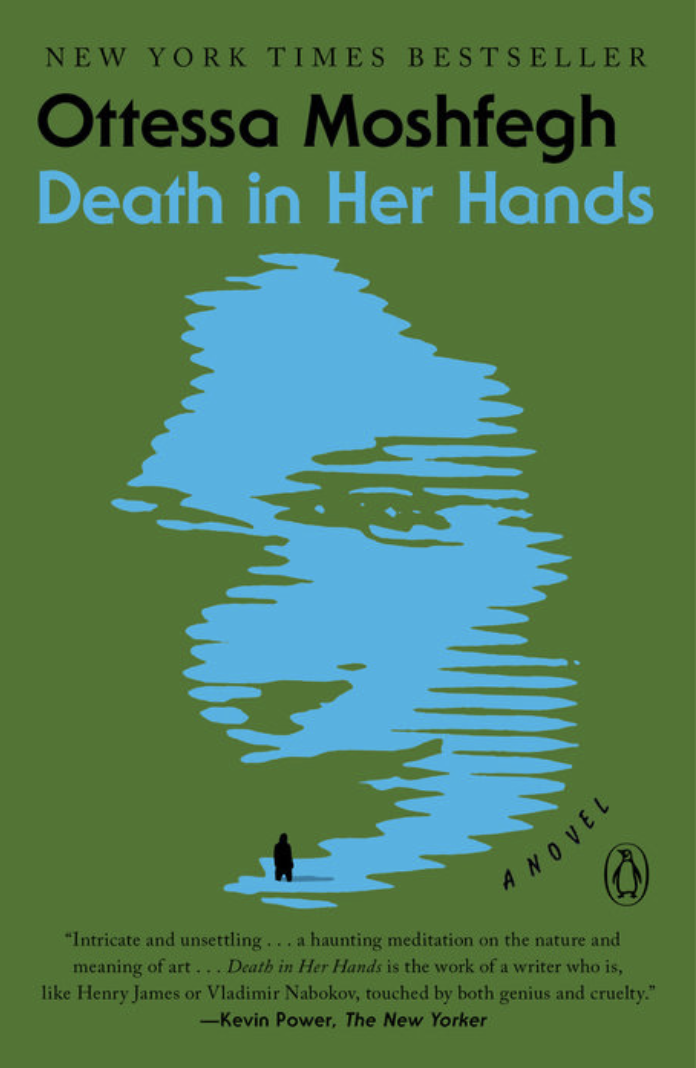
Death In Her Hands – Otessa Moshfegh
READ FOR BOOKCLUB
Chosen by Rachel
An investigation of an elderly woman’s mental wanderings after finding a note referring to a murder. Vesta Gul is an expected Moshfegh character: a female loner with convoluted, dangerous thoughts. She is 72, living alone in the woods after the death of her husband, with only her dog Charlie for company.
After discovering a note in the woods that reads ‘Her name was Magda. No body will ever know who killed her. It wasn’t me. Here is her dead body’, Vesta starts a crusade to discover the truth about Magda. However, her over imagination gets away with her to the point it is difficult to work out what is real and what is imagined.
But this is fiction, so everything is imagined, and Magda is as much a character as Vesta. As such, it becomes a kind of post-modern scrutiny of the processes of fiction writing, with a power play of narrative authority between Otessa Moshfegh writing Vesta Gul, and Vesta Gul writing Magda.
Brutes, those cops were, talking about me that way. Didn’t they know I’d been the wife of a scientist? Didn’t they know I’d worn the most elegant silk blend dresses, gone to dinners at the university? The wife of a state senator had complimented me on my hairdo. They’d printed my picture in the paper a few times. I’d sung in a chorus at college. I’d studied Japanese calligraphy. I once saved a kitten that had crawled up into the wheel well of an old man’s car. And what were those cops good for? Pulling people over for speeding?
⫸ “A fabulous study of loneliness and of the impact of living with an oppressor on the psyche. Vesta slowly reveals the details of her suffocating marriage at the same time as she imagines the life of the unknown Magda. The two are clearly linked. Her obsession with the murder allows Vesta the same freedoms and clarity as she has given her imagined Magda and so her unreliability deepens. Death In Her Hands is a dark, mysterious novel which I found compelling as a character study on madness. I could not predict the outcome and had to invest time and effort into working out what was real and what was imagined. I really enjoyed it.” – Rachel
⫸ “Reading this book over a relatively short period of time I almost felt like I was experiencing the same uncertainty and confusion as the main character Vesta. As we moved into her spiralling thoughts I felt increasingly uncomfortable – I was less concerned with ‘solving the mystery’ and more worried for her wellbeing. Overall it was a very compelling read. Side note – this is the second fictional dog called Charlie I have come across where things have not gone well for the owner (I’m looking at you A Star is Born).” – Suzy
⫸ “The protagonist started off as someone who seemed sane and quite interesting, though somewhat neurotic, and her gradual slide downhill into incoherence was convincingly portrayed. It was often difficult to interpret what was real and what wasn’t and this added to the intrigue. Revelations about Vesta’s marriage became darker and darker as we moved through the book. It was almost as if she was slowly choosing to open up to the reader, revealing more intimate details as the story unfolded. The novel had a great ending that was sad but strangely satisfying.” – Jo
⫸ “I appreciated the concept of the novel which is essentially a story within a story and found that quite interesting. The second half of the story became more thrilling as Vesta’s mental health began to decline and her confused state led us into the sometimes dark, sometimes pitiful meanderings of her mind. A clever and well written book but to be honest it wasn’t really for me.” – Jodie
—–
Published 2020
Penguin Press
259 pages
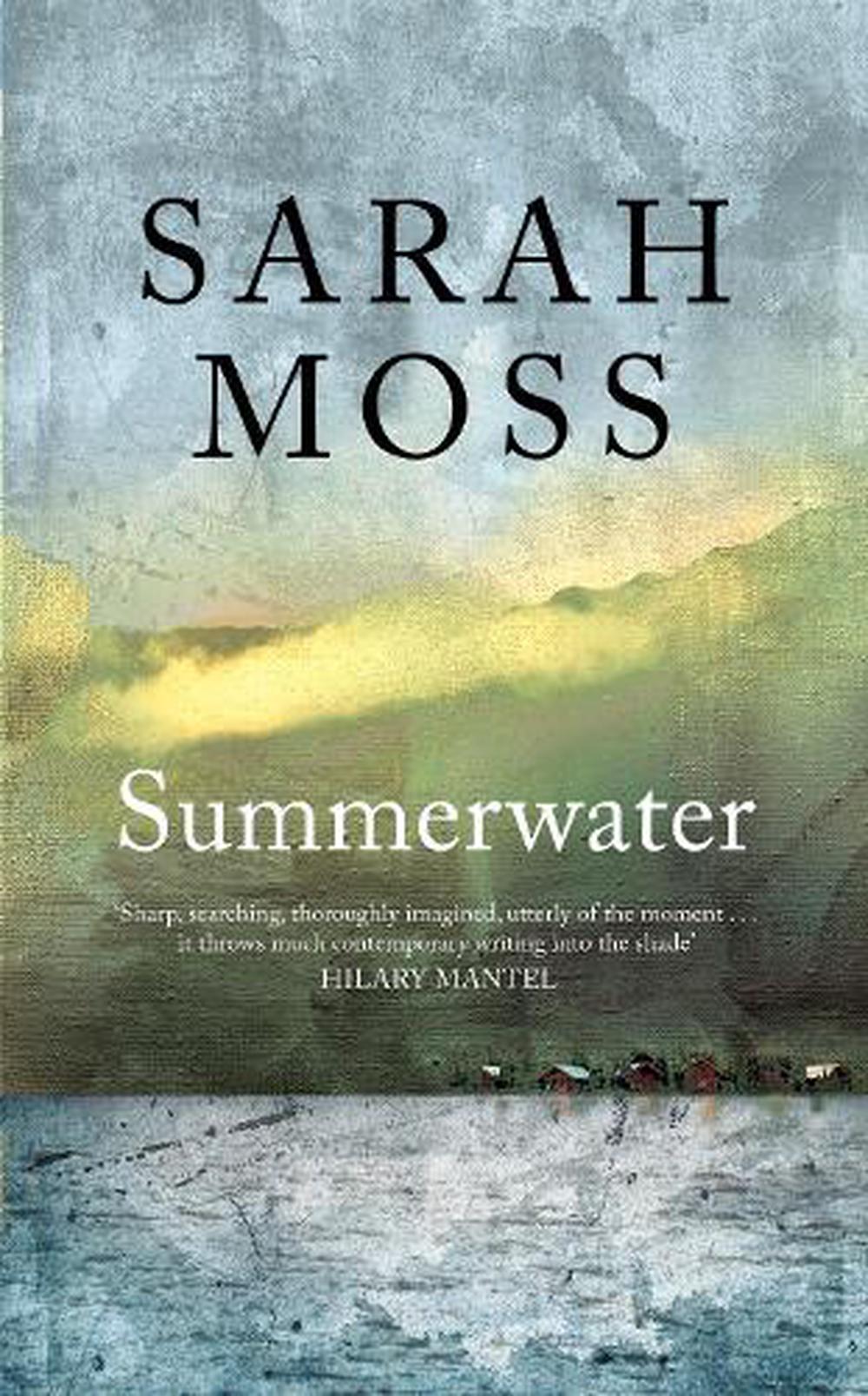
Summerwater – Sarah Moss
READ FOR BOOKCLUB
Chosen by Jo
Apt for a loch setting, there is dark and mysterious element at work in Summerwater. Its title is a reference to “The Ballad of Semerwater” by the poet William Watson. This was based on a legend in which the waters of a lake rise up and drown a village, saving only the household who have offered a stranger from a distant land food and drink.
On the shore of Moss’ loch are several holiday cabins, encased in a typical Scottish deluge of rain. Their inhabitants’ tales of rainy day gloom, boredom activities and wild imaginings are told, and from the outset it’s clear tragedy will befall one of them by day’s end, but who? Everyone has a secret, no one has mobile phone coverage, and there are many personalities and natural dangers at play.
Under the hedges, in the hollows of small trees, birds droop and wilt, grounded, waiting. Small creatures in their burrows nose the air and stay hungry. There will be deaths by morning.
⫸ “The beauty of Summerwater lay in its skilful representation of the myriad different characters. It was if different authors were writing about each of the characters. My attention was captured from the outset of the book; I felt the tension immediately. Throughout the pages there were so many potential tragic scenarios and the skilful prose kept me guessing until the end. The conclusion was fairly swift, and I thought that it was a bit of a shame to not have the characters’ post-tragedy perspectives.” – Jo
⫸ “Summerwater was a slow paced read but waiting for something terrible happen helped keep me engaged. Moss did a great job conjuring up images of each family. It felt real and natural. The ending was tragic and completed the novel with the punch it needed” – Jodie
⫸ “Moss’ ability to build atmosphere and conjure up the many iterations of family life was of particular note in Summerwater. The pace matched the drum of the constant rain and the sense of doom grew page by page. Despite intently trying to guess the tragedy, I did not pick how things would end up. Summerwater was a quick but intense read and I really enjoyed it. ” – Rachel
⫸ “Summerwater was such an evocative read and conjured up many memories of family holidays – mainly the not-so-fun parts that inevitably occur when the weather plays up or the full-on time spent together becomes a little too much. Although we only got small glimpses into the characters’ lives I was somehow left with the feeling of knowing them all so well. The wee twist that was brought about by Jo’s research definitely put a more sinister spin on the novel, and left me thinking about it for weeks after.” – Suzy
—–
Published 2020
Pan MacMillan/Picador
208 pages
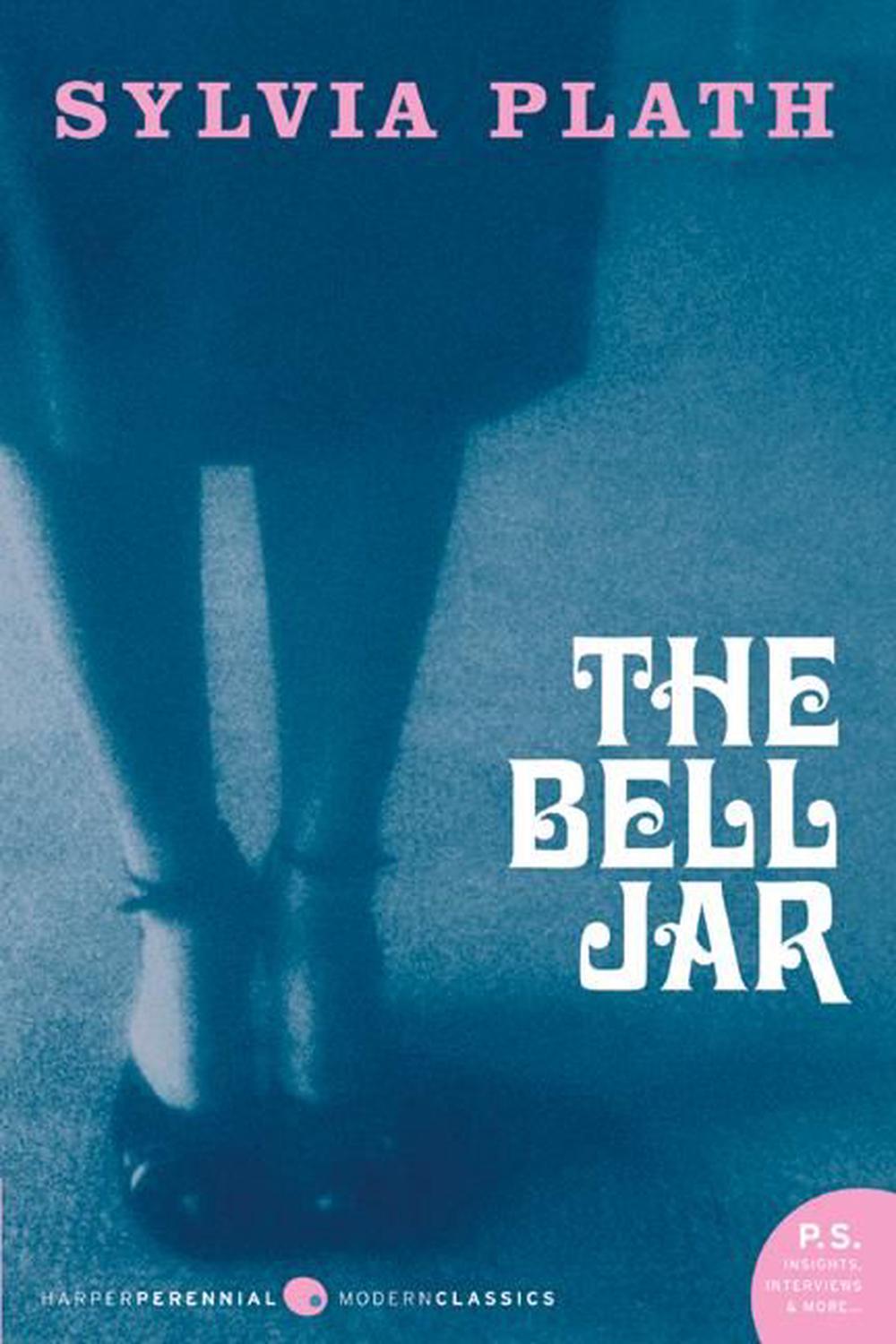
The Bell Jar – Sylvia Plath
READ FOR BOOKCLUB
Chosen by Jodie.
Esther Greenwood’s story is remarkably similar to Sylvia Plath’s own life and struggles and is considered autobiographical fiction, despite being written under a pseudonym.
Esther is an editor with mental illness who soon succumbs to being institutionally committed, fighting off her suicidal tendencies. Despite its grim plot, the book is considered a telling of truth and one which has helped women find acceptance in themselves and each other.
The Bell Jar was published 30 years ago when such acknowledgement of mental illness was not forthcoming. Perhaps this makes Plath a leader in the frank discussion of this topic. Certainly the content of her book only becomes more and more relevant as times goes on.
Because wherever I sat—on the deck of a ship or at a street café in Paris or Bangkok—I would be sitting under the same glass bell jar, stewing in my own sour air.
⫸ “Weeks after reading The Bell Jar I was still affected by it, and found myself thinking about Esther like she was someone I knew. It’s a very power novel – a heartbreaking insight to the suffering that inflicts people with depression. Sadly the novel is semi autobiographical, and I was haunted throughout the novel knowing that Sylvia herself battled with the same struggles.” –Jodie
⫸ “The Bell Jar is less shocking the second time around but there is one image that has stayed with me, and that was the protagonist squashed into a space under the floor of the house after taking loads of pills. It is utterly horrible. I think Sylvia has described or explained depression so convincingly and in a captivating way that this dark story is not hard to read but, surprisingly, a joy. How on earth did she make such a depressing story not depressing? The dark humour was clever, perhaps that helped.” – Jo
⫸ “This was my second read of The Bell Jar and my vague recollection of it being mostly a bit of black humour akin to Catcher in the Rye turned out to be very wrong. While there were the occasional bleakly funny moments it was the brutal account of Esther’s descent into mental illness that was central to the book and made for a distressing read. Knowing the author’s history made it even harder to bear. I often think of Esther’s beautiful words towards the end of the book: “I took a deep breath and listened to the old brag of my heart. I am, I am, I am”. I will never not feel sad about Sylvia Plath and The Bell Jar.” – Suzy
⫸ “Investing one’s time into 300 pages of a break down is not usually considered fun. However, despite the misery and sadness of The Bell Jar there is an abject realism to the story that makes it not only accepting but strangely enjoyable. Esther is such a real character that her loves and lives and thoughts formed in my mind like a truth and I felt her pains, her joys and every tiny step she took both forward and backward in her mental health journey. There are very few authors who can write so succinctly yet so convincingly in a way that breaks your heart. Well mine anyway. Stunningly beautiful.” – Rachel
—–
Published in 1953
Heinemann
294 pages
2021 NZ Book Awards
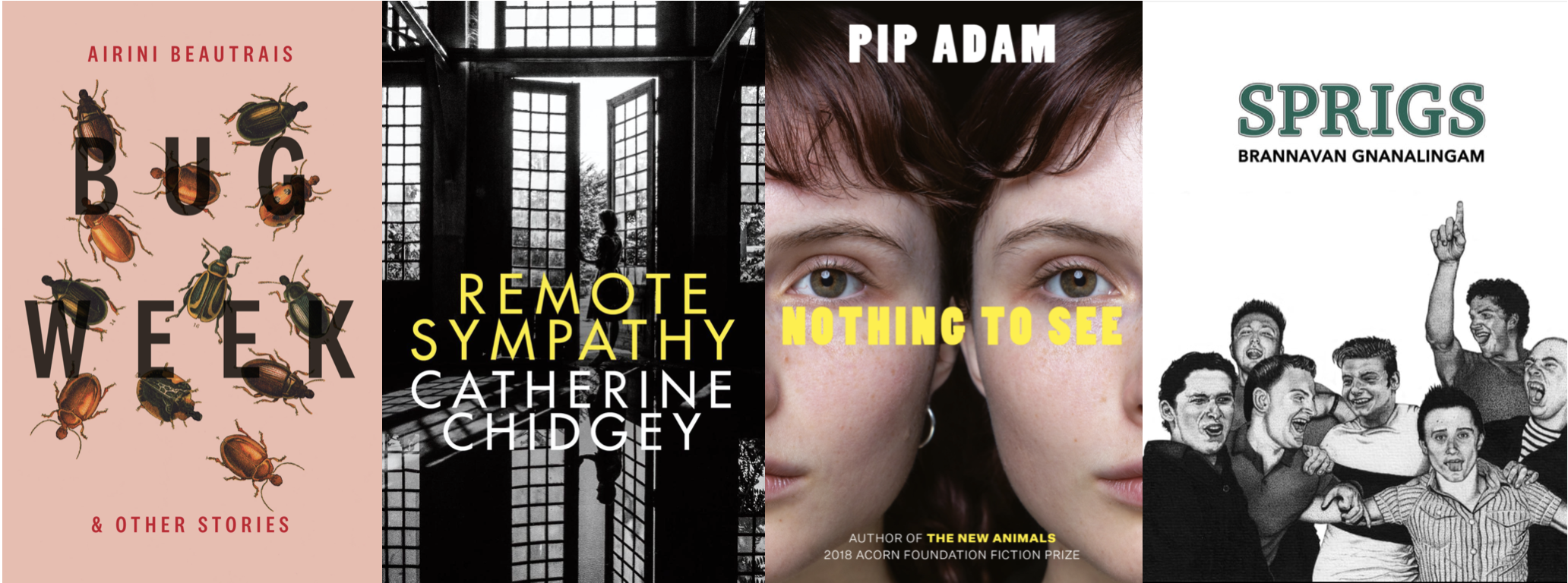
Suzy: “All four books seemed completely deserving of their place on the shortlist. While I would have thought the judges may have leaned more towards Nothing to See I am not mad at all about Bug Week winning. There are flashes from the various Bug Week stories that still sit with me and resonate – I think about that damn talking toroa a lot more than I would like to admit. Please stop haunting me talking toroa!
‘With Remote Sympathy set outside NZ it felt quite separate from the other books, but this was neither a good or bad thing – it just felt ‘different’. I don’t think I will ever be able to face finishing Sprigs, but I deeply appreciate Brannavan Gnanalingam diving so sensitively into such a distressing topic.
“I regret not being able to finish these books before the actual winner was announced, hopefully 2022 will be a more settled year!”
Rachel: “The commonality I found in the four shortlisters this year was how the voices of those we might not usually hear from formed a powerful discussion point. All these books went to extra lengths to ensure their characters, whether good, bad or misunderstood were human, with all their personality traits out in the open. As the reader I connected with them all, for better or worse, because they were so fully developed. I heard point of views I had not before. I also felt ownership over how I could feel about them, even the truely terrible ones, rather than pushed into an emotional corner. To me, this gift of understanding was the best feature of this lineup.
“I did enjoy all the titles for their brave storylines, though to varying degrees and that doesn’t mean I’d recommend them all. Full disclosure, we are a little late this year and I am writing this knowing who the winner is. And I can see why it won. Though not a short story fan myself, Bug Week was probably one of the best short story collections I’ve read. However, the book that stood out most to me was Remote Sympathy. I was captured by every character’s tale and enjoyed just how uncomfortably comfortable I was, lost in the plot.” – Rachel
Remote Sympathy – Catherine Chidgey
Read for NZ Book Awards
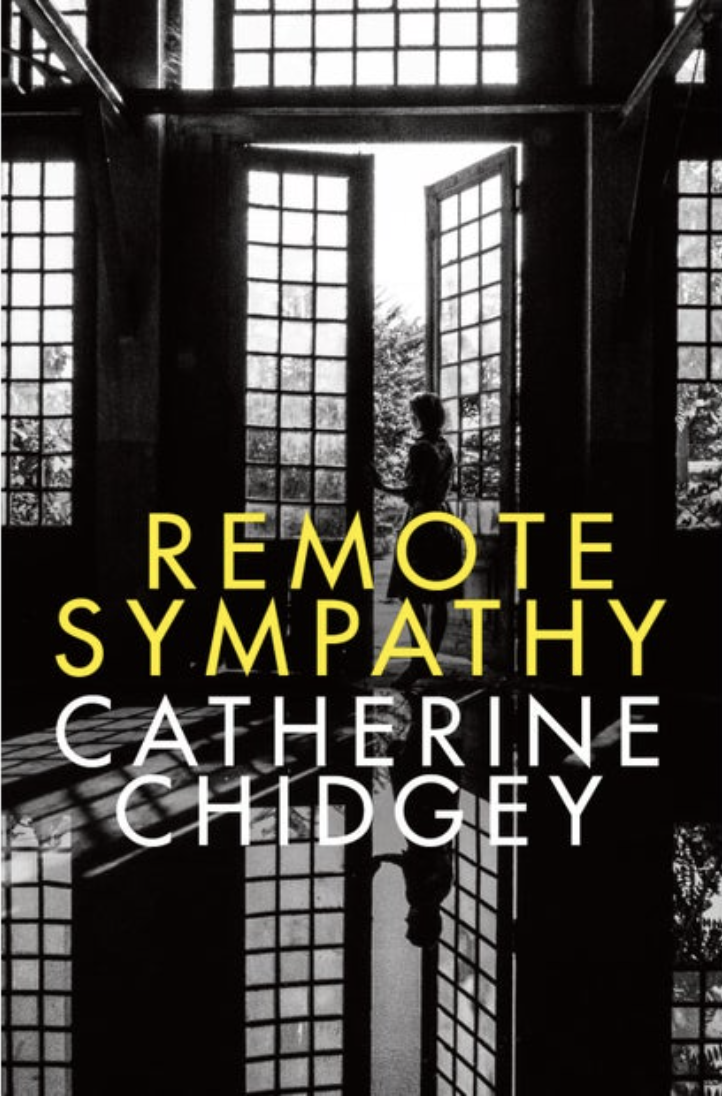
An inmate at Buchenwald concentration camp aids the commandant who is trying to save his wife’s life
⫸ “Remote Sympathy tells the stories of several people and families who all have one thing in common: the Buchenwald concentration camp near Weimar, Germany.
“At the midst of the story are a commandant, placed in charge of the problematic camp, and his young, sick wife whom he’s trying to save; and a prisoner searching for information on his family, who invented a strange medical invention which may just save the commandant’s wife.
“The story is told in alternating dialogues from these characters, Doktor Weber, Herr Hahn, Frau Hahn, who tell their stories, their dreams, their hopes, their personal trials and tribulations living in a most unique situation, where captor and prisoner are secretly working in partnership. A fourth narrative is provided by the “citizens of Weimar” a community which stood by while men were starved and tortured all around them; a community wiling to be silent bystanders.
“The camp was a real place and Chidgey has combined a good portion of fact alongside the fiction. Several real Germans are detailed, along with their crimes and punishments, and some of Herr Hahn’s contributions are comments made by the real Buchenwald commandant when interrogated by the Americans in 1954. This foundation of truth builds a solid base to help humanise the fictional characters and their stories.
“The fact that Chidgey speaks German, has spent a lot of time living in Berlin, and was a recipient of a Berlin writing fellowship are probably why she writes with such authority about this era.”
⫸ “At the onset of reading this book, I looked at the 510 pages and wondered how this war story would be different to the many others that have been recorded over time. But, from the opening pages Catherine Chidgey proved there are so many more stories to be told. I was hooked immediately. Lenard Weber is likeable and I immediately felt connected to his story and his family.
“What’s more I also felt connected to Dietrich Hahn and his family. He was a despicable person who oversaw and instigated Holocaust crimes we are all familiar with. It’s disturbing and revolting and like the residents of Weimar it is sometimes easier to look away. But what stuck with me just as much was the image of Dietrich carving wooden animals for his doting son and desperately trying to save his dying wife whom he loved so much. I wouldn’t say I liked him, but these affections made him more of a complete person, rather than just the villain. I enjoy this conflicting feeling towards a character. It indicates to me an incredibly talented author.” – Rachel
⫸ “Remote Sympathy felt to me like one of the most perfectly written novels I have read in a long time. I wonder whether it was the circular nature of the storyline that felt so satisfying?
“The content was at times completely horrific and it was interesting to get perspectives from characters on both sides. Humanising a leader of a concentration camp is certainly a skill and Catherine Chidgey does this so well, even though of course we are left in no doubt that the man in question is a monster.
“The meticulous research that is referred to in the Author’s Note never felt laboured while reading Remote Sympathy and the blend of fact and fiction was seamless.” – Suzy
——
Published 2020
VUP
522 pages
Bug Week And Other Stories – Airini Beautrais
Read for NZ Book Awards
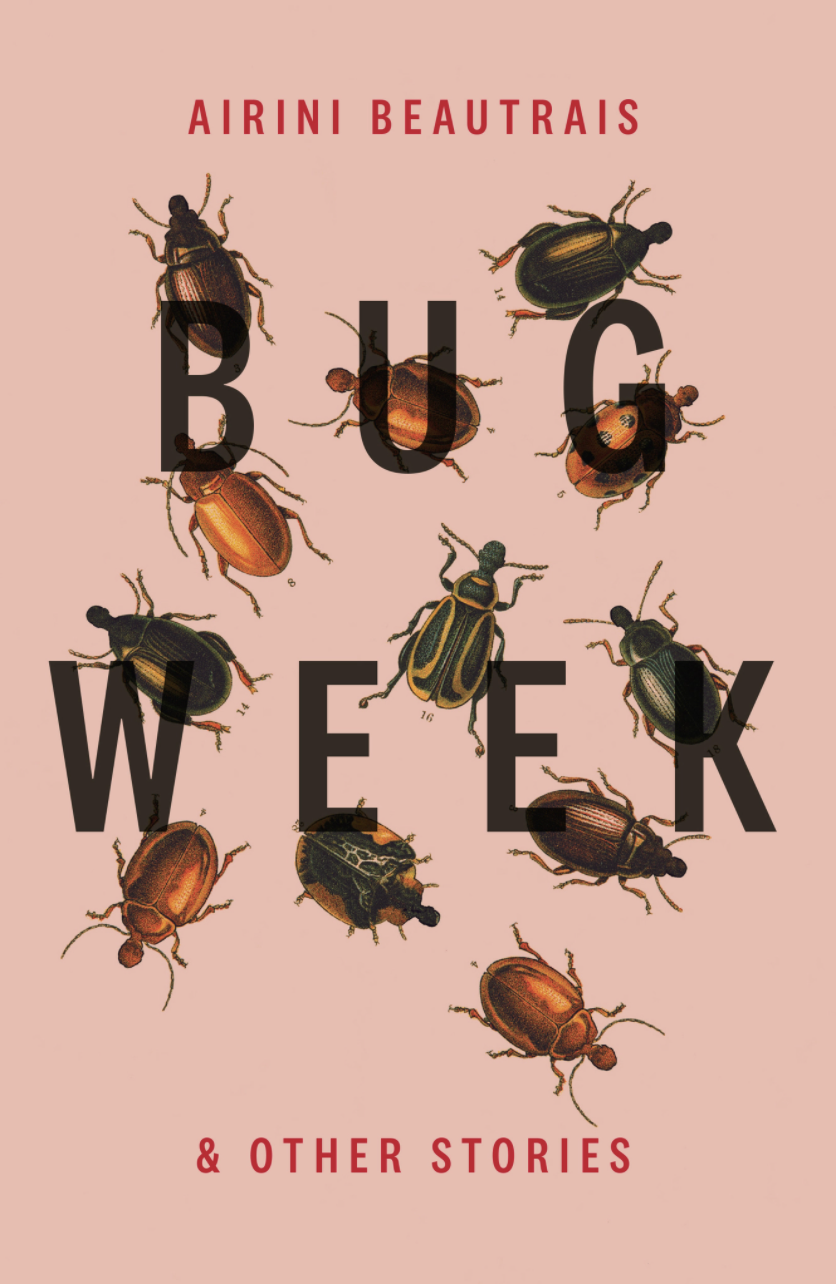
From 1960s Wellington to post-Communist Germany, Bug Week is a collection of short stories that traverses the weird, the wry and the grotesque fragments of people’s lives.
There are bug collectors, necrophiliacs, an albatross at an open mic night, and body parts washed up on a river bank. The social settings and voices are never the same, rather the stories showcase a varied and authentic collection of characters, relaying unexpected stories of human relationships. Despite the focus on the cynical and perverse, there is an element of comedy amongst the tragedy.
⫸ “I have some kind of weird resistance to short stories in general – maybe too much analysis in sixth form at school rather than reading for pleasure? So I started Bug Week with a bit of trepidation. I wasn’t just pleasantly surprised, but genuinely enjoyed these beautifully written stories.
“Often a gentle tone would lead into an unexpectedly grim event however as a reader I continued to be drawn into a story and lulled into a rhythm only for a turn of events to throw things off balance. This was never jarring in a way that made for an unpleasant reading experience, it was done perfectly.
“I tried to guess which of my colleagues would play the starring roles of the eponymous Bug Week and for that I can only apologise to them. I also do need to mention the final story which probably goes down as The Worst Short Story I Have Ever Read.” – Suzy
⫸ “Bug Week is a good example of why I don’t often read short stories. Just as I fall in love with the story and become emotionally invested in the characters, it is over. I get new book apprehension and end-of-book despair repeatedly and the mid-story joy doesn’t long last enough. I know this is a bit of a backhanded compliment, in that I enjoyed the book so much it annoyed me there wasn’t more to enjoy, but this is my usual reaction to excellent short story collections. I will add that this is one of my favourite ever short story collections and I would strongly recommend it.
“I felt connected to each and every story in this collection; they were engaging, connected and piqued my interest instantly. My favourite story was The Baddest Toroa In Town in which an albatross takes the stage at open-mic night, interrupts a poetry recital by a fisherman and urges the crowd to stop plundering the oceans. While funny and slightly absurd it makes the point that art is often a more effective medium for societal and political messaging than formal appeals to the higher ups.
“Beautrais has a knack for conveying a maximum amount of content in a minimal amount of words and has an appealing wry humour. The characters are structured in identifiable Kiwi ways, their social quirks and their chill, no-nonsense tone. And the New Zealand settings anchor the narratives geographically and historically. Even the German-set stories gave me a NZ Lit vibe in that they reminded me of Katherine Mansfield’s In A German Pension, in which she had a satirical focus on the grotesque behaviours of ordinary people.” – Rachel
——
Published 2020
VUP
184 pages

We're
currently
reading


Recent Comments