The Free-Range Bookclub
Bookclubbers without boundaries in Nelson, New Zealand
Sophie’s Choice – William Styron

READ FOR BOOKCLUB
Chosen by Rachel
An aspiring novelist is captivated by a Holocaust survivor and her unpredictable boyfriend
Stingo is a Southern young man aspiring to be a novelist and living off the income from his grandmother’s controversial sale of slaves many years prior.
He moves to New York and there meets Sophie, an Aushwitz survivor and her biochemist boyfriend Nathan who both enchants and infuriates our protagonist. The relationship between the trio is intense and sometimes maddening, with Stingo playing an active part in the emotional aspect of his friends’ courtship.
The current day drama is broken up by Sophie’s extended recollections of the war and her 20 months spent in one of German’s most notorious concentration camps. By making Sophie Polish, the author demonstrates how the Holocaust was a crime against humanity, not only Jewish people.
Despite her already extended suffering, Sophie’s boyfriend likes to, among other heinous things, question her about what she had to do to survive Aushwitz when others did not. Taking the role of Sophie’s newest oppressor, he ensures her state of victimhood and unnatural dependance on him remain.
The author does not use overt horror to ram home his story, rather a snippet told in the briefest of words is often the hardest to read. Characters are convincing, portraying the full spectrum of humanity, from guards evil to those reluctant to hurt; from prisoners who suffered immensely to those who gave up their best friend for an extra crust of bread.
The story of ill-treatment is replicated in other pages of the book by Sophie’s disturbed boyfriend and to a certain degree by Stingo who, as sympathetic and likeable as he seemed, still exhibited a lack of objectivity and a domination of women which unfortunately was common at this post-war time. This is seen right down to the very pages themselves in which Stingo is possessing Sophie by writing about her.
“Those strange creepy people, all picking at their little… scabs,” she had complained to me when Nathan was not around. “I hate this type of”—and here I thought she used a lovely gem of a phrase—”unearned unhappiness!”
❝ There are many good Holocaust novels but for me, Sophie’s Choice is unrivalled. Plus it’s so much more than a Holocaust story. As traumatic as the book sounds – and is – I was gripped by every action and every one of Stingo’s tales. Yes the characters are messed up, but they are drawn particularly well and what I enjoyed the most was observing and analysing their tangled relationship from a social and historical aspect. – Rachel
❝ I found Sophie’s Choice totally enjoyable, though I would recommend that potential readers prepare by investing time and effort into this mammoth book. The relationship between the three main characters is fascinating and I invested a lot of thought into their actions. I felt strongly that Stingo’s lack of action to protect Sophie was totally understandable given that Nathan was such an oppressive and formidable character. – Jo
❝ This was an engrossing story and I was swept up in the present day story as well as Sophie’s extremely grim Holocaust memories. The slow unravelling of both storylines was tense and engaging. A negative for me was that it felt like the character of Sophie was fetishised by the author at times and this made for uncomfortable reading. After learning about the slightly autobiographical nature of the book this became almost repugnant. – Suzy
❝ The first person narrative suited the telling of the story in Sophie’s Choice. I felt like I was sitting next to Stingo as he told me his story – it had a real confessional feel to it. Stingo relayed events in a compassionate and compelling way, with a touch of humour thrown in the mix to offset the trauma. The story unwound steadily, leaving me wanting more as Sophie’s secrets were drip fed to us. I thoroughly enjoyed the characterisation of Sophie, Nathan and Stingo and the complex, frustrating dynamics of their friendship. A great novel on many different levels.” – Jodie
—–
Published 1979
Random House
562 pages
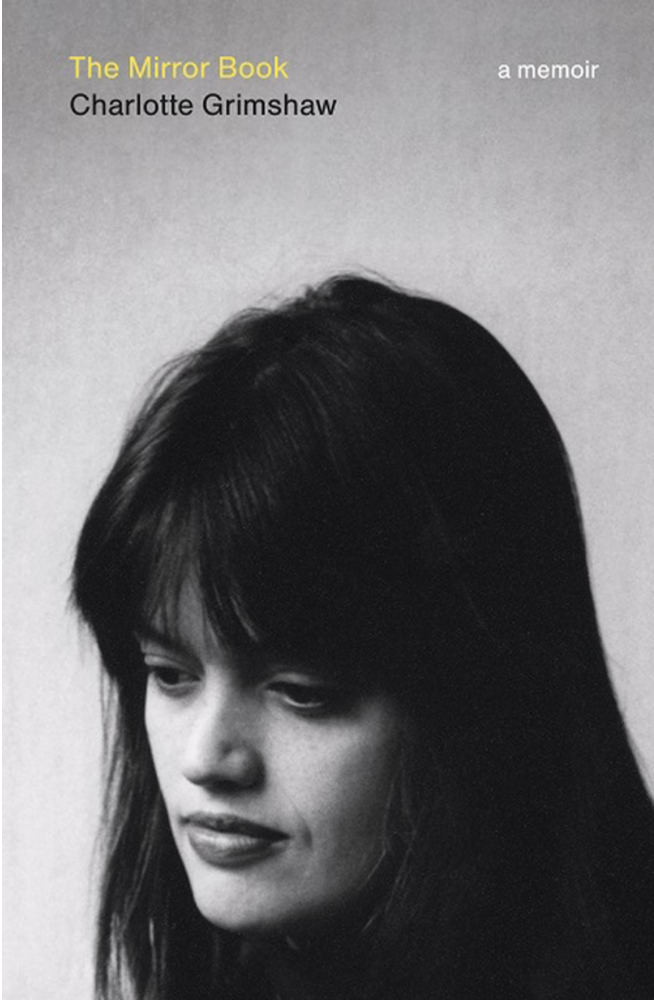
The Mirror Book – Charlotte Grimshaw
READ FOR BOOKCLUB & NZ BOOK AWARDS
Chosen by Suzy
The memoirs of Charlotte Grimshaw, author and daughter of C K Stead
❝ I can’t lie – I initially wanted to read The Mirror Book for the goss factor, but this memoir is so much more. It’s a personal assessment and investigation into trauma and grief and is communicated with such clarity and insight I almost felt envious of the way the author had so comprehensively gotten her shit together. This book was shocking and a completely engaging read. – Suzy
❝ I find memoirs fascinating, I guess primarily for the nosey neighbour aspect. However, I do find that many memoirs are either written by ghost writers in a matter-of-fact way, or by the subject who may have an interesting story to tell but not the skill to proffer it in the most literary way. However, The Mirror Book was particularly appealing to me because it had all the scandal of a memoir, but also the lyrical prose of fabulous fiction, which is primarily what I read. The psychological and analytical nature of Grimshaw’s thoughts, and the references from her life that ended up in print in both her and her father’s works, are like the best fictional constructs yet really happened to this literary family. This was the perfect mix of fictional prowess and true life story for me. – Rachel
❝ Charlotte Grimshaw had a traumatic upbringing – exciting and stimulating from a reader’s point of view, though it did leave me a little stunned. The Mirror Book was shocking at times, exposing Grimshaw’s dysfunctional family in a way that was fascinating and a little provocative. I kept wondering, why did she write this? Learning it was a sort of cathartic therapeutic process as part of her healing made sense. I found the first section a little rambling and haphazard but overall found it hard to put down. It was thoroughly enjoyable, though it seems there is more to tell and I hope one day she writes a more in-depth account of her childhood. – Jo
❝ I found The Mirror Book a captivating read of a childhood quite unlike any I have known. Charlotte was brutal with her honest account of events, and though at times I felt like she was throwing her parents under the bus, I appreciated her bravery. It was a courageous memoir that was beautifully written by a talented writer. – Jodie
——
Published 2021
Penguin Random House
320 pages
2022 – Reading Culture
As an environment where reading is championed and valued, bookclubs provide an encouraging culture of shared learning; of the ability to understand a reality other than our own. Establishing culture is not only an important basis of book clubs but books too, for stories often have a basis formed by societal retellings and enriched historical fact.
Culture breeds culture.
Adding to the culture of our bookclub is the return of one of our founding members. No, Suzy has not relocated back to Nelson, but the Zoom culture of 2020 and 2021 made us all realise we did not need to reside in the same town to benefit from one another’s literary insights. Welcome back Suzy, we look forward to the new and interesting book choices and conversation directions.
And perhaps unsurprisingly our book list this year reflects this hark back to cultural influences, to expanding our intellectual travels at a time when literal world explorations are nigh impossible. With translated works, historical dramas and stories of native culture from several parts of the world, we are feeling a sense of groundedness and connection in our reading list this year.
Here’s what’s coming up:
The Mirror Book – Charlotte Grimshaw
Sophie’s Choice – William Styron
Boys Don’t Cry – Fiona Scarlett
The Matriarch – Witi Ihimaera
Crossroads – Jonathan Franzen
The Lying Life of Adults – Elena Ferrante
All The Light We Cannot See – Anthony Doerr
Colorless Tsukuru & His Year’s of Pilgrimage – Haruki Murakami
In My Father’s Den – Maurice Gee
At Night All Blood is Black – David Diop
The Dictionary of Lost Words – Pip Williams
The Color Purple – Alice Walker
Potiki – Patricia Grace
2021 – End Of Year Thoughts


Twelve months ago we agreed we were glad to see the end of 2020 but, unfortunately we are just as pleased to say goodbye to 2021. Lockdowns, frustrations and uncertainty have prevailed, but at least books were still being written and published and read. Perhaps it was because we had the time to take note, or perhaps good old-fashioned reading was hitting the popularity stakes over social media, but there seemed to be a plethora of new and exciting books available in 2021, well, more than usual crossing our radars anyway.
We discussed the literary year at our end-of-year dinner, which again, we were lucky to be able to hold. This year we chose Le Plonc in Nelson for some fine French cuisine. Between courses we contemplated our contemporary new fiction focus as of late.
We had began the year with a murder amongst friends, and a novel of warnings, then moved into relationships marred by Roman mythical creatures, imagined murderers, and sisters with confused identities. Accidental communities faced the threat of death, and reproductive control, and the changing of history. The analysis of the modern person was certainly present in these titles and gave us much to critique.
For instance in a year where romance was basically absent from our book choices, our attention was drawn instead to two relationships of a different type, both unusual sibling attractions. July & September in Sisters and Charles & Camilla in The Secret History had complex connections that would keep the most analytical reader occupied!
We agreed Sylvia Plath was the most interesting author, that Bina had too many punchy one-liners to name our favourite and that the books could be summarised by containing a number of slow-burning horrors that gave us many shocking moments of note.
Here are the rest of our bests:
Best character:
Jodie: Esther – Bell Jar
Rachel: Richard – The Secret History
Jo: Vesta – Death In Her Hands
Most memorable setting:
Jodie: Loch – Summerwater
Rachel: Loch – Summerwater
Jo: Cottage – Death In Her Hands
Worst character:
Jodie: Eddie – Bina: A Novel In Warnings
Rachel: O’Brien – Nineteen Eighty Four
Jo: Psychologist – Blue Ticket
Runner up best book:
Jodie: Sisters – Daisy Johnson
Rachel: Sisters – Daisy Johnson
Jo: Death In Her Hands – Otessa Moshfegh
Book of the year:
Jodie: The Bell Jar – Sylvia Plath
Rachel: The Secret History – Donna Tartt
Jo: The Secret History – Donna Tartt
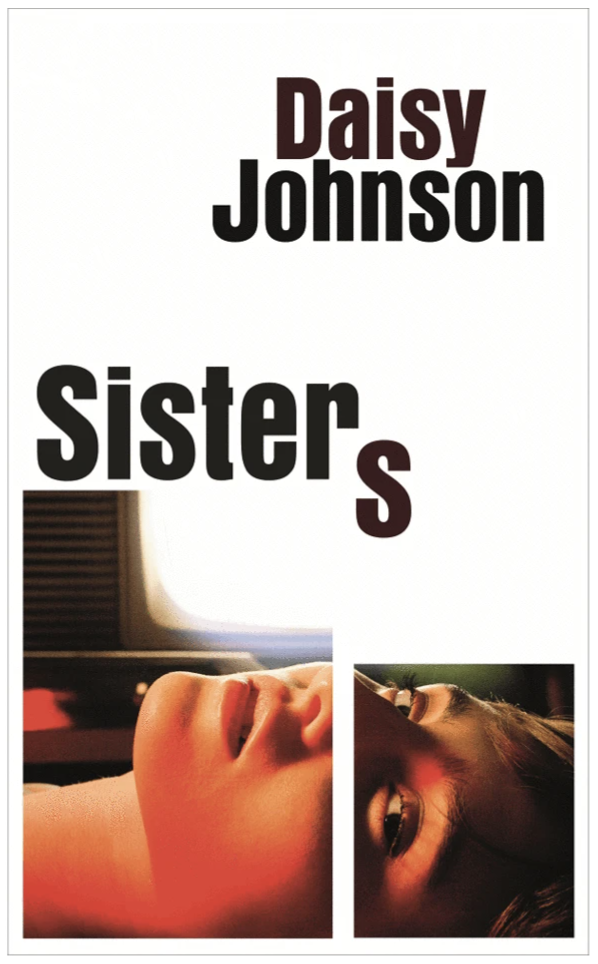
Sisters – Daisy Johnson
READ FOR BOOKCLUB
Chosen by Rachel
Born ten months apart, July and September are almost like twins. They do not look the same, they do not have the same personalties, but they are becoming inseparable and September increasingly exhibits dark influences over July.
Their closeness allows no one else entry into their lives, not friends, not boyfriends, and not their mother, Sheela. The closer she tries to get to the girls, the more September bars her from their insular dynamic. Sheela begins drawing the girls into her fantastical children’s books in order to feel connection to them.
One day there is an incident at school which creates a divide between the sisters. The narrator July cannot understand their shifting bond, nor September’s moodiness. Then, one day, it all becomes apparent.
The look in their eyes when she came across them, the sudden silence that fell and that she could not quite break into. The sound of her banal chatting as she tried to befriend them. Her own children. The things that teachers said about them at school: isolated, uninterested, conjoined, young for their age, sometimes moved to great cruelty.
⫸ This psychological thriller builds tension right from the opening page, slowly but evenly paced so I was wondering what the truth was from the start, and changed my predictions every few pages! In the end I realised I was never going to work out the complex relationships at play. Yet re-reading the opening chapter made me realise the clues were there all along. There is certainly a sense of dread and wonder all the way through the book and the innate feeling that something oppressive and unnatural is lurking in the shadows. I loved this book. Finishing it made me want to re-read it all again. – Rachel
⫸ Sisters had a haunting quality right from the start and my assumptions about the exact cause of the ‘haunting’ were wayyy off track. This was an uncomfortable yet compelling read and I think Daisy Johnson did a brilliant job of getting the reader completely invested before the shocking reveal. Well I found it shocking – more astute readers may not! – Suzy
⫸ Johnson’s story telling was exceptional. I was captivated through out the entire novel. It could get a little weird at times but was quite intriguing as I never quite knew what was going on! Don’t let that bother you, it was a fascinating read. I would recommend it to anyone wanting to try something a bit different. – Jodie
⫸ The tension of wondering what had happened re the bullying incident was nicely balanced with the present story. I was suspicious about July’s activities but didn’t understand how they could be. A brutal situation for all involved with a domestic violence (albeit not in the usual way) theme becoming more and more alarming as the details were revealed. I wish July could have moved on but that wouldn’t have made for a very good ending – the one given was much bleaker and made the book all the more better for it. I enjoyed this book but would only recommend to selected hardened readers! – Jo
—–
Published 2020
Riverhead Books
224 pages
2021 Booker


⫸ There are many safety nets which we turn to in a time of ongoing global uncertainty, and one of them is the search for the truth. Opinions of experts and everyday people, the reliability of data and keeping up to date with what is happening to humanity in all corners of the globe consumes us. While effectively living in a world we only thought possible in a dystopian novel, perhaps more dystopia in our reading is not what we are after right now.
Surprisingly this year’s Booker shortlist is alternative-reality free and in fact swings the other way, relying heavily on true-to-life fact and real events as their foundations. Fortune Men details the life and death of the last man hung in Cardiff Prison after being wrongly imprisoned; A Passage North is set in the aftermath of the Sri Lankan Civil War; The Promise‘s setting and characters represent South Africa and the struggles with ending apartheid; No One Is Talking About This is autobiographical fiction detailing events in the life of the author and also studying our obsession with the internet; the collapse of the natural world, society and political reliability in America is the basis for Bewilderment; Great Circle uses famous female aviators as inspiration to create a character we thought must have been real! (But was not!!)
Rachel and Suzy both acknowledge this is one of their loves in fiction reading, for when a novel is based on fact it is educates us as well as entertains us, and the truthfulness lends veracity to the fictionalised components. Authors create a vehicle to convey their societal concerns and document moments in history. (It’s not surprising climate change and an unnamed American president feature in two of the books.) And what better way to impart the sense of an atrocity or celebrated event than to fictionalise it with great emotion and a narrative that pulls the reader into the story. It’s far more affecting than a straight non-fiction account. (ioho)
So, as we hunkered down in a stunning beachside AirB&B, checking the portal for new cases of Covid springing up around us, we discussed, debated and pondered the six very readable shortlisted books and came up with the following assesments:
The trauma of loss permeated throughout Bewilderment, in Theo’s family life, in the environment and in the social structure of America. Powers raises several causes of concern without sentimentality and formed the perfect protagonists to ponder and protect all that is wrong. It’s a domestic story on a global scale. We both thoroughly enjoyed this and would be happy if it won.
A Passage North has poetic and philosophical ruminations of trauma and survival, and its calm pacing compelled us to slow down and ponder with care the time and place the author has documented. The techniques Arudpragasam has used is notable and he should be commended for his unique structure, but we thought perhaps we were not sophisticated enough readers to appreciate it fully.
The fact that we both thought Marian Graves must have been a great aviator we had, ashamedly, never heard of goes to show how dedicated the author of Great Circle was to creating a work of extraordinary realism. The book starts on a high and continues with a great sweeping narrative never plummeting into the abyss of boredom. With developed links back to New Zealand and our own Jean Batten we felt connected to this story. Perhaps too much of an adventure story to get the nod, but we’d be pleased if it did win.
The Promise‘s powerful language addresses us directly with a mix of third and first person narratives, drawing us in to the plight of post-apartheid South Africa. Starting with a lighting bolt of realisation, we are alongside Amor, wishing she could fix everything and honour the promise. A book of extreme scope and devastating honesty should surely be one of the top contenders for the prize this year.
Nadifa Mohamed has committed to correcting a piece of history by detailing Mahmood Mattan’s story in The Fortune Men. We appreciated her even-handedness and honestly in detailing everyone’s backstory and agree this is a respectful, dignified account of a moment in history. While it’s important and should be celebrated, we thought it was more conventional than literary and we’d be surprised if it was placed ahead of others on this shortlist.
True events as seen in the portal (internet) pepper the pages of No One Is Talking About This. The author’s commentary on the degradation of American society and the environment is clear but the investigation into our fixation with the internet as a tool for validation and information gathering is what stands out. It’s cross-genre style and dark humour made the reality more biting. A truely unique book that again we are sure must we one of the top picks.
⫸ Suzy: This was a very eclectic mix of books that all had their own strengths and I wouldn’t be too mad if any of them won. My favourite was The Promise. It was so atmospheric and gripping and I took a perverse pleasure in the downfall of a generally awful family.
In regards to the others: Great Circle is an amazing story and dare I say it a page-turner; No One Is Talking About This is a worryingly accurate commentary on modern society; Bewilderment is overwhelming as any book on species extinction should be; The Fortune Men is a necessary rewrite of history to reflect the truth; A Passage North was quite meditative.
In terms of who I think the judges will pick, I’m going with No One Is Talking About This as it’s a book with a form like no other I’ve read before and has such a searing commentary on society it demands attention.
⫸ Rachel: This has been one of my most enjoyable selection of Booker Reads in years and I am so pleased to have read them all. All of them heightened my thoughts on some topic or rather and to be honest I’d like to select a four way tie – but I will not!
Although Great Circle was my best read for a read’s sake, I’ve been jostling between The Promise and No One Is Thinking About This for the top prize, and I think I’m going to choose the latter. I appreciate the author’s own genre creation and do love a good dose of absurdist humour to bring attention to important issues. I laughed, and cringed at myself for laughing, many times in this book. The fact it is autobiographical adds to its integrity.
The other two in my four way tie are Great Circle and Bewilderment. I’d be happy if any of them won. Fortune Men and A Passage North I appreciate but they weren’t my faves.
Suzy, favourites 1-6
The Promise
Great Circle
No One Is Talking About This
Bewilderment
The Fortune Men
A Passage North
Rachel, favourites 1-6
No One Is Talking About This
The Promise
Great Circle
Bewilderment
A Passage North
The Fortune Men
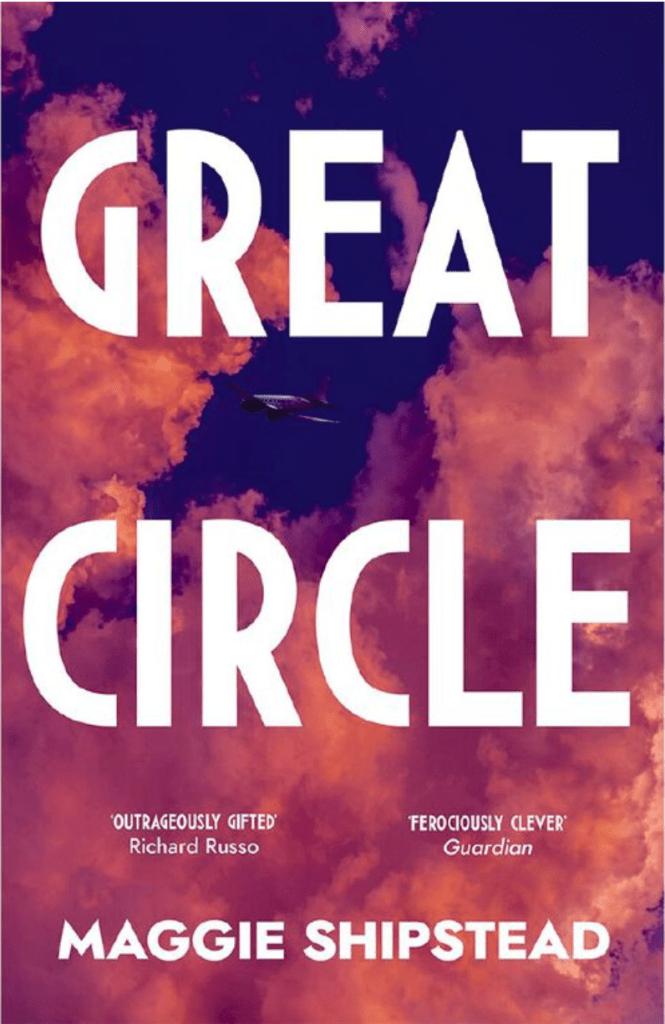
Great Circle – Maggie Shipstead

READ FOR BOOKERTHON
The story of daredevil female aviator Marian Graves and her plans to circumnavigate the globe.
Marian and Jamie Graves are rescued as infants from a sinking ocean liner in 1914, then raised by their uncle in Montana. After encountering a pair of barnstorming pilots passing through town in beat-up biplanes Marian commences her dream of being a pilot.
“At 14 she drops out of school and finds a patron who subsidises her flying lessons, an arrangement that will influence her decisions for the rest of her life, even into her ultimate destiny: circumnavigating the globe by flying over the North and South Poles.
“A century later, Hadley Baxter is cast to play Marian in a film that centres on Marian’s disappearance in Antarctica. With her own determination to succeed and create an individual life, Hadley is eager to redefine herself by immersing herself into the character of Marian.”
“Not only is Marian’s attempt at circumnavigating the globe detailed but so are many other momentous piloting moments, including mentions of Jean Batten, Amelia Earhart and the role of female pilots in World War II. New Zealand gets a few mentions, too.”
I was born to be a wanderer. I was shaped to the earth like a seabird to a wave. Some birds fly until they die. I have made a promise to myself: my last descent won’t be the tumbling helpless king but a sharp gannet plunge – a dive with intent aimed at something deep in the sea.
⫸ “Great Circle felt like the perfect adventurer’s novel. It dipped and dived into so many different offshoots of stories – sometimes frenetically, other times more languidly.
“Throughout the novel we always knew we were moving closer to Marian’s final flight. Yet somehow this didn’t loom over the story and I felt comfortable settling in and just enjoying what was happening in the moment rather than being distracted by the impending doom.
“Every story’s thread was tied up by the end of novel but not in a way that felt forced or implausible. This was such an enjoyable read.” – Suzy
⫸ “Great Circle has two interwoven narratives, that of Marian and her determination to circumnavigate the globe, and that of Hadley, an actress who plays her in a film, a hundred years on. The story lines run parallel so we’re able to feed off Marian’s adventures and then observe Hadley as she attempts to re-create them amidst her own 21st-Century woes.
“At 608 pages there is a lot of story and a big cast yet it never feels overwhelming. In fact, every character’s life and loves and successes and failings are detailed so well, its’ hard not to feel attached to them all. The pacing and timing is spot on with narrative drops and plot markers clearly delineated but also anchored to other such markers so there is never any confusion over what Century we are in or where things are headed.
“Great Circle has more of a traditional narrative than some of the other genre-busting shortlisters but this epic tome has been structured so well it doesn’t feel any less outstanding. In fact, I couldn’t put this book down.” – Rachel
—–
Published 2021
Knopf
608 pages
Bewilderment – Richard Powers
READ FOR BOOKERTHON
An astrobiologist helps his neuro-divergent son understand our beautiful, imperilled planet
Theo Byrne is an astrobiologist looking for life in space while also caring for his behaviourally challenged son, Robin. Theo’s wife, an environmental activist, has died in a car crash and as means to connect, Robin is intensely focused on the deterioration of the natural world.
He is prone to violent rages when frustrated or challenged, and authorities from his school are concerned about Theo’s parenting abilities. Until Robin is accepted into an experimental programme focused on enhancing his emotional control as well as re-connecting him with his dead mother.
The book provides commentary on the political, scientific, environmental and social state of the world within the private universe of a close father-son bond.
Get out, my son said. You’re making that up. And we were, we Earthlings. Making it up as we were went along, then proving it for all the universe to see.
⫸ “Powers has a common theme of environmental and political care in his novels, and I appreciate that he never makes his points preachy or suffocating. In this instance he has a focused narrative about Theo and his mentally troubled son Robin whom he is trying to raise alone. The boy’s obsession with the world and Theo’s obligation to be his teacher, provides an opportunity for Powers to educate us on his thoughts of what’s wrong with the society and how to fix it. Yet at the same time the relationship between the two protagonists is beautifully detailed keeping the reader hooked.
“I especially liked the science fiction/dystopian touch with the machine that can connect people’s thoughts with those already passed. A real mix of topics and styles both real and not brought together in an enlightening read.” – Rachel
⫸ “In hindsight, the conclusion of this book was entirely predictable, but at the time it hit me like a tonne of bricks. I don’t have the eloquence to convey even a sliver of the grace Richard Powers has as an author. His commentary on the degradation of the environment interwoven with the helplessness and terror felt by the character of Robin left me feeling depleted. There was no glimmer of hope or redemption, and nor should there be.” – Suzy
—–
Published 2021
WW Norton Co
288 pages
The Promise – Damon Galgut

READ FOR BOOKERTHON
The lives and deaths of a white South African family, and a promise made to their black housekeeper
When Rachel, a 40-year-old white South African dies in 1986, her country is transitioning out of apartheid. The subsequent decline of the family after Rachel’s death parallels the history of South Africa, a common feature of Galgut’s writing.
“The eponymous promise is one made to the family’s black maid, that she shall be given the deeds to the house she occupies. Yet it goes unfulfilled and the karma of that seems to be the death of one family member per chapter.
Trouble in all the townships, it’s being muttered about everywhere, even with a State of Emergency hanging over the land like a dark cloud and the news under censorship and the mood all over a bit of electrified, a bit alarmed, there is no silencing the voices that talk away under everything, like the think crackle of static.
⫸ “The life of each family member is highly detailed in The Promise, drawing you in, before culminating in their untimely death. And every family member’s life is a page turner, enhanced by the plot line of the younger sister Amor who is attempting to right the wrong of the unfulfilled promise.
“It’s a somber book but beautiful and captivating and poignant at the same time. I was heavily invested in the lives of the family members and felt like I learned I little bit more about South Africa’s history too. I would recommend this book to everyone, very accessible as well as well-constructed and -presented.” – Rachel
⫸ “I loved this book and as a reader it felt a bit like I was living through history alongside the characters. I found the ongoing demise of Swart family grim but satisfying. There was nothing redemptive in any family member’s actions, with even the ‘good’ character’s behaviour left lacking. I’m four books in with my Booker reading and this is the standout for me so far.” – Suzy
—–
Published 2021
Chatto & Windus
304 pages
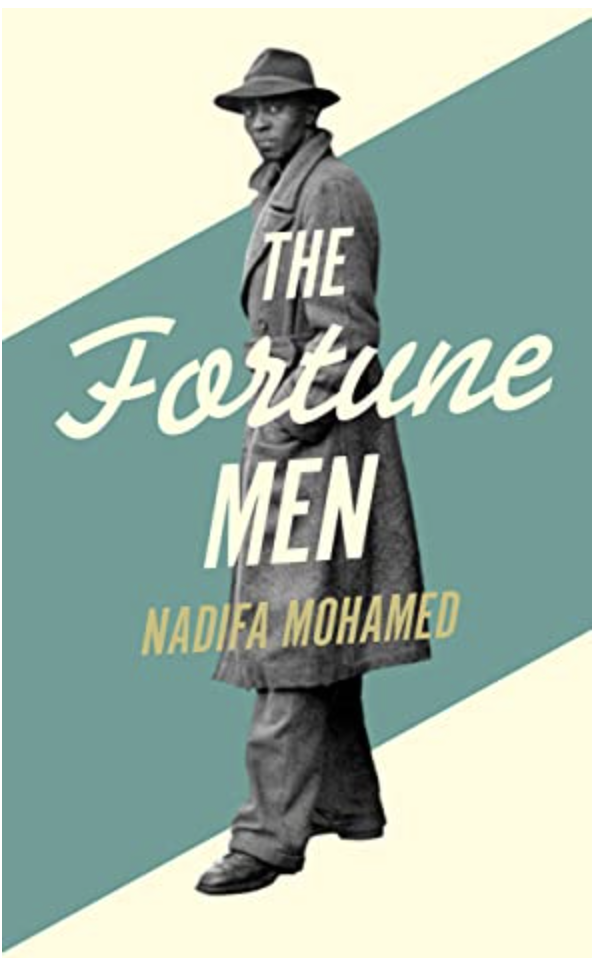
The Fortune Men – Nadifa Mohamed
READ FOR BOOKERTHON
Set in 1952 in Cardiff, The Fortune Men details the real events surrounding the wrongful imprisonment of Mahmood Mattan, a Somali seaman. False witness accounts and racist policing led to him being found guilty of the murder of a local shopkeeper. In prison his hope for justice dwindles as he fights conspiracy and prejudice in all corners.
You cannot look like prey here. You cannot show weakness or your days are numbered, like those of the Somali drunk the police beat to death last year. Mahmood had learnt to do the black man’s walk early on in Cardiff.
⫸ “This was a shocking story and a shameful part of Welsh history. Throughout the novel I thought – yes this is truly awful, but surely things were never that bad. I was in a state of disbelief by the end of it and nothing that was done in the wake of these events can ever make things right.
“I was going to say for a highly unusual piece of Welsh history this book is recommended, but I do have to wonder just how unusual it was.” – Suzy
⫸ “It took me a little bit to get into this book as we jumped between many different characters to begin with. But I soon came to appreciate the author’s meticulous detailing of both prime and sundry characters, including the murdered woman, the grieving family and the accused and his family. Their voices are authentic and the settings are vivid.
“Mohamed has chronicled an important part of both Welsh and Somali history. What results here ends up in the history books and Mohamed has dealt with the entire situation with compassion.” – Rachel
——-
Published 2021
Viking
372 pages

We're
currently
reading


Recent Comments