The Free-Range Bookclub
Bookclubbers without boundaries in Nelson, New Zealand
In Cold Blood – Truman Capote
 READ FOR BOOKCLUB
Chosen by Suzy
Considered the original non-fiction novel, In Cold Blood details the 1959 murders of Kansas farmer Herbert Clutter and his family who were found bound and shot in their home. Capote follows the search for the killers, as they travel the length of country, interacting with strangers who closely escape their next crime. The capture, confession, and trial of the two men responsible are detailed, providing a full cycle of events surrounding the murders.
♥ “A chilling story that kind of crept up on me. Chilling because it was a true story. But also I think knowing the events that took place at the beginning of the book left me unprepared for almost feeling empathy for the killers at the end of it!” – Nadine
♥ “Aside from biographies, I don’t read a lot of non-fiction. But this is the kind of non-fiction I do like. A nail-biting, well-built plot made all the more astounding by knowing it actually happened and what’s more was the first of its kind in format. I enjoyed hearing the story behind the story, too, in regards to Capote’s subsequent interaction with the murders while in prison.” – Rachel
—–
Published 1994
Vintage
343 pages
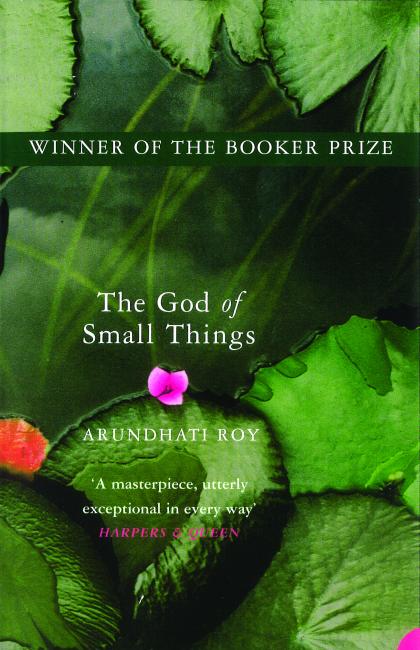
The God Of Small Things – Arundhati Roy
 READ FOR BOOKCLUB
Chosen by Nadine
This novel discusses who should be loved, and how. And how much. It describes how small things affect people’s behaviour and lives
♥ “The God of Small Things details the lives of fraternal twins Rahel and her brother Estha. The narrative alternates between two time periods from the present to the of the time of the twins’ greatest trauma, which occurred upon the childhood visit of their cousin Sophie Mol.
“Separated for twenty-three years with no contact, the twins are now adults. Rahel had travelled to America, where she suffered a failed marriage. Estha went mute willingly.
“In the present they meet at their family home in Ayemenem, where the trauma that separated them occurred. During the course of the novel, Rahel unravels her memories of what happened to them and their family. The perspective also moves to other family members’ lives to provide an understanding of the family dissolution.
“The story revolves around the way different family members’ choices and attempts to escape their culture or class impacts them. Abuse and betrayals are passed down from generation to generation. There is much marital discord, abuse, and rejection by the family members from whom they most the need love.
“Yes there is a lot of sadness, but Roy’s portrayal of innocence is touching. The characters are relatable and likeable from the first page. The many changes in narrative perspective proved a bit of a distraction but ultimately the characters’ believability transcended the confusion.”
—–
Published 1997
IndiaInk
368 pages
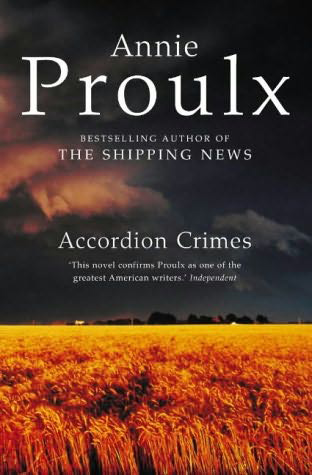
Accordion Crimes – Annie Proulx
 READ FOR BOOKCLUB
Chosen by Rachel
The history of America’s founders is told by the travels of an accordion, and the hands it passes through.
♥ “An accordion is handmade by a Sicilian in 1890 and changes owners several times throughout the novel, ending up in Florida in 1966. Each owner belongs to a nation of people new to the Americas. Each chapter tells their story, not only their personal story but how their people came to America, their successes, their adversities and importantly how they helped shape and grow the country into what it is today.
“It acknowledges the contributions of the various nationalities from the music and song of the French and Sicilians to the railroad construction techniques of the Germans. At the same time it demonstrates how the memories of these nationalities’ contributions are being erased, instead labelling the Sicilians as criminals and mobsters and causing German families to change their surnames due to fear of persecution.
“Amongst the seriousness is the beauty of the accordion. The reader is educated on the intricate detailing required to build the instrument, but also how they are played and how each generation, and each nationality of people, played and enjoyed it and how it formed part of their history.
“At the end of each extended chapter, (small spoiler alert but you’ll still enjoy the book having read this) all the characters you have been introduced to and became familiar with, die in the short space of a page or two. Some are gorily detailed, others are merely recorded, some are hard to read, others are amusing, but by the end, we have learnt of everyone’s ultimate demise.
“Proulx to her credit has been quite inventive with her deaths. It gets to the point where you wonder how she could possibly find ways to kill off the next bunch of characters. But of course there is a serious side too, with their deaths showcasing the violence and injustice often experienced by immigrants.
“Despite knowing everyone is going to die in the final paragraphs, the reader is presented with characters who are full and highly detailed in the pages prior, with their stories concluded before the dying begins, so the sudden reporting of their fates doesn’t leave you in the lurch with an unfinished story. It’s an interesting feature though, that drew different reactions amongst us from bemusement to horror.”
—–
Published 1996
Scribner
544 pages
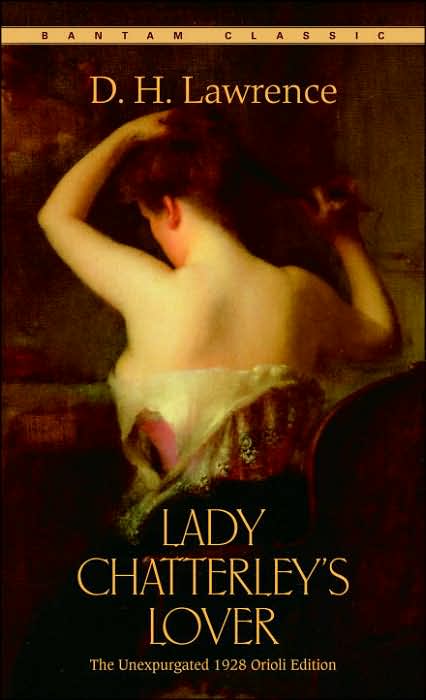
Lady Chatterley’s Lover – D H Lawrence
 READ FOR BOOKCLUB
Chosen by Suzy
D.H. Lawrence wrote Lady Chatterley’s Lover in 1920 amidst much controversy over its content, mainly an upper class woman’s affair with her gardener in order to give her war-paralysed husband an heir. This type of love and passion in posh society was not looked upon favourably in the 1920s. Neither was Lawrence’s choice of four-letter words, resulting in the privately published book being censored in both the UK and US.
Ours is essentially a tragic age, so we refuse to take it tragically. The cataclysm has happened, we are among the ruins, we start to build up new little habitats, to have new little hopes. It is rather hard work. There is now no smooth road into the future: but we go round, or scramble over the obstacles. We’ve got to live, no matter how many skies have fallen.
“We agreed the controversy over this book was its appeal, but obviously reading this book for the first time nearly 90 years after it was written, when such stories are now commonplace, meant the shock factor as we imagined was not present. However, we appreciate how this content was risqué for its time, and that its mere existence paved the way for writers that followed Lawrence.
“But it was a great romance, filled with angst and passion; a story we did all enjoy.”
—–
Published 1928
Tipografia Giuntina
352 pages
The Child In Time – Ian McEwan
 READ FOR BOOKCLUB
Chosen by Nadine
In a dystopian future a child is snatched during a routine supermarket visit.
♥ “Stephen Lewis takes his three-year-old daughter to the supermarket one morning. He turns his back for just moments and she is gone. When she cannot be found he must head home to give his wife the news.
“The couple search in agonising fashion. Readers do not need to be parents to feel the acute pain of these parents poured out on the pages. Their marriage and their lives are ruined.
“At the same time Stephen is involved with politics in a slightly dystopian future, responsible for writing a book about child care. There is some kind of subtle time travelling event, which links into the title of the book: examining the timelessness of passing hours spent between a parent and a young child, about the innocence, about the sentimentality of remembering a child at a certain time of their life. About a kidnapped girl who now belongs to that moment of time.
He had been back a thousand times, seen his own hand, a shelf, the good accumulate, heard Kate chattering on, and tries to move his eyes, lift them against the weight of time, to find the shrouded figure at the periphery of vision, the one who was always on the side and slightly behind, who, filled with a strange desire, was calculating odds, or simply waiting.
“It is a very difficult book to read for the searing possibilities of ‘what if’. But it is the haunting nature of it which makes it outstanding. All of us as mothers of young children were affected by this. Especially the line “‘she was a lovely daughter’. There were tears shed! The dystopian future is constructed well, London is a city of unemotional, faceless crowds, and various wars are underway, but it is not too far-fetched so as to distract you from the real story, which is Stephen’s anguish over the abduction. This was an emotional read but one which we can all recognise as a work of genius.”
—–
Published 1987
Jonathan Cape
250 pages
Back Booker 2001

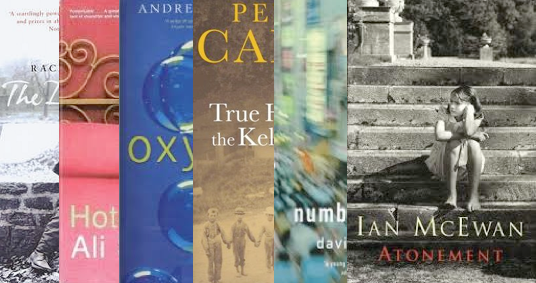 Being unable to contain ourselves until the 2008 Bookerthon we decided to undertake what we named a “Back-Booker”. Yes we looked back into past years, saw we had read several of the shortlisters since the turn of the Century and thought hey lets provide the same reading hours, and the same intensity in evaluation on to those past shortlists and see how our thoughts evolve. There were already a couple of winner announcements we were surprised at, but how could we criticise when we had not read the competing finalists.
And so, we began with 2001. Perhaps only for the opportunity to read Atonement again and provide it the atonement we felt it needed, to be announced as the winner by someone, if not those qualified to do so! Also, there were another five thought-provoking books that had been stated as worthy advocates so who knew what joy was awaiting us.
For this Back Booker we headed to the Marlborough Sounds, ate a lot of figs from the laden tree and stared at pages instead of the view. While we felt happy and homely, we did notice in the books an extreme sense of displacement. Characters out of the depth in location, time or health. Transitory characters who needed resolution for their tribulations of the past. Such conflict is always a crowd pleaser, with the hope all will be resolved by the final pages. 2001 contained a nice combination of books, selections that complimented each other.
In Hotel World, five lost characters live in a dreamlike narrative, set in a luxurious hotel where their anonymity is a key part of their existence. The stream-of-consciousness style made for a rambling plot but which took on serious themes such as love, death and capitalism.
Robbie, a lost solider on Dunkirk awaiting rescue in Atonement, is one of the few characters displaced in this book by the wild imaginings of 12-year-old Lola years earlier. Her testimony to an assault ruins the lives of many and her attempt to atone for years to come combines with an art for storytelling.
The Dark Room is another war story, capturing the reality for German victims of war who must live with the actions of their country. In particular the story follows a group of siblings whose parents are captured as sympathisers and who must find a way to escape the country without food, identification or adults to care for them.
Oxygen has a lead character called Alec, who is a struggling with life in general but must return to his childhood home to care for his mother dying of cancer, but must also confront his feeling of inadequacy around his brother Larry who is an ex-tennis star turned soap-opera celebrity.
In True History of the Kelly Gang, Australian career criminal Ned Kelly gets a voice. Though a criminal, thief and murderer, he was also a hero to many Australians, defying the authority of the English. Here the labels are broken down and he is characterised and humanised.
Eiji Miyake, from Number 9 Dream is a 20-year-old Japanese student, newly arrived in Tokyo to search for his missing father, but his real quest turns out to be resolving a tragedy buried in the past. A multi-genre tale full of action, romance, and quests.
However, in the end, as predicted, we were unconvinced that any could beat Ian McEwan and we therefore declared he would have been our pick for winner had we conducted this Bookerthon in the correct year. Wouldn’t it be nice to know the workings of the judges’ minds! The other shortlisters were varied and interesting but Atonement did shine above the rest for its psychological nature, its deeply compelling characters and its highly detailed descriptions of several times and places so that we felt we could see this story long before it was a movie. Plus, there are few who can beat McEwan’s ability to turn a phrase.
All the others were great, though Rachel had a particular dislike for Number9Dream. “It was obviously highly influenced by Haruki Murakami and as a Murakami fan of the highest order, I couldn’t see where Murakami’s influence ended and Mitchell’s talent started.”
Best book 1-6: Suzy:
Atonement
Hotel World
True History of the Kelly Gang
Number9dream
The Dark Room
Oxygen
Best book 1-6: Rachel:
Atonement
The Dark Room
True History of the Kelly Gang
Hotel World
Oxygen
Number9dream
Disgrace – J M Coetzee
 READ FOR BOOKCLUB
Chosen by Rachel
A South African professor loses everything and takes refuge on his daughter’s farm on the Eastern Cape as he seeks redemption.
♥ “David Lurie is a disgraced professor who leaves behind his university and city life in Capetown to take refuge on his daughter’s farm. His daughter Lucy is fighting her own battles with a neighbouring black man who has overcome prejudice to become a landowner, but who still holds a grudge about apartheid of the past.
“David, Lucy and Petrus clash in a violence manner, leaving David shaken to the core and Lucy in disbelief, yet she cannot blame him for feeling this way towards white people.
“The disgrace of David, and then of Lucy is also the disgrace of South Africa and its tormented history . The metaphorical book highlights how the injustices have shaped the country and its people.
“Disgrace won the Booker Prize in 1999.
Yet she too will have to leave, in the long run. As a woman alone on a farm she has no future, that is clear. Even the days Ettinger, with his guns and barbed wire and alarm systems, are numbered. If Lucy has any sense she will quit before a fate befalls her worse than a fate worse than death. But of course she will not. She is stubborn, and immersed, too, in the life she has chosen.
♥ “Let’s be honest here, Disgrace is somber, haunting and a little disturbing. But there’s something highly rewarding about it, too. I may have been reading between my fingers in some cases but I could not put the book down. The characters are, for better or worse, alluring, and the theme of redemption is an emotional pull, especially with the realisation that David Lurie’s story is a small scale reflection of South Africa’s political and discriminatory problems. I will never forget this book. The movie does it justice too, John Malkovich as David Lurie is perfect.” – Rachel
—–
Published 1999
Secker & Warburg
218 pages
The Whale Rider – Witi Ihimaera
 READ FOR BOOKCLUB
Chosen by Suzy
Kahu Apirana is a 12-year-old Maori girl who wants to become the chief of her tribe, but must battle her great-grandfather to make herself heard.
♥ “Maori chief Koro Apirana is angered when his grandson’s wife gives birth to a daughter. Leadership of the iwi is handed down to the eldest son of each generation and her birth has broken the tradition.
“As she gets older the girl, Kahu, demonstrates the talents and ability of the ancient Whale Rider for whom she was named but Koro constantly rejects her for being female.
“It’s this craving for her great-grandfather’s love that provides Kahu’s motivation to prove to herself, and the relationship between the two is at the heart of the story. Kahu seems to understand why her great-grandfather excludes her from tribal rituals and from his love, even though she disagrees with him.
“Witi Ihimaera’s (Te Aitanga-a-Māhaki) book has become a classic in New Zealand literature.”
Our Koro was like an old whale stranded in an alien present, but that was how it was supposed to be, because he also had his role in the pattern of things, in the tides of the future.
♥ “If you are a New Zealander and you haven’t read this book then for the love of God at least go and see the bloody movie! But preferably read the book. Yes it’s essentially a children’s book but I was as happily enthralled in this as I have been in any novel written for adults. HURRY UP! READ IT!!” – Suzy
♥ “Usually I read the book and don’t even watch the movie, but did enjoy them in reverse in this instance. And I think it ruined the book for me a little as I couldn’t help but picture the movie as I read. Nonetheless, this is an excellent book that every New Zealander and every child trying to find their place in the world should read.” – Rachel
—–
Published 1987
Heinemann
122 pages
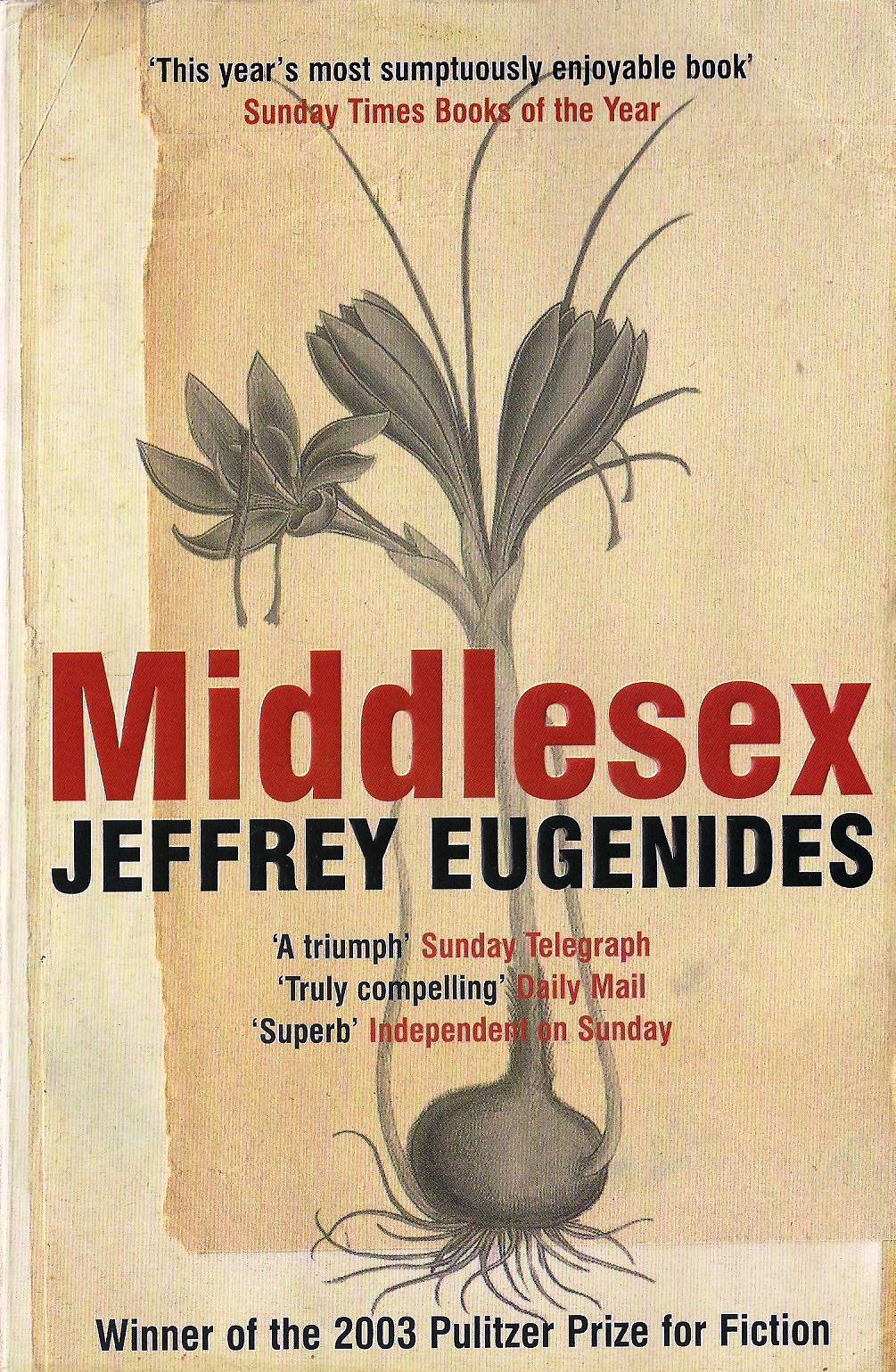
Middlesex – Jeffrey Eugenides
 READ FOR BOOKCLUB
Chosen by Nadine
Middlesex is a Pulitzer Prize winning novel which chronicles the impact of an intersex gene on three generations of a Greek family.
♥ “Protagonist Calliope (Cal) Stephanides undertakes a rebirth as he comes to terms with his family’s history and how it inevitably led to his hermaphroditic birth.
“The story starts in 1922 where Lefty and Desdemona Stephanides are fleeing war-torn Greece for a new life in America. Their anonymity hides their attraction to one another and the brother and sister are married. Their life in America is shared with their cousin and her family, only for their children, also cousins, to marry. Cal is born to the cousins as a girl and later discovers she has both male and female genitalia. Middlesex is the story is of Cal’s life as an intersex person, the sufferings, the joy, the friends and relationships.
“Gender, identity and rebirth all play a vital role in this 2003 novel as does duality of identification. All three generations of Stephanides must assimilate into American culture while also holding onto their ancestral heritage. Individuals are all given opportunities to reinvent themselves throughout the novel.”
I hadn’t gotten old enough yet to realize that living sends a person not into the future but back into the past, to childhood and before birth, finally, to commune with the dead. You get older, you puff on the stairs, you enter the body of your father. From there it’s only a quick jump to your grandparents, and then before you know it you’re time-traveling. In this life we grow backwards.
♥ “Middlesex takes you on a sweeping journey and was quite different to what you might expect from a book about a hermaphrodite. I liked it, but upon reflection I think something didn’t quite gel for me.” – Nadine
♥ “Carefully handled story of a hermaphrodite who struggles with identity issues. Tracing the gene through generations of family provided many interesting stories and gave the novel more of an epic feel. An intriguing book that covers a unique topic, with charming characters to lead you through the story. Ultimately, it offers the message that however you identify yourself, if you are at peace with it, your choices are the right ones.” – Rachel
—–
Published 2002
Farrar, Straus and Giroux
544 pages
2008 – The First Rule of Bookclub

 Actually there is no first rule of bookclub, that’s the fabulous thing about it. The phrase, obviously borrowed from Chuck Palahniuk’s The Fight Club, was actually initiated by the husbands, perhaps mockingly, though I’d hope in a jealous of-our-bond kind of way. (I’m sure it’s not because they don’t want to hear about it … ?!) Whatever the case, the phrase appears to have stuck and has come to mean everything and also nothing, for there are no rules in bookclub but it is everything to us. 🙂
In 2008 all three bookclubbers remain. Fully engaged and into the swing of things we are eager to explore more authors and genres and share our past literary loves.
We have chosen four books each over the year and plan to meet every three weeks. Many of our choices are classics though we’ve thrown in a couple of modern New Zealand novels and a fictionalised non-fiction, too.
Middlesex – Jeffrey Eugenides
The Whale Rider – Witi Ihimaera
Disgrace – J M Coetzee
The Child In Time – Ian McEwan
Lady Chatterley’s Lover – D H Lawrence
Accordion Crimes – Annie Proulx
The God Of Small Things – Arundhati Roy
In Cold Blood – Truman Capote
The Sound of Butterflies – Rachael King
Wuthering Heights – Emily Bronte
And Then There Were None – Agatha Christie
The Plague – Albert Camus

We're
currently
reading
 The Free-Range Bookclub
Recent Comments