The Free-Range Bookclub
Bookclubbers without boundaries in Nelson, New Zealand
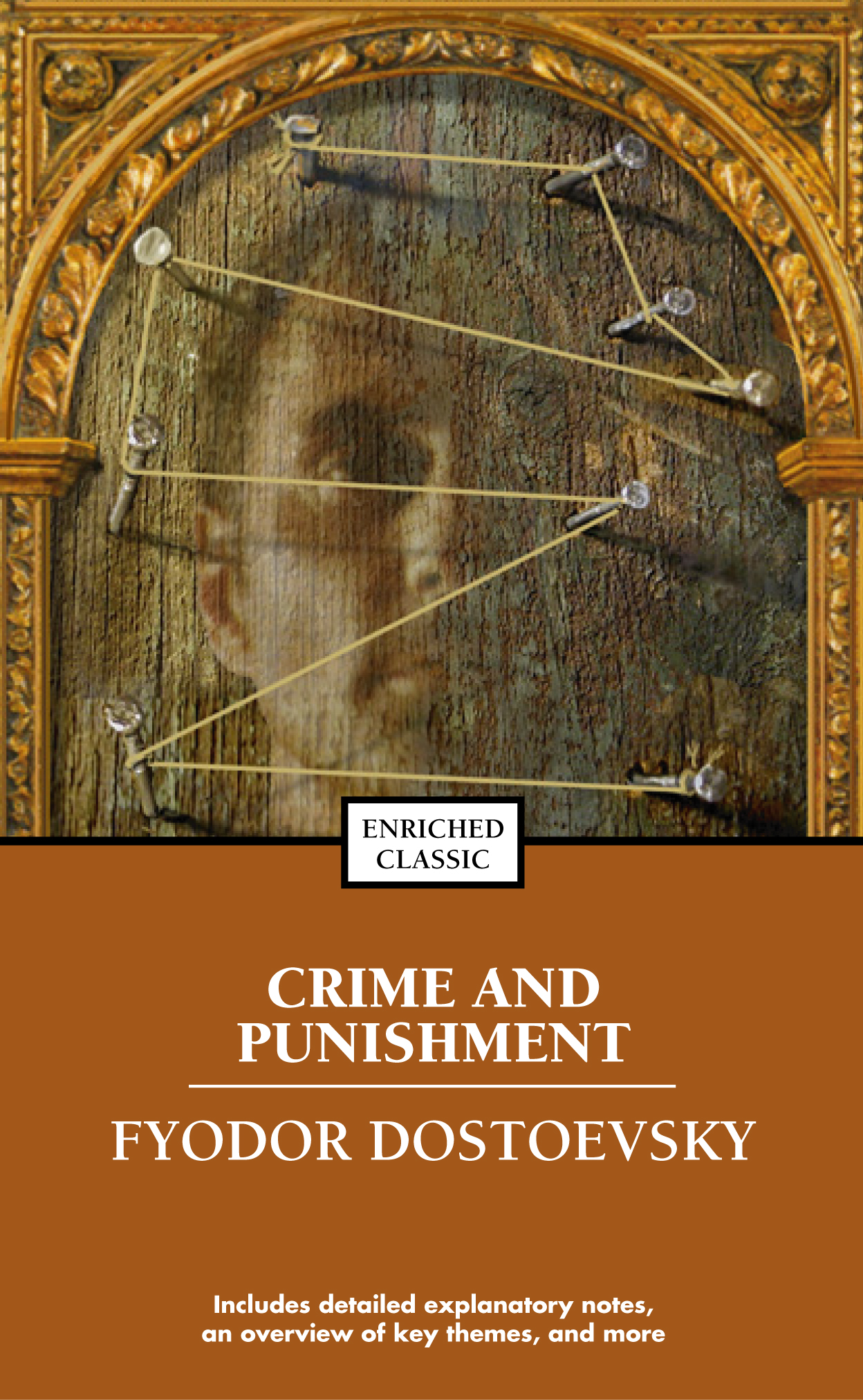
Crime And Punishment – Fyodor Dosteovsky
 READ FOR BOOKCLUB
Chosen by Jo
A Russian student commits a murder believing humanitarian ends justify the crime
✔ “Raskolnikov is a destitute and impoverished former student who wanders through the slums of St Petersburg in this 1866 Russian classic. Without warning he commits a random murder with no immediate remorse or regret. He imagines himself to be a great man, acting for a higher purpose beyond conventional moral law, and that humanitarian ends justify vile means.
Unlike crime stories of the time, there is no mystery as to the crime or the perpetrator. Instead the story concentrates more on the psychology of the murderer than in the specifics of the crime.
As such Raskolnikov embarks on a dangerous game of cat and mouse with a suspicious police investigator. Though he is pursued by the growing voice of his conscience and finds the noose of his own guilt tightening around his neck. Only Sonya, a downtrodden sex worker, can offer the chance of redemption.
Like many of the great 19th century novelists, Dostoyevsky often uses a series of incredible coincidences to move the plot forward. Nonetheless, the story takes on a life of its own. Dostoyevsky’s use of parable, dream sequences and a cast of memorable characters is also notable.
It is also an exposé of social conditions in 19th century Russia and a dramatic study of the nature of good and evil.
Pain and suffering are always inevitable for a large intelligence and a deep heart. The really great men must, I think, have great sadness on earth.
It is fair to say the bookclubbers were all a little nervous at the prospect of reading a many-paged Russian classic! However we were all surprised to find it was less daunting than we thought and we all liked it – albeit at varying levels. It may have sounded ominous but it was actually engaging and entertaining. The crime is committed early but there is still a catchy plot, examining the crime from every angle throughout the rest of the book as Raskolnikov himself tries to understand it and seeks redemption in the form of punishment. The serial publication of Crime & Punishment had to be taken into consideration when some pages got wordy and dragged on.”
—–
Published 1866
The Russian Messenger
574 pages
Bliss & The Garden Party – Katherine Mansfield

READ FOR BOOKCLUB
Chosen by Rachel
Bliss tells the story of a dinner party where secrets abound. The Garden Party captures the story of an upper-middle class NZ family preparing for a garden party.
✔ “Considered Mansfield’s finest piece of short fiction, The Garden Party is said to have influenced such modernist authors as Virginia Woolf with its stream-of-consciousness and symbolic narrative style. It incorporates many of Mansfield’s defining themes: New Zealand, childhood, adulthood, social class, class conflict and innocence.
“Structured around an early afternoon garden party in New Zealand the story has clear connections to Mansfield’s own childhood in New Zealand. The main character, Laura, is an idealistic girl who wishes to cancel the planned gathering when she learns of the death of a working-class labourer who lives down the hill from her parents’ home. The story concerns Laura’s alternating moments of resistance and conformity to her mother’s idea of class relations.
“Another of her most revered short stories is Bliss, which tells the story of Bertha, an extraordinarily happy woman who spends the opening pages summing up the terrific things in her life: her home, her husband, her baby and her friends.
“As she contemplates her good fortune she prepares a meal for dinner guests who are friends of the couple, glancing out the window at a stunning pear tree which she considers represents herself and her wonderful life.
“The friends arrive and the dinner proceeds but the conclusion of the evening is not the outcome Bertha was expecting.
“At the time of its publication in 1920 the story was considered controversial, dealing with infidelities, sexuality and superficial characters.
What did garden-parties and baskets and lace frocks matter to him? He was far from all those things. He was wonderful, beautiful.
✔ “These two short stories were our favourites of all the Katherine Mansfield we read this month. Not only astounding that so much can be said in such a short space, but that important social and moral commentaries are woven amongst the decadent narrative. Stunning imagery, too – We all seem to recall these stories vividly.”
—–
Published 1918
The English Review
In A German Pension – Katherine Mansfield
 READ FOR BOOKCLUB
Chosen by Rachel
A young woman observes the absurd and grotesque while staying in a German pension.
✔ “In A German Pension was Mansfield’s first short story collection, written when she was 22. The stories are semi-autobiographical because Mansfield herself was sent away to a German pension for being unmarried mother to be.
“The collection’s narrator is stuck in the pension and feels she is surrounded by grotesque fools. She unleashes her disgust by writing sharp and satirical anecdotes of them, which usually portray their revolting habits
“The stories are about gender roles and sexism, violence towards women, class discrepancies and the exploitation of children. The stories start off lightly satirical but get progressively more absurd and unpalatable.”
✔ “Very much a book of character studies, with short stories all featuring the same protagonist, a young Englishwoman in a German pension. As the story unfolds we discover her complexities – she feels she is kind of pitted against the Germans, who all seem to be described as grotesque. Fascinating.” – Rachel
✔ “My attention was captured by Mansfield’s often tragic themes and boring everyday life written so sharply and with a dark sense of humour. Especially interesting considering such quality of writing was produced by someone so young at the time.” – Jo
—–
Published 1911
134 pages
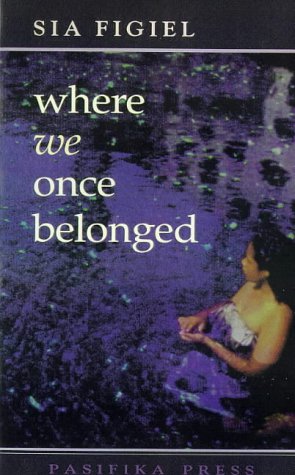
Where We Once Belonged – Sia Figel
 READ FOR BOOKCLUB
Chosen by Suzy
Where We Once Belonged is written in the traditional Su’ifefiloi style. Literally this means a woven garland of flowers. As a narrative technique, it refers to the stringing together of individual stories or fragments, told in different styles without regard to order or continuity, producing a slowly revealed plot. The story reveals the coming of age of 13-year-old Alofa and her traditional and sometimes brutal upbringing as she finds her place in the world as a Polynesian and a woman.
✔ “Oooh spooky, when I started typing this up Sia’s Chandelier came up on Spotify. Moving on … Nice to read a book about young Samoan females set in Samoa by a Samoan author. A series of interlinked stories that I felt I happily floated amongst.” – Suzy
✔ “This book is engrossing right from the first page with its merging of poetry, prose and mythology. Alofa is well written, and it is heartbreaking to read about the difficulties she endures in her regulated childhood.” – Rachel
✔ “This story involves domestic violence and cultural repression of sexuality in a coming-of-age story set in a Samoan village. The themes of racial and sexual discrimination are disturbing at times. I enjoyed the way the Samoan language peppers this book, however this was sometimes frustrating as not all words/phrases were included in the glossary translation. A good read.” – Jo
—–
Published 1996
248 pages
Back Booker 2002

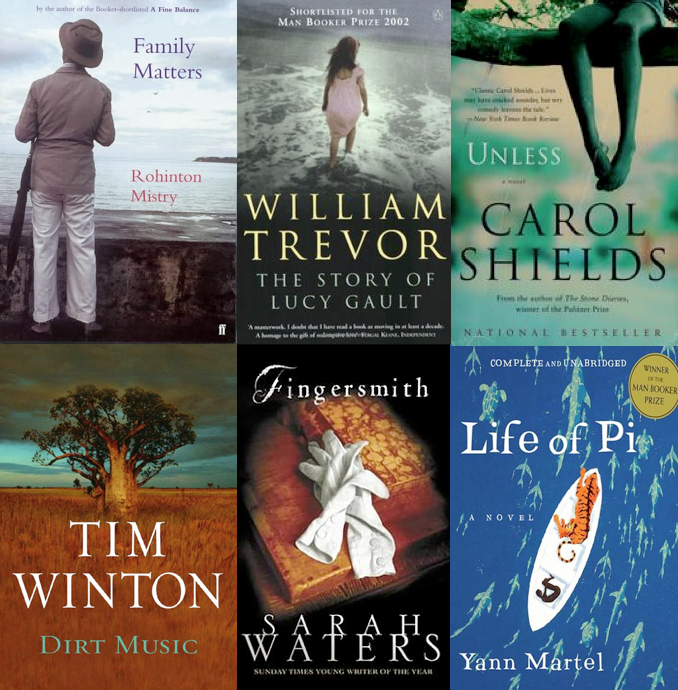
Time for another Back Booker and this time we’ve focused on 2002. A year with a kind of seriousness about it. Though not in a moralistic or melancholy kind of way, rather the authors have demonstrated the impact of significant themes and topics with well constructed characters. As such they’ve offered points of view and reactions to the weighty matters of real life in a poignant way.
As a result there are some really heartfelt stories amongst the shortlisters. We considered, to what level do fictional families represent society in general? Here are our thoughts:
Family Matters has three generations of a Parsi family in Bombay living under the same roof in a cramped apartment with religion, hierarchy, untruths and wanting for better plaguing them every day. It is a strong novel with both modern and traditional elements that we’re sure many readers would relate to.
Set in a fictional fishing port in Western Australia, the characters of Dirt Music are contemplative and secretive. Yet they live in a society of wealth and indulgences, accidents and near deaths, criminal acts and violence as well as the serenity of the Australian way of life in a real slow burn of a novel.
The Story of Lucy Gault is not about what happened to Lucy Gault, it’s about the story of what happened to Lucy Gault, an Irish girl who disappeared, and how that affected her friends, family and community. It is a haunting book of silence and secrets where nothing feels quite right.
The chapter headings in Unless illustrate its pensiveness. Notwithstanding. Despite. Whatever. It is about a family whose daughter sits on a Toronto street corner with a begging bowl and a sign that says GOODNESS. They don’t know if she’s serious or acting. Though her mother wonders if she gets her life in order will she get her daughter back.
Life of Pi explores questions around faith, friendship and fiction in the tale of a religious Indian boy nicknamed Pi who becomes stranded on a lifeboat with a 450-pound Bengal tiger. Life experiences and morals abound as Pi establishes peace with the tiger, which he sees as his only possibility for survival.
Fingersmith is the most lighthearted of the lot. A story of a Victorian pickpocket who is enticed into a bigger job of theft. It’s long and twisted and satisfying, detailing the extent to which an orphan will go for acceptance, and the consequences for those who are conned. An enticing read!
But in the end Life Of Pi won out for us both, with its unusual plot and twists and turns. The author took a gamble, expecting the reader to go along with his absurd tale, but it seems many are willing to stretch the imagination in search of a great story and are able to see the serious intent of its foundations.
Best book 1st-6th: Suzy:
Life Of Pi
Fingersmith
Unless
Family Matters
Dirt Music
The Story of Lucy Gault
Best book 1st-6th: Rachel:
Life Of Pi
Unless
Fingersmith
Family Matters
The Story Of Lucy Gault
Dirt Music
2011 – Thematic Construction
 The best characters exist within the construct of firm guidelines, and life-changing literature becomes so because of the meaning which permeates every turn of events. It is these sturdy but often subtle parametres which define our love of books.
With this is mind we have opted this year to implement strategies to further enhance our enjoyment of our reads, and what better way than the construct of the very thing we discuss at length each month: themes.
Yes, along with the addition of a new book nerd, the lovely Sophia who joined us mid last year, we have integrated a structure to our book choices this year. This not only encourages a more solid framework to bookclub but allows us to delve deeper into genres, authors or literary forms that interest us.
Here’s how the year will shape up:
Sophia – The Great American Novel
Suzy – Maori & Pacifica Writers
Rachel – Feminist Novels
Jo – Russian Classics
It’s not only this which supplies us with additional form, but the feeling of stability and connectedness which has emanated now that we are four. Some things are just meant to be; our reading interests and knowledge are both complimentary and diverse, our thoughts on what makes a good book always up for debate. The midnight candle is often burning, and we wouldn’t have it any other way.
Here’s the reading schedule:
Where We Once Belonged – Sia Figiel
Selected Short Stories – Katherine Mansfield
Crime & Punishment – Fyodor Dostoevsky
Ragtime – E L Doctorow
Sons For The Return Home – Albert Wendt
The Female Eunuch – Germaine Greer
Anna Karenina – Leo Tolstoy
Freedom – Jonathan Franzen
Treasure Island – Robert Louis Stevenson
The Pregnant Widow – Martin Amis
Lolita – Vladimir Nabokov
2010 – End of Year Thoughts
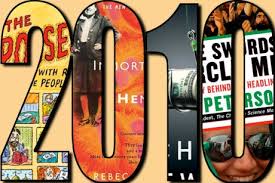
 Harry’s Bar was our destination for EOY bookclub in 2010. Joined by our newest arrival, the fabulous Sophia, we had a lot to discuss. We found that we had many conflicting opinions on this year’s readings, which we welcomed as it makes for lively and prolonged debate – a nerdy bookclubber’s perfect night!
We agreed there was a lot of disturbing features present this year (characters, scenes and themes) and the relevance of each was always up for discussion.
Book of the year:
Sophia: Nip The Buds, Shoot The Kids
Jo: The Sea, The Sea
Suzy: The Sea, The Sea
Rachel: Nip The Buds, Shoot The Kids
Runner up:
Sophia: The Sea, The Sea
Jo: Nineteen Eighty-Four
Suzy: Novel About My Wife
Rachel: The Sea, The Sea
Most interesting author:
Sophia: Iris Mudoch
Jo: Iris Murdoch
Suzy: Iris Murdoch
Rachel: Simone de Beauvoir
Coraline – Neil Gaiman
 READ FOR BOOKCLUB
Chosen by Sophia
A children’s horror in which a girl called Coraline travels to another world through a mysterious locked door in the living room.
☁ “A young girl called Coraline fancies herself an explorer and spends the first weeks of the summer holidays investigating every inch of her family’s property. The spooky neighbours, Miss Spink and Miss Forcible tell her fortune and say she is grave danger. One rainy day, Coraline discovers a locked door which has been bricked up and leads nowhere.
However, she is drawn to it and one day when her parents are away, she unlocks the door and discovers the bricks are gone. Inside is an apartment just like hers, occupied by a woman and man who describe themselves as her other mother and other father. Though they treat her well they subversively attempt to make her stay in their parallel world. To do so, she would need buttons sewn over her eyes, as they have.
When Coraline returns to her world she finds that her parents are missing. Coraline realises she must draw on her own bravery to re-enter the other mother’s world in order to rescue her parents.
“How do I know you’ll keep your word?” asked Coraline.
“I swear it,” said the other mother. “I swear it on my own mother’s grave.”
“Does she have a grave?” asked Coraline.
“Oh yes,” said the other mother. “I put her in there myself. And when I found her trying to crawl out, I put her back.”
Despite the horror genre, Coraline is a children’s book, marketed at a 8-12 year old audience. Yet all the freerangers admitted to being spooked by this book, some more than others, but we all agreed we thought it too scary for 8-12 year olds.
The structure with one main plot and little in the way of sub-plots, and the narrative styled on an adults voice gave the book strong direction which would hold a young person’s attention. However we just can’t get over the other parents with buttons sewn over their eyes !!
—–
Published 2002
Harper Collins
162 pages
Nineteen Eighty Four – George Orwell
 READ FOR BOOKCLUB
Chosen by Jo
A dystopian novel set in Airstrip One, Oceania which is in a state of perpetual war and where free thought is considered a thought crime. The all-seeing Big Brother, rules with tyrannical power.
☁ “This is my second favourite book of all time. Its relatable characters living in an alternative reality of tyranny act as warnings about what is possible when free thought is no longer a basic human right. While it contains all the hallmarks of a great novel, it’s the potential for disaster and lost freedoms that make it also a personal story.
“I do love dystopian novels and it is interesting to see how Nineteen Eighty Four is the clear influence for many contemporary stories. I read this first as a teenager and since have re-read parts many times and found references to it in many facets of life. As such, I feel like I’ve grown up with this book. Every part of it, the locations, the characters, the emotional journey – the potential for what if – are etched on my mind.” – Rachel
☁ “It’s hard to know what to write about Nineteen Eighty Four that hasn’t already been written by people far more insightful than me! This was an unsettling read that has obviously resonated with readers over the years to the extent that concepts from the book are now part of our lingo – for example Big Brother.
Between this and Animal Farm George Orwell has contributed to far too much of my brain’s worrying. While I acknowledge the obviously amazing contribution these novels have made to society’s discourse I would have been better off having read neither of them – I think I will happily add “Ignorance is bliss” to the Ministry of Truth’s slogans.” – Suzy
—–
Published 1949
Secker & Warburg
267 pages
2010 Bookerthon
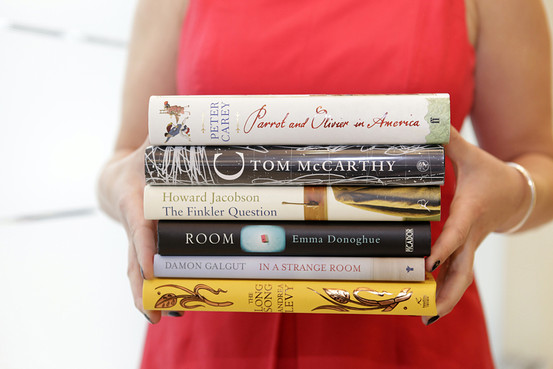 We may not have been doing Bookerthon for long enough to comment as such, nor have the relevant degrees or analytical background to offer such thoughts, but … we weren’t blown away by the shortlist this year.
Not to say we didn’t enjoy (some of) them and even love one or two, but as a whole the shortlist didn’t provide us that overwhelming sense of exhilaration like in years past.
The Man Booker shortlist is meant to be made up of the best six books of the year but we’d be to differ this year. What’s more, they are vastly different. They are like six fighters vying for the win, with their gloves up in very different corners of the ring, rather than a collection of works that sit harmoniously side by side and are indicative of the state of the world. Everyone would probably find one they were intrigued by, but we can’t imagine most bookies would read this list and be enthralled by them all.
Were the judges trying to be astute? Or transformational? Were they hoping their choices would come to be recognised as visionary in years to come? Sorry judges, we know you are highly qualified and we are not, but in our humble opinions we thought the list tries a little too hard.
For example the finalists ranged from a book so intellectual and literary (C) we failed to understand it, to a book so lacking in literary merit (Room) it felt like it was only shortlisted because its content was timely. How were these two books fairly judged by the same standards?
From the (admittedly only few) Bookerthons we have completed, this is our least favourite. Here’s our thoughts overall:
Rachel loved In A Strange Room for its readability, beautiful style, and sense of mystery and intrigue that encourages the reader to examine the book’s literary merit further. And she found The Long Song, the story of the girl enslaved on a Jamaican sugar plantation, to be heartfelt and well constructed.
“However, I could take or leave the rest. The Finkler Question and Parrot & Olivier are both good reads, but not stories I particularly connected with. C is very clever, but too clever for me. As for Room, I’m surprised it has even been shortlisted so that’s not a contender as far as I’m concerned.”
Suzy loved the journey and explorations detailed in Parrot & Olivier. A portrait of life as an American settler in the 1820s is full of drama and intrigue and she was enthralled throughout. She found The Long Song affecting and emotive and In A Strange Room clever and capable of winning. However she also struggled with C and The Finkler Question and concurred with Rachel that Room was a surprise addition to the shortlist, that, though topical, did not stand up against the literary merit of the other finalists.
Best book 1st-6th: Rachel:
In A Strange Room
The Long Song
The Finkler Question
Parrot & Olivier in America
C
Room
Best book 1st-6th: Suzy:
Parrot & Olivier in America
The Long Song
In A Strange Room
The Finkler Question
C
Room

We're
currently
reading
 The Free-Range Bookclub
Recent Comments