The Free-Range Bookclub
Bookclubbers without boundaries in Nelson, New Zealand
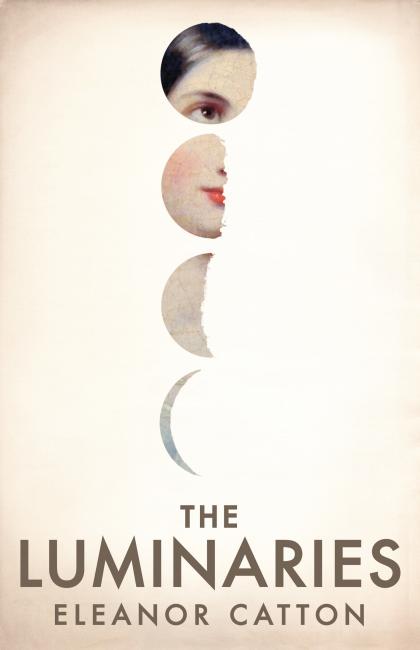
The Luminaries – Eleanor Catton
 READ FOR BOOKERTHON
❖ “The Luminaries is a ghost story and murder mystery set in Hokitika, New Zealand. It is 832 pages and won the Booker Prize.
“Its protagonist Walter Moody comes across 12 men having a secret meeting in the lounge of his hotel in the opening pages. The men take him into their confidence and advise of a string of strange occurrences, including the death of a local man, the attempted suicide of a prostitute and the disappearance of a wealthy gold miner.
“Since all of these events happened on the same night, the group is under the impression they are linked. They turn to Moody for help and he is soon drawn into the mystery, and into a complex network of fates and fortunes.
“While the main plot of the novel is simple, the subplots are complicated as the characters become entangled in one another’s lives. Each of the 12 chapters has links to astrology and the astrological links of the characters according to their birth. All the loose ends are not tied up by the end and the reader must decide for themselves what must have happened.
We spend our entire lives thinking about death. Without that project to divert us, I expect we would all be dreadfully bored. We would have nothing to evade, and nothing to forestall, and nothing to wonder about. Time would have no consequence.
❖ “Where to start! The structure of this epic story is sometimes so simple yet sometimes so complex, it does require a focused and dedicated read. I can’t begin to imagine the intellectual prowess it must have taken to put together. But I know from Catton’s The Rehearsal that she is a writer who doesn’t waste a word, so The Luminaries‘ multi-layered complexity/simplicity over 832 pages was not a surprise. It’s fair to say I finished this knowing I had missed a lot of detail and in no way understood the true scope of this work. It’s clear this is going to enter the history books as a NZ classic. Hopefully one day I will have the patience and understanding to re-read it and truely appreciate it.” – Rachel
❖ “To my eternal shame I have attempted this book 3 times and it remains unfinished. This is a reflection on ME and my distractibility NOT the author. Don’t judge me ok! I have always enjoyed it as far as I’ve read it! Watching Eleanor Catton speak in Nelson in 2014 was just so good. One of my heroes, literary and otherwise.” – Suzy
❖ Rachel: As an aside, Suzy and I attended an afternoon with Eleanor Catton some months after this and we were amazed to learn how deep the layers of this book actually go. She spoke passionately about astrology and music having an in-sync rhythm as well as the development of her characters in true Victorian style. We left even more impressed with her ability but more confused about what actually happened in this book!
—–
Published 2013
Victoria University Press
832 pages
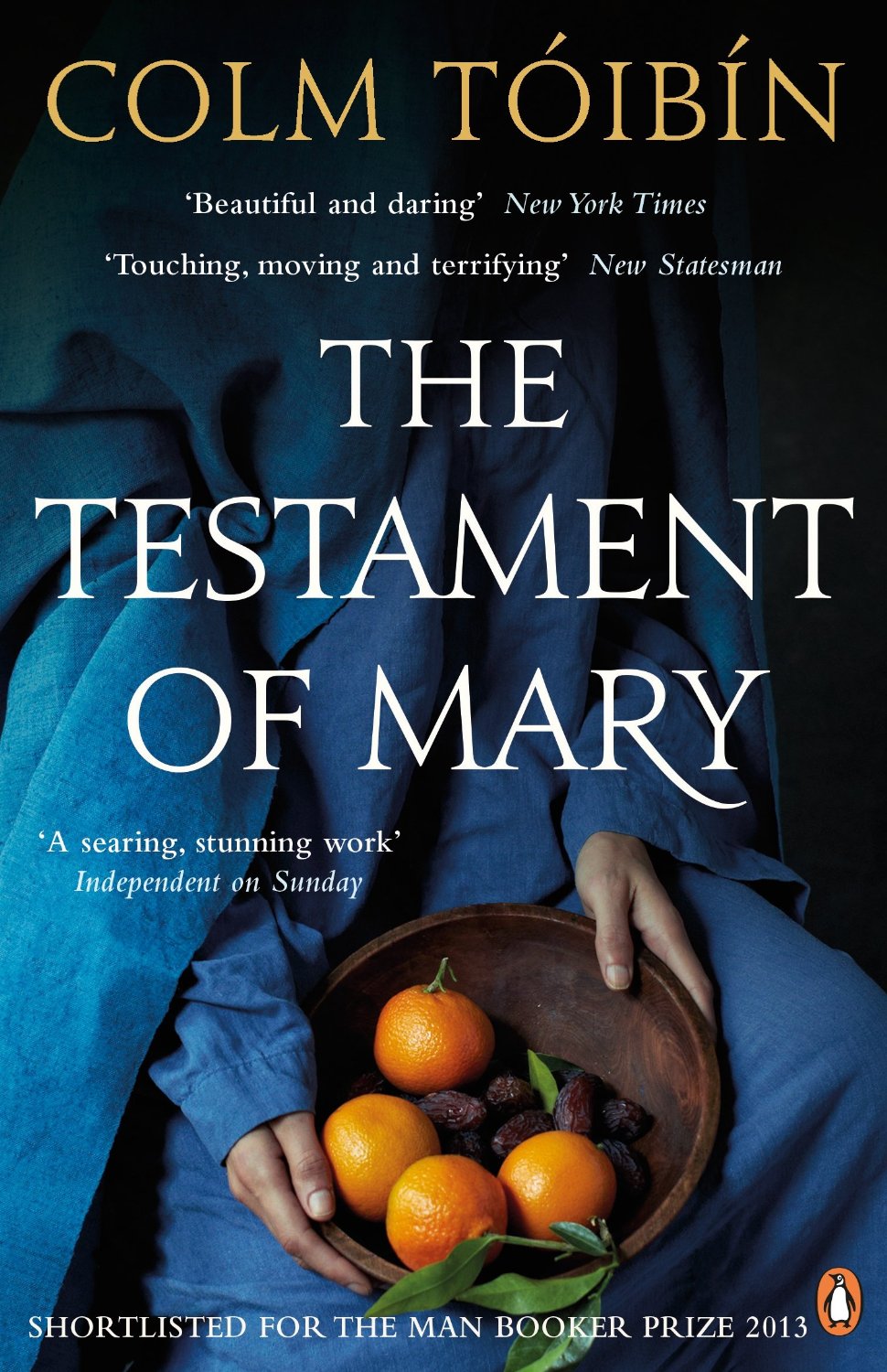
The Testament of Mary – Colm Toibin
 READ FOR BOOKERTHON
Mary, mother of Jesus, is in her old age and does not believe her son was the son of God
❖ “The Testament of Mary is the story of Mary, mother of Jesus. She is elderly and being visited by ‘the Beloved Disciple’ who has returned to her home to question her again about the life of her son. He is writing an account of the time, which Mary says will be the founding of the new religion.
While being evasive to her guests, Mary instead tells the reader her account of things. How she felt for her son’s followers, whom she calls misfits, how she felt disconnected with him when he matured into a man. Her account culminates with the crucifixion, which Mary describes in detail.
The premise of the book is to give a voice to someone who was, in history, merely a vessel. She tells how the Evangelists weren’t interested in what really happened, rather what they could market or present the son of God to everyday people.
I told him before he departed that all my life when I have seen more than two men together I have seen foolishness and I have seen cruelty, but it is foolishness I have noticed first.
❖ This book could have gone a number a ways and to be honest I wasn’t desperate to read it, but actually Mary’s complexity was revealed with a kind of cutting humour that opened the story up to many interpretations. I liked this more than I thought I would – it was the mother-son bond that held it together.” – Rachel
—–
Published 2013
Scribner’s
96 pages
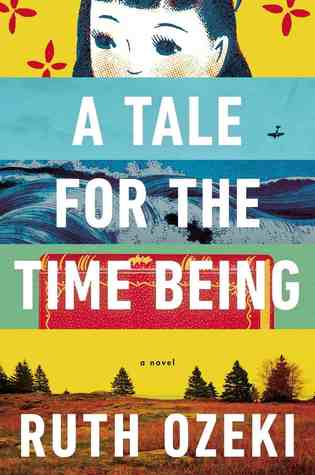
A Tale For The Time Being – Ruth Ozeki
 READ FOR BOOKERTHON
A Canadian novelist finds a diary of a 16-year-old girl from Tokyo washed up on shore after the 2011 Japanese tsunami
❖ “A Tale For the Time Being is a multi-era, multi-genre, multi-themed, multi-culture, multi-plot book. In it you will find World War II, origami, fetish cafes, the Japanese tsunami, quantum physics, Hello Kitty and ecological collapse. The story is told of nuns, Buddhist priests, writers and readers, teenagers, anarachists and people of various race. They talk about memories, death, philosophy, what it means to be female, depression and writing.
Phew!
This sounds suffocating but actually what it’s about is a 16 year old Japanese girl called Nao who wishes to end her life but decides to write the story of her ancestor first. Years later the diary, inside a Hello Kitty lunchbox, washes up on the shores of Canada where it is discovered by a writer named Ruth. The writer is intrigued to know what happened to the girl and begins a search, as she reads the diary, investigating and developing the relationship between reader and writer.
Ruth’s quiet sensible life on the Canadian shores contrasts with Nao’s more philosophical nature, questioning existence and time. In her diary she details her life with her unemployed, depressed father and emotionally absent mother. Nao is cruelly bullied at school and finally breaks free by moving to live with her great-grandmother, Jiko, an elderly feminist nun living in a mountain temple observing Zen qualities of life.
I helped Jiko to her feet and we walked back to the bus stop together, holding hands again. I was still thinking about what she said about waves, and it made me sad because I knew that her little wave was not going to last and soon she would join the sea again, and even though I know you can’t hold on to water , still I gripped her fingers a little more tightly to keep her from leaking away.
The scope of the story is like the giant flotsam that washed the lunch box ashore, so very vast and made up of a milieu of things and ideas. Somehow all that stuff resulted in one simple item being carefully deposited upon land to be discovered.
Or you could say that this is simply the story of a writer reading the diary of a girl who has captured her great-grandmother’s life. How much of that flotsam you gather up and take on board is up to the individual reader, but be aware, the content has the potential to sail you along on the tide or drag you under.
In our cases it was close. Suzy gave it 4 stars, Rachel 4.5.
—–
Published 2013
Viking
432 pages
The Lowland – Jhumpa Lahiri
 READ FOR BOOKERTHON
The story of two brothers living in 1960s Calcutta. One becomes an oceanographer, the other a political activist
❖ The Lowland features two Bengali brothers Subhash and Udayan who follow different paths as they grow up in Calcutta during the 50s and 60s. Subhash is the older sibling and is drawn to the natural world, choosing to become an oceanographer and moving to the States to do so. Udayan is an energised activist who joins the Naxalite movement and opposes anyone and any thing that seems a threat to what he sees as his right.
Udayan gets involved in several illegal activities in pursuit of his moral and ethical standards, and marries a woman whose political beliefs match his own, to the distain of his family.
Bit of spoiler alert, but has to be said: soon after this Udayan is killed in a skirmish. His new wife Gauri is pregnant and lost. Her brother in-law, the sensible Subhash takes her as his own wife in order to provide a life for her and the child and heads back to the States, wife in tow. It’s unsurprising to learn Gauri is unhappy with her new life, and how she copes is the subject matter of the rest of the book.
He felt his presence on earth being denied, even as he stood there. He was forbidden access; the past refused to admit him. It only reminded him that this arbitrary place, where he’d landed and made his life, was not his.
The characters are exceptionally well drawn and what kept us both glued to the pages. The setting and plot and therefore the pace, drastically change once Subhash and Gauri head back to the United States to live. This is a bit of a shock after the energy and fervour of the opening chapters but the strength of the characters keeps the story interesting.
From Bengali culture and politics to oceanography to philosophy, this is a book that covers a range of topics and themes in a personable way. Both Suzy and Rachel said they would recommend it.
—–
Published 2013
Alfred A Knopf
340 pages
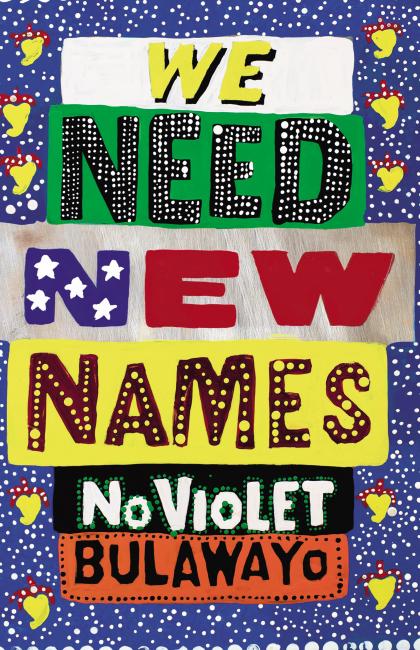
We Need New Names – NoViolet Bulawayo
 READ FOR BOOKERTHON
This is a coming-of-age story about Darling, a ten year old living in Zimbabwe. She is orphaned after her mother leaves to work at the border and her father abandons the family for a life in South Africa, and later contracts AIDS.
On her own she has the usual teenage drama to deal with along with the adversity of living in poverty without anyone to care for her. She struggles with the aftermath of the country’s unrest and this forces her to question what path her own life will take.
There is a cast of unique characters alongside Darling, including Chipo, (a ten year old pregnant to her grandfather), Godknows, Shbo & Stina. The group get up to various antics and have situations forced upon them, such as when they come across a body hanging from a tree.
Mid way through the book Darling has had enough of the struggles of poverty and conflict and she escapes to America, living with her Aunt Fostalina in Michigan. To adapt to life in the US, she distances herself from her connections and memories of Zimbabwe, but does experience guilt for abandoning her country. This is the books main premise, about the cultural differences between the two countries, their daily lives, their traditions, their beliefs and how no two people have the same experience when undergoing a cultural change.
Look at the children of the land leaving in droves, leaving their own land with bleeding wounds on their bodies and shock on their faces and blood in their hearts and hunger in their stomachs and grief in their footsteps. Leaving their mothers and fathers and children behind, leaving their umbilical cords underneath the soil, leaving the bones of their ancestors in the earth, leaving everything that makes them who and what they are, leaving because it is no longer possible to stay. They will never be the same again because you cannot be the same once you leave behind who and what you are, you just cannot be the same.
“Despite being a story of Zimbabwe’s trauma and desperation, and believe us there are some harrowing accounts in these pages – it is the cast of loveable characters that offsets the sorrow and at the end of the day what makes it so powerful. We both really enjoyed this but do warn, be prepared to go on an emotional rollercoaster.
—–
Published 2013
Vintage
304 pages
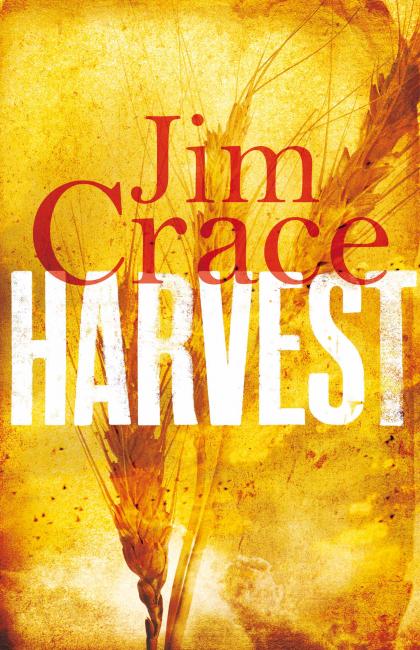
Harvest – Jim Crace
 READ FOR BOOKERTHON
In a remote English village economic progress disrupts the pastoral idyll
❖ Set in a rural village Harvest‘s pages open with the community harvesting their crops. They are joyous and spirited, sustained by their hard work for another season.
However at the feast that evening, there is news that the land is to be repurposed for sheep and wool production. This is a real piece of English history where sustenance farmers were dispossessed and displaced in favour of sheep farming many centuries ago.
As this announcement is made, three strangers wander in to the village, displaced from other lands. One lays claim to the land and intends to measure and prepare it for his use. The villagers are displeased and what eventuates is a series of violent events, everyone thinking their connection to the earth is most important. That theme of displacement from land is as relevant today as it ever was.
I am excused, I think, for wondering if I am the only one alive this afternoon with no other living soul who wants to cling to me, no other soul who’ll let me dampen her. The day has ended and the light has snuffed. I’m left to trudge into the final evening with nobody to loop their soaking hands through mine.
Suzy enjoyed the fact that the narrator Walter Thirsk could be trusted to provide a grounded, realistic account of people and events, and did so in a voice that is both old-worldly but also contemporary.
Rachel praised the intelligent prose and acknowledged it as work of art, but said the book as a whole lacked a level of excitement for her.
—–
Published 2013
Picador
288 pages
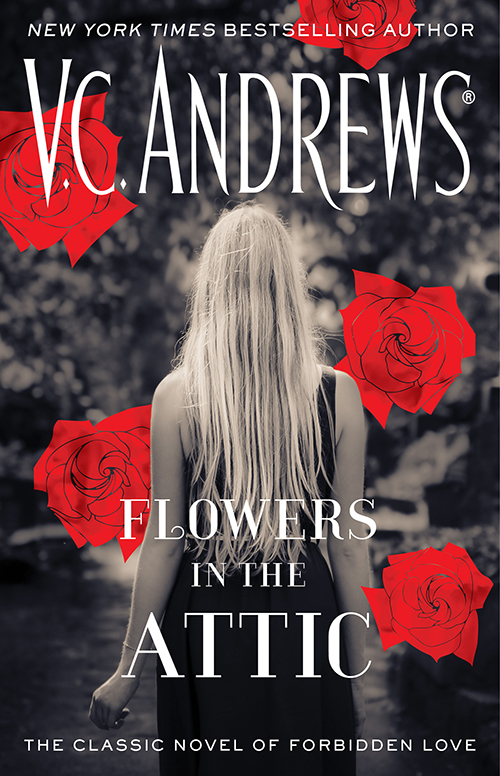
Flowers In The Attic – Virginia Andrews
 READ FOR BOOKCLUB
Chosen by Suzy
Four siblings are locked in an attic in the childhood home of their mother after the death of their father. The children are told they will only have to remain there until their estranged grandfather forgives his daughter for running away to marry their father. He is ailing and she tells the children when he dies he will leave his sprawling estate to her.
However, years pass and the children begin to doubt their mother’s story and begin searching for a way to escape. The older two, Cathy and Chris take on the role of parents to the younger twins. However this role playing takes a sinister turn and Flowers in the Attic becomes a dark story of greed, incest and abuse.
“I love you,” was his reply. “I make myself keep on loving you, despite what you do. I’ve got to love you. We all have to love you, and believe in you, and think you are looking out for our best interests. But look at us, Momma, and really see us.”
❖ “I can’t believe I put everyone through reading this book. LADIES, I APOLOGISE. I chose it for bookclub as a throwback to high school where we all loved it. Re-reading it as an adult I can only say this book is really quite horrible. There are three other books that follow on from it, and having read the synopsis of those I can assure people that things don’t get better. We were so starved as teenagers for information about sex that we coveted a book about incest and abuse?? Bloody hell.” – Suzy
❖ “I read this as a teenager and thought it was great. But re-reading at this stage of my life, I struggle to think how anyone could stomach this story. It is a horrific tale of abuse. Yes sure there have been other stories of abuse that are still good reads, but I feel like this book had a reputation as a romantic, forbidden love type tale rather than a redemptive story about surviving abuse. This narrative seems to relish the fact the brother was forcing himself on his sister. Ugh. Disgusting. But also I read to the very end and then googled the plot for the sequel! (hoping to find they were all living a normal life but no there is just more abuse and incest.) It does make me wonder what is it with this book that has been so grotesquely appealing over the years.” – Rachel
—–
Published 1979
Simon & Schuster
400 pages
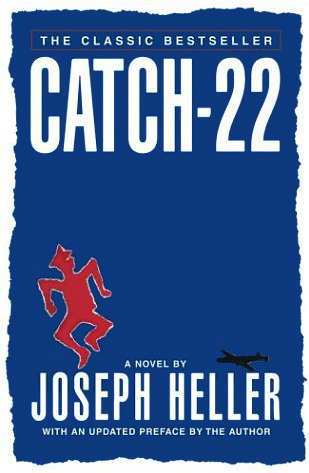
Catch-22 – Joseph Heller
 READ FOR BOOKCLUB
Chosen by Rachel
Set toward the end of World War II in 1944, on an island off the coast of Italy, Joseph Heller’s Catch 22 is a satirical anti-war novel. It features extensive use of black humour, a non-linear structure, surrealism and an anti-hero protagonist who struggles to deal with the insanity of war. He decides that the only sane response to it is not to participate in it.
That anti-hero is American army pilot John Yossarian, who is aghast at his commander who keeps raising the number of missions men must complete before being rotated out. He spends most of his time trying to get out of active flight duty by asking to be declared insane. However, the mysterious Catch-22 states that only an insane man would fly this dangerous missions so asking to be grounded proves he is sane. The circular reasoning of this “catch” is the central metaphor for the absurdity of war and the military bureaucracy.
The book and its many characters and plot lines drive home the author’s point that institutions such as the military, big business, government, and religion are corrupt and individuals must find their own responses to this corruption. Heller’s questioning of these institutions, and of war in general, reflect the social protests and anti-war movements of the late 1960s.
Some men are born mediocre, some men achieve mediocrity, and some men have mediocrity thrust upon them. With Major Major it had been all three. Even among men lacking all distinction he inevitably stood out as a man lacking more distinction than all the rest, and people who met him were always impressed by how unimpressive he was.
“This is one of those hilarious but desperately sad books that makes you laugh but want to cry at the same time. The story is strange and convoluted and it drags you into the chaos, no matter how many times you’ve re-read it. Additionally, there’s a cast of characters who range from anti-heroes, to well-crafted protagonists to cliched war-story clowns, reminding us how real but how ridiculous war is. You cannot help but be moved and entertained with this book. One of my all time favourites.” – Rachel
—–
Published 1961
Simon & Schuster
543 pages
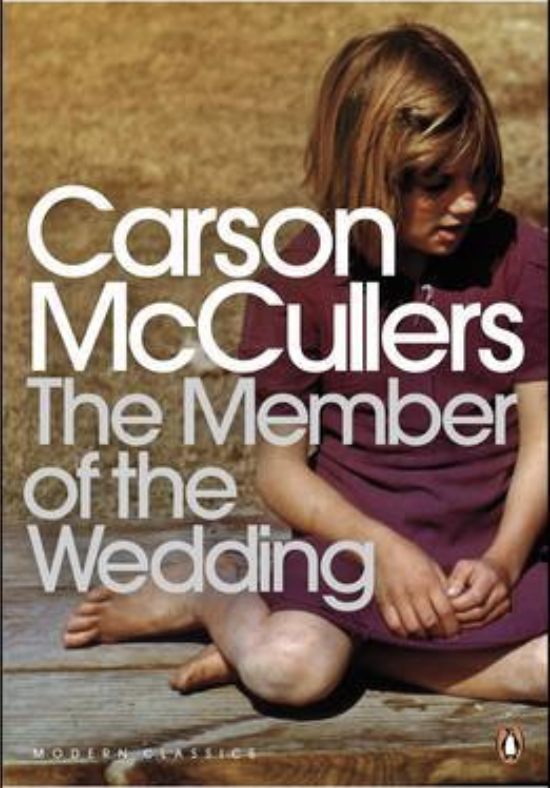
The Member Of The Wedding – Carson McCullers
 READ FOR BOOKCLUB
Chosen by Sophia
Troubled teen and tomboy Frankie Addams becomes obsessed with her brother’s wedding plans as she seeks to become a member of something important.
Frankie Addams is an awkward twelve year old out of school for the summer. She lives with her widowed father and a housekeeper named Berenice. Her father is a jeweller and often not home. As a result, Frankie is closer to Berenice and often looking for belonging. What’s more she is tall, has cropped hair, and is a tomboy, so is no longer included in the group of neighbourhood girls. She struggles with her identity and self-esteem.
Frankie reads about the events of World War II and imagines it as an adventure, of being part of something that is easily defined. When her brother Jarvis announces his upcoming wedding, Frankie is elated. Through a combination of wishful thinking and youthful naiveté, she becomes convinced that she will go with her brother and his bride on their honeymoon, and live with them wherever they go afterward. Believing that she has solved the problem of not belonging anywhere, she begins planning for her new life.
Parts of The Member of the Wedding are autobiographical. McCullers lived in a small home town, had a jeweller father and African-American servants. Frankie’s feelings of awkwardness are drawn from McCullers who said she felt like a gangly misfit and whose tomboyish ways made it difficult to fit in with boys or girls her age.
She stood in the corner of the bride’s room, wanting to say: I love the two of you so much and you are the we of me. Please take me with you from the wedding, for we belong to be together.
❖ “There is a kind of awkwardness to this book which makes it uncomfortable but distinctive. Frankie IS the story and she is a perfect character. She embodies the need to belong and I’m sure everyone could relate to her because of this. Exceptionally well written and enjoyable.” – Rachel
—–
Published 1946
Houghton Mifflin Publishing
176 pages
The Little Stranger – Sarah Waters
 READ FOR BOOKCLUB
Chosen by Jo
The Little Stranger is a mixed genre story set in a dilapidated mansion in Warwickshire, England in the 1940s. It features a country doctor who calls on an old family of declining fortunes who own the old estate that is crumbling around them.Though attending in a professional manner at first, the doctor becomes entwined in the family’s plight and the ghoulish goings on. The historical/gothic novel also delves into many societal interactions of the time: class systems, repression, gender roles and the British way of life.
It was simply that, in admiring the house, I wanted to possess a piece of it — or rather, as if the admiration itself, which I suspected a more ordinary child would not have felt, entitled me to it.
❖ “A very cleverly written ghost story … but is it a ghost story? Nothing is as it seems and with the tension gradually building between the two main characters and the strange happenings at the mansion, you are in for a stimulating read. One of my favourites, and I loved the re-read.” – Jo
❖ “The re-read is even more riveting than the first and I thought I might pick up a little more about the goings-on, but alas. In saying that, I love how everything is not completely spelled out. The story is engrossing, melding historical fiction and supernatural genres. The characters are troubled but charismatic and offer both sides of the argument, with the mysterious goings on first considered by the insular family and then the doctor’s scientific mind. It really is a wonderful read.” – Rachel
—–
Published 2009
Virago
510 pages

We're
currently
reading
 The Free-Range Bookclub
Recent Comments