The Free-Range Bookclub
Bookclubbers without boundaries in Nelson, New Zealand
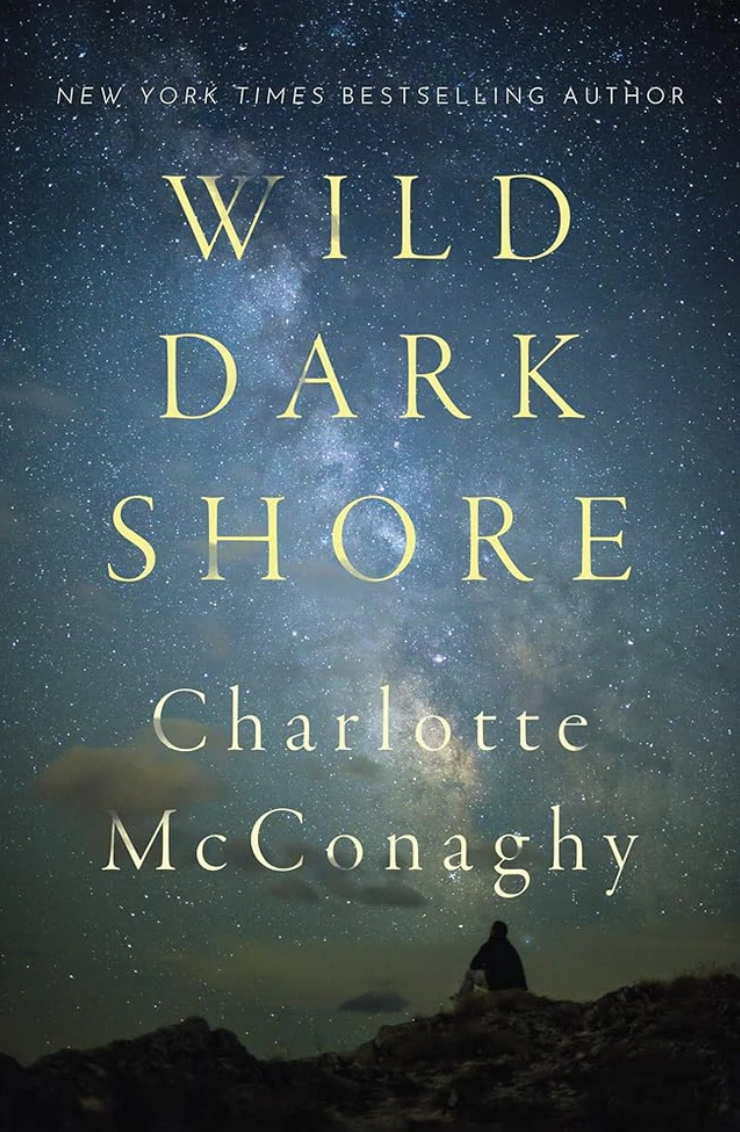
Wild Dark Shore – Charlotte McConaghy
READ FOR BOOKCLUB
Chosen by Rachel
Dominic Salt and his three children are caretakers of Shearwater, a tiny sub-antarctic island that is home to the world’s largest seed bank. It is being destroyed by climate change and while the Salts await rescuers, a woman washes ashore. Wild Dark Shore is an exploration of a world in crisis, both ecologically and emotionally. It’s a psychological and climate thriller with many twists, turns and surprises.
Maybe we will drown or burn or starve one day, but until then we get to choose if we’ll add to that destruction or if we will care for each other.
RACHEL
● The multi-genre style of this book makes it very approachable. It has the twists, turns and plot dumps of a typical thriller, the character development of literary fiction, a wild gothic setting and the “what if?” climate fiction noose hangs menacingly in every scene, more realist than speculative. I forgave some of the more convenient plot drivers due to the author’s extraordinary work in creating emotional intensity in a well structured and paced format. This is the best cli fi novel I have read, as McConaghy does not get preachy or moralistic, but made me love the setting like a well-developed character. The more the raging sea dragged land into its depths, and the haunting lights tumbled in the howling winds, the more connected I felt to the Earth, a living, breathing thing begging for attention. – Rachel
JODIE
● This slow burn thriller had me fully immersed in the plot but it was the setting that is one of the most compelling elements of the novel. The rugged wind lashed the coastline and felt almost alive. The wild backdrop not only grounds the narrative but amplifies its gothic tone. The climate change theme was subtly woven into the narrative. It didn’t come across as preachy but showed us a realistic portrayal of environmental change. I found the seed bank aspect fascinating, and from Rach’s research learnt there is a world seed bank in Norway. A great novel that threw out a lot of punches towards the end.
TESSA
● I found Wild Dark Shore immersive and easy to move through, despite its darker themes. For me, the real strength of the novel was the author’s vivid description of the setting, brought to life through the characters’ perspectives — that was the part I connected with the most. I could really feel the isolation and beauty of the place, along with its dark past. I also appreciated the strong environmental focus, which is beautifully woven into the story, and learning about seed vaults added a fascinating element. The mystery aspect, however, felt a bit forced at times, which made it harder for me to connect with the characters emotionally until later in the book. It didn’t all work for me, but it was still a satisfying read.
SALLY
● I was very excited by the synopsis on the back of this book but ultimately, I found it unconvincing. The characters were well drawn apart from one in particular, who I felt was not as villainous as we were expected to find them. My main irritation was with the multiple, seemingly endless, plot strands. I found some of the character storylines unnecessary and distracting and others failed to ring true and added nothing to the story. For me, the climate change angle and the family dynamics would have filled the book.
Until our book group discussion, I was unaware there was a whole genre of fiction classed as climate fiction. I feel happy to have been educated! The author painted a great picture of the location, the wildlife, and the history of the island and she nailed the gothic fiction elements. This book was not a stand out for me, but I happily ready right to the end, which (unlike other members of our group), I did not see coming.
BRIDGET
● The themes I gravitated towards the most in Wild Dark Shore were those that focused on the environment, grief, and hope. The characters each carry deep personal grief. Whether it’s the death of loved ones, or the slow erosion of the world, grief saturates them. Yet I always sensed a persistent glimmer of hope and that made the characters’ journeys relatable. This juxtaposition of environmental collapse and emotional resilience reminded me that it is not foolish to hope for better, it is necessary.
The environmental destruction in this book is not just a backdrop, it felt like a living force that was shaping the characters’ decisions and relationships. The author’s talent of depicting wild spaces, crashing wind swept coastlines, ancient forests, and open sea helped me further understand the fragility of the human spirit and Mother Earth. I didn’t think I’d enjoy climate fiction but this won me over, especially with that ending which is fast-paced and full of surprising twists that kept me on my toes.
Published 2025
Flatiron Books
303 pages
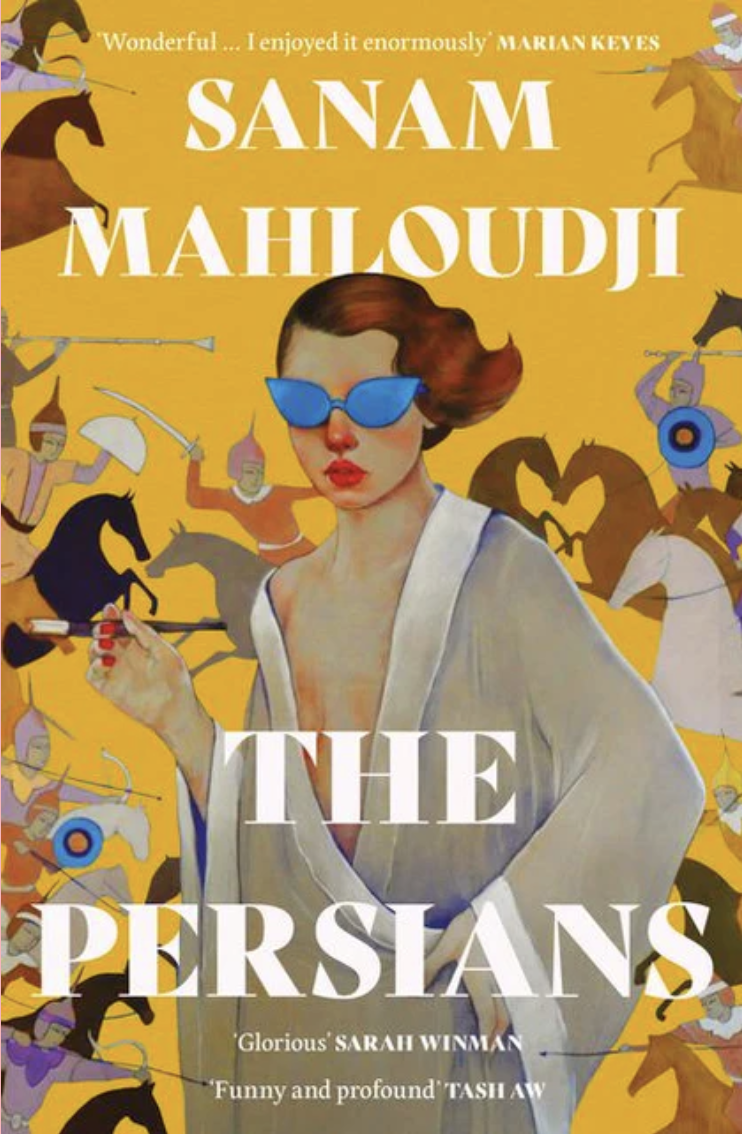
The Persians – Sanam Mahloudji
READ FOR WOMEN’S PRIZE
The story of an Iranian family, some of whom flee to the US during times of conflict, and some who stay. Five women from three generations of the Valiat family narrate their past and present as members of the Iranian elite who are discovering family secrets and trying to find their place in their new worlds.
We are born artists, us Persians, born dreamers. Even if we express it in high finance or dentistry.
RACHEL
● The Persians is a wild juxtaposition, combining the seriousness of Iranian political history and generational trauma with a satirical, absurd narrative voice. At first, I found this jarring. I think I expected a more typical immigrant-struggle narrative. Then Suzy referenced it as being like Housewives of Beverly Hills (or Tehrangeles) and that helped me loosen up and embrace the ride.
The characters are all super privileged, like spending-$30k-on-watches-and-then-throwing-them-in-the-snow rich. I didn’t ever connect with them, they were too entitled and shouty for my liking. What kept me going instead was the historical backdrop and the reflections on Persian identity, particularly for women. It is a fast-paced read with something new and dramatic happening every paragraph so it certainly wasn’t boring. – Rachel
SUZY
● The juxtaposition of the character’s lives in both America and Iran was at times jarring, and I can only imagine the reality for immigrants who move between these two immense cultures that were each presented as flawed and challenging, with residents trying to make the best of things regardless of where they settled.
I really enjoyed the layered, multi-generational storytelling and the debauched humour was much appreciated and often a welcome relief.
Published 2024
Scribner
384 pages
2025: NZ Book Awards

This year’s Book Awards brings together four quietly powerful novels that reflect a focus on subtlety and social resonance. Delirious by Damien Wilkins, The Mires by Tina Makereti, Pretty Ugly by Kirsty Gunn, and At the Grand Glacier Hotel by Laurence Fearnley each offer explorations of human experience anchored in the quiet burn of real life rather than the sensationalism you might expect from an awards shortlist.
“That year. That year. People always said, that year. [Delirious]
One aspect that unites these books is the focus on characters often overlooked in fictional narratives: in particular middle-aged women, older men and women, those in long marriages and those dealing with disabilities and health concerns. In Delirious, Wilkins paints a tender portrait of a couple navigating ageing and the impact of the past, while Fearnley’s At the Grand Glacier Hotel quietly allows its protagonist to heal in a calming, isolated part of the natural environment. These protagonists and narratives are not rushing toward revelation; they are steeped in time, place, and recalibration.
Why we were drawn to each other was somehow simple but also mysterious. We were easy in each other’s company but beneath that? I felt seen, I suppose, but something more. [At The Grand Glacier Hotel]
Tina Makereti’s The Mires adds a visceral exploration of colonialism, racism, and intergenerational trauma, folding climate anxieties and Māori mythology into its swampy, haunting setting. Kirsty Gunn’s Pretty Ugly is a short story collection where emotional and aesthetic contradictions expose the raw beauty and ugliness of humanity.
These are not twisty thrillers nor alternative genres, they are all tales of lived realities and the complexities of the human condition. They’re novels that trust the intelligence and patience of their readers.
It is a shortlist that omits some expected authors and titles, but the result of the judges’ choices is a collection that embraces subtly, realism and meaningful settings rather than rushing to create and resolve plot drivers.
All these stories are about truth; how to find the truth and how driven we are by pretense and how much of our lives are lived not so much as what they truly are but as what we want them to appear to be. [Pretty Ugly]
● What an interesting shortlist – these novels/short stories are restrained to the point of being almost subdued, but each has a richness and warmth that means as a reader we are drawn in and carried along beside the characters as they make discoveries and decisions that at times appear to be inconsequential, but are in fact often monumental.
Pretty Ugly was often too clever for me, but I think it’s this cleverness that will possibly get it the win. My favourite read was At The Grand Glacier Hotel. I felt enveloped and cocooned by this novel and loved the gentle journey that the protagonist went through. – Suzy
Sometimes it’s animals, sometimes it’s less animated things, like trees or mud. The worst is people. You don’t ever want to feel what’s going on inside another person, not if you can help it. It’s so confusing, so dense with thought and word and feeling, all scrambled together. [The Mires]
● This collection of books has reminded me to slow down and relish all parts of a story. Often books are written in a propulsive way that make me want to read quickly to discover the next revelation, but these four books made me ease up and enjoy the journey of reading rather than just anticipating the resolution. Which is what the characters were doing, taking considered steps through interesting parts of their lives and not trying to rush the future.
It took some further thinking and an illuminating literary dissection with Suzy before I appreciated all the books fully but I have come to highly value them all and think they will affect my future reading. To be honest I don’t mind who wins. I mostly loved At The Grand Glacier Hotel and The Mires and will choose the latter as my pick for win. – Rachel
Her Side Of The Story – Alba De Cespedes

READ FOR BOOKCLUB
Chosen by Rachel
Alessandra Corteggiani recalls her youth and the lives of women during the rise of fascism in Italy, the resistance, and the fall of Mussolini. Originally published in 1949, it is a timeless portrayal of the complexity of the female condition, told by a woman who is committed to telling “her side of the story.”
Even the brief life of a woman is infinitely long—hour after hour, day after day—and rarely is it a single motive that drives her to a sudden act of rebellion.
● Her Side of the Story is a novel that blends romantic tension with historical social commentary – it really shines a light on the complexity of love, particularly over the time of the second world war when societal expectations weighed heavily on women. It’s a beautifully written feminist novel that was influenced by the author’s own experiences over this time period. Don’t let the length put you off. I was engaged for the entire 500 pages and loved the ending which was delivered with a real punch! – Jodie
● What I loved about this book was the author’s ability to portray a woman who is strong and brave and determined but also a hopeless romantic. Alessandra wants everything that life has to offer whether it is perceived as feminine or masculine or morally wrong. She wants every experience and does not apologise or feel guilt for her actions. She is such a complete character and I enjoyed following her through her life as a child with troubled parents, as a niece sent to the countryside, as a wife who can spot a controlling patriarchal convention a mile off and as a rebel taking action against the fascists. A long book and a slow burn, something to really lose yourself in. – Rachel
Published in Italian 1949
Translated into English by Jill Foulston 2023
Astra House
500 pages
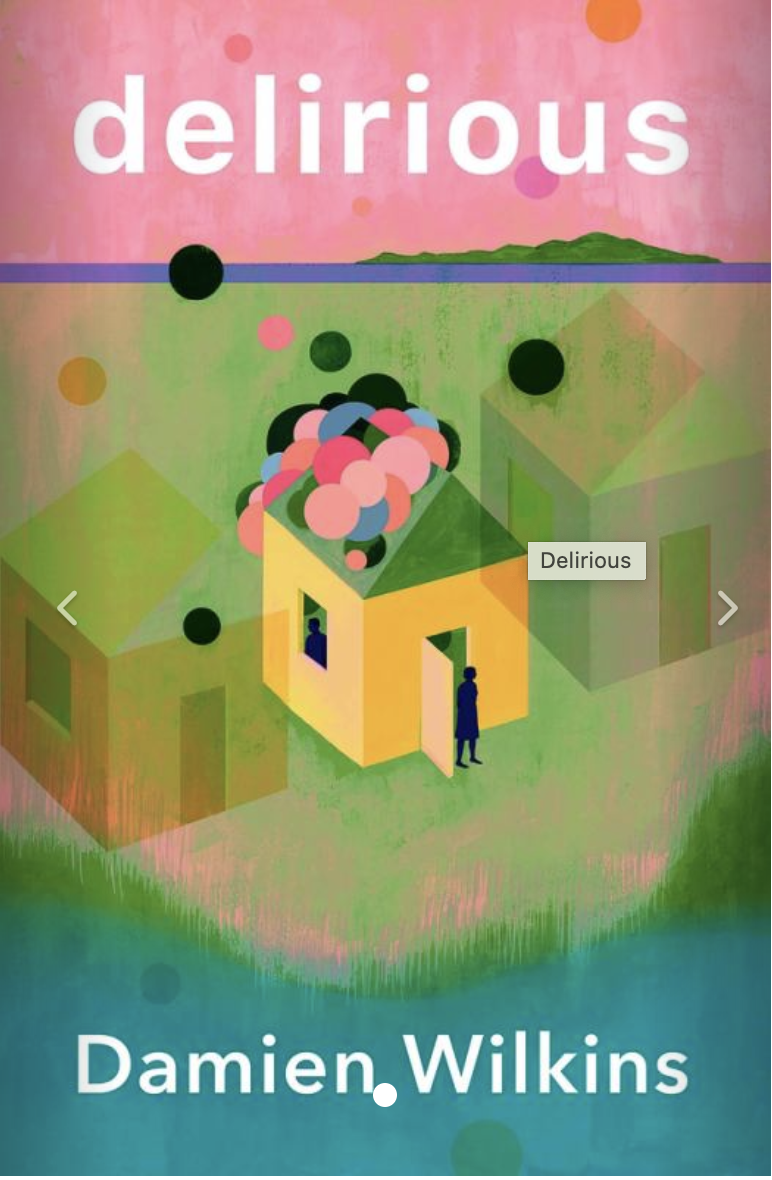
Delirious – Damien Wilkins
READ FOR NZ BOOK AWARDS
Retired cop and librarian Mary and Pete are struggling with ailments and deciding whether to move into a retirement home or stay in their family home. Then the police ask to speak to them about the accident that killed their son 40 years ago. A book about the dilemmas that come with being lucky enough to reach old age, and the enduring impact of the past.
With her now tiny legs folded up against her body as the sling raised and lowered her, she looked like a delicate animal, a foal perhaps, being weighed.
● The older generation is often stereotyped in fiction so it was nice to read something that had a positive and honest focus on the subtleties of everyday life for this sector of the community. The first part of the story that piqued my interest was the plot line of new information about their son’s death, but I felt like there was too much padding inbetween returning to this narrative. It could have been woven in better. But overall I did like this story. It isn’t grandiose and doesn’t try to be clever, with crazy twists and turns, but rather has realistically crafted characters dealing with bad health, grief, familial relationships, as well as upheavals and second chances. – Rachel
● A beautifully paced exploration of ageing, family and grief, with a side of reality-of-a-long-term-marriage. There was something captivating about following Peter and Mary and their relatively gentle lives, and looking back through their years was both illuminating and sad. The author did a near perfect job of describing the characters and settings and each person and place we came across seemed utterly recognisable. – Suzy
Published 2024
Te Herenga Waka University Press
312 pages
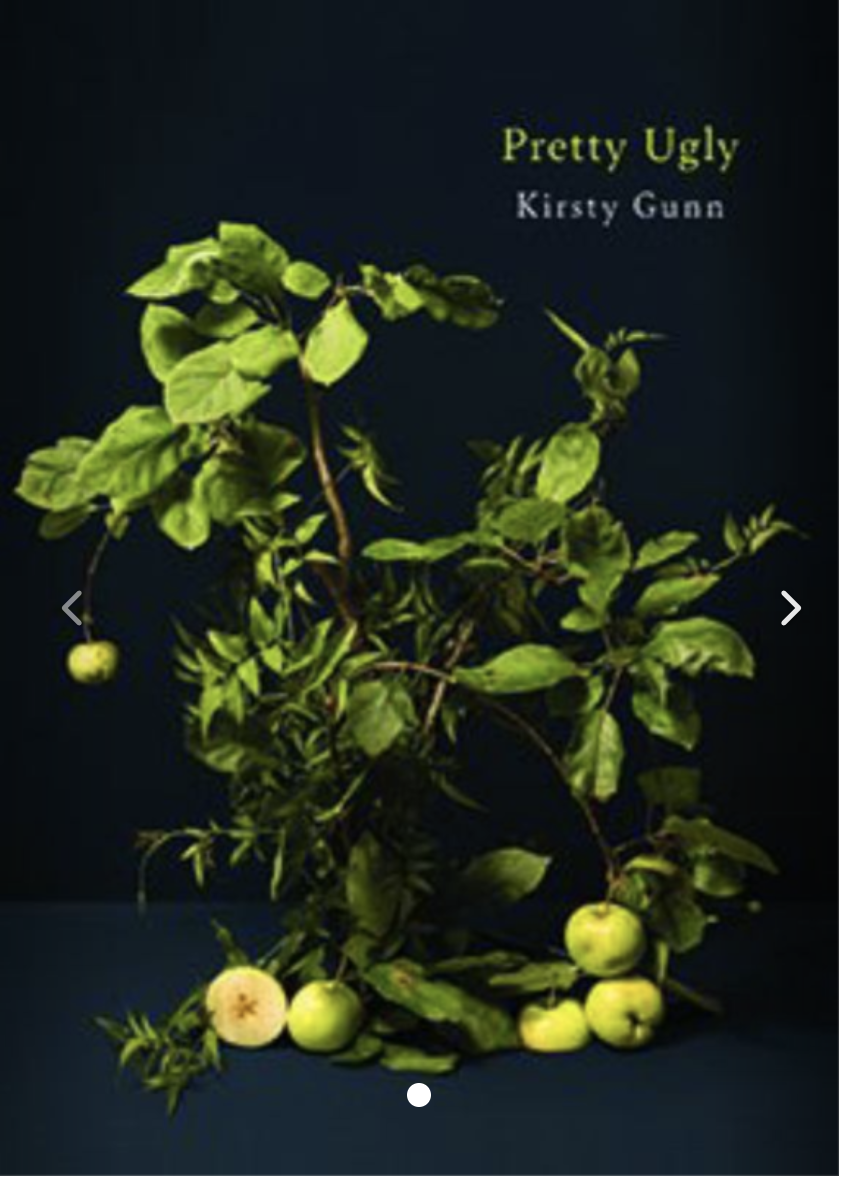
Pretty Ugly – Kirsty Gunn
READ FOR NZ BOOK AWARDS
Thirteen darkly compelling stories look directly into the troubled human heart and draw out what dwells there. The ‘ugly’ of these stories is to do with ‘considering how much a person’s life can bear’. The unease and compassion for the human condition told in intelligent prose with a strong dose of introspection.
Great fatted Chrysanthemums held by skinny stems jostled up next to double-headed tulips and phlox; massed foliage poked out above the many greasy hearts of lilies. And were those thistles? Yes. Thistles, too, and other unkind-looking items were arranged among the rest. This was a posy with no theme or unity—and was it even…fresh?
● As the deadline of the Ockham’s draws near I haven’t quite gotten through all of these short stories, but I loved most of what I did manage to finish. One was so painful to read I felt like I was slicing into my nerves with each page and for that reason I should be grateful it was a short story. What an extraordinary author. – Suzy
● I enjoyed Pretty Ugly more as a work of art than a fictional reading experience. I was impressed by the intelligent prose and enjoyed the metafictional stories that reflected on the nature of storytelling and the book’s own construction. But, as I often feel with short stories, I was unable to completely let myself go and grow with the ever changing narrative like I can with a novel. – Rachel
Published 2024
Rough Trade Books
218 pages
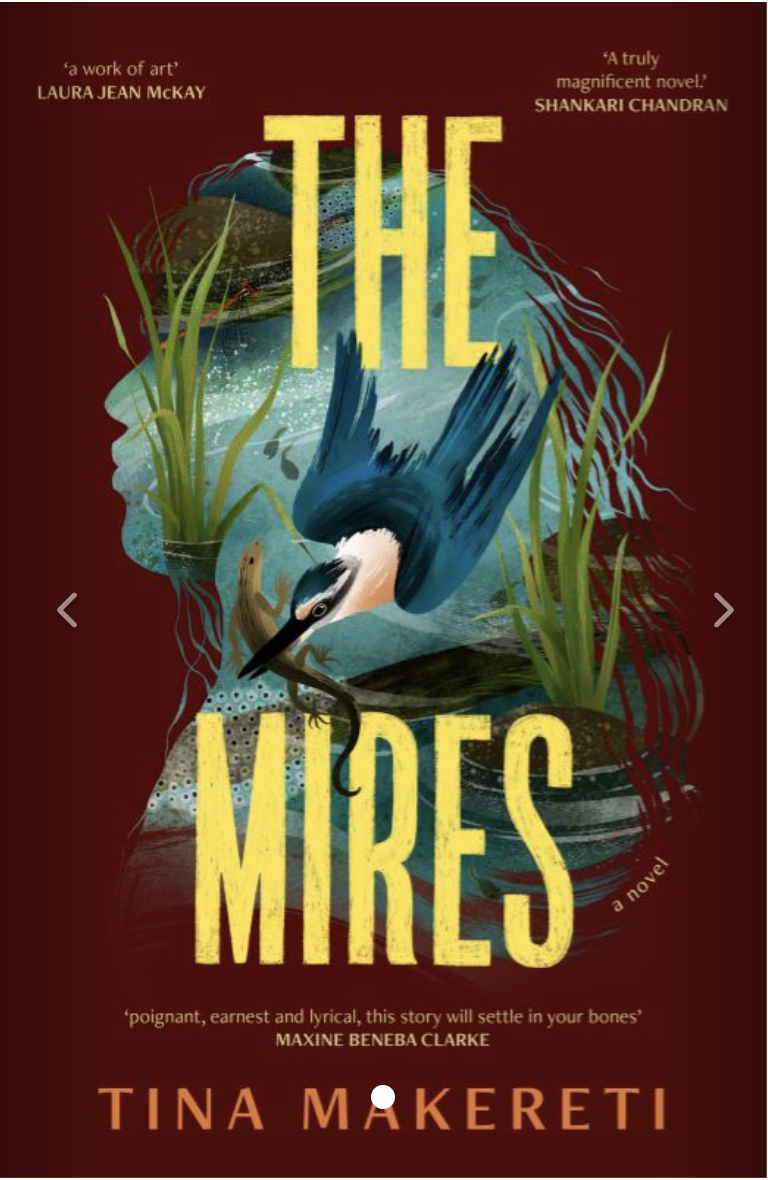
The Mires – Tina Makereti
READ FOR NZ BOOK AWARDS
Three neighbouring families in a small New Zealand town become acquaintances, some get along, others are suspicious of each other. Some share an attraction, another has a strange gift for premonition and another is acting cagey and has secrets to hide. They live in a coastal town that is succumbing to the effects of climate change and while the nearby mires stir, history, tradition and the future of the characters’ lives and of ours are explored.
Water will come and you think it will be soft. You think it will be smooth and find its way around your your houses and cars and furniture, your gardens and windows and hope. But water can be the foot of an elephant, the horns of a moose, a herd of buffalo running from a lion, water can be the kauri falling in the forest, a two-tonne truck, a whole stadium filled with 50,000 people, screaming … Water is life, and water can be death.
● The swampiness that is at the crux of this book really crept into all parts of the narrative. I always felt under water, being pulled this way and that between the characters stories, and like there was a slow dread creeping up on me. The characters were all perfectly formed and though kind of expected – old racist white lady, Māori single mum, lovely but hard done by immigrants – they did all fill out and become their own characters. Very good combination of climate/immigrant/social rights into one story. Plus there was a creepy thriller plot and a really great ending. – Rachel
● I felt like sobbing after finishing The Mires, but as I was in public I unhealthily held it in. Each of the characters carries their own sadness/loss (maybe apart from Walty, the toddler) which permeates the novel and there was the sense of grief lingering past the final pages. The overwhelm from the weather event in the novel reminded me of Brannavan Gnanalingam’s Sodden Downstream, and the uneasiness I feel from the way those who could do with the most support are the most easily dismissed is the same. – Suzy
Published 2024
Ultimo Press
309 pages
At The Grand Glacier Hotel – Laurence Fearnley

READ FOR NZ BOOK AWARDS
Libby Holt is on holiday with husband Curtis but due to unforeseen circumstances she ends up staying at the majestic Grand Glacier Hotel by herself. A new friendship and a quest with hidden clues keep her entertained but her concerns return to her ailing health. This is the third of Fearnley’s novels aimed at the senses, this book being built on the experience of sound.
Though I had played out numerous scenarios of my death, ranging from the quietly dignified to the tragically operatic, I had never imagined that I might die in a puddle on a nature walk.
● I felt enveloped by the almost mystical setting of the West Coast while reading and felt myself often wanting to return to At the Grand Glacier Hotel not so much for the storyline, but more so for the sense of place and how it made me feel. The author did well to accurately depict the weird and lonely journey of recovery from cancer. – Suzy
● Fearnley’s books always have atmospheric settings with the natural environment often playing a character. This book is no different. Set in Franz Josef on the West Coast, mountains, glaciers, rivers and forests play crucial roles in the narrative. However the story is Libby’s, of her survival and rehabilitation from a cancerous tumour on her leg which makes usual movement difficult. Her husband is blocked from remaining to her by a storm and I really liked the idea of the environment cocooning her in this beautiful sanctuary where she is able to physical and emotional heal on her own terms. It’s a not a book full of dramatics but a quiet story of recovery and gives both the ageing and the ailing more air time than most fiction does. – Rachel
Published 2024
Penguin
280 pages
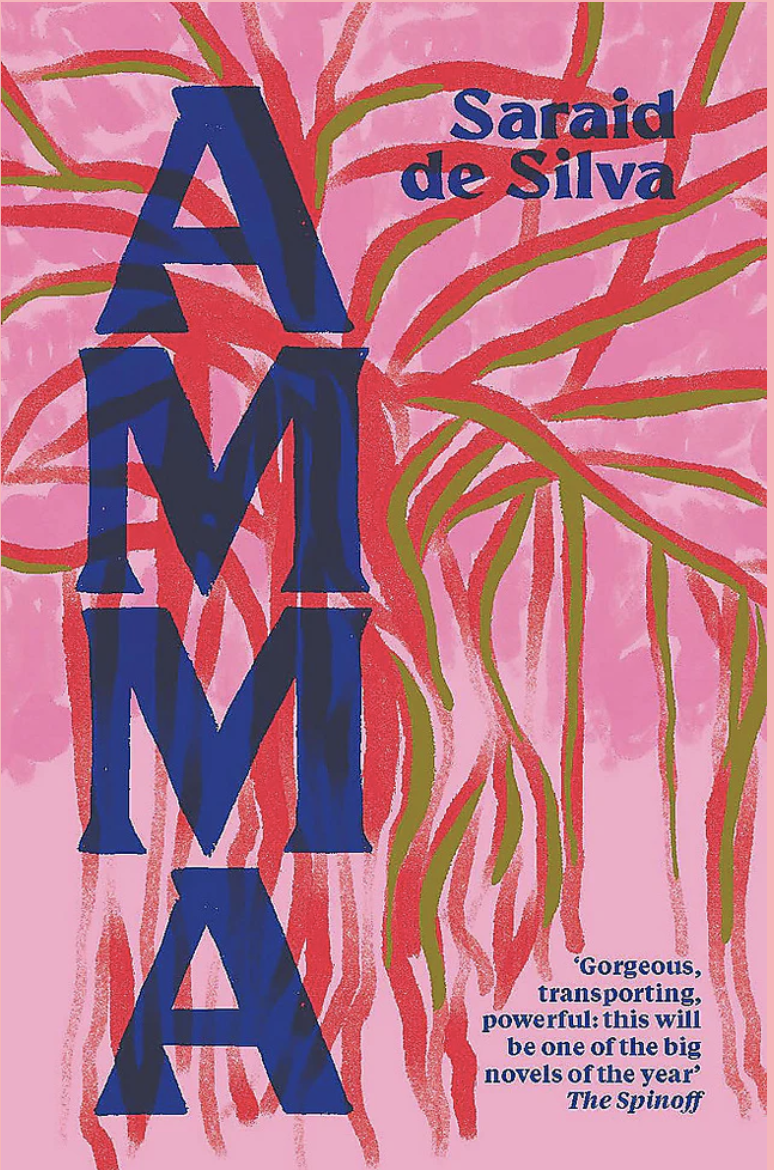
Amma – Saraid de Silva
READ FOR NZ BOOK AWARDS
The migrant story of three generations of women in a Sri Lankan family. Josephina, who grew up in 1950s Singapore and her daughter Sithara who move from Colombo to Invercargill, and granddaughter Annie who moves between many cities looking for a place to call home. Not only do the women have their travels in common but also their struggles as victims of violence and racism.
She grinds her teeth, chews them to dust, opens her mouth and lets ash fall out. In the grit she tastes the horrified looks of the priest and the schoolchildren and her sour-lipped teachers. She summons demons from her stomach and vomits lava over everyone stupid enough to look at her.
● This is a brutal look at the diasporic experience in New Zealand’s diverse multi-cultural society and shows how difficult it can be for marginalised communities to find a sense of belonging and to be accepted in a place with an evolving national identity. It certainly has a place in our literary landscape especially representing Asian New Zealanders and the queer community. It does include a lot of trauma though and is sometimes hard to read. Trigger warnings are required for sexual assault, domestic violence, racism, rejection and psychological abuse. Reading Amma is like being filled to the brim with emotion, whether that’s a good thing or not is up to the individual reader. – Rachel
● The way Amma jolted the reader between settings was like going from a hot sauna to a cold plunge pool (although the cold plunge pool was Invercargill so I imagine it being quite grimy and kind of gross). There was a strong sense of displacement in this novel, and even those characters who should have ‘belonged’ in their settings were often still wildly unsettled. Aspects of Amma felt perhaps more forced than they should have, and the depictions of violence were at times unnecessarily visceral. – Suzy
Published 2024
Moa Press
282 pages
Poorhara – Michelle Rahurahu

READ FOR NZ BOOK AWARDS
Written by Michelle Rahurahu (Ngāti Rahurahu, Ngāti Tahu, Ngāti Whaoa) Poorhara uses a play on the word Pōhara (poverty), and is about living without – without money or possessions, and without the same rights and respect as others. The plot follows Erin and Whetu (Star) who are cousins traversing the North Island in an old car, with a nameless dog, visiting places and people. The cousins are seeking belonging and their true home as they carry the burden of their ancestor’s traumas and face adversity at every turn.
I’ve been to all those courses, cuz, I’ve sat in every room that they’ve told me to sit in, I’ve gone to every clinic there is to fix my life—but you know what every piece-of-shit administrator or social worker or pig really wants? They want to find a reason to take the kids away and raise them in perfect little white houses and leave me to die for the sin of bringing them into the world.
● Poorhara is an exploration of how traditional and modern Māori experiences, expectations and values combine and clash in a white world – from journeys, lineages and identity, to societal outcomes and racism.
The journey the cousins are undertaking encompass and experience all of these aspects in what is quite an Odyssessian journey but with “a Maaui vibe”. It incudes myths, beautiful New Zealand landscapes and the use of all three official NZ languages.
Star mentions how love stories are never about the poor. And while not a love story, Poorhara is a literary, poetic and intelligent piece of work that features people poor financially but rich spiritually, and I really valued that tapestry of contemplation. – Rachel
Published 2024
Te Herenga Waka University Press
336 pages

We're
currently
reading
 The Free-Range Bookclub
Recent Comments