The Free-Range Bookclub
Bookclubbers without boundaries in Nelson, New Zealand
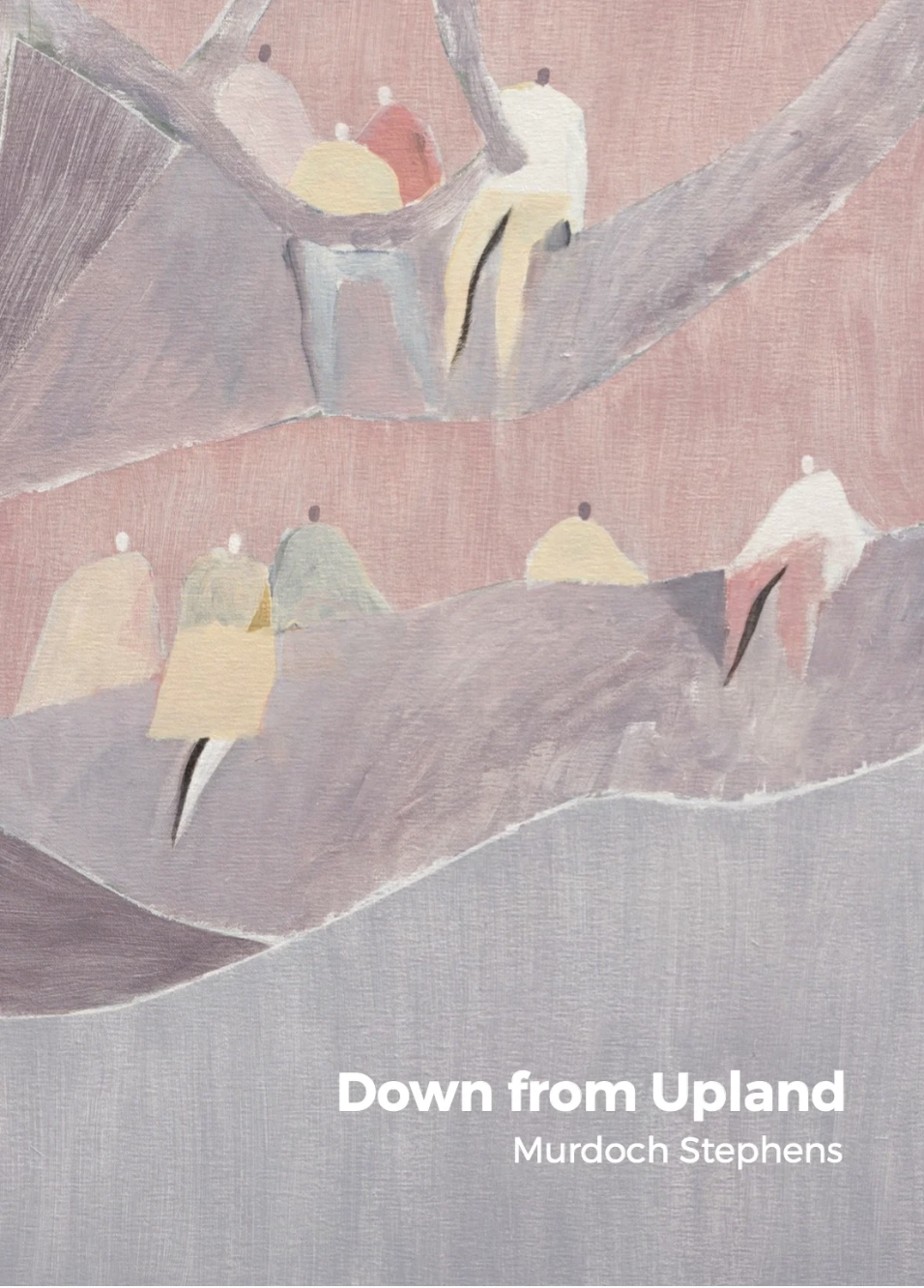
Down From Upland – Murdoch Stevens
READ FOR NZ BOOK AWARDS
Set in Wellington, down from Upland Road in Kelburn, this book is a satirical tale about the complexities of growing up, when you’re a teenager and when you’re in your 40s.
Axle has joined a new school. He is at parties, attempting to make friends and impress girls, light beers from his parents in his hands.
His parents, Scott and Jacqui, are civil servants, stuck in the cogs of the Government wheel, wanting more excitement from life. The idea of an open marriage comes to the fore and Jacqui fits into this new outlook with ease while Scott’s attempts at seduction just get him in hot water.
“I would, of course,” said Jacqui. “But my situation is different. As far as I know, Scott has been wholly loyal. Not to make myself into Cinderella, but the shoe just doesn’t fit.
“You can make it fit if you want. Be inventive. What did the sister do in the original, unsanitised version? Cut off some toes, hack off the heel?” Kaye said.
The book is funny, cringey and ickily realistic. The characters are well-defined. I felt pulled in from the outset, as if I was sitting there with Scott while he said inappropriate things, watching things play out through gaps in my fingers. I had the feeling of wanting to stand up and walk away but couldn’t stop watching the train wreck.
Obviously with all three characters navigating changes and trying to grow up there are going to be dramas and arguments and surprises, and Murdoch Stevens does not disappoint.
Also, extra kudos for this book because the author’s name is Murdoch, same as my cat. Meow. – Rachel
Published 2022
Lawrence & Gibson Publishing
240 pages
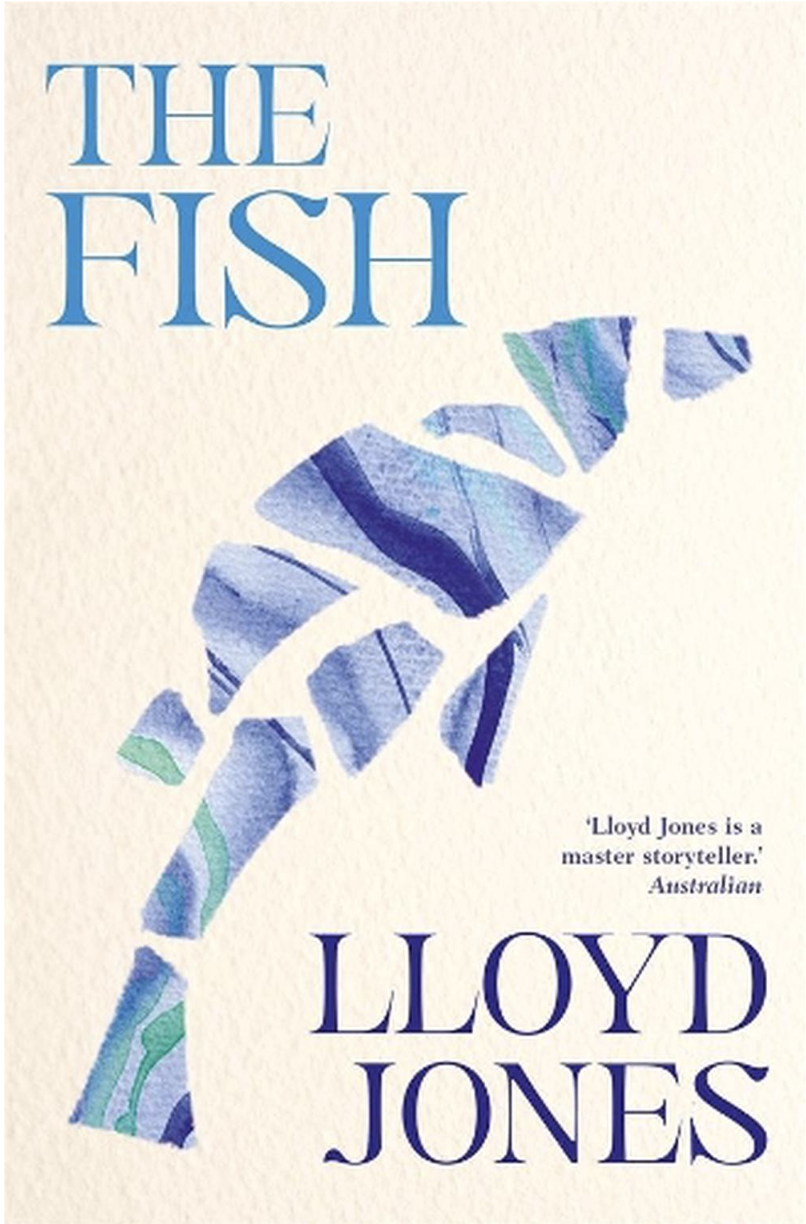
The Fish – Lloyd Jones
READ FOR NZ BOOK AWARDS 2023
A baby is born to a young, single mother in a caravan park, suffering from an unnamed condition which earns him the name the Fish. The story of the Fish, and the family’s shame and secrets are narrated by the Fish’s uncle, himself only a child.
● Lloyd Jones often writes about otherness, about people who are different or isolated or put in a corner for no other reason than they make those around them feel uneasy. The Fish is no different.
The new baby, Colin Montgomery, is referred to as the Fish for his mostly unexplained unique features. The opening pages detail the shock and shame the family go through at having this new creature in their lives, birthed in a trailer park. But, as with all babies, a fierce sense of love and protection overcome the family and he becomes the centre of their world.
We find a place to hide the class photo. We worry that the Fish will see in the photo what has not been apparent to him in his short life so far. He is different. A fact that would perhaps astound him. My sister has given birth to difference. Worse, she has placed difference in our ranks. What the Fish ought to feel transfers itself onto us. The girl in the photo rearing away from our Fish makes me want to lean into her and bare my teeth.
As expected, not all is plain sailing. The family have secrets and peculiar life habits and are judged by outsiders in what becomes a book about alienation and social acceptance and tragedy. This atmosphere is enhanced by the setting, mid 20th Century New Zealand, post-war when close-mindedness was rife.
The narrator is a passive observer and also a child himself at the start and this works well as we are learning with him, about how to love the Fish, about the cruelties of the world. Sometimes the child uncle doesn’t know how to explain the complexities and that is okay because sometimes things don’t need to be over explained. Sometimes a few simple words make enough of an impact.
It did feel like there were some plot holes, or maybe plot decisions made for convenience but I didn’t mind because the book had an allegorical, slightly magical realist bent anyway. The writing is stunning and the New Zealandness of the time and setting shines through. I loved this book and was really surprised it did not make the NZ Book Awards short list. – Rachel
Published 2022
Text Publishing
272 pages
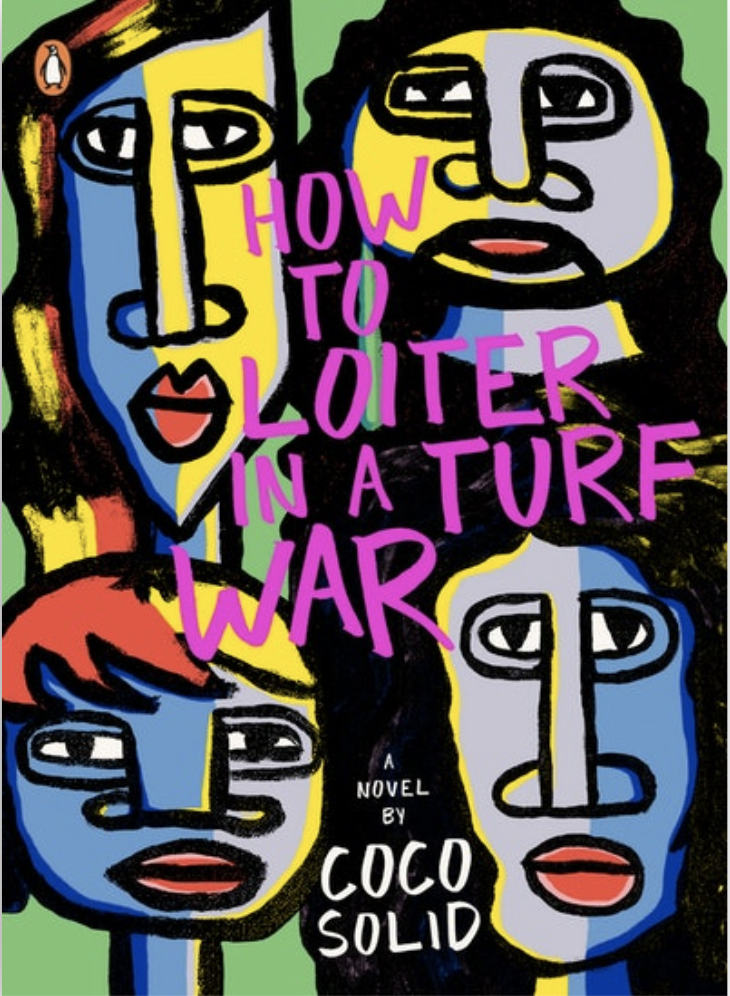
How To Loiter In A Turf War – Coco Solid
READ FOR NZ BOOK AWARDS
A day in the life of three brown friends hanging out in Auckland, eating, chatting, catching the bus, amongst racism, gentrification and the modern effects of colonisation.
That’s the third person I know without a house.
What the hell is going on?
They’re pulling us out of our own soil … like weeds.
I’m not a weed.
● In this book there is a trio of friends who are young and hopeful, clever and contemplative. They offer interesting and witty thoughts on relevant topics in voices that range from street language to intellectual. They are innocent. They are powerful. They are also brown and so their everyday experiences are tinged with the effects of racism both spoken and unspoken.
The book could be described as a novel, a short story, an essay, a long poem, musings … Coco Solid (Ngāpuhi, Sāmoa) uses the word novel on the front cover but I think it’s a lot more honest and raw than this word portrays. Plus the text is arranged in interesting ways and there are drawings scattered throughout. It is very much a multi-genre work of art that reflects a honest day in the life of an ordinary Kiwi. – Rachel
Riding New Zealand buses, same as riding dick.
You need to be optimistic your next one won’t let you down despite what you know.
You let a bus timetable lie to your face.
But you still get on board don’t you?
I’m just saying. If you and them are going the same way … why not hop on?
Published 2022
Penguin
176 pages
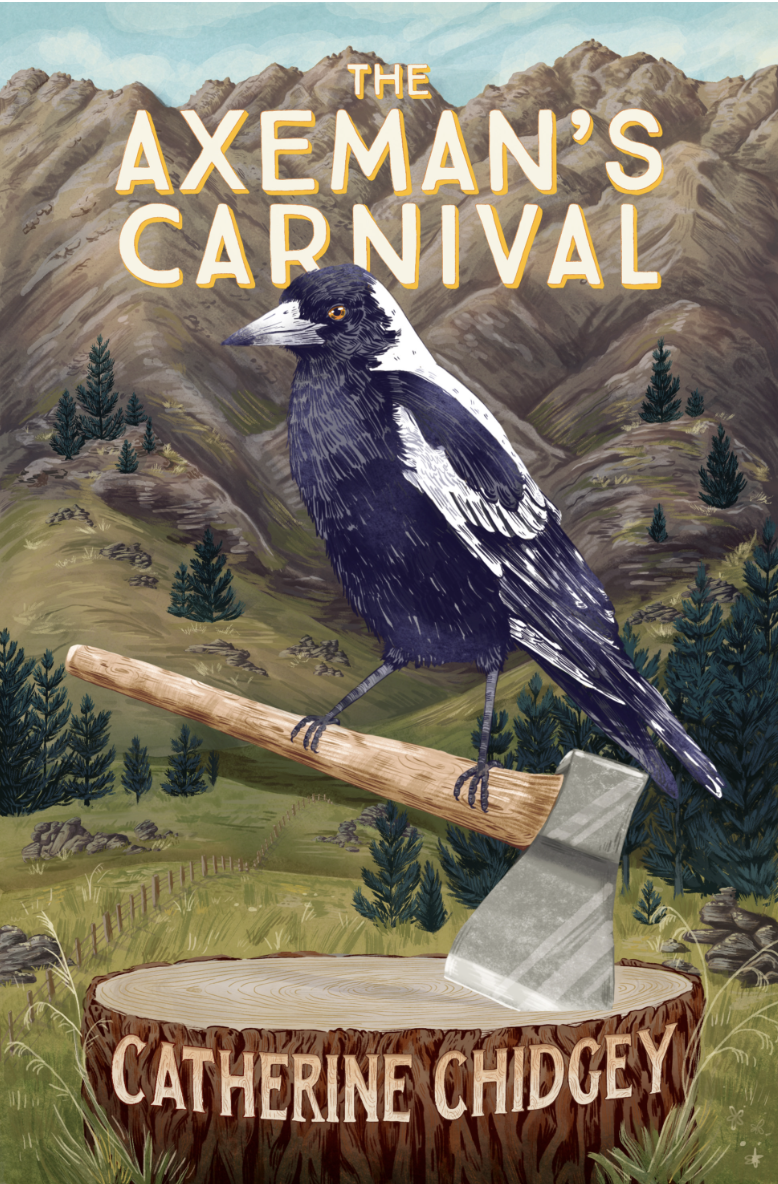
The Axeman’s Carnival – Catherine Chidgey
READ FOR BOOKCLUB & NZ BOOK AWARDS
Chosen by Suzy
From New Zealand author Catherine Chidgey is a story quite unlike her former novels. Instead of wartime Germany, this time the setting is rural New Zealand and the protagonist is a magpie called Tama, who narrates succinctly and regurgitates phrases moments after hearing them.
Tama falls from his nest as a chick and local farmer’s wife Marnie scoops him up and raises him. Though he has a magpie family in the trees, Tama learns the ways of his human parents and adopts them, copying phrases, sleeping in a mini bed with a pillow, meowing as he enters and exits via the cat door, and eating human food.
His owners decide to financially capitalise on his talents and install cameras throughout the home linked to an Instagram account, however the cameras capture more than expected and tell a private story of their own.
Tama’s naive outlook on life mimics what other authors do with child narrators, giving us the bare basics of information and letting us work out the real facts ourselves. There is a focus on domesticity, human relationships and power struggles or control.
I stepped … from the windowsill to the deep-freeze. My right eye saw the gathering night and my left eye saw Marnie and she was not going to wring my neck, or run me down, or shoot me, or poison me. That was not how houses worked. I threw myself on my back and waited for her to scratch my belly because she loved me.
● I really enjoyed this book! Having Tama the magpie as narrator was a bit of a wildcard approach, however Catherine Chidgey is so good I am now wondering why more novels don’t have magpie narrators! The main plot was absolutely a page-turner and was written with heart and a sensitivity to what were some fairly unpleasant events. There were also some humourous moments that allowed me to exhale rather than (what felt like) constantly holding my breath through the tension. Following our bookclub discussion there was a slight sense of unease about the author’s intention with a possible extended metaphor around colonisation, however we may have not been completely correct with that. – Suzy
● I have to admit I was a bit apprehensive learning the protagonist was a magpie!! I needn’t have worried – I loved it from the offset. Tama was a believable and charming protagonist. His perspective had an air of innocence in the complicated world of humans. The novel was littered with humour, disaster, love and brutality and a sense of dread that had me turning the pages. I was intrigued about what would play out. I loved the rural NZ setting and felt familiar with the surroundings where the novel was based. I thoroughly enjoyed and would recommend The Axeman’s Carnival to anyone. – Jodie
● Catherine Chidgey is a top quality and consistent writer. Having a bird as narrator could put people off but with Chidgey there’s no doubt she’d make it work. Tama is a bird but he’s like narrators – human and otherwise – who relay events simply as they see them and allow the reader to be fully involved. I was so immersed in Tama’s life, Marnie and Rob’s life and all the drama and tension. The only part that disappointed me was the comparison of Tama’s life in a white family with colonisation (“he has been colonised … forced to wear degrading costumes … video shoots for the titillation of an international audience … erosion of his mother tongue … exploitative merchandise“). While I value stories of colonisation, this felt suddenly thrown at us, political, and out of character for the book. However to Chidgey’s credit it did not turn into a moralistic lecture. The story’s conclusion was suitable to the style of the book and in the end I loved 99.9% of it. Recommended read. – Rachel
● This book had great characters with a magpie taking centre stage. There were lots of funny moments (“Meow”) and a doom filled plot – this book had all the elements to make it memorable. However, there is one glaring problem: the confusingly offensive comparison between Tama and Māori when he is kidnapped. This aspect was easily overlooked while I was engrossed and sped along to the end but led to uncomfortable reflections afterwards. I totally loved this book but feel a bit let down. I’d love to know why the author included these elements at all, when they were not substantiated with further discourse. – Jo
——
Published 2022
Te Herenga Waka Victoria University Pres
352 pages
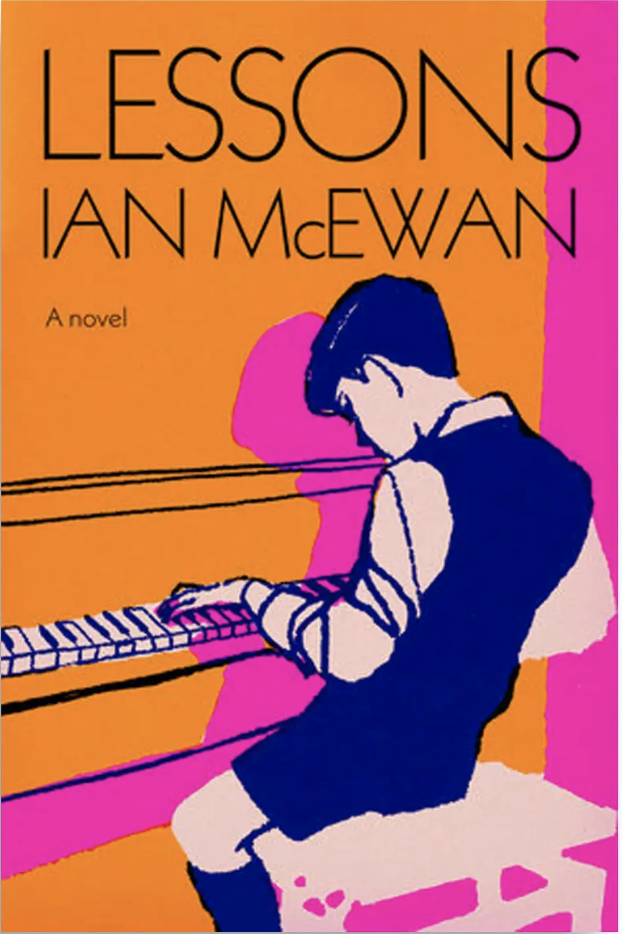
Lessons – Ian McEwan
READ FOR BOOKCLUB
Chosen by Jodie
In a type of anti-memoir, McEwan has created Roland, a character who has lived the same years as him, observed the same global events and pondered the same questions about humanity and society. Roland has even lived in some of the same locations and been involved in some of the same circles.
However, McEwan does point out that some of the more dramatic events of the novel are pure fiction: primarily the grooming and sexual assault of Roland by an older female piano teacher at his boarding school. Occurring in the open pages, this event, unsurprisingly, has a flow on effect to the rest of Roland’s life, influencing his interactions with people, decisions he makes and what becomes of him.
Lessons details many historic events such as World War II, the Berlin Wall, Chernobyl, the Cold War and Covid. It demonstrates how cyclic events can be and how we are constantly alternating between fear and optimism in regard to the future. Yet it is the reaction and interactions Roland and the other characters have with these events that shape and document them and provide the true lessons.
When Roland’s wife leaves him and their son in order to become Europe’s next biggest thing in literature, Roland’s musings and life directions interplay with the timing of global events.
By what logic or motivation or helpless surrender did we all, hour by hour, transport ourselves within a generation from the thrill of optimism at Berlin’s falling Wall to the storming of the American Capitol?
● It was interesting to discover the correlations between the lives of McEwan and the protagonist Roland Bains. This novel spanned Roland’s life over 70 years exploring the mix of personal experiences and historical forces that shaped his life. The first part of the novel, navigating through Roland’s childhood and relationship with his piano teacher, was quite enthralling. I enjoyed McEwan’s unrushed writing style. However, as the novel progressed I became a little unengaged. I found Lessons more character driven than plot driven, which is fine, but difficult when you find the protagonist a little boring. – Jodie
● To me, Lessons felt like a return to the Ian McEwen of old. The considered depth applied to understanding characters, in particular to children and their vulnerabilities; his engagement with global humanities and his intelligent and artful styling of phrases made me feel right at home. I liked Roland, for all his blandness and passivity. I felt like he was a vehicle from which we were able to observe and consider world events and the captivating people (both good and bad) who fell in and out of his life. I wouldn’t recommend this to a McEwan virgin but after Atonement and The Child In Time, this would be a good reading companion. – Rachel
● While there were many passages in Lessons that I found gripping there were also those that felt forced and laboured. It was an enjoyable read but the urgency and drive that I loved in McEwan’s previous novels just wasn’t there for me. Perhaps this is reflective of the author’s stage of life and the languid nature of lockdown where apparently he did most of his writing. If someone is looking for a McEwan recommendation you can’t go past Atonement – diving straight into Lessons would not give a reader a true representation of this author’s brilliance. – Suzy
● Parts of this story were truly captivating and psychologically stimulating to me for some time after: the disturbing sexual relationship between our protagonist and his teacher, an absconding wife and mother and her continued rejection of her son, and dark family secrets. However, all these absorbing tales were interspersed with lengthy and mostly boring stretches of self reflection from Roland. As such, it felt like a long chore to read at times which is a shame as other parts were really brilliant. Not a great introduction to Ian McEwen for me, as I know he is considered one of the greats. – Jo
——
Published 2022
Knopf Publishing Group
448 pages
2023: Escape From Reality

Looking for an escape from reality is a primary reason why many people read: to forget the worries of the world, the stresses of work, the demands of family and to take a moment to indulge in a fantastical world that stretches and opens the mind.
Our books choices for 2023 seem to be a telling sign of how we all felt about 2022, for there is little that resembles the reality we once knew. Instead there is a selection of magical realism, horror, dystopian, mythical, psychological fiction, and absurbism. There are asylum residents, zombies, talking magpies, mysterious aliments and cannibals.
There are realms where realities and personalities alter, revealing other sides of ourselves as a humanity. This seems to be the most alternative selection of settings, plots and genres in all our bookclub years, though it will be interesting to see if these radical worlds remain escapism attempts or if we find connections amongst the strange and the imagined that link us right back to actuality.
We circumnavigate the globe too, reading literature from New Zealand, Australia, the UK, the US, Japan, Argentina and China.
Here’s the reading list:
Lessons – Ian McEwen
The Axeman’s Carnival – Catherine Chidgey
The Girl WIth All The Gifts – M R Carey
The Swimmers – Julie Otsuka
The Foundling – Ann Leary
Convenience Store Woman – Sayaka Murata
Sorrow & Bliss – Meg Mason
Tender Is The Flesh – Agustina Bazterrica
Dairy Of A Void – Emi Yagi
The Last White Man – Mohsin Hamid
Cocoon – Zhang Yueran
The Rabbits – Sophie Overett
2022: End of Year Thoughts
2022 was the year of adverse reactions to strong sentiment. Covid and its consequences may have been the catalyst but the effects reached all facets of the world.
In literary circles, 2022 saw a hark to the mid 20th century with the banning and condemning of books that dared to raise controversial subject matter or challenge censorship. Even classics like To Kill A Mockingbird and The Handmaid’s Tale became questioned or unobtainable in certain places this year – books that were available and widely considered masterpieces prior.
Authors and literary greats around the world began campaigning against the control of speech and thought, advocating that the way to counter undesirable speech is with more speech and more freedoms, not less.
Margaret Atwood and her publishers were so concerned about the trend to ban books they produced a fireproof copy of The Handmaid’s Tale. The special edition was printed on heat-resistant aluminium material, bound with nickel wire and stainless steel, and printed with ink that can’t be destroyed or degraded even at extreme temperatures.
There was even a You Tube clip of Margaret Atwood proving its indestructibility by turning a flame thrower on to it! The book ended up selling at auction for $130,000 with all proceeds going to a fund to fight literary censorship.
Free speech came to the fore again when literary great and freedom of speech advocate Salman Rushdie was attacked, stabbed on stage at a literary event. Rushdie has been under threat of attack for decades and lived in hiding for long portions of time because of his bravery to speak and write honestly.
What is freedom of expression? Without the freedom to offend, it ceases to exist.
The defence of free speech comes when people say something you can’t stand. If you can’t defend their right to say it, then you don’t believe in free speech.
Salman Rushdie
As these events took place throughout the year, we freerangers realised more the value and importance of everything we were reading, not wanting to take for granted our ability to read about controversial subject matter. Will what we now consider a standard or expected read one day be considered reprehensible?
As we met via Zoom for our end of year bookclub (Covid striking again) we relished characters both appealing and offensive, with villains in our favourites list and wholesome characters appearing in our least favourite list. We appreciated plots both inspiring and challenging and settings both magical and oppressive. A time to treasure them all for who knows when any of these components may be unavailable as writing devices in the future.
There some commonalities in our favourites: Celie and Shug were a great couple, Charlotte Grimshaw and Elena Ferrante had fascinating bios, A Color Purple had a satisfying ending and The Dictionary of Lost Words‘ ending was a bit too predictable, but we many differing thoughts too:
Favourite character:
Jo: Celie from A Color Purple
Suzy: Alfa from At Night All Blood is Black
Jodie: Aunt Vittoria from The Lying Life of Adults
Rach: Aunt Vittoria from The Lying Life of Adults
Worst character:
Jo: Celie’s stepfather in A Color Purple
Suzy: Nathan & Stingo from Sophie’s Choice
Jodie: Russ from Crossroads
Rach: Russ from Crossroads
Most vivid setting:
Jo: The trenches in At Night All Blood is Black
Suzy: The underground world in Halfmen Of O
Jodie: The scriptorium in The Dictionary of Lost Words
Rach: Saint Malo in All The Light We Cannot See
Have you ever found God in church? I never did. I just found a bunch of folks hoping for him to show. Any God I ever felt in church I brought in with me. And I think all the other folks did too. They come to church to share God, not find God.
Jo’s most memorable quote of the year: A Color Purple
Most shocking moment (spoiler alert!)
Jo: Sophie’s choice about which child to keep in the camp – Sophie’s Choice
Suzy: The overnight attack – The Matriarch
Jodie: Alfa taunting the Germans with severed hands – At Night All Blood is Black
Rach: Mademba stuffing his bowels back into his severed guts – At Night All Blood is Black
Runner up best book:
Jo: All The Light We Cannot See
Suzy: The Dictionary of Lost Words
Jodie: A Color Purple
Rach: At Night All Blood is Black
Book of the year:
Jo: A Color Purple
Suzy: Potiki
Jodie: All The Light We Cannot See
Rach: Sophie’s Choice
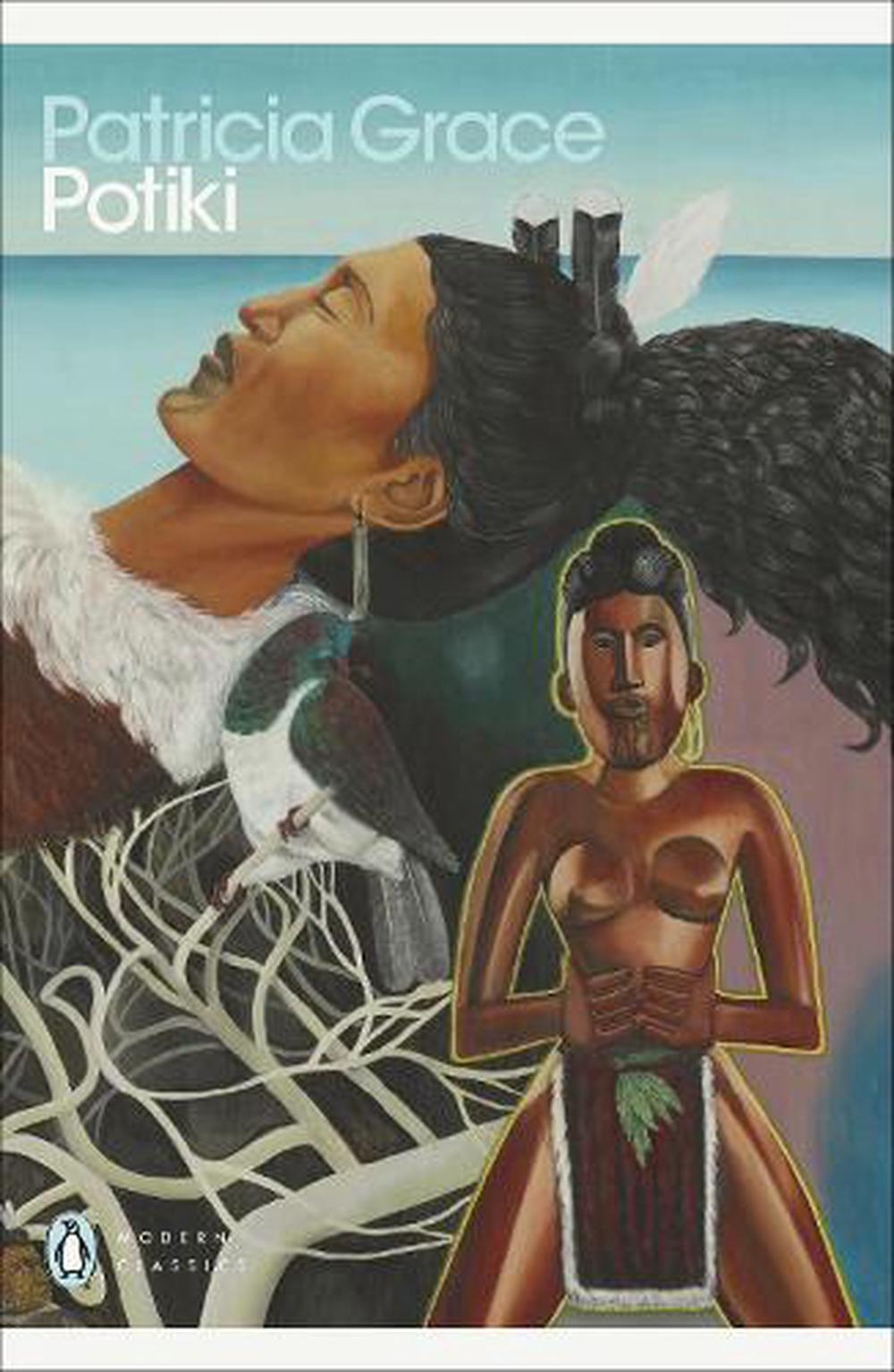
Potiki – Patricia Grace
READ FOR BOOKCLUB
Chosen by Suzy
Potiki tells the story of land developers who have their eye on coastal Māori land for commercial development with no understanding of the community’s needs or of their strong connection to the land.
Grace (Ngāti Toa, Ngāti Raukawa, Te Āti Awa) uses a multi-narrator style detailing the growing concerns of Māori and their attempts to quietly refuse the developers. Several sets of eyes offer different perspectives, from a jobless man who trusts in the land to provide all he needs, and his spiritually connected and disabled son, but mainly via his wife Roimata who documents events in a calm and reasoned manner.
This family is just one part of the loving and supportive community that is the crux of the book. Whatever their skills or status, strengths or weaknesses, no one in this extended whanau is insignificant; everyone is valued.
The book’s power in relating myths of generations past to modern political realities still resonants today. Yet when released in the 1980s the book was considered controversial, in part because of its unashamed and untranslated use of Te Reo.
Potiki won the NZ Book Awards prize in 1987, the same year Te Reo Māori became an official language of New Zealand.
We have known what it is to have had a gift, and have not ever questioned from where the gift came, only sometimes wondered. The gift has not been taken away because gifts are legacies, that once given cannot be taken away. They may pass from hand to hand, but once held they are always yours. The gift we were given is with us still.
❝ Potiki was a beautifully written novel and while it had a gentle rhythm that really pulled me in, there were acts of extreme violence amongst the depictions of family unity and community togetherness. It was a very grounding read and somewhat of a balm amongst the pre-Christmas busyness. – Suzy.
❝ Our painful racist history is a theme in Potiki but it’s the strength, resilience and aroha of the whanau that is heart warming and inspiring in this story of a seaside community and their strong connection to their land and determination to keep it. I was reminded once again about the importance of land to Māori. The spiritual aspect was interesting with Toko being a sort of prophet for the group. Patricia Grace has a way of making you feel like you are there in the garden, by the sea and in the wharenui which provides a nice bit of escapism when you can transport yourself to another place. Hard to believe it was so controversial when it was released as it seems to tell an important story related to common events of the time. – Jo
❝ Potiki is an attractive book to read because of its power of connection, to whanau and friends, to the spiritual world but in particular to the whenua. It’s a very New Zealand book in terms of its relationships and calm considerations to hierarchy and power. Rather than have a focus on appointing blame, Grace instead gives affected parties a voice and encourages the reader to determine their own position on a topic that has and will continue to make headlines, for connection with and ownership of land is a powerful force. Potiki is a timeless tale and should have been required reading in secondary schools from the time it was written, as far as I’m concerned. – Rachel
—–
Published 1988
Penguin Books
192 pages
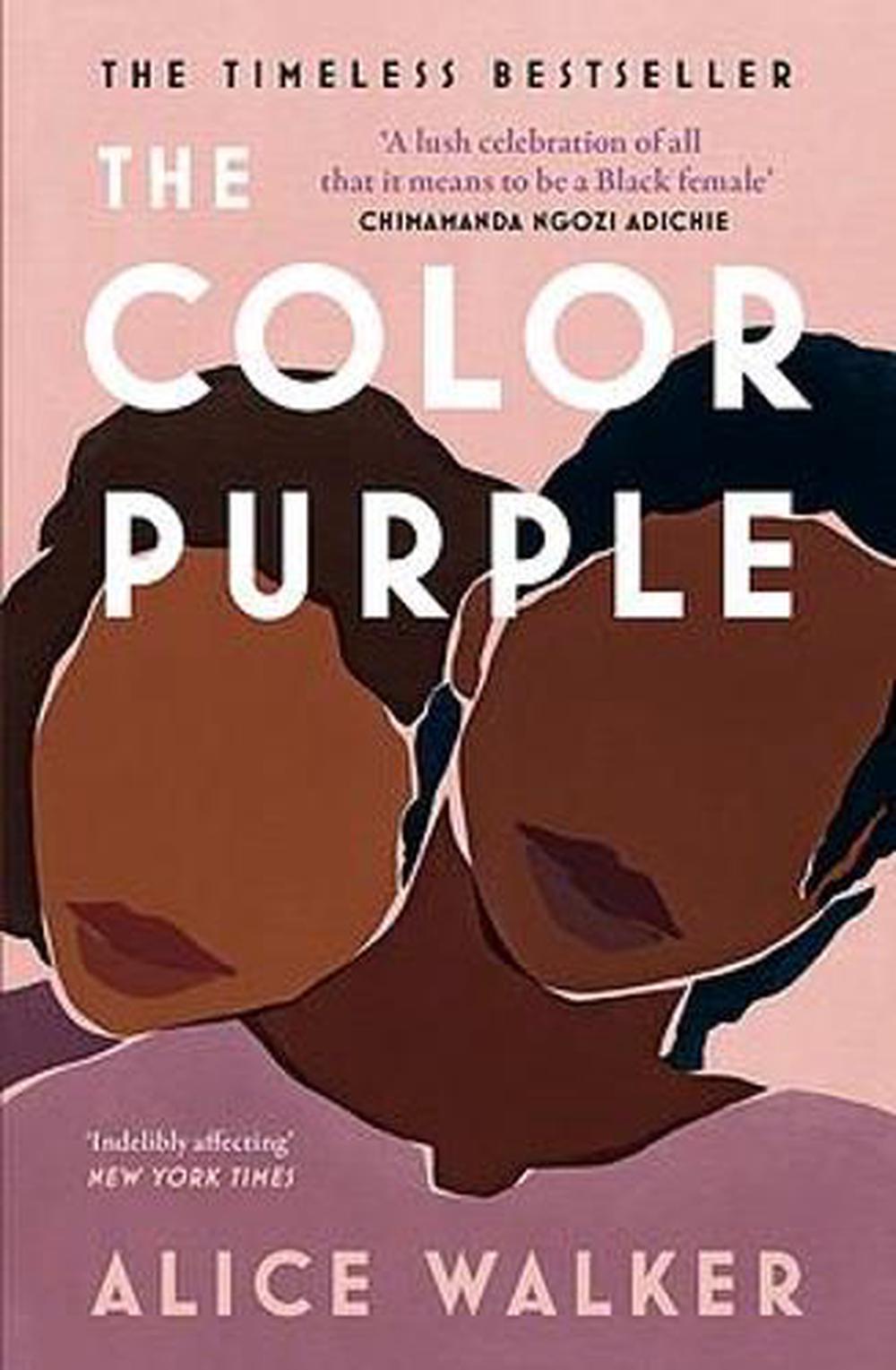
The Color Purple – Alice Walker
READ FOR BOOKCLUB
Chosen by Jo
The lives of two African-American sisters growing up in rural Georgia in the early to mid 20th Century are detailed in The Color Purple. Celie is raped by her stepfather and bears two children to him who are sent away. Celie writes letters to God outlining her fate and questioning the injustices in her life.
Nellie, with Celie’s help, manages to flee to Africa with a missionary group, however their father hides her letters to Celie. Once discovered they are found to detail her African experiences, discovering her family’s connections to the past.
There is a cast of other characters in the sisters’ lives whose fates showcase the brutality and degradation they experience at the hands of the men.
During the course of the novel Celie manages to free herself from her husband’s control. Supported by her female friends Celie eventually finds the empowerment to push back and to forge her own life, and as such gains some respect from the men who treated her so poorly.
Thematically the book details the sexism and prejudice that was common at that time, especially for people like Celie being both a woman and a person of colour. However transformation is also a key message. The Color Purple won the Pulitzer Prize for Fiction and the National Book Award for Fiction in 1983.
All my life I had to fight. I had to fight my daddy. I had to fight my brothers. I had to fight my cousins and my uncles. A girl child ain’t safe in a family of men. But I never thought I’d have to fight in my own house. She let out her breath. I loves Harpo, she say. God knows I do. But I’ll kill him dead before I let him beat me.
❝ I was reluctant to read this book as the blurb made it sound as if it would be incredibly traumatic. It does contain disturbing themes but on the whole is an uplifting story of female support and friendship. It is formatted as letters, and I found myself engrossed in Celie’s side of the tale so much so that whenever I was reading Nettie’s letters I just wanted to get back to Celie. The characters grew and changed for the better as the pages went by and it was satisfying when Celie rose up and took control over her own life and finally spoke the truth. I loved this book. – Jo
❝ I have to admit I was apprehensive to read The Color Purple as it has been portrayed as a violent and sad novel. Yes it is a heart-wrenching portrayal of African American woman in the 1930s . But it is also an inspiring journey of the protagonist Celie from the abuse she endured to self-discovery and independence. I found it a powerful story that has a rich, dynamic cast. Walker suffered criticism for her portrayal of African American men – it was a brave novel to write and one that was important for its honesty. It studies humanity and suffering but has a powerful message of redemption and hope. A must read! – Jodie
❝ This novel was made up of many truly awful moments, but was somehow able to maintain a thread of hope among the grim reality of living as a black woman in America in the early-mid 1900s. I enjoyed so much about The Color Purple, including the matter-of-fact way Celie’s same-sex relationship with Shug was conveyed, her wavering connection to religion, and how several characters were able to find a sense of peace despite their challenging situations. I haven’t seen the movie but after hearing a bit about it from Jo I will happily just stick with this amazing book. – Suzy
❝ I started The Color Purple decades okay but the grim content on the opening page made me put it down and I was apprehensive to pick it up again. However, anyone who feels this way should know the book is actually full of hope and redemption and taking back control of one’s life. Yes the female characters suffer but they also rise up, and it is quite an empowering read without being over the top and moralistic. It is written as Southern folk speak and this, as well as the directness and honesty of the narrative brings the settings and characters to life more than many books I’ve read. I’m so pleased I’ve read it now and I would recommend it widely. – Rachel
——–
Published 1982
Harcourt Brace Jovanovich
304 pages
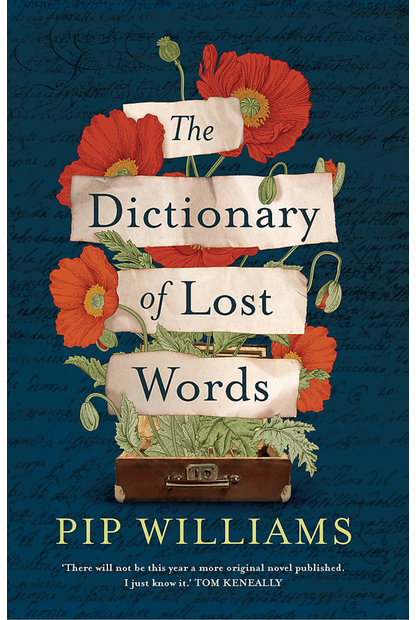
The Dictionary of Lost Words – Pip Williams
READ FOR BOOKCLUB
Chosen by Jodie
❝ Esme Nicholl is the daughter of a lexiographer, raised in the Scriptorium where the first dictionary is collated. She hides beneath the table and collects slips of paper containing words that are lost or deemed unsuitable. As she matures she realises, from these abandoned words, that a woman’s point of view is missing from the dictionary. She goes on a journey to catalogue words commonly used by women.
This is a work of historical fiction which is partly based on fact (the creation of the dictionary, the Suffragette movement, WWI). However Pip Williams has chosen, via the fictional content and the lost words, to honour those who have been under-appreciated or excluded by society over the years.
The novel’s premise is that word matter, and it questions whose words are more important than others and who gets to decide which words we are exposed to. Words have the power to control, but also to provide freedom and both are indicated in this novel.
You are not the arbiter of knowledge, sir. It is not for you to judge the importance of these words, simply allow others to do so.
❝ I found it fascinating how laboursome and time consuming the process of constructing the dictionary was. The realisation that a lot of words and their meanings primarily came from a male perspective was something I hadn’t considered before. The author did a great job at highlighting the lack of women’s contribution without undermining the male role.
In addition to themes of loss, feminism and friendship, I enjoyed the influences of the women’s suffrage movement and WWI on the storyline. The novel was based in part on real events and for me this made it all the more compelling. It’s an easy to read book, not full of excitement but once I got into the flow I enjoyed being educated on a topic I knew nothing about. – Jodie
❝ I’d never thought about how the dictionary was made or read a lot about suffragettes in the UK so this was an educational book for me which enriched my historical knowledge. The story was slow in places but not boring and I liked how the main character was somewhat realistic in her acceptance of her life and her reluctance to join in enthusiastically with the suffragettes fight. It seemed authentic. I would recommend this book which is surprisingly rare for our books.– Jo
❝ I really enjoyed reading about the creation of the Oxford Dictionary from a female perspective. Everything the main character, Esme, was striving to achieve was so valid and her pushback against both class and gender norms was so satisfying I could’ve cheered for her at times.
I would love to see a wave of fiction told from a non-male perspective to round out and give depth to historical events that have previously only been written with a pale, stale & male lens. – Suzy
❝ I have read Surgeon of Crowthorne so already had an understanding of how the Oxford English Dictionary was put together. However that book was very factual and this version was much more approachable and full of personality. Its focus on the dictionary from a woman’s point of view and inclusion of the suffragette movement really bound the fictional and the true fact.
Esme was a quiet hero who doesn’t have every win afforded her by the author, therefore making the storyline more realistic. The book isn’t full of twists and turns and actually starts of quite slowly, but I persevered and came to enjoy the slow burn. By the end I was fully invested in Esme’s life and outcomes. – Rachel
—–
Published 2020
Affirm Press
384 pages

We're
currently
reading
 The Free-Range Bookclub
Recent Comments