The Free-Range Bookclub
Bookclubbers without boundaries in Nelson, New Zealand
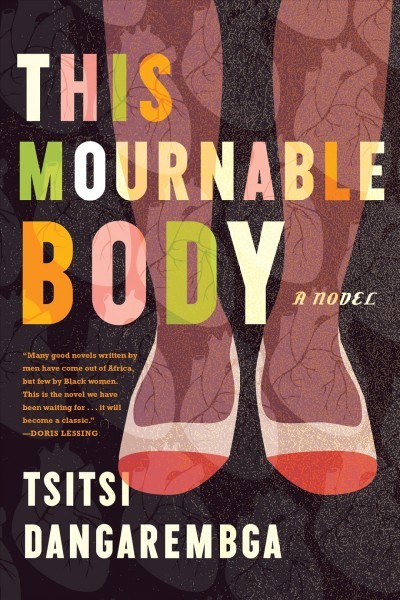
This Mournable Body – Tsitsi Dangarembga
 READ FOR BOOKERTHON
This Mournable Body is the story of Tambudzai, a disillusioned native woman who has lived through the long and devastating guerrilla war between the white Rhodesian army and native black nationalists. Now in the 1990s, the nation has gained independence and is trying to rebuild itself. Tambudzai (Tambu) too is trying to re-establish her life in post-colonial Zimbabwe.
✚ “Finding out about halfway through This Mournable Body that it was the third book in a trilogy was useful to know as there was certainly the feeling that the Zimbabwean war that was often referred to was the ‘real’ story, whereas we were learning more about its aftermath and the impact on the character Tambudzai and her family. I’m thinking maybe the first two books dealt with the war and its politics more comprehensively?”
“The book wasn’t without violence and there was a constant underlying feeling of menace that hovered on the edges of the story and threatened to spill over in many ways. Tambudzai spent most of the time on edge and was constantly negotiating with herself whether she would deal with issues in flight or fight mode.
“I genuinely felt for Tambudzai and her experiences and its clear this book can standalone with no need to read the preceding two books, however I think I would have got more out of it had I had a bit more background.” – Suzy
Your umbilical cord is buried on the homestead; in the empty space that widens within at every step, you feel it tugging.
✚ “It is clear in this book that the main character, Tambu, is in the midst of a personal or post-traumatic crisis. She jumps from one experience to the other, making observations of her new fragmented environment and attempting to find purpose, but hurting people and herself along the way.
“The book is jarring but hopeful and Tambu is an emotive parallel for a country with a new and promising future. Zimbabwe, and Tambu, must look for opportunities in its new-look reality and acknowledge that the past cannot be erased, but must be respected as something that will continue to shape them.
“Told in second person, as though Tambu is trying to distance herself from her past, ensures we, the readers, are intimately invested. The episodic wanderings of Tambu can seem a little disruptive to the flow of the plot but if you remember her experiences are also notations of a post-colonial era’s history, the plot is more meaningful.” – Rachel
—–
Published 2018
Graywolf
284 pages

We're
currently
reading
 The Free-Range Bookclub
Recent Comments