The Free-Range Bookclub
Bookclubbers without boundaries in Nelson, New Zealand
Cocoon – Zhang Yueran

READ FOR BOOKCLUB
Chosen by Jo
Li Jiaqi and Cheng Gong recall their childhood friendship under Chinese communist rule, living with extended family and in wonderment about what really happened that rainy night in 1967 in the abandoned water tower where Gong’s grandfather was attacked. A story of family, mystery and intergenerational guilt, of China’s recent history and politics creeping in and taking over people’s lives.
Grandpa once told me he just went with the flow; he studied hard at school, and did his best as a doctor. He joined the army at the right time, and then joined the Party at the same time. He made sure to put his feet in the right place. The times were changing so quickly, one false step and you’d find yourself no longer on solid ground, plummeting into the abyss. Going with the flow was actually very difficult. Like a signal operator patiently adjusting the frequency, one needed sensitive ears and a still heart to correctly tune into the era.
● This book was filled with heartbreaking themes – generational trauma and grief, inherited guilt, child abandonment with a little bit of domestic violence thrown in there, too. Interestingly, it wasn’t a miserable read but instead intriguing and powerful. I was gripped from the start and the understated bombs that went off through the book really shocked me. The vegetative grandfather added another element of interest and I’m still thinking about him being both alive and dead at the same time. The characters were complex and well developed. I really enjoyed this and would recommend it. – Jo
● Cocoon leads the reader assuredly through two families’ intertwining lives. It feels gentle at times, as well as grounded and deliberate, however there were also many moments that I know will sit with me uncomfortably for some time. The more I reflect on this novel the more I realise how clever and special it was. – Suzy
● This beautifully crafted novel reveals how the two protagonists Li Jiaqi and Cheng Gong’s history and fate were shaped by the Cultural revolution and the generations before them. I really enjoyed the complexity of the plot and characters. Their alternating stories weave together to make for an intriguing and complex plot. There is a lot of bleakness and sorrow and not a lot of true happiness, but I never felt dragged down by this. Zhang Yurean had a way of portraying an underling hopefulness. I really enjoyed this and would recommend it to anyone. – Jodie
● Despite themes of guilt, tragedy, shame and loss, Cocoon is a page-turner with a well-constructed cast. The main plot line focuses on Cheng Gong trying to discover who injured his grandfather during the revolution leaving him in a vegetative state. It was impressive how, even in his barely alive state, Zhang managed to make the grandfather such a personality in the story. But there is so much more to the book than this plot. Characters relay their own histories and struggles as well as weave in and out of the main plot line. Just when you think something is covered off, one character appears again providing a new angle to the intrigue. I loved all the characters, was invested in their plights and enjoyed the Chinese history lesson adeptly built in. This was a fantastic read and I think most readers would enjoy it. – Rachel
Published in Chinese 2016
Translated by Jeremy Tiang in 2022
World Editions Ltd
323 pages
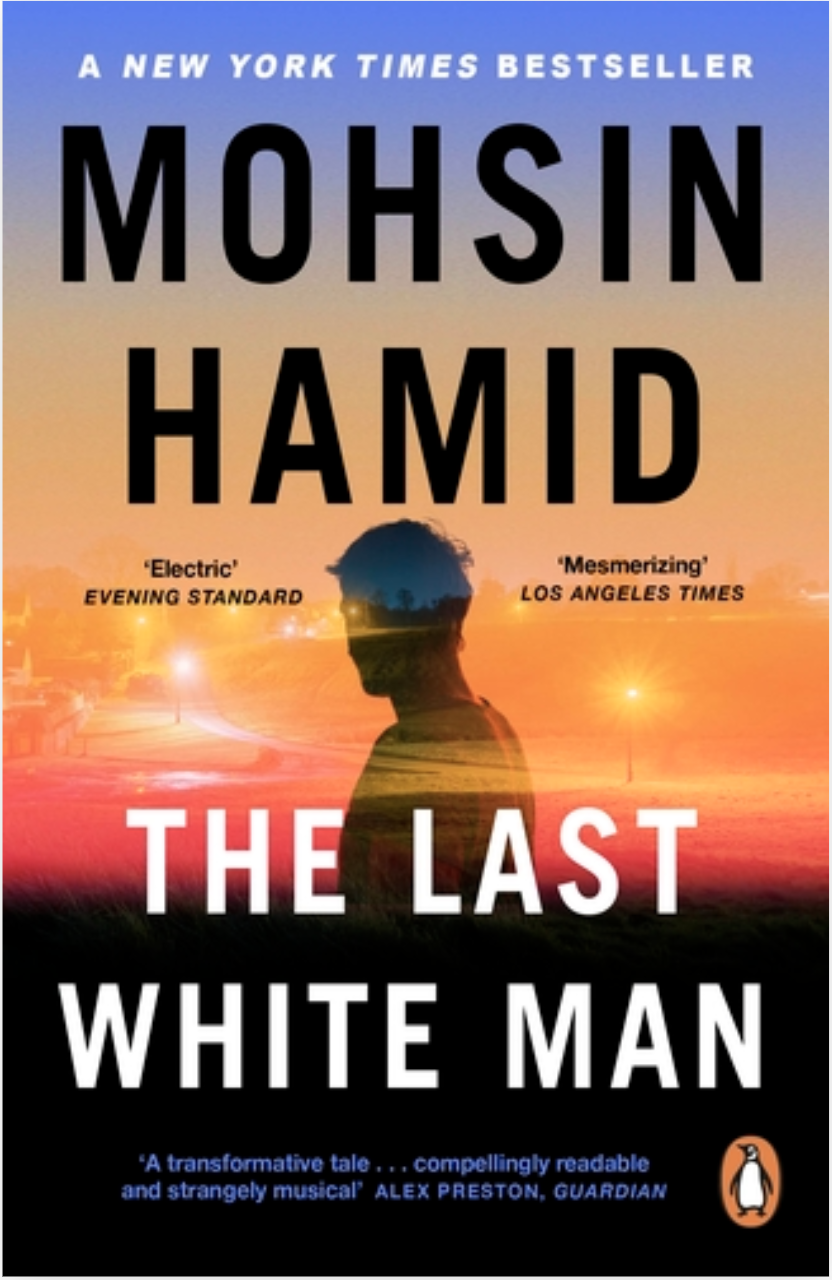
The Last White Man – Mohsin Hamid
READ FOR BOOKCLUB
Chosen by Suzy
Anders, a white man living in a fictional town, wakes one morning to discover his skin has turned brown. Confused and ashamed, he experiences change in the attitudes of the people in his family and community. Yet he is only the first to transition. A magical realist novel about racism, isolation, loss and new beginnings.
… and the more he looked, the less white he seemed, as though looking for his whiteness was the opposite of whiteness, was driving it further away, making him seem desperate …
● I enjoyed the premise of The Last White Man. Mohsin Hamid has written in a way that feels like what’s happening to Anders is actually pretty plausible rather than absolutely impossible. The rolling sentences at times lead the reader relentlessly forward, however there was also something about the writing that made me feel like I was being kept at arm’s length. Not my favourite novel of Hamid’s but still an enjoyable read. – Suzy
● The Last White Man is a reminder of how bias continues to reign in society and what its flow on effects are. There is the obvious racism theme, but the book also reminded me of the pandemic, where people were terrified about what afflicted others and feared any social contact. There is a steady pace to the book and long, propulsive sentences, but it is not climatic. I was not disappointed by this as I felt the styling was reminiscent of The Metamorphosis, which obviously provided some inspiration for this book. – Rachel
● The first line of the book had me captivated: ‘One day Anders, a white man, woke up to find he had turned a deep and undeniable brown’. Unfortunately, as the novel progressed it didn’t really pack much punch and I’m not sure I got the key take away from the book. I feel Hamid had great intent but it was lacking in depth for me. In saying that it was certainly thought provoking and puts to the reader questions about the acceptable treatment of one other. – Jodie
● The Last White Man was a strangely subdued story with no real peak – I kept expecting one but it never came. This perhaps gave me an overall sense of being underwhelmed. In saying that I did enjoy aspects of the book, especially its themes around racism. The long sentences had me rushing along at a frantic pace and I thought this was a clever way of creating tension. – Jo
Published 2022
Riverhead Books
192 pages
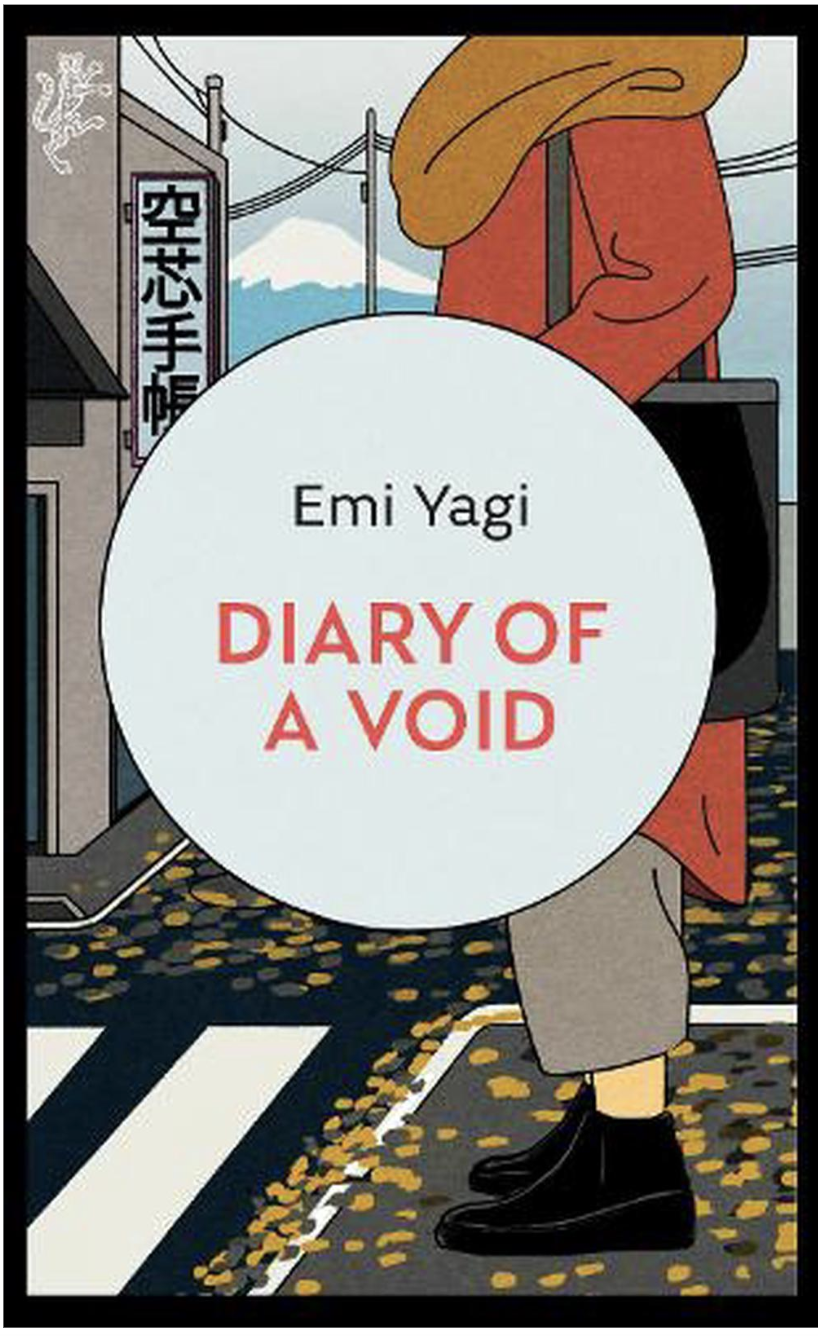
Diary Of A Void – Emi Yagi
READ FOR BOOKCLUB
Chosen by Jodie
A translated work in which a Japanese office worker fakes a pregnancy to avoid menial cleaning and tidying jobs that her male counterparts are never burdened with. However, the hoax becomes all-absorbing, and the boundary between her lie and her life begins to dissolve. A novel which examines gender roles and societal traditions in Japan.
Once I started wearing dresses to work I was now unmistakably pregnant. When I walked around the office, arms full of paper core samples, coworkers from other sections would come up and offer to carry them. When I was waiting for the elevator, they’d stay back and let me get in first. I even had an old woman, a complete stranger, offer a prediction. The baby, she said, would be arriving “next week”. “Um, the due date is May,” I said to her.
● Emi Yagi’s attempt to write a quietly political novel about the inequalities women face in Japanese society was funny and engaging. The protagonist’s impulsive decision to lie about a pregnancy to get out of tasks at work grows into a personal rebellion against society. Yes there is a new life growing inside of Shibata, her own life, of which she has more control over during her fake pregnancy. I loved this novel and am pleased Yagi chose to highlight the injustices Japanese women face every day. – Jodie
● Diary of a Void initially felt quite playful and fun as Shibata engaged in a lie that meant she was no longer responsible for so many of the menial tasks that came with being the only female at her workplace. While her colleagues, new friends and the reader were pulled deeper into her deception I felt my smile become a bit more forced as the good humour at the start of the novel gave way to some uncomfortable observations about women’s role in Japanese society. – Suzy
● Diary of a Void started off as a bit of a lark. Ms. Shibata has a dry, cutting sense of humour and I laughed at her inner thoughts and the lengths she went to to fake a pregnancy. But once the author has captured you with humour she throws a few contemplative curve balls to ponder. There’s moral questionability, objectification and judgement of women, and the consequences of loneliness. This transition from lark to societal and political is so well done, as is the soft genre shift from realist to surrealist to a magical realist. I finished the book in a different mindset as to how I started it. I loved the journey and every part of the story, including the shocking and appropriate ending. – Rachel
● Shibata, the main character in Diary of a Void, is funny and sweet and unfortunately desperate to relieve the awful gender expectations of her demanding work role. The crazy idea to pretend to be pregnant slowly seems more and more real as time goes on. I questioned whether she really was pregnant which, as it turns out, was one of the author’s goals. This book has a brilliant ending to a social challenge of Japanese societal expectations of women. – Jo
Published in Japanese 2020
Translated into English by David Boyd & Lucy North 2022
Penguin Random House
213 pages
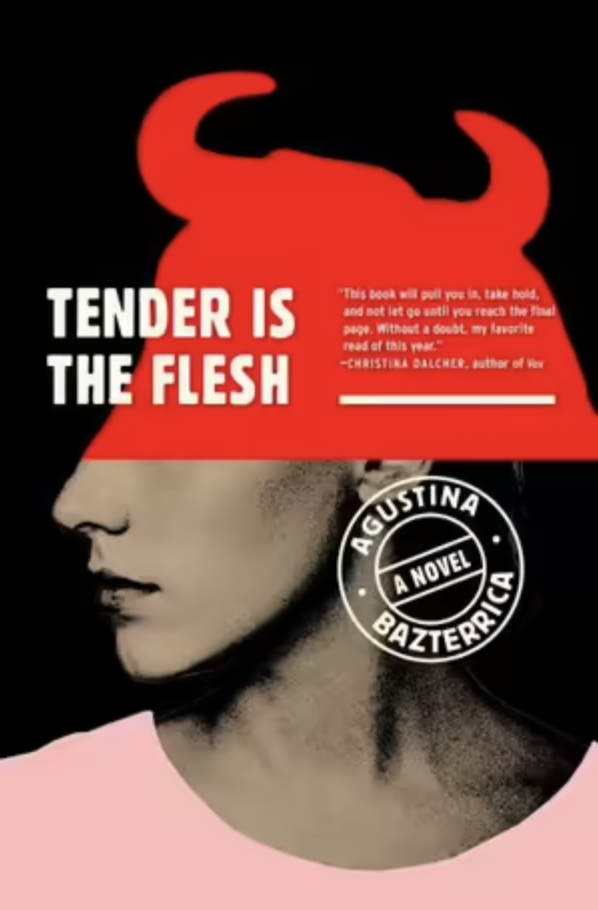
Tender Is The Flesh – Agustina Bazterrica
READ FOR BOOKCLUB
Chosen by Rachel
Dystopian fiction about a world where humans are farmed for meat after animals become diseased and unfit for consumption. Told through the eyes of Marcos, a slaughterhouse official, who is disgusted at what society has become but remains stuck in the cogs of ultimate control. A metaphorical look at how groups in society “consume” one another through dehumanisation.
Don’t be an idiot. Can’t you see they’re controlling us? If we eat each other, they control overpopulation, poverty, crime. Do you want me to keep going? I mean, it’s obvious.
● Agustina Bazterrica has written about her disgust at consumerism and capitalism and how groups in society are willing to objectify and depersonalise each other for power and control. The message is portrayed in the most graphic of ways with detailed passages of human beings being treated as “meat”: on ropes in the barn, slaughtered at the abattoir, hunted for sport, sacrificed for religious reasons, experimented on in laboratories, eaten alive, stolen from mortuaries. The content in this book is the most disturbing I have come across; sometimes it was distressing to even look at the words. But beneath the horror is a well constructed and poignant story making this one of the best and one of the worst books I’ve read. I enjoyed the complexity of Marcos, someone who can reveal the horrors of “transition” to us in honest accounts but who is still willing to manipulate the system for his own benefit. And I loved the ending – horrifically perfect. – Rachel
● I found this novel very disturbing, and even more so knowing that every horrific treatment being meted out on the fictional humans (or ‘head’) is regularly administered to animals in real life. Even though promoting animal rights wasn’t the author’s primary motivation, I deeply appreciated a book highlighting the realities of slaughterhouses and scientific testing on live subjects. Was this an incredible book? Yes. Would I recommend it to anyone other than my worst enemy? No. – Suzy
● I have never read such a disturbing, disgusting, relentlessly horrifying but truly fascinating book as this one. I dreaded picking it up each night but once I was reading I couldn’t put it down! Cannibalism is not a new literary topic so this in itself wasn’t a particularly hard thing to stomach. But what was difficult to read, was the farming and commercialism of humans as meat for consumption and the horrifying way this was executed. If you do decide to read this book, be prepared to have your mind blown! – Jodie
● I’ve never read anything as horrific but fascinating as Tender Is The Flesh. I would think I’d reached the pinnacle of horror as each chapter finished, but the horrors just kept coming. Eating people is not the worst part either, it’s only the beginning. It is all the awful infrastructure around it and details of all the hideous things you can, apparently, do with a human that makes it truly disturbing. Yet, I couldn’t stop reading – this book is a real page turner. I’m still thinking about it, especially how people can live in a society lacking in basic humanity. – Jo
Published in Spanish 2017
Translated into English by Sarah Moses 2020
Scribner
209 pages
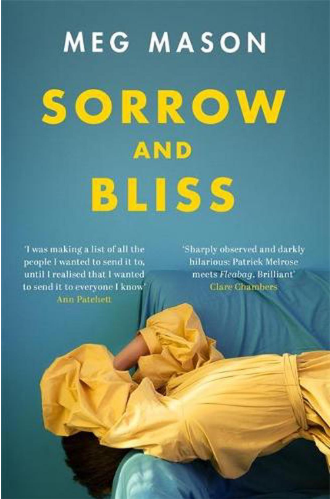
Sorrow And Bliss – Meg Mason
READ FOR BOOKCLUB
Chosen by Jo
Martha has an undiagnosed mental health issue, a loving husband who says she is fine and a family who fall outside of the norms. In this book Martha examines her upbringing and her failing marriage through the lens of past and current sorrows. But it’s clear there is also much humour, joy and love injected into her life by her relationships with others and her unique take on the world.
Two things, that when you put them together in a poem, make the reader feel whatever emotion you want them to so you don’t have to expressly name it. As in, if you write slag heap it saves you the job of typing morbid existential despair.
● Reading Sorrow & Bliss made me feel like I felt like a member of this fictional family, such was the extent I felt I knew and loved all of the characters. Since finishing the book I have thought about Martha a lot, wishing I could spend more time with her. Sometimes she was awful and impossible but I couldn’t help but like her anyway – this is when I know a writer is exceptionally talented. The story was engrossing, full of humour and emotion and I’m sorry I can’t read it again for the first time. – Jo
● Sorrow & Bliss is like a modern, funny version of Sylvia Plath’s The Bell Jar. The study of mental illness from both a sorrowful point of a view and a dark humour angle makes the main character’s journey so compelling. Meg Mason has added to the joy by creating irresistible characters each with their own idiosyncrasies. Reading the book felt like being a part of this unique family. I especially loved the sister Ingrid and Martha’s relationship with her. But also the love story of Martha and her husband Patrick which is indepthly explored and raises many ideas and situations to ponder. – Rachel
● I couldn’t put this book down! I completely fell in love with all the characters who were rich in personality. Martha and her undiagnosed mental illness made for a thrilling protagonist. I never knew quite what to expect as a reader, being tossed between laughing out loud and crying – though I always felt like I was part of Martha’s rollercoaster of a life. The subject matter and Martha’s struggles were very sad but this was balanced with funny one-liners and Martha’s hilarious observations of the world. – Jodie
Martha, why did you label every single box Miscellaneous?
● Meg Mason did such a faultless job at conveying such complex situations and emotions that at times I felt nearly as broken as the character of Martha while reading Sorrow & Bliss. I was desperately grateful for the injections of humour which were somehow done in a way that didn’t belittle or degrade situations. The relief that these moments brought was palpable. I am at a loss to know how this book was deservedly shortlisted for the International Women’s Prize, but only longlisted for the New Zealand Book Awards. – Suzy
Published 2021
4th Estate
352 pages
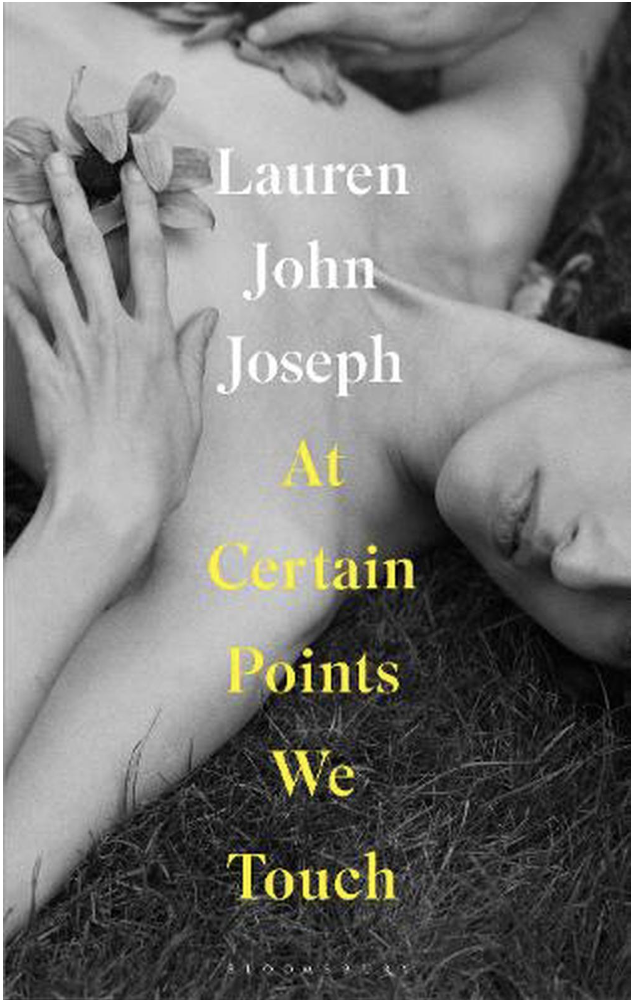
At Certain Points We Touch – Lauren John Joseph
READ FOR BOOCKLUB
Chosen by Jodie
JJ, a representation of the author, writes an ode to her past lover Thomas John who has tragically passed away. Meandering through the New York, San Francisco and London gay scenes, JJ pursues sex and artistic freedom as she examines her loss. Queer fiction where characters do not have to justify their identities like so many queer characters of the past.
It is now ten years since we met, six years since we last spoke, four years since your death and I’m writing you this from Mexico City, under grave obligation. It is not a letter, since I know you cannot reply; maybe it’s another monologue, certainly it does not require a second voice; let’s call it plainsong then. This is the chant recalling your life, it is fiction, it is biography, it is a transfiguration.
● If you want to get out of the bubble you live in for a moment, this could be your next read. Be prepared to be thrown into a world of trans femininity, toxic relationships, graphic sex scenes, night life, grief, betrayal, poverty oh and did I mention sex scenes? This cleverly crafted novel was a great insight to what Millennial queer life is like. The author draws on personal experiences to shape the novel and as a result they have changed the face of traditional queer fiction. This novel may not be for everyone but I feel it’s worth breaking out and trying something fresh and new. – Jodie
● This book was an eye opener, for sure. The graphic sex scenes and debaucherous lifestyle of the characters made me feel like a prudish old lady! It was refreshingly devoid of gender explanations, but the homophobia peppered throughout was pretty heartbreaking. It was hard to know exactly why our protagonist loved Thomas James so much as often their relationship was not nice. But he did accept her for who she was, and had a strong desire for her. I can’t imagine recommending this book to anyone but I have to say I enjoyed reading something new to me and somewhat challenging. It made me think, and I always appreciate thought-provoking reads. – Jo
● Jodie read us this reviewer’s quote which she had found online. “A debut that lies in the gutter while looking up at the stars, with moving, if sometimes overindulgent, results.” This is an apt observation. Yes the narrative and characterisation is sometimes poignant but also sometimes overwritten. And while it does have some unpleasant, real life content, it creates a standard for queer characters and diverse identities in fiction. I think we will look back in years to come and see it has been influential. – Rachel
● This story about the loss of a lover and the looking back on encounters and conversations leading up to that death held a lot of promise. While the writing was poignant and at times moving I found the narrator’s stagnation and pontification at times hard to get through. I felt like I was watching the characters live their lives from a distance, whereas other novels seem to somehow place the reader right amongst the action. –Suzy
Published 2022
Bloomsbury
384 pages
2023 Women’s Prize
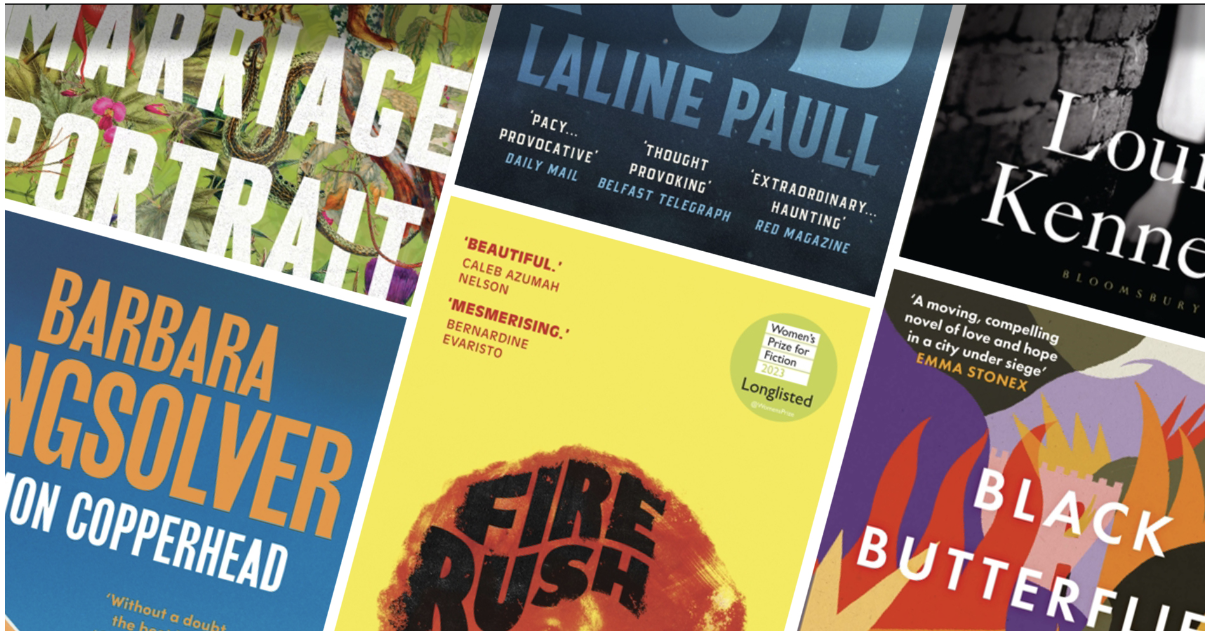
This is our first year at reading the Women’s Prize shortlist in its entirety and blogging about it, and it’s fair to say we are mightily impressed. As a collective these represent story telling at their best: engaging plot, strong characters, and a clear narrative. There is no attempt at grandiosity, where examples of cleverness are utilised to the detriment of readability.
We wondered if this a hallmark of female writers right now … Whatever the case, characters were treated with care, love, attention to detail and were easily likeable, even when flawed. The female experience was carefully investigated. Even the book without human characters had a female animal at its heart, and the book with a male protagonist gave voice and substance to its female support cast, too.
Drawing from the past to analyse our present and future was a commonality. True accounts, true people and significant moments in history were examined. These novels not only enhance historical records, they educate us, and ask what lessons we can learn and take forward with us in a generation of change and acceptance.
Fire Rush examines the migrant experience, in particular that of Jamaicans in 1980s London. The prejudice and ability of police to stop and search without cause was a key part of their trauma in the migrant experience. The police brutality in these pages is unfortunately still far too common.
Trespasses highlights the tragedies created by The Troubles in 1970s Ireland, particularly on families and young people but also on those from opposing religions seeking comfort and love. It highlights the extent to which prejudice can break and damage people and how this still occurs in modern times.
Black Butterflies is set in 1992 Sarajevo and follows one woman’s attempts to continue living as normal as possible in a city that was previously so multi-cultured and accepting but ended up being bombed by its own people. She reminds us how easily civil conflict can occur amongst even the most peaceful of people.
The Marriage Portrait examines the lives of true people, the Duke and Duchess of Ferrara, Italy in 1560. The author highlights the patriarchal systems of the past, gives a voice to the women who did not have one during their own lives and asks us to remember what injustices some women are subjected to today.
Demon Copperhead is a retelling of Dicken’s David Copperfield and studies institutional poverty. It is set in the Appalachias, a place that is often ridiculed and looked down upon. Kingsolver gives many people a voice and asks what has changed for those who are struggling since Dickens wrote Copperfield.
Pod is climate fiction highlighting how we are damaging the oceans and the affect that is having on both wildlife and humanity. She is certainly calling for change so that we can all have a future.
Nearly all of the authors lived through the experiences they wrote about: Laline Paull lives with environment damage every day, Barabara Kingsolver’s home is the Appalachias, Prisciallia Morris’s second home was Sarajevo and her grandparents were caught up in the Siege, Louise Kennedy lived through The Troubles, and Jacqueline Crooks lived through the Jamaican disapora. Though Maggie O’Farrell does not have a personal connection to the court of Ferrara, she investigated and researched and visited the locations where Lucrezia resided, was entombed and immortalised in paint, until, she says, she loved her like one of her own children.
Like the portrait in The Marriage Portrait art offers an escape and a sense of control, especially for people living in a time of conflict or fear, when all other eventualities and choices around them seem so out of control.
Art and self-expression feature strongly in every shortlisted book. Painting, drawing, reading, music and the study of language symbolise a gateway to escape, individuality, freedom and redemption.
● I felt so invigorated by the books on this shortlist – they were all phenomenally well written and I felt like I learned so much from each of them. A real win-win. As I read each book I thought yes, this is my favourite only for it to be overtaken by the next book.
I finished with Demon Copperhead, but that’s not the reason it was my favourite! I was so moved by this book, and I felt a level of absorption in the storytelling that reminded me of reading when I was in my teens and there was no distraction from social media, phones, multiple streaming services etc. Of course the subject matter was at times grim, but the reading of the story was absolutely joyful for me. I cared so deeply for the characters that I felt a sense of loss when I finished it.
I feel like Barbara Kingsolver is unmatched with her storytelling. She is my pick for the Women’s Prize winner, and I wonder whether (along with the Pulitzer) she will take out the trifecta with the Booker Prize later in the year. – Suzy
● The Women’s Prize shortlist was one of the best, if not the best, shortlist of any awards programme I have read. I LOVED this collection of books. I had some minor gripes along the way, but every book has stayed with me and improved over time as I have pondered them further. And I consider lasting impact a noteworthy trait.
So I have a four-way tie for first! Demon Copperhead, Black Butterflies, The Marriage Portrait and Fire Rush. Trespasses and Pod are very close behind. But I think Demon Copperhead will be the most timeless in years to come, so I’m backing Barbara Kingsolver for the win. But I do highly recommend all of these books to every avid reader. – Rachel
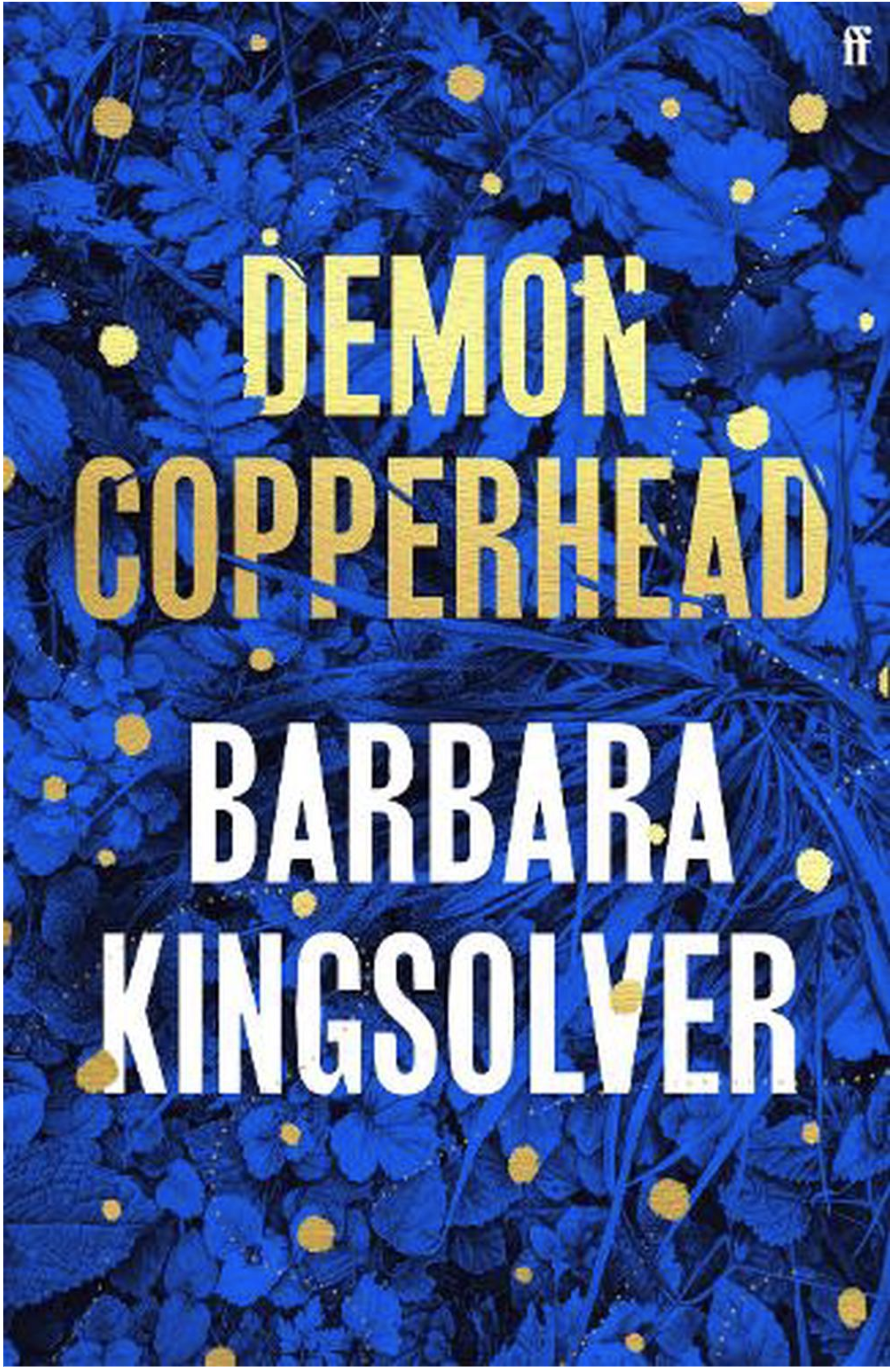
Demon Copperhead – Barbara Kingsolver
READ FOR WOMEN’S PRIZE
Demon Copperhead is a book about institutional poverty and is a modern retelling of Dickens’ David Copperfield. Set in the Appalachias it tells the story of a young boy caught up in the system, for whom life is a mountain to climb but who never loses his sense of humour and adventure.
● Damon Fields (known as Demon) grows up in a trailer with his drug addicted mother and ends up in the foster care system where he is neglected, used for child labour and always hungry. He is surrounded by an enthralling cast of people with great nicknames, like Maggot, Fast-Forward, U-Haul, Hammer and Baggy Eyes. It sounds like a grim premise and yes it does cover off tragedies like poverty, addiction and loneliness, but it does so with wit, dry humour and a page turning plot.
Demon is tuned into life and the consequences of human nature, and via the author makes many astute observations. It’s these poignant commentaries on life and poverty and survival that really highlight that Kingsolver is a master of her craft.
I found the first half of the book absolutely riveting, the language, the pace, the relevance and the characterisation is astounding, and Demon’s life experiences are varied and fascinating. There was a time in the second half that I thought became a bit repetitive but this is a minor gripe, and perhaps simply an indication of how uncomfortable the truth can be.
I read Demon Copperhead before the shortlist was announced and I have thought about it a lot since. It’s a book that highlights generational issues both in America and in our current times, and will no doubt be a sign-of-the-times classic just like David Copperfield is. – Rachel
I put my face to the window so nobody would see if I tore up. Was this me now, for life? Taking up space where people wished I wasn’t? Once upon a time I was something, and then I turned, like sour milk. The dead junkie’s kid. A rotten little piece of American pie that everybody wishes could just be, you know. Removed.
● I had such a deep concern for Demon I was almost obsessed with the outcome of his life’s story.
The setting of Southern Appalachia was written so devastatingly perfectly I felt like I was being guided along as some kind of worried entity observing Demon’s life unfolding and I’m not sure whether I have ever cared so much for a fictional character.
Barbara Kingsolver has so deftly showed us this community’s culture and the battles they are facing. We know of course that Demon is fictional, but I am sure there are lots and lots of other young people in this area with similar stories.
One of my new all-time favourite reads. – Suzy
Published 2022
Harper
546 pages
Black Butterflies – Priscilla Morris

READ FOR WOMEN’S PRIZE
A true account of life for citizens during the Seige of Sarajevo told via the main character Zora, a 55 year old artist and teacher. When tensions flare she sends her family to safety never thinking things will become what they do.
● I read this in one sitting and the encroachment of the war on the life of Zora was challenging to absorb. As I sat in my warm cozy home with an apple pie being cooked in the oven, I had a strong sense of gratitude, but also guilt, for the life I have.
The author convincingly showed the reader the almost gentle, incremental changes to life for Sarajevo residents, interspersed with more horrifying impactful events. It is hard at times when watching events on the television news to get a true sense of the life in a war zone as often it’s conveyed to us in a very broad way.
This novel very successfully showed us the life of just one individual and how she was affected. This helped me connect and understand this conflict in Sarajevo that I had previously been unable to do. – Suzy
‘These have been falling all over the city for days now, as far out as the airport and Ilidža. Do you know what people are calling them?’
‘No.’
‘Black butterflies,’ he says softly. He peers at the scorched page as if trying to read it, then carefully places it in his breast pocket. ‘Burnt fragments of poetry and art catching in people’s hair.’
● If you’d asked me about Sarajevo before last week I would have had to admit I knew nothing about the early 90s conflict. However, after reading Black Butterflies I feel informed and emotionally connected to the Siege of Sarajevo.
This book details one woman’s determination to stay in her home city, to go to work, to cook dinner, to paint, to chat with her neighbours despite bombs blowing off sides of her apartment block, dismembered body parts being snatched by starving dogs in the street, and young men with guns demanding to know if she is Serb, Muslim or Croat.
The story is compelling and effective, told from one person’s experience, which it turns out is based on true accounts of this time and place. At first, when Zora is trying to persuade squatters to leave her mother’s uninhabited apartment, I thought the prose was too basic, not layered and nuanced enough, but actually the style is gritty and softly poignant and that suits the brutal honesty of war. And besides, who has the capacity for pomp and fluff when they are trying to catch a pigeon to break days of starvation and dehydration.
I read the book quickly, and when I wasn’t reading it I was thinking about Zora and worrying about her. A book that many people would enjoy. Highly recommended. – Rachel
Published 2022
Duckworth Books
271 pages
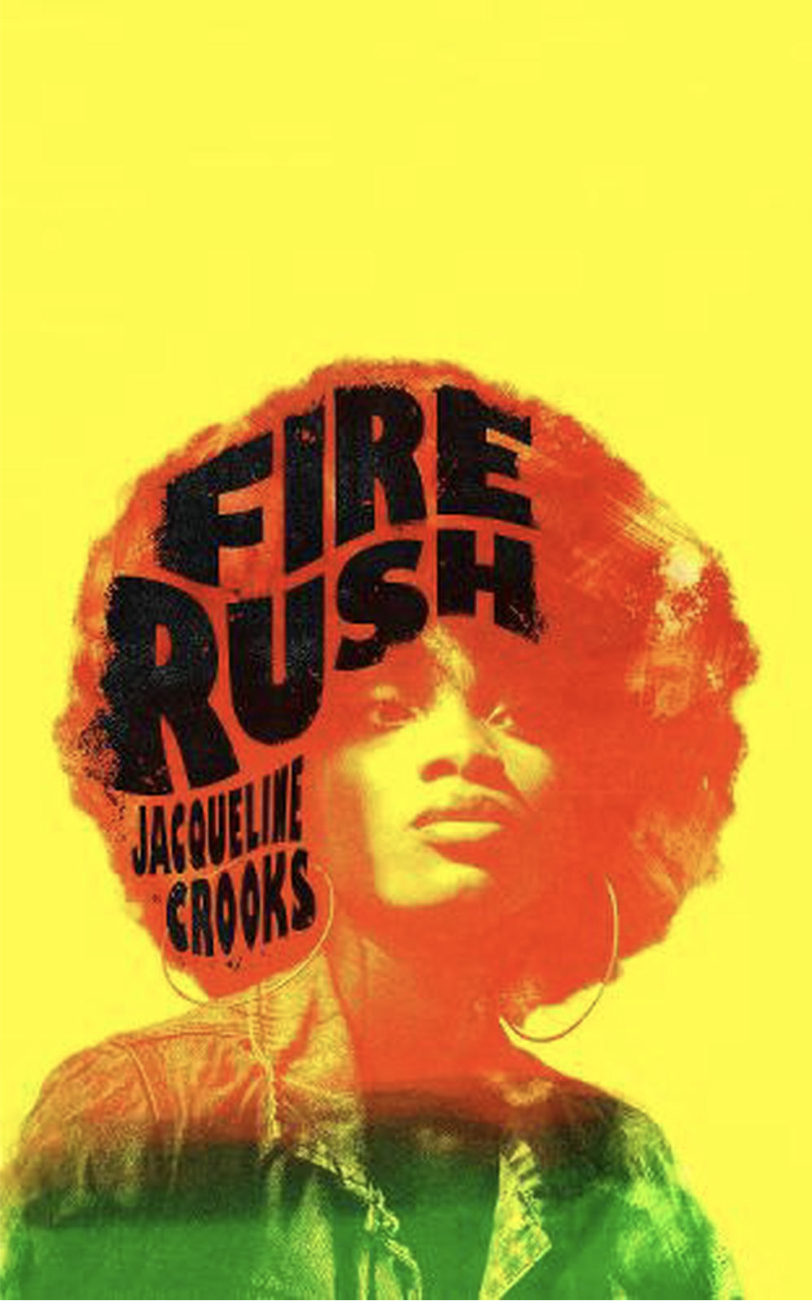
Fire Rush – Jacqueline Crooks
READ FOR WOMEN’S PRIZE
Yamaye is a young Jamaican woman living in 1980s London. She dances at an underground dub reggae club and suffers daily from her lack of familial ties. Like her friends she does her best to avoid the harassment of Babylon (the police) but sometimes there is no escaping their brutality.
● The strong linear plot of Fire Rush has a beautiful rhythm, like the music of the Crypt where the characters dance freely night after night. The language and the pacing is hypnotic and I felt like I more than reading this book, I was living it. I was invested in Yamaye’s life almost immediately and as each new character was introduced I connected with them also.
The narrative was truthful and redemptive and I appreciated that, as well as the conclusions that weren’t out of place. Fire Rush is haunting, rhythmic and addictive and I would highly recommend it. – Rachel
One o’clock in the morning. Hotfoot, all three of us. Stepping where we had no business. Tombstone Estate gyals – Caribbean, Irish. No one expects better. We ain’t IT. But we sure ain’t shit. All we need is a likkle bit of riddim. So we go inna it, deep, into the dance-hall Crypt.
● As well as a beautifully winding storyline and believable, fallible characters it was Jacqueline Crooks’ ability to bring us so completely into the various settings that was the standout quality for me. She did a phenomenal job of placing us right there with Yamaye and I felt either uplifted or almost claustrophobic depending on where she was.
I quickly settled in to dialogue of the 1980s Jamaican migrant community and this language also contributed greatly to the authenticity and events of the novel. I loved Yamaye and Fire Rush and believe it’s a strong contender for the big prize. – Suzy
Published 2023
Viking
352 pages

We're
currently
reading
 The Free-Range Bookclub
Recent Comments