The Free-Range Bookclub
Bookclubbers without boundaries in Nelson, New Zealand
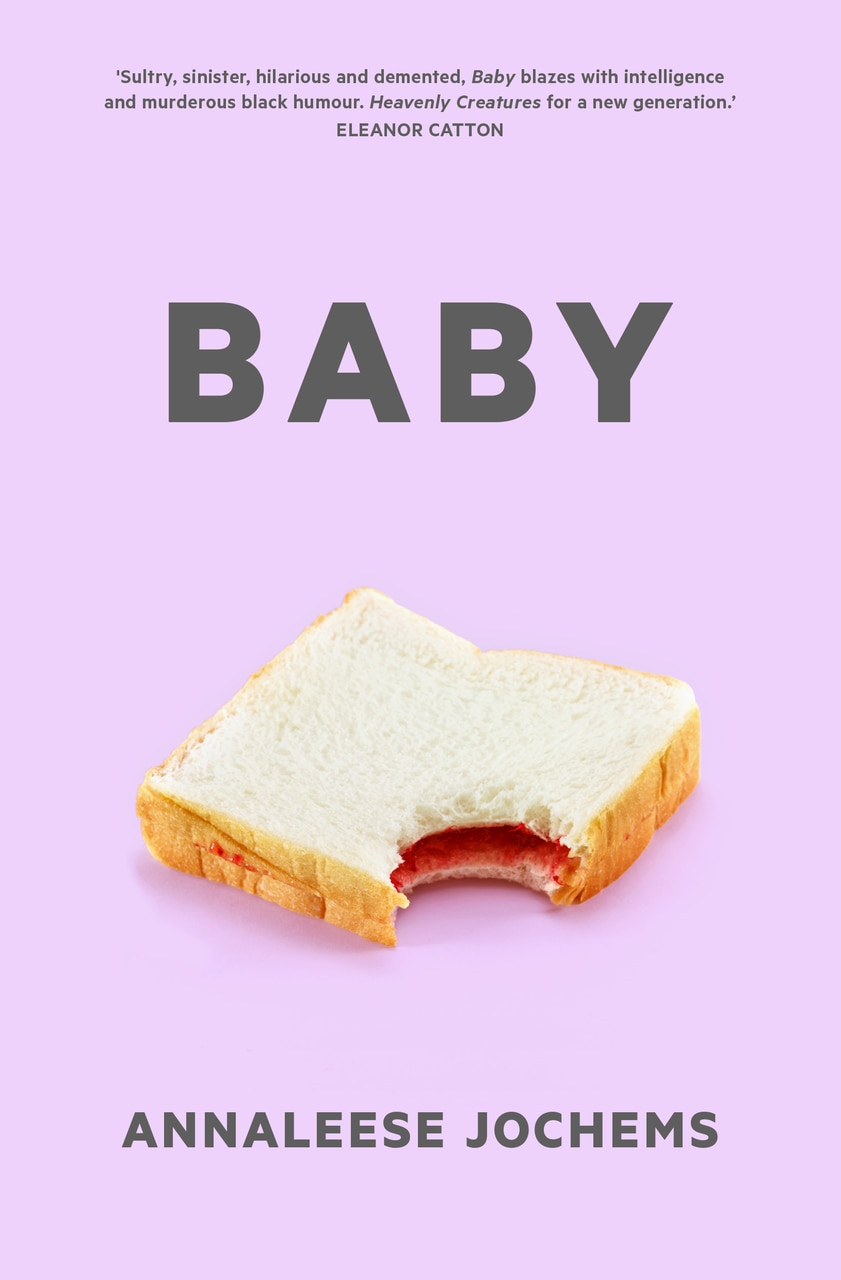
Baby – Annaleese Jochems
 READ FOR NZ BOOK AWARDS
In this debut novel, young lovers run away, stealing money to buy a boat but inciting disaster wherever they turn.
➽ “I think we are all capable of horrible acts, depending on circumstances and surely we all sometimes wonder how far we would go given the situation. Baby explores this idea beautifully and looks at what happens when two regular people are placed slightly out of their comfort zones. I felt I was in no position to judge the characters’ actions as what would I have done if faced with their options (or lack thereof)? I absolutely loved the dark humour of this novel, but I never quite decided whether I really liked the whole thing. The glowing recommendations on the cover from Eleanor Cotton and Emily Perkins tell me maybe I could do with a re-read and reassessment. As a small aside, this is the second Ockham shortlisted novel I have read with a dog as a minor character and I am hoping for a strong showing from cats in 2019.” – Suzy
—–
Published 2017
Victoria University Press
219 pages
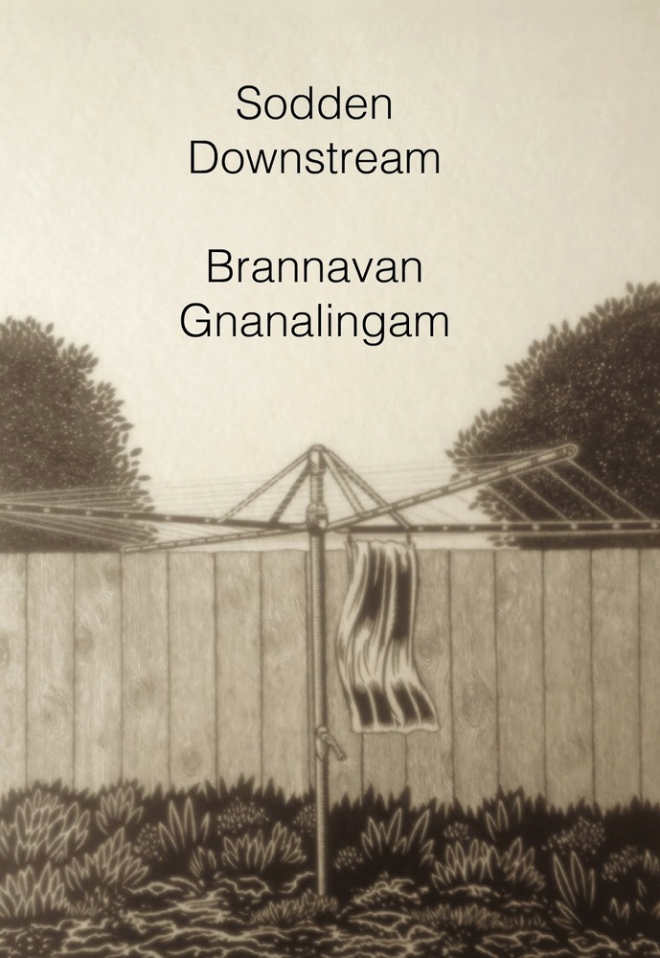
Sodden Downstream – Brannavan Gnanalingam
 READ FOR NZ BOOK AWARDS
A refugee walks through a Wellington storm to get to work but must rely on the kindness of strangers to get there.
➽ “A journey or expedition is a staple in fictional themes, however here this is turned on its head with the protagonist’s trek being through a storm in order to get to her cleaning job. Without it she cannot feed her family, it’s as simple as that, yet her story is told with the same power as some of the more well known odyssean stories.
“The completeness of the NZ themes are what sets this book apart. The Kiwi colloquialisms are raw and true, albeit a bit cringeworthy and the author paints a detailed picture of his interpretation of our current social climate, especially for immigrant refugees.
“I did think all of this was beautifully and fully done, but did find it a bit preachy. But it certainly details a moment in history that will be referred back to in time, I’m sure, and deserves its place on the Ockham’s shortlist.” – Rachel
➽ “I read this book a while ago now and I still think about it every day. Sita attempting to reach central Wellington has to be one of literature’s great journeys, right up there with The Hobbit, The Adventures of Huckleberry Finn etc.
—–
Published 2017
Lawrence & Gibson
178 pages
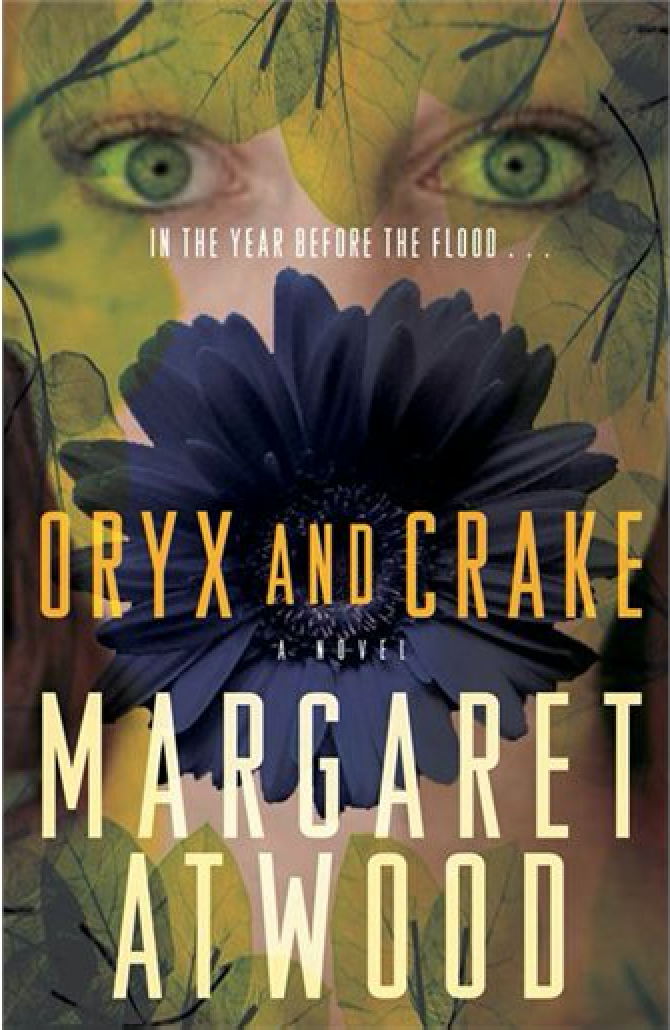
Oryx & Crake – Margaret Atwood
 READ FOR BOOKCLUB
Chosen by Jo
An unforgettable story of love, friendship and biologically modified humans in an alternative reality where pharmaceutical companies rule.
➽ “Margaret Atwood’s Oryx and Crake is another one of her chilling dystopian novels which kept me gripped right to the end. The exaggerated play on current technologies and lack of regard for our world and the environment give an unnerving sense that this future is entirely possible and therein lies Atwood’s creative brilliance. She is darkly clever with the names, brands and themes throughout and there’s so much complexity in this book that I’ll need to re read it to fully appreciate the content. I couldn’t leave Jimmy and his weird world alone and rushed out to the library and read the next book in the series – if you know me then you’ll know this means this book is an absolute hit. My mind is still whirling!” – Jo
➽ “After struggling a bit to get into recent reads, Oryx & Crake was a wonderful, interesting and exciting read. I found myself looking forward to the evening read before bed. I was in awe of Atwood’s brilliance in painting her depressing yet fascinating picture of future earth. Like watching a disturbing movie scene, I was both repelled and hooked at the same. I loved the way she blew out all of the controversial trends of our time, like our obsession with sex, youth, immortality, genetic modification, climate change and drug culture, into their future extremes, although in this respect I found the book rather depressing. Definitely keen to read more from this trilogy and I can’t wait for the movie to be made.” – Sonya
➽ “This was my fourth re-read of Oryx & Crake and though nothing will ever replace the first read, I still find reasons to re-read it. What appeals to me is Atwood’s innate ability to combine real life characters with speculation on the state of the world if current experimental biological modification trends are pushed to the nth degree. There are no inventions in Atwood’s fiction, rather an intelligent mind bending about things that actually existed at the time she penned the book. As time passes, it is interesting to see how many of her prophesies are coming true! Jimmy, Oryx and Crake are the perfect personalities to carry and ‘normalise’ the crazy story, covering the roles of crazed creator, passive caregiver and questioning observer between them. Jimmy in particular voices the reader’s concerns and therefore is the connection between our reality and Atwood’s. I can’t recommend this book highly enough, as well as the two sequels.” – Rachel
—–
Published 2003
Anchor Books
400 pages
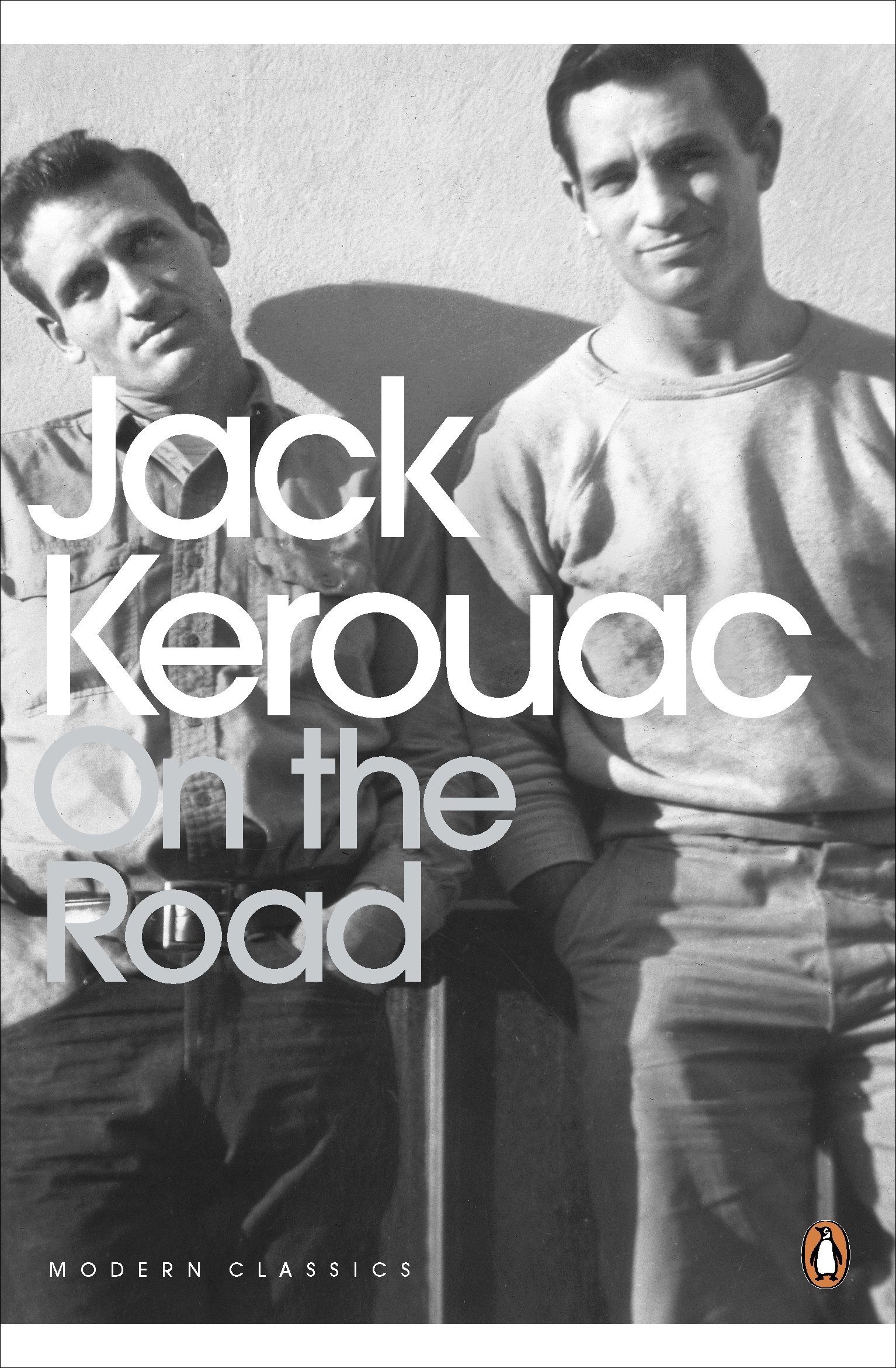
On The Road – Jack Kerouac
 READ FOR BOOKCLUB
Chosen by Becks
On the Road is an early example of the stream of consciousness style and chronicles Kerouac’s years traveling through North American with his friend Neal Cassidy.
➽ “I love stories about people’s travels and adventures so I was excited about reading this, especially because it is considered a classic American novel. However, this was completely different to anything I have ever read before. Kerouac apparently wrote this in 3 weeks on a continuous scroll of paper in a new writing style known as a stream of consciousness. This transposed as rambling at times and made for a challenging read. I did enjoy the glimpse into the Beat movement though. Sal & Dean embodied a carefree spirit, they rejected conformity and believed in spontaneity which are typical characteristics of the Beat generation. With these beliefs they travelled America on a drink and drug fuelled roadie always in search of the next big thrill. Their friendship was based on hero-worship, in which neither Sal nor Dean acted morally responsible for their actions. Their behaviour at times made me want to cringe but in the end their carefree attitude to life is something to admire.” – Jodie
➽ “Although On The Road is a renowned famous book written in just three weeks (which is amazing), to me it is essentially a long debaucherous rant. Sal’s various trips for ‘kicks’ begin to run into each other with all his and friends’ sordid tales of drunken drug taking and sleazy sexual encounters. Sal and Dean are thoroughly unlikeable and the story in general became tedious as it went on.” – Jo
➽ “Context is important when reading On The Road. Set in the 1950s, with post-war freedoms creating a distaste for rules and regulations, the story would be hard to fathom in the current social climate. Dean is reportedly the antagonist and Sal’s opposite, but really Sal was using Dean, going along for the ride, for ‘kicks’, to see what adventure might occur. No one pulls Dean up on his misbehaviour, rather they revel in the opportunity to rebel and take advantage of people and situations. I disliked Dean immensely during the book but ended up pitying him instead, and thus enjoying him as a character. (Though, disturbing to know he was a real person!) Representative of a time in history and with poetry like prose, On The Road is an important work, that I sometimes struggled with and sometimes loved, but which I am glad to have read.” – Rachel
—–
Published 1957
Viking Press
307 pages
2018 – Setting the scene
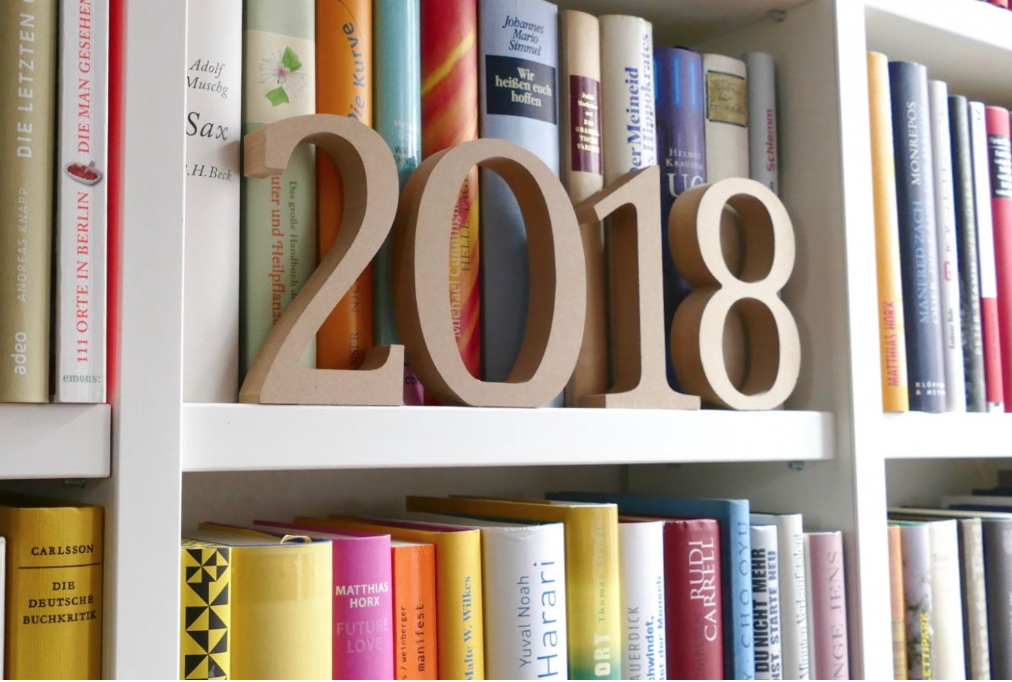 Sometimes you put a book down late at night after a long reading session and you can still “see” it, see the landscape or the building or the room so clearly in your mind. And it’s then that you know the setting has received the perfect amount of consideration and construction by the author.
Yes, setting is as important to a novel as the characters. Whether a subtle backdrop or vivid as if part of the cast it supports and enhances the plot; it allows the characters’ strengths and flaws to take centre stage.
We discovered this last year when locations from our year’s reading seemed imprinted on our brains as if memories. The Bulgaria of East of the West, its lush countryside, flowing rivers and ancient architecture won’t leave us and the many and varied concepts of Venice in Invisible Cities is etched like artwork in our recall.
2018 is brimming with equally enticing fictional settings that intrigued us before we even started reading: the fictional reality of Oryx & Crake, the mountain villages of Nepal, and Jack Kerouac’s many visited locales.
How will they influence our opinion of said books once read? This varied assemblage of settings and locations, ready to delve into, to consider as an alternative reality to our own as we traverse across our own varied and breathtaking region to attend bookclub meets. No, we are not neighbourhood pals in the Free Range Bookclub, we are scattered throughout the Nelson/Tasman region, inciting travel and change of location for every meet. We must become accustomed to changes in our own settings to delve into the mystery of fictional ones!
This year there will be an added setting for bookclub meets as we welcome a new freeranger, the lovely Jodie. Another avid reader, another home, another place in which to assemble, where the scene has been set to encourage our eager and fruitful discussions about setting, location and personalities as we embrace our own.
2018 Schedule
On The Road – Jack Kerouac
Oryx & Crake – Margaret Atwood
Breakfast At Tiffany’s – Truman Capote
When I Hit You: Or A Portrait Of The Writer As A Young Wife – Meena Kandasamy
Five Sons & A Hundred Muri of Rice – Sharyn Steel & Zoe Dryden
I, Capture The Castle – Dodie Smith
The Paying Guests – Sarah Waters
The Nine-Chambered Heart – Janice Pariat
The Bridge of San Luis Rey – Thornton Wilder
Pachinko – Min Jin Lee
Back Booker 2004
 It’s as if there was a prerequisite for darkness and literary grim in 2004. The shortlist certainly leant itself to depths that despite their brilliance were sometimes difficult to read.
Rape, incest and murder abound in Bitter Fruit, the story of a South African family living in a post-apartheid climate.
Drink was the central theme of I’ll Go To Bed At Noon. Despite the grimness of pubs and alcoholic misadventures, the book is a compelling study of human nature.
The Master is a retelling of Henry James’ life over a busy and melancholic four years. An important story, told with literary freedom, the book is perhaps best suited for those intellectuals with a more learned understanding of James’ life and literature.
The Electric Michangelo is about tattooing but more so about pain. There is much pain endured by the characters, in a book that offers an acute awareness of world events that also inflicted much pain.
Then we come to Cloud Atlas. On the positive side, it is about lives brought together in time and significance by convergent fates and features NZ Maori, but conversely its six stories covering nineteenth century South Pacific to a post-apocalyptic reality took it out of the enjoyable realm for these freerangers.
Then, pitted against these dark books, is The Line of Beauty. Set against the backdrop of Thaterism and the 1987 UK general election, The Line of Beauty is ultimately a human story. Nick, a homosexual man who lives with a politician and his family, is at the centre of the plot. Hollinghurst manages the relationships, the political history and the thrill-a-minute plot with skill and leaves the reader with an optimal amount of emotional investment but also uncertainty about it all. A thoroughly enjoyable and beautiful novel that certainly deserved the win in our eyes.
2017 – End Of Year Thoughts
 Either the freerangers read a list of descriptive masterpieces this year or we have developed heightened senses for the understanding of people and places in fiction.
Such was the enthusiasm with which we have analysed the make up of our reading this year. Did we inadvertently pick books full of delicious descriptors, of people, time and place? Or did we immerse ourselves more fully and latch onto the beautifulness, whether apparent or layered?
Perhaps both were relevant as we kicked off the year with our long-awaited ten year bookclub reunion. Eight minds deliberating Coetzee and Plath masterpieces – what else could result but dissection of every hint of activity.
The depth and emotional pull continued through the year: Offred’s lonely plight; the lush, romantic landscapes of Bulgaria; the bewilderment of Simon and David; a looming island prison; a vulnerable conversation during a mountaintop storm; the honesty of troubled school boys.
The NZ Book Awards shortlisters also had a breadth of character development that was beguiling and the Bookers crossed every continent, imagined and real, with its focus on migration and belonging.
We loathed – but secretly loved – the characters for being vindictive and flawed; we rubbished them for being weak and ineffectual; we praised them for being perfectly and imperfectly real. We connected with the settings as if they had come to rest vividly in us, formed as if a memory.
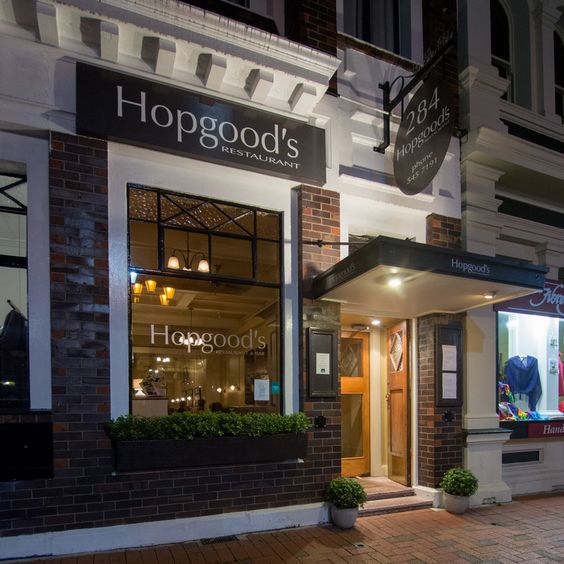
Yes, there was much to discuss at our end of year get together, this year at Hopgood’s Restaurant on a stifling summer’s evening. Here are the highlights of our musings:
Book of the year:
Rachel: The Childhood of Jesus
Becks: The Handmaid’s Tale
Jo: Kafka On The Shore
Sonya: East Of The West
Runner up:
Rachel: The Handmaid’s Tale
Becks: East Of The West
Jo: The Handmaid’s Tale
Sonya: As The Earth Turns Silver
Best character:
Rachel: Simon from The Childhood of Jesus
Becks: Offred from The Handmaid’s Tale
Jo: Nakata from Kafka On The Shore
Sonya: Walter from The Hut Builder
Best revelation:
Rachel: That the story of The Childhood of Jesus can be viewed as a
harbinger for the end of the world
Becks: That all the cities in Invisible Cities are Venice and depict
architectural ideas and concepts
Jo: That Sylvia Plath’s The Bell Jar was autobiographical
Sonya: That the author of The Hut Builder, Laurence Fearnley, is a woman
The Hut Builder – Laurence Fearnley
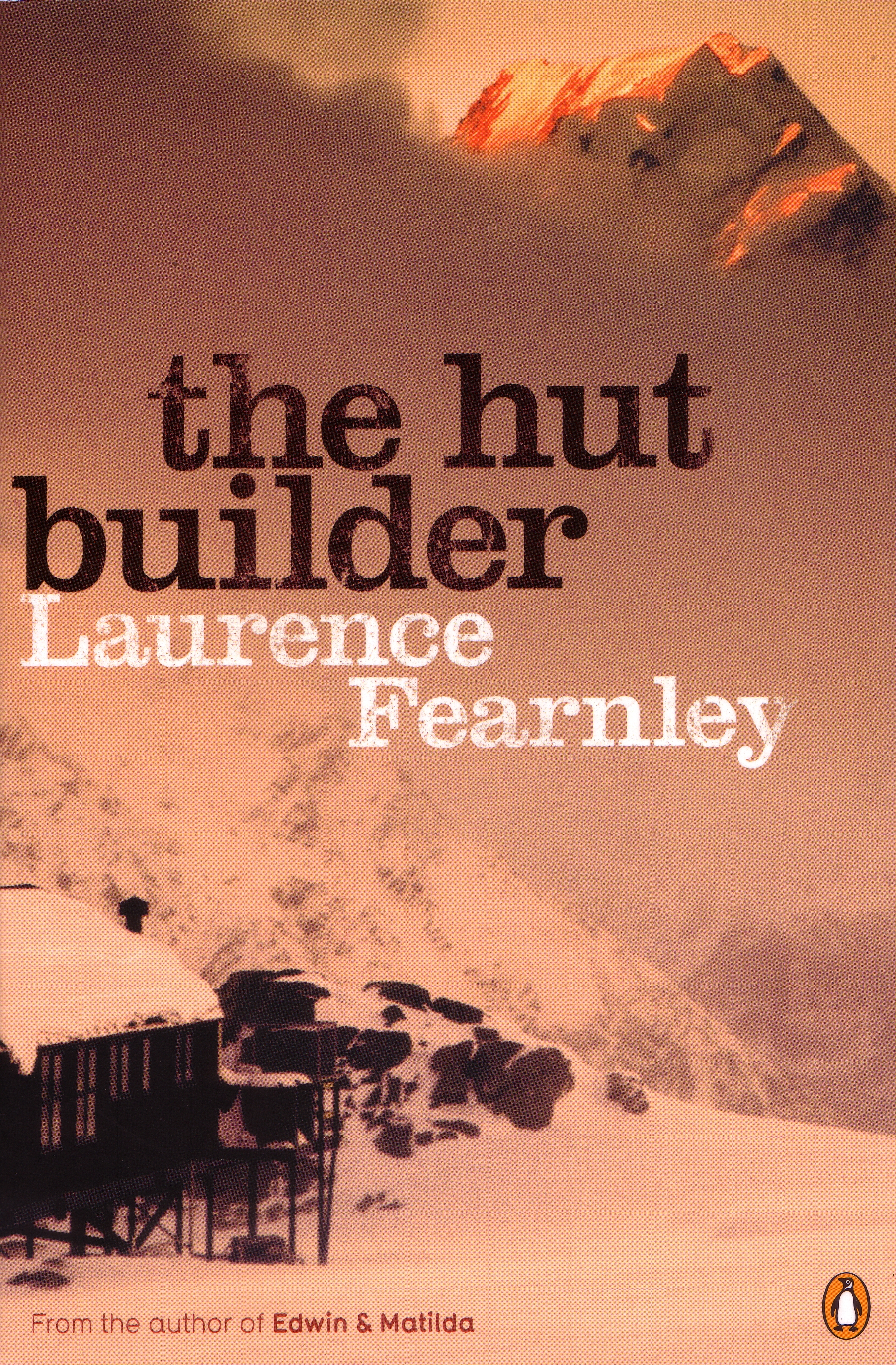 READ FOR BOOKCLUB
Chosen by Jo
Set in NZ’s deep south, a man at sorts with life finds himself on a mountain with Sir Ed Hillary. 2011 NZ Book Awards winner.
◉ “Getting to know Boden Black is a slow process – he turns out to be a quiet, reflective person with some poignant insights. His mother’s consuming depression casts a dark shadow over his early life and a strange parental surrogacy ensues as a way for Boden to escape into a warmer brighter family life.
“Boden experiences an epiphany on encountering the incredible Mackenzie basin which leads to a lifetime of poetry juxtaposed with a living as a butcher. His appreciation of nature is expertly expressed – I especially loved the hut scene on Mt Cook. Although not a hugely memorable book to me and Boden didn’t seem particularly strong or well defined it was a comforting interesting story.” – Jo
◉ “Like Laurence Fernley and her protagonist Boden Black, I too have an affinity with the Mackenzie district. I have not climbed any mountains but I have spent a lot of time there and I appreciate its arid beauty. Which, I guess, is why I enjoy Fearnley’s books so. She uses the contemplative calm of the environment to build her characters and so everything in the novel is harmonious.
“Like Mt Cook, Boden is a solitary figure, a loner, though not out of touch with reality. Ultimately the book is his life story, about his search for identity. Occurrences such as an accidental mountain climb with Sir Ed, unknown relatives popping out of the woodwork, and of course his assistance with hut building on snowy slopes, help him discover who he really is, in this lifeless environment full of solitary things that fit in.
“It is not a book full of action or surprises, more a steady trek through one man’s life and challenges, that leaves you with a wee smile on your face at the conclusion.” – Rachel
—–
Published 2010
Penguin Random House
246 pages
Kafka On The Shore – Haruki Murakami
 READ FOR BOOKCLUB
Chosen by Rachel
A teenage boy, Kafka Tamura, runs away from home to escape a gruesome oedipal prophecy and search for his long-missing mother and sister.
◉ “One day in 2006 I bought this book new off the shelves in an Auckland bookshop. And, it changed my life. I immediately went about securing and reading every work of Murakami’s fiction. He became my obsession!
“So I was excited about re-reading this, my foray into the strange world of Murakami. And I certainly appreciated it much more on the second reading, with the understanding of how and why Murakami writes. It was like reading it for the first time again.
“Like all Murakami’s books, comprehending the layers of death and construction which can keep bookclubs talking for hours is not instrumental to enjoying and loving Kafka On The Shore. In 2006 it was a surface read. I recognised the obvious metaphors, but mainly just loved the weird and wonderful journey. Whereas this time I examined every page for it’s meaning and depth and revelled in it.
“In this book it rains fish, children fall unconscious in the forest, an evil spirit takes many forms including Johnny Walker and Colonel Sanders, and lost soldiers from WWII guard the entrance to another world where spirits wait in limbo, yet somehow it all seems very real, with the touching story of a boy who feels separated from his reality and longs to know why his mother took his sister and abandoned him years ago.
“There’s nothing else to say except Murakami is a genius.” – Rachel
◉ “The skill and imagination of Haruki is breathtaking. His writing style is simple but profound with characters so expertly distinct and a story that’s weird and engaging.
“I savoured each and every part of this amazing book and really didn’t want it to end. The strange parts of his magical realism story were woven in so that you didn’t end up thinking it was ridiculous.
“I’m still in love with a few of these characters and I really wish I could talk to cats!” – Jo
—–
Published in Japanese 2002
Translated into English by Philip Gabriel 2006
Vintage
480 pages
2017 Bookerthon
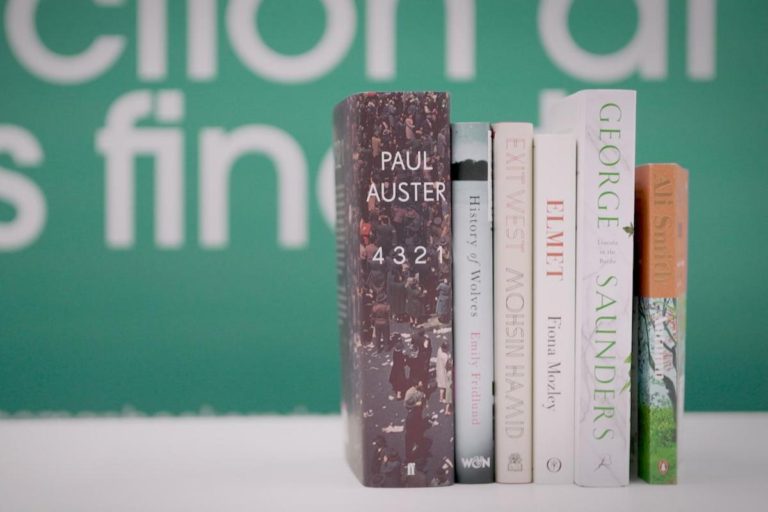
There is a line in Ali Smith’s Autumn which sums up all the shortlisted books this year:
“Passing the house with the “GO HOME” graffiti, Elisabeth sees that the words “WE ARE ALREADY HOME THANK YOU” have been painted right underneath”.
Migration, immigration and connections to the land are common threads, each novel exploring what it means to be in the place we stand, how we interact with the environment and who deserves to be in a place the most. Autumn even declares itself as the first ‘post-Brexit’ novel. In the others, the migrant theme not only manifests in the traditional sense, but as passage to the afterlife, as migrants of time and of childhood.
The list will certainly be remembered as representative of the time.
So, a nicely packaged lot, thematically and representatively apt, that ticks the boxes of scope. But are they the six best books of the year? We’re not sure we’d agree on that. Especially when in years past we have strongly felt we had read just that.
Elmet is a book of beautiful language and captivating interplay between power and powerlessness. But compared with the others, its lack of character depth let it down, with the setting almost acting as the main character.
In an interview, the author of History of Wolves revealed how she’d been told: ‘if you know something is going to happen, you might as well spend it or say it and then see what happens’. We felt she took this advice too literally as the book’s let down was the reveal of information. However, the voice of the teenager, her naivety and passivity, was authentic and the moody atmosphere of the wooded location a real scene setter.
Autumn is certainly the most literary of all the shortlisters. Sometimes it’s hard to grasp all the nuances in a Ali Smith book but this is definitely one of her more accessible novels.
As neither of us had finished 4 3 2 1 it was difficult to comment on the entire 866 pages. Funnily enough both of us had nothing but enjoyable experiences to report from what we had read but couldn’t rave it about it when taking the others into consideration. Reviews read today are disparaging about the ending and how the four lives end up rather the same.
It’s not every year we agree on our favourite, but this year we did. Exit West topped the table for us both. Nadia and Saeed are highly developed characters designed to be relatable to everyone, irrespective of their locality. The cross genre construction is believable and builds the foundation for the author’s view on immigration. He shows us a future where immigration is normalised; there will be no such thing a migrant or a native. His vision for the world is peaceful and hopeful. It was this desire to look to the future of immigration rather than report on what has been, that made it stand above the other shortlisters this year.
That brings us to Lincoln In The Bardo. We both acknowledge we found this a bit of a difficult read because it broke the traditional structure of a novel that we had adapt to. But at the same time we appreciated its genius and its combination of historical context, fact and fiction. Everyone sees or recalls historical events differently and Saunders reflects that in a compassionate and honest way.
So, if we were picking our favourite read, we’d choose Exit West, but if we were asked to chose the most original book, the one that will have the biggest effect on the literary world, we both agree the nod should go to Lincoln in the Bardo.
Suzy’s favourites 1st-6th
Exit West
Elmet
Autumn
The History of Wolves
4 3 2 1
Lincoln In The Bardo
Rachel’s favourites 1st-6th
Exit West
Autumn
Lincoln In The Bardo
4 3 2 1
Elmet
The History of Wolves

We're
currently
reading
 The Free-Range Bookclub
Recent Comments