The Free-Range Bookclub
Bookclubbers without boundaries in Nelson, New Zealand
The Land In Winter – Andrew Miller

READ FOR BOOKERTHON
Bristol, 1962, post-war optimism is fading, and a new, modern world forming. Two young couples live next to each other: a doctor and his wife in a beautiful cottage, a farmer and his wife in a rundown, under-heated farmhouse. Both women are pregnant and strike an easy friendship. But as one of the coldest winters on record grips England the two couples find themselves cut off from the rest of the world and old tensions and shocking new discoveries threaten to change the course of their lives.
She pressed the chrome ‘off’ button, then stood a moment – when had this become a habit? – watching the dot at the centre of the screen pulse like a small heart or a failing star until, with a suddenness she could never quite anticipate, it blinked into absence.
SUZY
● I don’t know how Andrew Miller does it, but there is something about the setting of the English countryside in The Land In Winter that makes even the most devastating of events feel somehow cushioned and contained. I felt completely enveloped by the landscape and deeply involved in the complicated lives of the characters. It was a slightly hypnotic read that I thoroughly enjoyed.
RACHEL
● The snow is an obvious metaphor for isolation in this book. But that’s okay, it works because Miller has integrated the sense of dread, the slowness of the fall and the drudgery of progression into the narrative and character development too so the book as a whole feels cohesive. The characters’ isolation is not restricted to the physical either, it extends to class, money, mental illness and self-worth. The post-war setting is present and clearly impactful but left in the background to haunt, while the lens is honed in on the characters and how they are navigating the change in themselves and the world.
The two pregnant wives are the most appealing and interesting characters. Though they are confined by their marriages and the time, they both have spark and I found their personalities and storylines to be well developed.
Published 2024
Sceptre
384 pages
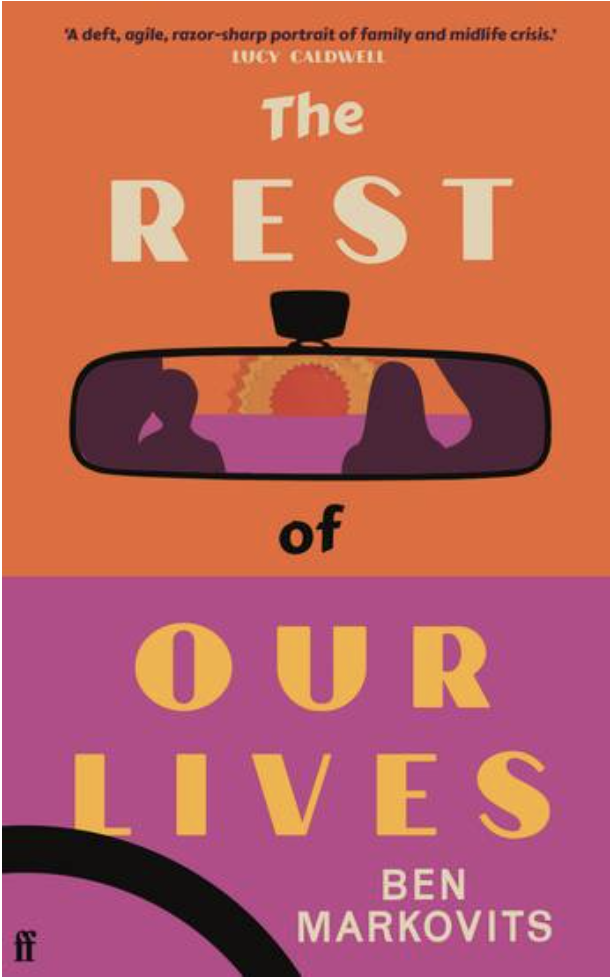
The Rest Of Our Lives – Ben Markovits
READ FOR BOOKERTHON
When Tom Layward’s wife had an affair he resolved to leave her as soon as his youngest daughter turned eighteen. Twelve years later, while taking her to Pittsburgh to start university, he remembers his pact, and keeps driving West. This road trip novel explores the nuance and complications of a long term marriage and of middle age.
What we obviously had, even when things smoothed over, was a C-minus marriage, which makes it pretty hard to score much higher than a B overall on the rest of your life.
RACHEL
● I would like to know how The Rest of Our Lives became shortlisted for one of the most prestigious literary prizes in the world. The novel is aimless and boring. Its protagonist is a privileged, overly introspective, middle-aged man whose thoughts are more self-indulgent than self-reflective. I did not care about him, nor the support characters who I thought were underdeveloped.
I hurried to this book because it was referred to as the male version of All Fours. And I adored All Fours. But I can tell you this book is not the male version of All Fours. Not even close. The Rest Of Our Lives has no compelling plot, no meaningful character development, no insightful societal commentary, nor any innovation in form or language.
What is it about, you ask? Well, a man hits midlife, goes on an aimless road trip, reminisces about his faded basketball dreams, meets a few people, has some health issues, the end. Another story about a white, cis, middle-aged man and his privileged problems … well as far as I’m concerned this demographic has had its time, and at this point in my reading life I want to hear about people in the margins, and read stories that examine the state of the world or have narratives that test the boundaries of form.
I am pleased authors are giving middle-aged people a voice in literature and that their changing lives are represented and taken seriously, but I can’t understand who needs this particular story, except the author as some sort of catharsis project.
SUZY
● I think this will be an uncomfortable read for a lot of mid-lifers, as we journey alongside a husband as he starts to experience what may be the gentle disintegration of his marriage. How this is received by family and friends along the way shows how much this outcome is often deemed an inevitability at this stage of life.
I am curious as to whether it was the (male) author’s intention to show the ease in which is this dealt with by husband? I couldn’t help but feel a sense of frustration at how established relationship gender norms are present even at times of disconnect.
Published 2025
Faber & Faber
256 pages
Hum – Helen Phillips

READ FOR BOOKCLUB
Chosen by Rachel
In a climate ravaged dystopian future where robots (Hums) take the every day jobs of humans and surveillance is at an all time high, a woman undergoes experiental facial surgery in order to pay her bills and treat her family to a visit to a sanctuary that has preserved the clean, green ways of the past. However, the Hums are watching their every move.
The hum paused for the programmed amount of time. Long enough to gesture toward thoughtfulness, not long enough to stall the conversation.
“Please have a regular day tomorrow, May.”
SALLY
● I empathised very early on in this book with the protagonist May. Set in a post apocalyptic world where fires have ravaged the natural world, May craves an immersive nature experience for herself and for her family. Frustrated with the way technology controls (and tracks) their every move, she sets in motion a chain of events that leads the family to a special trip to the Botanic Gardens. No spoilers, but it doesn’t turn out to be as magical as she hoped. The title of the book refers to the robots that populate the world. These “hums” are programmed to upsell every purchase or service they provide and use facial or fingerprint recognition, to identify the humans. The reader is never sure if they are good or evil. I found the plausability of such a world chilling, especially since, as I write, Sainsburys supermarket in the UK is trialing facial recognition in some of its stores.
Interestingly, the ending left me feeling hopeful although others had a vastly different impression. I wouldn’t wholeheartedly recommend this book but if you are looking for a read that leaves you with a sinister dread of where technology is headed, fill your boots.
RACHEL
● Hum invests more time into setting than plot, but the world it creates is so atmospheric and believable I don’t mind the simplicity. The futuristic, robot-controlled society is nicely balanced with a good old-fashioned human focus on motherhood, parenting and familial bonds. Despite how technological the book is, I found myself connecting with it on a very human level, mostly via May’s maternal fears about the world she has brought her children into. There is a constant sense of dread lurking, and every time a Hum appears something ominous happens. I enjoyed being on the edge of my comfort zone. The book’s realist-surrealist-speculative genre mash up provides a thought-provoking dose of reality mixed with a warning about a very possible future. I found this structure and the small cast made it easy to get lost in story and become immersed in the lives of the Webb-Clarke family.
BRIDGET
● Set in the not-too-distant future, Hum is a thought-provoking read that made me reflect on where society may already be heading. It isn’t fast-paced, but it offers a vivid and unsettling glimpse into a believable world where work is scarce due to AI robots (hums) replacing humans. Everyday life unfolds under the shadow of constant surveillance.
At its core, the novel follows mother May Webb striving to give her family the best life possible. Phillips explores both the morality of May’s decisions and the harsh judgment of others, not unlike our present world where keyboard warriors are quick to condemn. It’s the children’s innocence that really shows what’s at stake. May and Jem’s efforts are always focused on protecting Lu and Sy. The ending is cleverly written, leaving this book club with very different interpretations of what truly happened and fuelling some interesting discussions. I enjoyed Hum for its sharp, clever writing and unsettling vision, even if it did leave me feeling a little cold inside.
JODIE
● After finishing Hum I was left feeling unsettled in the best way. The way Phillips writes about a future shaped by AI feels both scary and relatable – I could actually imagine life heading in that direction. What makes Hum a good read, suitable for most readers, is that it’s not a far out sci fi epic, it’s more a slice of life that focuses on making the robot scenario feel eerily believable. I found it thought provoking and a little disturbing. It’s one that definitely lingers after you put it down.
TESSA
● I went into Hum with high expectations as the book jacket description sounded so intriguing, but in the end, it didn’t quite work for me. I think I was hoping for more plot momentum and deeper character development. It is certainly dystopian fiction aimed at the present, rather than some entirely imagined future, and much of what unfolds in the novel to me already feels uncomfortably real.
The story is told through May, a mother trying to hold her family together amid economic uncertainty in a world governed by artificial intelligence taken to the extreme. Helen Phillips vividly captures the bombardment of modern life: relentless ads, grim news headlines, the heavy weight of parenting and climate change (all of which she expands on in her endnotes). These details lend the novel both urgency and grounding, effectively conveying the characters’ mounting anxiety. Phillips builds tension through short, moment-to-moment chapters, and I found her sharpest writing was in the portrayal of everyday family life and the pressures technology imposes on it.
The speculative threads, however, didn’t always convince me, especially the face-alteration storyline, which felt underdeveloped. At times the family dynamics and their struggles within an AI-dominated society could have carried the novel on their own, without this extra element.
The open-ended conclusion leans toward ambiguity rather than closure, which ultimately left me unsatisfied. Still, Hum succeeds in evoking the claustrophobia of our current world and the uncertainty of what lies ahead. It’s not that I didn’t enjoy it, I did appreciate the story it was trying to tell, I was just left wanting and expecting a little more.
Published 2024
Marysue Rucci Books
262 pages
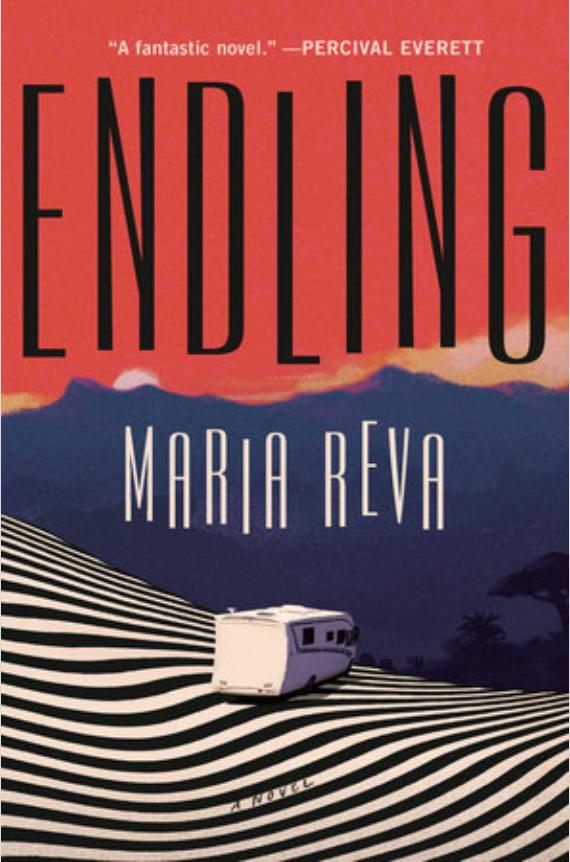
Endling – Maria Reva
READ FOR BOOKCLUB
Chosen by Jodie
Three women – a maverick biologist and two sisters embroiled in the Russian bride industry and searching for their missing mother – kidnap 13 hopeful bachelors and race across Ukraine trying to find a mate for a last-of-its-kind Lefty snail. An absurdist and metafictional work set amid the Russian invasion of Ukraine.
Here I am again, trying to make use of another cataclysm. Am I no better than a snail, sniffing out the softest, most rotten part of a log to feast on? At least a snail digests the rot and excretes nutrients, useful.
JODIE
● Endling by Maria Reva is an intriguing work of metafiction, a genre I hadn’t encountered before. Reva weaves layers of narrative and meaning, blurring fact and fiction in a way that is both complex and captivating. In fact, here is a quote from Reva in the novel: “I need to keep fact and fiction straight, but they keep blurring together”.
Discovering how the novel came to be written and Reva’s motivation behind it was a real help in understanding the inventive structure and complexity of the story. The novel is challenging and a second reading to fully appreciate its nuance and depth would probably be a good idea. I do recommend Endling but with the caveat to be mindful that it’s not how your typical novel rolls.
TESSA
● I found Maria Reva’s Endling a remarkable read, all the more impressive given that she is a first-time novelist. It’s not an easy book to sum up, and I had to sit with it for a while before I could begin to articulate my thoughts. What I can say for certain is that I’ve never read anything quite like it before.
At its core, Endling is a satirical exploration of the human condition, deftly weaving together themes of war, identity, conservation, and survival. Far from a conventional novel, it is absurdist yet meaningful, with a surface plot that is only one of many layers that resonate with the depth of the book. As I delved deeper, I found myself grappling with its intricacies, particularly midway through, as Reva steps into the story amidst Russia’s invasion of Ukraine. At this point, the novel turns sharply metafictional, becoming as much about the act and even the right of storytelling as it is about the characters caught up in the conflict itself.
In my opinion, it well deserves its place on the Booker shortlist. It’s a thoroughly enlightening read that will stay with me for some time.
SALLY
● I have struggled to think how to review this book and in the final analysis, I have elected to separate my thoughts into two streams. For the construction of the book, the metafiction and the devices used within the text to subvert the narrative, I have a great deal of admiration. The skill involved in its construction belies the fact that this is a first novel. But viscerally, this admiration did not translate to enjoyment, not really. Early on I was engaged but I think I became lost in the absurdity. Having said that, I did enjoy the idea of writing multiple different outcomes.
There is a heavy dose of autobiography I am sure, given that the author is a Canadian of Ukrainian birth and I think it was best illustrated in writing the multiple outcomes for the character of the grandfather. Her frustration and desperation were clear. It’s a complex novel both structurally and thematically. Probably not to everyone’s taste.
RACHEL
● As a fan of absurdist fiction, Endling delighted me. The lefty snails, dead-bride tours and kidnapped bachelors are outrageous, but they felt more steeped in real life than some books in the realism genre. Reva’s satire of war, authority and men’s power over women hits hard, and the film crews “staging” comical war scenes show how obsessed we are with turning tragedy into spectacle. Somehow Reva folded reality into parody and parody back into reality.
Even the book’s fractured presentation felt more truthful than a neatly structured story. The war interrupted people’s lives and the narrative reflects this by becoming disjointed with false endings, alternative outcomes and metafictional interludes. I think each reader of this book will come away with a slightly different memory of the story, with the post invasion fragments stitched together in their own way. I felt constantly wowed and more invested in the story the further I read. Every absurd event just made me feel more like I was there experiencing the displacement and ruin of Ukraine.
BRIDGET
● Imagine a mash-up of environmental despair and transactional romance, racing across Ukraine in a mobile lab amid the chaos of invasion. Sounds intense… well, it is. As a newcomer to unconventional writing and non-mainstream genres, this one pushed my limits. I still enjoyed it—there were moments that had me laughing out loud—but I also found myself confused and completely lost at times.
Maria Reva blends absurdist humour (a genre new to me) with brutal reality. The result is both funny and tragic. The novel also morphs into metafiction, another new experience for me, with Reva stepping in, weaving in glimpses of her own experience as a Ukrainian expat watching war from abroad and challenging what fiction can and should do in the face of real disaster. For readers well-versed in these literary techniques, or those happy to embrace a narrative that breaks the rules of structure, this novel may be a fascinating and rewarding read.
Published 2025
Doubleday
352 pages
Before The Queen Falls Asleep – Huzama Habayeb

READ FOR BOOKCLUB
Chaired by Sally
Born a girl to parents who expected a boy, Jihad grows up treated like the eldest son, wearing boy’s clothing and sharing the burden of head of the household with her father. Now middle-aged, each night Jihad tells her daughter a story from her life. As Maleka prepares to leave home to attend university abroad, her mother revisits the past of their Palestinian family, describing their life in exile in Kuwait and her own experiences of love and loss as she grew up.
I weep over images from the serialised drama of our massacres, with multiple episodes and seasons. I gather them in private collections that I return to more than the family albums.
SALLY
● It took me a long time to become engaged with this book. Partly it was the style, which uses very elaborate and ornate language and very long sentence structure. I have since read that this is a feature of Arabic writing. The story follows a family of displaced Palestinians and centres round the eldest daughter, Jihad who is retelling her life story for the benefit of her daughter. I get the feeling the book is at least partly autobiographical as Jihad’s education and career mirrors that of the author, as does the fact that she has to leave her home because of war.
There are many themes in the book including displacement, family love, maternal love but for me the standout was feminism. All the female characters are strong and find ways to survive in terrible circumstances and to provide nourishment both physical and spiritual for their families. Their philosophy seems to be generosity even when there is very little to share. With the current horrors happening in Palestine, I felt especially empathetic towards this story of these women who prevail despite the challenges presented to them. A slow burn for sure but persevere and you will come to appreciate this loud and boisterous family, their strengths and idiosyncrasies and feel some hope for their futures.
JODIE
● I truly enjoyed this novel for the fact that it weaves together personal memory, family tension and gives the reader a cultural insight into Middle Eastern life. It tells us stories that women are often never allowed to tell. I enjoyed reading about the complexities of middle eastern womanhood and intergenerational trauma that comes with living through war, exile and silence.
RACHEL
● This was a mixed bag for me. Some parts were poetic and deeply affecting and others were long-winded chopping between people and times too much for me to follow. I did appreciate the characterisation of Jihad, and how her identity and place in the family helped define her and to question the role of women in Arab countries. I enjoyed the look at the reality of life in Palestine, Kuwait and Jordan during times of conflict, in particular how the author made this a personal war story not a political one. I loved all the female characters and how they manipulated their lives of control and survival with a quiet and undetected resistance in order to provide for their families. There are some people I think would enjoy this book but I wouldn’t make a sweeping recommendation of it to all and sundry.
TESSA
● Before the Queen Falls Asleep wasn’t a page‑turning read for me and certainly not a book I raced through. There were times where I was totally absorbed and other times where my attention was lost, putting it down to come back to later. Maybe it was the style of writing, or the way the narrative weaved between past and present at times making it feel fragmented. More than once, I found myself re‑reading passages to locate where I was in time and place.
That being said, I enjoyed the richness of the story. It felt intimate and deeply personal – almost like reading a memoir. What stood out for me was the focus on the women in the story, especially the central character Jihad. She carries a heavy share of her family’s burden on her shoulders, treated like the eldest son in terms of responsibility. She has a certain amount of freedom, but also through circumstances, heavy restraints lead to further hardship, which are compounded by displacement during the Gulf War. I also appreciated the father–daughter dynamic. His weakness showed just how strong and resilient she had to become, even when she felt like giving up.
There are very raw moments, tender moments and even flashes of humour throughout. I didn’t find it to be a political book but set within a certain time where politics played a strong part in the way the characters’ way of life played out. A book I am glad to have read and it felt especially timely in light of Palestine’s current situation.
Published in Arabic 2011
Translated into English by Kay Heikkinen 2021
MacLehose Press
500 pages
2025: Women’s Prize
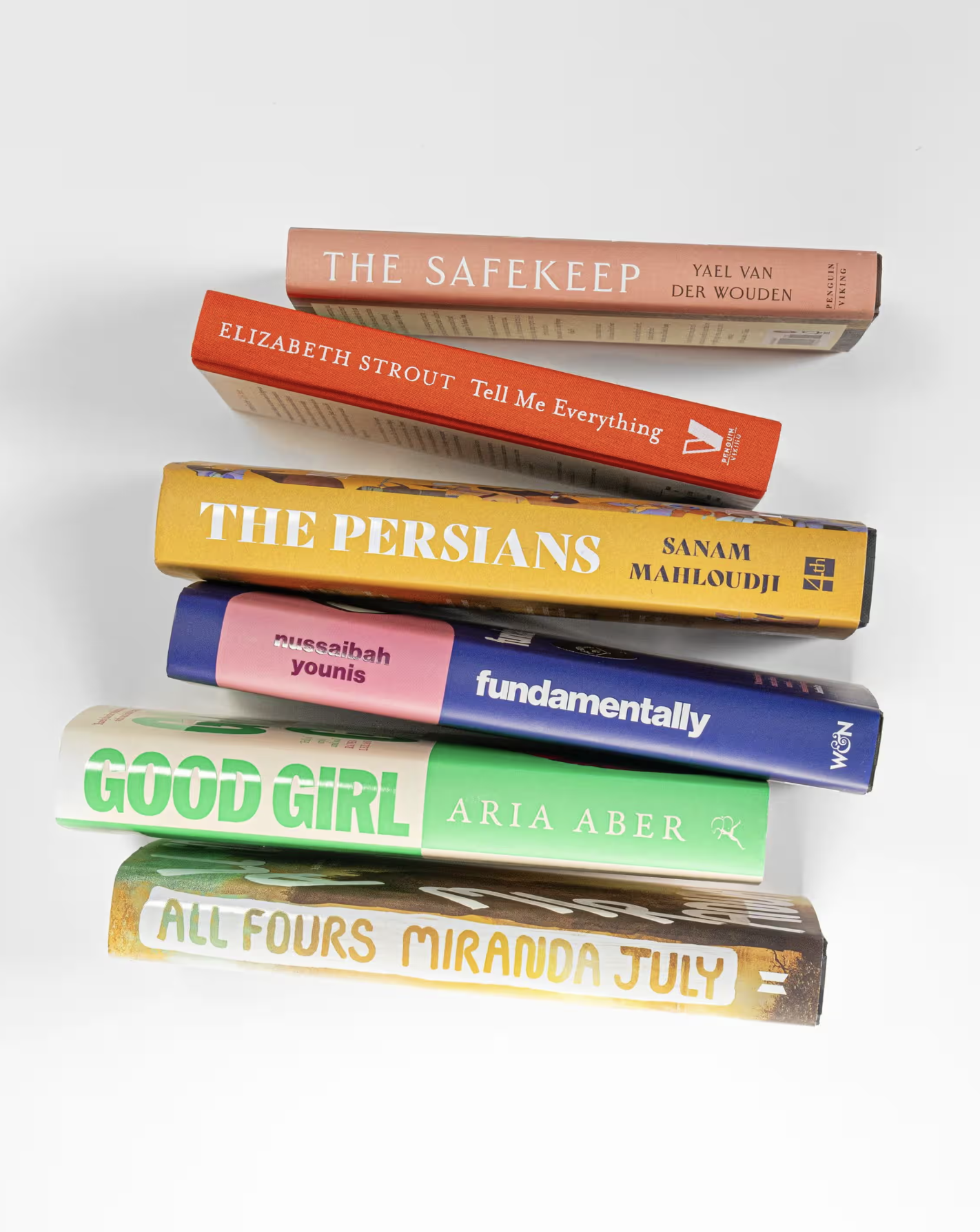
The representation of women in fiction has been under scrutiny for some time. Yes we are well beyond the era of the sighing damsel in distress, but a sustained examination of the intricacies of womanhood is still developing. Too often women are portrayed as needy, or overly heroic or given complexity only within an overused narrative framework.
So it was refreshing to see in this shortlist women in situations rarely depicted in fiction, with some of the deeper, messier and more honest realities of womanhood laid bare.
She felt she was not who she once was. She felt that this should be visible from a great distance.
The Safekeep
We read about a peri-menopausal woman in an implusive act of self-discovery; Isis brides and the fragile negotiations of deradicalisation; dynamics within wealthy refugee families where privilege does not protect against the sense of dislocation; cultural duality and coming of age in a space that exists beneath the surface of respectable society; the effects of WWII on women and their connections to home; and ageing women discovering their continued relevance and power.
These stories illuminate facets of the female experience that are often overlooked. They challenge readers to sit with discomfort, ambiguity and contradiction and to recognise how profoundly women’s lives are shaped by societal, cultural, and personal upheavals.
You had to withstand a profound sense of wrongness if you ever wanted to get somewhere new.
All Fours
The authors also pushed boundaries through form and structure. We weren’t expecting Isis brides satire, peri-menopause auto-fiction or the story of an underground life told without regret. By intertwining personal narratives, wider social issues and experimental narrative structure, these authors are contributing to the evolving landscape of contemporary fiction.
The secret of change is not to waste time fighting the old, but to use your energy to build the new.
Fundamentally
Suzy: I actually really enjoyed all of these books but for my favourite I can’t go past the slightly feral but overwhelmingly amazing All Fours. Miranda July is a complete icon and I love how she shone a very bright spotlight on middle-aged women.
Suzy’s ranking:
1. All Fours
2. Good Girl
3. Fundamentally
4. The Persians
5. The Safekeep
6. Tell Me Everything
Rachel: I loved the boldness of these books. There was certainly no fear displayed by the authors in their character development, narrative style and subject matter. While I connected with some more than others, this is where I want fiction to continue going, bigger and bolder, so women’s stories can’t be dismissed, and our unique and diverse qualities are normalised, not spurned. My pick for the win is the book that went the biggest and the boldest, All Fours by Miranda July.
Rachel’s ranking:
1. All Fours
2. Good Girl
3. The Persians
4. Fundamentally
5. The Safekeep
6. Tell Me Everything
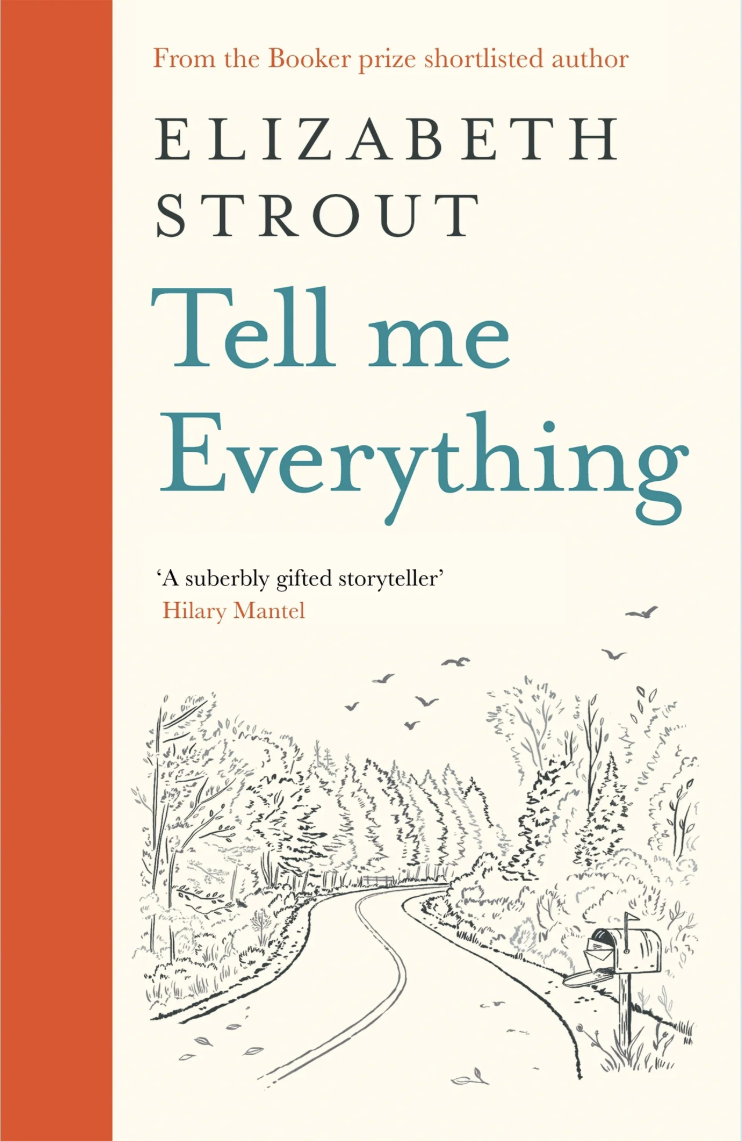
Tell Me Everything – Elizabeth Strout
READ FOR WOMEN’S PRIZE
Elizabeth Strout returns the reader to the town of Crosby, Maine, and finally brings together characters from her past fictional successes: Lucy Barton, Olive Kitteridge and Bob Burgess. There is a shocking crime committed, relationships examined and many stories told as the characters wonder: “What does anyone’s life mean?”
These are broken people. Big difference between being a broken person and being evil. In case you don’t know. And if you don’t think everyone is broken in some way, you’re wrong. I’m telling you this because you have been so fortunate in your life, you probably don’t even know such broken people exist.
RACHEL
● I think I set myself up for failure with this book. As a fan of Elizabeth Strout I’ve come to expect a lot from her books, and in a novel that brings together Lucy Barton and Olive Kitteridge I was expecting the flash and bang of fireworks. When, actually, what I value from Strout is her quietly powerful explorations of people and relationships, and this book certainly provides her usual sharp observations and insight. Why was I expecting fireworks? I’m not sure.
I think it was the patchwork of anecdotes and nostalgic returns that made me feel like there was no central plot. I kept thinking, ah, here’s the main thread, only for another tale to turn into a bit of a fizzer. Even the murder mystery element never quite delivers. But I guess that patchwork of stories fits the title: Tell Me Everything. The characters sure do tell us everything, to the point of oversharing. Maybe I need to re-read because it’s the only Strout book I haven’t whole-heartedly loved.
Published 2024
Random House
326 pages
The Book of Guilt – Catherine Chidgey

READ FOR BOOKCLUB
Chaired by Tessa
Triplet orphans spend their life isolated in a special home cared for by Mother Morning, Mother Afternoon and Mother Night, learning about the world from The Book of Knowledge, having their dreams analysed in The Book of Dreams and their wrong doings documented in The Book Of Guilt. Set in a dystopian Britain in 1979, the book is influenced by moments from history and has a slow burn as the innocent boys come to realise the truth of their lives.
Before I knew what I was, I lived with my brothers in a grand old house in the heart of the New Forest. It had blue velvet curtains full of dust and fire surrounds painted like marble to fool the eye, and a panelled Entrance Hall hung with old dark mirrors.
TESSA
● I found The Book of Guilt a deeply thought-provoking and quietly disturbing novel that lingered with me long after the final page. The story unfolds at a slow, deliberate pace that kept me slightly off balance throughout. Just when I thought I knew where it was heading, it would shift unexpectedly, deepening the tension and sense of unease.
Told through multiple perspectives, the novel explores unsettling ethical questions: how power operates, how identities are shaped or erased by systems, and what happens when control is masked as care. Though the themes are undeniably dark, Chidgey handles them with restraint, revealing the slow build of understanding, the emotional weight of realisation, and the deep harm that systems can inflict. And yet, alongside the bleakness, there are moments of connection, acts of kindness, and resistance.
The book doesn’t offer easy answers, but for me, that made it all the more powerful. It left me thinking deeply about how we are shaped and what it takes to hold onto something. I was left with a quiet sense of hope, that even within systems built to suppress, the human spirit is not entirely breakable. A haunting, intelligent, and unforgettable read. I highly recommend it.
SALLY
● I think I was about two pages into this novel when I decided I had discovered my new favourite modern writer. Catherine Chidgey’s prose is exquisite and I was constantly delighted by her clever use of language.
From the very first line of this book we are made aware that nothing is quite what it seems and the tension of that knowledge kept me turning pages. I could not put it down.The characters were so well drawn and utterly believable. The philosophical debates that rage within the plot gave us plenty to dissect in our discussions and in my view some aspects mirror events both historic and current. When I finished the book I was left with a vaguely nauseous feeling about homo sapiens in general but a magnificent admiration for this brilliant author. 10/10 from me and I am now working my way through her other novels.
BRIDGET
● The Book of Guilt was an easy and compelling read as it was so well written. It’s not fast paced but that didn’t make it any less thrilling. Chidgey unfolds a stirring exploration into the emotional burdens we carry, examining how obedience breeds power and control. Every character carries their own shadow of guilt, and Chidgey masterfully reveals how this guilt shapes identity, binds people together, and quietly corrodes their lives from within. I thought it was a beautifully written novel woven with a quirky humour. The funny moments added charm to a deeply layered, human story. I would highly recommend reading this one.
RACHEL
● When you think Catherine Chidgey can’t get any better she produces The Book Of Guilt. #mindblown. What I loved the most was the respect Chidgey gives us readers, providing subtleties and hints to allow us to work things out for ourselves, and not resorting to cheap highs. There is a even pace, consistent reveal of information, and a lovely sinister undercurrent lurking. The characters are beautifully drawn, flawed and guilty but relatable in their societally impacted actions. My heart strings were pulled left and right all book long as I sympathised with or loathed characters and/or their behaviours. I hope this book wins every award it is eligible for.
JODIE
● I was totally immersed in this speculative historical fiction novel by Catherine Chidgey from the first page. It was a thought provoking novel exploring ideas such as nature vs nurture and whether individual life is worth sacrificing for humanity as a whole. It’s full of twists and turns and I found it a real page turner. Without a doubt it’s a novel that is worth its weight in gold and I would recommend it widely.
Published 2025
Te Herenga Waka University Press
400 pages
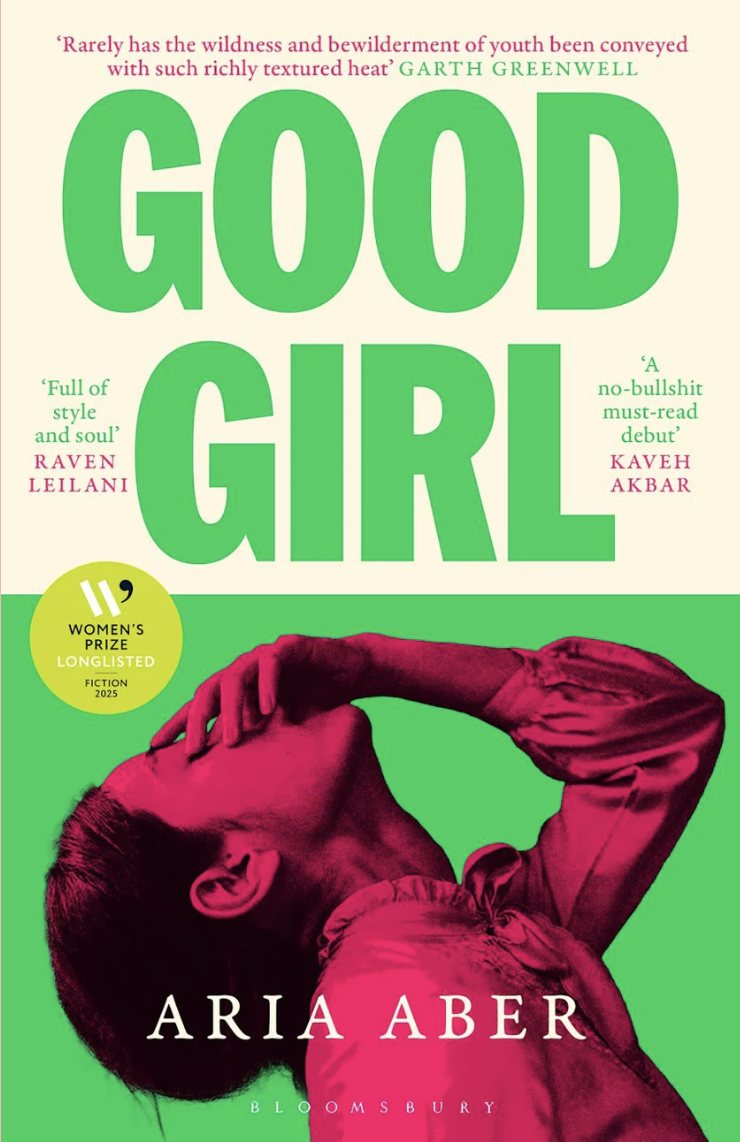
Good Girl – Aria Aber
READ FOR WOMEN’S PRIZE
A coming of age about Nila, a girl born in Berlin to Afghan immigrants. For Nila there is a constant negotiation between her inherited grief and her desire to belong in a culture that doesn’t reflect her. As a result she discovers underground clubs, sex, drugs, philosophy and literature, and finds herself attached to a demanding older American boyfriend.
Growing up meant learning how to love my parents in a language they didn’t understand, and forgiving them in one I barely spoke.
SUZY
● I was a bit dubious of Good Girl at first. It was such a jolt from the exuberant Fundamentally and I wondered whether the cool girl main character would ever let the reader in or would we be held at arm’s length as she wandered from one Berlin nightclub to another.
As I gently moved more deeply into her world, I felt such compassion for Nila and as the novel came to completion I felt like I was some kind of concerned aunty wishing her nothing but joy, peace and safety.
RACHEL
● I’ve always been drawn to books that balance hardship with the transformative power of art. Good Girl is the epitome of this, with the author giving Nila the attributes of artful contemplation and quiet rebellion, in an intelligent, emotionally grounded voice.
Some scenes were hard to read, the clubs, drugs, sex, and seductive chaos of Marlowe, because it was so apparent why Nila was chasing those quick highs. Sometimes I wanted to jump into the book and drag her out of the wreckage. But Aber constructed her protagonist so well I had to trust her and accept it would be both painful and gratifying to watch Nila grow up and find her own way out of the mayhem. – Rachel
Published 2025
Hogarth
368 pages
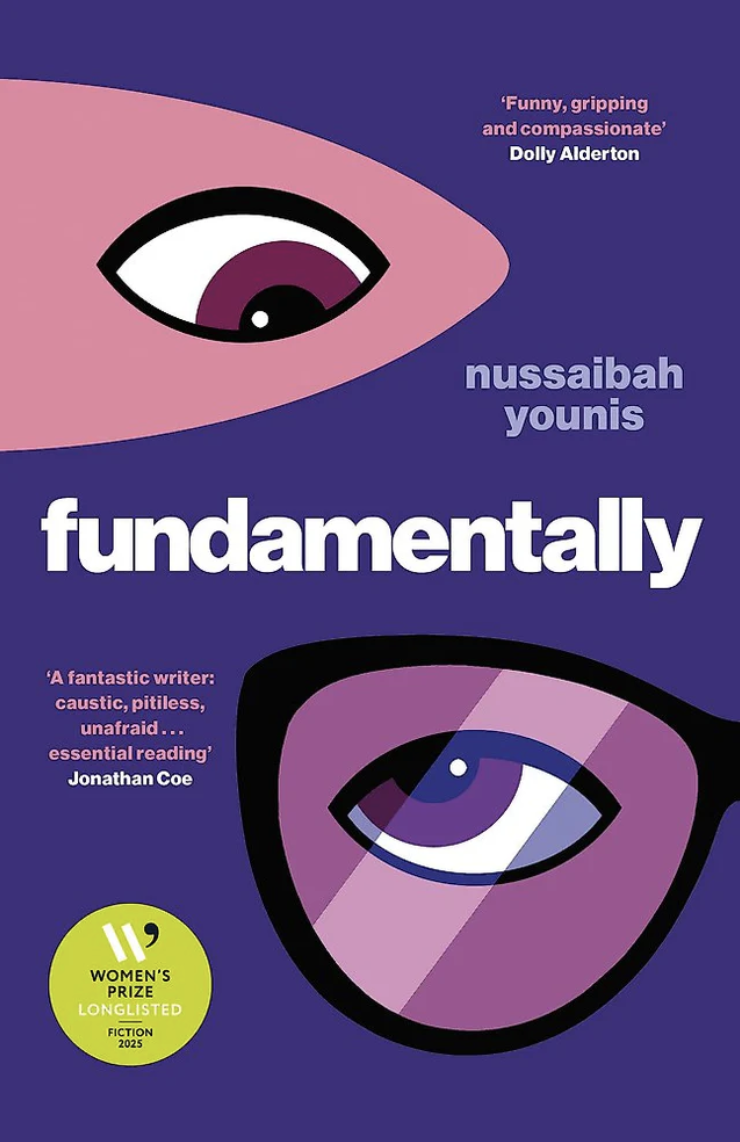
Fundamentally – Nussaibah Younis
READ FOR WOMEN’S PRIZE
Nadia Amin, a PhD graduate, publishes an article on deradicalisation, and ends up with a job rehabilitating Isis brides in Iraq. Relishing the opportunity to escape her claustophobic mother and broken relationship she realises she needs to heal herself as well as the Isis women. Told in a uniquely satirical and humorous narrative.
By normal, you mean like you? A slag with a saviour complex?
RACHEL
● At first, it felt inappropriate to laugh at Fundamentally. The author has taken a serious, politically charged subject and layered it with humour that is anything but subtle, it’s almost slapstick. But as I kept reading, the comedy grew on me, as did the main character, Nadia, with her sharp tongue and vulnerability. I felt like Nadia was the only character with true depth though, the support cast seemed there mostly to serve a function.
While I did learn a lot about Isis brides and the struggles with deradicalisation, the narrative did have its flaws in terms of plot holes and an overly sentimental ending. However, I was never tempted to DNF, it kept me engaged, even if I wasn’t swept away by it. I didn’t love it, but I appreciated what it was doing and I would probably recommend it. – Rachel
SUZY
● This book is shocking in that a comical spin is put on a definitely unfunny situation, but somehow the author does this in a way that doesn’t make you feel like a piece of sh!t when you accidentally smile at some of her hilarious writing.
I really enjoyed it and while the plot is implausible at times, it’s completely forgivable as it’s such a rollicking read.
Published 2025
Tiny Reparations Books
352 pages

We're
currently
reading
 The Free-Range Bookclub
Recent Comments