The Free-Range Bookclub
Bookclubbers without boundaries in Nelson, New Zealand
Remote Sympathy – Catherine Chidgey
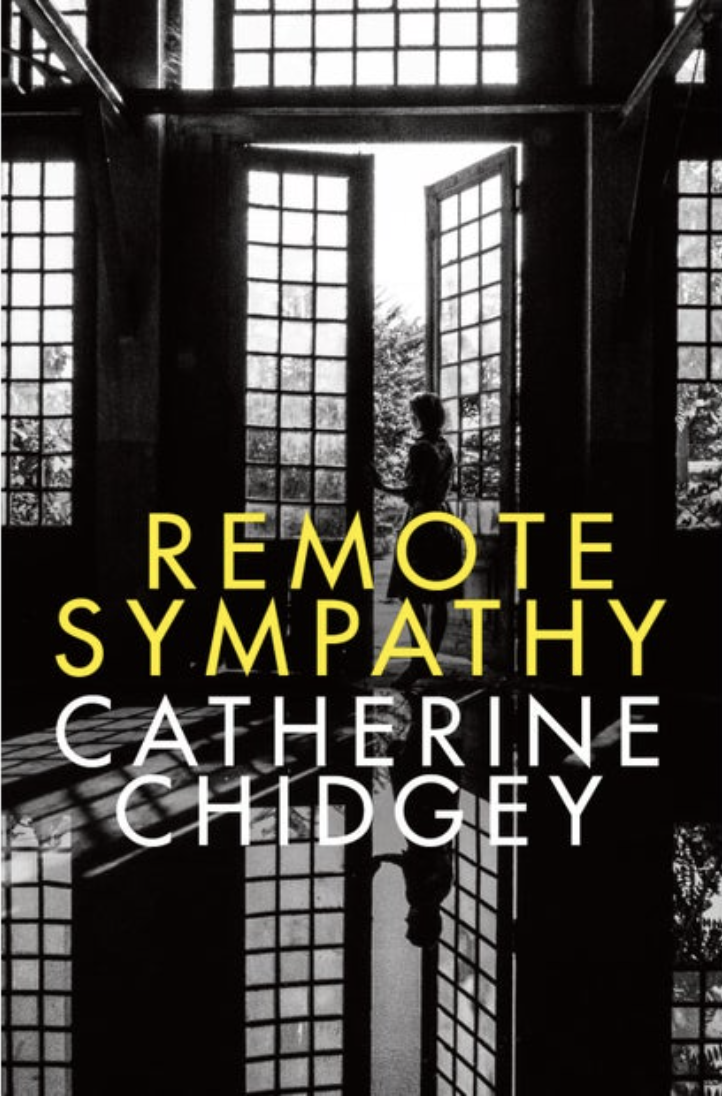
Read for NZ Book Awards
An inmate at Buchenwald concentration camp aids the commandant who is trying to save his wife’s life
⫸ “Remote Sympathy tells the stories of several people and families who all have one thing in common: the Buchenwald concentration camp near Weimar, Germany.
“At the midst of the story are a commandant, placed in charge of the problematic camp, and his young, sick wife whom he’s trying to save; and a prisoner searching for information on his family, who invented a strange medical invention which may just save the commandant’s wife.
“The story is told in alternating dialogues from these characters, Doktor Weber, Herr Hahn, Frau Hahn, who tell their stories, their dreams, their hopes, their personal trials and tribulations living in a most unique situation, where captor and prisoner are secretly working in partnership. A fourth narrative is provided by the “citizens of Weimar” a community which stood by while men were starved and tortured all around them; a community wiling to be silent bystanders.
“The camp was a real place and Chidgey has combined a good portion of fact alongside the fiction. Several real Germans are detailed, along with their crimes and punishments, and some of Herr Hahn’s contributions are comments made by the real Buchenwald commandant when interrogated by the Americans in 1954. This foundation of truth builds a solid base to help humanise the fictional characters and their stories.
“The fact that Chidgey speaks German, has spent a lot of time living in Berlin, and was a recipient of a Berlin writing fellowship are probably why she writes with such authority about this era.”
⫸ “At the onset of reading this book, I looked at the 510 pages and wondered how this war story would be different to the many others that have been recorded over time. But, from the opening pages Catherine Chidgey proved there are so many more stories to be told. I was hooked immediately. Lenard Weber is likeable and I immediately felt connected to his story and his family.
“What’s more I also felt connected to Dietrich Hahn and his family. He was a despicable person who oversaw and instigated Holocaust crimes we are all familiar with. It’s disturbing and revolting and like the residents of Weimar it is sometimes easier to look away. But what stuck with me just as much was the image of Dietrich carving wooden animals for his doting son and desperately trying to save his dying wife whom he loved so much. I wouldn’t say I liked him, but these affections made him more of a complete person, rather than just the villain. I enjoy this conflicting feeling towards a character. It indicates to me an incredibly talented author.” – Rachel
⫸ “Remote Sympathy felt to me like one of the most perfectly written novels I have read in a long time. I wonder whether it was the circular nature of the storyline that felt so satisfying?
“The content was at times completely horrific and it was interesting to get perspectives from characters on both sides. Humanising a leader of a concentration camp is certainly a skill and Catherine Chidgey does this so well, even though of course we are left in no doubt that the man in question is a monster.
“The meticulous research that is referred to in the Author’s Note never felt laboured while reading Remote Sympathy and the blend of fact and fiction was seamless.” – Suzy
——
Published 2020
VUP
522 pages
Bug Week And Other Stories – Airini Beautrais
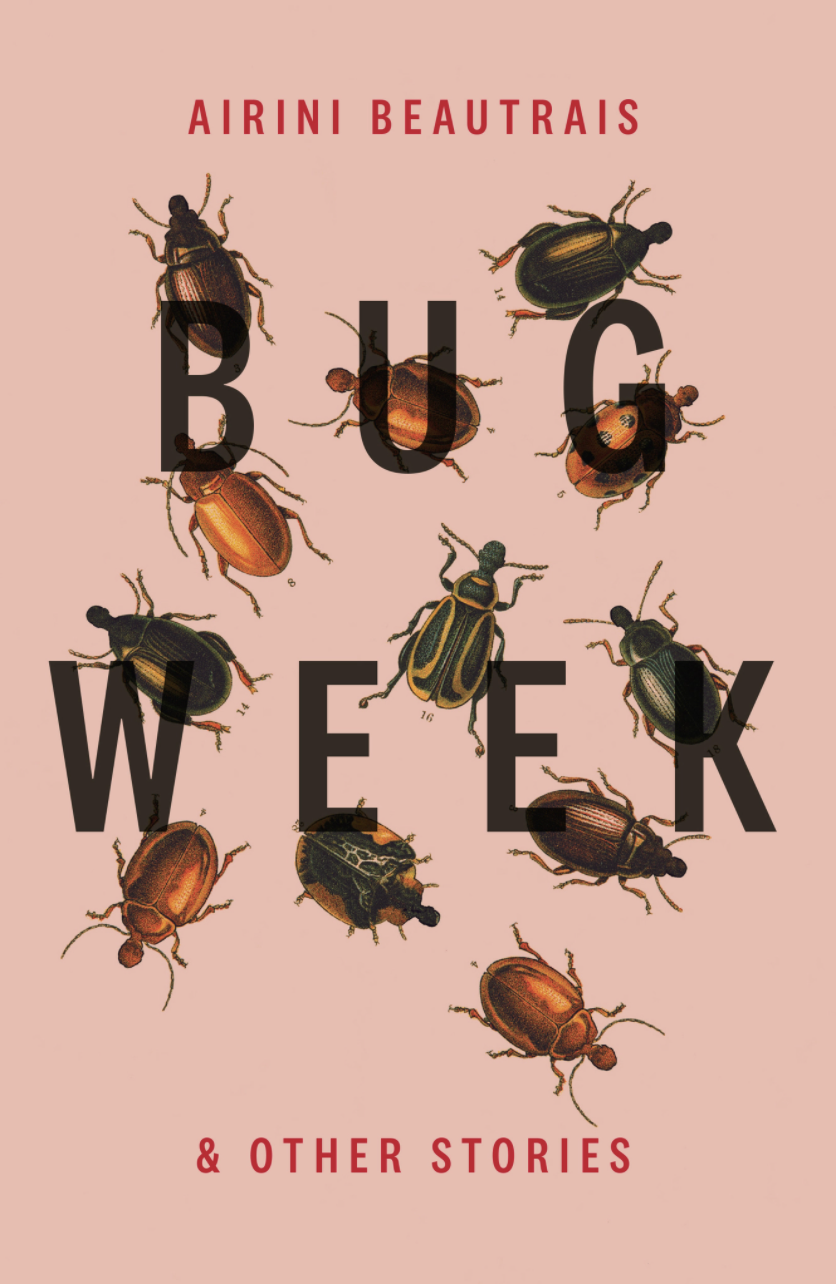
Read for NZ Book Awards
From 1960s Wellington to post-Communist Germany, Bug Week is a collection of short stories that traverses the weird, the wry and the grotesque fragments of people’s lives.
There are bug collectors, necrophiliacs, an albatross at an open mic night, and body parts washed up on a river bank. The social settings and voices are never the same, rather the stories showcase a varied and authentic collection of characters, relaying unexpected stories of human relationships. Despite the focus on the cynical and perverse, there is an element of comedy amongst the tragedy.
⫸ “I have some kind of weird resistance to short stories in general – maybe too much analysis in sixth form at school rather than reading for pleasure? So I started Bug Week with a bit of trepidation. I wasn’t just pleasantly surprised, but genuinely enjoyed these beautifully written stories.
“Often a gentle tone would lead into an unexpectedly grim event however as a reader I continued to be drawn into a story and lulled into a rhythm only for a turn of events to throw things off balance. This was never jarring in a way that made for an unpleasant reading experience, it was done perfectly.
“I tried to guess which of my colleagues would play the starring roles of the eponymous Bug Week and for that I can only apologise to them. I also do need to mention the final story which probably goes down as The Worst Short Story I Have Ever Read.” – Suzy
⫸ “Bug Week is a good example of why I don’t often read short stories. Just as I fall in love with the story and become emotionally invested in the characters, it is over. I get new book apprehension and end-of-book despair repeatedly and the mid-story joy doesn’t long last enough. I know this is a bit of a backhanded compliment, in that I enjoyed the book so much it annoyed me there wasn’t more to enjoy, but this is my usual reaction to excellent short story collections. I will add that this is one of my favourite ever short story collections and I would strongly recommend it.
“I felt connected to each and every story in this collection; they were engaging, connected and piqued my interest instantly. My favourite story was The Baddest Toroa In Town in which an albatross takes the stage at open-mic night, interrupts a poetry recital by a fisherman and urges the crowd to stop plundering the oceans. While funny and slightly absurd it makes the point that art is often a more effective medium for societal and political messaging than formal appeals to the higher ups.
“Beautrais has a knack for conveying a maximum amount of content in a minimal amount of words and has an appealing wry humour. The characters are structured in identifiable Kiwi ways, their social quirks and their chill, no-nonsense tone. And the New Zealand settings anchor the narratives geographically and historically. Even the German-set stories gave me a NZ Lit vibe in that they reminded me of Katherine Mansfield’s In A German Pension, in which she had a satirical focus on the grotesque behaviours of ordinary people.” – Rachel
——
Published 2020
VUP
184 pages
Sprigs – Brannavan Gnanalingam
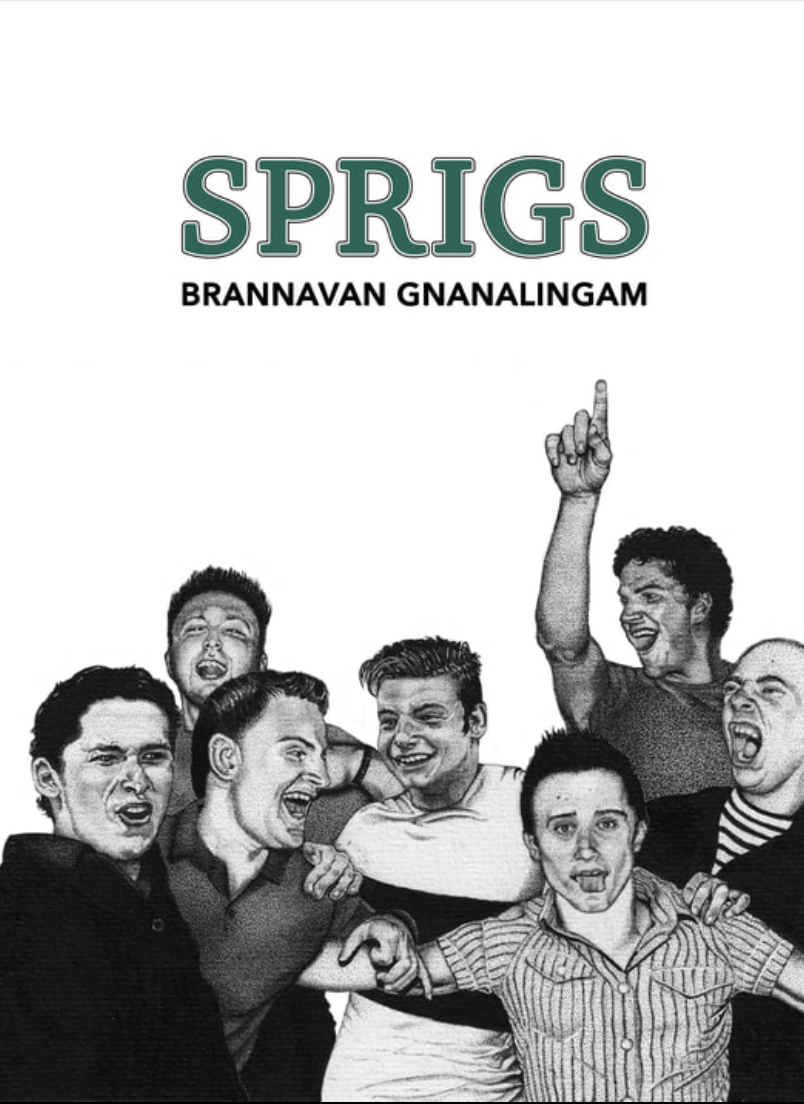
Read for NZ Book Awards
A brutal story of rugby, rape and toxic masculinity.
⫸ “After a Wellington School’s revered rugby final, a 15-year-old year is gang raped at the after party. We are then made privvy to the thoughts, actions and emotions of all involved. From the victims, to the perpetrators, the families, friends and even the school leaders, unsure how to deal with the aftermath. And that is the real point of the novel, understanding how far the damage of such a crime extends. Obviously the victim is deeply harmed but such a display of hurt and hate damages all of the community.
“The book opens with a trigger warning, and though the defilement is not detailed as it happens, we are fed disturbing snippets of memory and large chunks of reaction and emotion in the remainder of the pages – a reminder of the flashbacks and stabs of emotion which are with victims forever.
⫸ “There were two things that put me off Sprigs before I even started reading: a ‘content will disturb’ warning, and a three-page character list. Then there was a 70-page rugby game …
“However, in the end I did enjoy the book more than I thought I would. It was horrible, revolting and downright sad, but I appreciated how the author took us into the minds of everyone involved. Not only the victim but the rapists, who all reacted in very different ways after the event, from remorse to indifference.
“I hadn’t thought (hadn’t want to think) about what goes through a rapist’s mind afterwards, but I imagine this is a realistic portrayal. That ability to produce a study of their minds was ultimately what impressed me. It is a grim book, with a heavy storyline, but there is life too, and a little bit of hope. Though I can’t think of many people I would recommend this to.” – Rachel
⫸ “I kind of scoffed at the content warning at the start of Sprigs – I have read so many books where so many horrible things happen and therefore thought I was kind of immune to whatever storyline might be presented to me.
“I think Sprigs is one of the very few books I have not been able to finish due to the upsetting content. Over the years I’ve become very adept at skim reading or skipping sections that linger on violence. It was impossible to do this with Sprigs as assault isn’t just part of a storyline, it is the storyline.
“The scene in the hospital with the victim and her mother made me feel physically ill – the sadness, the deflection, the shame, the guilt, the how-do-I-make-this-go-away-forever. It indicated the beginning of a horrendous journey that as a reader I did not want to be a part of.
“I felt at that stage I couldn’t accept any storyline outcome that didn’t involve justice at the least and extreme vengeance at most and I did not get the sense from Sprigs that this was going to happen – it was this accurate reflection of reality by the author that was perhaps hardest to bear.” – Suzy
—–
Published 2020
VUP
438 pages
Nothing To See – Pip Adam
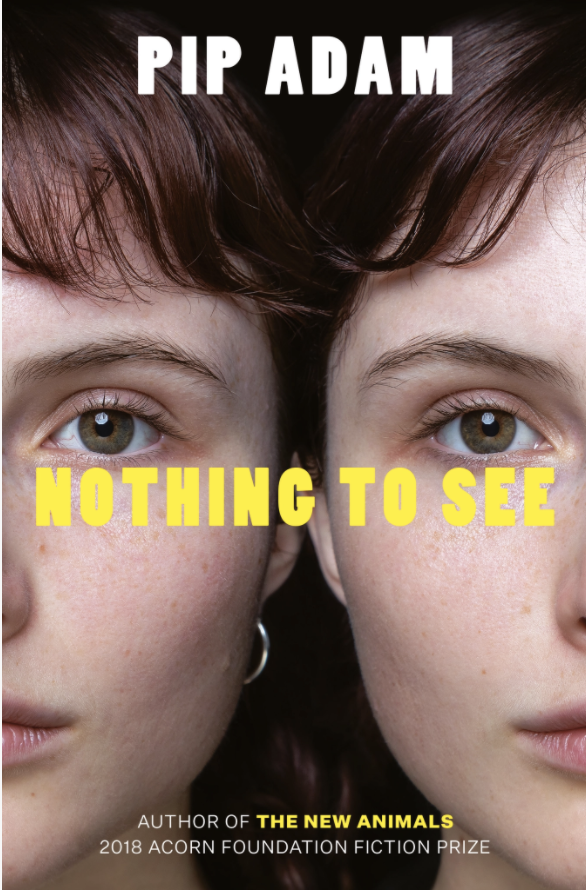
Read for NZ Book Awards
The lives of friends Peggy and Greta are detailed in three different decades in this book. In 1994 they are aged 24 and breaking free of alcohol and a traumatic past; in 2006 they have jobs and are coping well; in 2018 Margaret is working in surveillance technology and struggling with mental illness.
“It sounds banal but the book is about more than the sum of their every day activities. It showcases how trauma can lead people to live in a transitional state with a fragmented sense of time, space and self; people who, just by existing, challenge the norms of society.
“Without adding a spoiler alert, the characters in this book certainly do have complexities that challenge society norms and your own understanding of personality and identity. For the characters, self-acceptance is no easy feat, but they persevere for if they do not accept their own intricacies, no one will. And ultimately, understanding their intricacies is the beauty of the story.”
⫸ “Nothing To See had me interested and engaged right from the start. A relatively straightforward storyline soon gave way to the sense that something was definitely not right, but what that was exactly …hmmm.
“I was somehow in the position throughout the novel of discomfort with the main characters. I just wanted everything to be normal. Was that the author’s writing or was it more an indictment on me and my own lack of tolerance? It couldn’t have been empathy because the characters were clearly happier when in their state of being ‘different’.
“There was a bit of confusion for me at the end but the twists were definitely nowhere near The New Animals. A beautiful read and one I would definitely recommend.” – Suzy
⫸ “I’m torn on the success of Nothing To See. Part of me admires it for its unique take on character constructs, for it certainly was unique and offered an insight into the minds of people who identify differently to what we expect. This storyline is complete and interesting and in my mind was story enough.
“However I expected the “surveillance capitalism” slug that accompanied the book’s marketing to play a bigger part in the story. I was constantly analysing the plot to see how this fits in. There’s mention of surveillance technology in the 2018 chapters, but to be honest I didn’t think this made it a major theme of the book, unless how we perceive Peggy and Greta is a metaphor for this.
“If I had accepted the book as is and didn’t look for extra meaning I think I would have enjoyed it more. But all in all, it is very cleverly written and intelligent, and it represents the New Zealand fiction genre with mana.” – Rachel
——–
Published 2020
VUP
380 pages
Nineteen Eighty Four – George Orwell
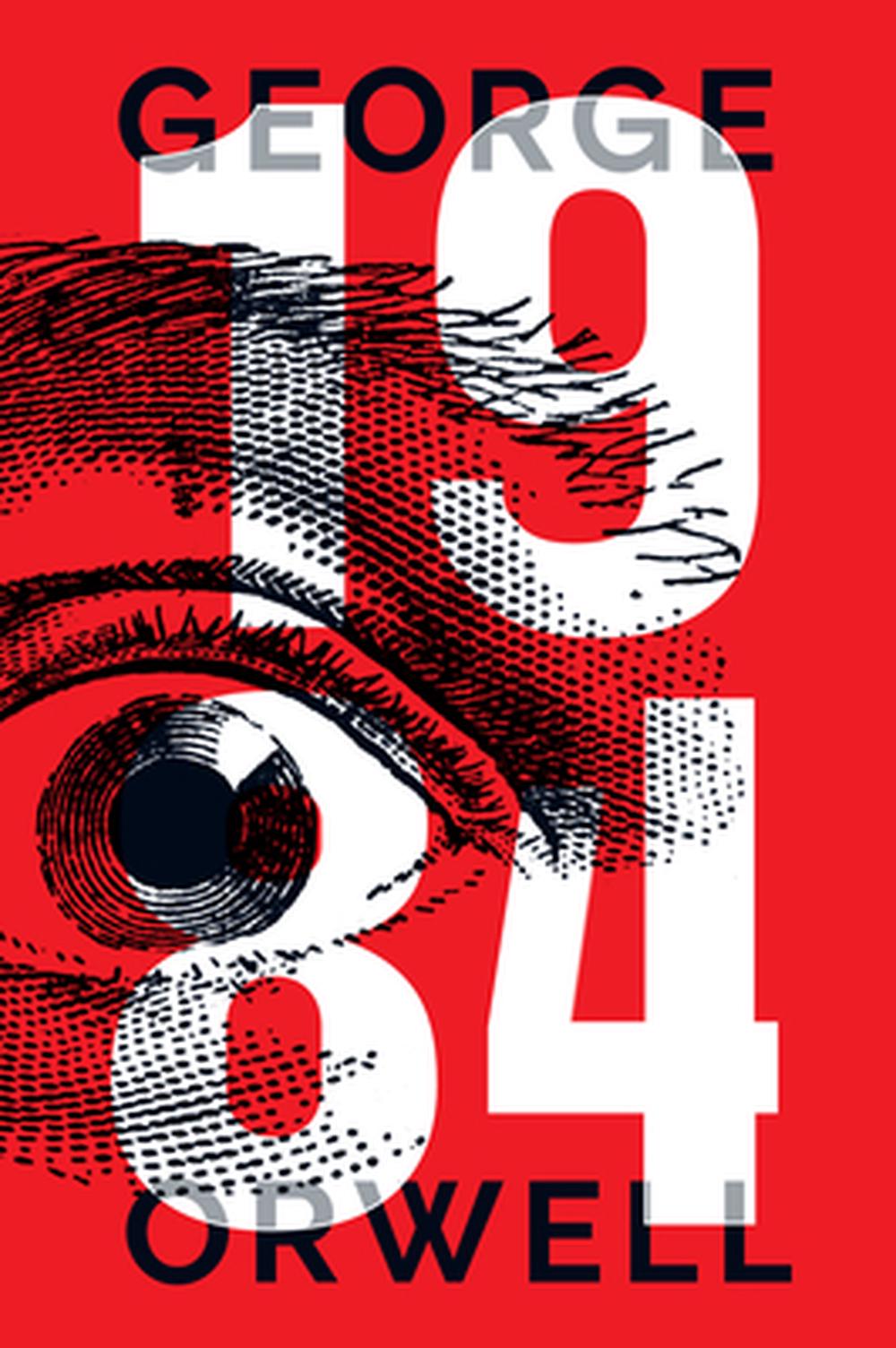
Chosen by Becks
Political satirist George Orwell’s nightmarish vision of a totalitarian, bureaucratic world and one man’s attempt to find individuality..
⫸ “Winston Smith is both an anti-hero and an everyday man who re-writes history for a living. He lives in Oceania in an apartment where the all-seeing leader, Big Brother, can observe his every day activities via a telly screen. There are no freedoms, no liberties, not even to say how one truly feels for fear of being vaporised by the thought police.
Who controls the past,’ ran the Party slogan, ‘controls the future: who controls the present controls the past.
“This is Nineteen Eighty Four. Set in 1984. Written in 1947 when such things as telly screens and Speak Writes did not exist, though the atrocities of Hitler and Stalin were firmly in Orwell’s mind.
“It is therefore no surprise that freedom and enslavement are at the heart of the story. Via Winston’s life, Orwell warns us what can eventuate if we allow absolute power to reign again; if we allow our rights to freedom and free speech to be eroded. He builds real places, real characters, real predicaments and places them in a dystopian reality where Government has total control over everyone’s day-to-day thoughts, actions and relationships. It is hard not to transport yourself and feel the desperation and the urge to rebel that Winston does.
⫸ “I was a Nineteen Eighty Four virgin before this bookclub and as I put something into words I realise the book has stirred up many emotions in me. I mean, wow what a truly scary book! I found it fascinating especially with my first read being at a time when its seems so relevant.
“I was left feeling acutely saddened by the idea that an entire population could so easily be brainwashed. This made me look at our reality in a whole new light. Is this happening to us in today’s world? Is the coverage of world events we are fed through our media subjective? What of the information we are bombarded with via social media? Is this not a form of brainwashing and censorship? This book has raised many questions in me.
“I can see how Nineteen Eighty Four has been an influential novel not only for the dystopian novels that followed it, but for us all.” – Jodie
⫸ “I loved reading Nineteen Eighty Four again, but there was a sense of disappointment attached this time – because I knew I could never feel the same shocked delight I experienced on my first reading.
“Although I knew the story, and knew what was coming, and there was no shock value, what I still did marvel at was Orwell’s incredible ability to invent such a unique and enthralling world that felt so close to home. Winston is a likeable character whom I felt I understood, and that is important to me when reading fiction. His situation is unbearable and impossible to overcome and I felt this intensely.
“Without spoiling anything, this reading also reminded me how perfect the ending is.” – Jo
⫸ “After becoming spellbound with Nineteen Eighty Four as a teenager, I have grown up considering how small aspects of the story were evident in real life. In current times, where liberties have been tightened due to global events, I feel as though Nineteen Eighty Four is more relevant than ever. And that is scary.
“But Orwell is not prophetic, rather he wrote a timeless novel about leaders at their worst and human beings at their weakest, something that is completely relatable when studying the world history of events. A clever man who has written a warning in fiction, and something that can, literally, change the world.” – Rachel
——–
Published 1947
Secker & Walburg
298 pages
Victory Park – Rachel Kerr
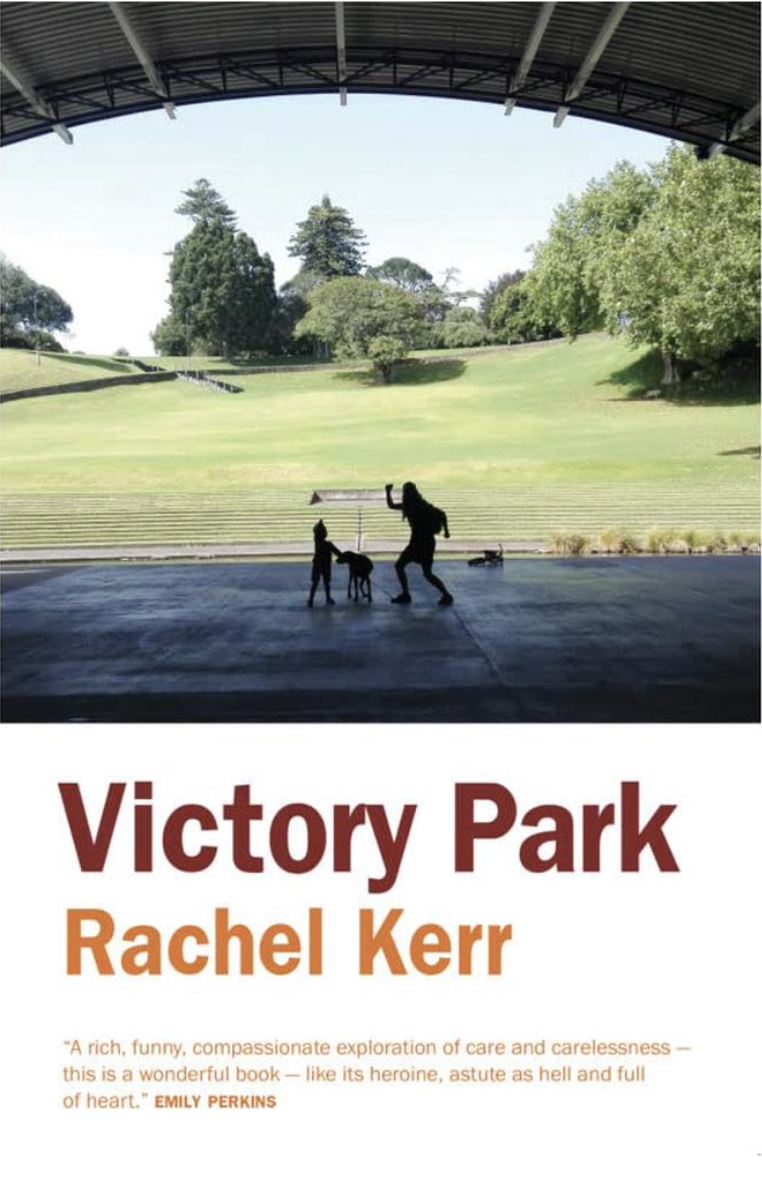
READ FOR NZ BOOK AWARDS
Kara is a young widow, living in the Victory Park council flats with her young son Jayden. She makes a living by minding other people’s tamariki in her home but struggles to get by financially and emotionally.
Her new neighbour, Bridget, interests her. She is the wife of a disgraced Ponzi scheme fraudster and is lying low, albeit while maintaining her luxury lifestyle. In need of friends, Bridget manages to draw Kara into her complex, privileged and exploitative life. The characters are convincing and well drawn. I had a lot of empathy for Kara and could understand why she was lured into Bridget’s world, why she wanted to help Bridget be a better person and how she got trapped by her own kindness.
Kara took a few deep breaths, as if calming herself down would help Bridget, then she hustled the kids on. What kind of comfort could she offer when she had no idea what was happening? Bridget could have warned her she was in the middle of a meltdown.
The book is very Kiwi, with recognisable locations, situations and character behaviours. It raises important topics such as how women are (or are not) valued, and highlights the plights of low-paid, single working parents. It could have been easy for the story to be moralistic or the characters to be caricatures but it felt authentic and I was invested in their outcomes. – Rachel
Published 2020
Mākaro Press
243 pages
The Swimmers – Chloe Lane

READ FOR NZ BOOK AWARDS
Twenty six year old Erin is at the bach visiting her mum who has motor neurone disease, only to be informed her mother wishes to take her death into her own hands.
Erin has walked away from a job after a failed affair with a married man and was looking for solace with her mother and aunt but is thrown into the ultimate state of despair.
I’d dyed my hair a few days before and, while the box had described the dye as ‘darkest intense auburn’, the result was more of a pink grapefruit. When I emailed my mother a photo she had responded: OH NO MY DAUGHTER HAS JOINED A CULT WHERE THEY WEAR WATERMELON HATS. Her comment didn’t really make sense, but it had deflated me. She could still be blunt – her illness hadn’t changed her that much.
Her coming to terms with the upcoming grief is of the quiet, contemplative type, combined with inappropriate actions. It is different to how grief is often portrayed but felt like an authentic response, and is just as devastating as any other more overt reaction.
It’s a book full of tough topics and may not be everyone’s cup of tea but as an exploration of deep emotion it is very moving and well written and worth reading. It’s also topical as euthanasia is in the process of being legalised in New Zealand.
Published 2021
Victoria University Press
218 pages
Toto Amongst The Murderers – Sally J Morgan
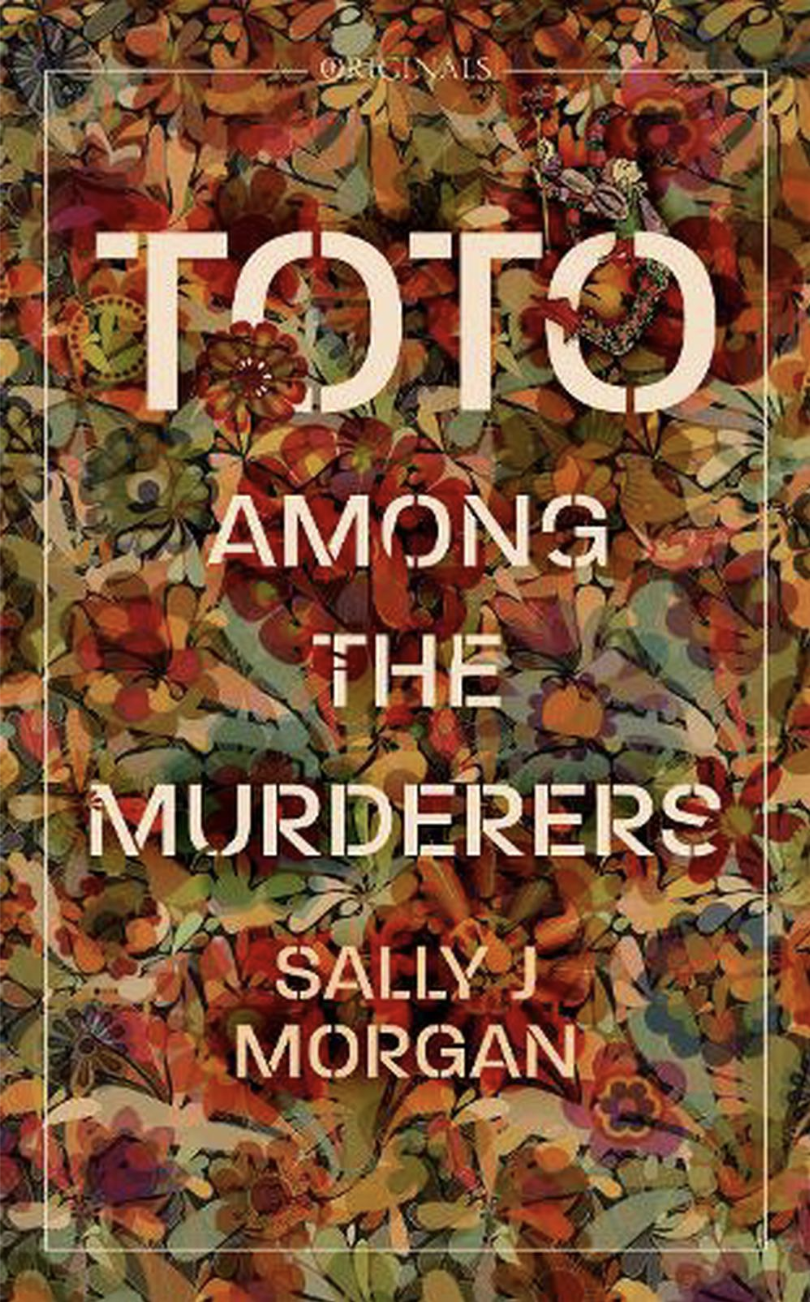
READ FOR NZ BOOK AWARDS
● In the 1970s, at age 21, Sally J Morgan was hitchhiking in Yorkshire and was offered a lift by Fred and Rosemary West. This close call inspired her novel Toto Amongst The Murderers, in which the protagonist, Toto, is fond and completely unafraid of hitchhiking despite not always attracting people with the right intentions.
Toto has graduated from art school, living in an undesirable area in Yorkshire and takings risks as she lives wildly, happy to not know where her life is heading. As she does so there are growing reports about attacks on women and slowly the violence creeps closer to her home and to her.
Nel began calling me Toto when we were flatting together as students in Sheffield. It started as a joke because of my surname and it stuck because she thinks I’ve got the same lack of concern for consequences as that little dog from The Wizard Of Oz. According to her I’m always running off without warning, stealing wizards’ sausages and biting witches’ legs. She thinks someday one of those witches will bite me back.
This is an exploration of the time when Fred and Rosemary West were skulking around the streets offering lifts to strangers and the Yorkshire Ripper was predating on young women. As such it looks at the female experience in relation to relationships, and fears over safety. But also, self worth and self preservation and friendships that enable positivity.
Toto is a good character. She has a bit of Holden Caulfield about her, wandering aimlessly, in search of something she’s not quite sure of. But Holden didn’t have to worry about getting raped or murdered and this is an important point of this story, that as women we want to go about our lives as men are able but have to have a constant fear about our safety in the back of our minds.
The setting is atmospheric. I haven’t been to Yorkshire but I’ve seen several readers credit Morgan with re-creating a true to life ’70s Yorkshire. The language is lyrical, however it was the plot, the message and Toto herself that kept me intrigued. I can understand why this did not make the NZ Book Awards shortlist, but am glad it made the longlist. – Rachel
Published 2020
JM Originals
352 pages
The Harpy – Megan Hunter
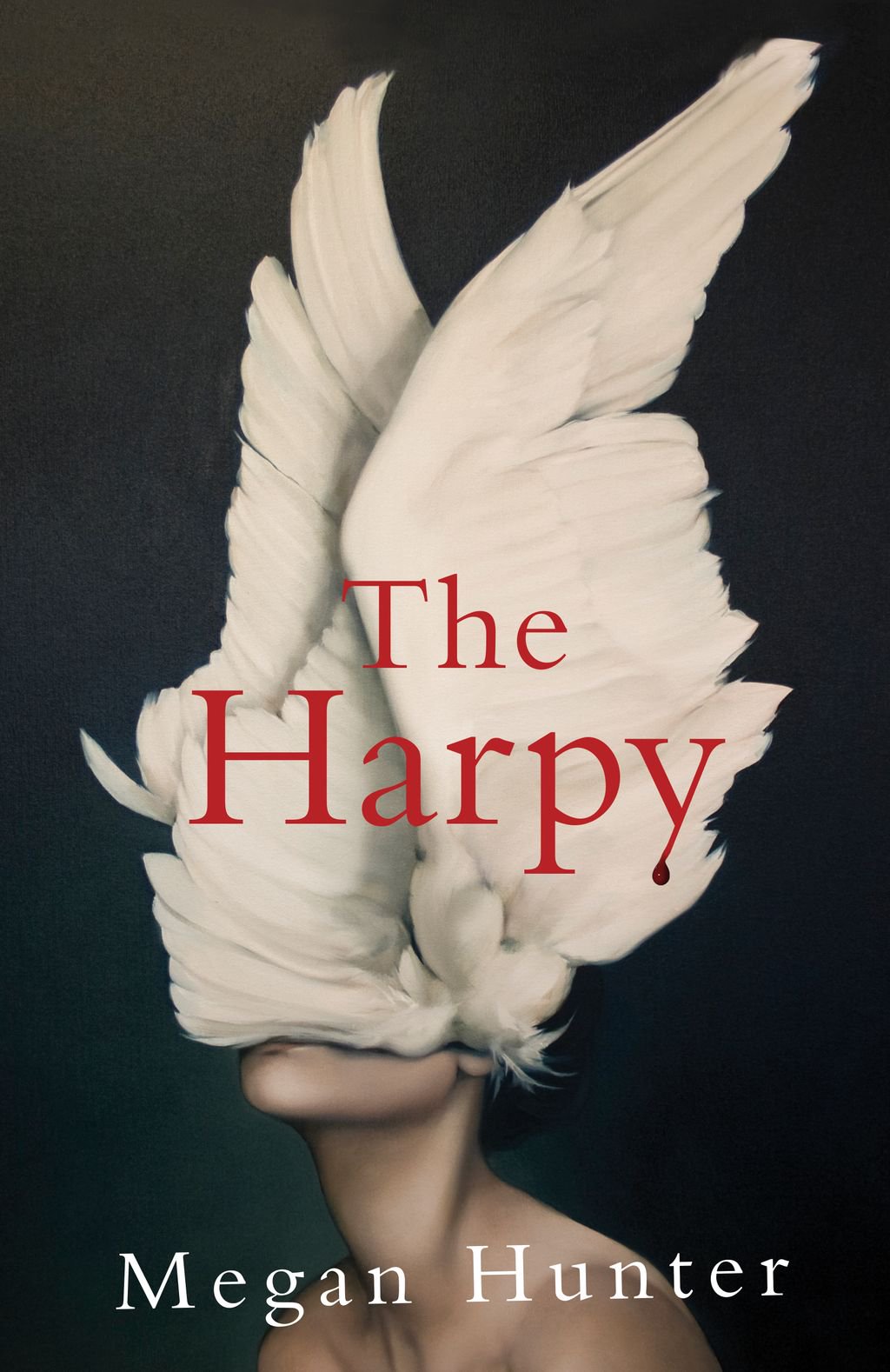
Chosen by Rachel
A wife is permitted to hurt her husband three times after his affair is discovered.
⫸ “In Greek mythology a harpy is a half bird-half woman. As a bird of prey it has wide wings and sharp talons, yet the face of a woman. They are agents of punishment, abducting people and torturing them on their way to Hades in the underworld.
“In Megan Hunter’s book a bored housewife becomes harpy-ish after she learns of her husband’s infidelity. In an effort to keep the family together the couple agree she shall be allowed to hurt him three times as revenge.
“As Lucy carries out her retribution, Hunter details it with prose that is distant and numbing. One reviewer described her writing style like watching the family inside a specimen jar and that is an apt description, for the reader is always treated like an outsider peeping in; a fly on the wall. A harpy circling above.
“Lucy is a sad character with no friends and a lonely existence. Her thoughts and emotions, her recollections of her dysfunctional childhood are all highly detailed. Even the detached part of her that relates to being a harpy gets a voice in italicised sections throughout. Yet her husband Jake is not allocated much of a personality, nor a motive for his infidelity. His characterisation is vague and it could have been beneficial to learn more about him.
“Ultimately things unravel, like a slow motion train wreck before our eyes. Lucy becomes consumed with being a harpy and its clear from the start this was never going to end well.”
“So would we recommend this book? Jo: “yes but I’d be selective about who I recommended it to.” Jodie: “yes it’s engaging and beautifully written.” Becks: “yes I would. Even though it was a bit twisted it was beautifully written and got me thinking.” Rachel: “I wouldn’t offer a blanket recommendation but to certain people yes I’d definitely encourage them to read it.”
—–
Published 2020
Grove Press
194 pages
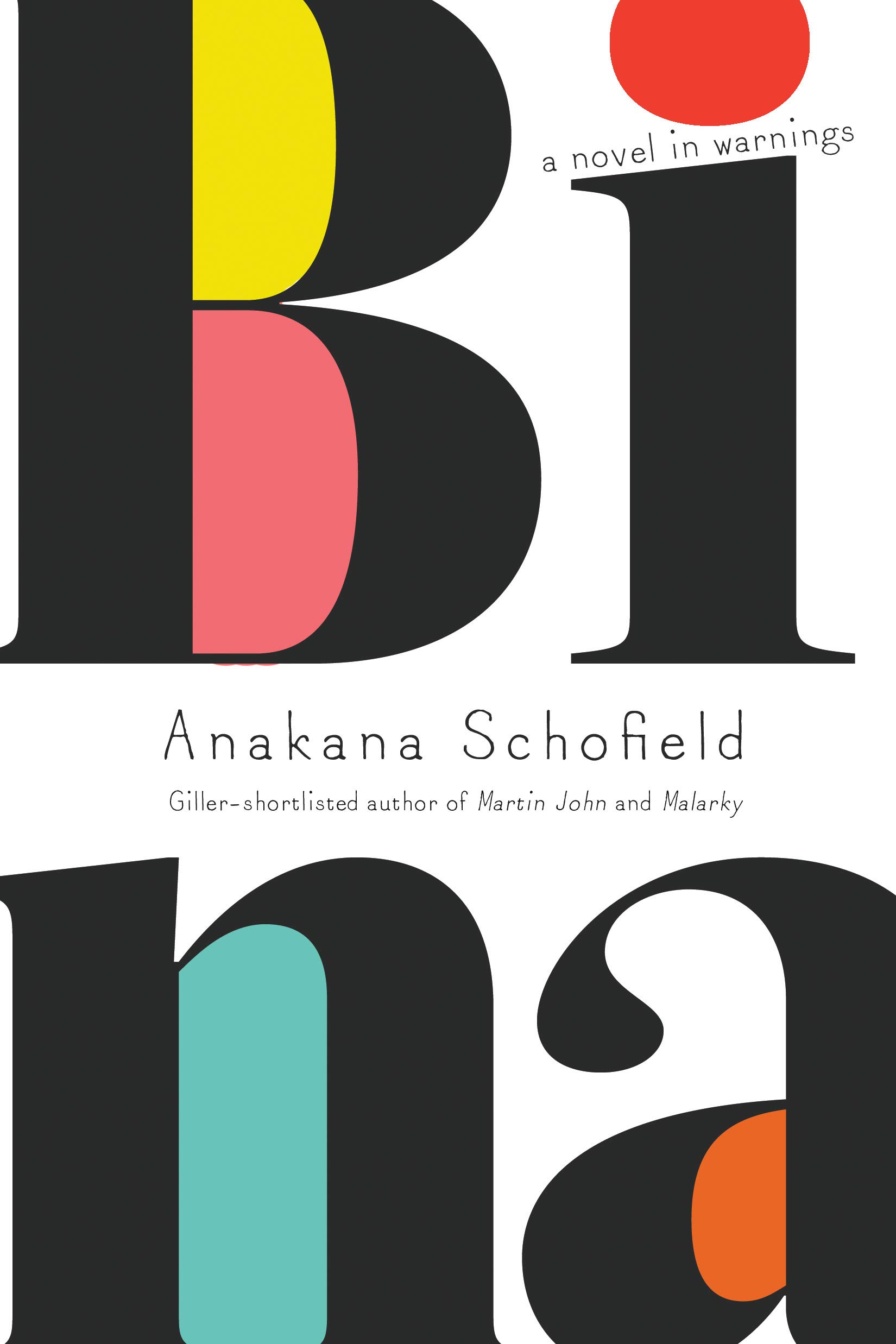
Bina: A Novel In Warnings – Anakana Schofield
READ FOR BOOKCLUB
Chosen by Jo
A disillusioned woman in her 70s writes on the back of envelopes about her life, dedicating her story to all the women who have had enough.
⫸ “Anakana Schofield was quoted as saying literature does not exist only to provide pleasure. It should also ‘challenge and perturb us.’
“Both sentiments would be accurate of how the Free-Rangers felt about this novel. We all admitted to struggling through the initial pages, wondering where the repetitive, distracted and sometimes vague mental wanderings were going. But at some point things clicked into place and the challenge of reading Bina became more a pleasure.
“Bina is a character who featured in Schofield’s debut Malarkey as an old woman attacking a plane with a hammer during a protest. She had such presence Schofield decided to give her her own platform.
My name is Bina and I’m a very busy woman. That’s Bye-na, not Beena. I don’t know who Beena is but I expect she’s having a happy life. I don’t know who you are, or the state of your life. But if you’ve come all this way here to listen to me, your life will undoubtedly get worse. I’m here to warn you …”
“As she scribbles poetic warnings on the back of till receipts and used envelopes, Bina tackles big topics such as grief, frustration, anger, friendship and womanhood. It will take time to work everything out, though. Who exactly is Eddie; why are activists picketing outside her home; why is her back yard full of medical waste; why are the police investigating her over the death of her best friend Philomena.”
“You could say the novel is a kind of confessional for Bina, though she does admit: “if you write out everything you think they’ll think it’s everything you did, rather than everything you thought about doing.”
⫸ “Bina’s musings were frustrating. However, that confusion kept me guessing and therefore invested in the story. Plus there was a great sense of satisfaction once I’d worked out her meaning or connected the plot dots. After the final page there were still questions left unanswered, which can sometimes be disappointing, but it does also lead to further pondering which is always a sign to me that I’ve read something thought provoking and worthwhile.” – Jo
⫸ “Bina is a strong, outspoken woman who has lived life and taken action where she felt necessary. I liked her a lot. Though it took me a while to get to know her as her opinions and warnings are sometimes vague, and rambling. But she is a 74 year old woman so I’ll forgive her that. Bina is a quick book to read but attention to detail is required for maximum enjoyment. I would recommend it to those who enjoy something outside of the box.” – Rachel
⫸ “I initially struggled with Bina as I enjoy a more plot driven storyline. However, the structure of the novel was unique and intrigued me which gave me the motivation to press on. I appreciated the combination of wittiness and sadness, which helped build a more complete picture of Bina. I would recommend this novel for its thought-provoking qualities, but word of warning, you will be left pondering it for days after you have finished.” – Jodie
—–
Published 2019
Knopf Canada
336 pages

We're
currently
reading
 The Free-Range Bookclub
Recent Comments