The Free-Range Bookclub
Bookclubbers without boundaries in Nelson, New Zealand
Bookerthon – 2022
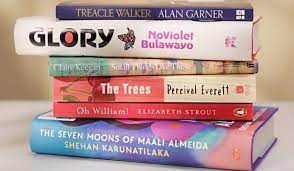
❝ The announcement of the long list was an impressive start to the 2022 Booker season. Strong contenders from around the world covered off important real life events or offered evocative interpretations of them. We had already read some of the books and were immediately drawn to others, so continued reading eagerly.
The shortlist was not exactly as either of us would have guessed but we still had some of the final six to go and were intrigued to discover why some of our favourites were omitted from the finalists’ schedule.
What we did find were recurring themes and ideas that suggested to us that events of the world in recent years are really causing us to examine more closely what it means to be a part of humanity and community and what our obligations are to both preserving the past and bettering the future.
As Mama Z in The Trees demonstrates by chronicling the names of the lynched and predicting one character’s death, it is knowledge of the past that allows us to make sense of the present and foresee the future.
While we experienced a range of emotions from delight and intoxication to confusion over the individual titles, the essence of the collection was resounding and affecting.
There were other commonalities amongst the group too, especially in the thematic and structural presentations employed to represent concerns about the past and the future. Satire, politics, history, folklore, ghost stories and religion were present in multiple works. Even Trump appeared more than once! Plus, unlike Bookers of the past, three of the novels were not lengthly, with two of them seeking word perfection with absolute minimal word counts.
Words not only mattered but they were power. Words were muti. Words were weapons. Words were magic. Words were church. Words were wealth. Words were life.
Glory – NoViolet Bulawayo
The Trees, as mentioned, examines historical lynching and modern day racism. The lynched rising from the dead was perhaps the most overt example of the past coming back to haunt us.
Treacle Walker is very short, using folklore, religion and ethereal figures to produce a pure form of literature which examines the fluidity of the various realities that exist for different people.
The Seven Moons of Maali Ameida is a satire set in the Sri Lankan civil war, featuring a recently passed figure trying to make sense of and clear up his past so that he can pass through into the afterlife.
Glory is also satirical and set in another conflict, that of Zimbabwe under Mugabe. Its recent historical events calls for closer inspection of what is happening for everyday people under the current regime.
Small Things Like These recalls Ireland’s religious history in a short, word perfect novel. We loved the main character who only wanted to pass on the love he had had as a child to someone else in need.
Oh William! features the well known character Lucy Barton scrutinising her first husband William, and therefore avoiding self examination, and how this extrapolates into their current friendship and her own present.
Many of these books also highlighted the position of individuals to identify injustices and to speak out. As a community it is easy to not be the one who makes a fuss, but as a collective, that transcends into acceptance and as we have seen from history and from this collection of books, complicity can lead to the most horrendous of acts.
Bill Furlong in Small Things Like These has the moral courage to affect change without fuss, and if everyone had the bravery to quietly stand up for their beliefs, perhaps some of our histories wouldn’t be quite so worth writing about.
And as Mama Z asks three times near the end of the The Trees, “Shall I make him stop?” indicating we can stop injustices, the choice to stop exists and each of us as individuals need to make that decision rather than be part of the complicit collective.
Suffice to say, the short list this year was quite an emotive ordeal. It feels like fiction for fiction’s sake is a thing a of the past and the authors of today are maximising this incredible platform to inform, inspire as well entertain. As Suzy says, it was a privilege to be accepted into these worlds and to hear these messages.
❝ I so enjoyed this shortlist. Even the impenetrable mayhem of Treacle Walker had its place as yet another whacky shortlister to add to a long list of whacky shortlisters we have come across over the years.
For me the standout was Glory which was incredibly impactful and so intelligently written. I am truly in awe of NoViolet Bulawayo and what she has done.
The next four books were also stunning and so affecting, and they have sat with me for days after finishing them. The authors have all written with such grace and skill – it has been a privilege to be able to immerse myself in their worlds. – Suzy
❝ I almost want to choose a four way tie for first: Small Things Like These, Glory, The Trees and Oh William! To have Oh William! fourth on my list is not an accurate portrayal of how much I liked it, nor how likely I think it is to win.
In the end I have picked Small Things Like These for the gong. While it offers so much, as the others do, Claire Keegan has shown great restraint to get her message across. Not only in the total word count, but to finish the book at a spot where most would consider it was just getting good. To raise the topic of shameful Irish history without drowning the reader in horrid details and moralistic sentiment, and to use so few words to produce such a huge effect, I think, should be recognised over other important stories that use ten times as many words.
I wouldn’t be unhappy if Glory, The Trees or Oh William won. And even though The Seven Moons of Maali Amedia wasn’t one of my favourites I could understand if it beat the rest. However, I think Treacle Walker winning will be a disservice to the half of the reading population who had no idea what was going on. (That includes me). – Rachel
Suzy’s favourites
Glory
The Seven Moons of Maali Ameida
Small Things Like These
The Trees
Oh, William!
Treacle Walker
Rachel‘s favourites
Small Things Like These
Glory
The Trees
Oh William!
The Seven Moons of Maali Ameida
Treacle Walker
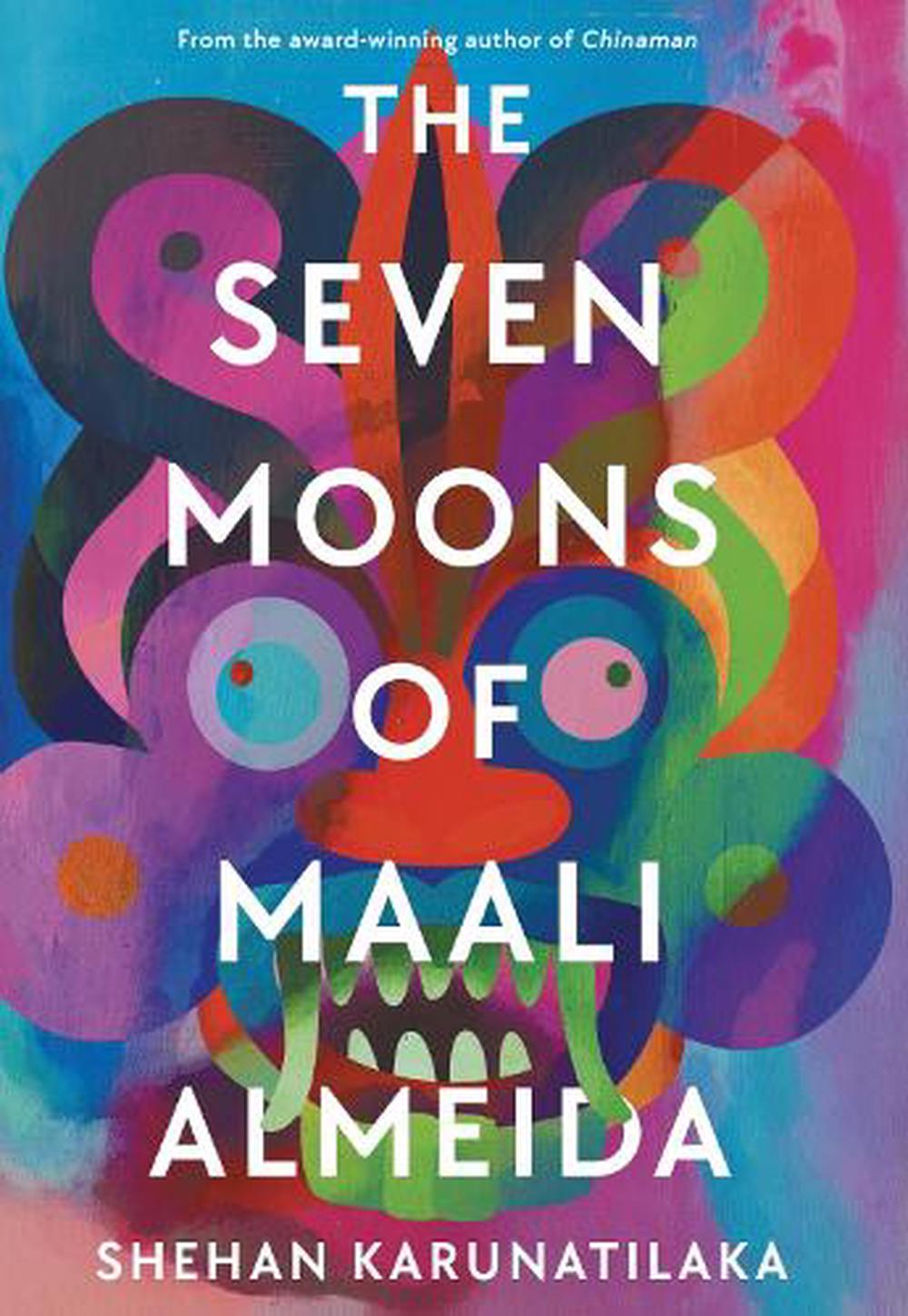
The Seven Moons of Maali Ameida
READ FOR BOOKERTHON
A war photographer dies in 1990 during the Sri Lankan civil war and is caught inbetween life and the afterlife. He has seven days, or seven moons, to discover who killed him, ensure a series of important photographs he has taken are discovered, and to reach ‘the light’. A ghostly guide assists him in connecting with the living as he pursues his answers.
❝ I was reading The Seven Moons of Maali Almeida while struggling night after night with very little sleep – awake for hours at a time in the early hours of the morning while endeavouring to get through a book about a soul caught ‘In Between’. Well let’s just say everything was starting to feel quite tangled and confused.
The struggle in getting through this book sat entirely with me and my sleep-deprived brain and is not a reflection of what is a completing engaging, yet devastating, storyline.
There is something extremely powerful about a book written about war where humour is used so adroitly and regularly. It gives the reader breathing room and space and makes the interspersion of extreme cruelty and suffering even more shocking.
All of the characters, whether alive or dead, are imperfect. Some are evil with no redeeming features and others are just regular and flawed, but doing the best they can in what feels like a time of very little hope.
There is one particular moment where the narrator directly addressed me as a reader and my own world. It was unsettling and effective and added to my sense of confusion and blurriness while reading this book.
As I journeyed through the In Between with Maali Almeida I felt sadness and I was entertained. Overwhelmingly it is the sense of the hopelessness of war that has sat with me upon completion of this book. Shehan Karunatilaka has done a stunning job and I would be delighted if this one took out the Booker. – Suzy
In all this madness, there is only one beast whose existence you doubt. And you are not thinking of God, also known as Whoever. You are thinking of that most impossible of all mythical creatures: the Honest Politician.
❝ This book is serious, ghostly and satirically funny. It covers off war, murder, art, politics, sexuality, and justice. It is a big book full of big ideas and takes you on a journey through Sri Lanka’s history and colourful landscape of people.
The narrative uses a second person POV, with Maali Ameida’s ghost reminding himself of what his life entailed, which was mainly photographing war scenes ‘burned homes, dead children”, gambling and sexual encounters.
I did like it, but there are so many characters and so many events and I was in a Bookerthon reading rush. I think if I had read this first and slowed up a bit I might have gleaned more from it, but instead it was last off the rank for me. So, in the end, it turns out I’m not as enamoured with it as I know so many other readers and bloggers are.
——-
Published 2022
Sort of Books
386 pages
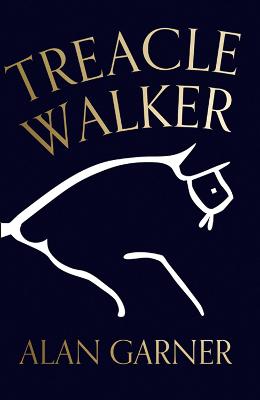
Treacle Walker – Alan Garner
READ FOR BOOKERTHON
From GoodReads: Treacle Walker is a stunning fusion of myth and folklore and an exploration of the fluidity of time, vivid storytelling that brilliantly illuminates an introspective young mind trying to make sense of everything around him.
❝ I will admit that I struggled to understand the meaning or plot of Treacle Walker. It is a novella with very few words, some of which are old-fashioned, nonsense, rhyme and riddles, only a few characters and a fragile plot.
I had to resort to Google searches to understand it better 😦 It is about a boy named Joe whose lazy eye and eye patch symbolise his innocence, youthfulness and his pure outlook on life. He wants to get his vision fixed but a peddler, Treacle Walker, appears as his spirit guide, apprehensive of him establishing a more advanced outlook on reality. Comic characters come to life; a second version of Joe lives in a dream world; a figure named Thin Amren lives in a bog and calls to Joe encouraging him to ‘see’.
The book contains references to ghostly worlds, comic book history, quantum physics, folklore and fairies, innocence and many other features. Yet Garner has included all this and stripped away the words until the purity of only the essential ones remain.
I have come to realise how much meaning there is behind every word in this book and what an incredible job Garner has done has at creating a pure form of literature. I’m sure Garner fans and literati would be awe-struck with what he has achieved, but I maintain this is not a book that would have wide appeal due to its complexities. – Rachel
“Treacle Walker?” said Thin Amren. “Treacle Walker? Me know that pickthank psychopomp? I know him, so I do. I know him. Him with his pots for rags and his bag and bone and his doddering nag, and nookshotten cart and catchpenny oddments. Treacle Walker? I’d not trust that one’s arse with a fart.”
❝ I was completely flummoxed by this book. Rag and bone man, marbles, poor eyesight, cuckoo. That pretty much covers it. For it to be a Booker shortlister there’s an audience out there who ‘gets it’. Needless to say I am not part of that audience.
Following Rachel’s research I have come to believe Treacle Walker is undoubtedly a masterpiece, however without her assiduous investigation of what on earth Alan Garner was talking about this book surely remains impenetrable to most readers. – Suzy
——-
Published 2021
Fourth Estate
150 pages
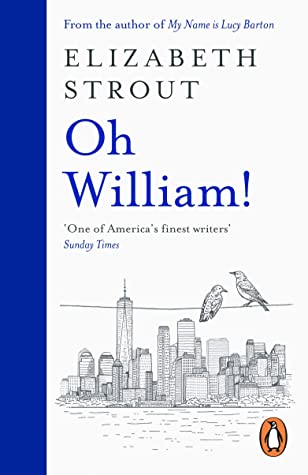
Oh William! – Elizabeth Strout
READ FOR BOOKERTHON
Writer Lucy Barton is asked by her ex-husband William to join him on a journey to investigate a recently uncovered family secret. A story about Lucy and William’s ever changing relationship as much as it is about the family secret. Set in pre-Covid America.
❝ Oh, William! is a story about Lucy Barton’s relationships, especially her time with her ex-husband William. While they are no longer together as a couple they still see each other regularly and often reflect on their shared experiences.
The triumph of this book is the very real way Elizabeth Strout is able to convey the immense comfort and intimacy that comes from having loved someone for such a long time, while so accurately portraying the small irritations and ‘ugh’ moments that emerge within a relationship too.
Amongst some very heavy-hitting books on the shortlist this year, it was nice to read a novel that felt quite nuanced and subtle by comparison. – Suzy
There was something about her that seemed deeply—almost fundamentally—comfortable inside herself, the way I think a person is when they have been loved by their parents.
❝ Oh William! is the third book in the Lucy Barton series, but holds its own as a stand alone read, too. In the first book, My Name is Lucy Barton, Strout examines Lucy’s childhood and relationship with her mother. I have not read the second book but this, the third, is an analysis of her first husband William, but set later in life when both Lucy and William are in their 60s/70s, partnerless and finding both comfort and frustration in each other.
Reading this amongst the other Booker shortlisters, which rely on fables and real events for impact, helped highlight Oh William!’s good old-fashioned story telling techniques and character study mastery. Lucy constantly analyses herself and those around her, though the support characters fill in the gaps with their opinions and commentaries when Lucy fails to. There is a nice plot but the characters are the book’s standout feature.
I really do enjoy character studies and Strout certainly has done an amazing job with Lucy Barton and her husband. They seem like real people to me, complex, clever, flawed and interesting. I know there is another Lucy Barton book on the horizon and I’m already looking forward to that. – Rachel
——-
Published 2021
Random House
240 pages
The Trees – Percival Everett

READ FOR BOOKERTHON
In Money, Mississippi white folk suddenly start turning up dead, savagely beaten and with a black man’s body present, cradling the dead’s severed testicles. A satirical look at the US’s grim history of racial violence.
❝ The Trees is set in Money, Mississippi and is full of characters with names like Junior Junior, Hot Mama Yeller and Reverend Fondle. When white folk of the town getting murdered, local and federal authorities get involved, unsure if they are dealing with a serial killer or a haunting or someone seeking revenge for historical lynchings.
The book reminded me of both Catch-22, with its absurdity and The Sellout, with its high level of satirical narrative that made me unsure if I should be laughing or cringing or crying. But what The Trees does do is absolutely lay bare the history of racism and racial violence in the US, with a reminder that issues remain today.
The book starts like a whodunnit, but don’t be fooled, this is not a murder mystery, this is a book where you need to look deeper than the plot. I enjoyed the techniques employed to reinforce the seriousness of the themes. Even the somewhat repetitive nature of the plot highlighted the relentlessness of racial abuse. – Rachel
Everybody talks about genocides around the world, but when the killing is slow and spread over a hundred years, no one notices.
❝ The Trees delivered sucker-punch after sucker-punch leaving me feeling almost worn out with the relentlessness of violence that got close to slapstick at times. What started as a humourous observation of redneck America soon descended into mysterious deaths involving mutilation and gore. But why was the horror I was reading about sometimes comical and nearly always rollicking?
The short sharp interspersion of historical lynching was shocking and provided the context of retribution as a possible reason why so many people were being targeted and killed.
I think when reading a satirical novel there is a risk that the humour can distract the reader from the issue the author is endeavouring to highlight. This was not the case with The Trees – Percival’s Everett’s message is very clearly received. – Suzy
——
Published 2021
Greywolf Press
310 pages
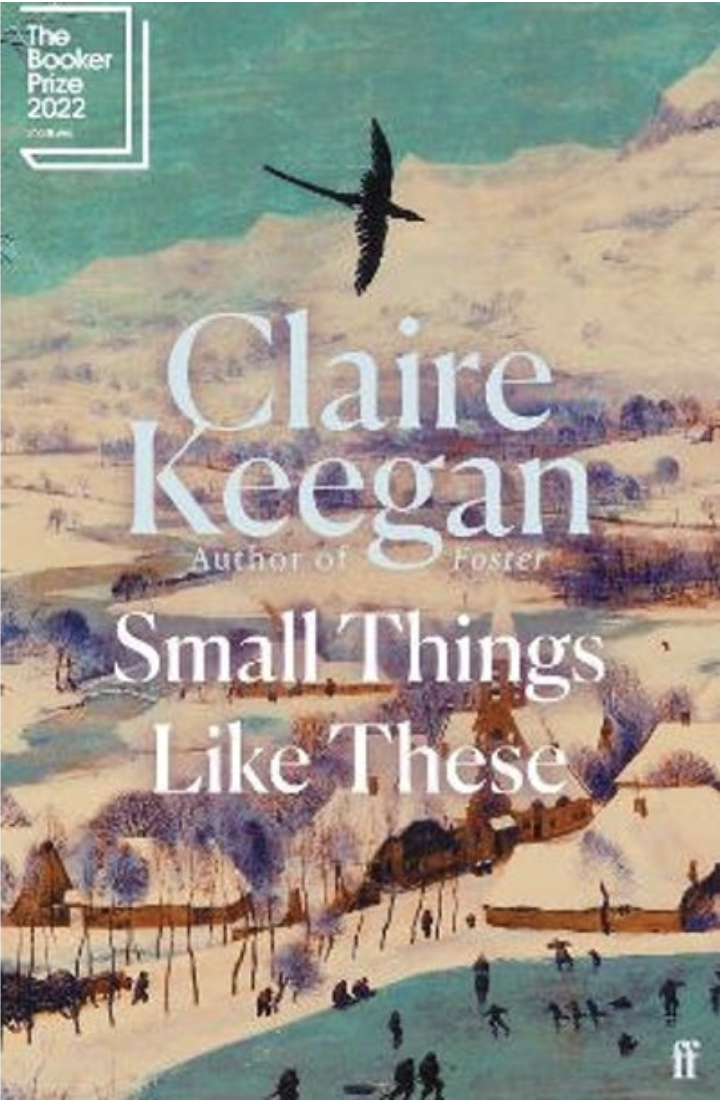
Small Things Like These – Claire Keegan
READ FOR BOOKERTHON
In New Ross, Ireland in 1985 a man named Bill Furlong works tirelessly delivering coal and firewood to the townsfolk, when he makes an unexpected discovery. A short book about community and complicity.
❝ As I got underway with Small Things Like These the size and simplicity almost lulled me into feeling like this was going to be a book of little consequence. How wrong I was.
We gently follow the thoughtful day-to-day musings of Bill Furlong as he works delivering coal in the Irish town of New Ross during the lead-up to Christmas 1985. Bill has an idyllic life in comparison to many other villagers, however he sometimes experiences a sense of slight discontent with his situation and often struggles to understand why.
These feelings lead him to making a monumental decision, the consequences of which we do not learn and can only imagine.
Another Booker short-lister that has entertained and educated, and has also left me feeling bereft. – Suzy
Before long, he caught a hold of himself and concluded that nothing ever did happen again; to each was given days and chances which wouldn’t come back around. And wasn’t it sweet to be where you were and let it remind you of the past for once, despite the upset, instead of always looking on into the mechanics of the days and the trouble ahead, which might never come.
❝ Bill Furlong has a wife and five daughters to feed and house. As he deliveries firewood and coal about the village he laments his own upbringing and family connections and though not sentimental about it, he does search for clarity and wonder ‘what matters?’
Furlong makes a discovery at one of his customers’ properties, which tests his courage and prompts further consideration of the past, not only his own but also Irish social history’s, shaped by the complicity of a community. Introducing the latter could have resulted in a moral or overwhelming narrative, but Keegan has introduced this theme in a measured and dignified manner and in only the amount of words required. There is no excess.
It is a short book at 116 pages but there is so much in it. It is both a lovely and heart wrenching book and I enjoyed it immensely. – Rachel
——-
Published 2021
Grove Press
116 pages
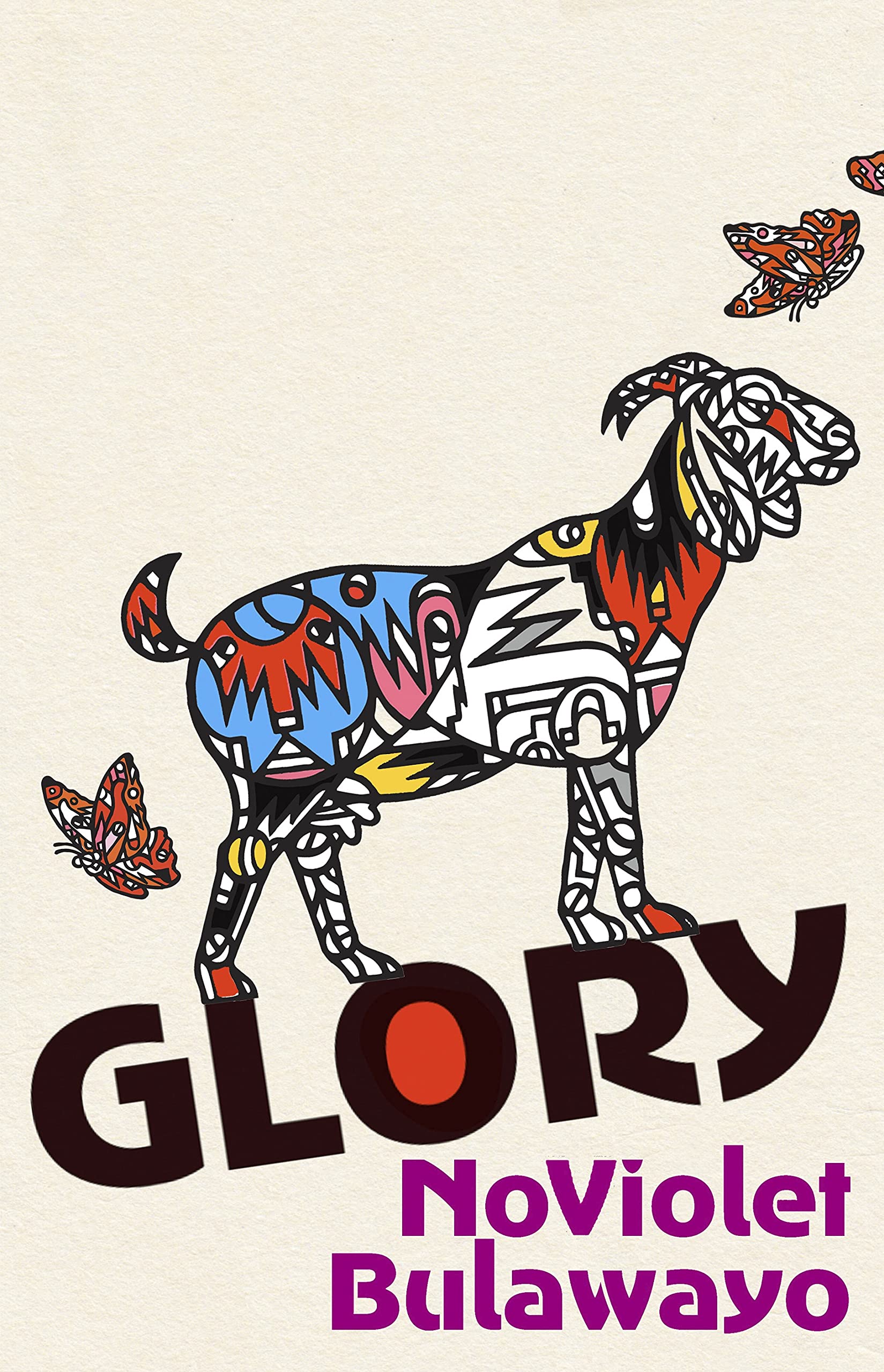
Glory – NoViolet Bulawayo
READ FOR BOOKERTHON
Glory is an Orwellian retelling of Zimbabwe’s political history. It centers around the unexpected fall of Old Horse, a long-serving leader of a fictional country. Told via anthropomorphised animals there is much drama, humour and colourful observations.
❝ Glory is a retelling of the coup that overthrew Mugabe. All the characters are anthropomorphised animals, with the Old Horse’s character modelled on Mugabe, his wife a donkey, and all other characters various creatures in heels, in queues for food and uploading their thoughts to social media on their smart phones.
They live in Jidada, “with a da, and another da”, challenging but mostly suffering under the oppressive regime of the Father Of The Nation, only to discover that life post the Old Horse is not as sweet as they imagined.
To be honest I often forgot the characters were animals, when they were tweeting or being abused by soldiers, or when a black citizen was lying beneath a white defender whispering “I can’t breathe, I can’t breathe”.
But that didn’t negate the effect the book had for me. It was extremely moving, highly satirical and very much a history lesson. When the animality of the characters was clear, when ducks marched by with placards for instance, I guess it deflected the horror of what was happening by removing the humanity from the occasion. Not that animals should be treated this way either, but I felt like the characterisation was a shield to protect us from the true horror that Bulawayo could have put on the page.
This is a very good book. It is dense and intense, and you need to be prepared to give up a little bit of your life for it, but it will be worth it. – Rachel
And yet, another cluster of even worse beasts threw themselves on the ground and filled the air with their stupid grief so that they threatened to drown the sweet song of our joyous jubilation. He’s gone! They’ve removed the Father of the Nation! they cried. Now what’ll become of us without him?! they wept. Because, honestly, us we just weren’t prepared for was for him to rule we all died and left him ruling.
❝ The light-hearted almost comical beginning to Glory was definitely tinged with a slight sense of uneasiness and discomfort. There were some laugh-out-loud moments for me, but with an increasing feeling that This Is Definitely Not Okay.
I also was embarrassed by my own ignorance as I knew moments in this story must be direct references to something, but just what I did not know.
The humourous moments soon became few and far between and the grim reality of living a life under a political dictatorship was revealed to the reader in visceral and devastating ways.
Why was every character in this book an animal?! If it was to lull the reader into a false sense of security that this was going to be a bit of a jovial barnyard tale then this goal was achieved. Similarities to Animal Farm will I’m sure be expanded on by reviewers with more insight than me.
Glory was gripping. The narrator’s urgency and the slow and increasingly violent unravelling of the characters and the political situation kept me completely engaged. – Suzy
—–
Published 2022
Viking
416 pages
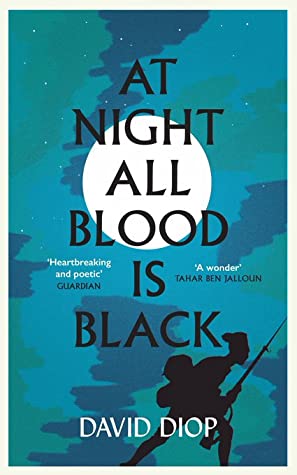
At Night All Blood is Black – David Diop
READ FOR BOOKCLUB
Chosen by Rachel
❝ Alfa and his ‘more than brother’ Mademba are Senglese, fighting for the French in World War I. Seen as ‘chocolate soldiers’ they are considered able to scare the life out of the enemy. After Mademba is fatally wounded and Alfa is morally unable to put him out of his suffering, Alfa undertakes revenge on the blue-eyed enemy, stealthily advancing on them after dark, under cover, and mutilating them.
Though grim, the book has a deeply psychological nature. Alfa’s madness and his deep connection with Madema have blurred lines, introducing the theme of duality, which is reinforced in several ways. Comparisons between the beauty of the body and love are offset against the grotesqueness of war. The moon as God’s witness, watches over all the crimes, including Alfa’s inability to help his friend, and his callous killings of the young German soldiers.
Published originally in 2018 in French, the book won the International Booker Prize in 2021 for translated works.
Temporary madness makes it possible to forget the truth about bullets. Temporary madness, in war, is bravery’s sister. But when you seem crazy all the time, continuously, without stopping, that’s when you make people afraid, even your war brothers.
❝ This is a short book and opens with Mademba trying to scoop his glistening bowels back into his open gut and begging for his throat to be slit. It is a visceral book, with so many bodily functions and parts highly detailed, the guts on the ground, a women’s sex, a severed hand, somehow develop the characters in a way an excess of words probably couldn’t. I loved this book. It was a slap in the face from the outset and used a unique way to build plot, character and tension and to portray a lesson in morality. I also loved the ending. I thought it was perfect for this tale. –Rachel
❝ Although this book had many moments of horror I read it hungrily as the main character enacted vengeance time and time again for the suffering of someone close to him. This was done partly to assuage his own guilt for his part in the person’s suffering. While collecting severed hands of his victims was a visceral and disturbing way of conveying the particular type of madness and distress he was experiencing, it somehow made so much sense. The author successfully conveyed the absolute futility of war while educating the reader about a time in history I was otherwise ignorant about. A stunning book. –Suzy
❝ The most enjoyable books to me are ones that make me think long after I’ve finished them and that’s exactly what this book did for me. It was not a relaxing read as it was quite brutal and heartbreaking but it did have characters that I felt empathy for and developed some sort of understanding of. Once again I benefited from the research done by Rachel and discovered a deeper meaning to the main characters that had flown over my head (again!) I would be careful when recommending this book as I think it would not be popular due to its violent content. But I loved it. – Jo
—–
Published in French 2016
Translated into English by Anna Moschovakis 2021
Farrar, Straus, Giroux
145 pages
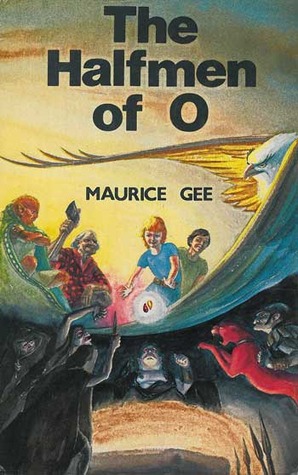
The Halfmen of O – Maurice Gee
READ FOR BOOKCLUB
Chosen by Suzy
New Zealand Children’s Fiction. Nick Quinn goes to spend a couple of weeks on his uncle’s farm at Lodestone Creek. However his cousin Susan is spirited off down a disused mineshaft into the world of O and taken prisoner and Nick is determined to rescue her.
❝ Okay, so The Halfmen of O wasn’t quite the distinguished novel that our bookclub was originally going to read, but upon learning about the grim content of In My Father’s Den it was time to switch to another Maurice Gee classic – albeit a children’s book. The Halfmen of O didn’t feel as well constructed as Under the Mountain, but was still a rollicking read. There were some quite visceral & horrible events, that even as an adult I was quite troubled by. I mean, how terrifying is a Bloodcat!? Very terrifying. While this wasn’t quite the satisfying read, when trying to view through the lens of a child it’s another belter from the legendary Maurice Gee. – Suzy
❝ I never did read this as a child and really wished I did! Reading it now as an adult I felt the story was lacking in depth with character development and plot but had to keep reminding myself it was written for children. Once I let go of this and tried to read through the eyes of an adolescent I enjoyed to easy flow of the novel and the ‘Kiwiness’ of it. Maurice Gee did an amazing job with this good vs evil story and I have no doubt it left many young readers on the edge of their seats! – Jodie
❝ Maurice Gee has an incredible imagination and has conjured up some amazing creatures in The Halfmen of O. I especially liked the stone people who could detect the tiniest amount of light and would suffer if exposed to it. The main characters were simplistic and lacked development which may have been a feature that would go unnoticed with younger readers for whom the book is intended. I enjoyed the story but found it a little short and simple for my taste and was wanting more at the end. – Jo
❝ Cousins Susan and Nick think their summer holiday will be like any other but when Susan falls down a mineshaft and into another world beneath the earth, her cousin goes off after her. Together they battle many interesting and scary creatures, knowing humanity requires their success. The book was reflective of its time, (published 1982) in both its girl needs saving plot *rolls eyes* but also in its creative, imaginative, captivating other world right here in New Zealand. It reminded me how so very clever Maurice Gee is and though I have always enjoyed his general fiction, it’s his children’s books where his forte lies. As children of the 80s we were lucky to have these magical, local stories to read. – Rachel
—–
Published 1982
Oxford University Press
204 pages
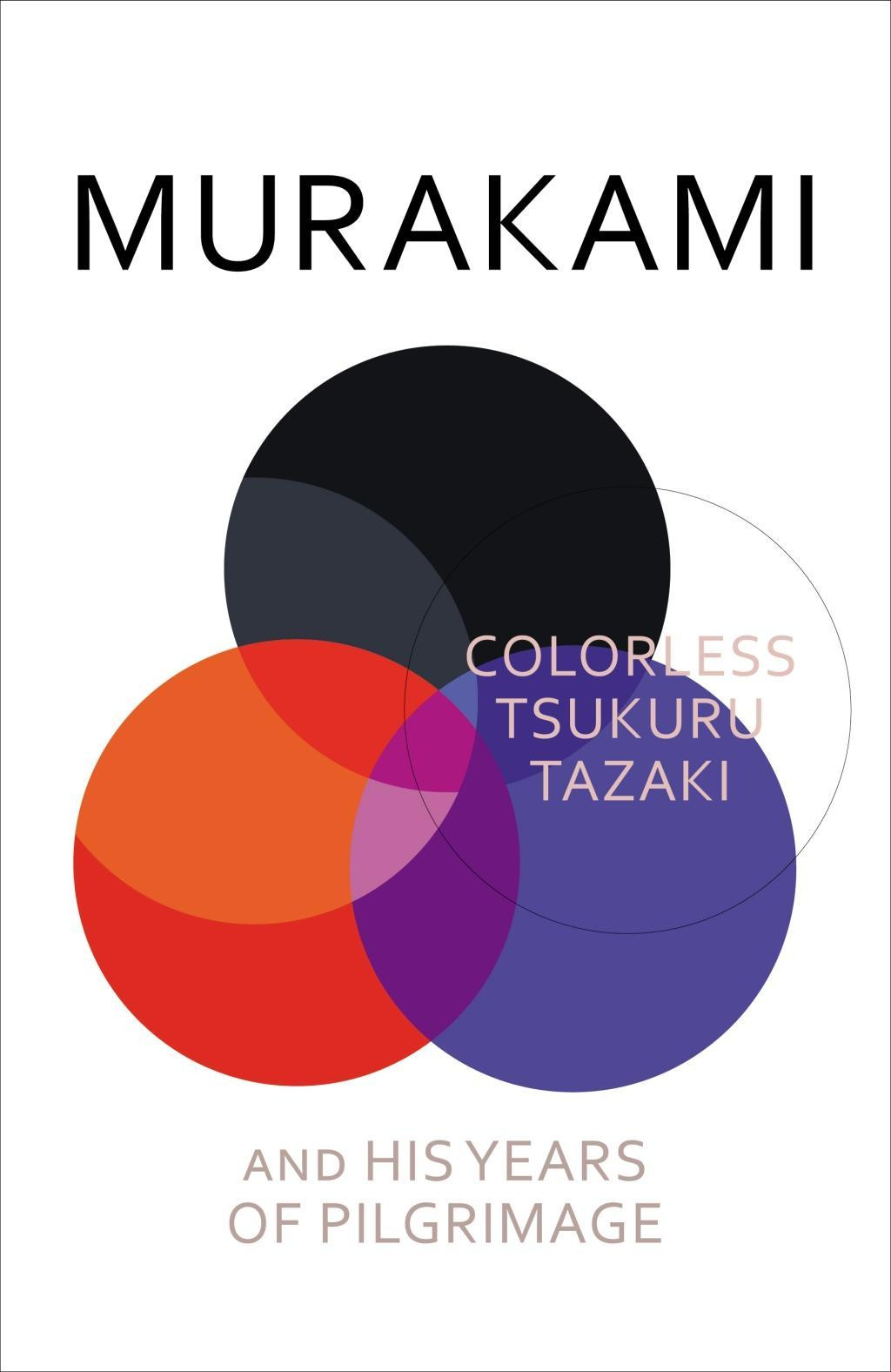
Colorless Tsukuru Tazaki & His Years of Pilgrimage – Haruki Murakami
READ FOR BOOKCLUB
Chosen by Jo
The protagonist of this book is Tsukuru Tazaki, a Japanese man in his 30s who designs railroad stations.
He recalls his younger years, where at high school he had four best friends whose names all include a colour: red, blue, white, black. Tsukuru’s name contained no reference to colour, and the joking about it caused him to consider himself blank, isolated and boring: colourless.
Suddenly, without explanation, his four friends abandon him swearing never to speak to him again. Though troubled and vexed by this, he never seeks to find out why this happened. For 16 years he simply wonders.
Now, in the present, he goes on a mission to find out why, revisiting his lost friends and asking them for their accounts of the abandonment. His quest for the answers takes him as far as Finland where one of the friends now lives.
Let’s say you are an empty vessel. So what? What’s wrong with that?” Eri said. “You’re still a wonderful, attractive vessel. And really, does anybody know who they are? So why not be a completely beautiful vessel? The kind people feel good about, the kind people want to entrust with precious belongings.
❝Murakami often has a theme of mystic realism and characters who have their opposites. At this bookclub meet we discussed these themes and worked out who each character’s complimentary opposite was. It was after this discussion that we realised Tsukuru had much more to him than meets the eye. He wasn’t a boring, straight forward person at all. Murakami’s prose always seems simple to me and flows so well, which is just as well as there is so much else going on if you know to look for it. Not having all the answers made the story all the more interesting as the reader is left to ponder and work out likely scenarios for themselves. – Jo
❝ I really enjoyed the relaxed and easy flow this novel brings and as in usual Murakami style it wasn’t full of flowery and elaborate literature. The plot was not at all complex to follow but was intriguing and quite puzzling at times. Murakami had us pondering what happened with his friend group and why they would cast him out? Were his dreams really dreams or a blur with reality? Colorless Tsukuru is a clever novel that has many hidden layers. A great novel to discuss with your bookie friends. – Jodie
❝ I loved the discussions we had around this book and the different theories and interpretations about what the hell actually happened. The feeling of not quite knowing wasn’t frustrating, it was really interesting to think about the author’s possible reasonings. There were aspects of Colorless Tsukuru Tazaki and His Years of Pilgramage that have not aged well. We are not ready to cancel you just yet Haruki, but you are sailing close to the wind mate. – Suzy
❝ Colorless Tsukuru has many of Murakami’s hallmarks yet wasn’t as out there as some of his others. Yes actions in dreams seem to occur in real life, but no there are no talking cats or portals to other worlds. Yes the characters had intense relationships and over-shared their emotions, but a sense of mystery remained. The links between the names of colour provided a layer of consideration that didn’t overwhelm the narrative. The primary mystery was solved but this raised more questions that had us discussing possibilities for hours. For me this is a perfect kind of Murakami novel with the right level of mystique, craziness and likeable characters. I totally loved it. – Rachel
—–
Published in Japanese 2013
Translated into English by Philip Gabriel 2014
Vintage
308 pages

We're
currently
reading
 The Free-Range Bookclub
Recent Comments