The Free-Range Bookclub
Bookclubbers without boundaries in Nelson, New Zealand
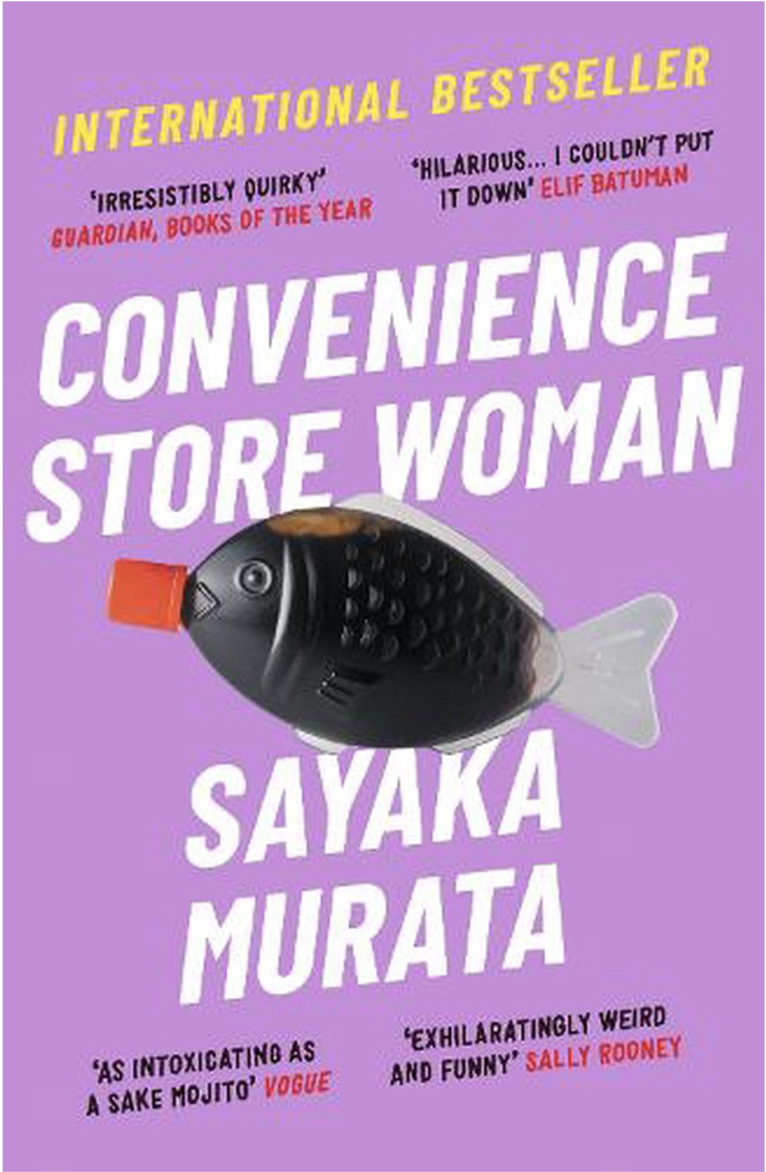
Convenience Store Woman – Sayaka Murata
READ FOR BOOKCLUB
Chosen by Suzy
Keiko is a young Japanese convenience store woman who enjoys the repetitive nature of her job, often referring to the store manual to act and respond to requests appropriately. Her simplistic life is ridiculed by friends and family for whom marriage is the true measure of success. Keiko attempts to counter these putdowns in an unusual manner in order to find acceptance. A commentary on Japanese societal expectations of women.
I wished I was back in the convenience store where I was valued as a working member of staff and things weren’t as complicated as this. Once we donned our uniforms, we were all equals regardless of gender, age, or nationality— all simply store workers.
● It feels a bit twee to describe a novel as delightful, but that feels like the most apt word for Convenience Store Woman. However, a lot of the humour in the novel was tinged with feelings of discomfort and wanting to look away as we gradually learned about the effort required by Keiko to exist in the world and be accepted by her family and peers. Sayaka Murata cleverly reflects significant issues in Japan within the character of Keiko, and due to the novel’s incredible success has hopefully taken a step towards normalising the less acceptable parts of the culture there.– Suzy
● As a fan of Japanese literature I was hooked on this book from the first page. It is told simply but with passion and a dry humour. I came to love the convenience store too and was astounded how interesting I found details of shelves being stocked in the correct way. The underlying premise of being accepted for being ‘normal’ but unhappy over being ‘abnormal’ but happy was thought-provoking and made me consider many aspects of society. I read this short, punchy book in one sitting and absolutely loved it. – Rachel
● I felt a sense of injustice at the way Keiko was treated by her friends and family. They were pedantic about their opinions that she should be married and have a better job than working in a convenience store, even if it made her unhappy. This is a sad reflection on Japanese culture, and we discovered the author actually endured the same criticisms from her family for her job as a convenience store worker. It was an unusual and well told story which I enjoyed. I was heavily invested in Keiko, her convenience store job and the decisions she was making for her own happiness. – Jo
Published in Japanese 2016
Translated into English by Ginny Tapley Takemori 2018
Portobello Books
163 pages
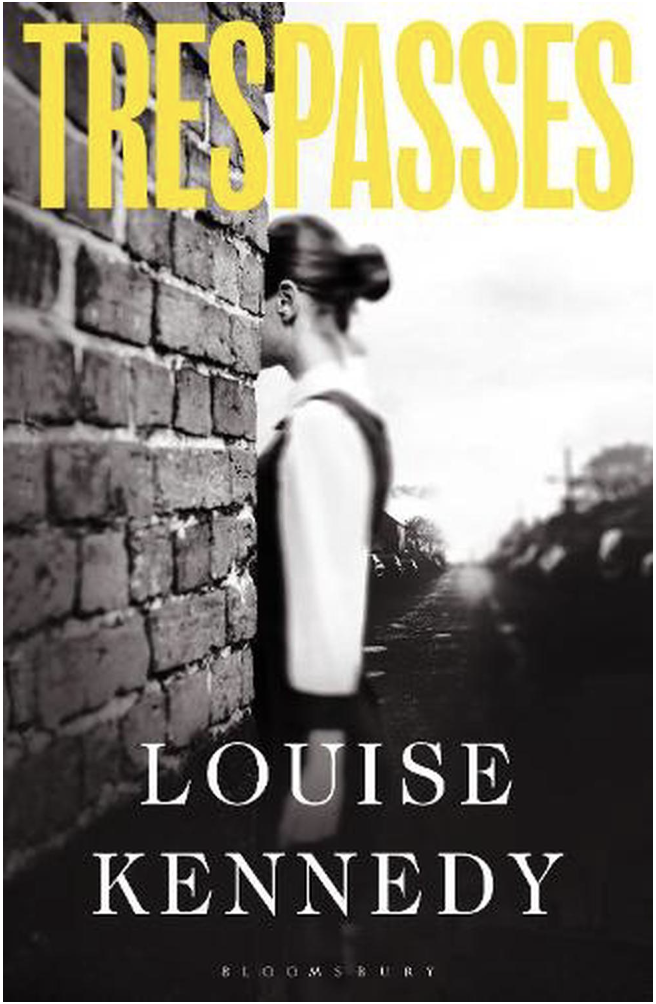
Trespasses – Louise Kennedy
READ FOR WOMEN’S PRIZE
Cushla is a 24-year-old Irish school teacher by day and custodian of the family pub with her brother in the evenings. It is in the pub she meets an older married man and they begin an affair. Set amongst The Troubles conflict of the 1970s.
● I had initially thought that this novel was a gentle exploration of the challenges of a romance between a Catholic woman and a Protestant man during The Troubles, however three-quarters of the way through things took a decidedly different turn and we moved from gentle to actually-pretty-bloody-intense.
I’m not sure if the previous gentle pace had engendered enough commitment from me to be completely invested in the outcomes for the characters, but this was still a great read and a showed the very personal impact of this Irish conflict. – Suzy
Booby trap. Incendiary device. Gelignite. Nitroglycerine. Petrol bomb. Rubber bullets. Saracen. Internment. The Special Powers Act. Vanguard. The vocabulary of a seven-year-old child now.
● The Troubles of 1970s Ireland provided a vivid and impactful setting for Trespasses, but I wasn’t moved by the love affair. Michael was a recidivist philanderer and in my opinion, taking advantage of someone half his age. However, I did appreciate its representation of the time, when unhealthy attraction can grow from societal conflict and how any kind of interaction between a Catholic and a Protestant must be kept secret.
There were other interesting sub plots such as Cushla’s relationship with her mother and the plight of one of her students, Davey, and his family. Also this book has a real banger of an ending! – Rachel
Published 2023
Bloomsbury Publishing
304 pages
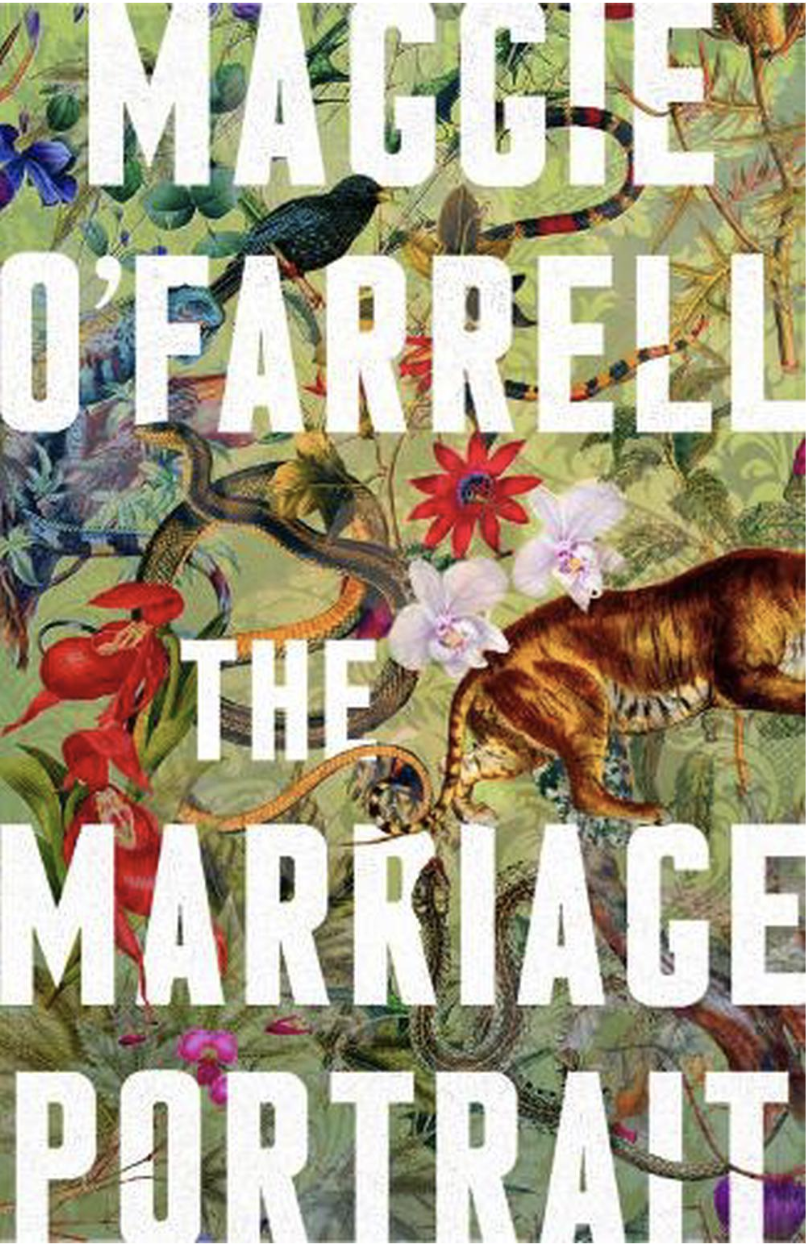
The Marriage Portrait – Maggie O’Farrell
READ FOR WOMEN’S PRIZE
● The Marriage Portrait begins as such:
In 1560, fifteen-year-old Lucrezia di Cosimo de Medici left Florence to begin her married life with Alfonso II d’Este, Duke of Ferrara. Less than a year later, she would be dead. The official cause of her death was given as ‘putrid fever’ but it was rumoured that she had been murdered by her husband.
Now, I’m not often a fan of historical fiction set in royal contexts. There is usually a complex and vast array of characters to remember; stylised language to suit the era, which is clunky if you are not familiar with it; and narratives of which authors often expect the reader to have prior knowledge of.
But this opening page had me intrigued. So I dove in, and I am very pleased I did. I loved this book so much. The characters are real (obviously fictionally re-imagined, with important alterations to fact noted in the back), they are portrayed richly and each and every one is memorable, not lost in a cast of excess. The language is careful, seems realistic, and is easy to read. The plot is well paced and enticing. The descriptions are so vivid that I can still see the passageways and rooms of the villas and palazzo in my mind. I can imagine the fashions, the hairstyles and the paintings which are also vividly described.
The narrative is not just about the Duchess’ married life, but her life as a bold child, and as a young women who maintains her spark while quashed with the expectations of life married to an older Duke. Lucrezia deals with her organised marriage with astuteness and practicality without her character appearing over written or fake. The entire book is like a feast, it is rich and delicious with much attention to detail. I would widely recommend it. – Rachel
● At the risk of sounding like a boomer shaking my fist at the young ones of today, it was so nice reading a book that was just storytelling at its absolute best. There was nothing fan dangled about The Marriage Portrait, although that’s not to say it wasn’t immensely clever. Maggie O’Farrell’s evocation of 16th century Italy was so well done I was right there wandering the palazzo with Lucrezia.
And I know I have banged on about this a few times in my reviews now, but I am always so happy to see historical fiction imagining the life of women as a move towards some slight rebalancing of the utterly male dominated history books. I loved this book and feel like I could unreservedly recommend it to pretty much all readers and it would be thoroughly enjoyed. – Suzy
Published 2022
Knopf Publishing Group
355 pages
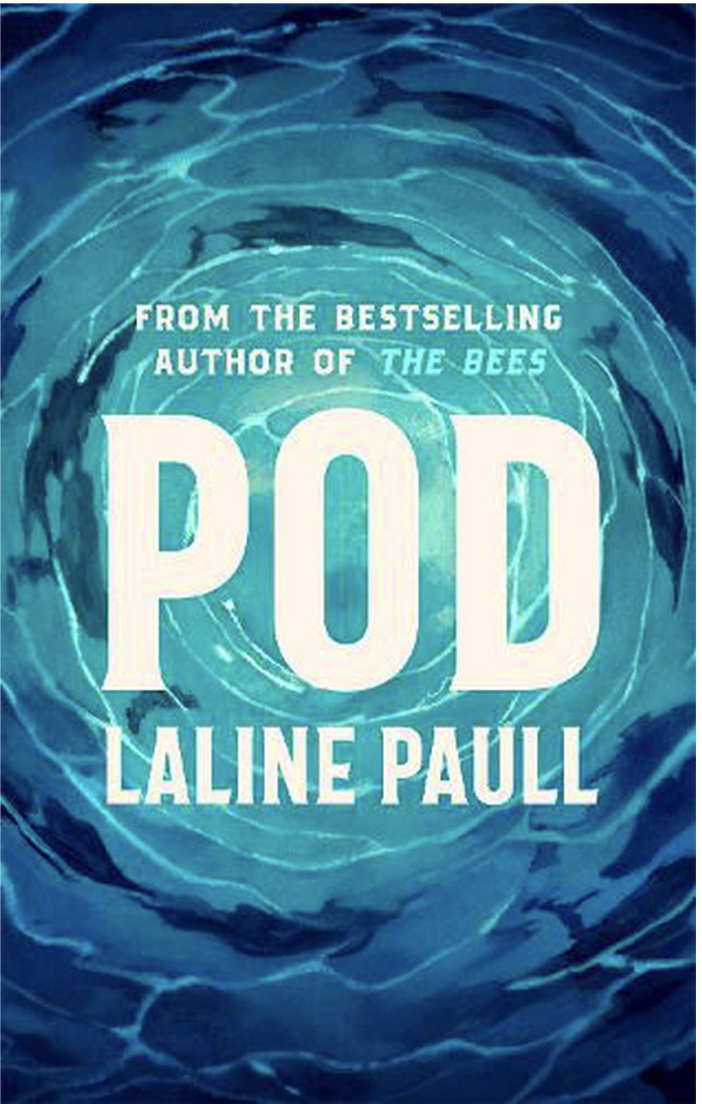
Pod – Laline Paull
READ FOR WOMEN’S PRIZE
Ea is a spinner dolphin who is deaf and cannot spin properly. When catastrophe befalls her family, Ea feels partly to blame and decides to leave the pod, meeting a vast array of other sea life. Climate fiction with talking animals and a strong message to humans.
● This was a beautifully written book, however I had an absolute love-hate relationship with it. I was completely enthralled with the story of Ea, a Longi dolphin, and her interactions with many other sea creatures. It was no great leap to go to a story with talking dolphins when we have already read The Axeman’s Carnival with a talking magpie this year, although Pod is a much richer exploration.
I wanted so badly for everything to go well for Ea and it was learning her fate that kept me turning the pages. I struggled with many aspects of this book in terms of the outcomes and experiences of many of the characters, a lot of which were truly horrible. If the author’s intent was to get us thinking a lot more about the human impact on the ocean environment then she has definitely achieved her goal.
I feel like my life is now divided between Before Pod and After Pod and I really wish I was back to the Before Pod time because Laline Paull has shredded my brain. A strong contender for my book of the year as well as my worst. – Suzy
… Exodus was the Longi people’s kinetic prayer of thanks to the ocean for the survival of their pod. All calves learned the story of how the Longi had been forced out of their beautiful original homewater by the invasion of the cruel barbaric Tursiops tribe. The passage across the ocean from that moment was perilous and marked with many losses.
● At its most basic this is a book about animals trying to exist in a world that humans are mistreating. The narrative begins with Ea, an adolescent spinner dolphin who is deaf and in turmoil about being unable to spin.
However, each subsequent chapter moves to the point of view of another speaking mammal or fish and I felt disengaged for many chapters. There were too many plot diversions and too many voices (though the shit-eating remora was my favourite!) Two thirds in, the focus returned to Ea as well as a former character, Google, a military trained dolphin. It was only then that I engaged fully with the plot and began to feel invested in the characters.
It’s an interesting premise that Paull has tackled and commendation must be given for that. In fiction featuring animals we are used to anthropomorphisation but in this case we are exposed to more of a no holds barred script for a David Attenborough documentary, complete with tribal warfare, animal to animal cruelty and rape, with the mammals’ clicks, beeps and sonar bounces interpreted into English. I began reading into everything wondering if it was all a giant metaphor for colonisation. I’m still not sure.
At this point in time I feel like this book’s premise is a bit of a stretch for me. However, I wouldn’t be surprised if in 20 years time we acknowledge this book as the turning stone for a completely new genre of fiction. – Rachel
——
Published 2022
Corsair
261 pages
2023 – NZ Book Awards

What is the job of fiction? To entertain? To educate? To document? To insert the reader into an unexpected place or mindset so they can see the world through another lens? The authors on this year’s shortlist took their roles to the next level, with the four books encompassing all of these criteria. It appears that to have the edge in 2023 it is not enough to just write something of interest and write well, the work must be important too, it should raise issues of note to New Zealanders and it should make us wonder: what is my understanding of this, and what is my moral responsibility in relation to this?
In Better The Blood a traditional detective story is interspersed with historical fact about past wrongs enacted on Māori and how a descendant of such a person now wishes to undertake utu to balance the playing field. It covers off colonisation, the role of Māori in the police force, the abuse of the Treaty of Waitangi, modern day protests over land, misogyny towards women, leniency of the courts towards white offenders …. heavy stuff but all merged into a real page turner of a plot.
Kāwai takes us back to 1734 and introduces Kaitanga, a newly born chief-to-be and details his life into young adulthood. It is a no holds barred look at the life Māori led prior to colonisation, including tribal warfare, slavery and cannibalism, but also the bonds and treaties made between tribes, the processes they had for foraging, cooking, building, marriage and training for warfare. Again a lot of information, historically accurate, but with a fantastic plot and loveable characters.
The Axeman’s Carnival seems like a more lively and less intense read, with a talking magpie as its narrator and funny social media content as a central plot driver. However, it too references colonisation, with one thread detailing how Tama’s sister is dismayed that he has given up on his bird family, their traditions and culture, instead taking up with the humans, speaking their language, eating their tasteless food and mimicking them. The book also broaches another important topic, domestic violence and the role of women.
Mrs Jewell & The Wreck Of The General Grant is the only shortlister to not tackle colonisation, however as a take on a real event Cristina Sanders has taken it upon herself to be historically accurate and to give the reader a real experience as if shipwrecked themselves. What’s more she has tackled the incomplete documentation of history and given a voice to someone who was not granted one at the time, the only female amongst the survivors.
There were some fine books on the longlist that did not make the cut. Especially notable omissions were stalwarts of the New Zealand literary world, Lloyd Jones and Vincent O’Sullivan, alongside some fresh new voices. Without having read them all we cannot say, but perhaps they did not tackle the big issues like these four have, without losing those all so important criteria of readability and entertainment. Taking on these topics does lend itself towards stories of violence, and there is a lot of violence amongst the shortlisters. However each author has instilled equal measures of hope, especially Better The Blood which in its final pages speaks of balance and restoring community without resorting to violence any longer.
Nā te ahi ka tahuna he ahi anō. Violence only bring more violence. Pain brings more pain. Māori must continue to fight. We were born brown and screaming. We must stand together and fight. Until the scars of two hundred years are truly headed. Until thing truly change. Not by making new wounds. Not by blood. We will fight with words. With love. With light. And we will win.
Better The Blood by Michael Bennett
● I felt very conflicted after reading the shortlist, with the book (and the magpie) that I initially thought would hands-down win being unexpectedly relegated into my fourth place. The enormity of Kāwai and what Dr Soutar has achieved with his spectacular addition to Aotearoa’s literature is so significant that I believe it’s completely deserving of winning the Ockham’s Acorn prize. I can’t wait to read the next part of this trilogy.
I am still not 100% sure who I think should be sitting at second place, with part of my uncertainty being related to my unfamiliarity with the crime genre. I think the way Michael Bennett so seamlessly wove in the impacts of colonialism with a highly readable mystery nudges it slightly above Mrs Jewell and the Wreck of the General Grant, but I still think so much about Mrs Jewell. Even though I don’t think Mrs Jewell will win, it’s the book that has left the most lasting impact on me. – Suzy
● Considering this year’s shortlisters individually or as a collective makes me feel differently about them. For example The Axeman’s Carnival is a fantastic book, with a real page turner plot, loved by all in our bookclub, but when put into battle with the other three, I wondered if the judges would prefer the more overt capitalisation on big topics. Better The Blood was a real page turner too, but I wondered about the meshing of the detective genre with serious New Zealand issues. But after reading the others I see that this powerfulness is where the Kiwi literature landscape is at the moment, and it gained more clout in my mind. I said in my previous review that I didn’t think Better The Blood should or will win, but I’m beginning to think it could. It delivers a sign of our times.
Mrs Jewell & The Wreck of the General Grant was my favourite read for a read’s sake. Mrs Jewell’s voice was authentic and I got gold fever myself, reading about the fortunes and misfortunes of the bunch of castaways. She has documented something important, and added to history which is no mean feat. But Kāwai is my pick for the win. To be fair I wouldn’t mind if any of the four won, but I did appreciate Dr Soutar’s dedication to creating something probably more historically accurate than most other books of this type. This historian’s move into fictional writing is impressive, the characters are distinct, I understood their emotions and actions, and I cared for them all. – Rachel
The Swimmers – Julia Otsuka

READ FOR BOOKCLUB
Chosen by Rachel
The Swimmers is about Alice, a Japanese American woman in the early stages of dementia. She swims daily but when a crack appears in the pool (ie in her memory) she has to stop swimming and move to a home. Her daughter visits, solemn, grieving, feeling guilt and harbouring regrets over her relationship with her mother.
Alice tries to remember all that she can and as a result we are treated to many fleeting moments of her life, packing a lot of content into a minimum of pages.
The structure of the book is unusual with five chapters which at first all seem to be distinct and disconnected from one another, but upon closer inspection are all steps in Alice’s dementia. Even the point of view alters often in order to showcase the marginalisation of the ailing and ageing in society: Collective, singular, third person, second person (or we, you, Alice, she).
Alice forgets about the crack the moment she gets out of the water and whenever somebody mentions it to her in the locker room she looks at them as though they were crazy. “Crack,” she says. “There’s no crack.”
● My word of advice with this book is to read every page and every sentence carefully. Post bookclub I re-read chapter 2 and felt like every sentence was a revelation I had not initially appreciated. Now, this book is haunting me more than any other with memory loss as a theme. How common and devastating the disease can be is intimately detailed, as is how such members of our society are pushed to the fringes and spoken about rather than with. The Swimmers is incredibly clever and once I understood it I loved it immensely. The problem is I didn’t fully understand and appreciate all its complexities on my first reading. – Rachel
● Well, well, well, The Swimmers certainly took a few different tumble-turns once the meaning was revealed at bookclub. When a crack is not a crack and the author is so goddamn clever it leaves you questioning basically everything you’ve just read. If you are reading this book literally (like me) then what can I say – the first half is a real slog, the second half is beautiful, poignant and devastating. – Suzy
● This beautifully written novel depicts the life of Alice as she deteriorates mentally from dementia. Each part of the novel represents a stage in her decline, which was very sad. The narration was a huge player as it represented the stages of Alice’s decline and how her mind was slowly deteriorating. It is so cleverly told by Otsuka that after finishing, it took some reflection to really grasp the understanding of each stage. There were parts I loved and other parts I didn’t fully appreciate until discussing in bookclub. – Jodie
● I didn’t understand the connection between the first and second part of this book. If I had done, it would have been a whole lot more enjoyable, but instead I just found the first section tedious. Re-reading the first bit with new knowledge revealed an incredibly clever and detailed reflection of Alice’s decline with dementia. It was an intriguing account of memory loss and a deteriorating life which I found enthralling. A pity that I didn’t really get this book and I really wish I’d known what was really going on right from the start.
——
Published 2022
Knopf
192 pages
Mrs Jewell and the Wreck of the General Grant – Cristina Sanders

READ FOR NZ BOOK AWARDS
In 1866 a ship bound for London from Melbourne crashed into the Auckland Islands and sunk, taking with it many lives and an undetermined amount of gold, direct from the goldfields of Australia. Fourteen men and one woman made it ashore and began the long, arduous task of staying alive. Here, Sanders gives voice to Mary-Ann Jewell, of whom little is known, with a fictional imagining of her time on the Auckland Isles.
We were nearly out of the cave when the wave hit and bounced off the end wall. We gripped on. Thirty, perhaps forty people cowered behind us in the long boat. The wave lifted and swamped them. Capsized, there were screams and frenzy and bodies falling. I saw them drown.
● I particularly enjoy fictional retellings of true events, especially NZ stories as it feels important to have these stories widely known and historically documented. Sanders has done a fine job with this novel. The historical facts of the wreck are accurate and surely she researched well to determine just how these 15 people could attempt survival in such barren and bitter conditions. The characterisation of Mrs Jewell suits the story perfectly, for it is natural to wonder how one woman survived this ordeal with 14 men, what her roles would have been, how she was treated and what her struggles where in comparison to the men. On top of a beautiful balance to those considerations, Sanders has written a rip-roaring read. I read it over one night/morning, my only break about 1am when my eyes couldn’t stay open any longer. Highly recommend this. – Rachel
● I felt quite desperate while reading Mrs Jewell and the Wreck of the General Grant. My first driving question was whether this was based on a true story or was it fictional, and the second was WILL THEY MAKE IT?! This was another fantastic story written from a female perspective and I so appreciate the authors who are creatively contributing and providing a voice for women where history books seem to have otherwise passed them over. A big thank you to Cristina Sanders for taking this reader along on such an absolutely extraordinary journey. – Suzy
—–
Published 2022
The Cuba Press
321 pages
Kāwai: For Such A Time As This – Monty Soutar

READ FOR NZ BOOK AWARDS
In the opening pages a 19-year-old man walks onto his family Marae and asks the local koroua about his whanau’s history. The man’s answer is provided over the following 300-odd pages. He tells of Kaitanga, born 1734 into a proud line and destined to be not only chief but a warrior, born to avenge the killings of his uncles and other tribesmen. We follow Kai, as he is known, from his birth through to his adulthood and hear about his warrior training, his friendships and loves and the pressure of living with such expectations upon him.
At the front of the book the author tells us ‘This saga is loosely based not on one true story but on many true stories.’
‘Our son’s name shall be a reminder to him, and to all his generation, that it will be by their hands that our tribe shall be avenged … Kia whakairo rawatia te tikange o tēnei ingoa ki tōna wairau mo ake tonu atu,’ Tāwae declared. Let the meaning of this name be seared deep into his soul forever.
● I appreciated how Kawai didn’t try and sugarcoat anything in regards to Māori history, with it delving right into certain subjects that have been completely avoided by other Aotearoa novels. Speaking of avoidance, I generally steer clear of historical multi-generational stories because I am not necessarily very interested in learning about some American family on a prairie hundreds of years ago. However, when it is set in my own country my buy-in was immediate and I was gripped. Dr Soutar’s (Ngāti Porou, Ngāti Awa, Ngāi Tai ki Tāmaki, Ngāti Kahungunu) biography clearly shows that he knows his stuff, and he has turned his knowledge of this country’s past into a highly readable and fascinating story. – Suzy
● This story is dense, detailing what appears to be, a realistic retelling of pre-colonial Māori life and the no-holds barred realities of tribal conflict. It features extensive use of Te Reo, translating in a way that aids readability but treats the reader and their knowledge with respect. The book is bound to become an important feature of NZ history texts. The author has done an amazing job here, writing something historically accurate but with a plot and characters that read like traditional fiction. My only gripe is the ending – it is clear the story continues in a second instalment. – Rachel
—–
Published 2022
David Bateman
371 pages
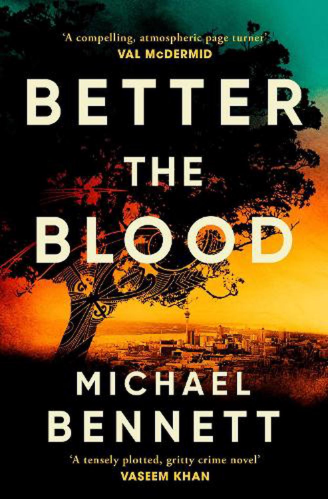
Better The Blood – Michael Bennett
READ FOR NZ BOOK AWARDS
NZ Crime fiction. Detective Hana Westerman chases down a serial killer who is undertaking utu, avenging past atrocities against Māori. Offers insight into New Zealand’s often controversial justice system.
● At first I was surprised to hear a crime story had secured a place on the shortlist over literary greats like Lloyd Jones and Vincent O’Sullivan. But who’s to say genre fiction doesn’t deserve a place on literary prize lists. Especially when, like Better The Blood, it has more substance than your average detective novel.
I found the historical information interesting and was provoked into thought by the commentary on how we view privilege and what our modern day responsibilities are, not to exact retribution for past wrongs but to re-establish balance.
However, it was disappointing this balance wasn’t evident in the presentation of the book. The important historical aspect and the detective plot were out of symmetry. I was also let down by the footnotes, where everyday Māori words like iwi and whanau were explained. It has been 50 years since Patricia Grace first refused such translations in her novels so this feels like a step backwards. Perhaps the book has an international intent but in my opinion it was obvious what the words meant from their context and surely the book’s biggest audience was always going to be New Zealanders.
Overall, I can see why it was included on the shortlist and it will probably be widely read, but I don’t think it will or should take home the top prize. – Rachel
For the Maori cops it was a nightmare. You learn your whole life to treat your elders with respect, to give others the dignity they deserve, to come to resolution through words, the way of the marae. Then you wake up one morning, you pull on your uniform … and that morning you realise your history, your background, the things you got taught on marae, none of that matters. You’re a person with a uniform. And a truncheon. That’s all you are.
● This didn’t necessarily feel like a typical Ockham novel, but once I’d surrendered to Better The Blood being a detective/crime story I was in. And as the story progressed it became clear it was so much more than just that.
How on earth did Michael Bennett (Te Arawa) so sensitively weave the devastating effects of colonialism with a rip-roaring story – I feel like it could have gone so wrong. I have read novels where being educated by the author within fiction felt clunky and also like I was being lectured to (sorry but I’m looking at you Anuk Arudpragasam), however it was done very naturally in Better The Blood.
The only thing that felt a bit clunky was the English translations for all Māori words. After recently reading Pōtiki and Patricia Grace’s refusal to do this, I kind of wish Michael Bennett had done the same. – Suzy
——-
Published 2023
325 pages
Simon & Schulster
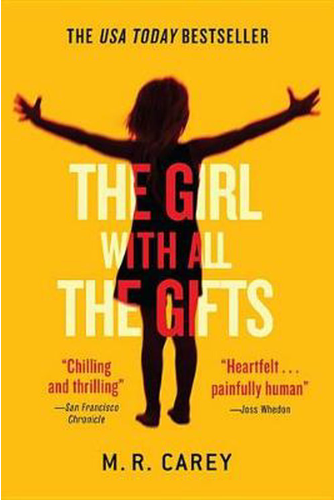
The Girl With All The Gifts – M R Carey
READ FOR BOOKCLUB
Chosen by Jo
The Girl With All The Gifts is set in a medical facility in a dystopian reality. There, a group of young children are held in cells and transferred to a sterile concrete classroom strapped into wheelchairs with loaded weapons at their heads. Behind steel doors they are taught mathematics, Greek mythology, reading and writing. They are told they are orphans but understand little of why they are there and who they really are.
If that is enough enticement to read this book we recommend not reading any more of this blog to ensure you get the full element of surprise, which is very much worth it. If you want to know more, here it is.
The dystopian plot of the book is set around a blood and saliva born fungus that spreads throughout the human race. There are lockdowns and breakdowns and people live in fear of the fungus which takes on a life of its own within the body, though different people have different reactions. Dr Caroline Caldwell is invested in understanding why and establishing a cure or a vaccine to save humanity.
Though written five years before the Covid pandemic, the book raises thematically some of the issues we have now lived through, such as the science vs morality discussion, and the bonds of humanity and how they are stretched when under threat. The power of education and Pandora’s box are also strong themes, with the main character, Melanie, a modern day Pandora, willing to open the box and fight evil. The name Pandora means ‘the girl with all the gifts’.
And then like Pandora, opening the great big box of the world and not being afraid, not even caring whether what’s inside is good or bad. Because it’s both. Everything is always both. But you have to open it to find that out.
● I didn’t know anything about this book when I started it and I’m glad I didn’t. I would have been put off by the subject matter as it is a theme that has been done countless times before. However this author has taken that theme and ramped it up and made it into something new and exciting, the detail about the pathogen added a believable aspect to it and drew me in even more. Having a central loving parent-child relationship at its core provided a welcome security for our main character and a bit of relief from the tension. The characters were well developed and I understood each of their viewpoints even if I didn’t agree. I couldn’t put this book down and would recommend it to anyone who enjoys dystopian novels. – Jo
● Would I have chosen this book off the shelf? Probably not. But I am so happy I have read it and proved to myself that I shouldn’t limit or discount genres I assume I wouldn’t enjoy. I totally surprised myself by being totally engaged and enthralled in this world of possessed humans. The novel had a brilliant mix of horror, love, sci fi, empathy and plenty of flesh eating action. The five main characters were strong and interesting and were very central to the novel’s journey from start to finish. Totally recommend this book, it’s a real page turner. – Jodie
● What could have been a re-make of many other such books took on a life of its own in The Girl With All The Gifts. The eerie setting of the secure medical facility, the innocence of the children held there and the relationships that eventuate between the five central characters gave the story personality, and the detailed scientific information about the fungus made the plot line seem possible. Perhaps having just lived through a pandemic and with news of a “super deadly fungus” currently spreading around the world made this fictional story all the more captivating. I couldn’t put it down, I devoured it. – Rachel
● I quickly became completely obsessed with The Girl With All The Gifts and I know I wasn’t the only one in the bookclub who became vigilant and on the lookout for possible Hungry attacks. I did not realise this book would be so completely all encompassing – one day you’re happily getting on with your life, the next day you’re wondering whether all that leftover sanitiser from the pandemic would be an effective way of masking your scent. This was an absolute page-turner and I was enthralled to the end! – Suzy
—–
Published 2014
Orbit
461 pages

We're
currently
reading
 The Free-Range Bookclub
Recent Comments