The Free-Range Bookclub
Bookclubbers without boundaries in Nelson, New Zealand
The Godwits Fly – Robin Hyde
 READ FOR BOOKCLUB
Chosen by Jo
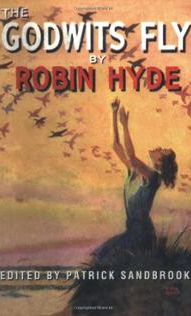
The Godwits Fly vividly evokes the complexities of family life and the intensely felt world of Eliza, a single-minded young woman in 1920s Wellington. Eliza has affairs and a breakdown and turns to writing for meaning. Like the Godwits, which migrate from Siberia to New Zealand every year, she wishes to escape and see the world. Strongly autobiographical, The Godwits Fly was published in 1938 and has become a New Zealand classic.
We take things too hard and we’re too ignorant. It’s ignorant to love so much and in this wasted way. And we fight, instead of trying to save one another.
➤ “I found this book very difficult to concentrate on and wondered if it would have been better suited to a very slow absorption rather than my relatively rushed read. The writing is very poetical and required analysis – something for which I am not able to give at this time. Depressing but interesting themes abound and once I found out more about Robin Hyde I came to appreciate the novel more as I discovered it is largely autobiographical. That for me was where the true interest lies. Not a favourite I’m afraid as I much prefer a straight forward easy to read book, at least for now anyway!” – Jo.
➤ “I am not going to tip toe around it. I really struggled with The Godwits Fly. This could be quite simply because it is not a book you read at night before going to sleep, when you’re busy or tired. Or it could be because my reading “fitness” is a bit deficit. Either way, the detailed, often poetic prose was tiresome. I struggled to get into the characters, and found myself reading whole chapters without really knowing what was going on, except for a strange melancholy. A sadness. Understanding the author and her personal circumstances helped to place this. And in another lifetime, I would like to go back to it and read it with the attention and deliberation it probably deserves.” – Sonya
➤ “This is the kind of book I love: Kiwi lit, a highly personal story that doesn’t tip toe around societal issues and emotions, and written as if poetry, so that every sentence is rich and beautiful. So why didn’t I connect with it? I certainly did in parts, but in others I managed to miss the relevance of pages of prose. I can only put it down to time, or lack thereof and therefore an inability to truly appreciate every word. And I think this is what this book requires because when I did connect with it, I was engrossed, emotional engaged and relished the mellifluous writing style.
“Despite the time that has passed since its publication I felt the themes and ideas were still relevant for NZ women, for NZ children, and for all Kiwis, especially that of the impulsive need to respond to the call of the motherland. I respect this book for what it means to New Zealand literature but don’t feel that I have completely appreciated it yet. Sophia sold me on the concept of this book many years ago and I have been waiting for so long to find time to read it, so am disappointed in myself for not giving it the time it deserves. I plan to re-read it in the near future and hope that I fall in love with it like so many others have.” – Rachel
—–
Published 1938
260 pages

We're
currently
reading
 The Free-Range Bookclub
Recent Comments