The Free-Range Bookclub
Bookclubbers without boundaries in Nelson, New Zealand
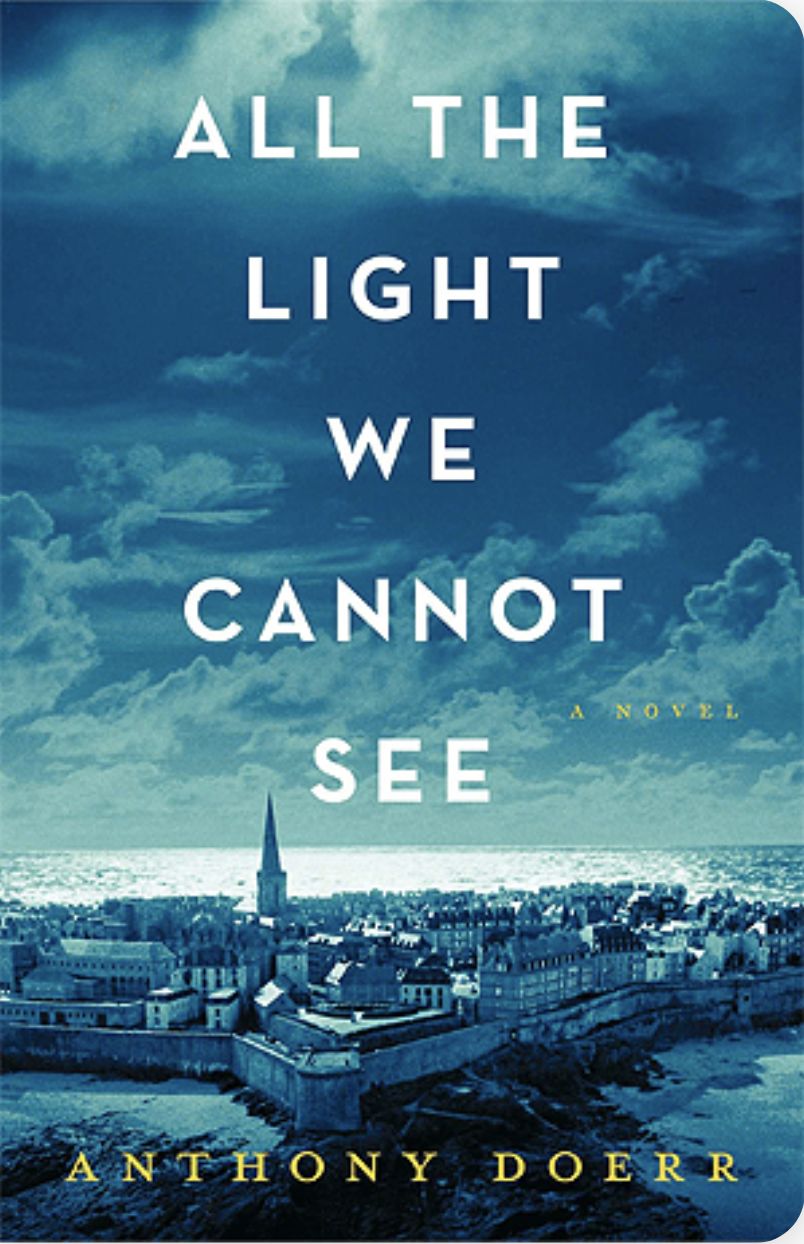
All The Light We Cannot See – Anthony Doerr
READ FOR BOOKCLUB
Chosen by Jodie
During the occupation of Paris a young girl named Marie-Laure loses her sight and relies on a miniature model of the city built by her father to navigate the streets.
Motherless, she and her father end up fleeing to Saint Malo to stay with her uncle and his housekeeper. But soon the bombs start and she finds herself alone in the house, with only a new model of the surrounding area to establish her way.
At the same time a young orphan named Werner is enlisted by the Germans as a solider and proves particularly useful at working with transmitting devices. Asked to hunt out any enemy transmission, Werner refuses to report the sweet voice of Marie-Laure.
Along with the childrens’ stories is that of Marie-Laure’s father Daniel who is a locksmith and keeper of the keys at the Muséum National d’Histoire Naturelle. In an attempt to hide the location of a large, blue diamond, named Sea of Flames, he creates four replicas. The original is said to protect the owner but kill and maim their nearest and dearest. The Germans are determined to track it down and their investigations lead them to Marie-Laure.
All The Light We Cannot See won the Pulitzer Prize for fiction in 2015.
You know the greatest lesson of history? It’s that history is whatever the victors say it is. That’s the lesson. Whoever wins, that’s who decides the history. We act in our own self-interest. Of course we do. Name me a person or a nation who does not. The trick is figuring out where your interests are.
❝ I was instantly captivated with this carefully constructed novel by Anthony Doerr. Ultimately Doerr wanted to write a book that reminded us of the magic of radio and liked the idea of a boy trapped listening to a story over the radio. Secondly Doerr had visited Saint Malo and was fascinated by its devastating history during WW2 and thirdly he was compelled to write about the theft of France’s precious artefacts. Over seven years Doerr braided the lives of the characters and his three base ideas together spanning two separate timescales. The scenes were beautifully intricate in their descriptions. Doerr’s focus of the novel was unlike any other WWII story I have read. He gave us a real insight into the sufferings of the children affected. It was both a heartbreaking and heartwarming novel that I would absolutely recommend. – Jodie
❝ What a thoroughly enjoyable page turning story. I think I’ve found my favourite book for the year. I enjoyed the time switching method as we learned more about the realistic characters with the tension rising as the story unfolded. Every word seemed necessary and important with short punchy chapters making it an easy albeit deeply saddening at times, read. The Sea of Flames added another dimension with its supposed curse and mystical nature. I would recommend this book to anyone. – Jo
❝ This was a WW2 novel with a few slightly different twists including a long-lost gem, disabilities, and ground-breaking technology. I found the author’s writing very evocative, particularly the time that Marie-Laurie spent in Saint-Malo with her uncle and his housekeeper. One disappointment for me was the drawn out sexual violence scene – an unnecessarily graphic addition that added nothing of value to the story. – Suzy
❝ I am a fan of personal war stories so this was my cup of tea. I think knowing that war stories are most often portrayals of true events astound and intrigue me. And this is no different, knowing a lost girl and a enslaved boy are breaking rules that could see them killed to keep in touch over the airwaves. I loved the aspect of blindness, of the miniature city and navigating ones away around the truth. This is a lengthy book but the short chapters provide a sense of urgency and though there are many perfect places to stop reading for the night, I hardly wanted to.” – Rachel
——
Published 2014
Scribner
531 pages
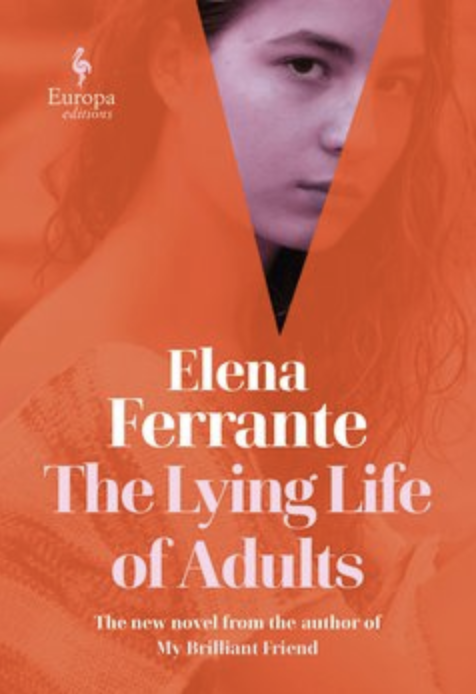
The Lying Life of Adults – Elena Ferrante
READ FOR BOOKCLUB
Chosen by Rachel
Giovanni is a 13 year old living in Naples. One day she overhears her father compare her to her Aunt Vittoria, a woman the whole family despises. Hurt but also curious, Giovanni goes in search of her Aunt.
Vittoria both intimidates and empowers her with honest conversations and intellectual challenges. Vittoria insists it is her brother that is the ugly one of the family, the one who tells lies. She implores Giovanni to look closer and uncover the truth for herself.
With her new found adult perspective Giovanni does inspect the adults in her life more closely, her mother, father, her friend’s parents and even Vittoria herself. What she discovers in them all is a litany of secrets and deceptions. Giovanni rebels, her ascent into adulthood is fast tracked and she becomes a teller of lies too.
Appearance has long been studied in fiction but this translated work offers a fresh perspective on what constitutes beauty. A bracelet which changes hands several times showcases how the perception of beauty and ugliness is a powerful tool that can both embolden and hurt people. The bracelet guides the narrative, and each change of owner signifies an impending change in one’s perception of themselves but also in their loyalties. Giovanni herself constantly realigns her loyalties and as such further impedes her transition from adolescent to adult.
Elena Ferrante is a pseudonymous author whose identity is known only by her publisher.
If you looked even just for a moment at those who had the privilege of a beautiful, refined face, you discovered that it hid infernos no different from those expressed by coarse, ugly faces. The splendor of a face, enhanced even by kindness, harbored and promised suffering still more than a dull face.
❝ The Lying Life of Adults has a perfect juxtaposition of vulgarity and refinement. All the characters and their actions can be described as such as different times in the novel. And what an apt way to portray the move between adolescent innocence and the harsh reality of adulthood. The characterisation in this book was fabulous, I loved and despised most characters at some time or other and always wanted to know who was lying the most. I loved it and I think most bookies would enjoy it, too. – Rachel
❝ The voice of Giovanni felt authentic throughout this great coming-of-age story. As with many teens, Giovanni would oscillate between being overly sensitive, emotional and difficult, to thoughtful and considerate. The lying theme was expertly woven throughout and was present right from the start which I didn’t immediately recognise until it was pointed out by our chair. I enjoyed pondering the characters’ stories and wondering who was actually more truthful. Altogether an awesome novel from an anonymous author. I would love to know who she is! – Jo
❝ I really enjoyed this slice of life about Italian teen Giovanna. A girl thrown from the idyllic bubble she lived in with adorning parents whom she admired, into a world of lies, secrets and personal discovery. There are two events which sparked major changes in her outlook of life, the first being a comment from her father, in which he said she was becoming like her estranged Aunt and the other the discovery of a life-changing family secret. However, Giovanna’s self-discovery leads her to become a strong willed, rebellious more opened-minded teenager. Great novel with great characters. – Jodie
❝ I know it’s been a long time since I’ve read something written by Judy Blume, but I swear The Lying Life of Adults tops even those gold standard coming of age novels. The mysterious Elena Ferrante channeled the contradictory and slightly unhinged aspects of growing up so accurately it almost felt like my own teenage years were being exposed. A fantastic read, one of my faves this year. – Suzy
——-
Published in Italian 2019
Translated into English in 2020 by Ann Goldstein
Europa Editions
336 pages
2022 NZ Book Awards
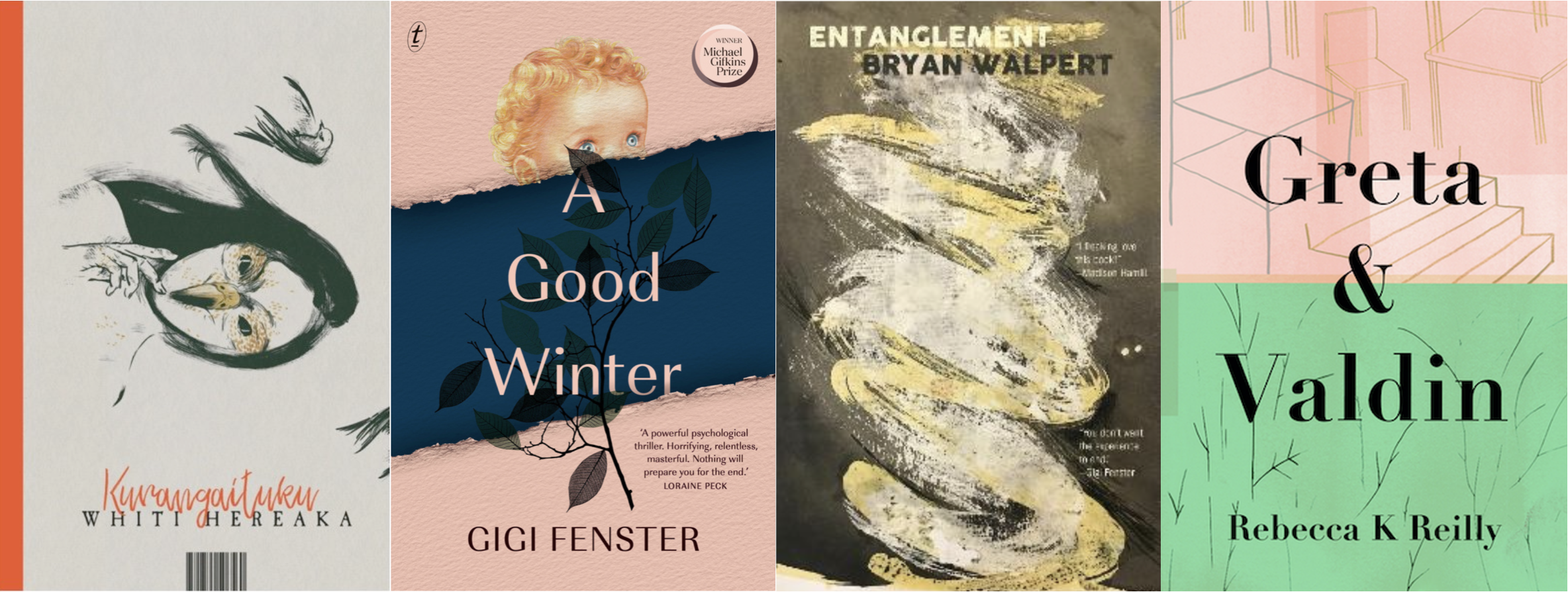
Identity comes through as a strong building block for all the fiction shortlisters this year. Misunderstanding of identity, attempts to place ones self in the realms of “normality”, studies of those with identity issues. Not only is this topical but important for writers to showcase the metaphorical and literal exploration of what it means to be ones self.
In Kurangaituku, the protagonist is a bird woman, misunderstood and seen as both a monster and a sex object. She is buried during the great eruption of Taupō and claws her way through the crust of the earth for a new beginning where she longs for love and acceptance.
In A Good Winter the protagonist is a middle aged woman who views her identity and her rights over others as far more privileged than they deserve to be. Her inability to reconcile her identity with the world around her causes her to instil harm and concern to those around her.
The protagonist in Entanglement is a time traveller. His identity is split into fragments spread over three countries and in several different time frames. He wants to return to 1977 to correct a mistake while examining the many parts of his identity and the tragedies that shattered him.
Greta and Valdin, of the eponymous novel, are gay, part Maori, part Russian siblings who constantly analyse what it means to be stretched between several stereotypes. Through their familial, educational and romantic experiences we observe all sorts of identity conflict and misconceptions.
——
❝ For the first time in all our years of (novice!) book award judging, I want to choose a four way tie. Normally there is at least one book I know will not be in my final line up, but this time every work was compelling and intelligent and meaningful and though I enjoyed each for different reasons I can justify why each should win the top prize!
Kurangaituki for its importance and stunning prose. Entanglement for its intelligence and study of emotion. Greta & Valdin for its accurate representation of New Zealand’s diversity. A Good Winter for its enjoyable exploration of an unstable mind.
I’ve re-written this paragraph several times, stating a preference for a different two or three each time, but can’t bear to leave one of them out! So, I’ll mention only one, and that is the book which I think will have longevity and relevance in years to come. Therefore, I’m picking Kurangaituku for the top gong. But I’ll be pleased whomever wins! – Rachel
——-
❝ These books fell into two categories for me with Greta and Valdin and A Good Winter being so engaging and almost demanding of my time as I tried to sneak as many moments as possible to sit down with them and find out what the characters were up to next. I found both stories utterly compelling.
Whereas Kurangaituku and Entanglement were structurally quite unusual and were also written with such beauty and intelligence. As a reader I also found them less accessible.
I think any of these books are utterly worthy of the prize and geez I cannot bloody wait to hear who’s going to take it out on the night – if I had to make a call though I think Kurangaituku may just do it. – Suzy
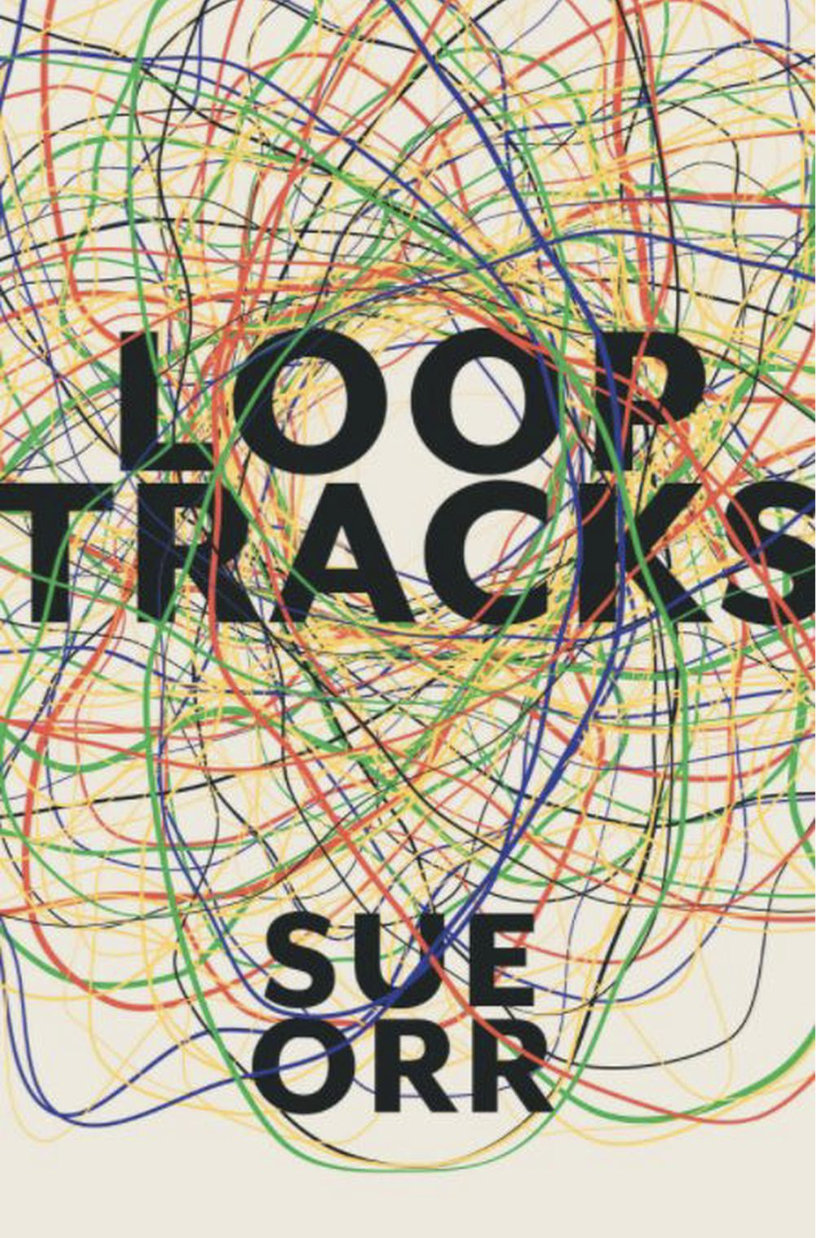
Loop Tracks – Sue Orr
READ FOR NZ BOOK AWARDS
For a time in the late ’70s, abortion was illegal in New Zealand and young woman who could afford it would fly to Sydney for the procedure. Loop Tracks‘ story line is built around that moment in history. The protagonist, Charlie, is 16 years old in the opening pages and onboard a flight bound for Australia.
The first time I got on an aeroplane, I was sixteen years old and pregnant. I was on my way to Sydney to have my situation sorted out. It was May 1978 and that was what you had to do if you had enough money for the flight and the procedure. Although they didn’t say procedure, or termination. Not as I recall. They definitely hardly ever said abortion.
The second narrative is set in 2020 when she is in her late 50s and caring for her teenage grandson Tommy who has Aspergers, and the country goes into Covid lockdown.
The story is bookended with controversial times in New Zealand’s history – the ‘70s when abortions were illegal, and 2020 when reform about abortion, euthanasia and drugs was in discussion. With an election looming, Tommy seeks answers and offers controversial opinions on big topics, spurring interesting debate between himself and his grandmother.
There is a cyclic nature to the themes and story lines which helps shape character development and the reveal of information, and which provides a feeling of completeness. As was common in lockdown, the characters here are spending those days locked in the same four walls examining their lives, their loss of choice, their community, trying to make sense of the past and worrying about the future. There are plenty of secrets and reveals along the way too.
I read this book in one day (ironically when home with Covid) and couldn’t put it down. The timing and topicality probably had something to do with it, but still, it is a well-structured book that’s easy to read and gets the conscience whirling. – Rachel
Published 2022
Victoria University Press
332 pages
Kurangaituku – Whiti Hereaka

READ FOR NZ BOOK AWARDS
Kurangaituku is the story of Hatupatu told from the perspective of Kurangaituku, the bird woman. The traditional story is told from the view of Hatupatu. He is out hunting and is captured by the bird woman who imprisons him in her cave in the mountains. Hatupatu eventually escapes, though he is pursued by Kurangaituku and evades her by leaping over hot springs. Kurangaituku falls into them and perishes.
In this contemporary retelling, Kurangaituku’s life is giving more meaning that of just being a monster. We learn about the birds who sang her into being, her life with Hatupatu, her death and her subsequent wanderings through the underworld searching for justice. Through the eyes of Kurangaituku, we come to see how being with Hatupatu changed her, emotionally and in her outlook and behaviours, and how devastating their separation is.
The book is split into three parts, with two sections printed tete-beche (upside down from one another). One, starting at the light coloured cover, tells the story of the bird-woman as she lived with Hatupatu. The story which starts from the dark coloured cover tells the story of Kurangaituku in the underworld. The middle section is told twice, each version upside down from the other, and is the traditional retelling for those who were not familiar with it.
The love shown to language and story telling allows the reader to feast on the phrasing and to devour the story, just as Kurangaituku devours life.
I was a creature trapped somewhere between bird and Song Maker. My face was covered in the same pale skin as my chest. The feathers on my head started high on my forehead, mimicking the hairlines of my Song Maker creators. I kept the beak of the kōtuku bu the position of my eyes had changed. Was I hideous or beautiful? I had never asked myself that before, but now I couldn’t stop the thought. Until that moment I suppose I had no ego. At least no idea that my curiosity ought to be focused on myself.
❝ This novel was raw, visceral and beautiful. Partway through I started crying and didn’t know why as it wasn’t a ‘sad’ part – it is just so beautifully written and is gut punch after gut punch. The language felt poetic throughout.
I felt weirdly unworthy of being an ‘observer’ of such a momentous and massive storyline. What right did I have to be enmeshed within these events?
I found it hard going. My capacity for the understanding of the reverse stories was limited and at times I felt like the cleverness was beyond me. I guess I need to feel like a book is within my reach and this was a barrier to me fully immersing myself within it. I need to attempt it a second time where I can give it undivided attention. I would be unsurprised if Kurangaituku won! It is stunning. – Suzy
❝ Novels based on folklore can be difficult to like if you’re not familiar with the history. And while, yes, knowing the story of Kurangaituku and Hatupatu helps with this book, you can just as equally love it for the unique contemporary character created by Hereaka (Ngāti Tūwharetoa, Te Arawa).
Her examination of identity and understanding of those who are different is strong. Kurangaituku is half woman, half bird searching for acceptance and love. She is fallible but reasoned, not simply the monster the original fable makes her out to be.
What’s more important than the plot though, is the mellifluous writing style Hereaka possesses. Though I didn’t always understand how all the parts of the plot came together, I was captured by how beautifully the book was written and how as a reader we were encouraged to feel a part of the story telling. This is clearly an important book about NZ history and modern explorations of identity and as such I can see it being relevant for a long time. – Rachel
——-
Published 2021
Huia Publishers
350 pages
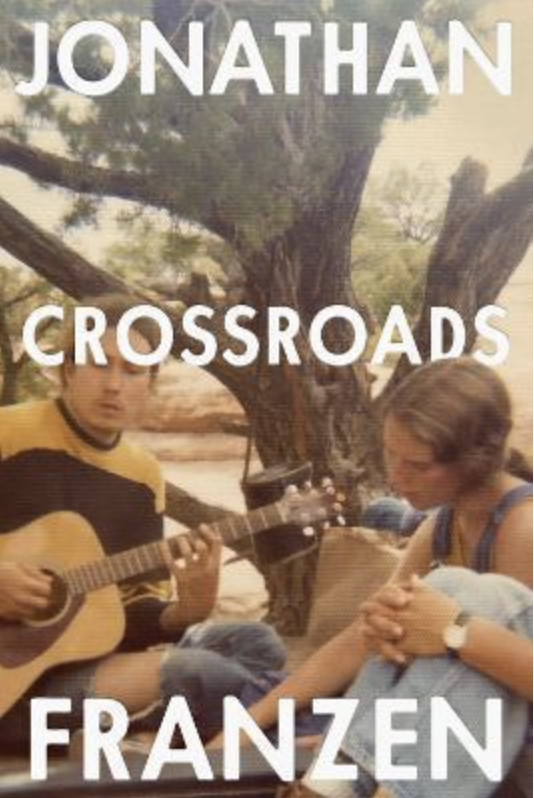
Crossroads – Jonathan Franzen
READ FOR BOOKCLUB
Chosen by Suzy
The Hilderbrandts are a clery family from New Prospect, Illinois. The minister father heads a youth group named Crossroads, yet this reference also pertains to the members of the Hilderbrandt family, who are all in a quandary of sorts and making important decisions that will influence their futures.
Russ and Marion each have reasons to end their joyless marriage which they are exploring. Russ is attracted to a woman in the parish. Marion is hiding a dark past which is coming back to mentally and emotionally plague her. Their eldest child, Clem, is coming home from college, having taken an action that he knows will upset his father. Becky, the social queen of her high-school class, is questioning her faith and her relationships, while Perry has been selling drugs to seventh graders but resolves to be a better person.
The use of religion and belief as a central theme allows Franzen the opportunity to explore the ways in which faith assumes varying forms, and the distinct ways in which people use religion to justify, explain or gain moral superiority over others. All of the five Hilderbrandts have different expectations and outcomes from their religiosity. Their faith, their actions, and their opinions show an accurate level of humanness and the wide gambit of religious interpretation that exists.
Your father doesn’t look to our Saviour but to what other men think of him. He preaches love but holds a grudge like no man’s business.
❝ This was an absolutely mammoth read and I was hoping with all my heart it would also be a good read, as the thought of tackling something that size and not enjoying it was almost overwhelming! Franzen more than delivered and I found Crossroads engaging from the very first paragraph to the last. Discovering this was the first of a trilogy was exciting and I look forward to hearing about what happens to the Hildebrandt family as they move through the years. – Suzy
❝ From the outset it is clear the characterisation performed by Franzen is extensive. I got a real sense that I knew these people and understood why they behaved as they did. Even the characters that were quite annoying I still found generally likeable due to their completeness. I liked the threading of religious faith through the book as it gave me an insight into the many variations around religious interpretation. Overall, a great story that I found easy to read. – Jo
❝ As usual Franzen has mastered genuine depictions of ordinary people, accurately bringing to life characters of all ages and identities. This masterful creativity was the highlight of the book for me. I also enjoyed examining religion as a societal convention from the aspect of many different people’s belief systems. And a 70s rebellion/drugs/sex/rock’n’roll theme is always fun. I liked and enjoyed this book, but it didn’t knock my socks off like some of Franzen’s other works have. – Rachel
❝ Crossroads was a novel I was drawn into from the start. It wasn’t the plot or content but the characters that had me absorbed. Frazen is very clever at developing the five family members, around whom the novel is centred. He paints a realistic picture of their lives falling apart within a very religious mid-western community. The strong religious belief of the family and community was quite eye opening and fascinated me as its something I know little about. The family and community were on the edge of crises throughout the novel, which was a a huge page turner. – Jodie
—–
Published 2021
Farrar, Straus and Giroux
580 pages
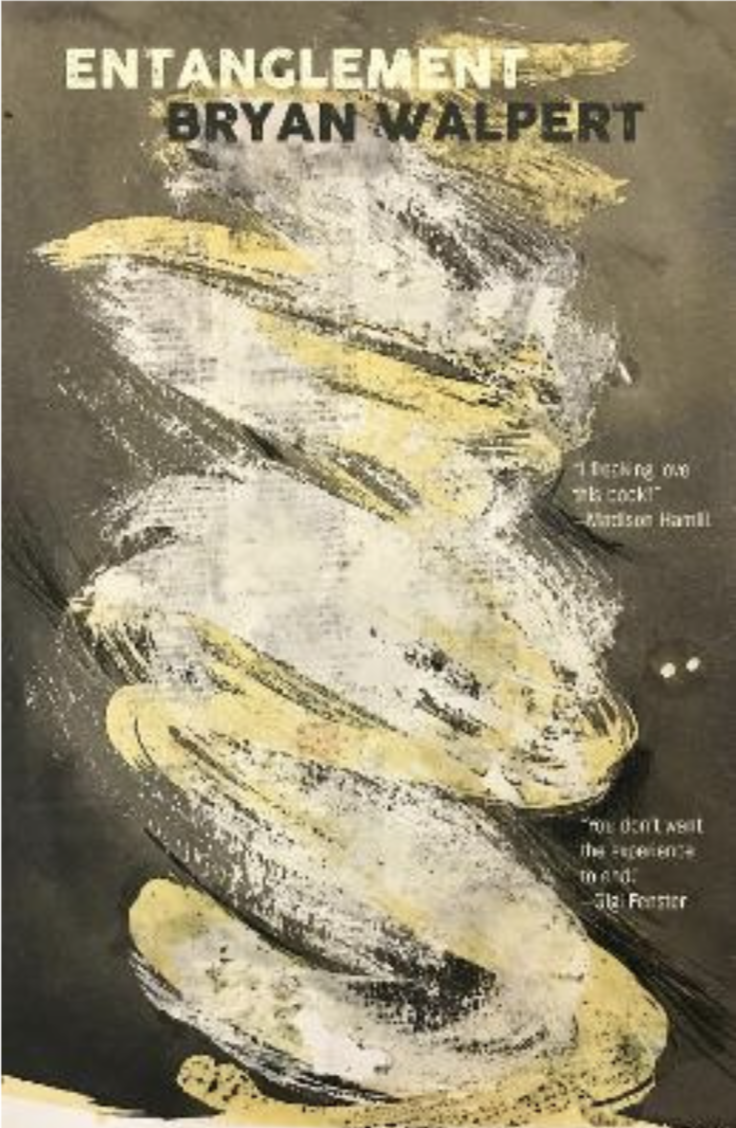
Entanglement – Bryan Walpert
READ FOR NZ BOOK AWARDS
Time and perspective are entangled in this novel, in which a time traveller attempts to return to the right point of his past to correct a mistake. Paul’s actions and recollections are scattered throughout the book, reported in three different narratives, themselves performing the art of time displacement.
The first begins in 2011 with a story, told in reverse, of Paul’s marriage to a Kiwi philosopher, his experiences as a father, and his time spent researching a novel at the Centre for Time in Sydney.
The second is a record of his time at a writer’s retreat in the South Island in 2019 where he uses narrative prompts to explore the disintegration of his marriage and the tragedies that have earmarked turning points in his life.
The third has no date afforded it, but records his experiences as a time traveller attempting to return to 1977 to correct one of the tragedies.
The philosophical novel introduces a vast range of topics, from quantum theory to good old-fashioned romance. The protagonist’s research into time provides a viability to the time travel which monopolises his life. However the book’s premise is really around grief and and to what levels we will go to for atonement.
Try to anchor yourself in the moment that you apparently have chosen as your present. The older man at the counters reads the classifieds, holds a pen in his hand, circles ads from time to time. The young couple holds hands across the table. These are the things a time traveller knows and things he does not know but the hardest is knowing all the things you should know, will know however much time from now.
❝ Entanglement is a kind of scientific fiction. It is both academic and exhilarating, for Walpert presents intellectual subjects in a format that is understandable for the layperson and which enhances the fiction reading experience. It did take me a bit to realise how the three narratives wove together but I did appreciate Walpert’s ability to showcase the philosophy of time in more ways than one, and to provide an indepth study of the protagonist’s emotions. The Writer’s Retreat passages were particularly moving, with Paul using a prompt to delve directly into telling moments of his past, all of which helped explain the other narratives. – Rachel
❝ Although I enjoyed the storyline being gently teased out over the pages I felt a need (ironically in a time-travel novel) for it to be propelled a bit further and faster. I really only felt the storyline building towards the end. I think feeling at odds with the pace was a reflection of me rather than the author as I’d just started a new job and with that busyness in my head I needed something a bit more concrete like A Good Winter. Overall though it was a lovely read – gut-wrenching and so well meshed together. It’s only now that I’ve finished that I’m reflecting on its cleverness and appreciating it more and more. – Suzy
—–
Published 2021
Makaro Press
268 pages
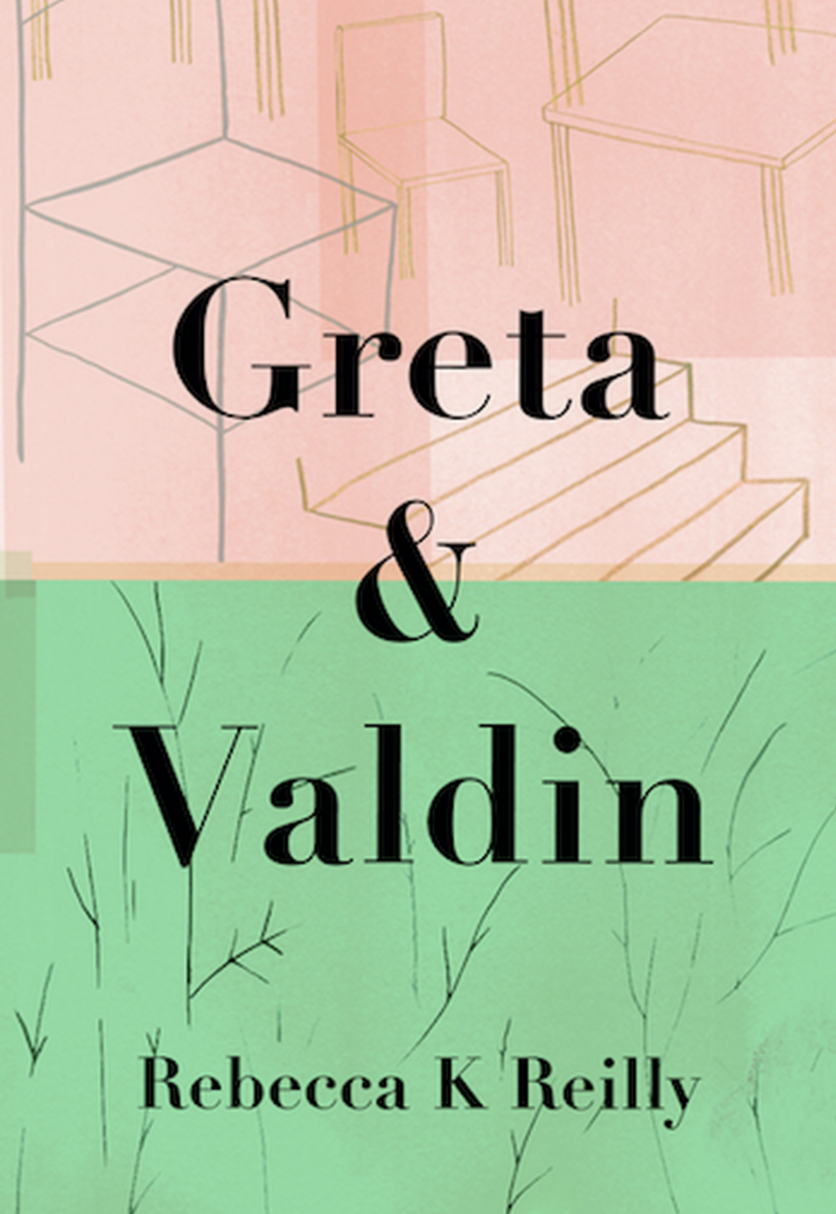
Greta & Valdin – Rebecca K Reilly
READ FOR NZ BOOK AWARDS
Greta and Valdin are brother and sister, both gay, with mixed heritages and living together in Auckland attempting to navigate life and all its triumphs and tribulations. Greta is a student/English tutor with a misguided crush on friend and colleague Holly. Valdin is a television presenter still in love with his ex, Xabi. They are both anxious and curious with a strong sense of self-awareness, examining their own actions and keeping each other and all the members of their family honest.
The book studies the social behaviours of people, not just in romantic and familial settings but also in regards to sexuality, ethnicity and mental health. These behaviours are built into the story so deftly they don’t feel moralistic, but do softly alert the reader, with a cringeworthy humour, about misconceptions and misguided comments that feature far too often in our lives and have a bigger impact than some realise: for example Valdin is asked to lead a karakia because he’s “the Maori one”; most people don’t even try to pronounce their long Russian surname (Vladisavljevic); others presume Greta is bisexual rather than gay because she is pretty and cares about her looks.
Setting is also given prominence, with many landmarks and recognisable features in Auckland and at Auckland University referenced – even the winking Santa on the Farmers building gets a mention.
I keep walking until I get to one of my favourite cafés, all full of normal morning people not humiliating themselves, then I walk into the liquor store next door, where I stand in the beer fridge until the man from behind the counter comes to check that I haven’t died.
❝ Both Greta and Valdin and all their family members are well built characters. Everyone has an interesting habit or relationship or identity and everyone is memorable, which I often find is not the case in large family sagas. The book is full of people and brimming with personality and activity. I felt like I was a part of the family involved in all the dramas and gossip and joys.
What I loved most about this book was it felt very much like a New Zealand book, one that represented a large cross-section of people who call themselves Kiwis, and which laid out in black and white our values, actions and thoughts (both good and bad) as a nation of people. – Rachel
❝ I loved the chaotic, loving energy of Greta & Valdin and while my age is more aligned with their parents I enjoyed living vicariously through twenty-somethings trying to live their best lives in the 2020s. This book was genuinely funny and I laughed out loud a few times which let’s be fair is pretty rare when watching a hilarious TV series let alone reading a book.
Maybe, just maybe, things were tied up a little too tidily at the end, but in saying that there was still a good zinger or two there keeping me on my toes. I feel like the word ‘rollicking’ is a bit too much of a cliché, but there you go it was a rollicking read and I bloody loved it! – Suzy
—–
Published 2020
Victoria University Press
352 pages
The Matriarch – Witi Ihimaera

READ FOR BOOKCLUB
Chosen by Jo
Tama Mahana is a grown man analysing the mystique and ambition of his grandmother, the matriarch of his family. But to truely appreciate the paths she has taken, he must study Māori mythology and New Zealand history. Tama is introduced at the beginning but is really only one thread of the book that holds together the various true stories of cultural clashes, wakapapa, and politics of the country and its people. It is clear the novel is steeped in true history.
All truth is fiction, really, for the teller tells it as he sees it, and it might be different from some other teller.
❝ This book weaves a fictional story together with historic Māori figures and their plights which provides the reader with some education around many issues of the Māori and Pākehā history. I learnt more about why land is so important and significant to Māori and the devastation that colonisation has caused. I never appreciated the extent of their spiritual connection to the land.
My favourite parts of the book however were the fictional parts. I particularly enjoyed the dialogue between characters and the bantering between Tama and his sisters. Ihimaera seems very skilled at bringing his characters to life; they certainly seemed like realistic people to me. – Jo
❝ An absolute masterpiece of a book. Honestly at times it was a bit of a slog to get through, but on reflection during our bookclub discussions I wondered was this because I was putting my Pākehā lens onto what was a Māori story? A challenging reflection.
The hour by hour account of the Te Kooti attack on the colonising European settlers on the East Coast was one of the most gripping passages of writing I think I have ever read. It will stick with me for a very, very long time.
I look forward to reading the follow-up novel The Dream Swimmer where hopefully we will learn more about the impact of the matriarch’s devotion to Tama. I am desperately hoping the outcomes will be only positive for his whānau. – Suzy
❝ It’s been a long time since I have reflected on NZ’s History. Witi Ihimaera’s (Te Aitanga-a-Māhaki) The Matriarch gives us a mix of historical facts, fiction and mythology from our past which I found fascinating. It wasn’t until the end of the novel I could see the importance of the historical facts that seemed very long and arduous at times. Although the matriarch and other characters were fictional I felt I had a glimpse into what life was like in a traditional Māori family of the time. – Jodie
❝ The retelling of colonial wars and land grabs can be a controversial topic. I think what Ihimaera has done in The Matriarch is effective as rather than be moralistic, he has portrayed the truth of the brutalities from both sides. Plus he has etched into the reader’s mind the importance of connections to the land, of spirituality and of histories, which provides context to the outcomes that eventuated for Māori. There are parts of the book that are long and arduous, others that are lively and full of dialogue, but many which are grounded in truth. For a real understanding of NZ history it is worth reading this book slowly and carefully. – Rachel
——
Published 1986
Heinemann
456 pages
A Good Winter – Gigi Fenster

READ FOR NZ BOOK AWARDS
Olga is an older woman who has taken on the role of carer to her friend Lara, Lara’s grieving daughter Sophie and Sophie’s child Michael. The family are extremely grateful for – what appears to be – her selfless assistance.
Olga takes it upon herself to not only care for the baby, but to construct the family’s schedule and ensure it is adhered to, to monitor visitors she judges a bad influence and to scold the local gossips.
However, we the reader, get another version of the truth via Olga’s monologue narration in this psychological character study. From the outset we are privy to her thoughts and justifications which demonstrate a worsening case of obsession and create a real sense of unease.
Alongside the story of Olga and Lara’s family is the story of Olga’s own family, her childhood, her relationship with her mother, and her alienation from her brother and father.
However, Olga is clearly not a reliable source of information, and the reader is left to navigate her variations of acceptable behaviour and wandering truths as she narrates the stories of her past and her present.
Sometimes I’d feel like I was in one of those arcade games that kids like. Where there’s a queen who needs to be protected from killer insects.
❝ The characterisation of Olga in A Good Winter is addictive. Though the only character who receives this indepth treatment and despite nearly everything that she tells us being negative, unhinged or really annoying, the book and the story is not at all depressing to read. Instead I found it enthralling to discover what depths her over-active imagination would go to next. I imagined myself as one of the characters, rolling my eyes behind Olga’s back after another outburst about inane things like when and how to replace light bulbs.
The spiralling of Olga’s neuroses and the sense of impending doom are nicely built. We know there’s going to be some kind of crises as a result but what exactly that was going to be kept me guessing. – Rachel
❝ I polished this book off in a day and in the times I wasn’t reading it, it was all I could think about it. The obsessive and compulsive nature of the storyline felt like it had transferred into my real life and I was all for it, although I will put a less concerning spin on it and say that I was very engaged.
If the other Ockham shortlisters are of this calibre then I have some absolutely stunning reads ahead of me.
The author expertly leads readers through this novel with an assumption that not everything has to be completely spelled out and it was absolutely appreciated. My only disappointment with this book is by skimming the blurb on the back and reading the endorsement on the front there was more storyline given away than I would have liked, so I would definitely recommend just diving straight in.
One thing I am kind of happy to be left wondering about though is whether the awful main character was slightly relatable to everyone or just me? – Suzy
—–
Published 2021
Text Publishing
260 pages

We're
currently
reading
 The Free-Range Bookclub
Recent Comments