The Free-Range Bookclub
Bookclubbers without boundaries in Nelson, New Zealand
Love is Blind – William Boyd
READ FOR BOOKCLUB
Chosen by Sally
Brodie Moncur is a young Scottish piano tuner who moves to Paris for a job and to escape his tyrannical father. There, a fateful encounter with a famous pianist changes his future and sparks an obsessive love affair with a beautiful Russian soprano. Moving between Paris, St Petersburg and Edinburgh in the early 20th century, Brodie’s love and its dangerous consequences pursue him around Europe and beyond.
“Complications. Oh, yes.’ The doctor reflected and then said, ‘I always think a life without complications isn’t really a life, you know. In life things go wrong, nothing stays the same and there’s nothing you can do about it. Friends betray you, family is a nightmare, lovers are fickle. This is the norm, no?’
SALLY:
● This was my choice for book group, having enjoyed some of Boyd’s previous work and wishing to introduce this Scottish author to my book group friends.
The book is in the style of others that I have read of his, in that it follows the life of an everyman character throughout whichever period of history and setting Boyd has chosen. He is meticulously researched and drills down into the minutiae of his characters lives as well accurate historical fact. He frequently blends real life characters into the plot with his fictional characters. Boyd himself has written “It’s the haphazard, rollercoaster of a life that is the key in the whole-life novel rather than a particular plot, theme or central relationship. Everything is grist to the mill for such novels, and this is what distinguishes the type.”
The story of Brodie Moncur’s life and undimmed love for Lika flows from Scotland to Paris, St Petersburg, Trieste and finally the South Pacific. Whilst I could be persuaded by Brodie’s emotion for Lika, I was never fully convinced of her’s for him, and I had a mild unease throughout the book that she was not quite what she seemed. Considering that, I found the ending slightly far-fetched.
Of all the Boyd novels I have read, this one seemed to be the bleakest. Possibly because of the number of betrayals Brodie suffers, possibly because the Scottish settings and characters are so mean (and I say this as a Scot). Happily, this has not put my book club friends off and one at least has read another Boyd subsequently. Mission accomplished!
JODIE:
● Love Is Blind starts strongly, with an original premise and some genuinely interesting detail about piano tuning, which I enjoyed. The early chapters drew me in and promised a rich, atmospheric historical novel.
However, the second half felt drawn out, repetitive, and slow. The drama often tipped into melodrama, without enough emotional depth to support it. Considering the book’s settings – Edinburgh, Paris, the French Riviera – I found the scenes surprisingly underdeveloped. I never gained a strong sense of place, which felt like a missed opportunity. I also struggled to believe in the characters, who seemed thinly drawn. As a result, the ending was anticlimactic rather than moving.
Overall, it’s a good storyline with an intriguing musical angle, but for me the execution fell short of its potential.
TESSA:
● After finishing Love Is Blind by William Boyd, I was left with mixed feelings. On one hand I really enjoyed the setting. Boyd brings to life the world of music halls, touring virtuosi and piano tuning with rich, convincing detail. The precarious livelihoods of musicians, the craft of tuning itself, all of it feels immersive and authentic. The historical backdrop is beautifully realised, and it’s clear how much care has gone into recreating this musical world.
But for me, I found the main characters difficult to warm to and struggled to invest in their relationship. Brodie often feels more like an observer than a fully realised emotional presence, and Lika remains frustratingly elusive. Overall, it felt muted and somewhat disappointing and the ending struck me as unsatisfying.
RACHEL:
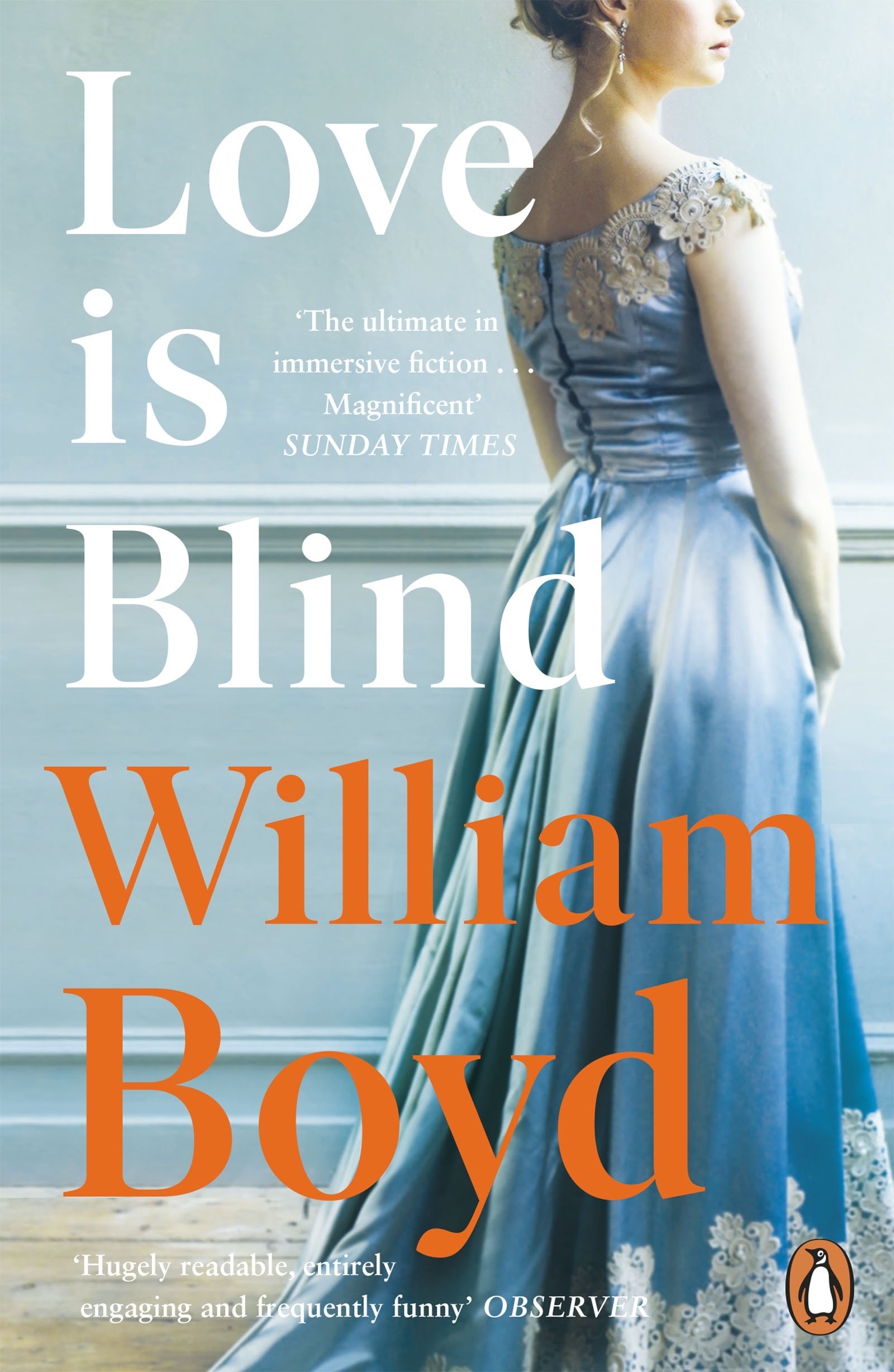
● First of all, I think the cover and title do this book a disservice. It presents as a straightforward romance and, yes, while a love story does sit at its centre, Love Is Blind is more than that. It’s historical fiction, set in Scotland, France, Russia and other European outposts, and is the life story of an ordinary man (as ordinary as a piano tuner who engages in gun-toting duels can be). If you like music and European history, this may appeal to you.
Personally, I had mixed feelings. In hindsight, I appreciated the full life story, but while reading I did not because I kept trying to assign meaning to everything, wondering what purpose each event served. As Sally pointed out at bookclub, some things did not have a higher purpose, they were included simply because these things happen in real life. I suspect I might have enjoyed it more if I had a better understanding of the book from the outset. Ultimately I found it slow to start, some characters frustrating, and the ending a bit ridiculous. Though I did enjoy some of the mid-book action-packed scenes. Another bugbear was the presentation of women, their descriptions, thoughts and actions. To me it was apparent they were written by a man and I found myself eye-rolling a bit.
BRIDGET
● William Boyd proves himself a remarkably skillful wordsmith in this life genre, where obsession, betrayal, and revenge drive the narrative forward. At the centre of this book is Brodie, a man who finds himself betrayed by his employer and the woman he loves. Brodie is a pleasant enough character but I found I him, at times, weak and I really wanted him to make better decisions. I felt Lika, Brodie’s love interest, could have been more fully developed. Her elusiveness creates a sense that she is never entirely present, always holding something back. Perhaps that intentional distance is essential to her character, but it still left me wanting a deeper connection to her.
I was disappointed with the conclusion, it felt a little undercooked and I found myself wishing for something with a bit more of a punch to it. Love is Blind was an easy read if not a little boring. I would recommend it to anyone interested in the workings of pianos.
Published 2018
Alfred A. Knopf
384 pages

We're
currently
reading
 The Free-Range Bookclub
Recent Comments