The Free-Range Bookclub
Bookclubbers without boundaries in Nelson, New Zealand
Endling – Maria Reva
READ FOR BOOKCLUB
Chosen by Jodie
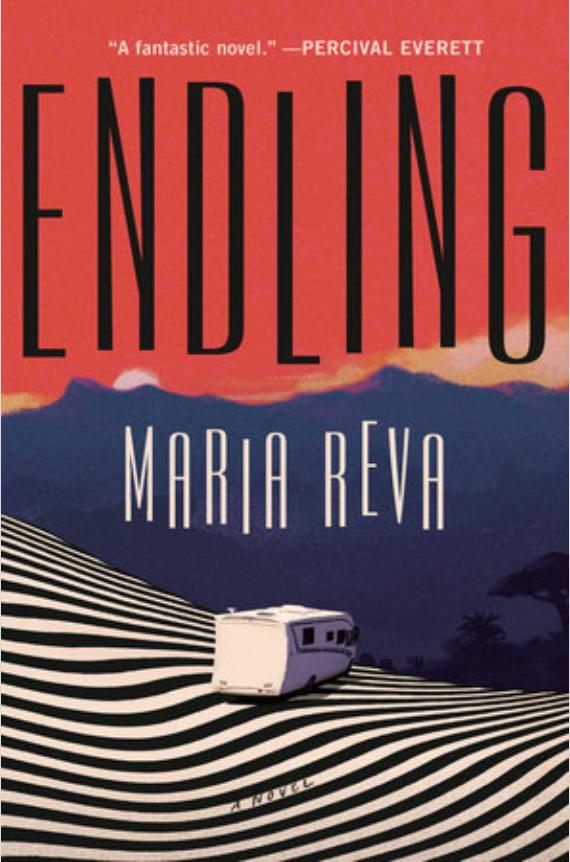
Three women – a maverick biologist and two sisters embroiled in the Russian bride industry and searching for their missing mother – kidnap 13 hopeful bachelors and race across Ukraine trying to find a mate for a last-of-its-kind Lefty snail. An absurdist and metafictional work set amid the Russian invasion of Ukraine.
Here I am again, trying to make use of another cataclysm. Am I no better than a snail, sniffing out the softest, most rotten part of a log to feast on? At least a snail digests the rot and excretes nutrients, useful.
JODIE
● Endling by Maria Reva is an intriguing work of metafiction, a genre I hadn’t encountered before. Reva weaves layers of narrative and meaning, blurring fact and fiction in a way that is both complex and captivating. In fact, here is a quote from Reva in the novel: “I need to keep fact and fiction straight, but they keep blurring together”.
Discovering how the novel came to be written and Reva’s motivation behind it was a real help in understanding the inventive structure and complexity of the story. The novel is challenging and a second reading to fully appreciate its nuance and depth would probably be a good idea. I do recommend Endling but with the caveat to be mindful that it’s not how your typical novel rolls.
TESSA
● I found Maria Reva’s Endling a remarkable read, all the more impressive given that she is a first-time novelist. It’s not an easy book to sum up, and I had to sit with it for a while before I could begin to articulate my thoughts. What I can say for certain is that I’ve never read anything quite like it before.
At its core, Endling is a satirical exploration of the human condition, deftly weaving together themes of war, identity, conservation, and survival. Far from a conventional novel, it is absurdist yet meaningful, with a surface plot that is only one of many layers that resonate with the depth of the book. As I delved deeper, I found myself grappling with its intricacies, particularly midway through, as Reva steps into the story amidst Russia’s invasion of Ukraine. At this point, the novel turns sharply metafictional, becoming as much about the act and even the right of storytelling as it is about the characters caught up in the conflict itself.
In my opinion, it well deserves its place on the Booker shortlist. It’s a thoroughly enlightening read that will stay with me for some time.
SALLY
● I have struggled to think how to review this book and in the final analysis, I have elected to separate my thoughts into two streams. For the construction of the book, the metafiction and the devices used within the text to subvert the narrative, I have a great deal of admiration. The skill involved in its construction belies the fact that this is a first novel. But viscerally, this admiration did not translate to enjoyment, not really. Early on I was engaged but I think I became lost in the absurdity. Having said that, I did enjoy the idea of writing multiple different outcomes.
There is a heavy dose of autobiography I am sure, given that the author is a Canadian of Ukrainian birth and I think it was best illustrated in writing the multiple outcomes for the character of the grandfather. Her frustration and desperation were clear. It’s a complex novel both structurally and thematically. Probably not to everyone’s taste.
RACHEL
● As a fan of absurdist fiction, Endling delighted me. The lefty snails, dead-bride tours and kidnapped bachelors are outrageous, but they felt more steeped in real life than some books in the realism genre. Reva’s satire of war, authority and men’s power over women hits hard, and the film crews “staging” comical war scenes show how obsessed we are with turning tragedy into spectacle. Somehow Reva folded reality into parody and parody back into reality.
Even the book’s fractured presentation felt more truthful than a neatly structured story. The war interrupted people’s lives and the narrative reflects this by becoming disjointed with false endings, alternative outcomes and metafictional interludes. I think each reader of this book will come away with a slightly different memory of the story, with the post invasion fragments stitched together in their own way. I felt constantly wowed and more invested in the story the further I read. Every absurd event just made me feel more like I was there experiencing the displacement and ruin of Ukraine.
BRIDGET
● Imagine a mash-up of environmental despair and transactional romance, racing across Ukraine in a mobile lab amid the chaos of invasion. Sounds intense… well, it is. As a newcomer to unconventional writing and non-mainstream genres, this one pushed my limits. I still enjoyed it—there were moments that had me laughing out loud—but I also found myself confused and completely lost at times.
Maria Reva blends absurdist humour (a genre new to me) with brutal reality. The result is both funny and tragic. The novel also morphs into metafiction, another new experience for me, with Reva stepping in, weaving in glimpses of her own experience as a Ukrainian expat watching war from abroad and challenging what fiction can and should do in the face of real disaster. For readers well-versed in these literary techniques, or those happy to embrace a narrative that breaks the rules of structure, this novel may be a fascinating and rewarding read.
Published 2025
Doubleday
352 pages

We're
currently
reading
 The Free-Range Bookclub
Recent Comments