The Free-Range Bookclub
Bookclubbers without boundaries in Nelson, New Zealand
2023 Women’s Prize
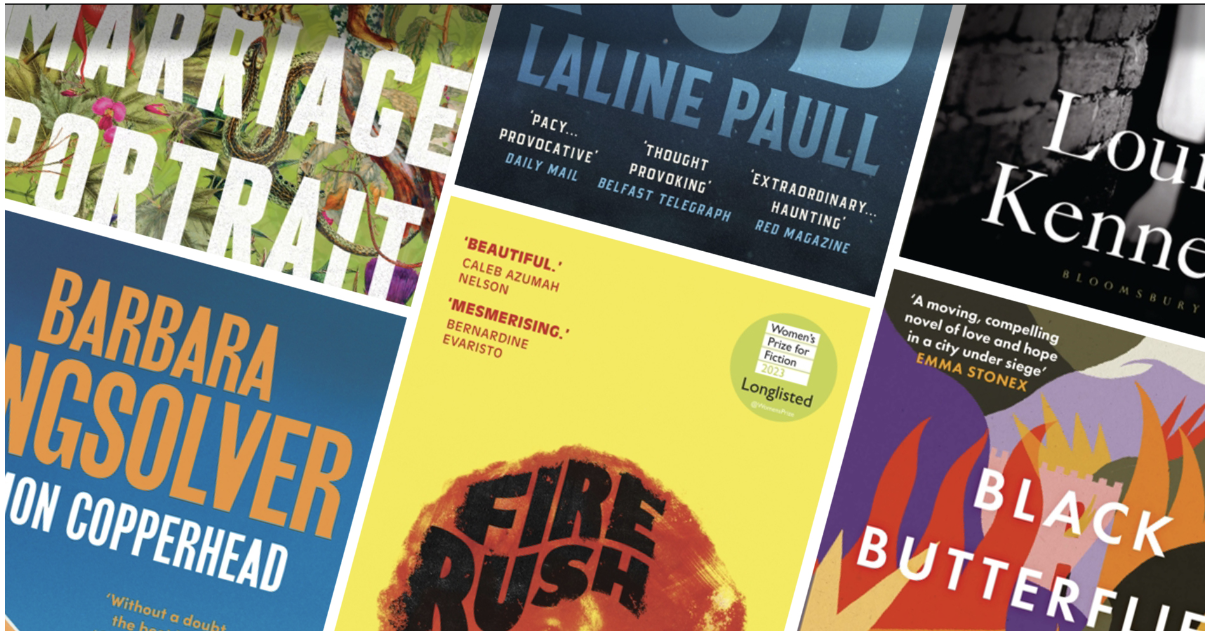
This is our first year at reading the Women’s Prize shortlist in its entirety and blogging about it, and it’s fair to say we are mightily impressed. As a collective these represent story telling at their best: engaging plot, strong characters, and a clear narrative. There is no attempt at grandiosity, where examples of cleverness are utilised to the detriment of readability.
We wondered if this a hallmark of female writers right now … Whatever the case, characters were treated with care, love, attention to detail and were easily likeable, even when flawed. The female experience was carefully investigated. Even the book without human characters had a female animal at its heart, and the book with a male protagonist gave voice and substance to its female support cast, too.
Drawing from the past to analyse our present and future was a commonality. True accounts, true people and significant moments in history were examined. These novels not only enhance historical records, they educate us, and ask what lessons we can learn and take forward with us in a generation of change and acceptance.
Fire Rush examines the migrant experience, in particular that of Jamaicans in 1980s London. The prejudice and ability of police to stop and search without cause was a key part of their trauma in the migrant experience. The police brutality in these pages is unfortunately still far too common.
Trespasses highlights the tragedies created by The Troubles in 1970s Ireland, particularly on families and young people but also on those from opposing religions seeking comfort and love. It highlights the extent to which prejudice can break and damage people and how this still occurs in modern times.
Black Butterflies is set in 1992 Sarajevo and follows one woman’s attempts to continue living as normal as possible in a city that was previously so multi-cultured and accepting but ended up being bombed by its own people. She reminds us how easily civil conflict can occur amongst even the most peaceful of people.
The Marriage Portrait examines the lives of true people, the Duke and Duchess of Ferrara, Italy in 1560. The author highlights the patriarchal systems of the past, gives a voice to the women who did not have one during their own lives and asks us to remember what injustices some women are subjected to today.
Demon Copperhead is a retelling of Dicken’s David Copperfield and studies institutional poverty. It is set in the Appalachias, a place that is often ridiculed and looked down upon. Kingsolver gives many people a voice and asks what has changed for those who are struggling since Dickens wrote Copperfield.
Pod is climate fiction highlighting how we are damaging the oceans and the affect that is having on both wildlife and humanity. She is certainly calling for change so that we can all have a future.
Nearly all of the authors lived through the experiences they wrote about: Laline Paull lives with environment damage every day, Barabara Kingsolver’s home is the Appalachias, Prisciallia Morris’s second home was Sarajevo and her grandparents were caught up in the Siege, Louise Kennedy lived through The Troubles, and Jacqueline Crooks lived through the Jamaican disapora. Though Maggie O’Farrell does not have a personal connection to the court of Ferrara, she investigated and researched and visited the locations where Lucrezia resided, was entombed and immortalised in paint, until, she says, she loved her like one of her own children.
Like the portrait in The Marriage Portrait art offers an escape and a sense of control, especially for people living in a time of conflict or fear, when all other eventualities and choices around them seem so out of control.
Art and self-expression feature strongly in every shortlisted book. Painting, drawing, reading, music and the study of language symbolise a gateway to escape, individuality, freedom and redemption.
● I felt so invigorated by the books on this shortlist – they were all phenomenally well written and I felt like I learned so much from each of them. A real win-win. As I read each book I thought yes, this is my favourite only for it to be overtaken by the next book.
I finished with Demon Copperhead, but that’s not the reason it was my favourite! I was so moved by this book, and I felt a level of absorption in the storytelling that reminded me of reading when I was in my teens and there was no distraction from social media, phones, multiple streaming services etc. Of course the subject matter was at times grim, but the reading of the story was absolutely joyful for me. I cared so deeply for the characters that I felt a sense of loss when I finished it.
I feel like Barbara Kingsolver is unmatched with her storytelling. She is my pick for the Women’s Prize winner, and I wonder whether (along with the Pulitzer) she will take out the trifecta with the Booker Prize later in the year. – Suzy
● The Women’s Prize shortlist was one of the best, if not the best, shortlist of any awards programme I have read. I LOVED this collection of books. I had some minor gripes along the way, but every book has stayed with me and improved over time as I have pondered them further. And I consider lasting impact a noteworthy trait.
So I have a four-way tie for first! Demon Copperhead, Black Butterflies, The Marriage Portrait and Fire Rush. Trespasses and Pod are very close behind. But I think Demon Copperhead will be the most timeless in years to come, so I’m backing Barbara Kingsolver for the win. But I do highly recommend all of these books to every avid reader. – Rachel

We're
currently
reading
 The Free-Range Bookclub
Recent Comments