The Free-Range Bookclub
Bookclubbers without boundaries in Nelson, New Zealand
The Sound of Breaking Glass – Kirsten Warner
READ FOR NZ BOOK AWARDS
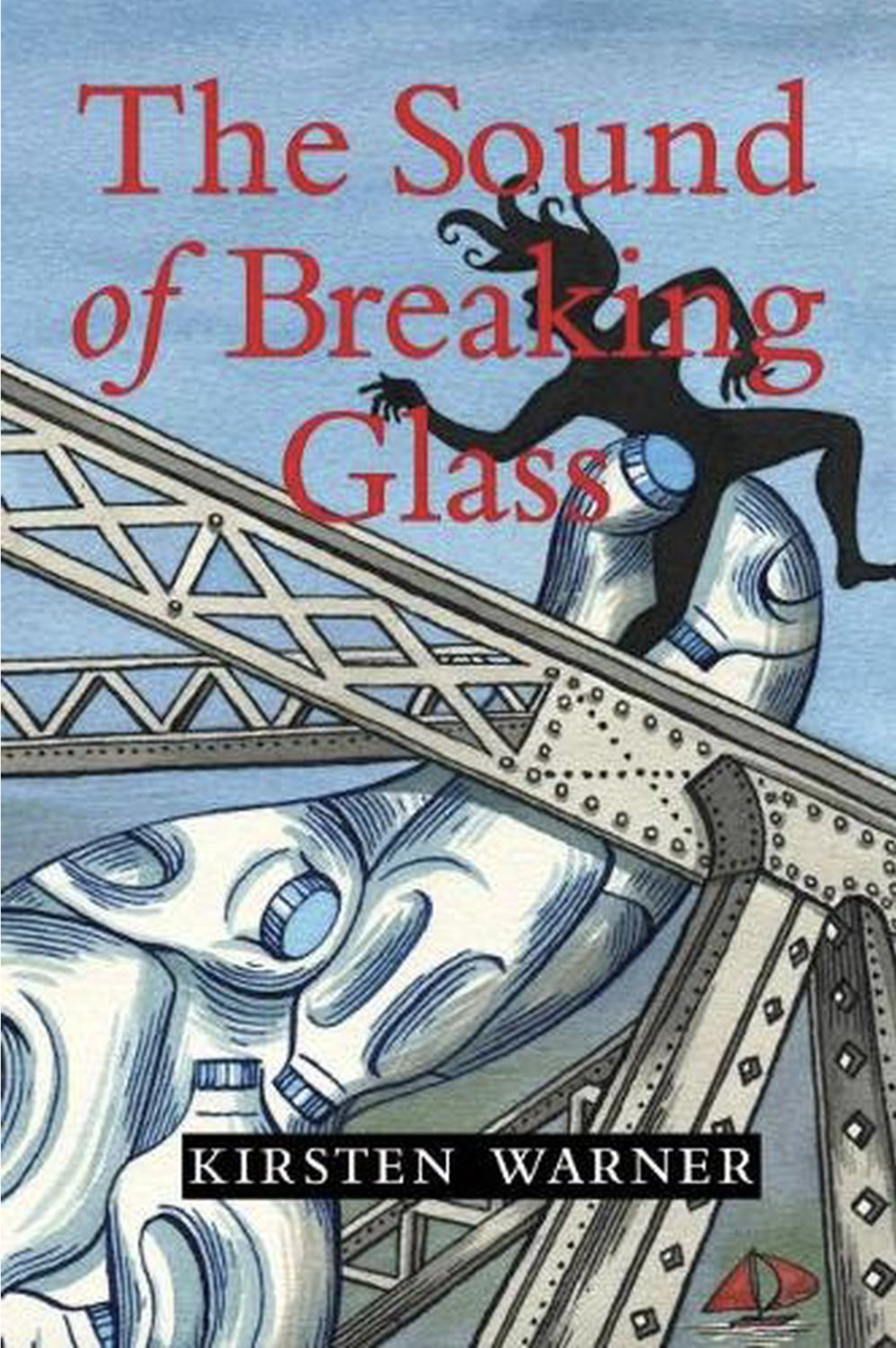
Christel has two small children, a stressful job in reality television, an activist lifestyle, a Holocaust survivor father, and now her protest milk bottle sculpture has come to life, appearing in various spots around Auckland like a giant golem.
I am driving up the Curran Street on-ramp and ahead of me Milk Bottle Man is dashing up the safety railing on the Harbour Bridge. He jumps onto the superstructure and runs up to the national flag. He is jumping from foot to foot and holding two figures in each hand – they must be the size of real people but look like toys because he is vastly inflated and up so high. Each swing of his giant arm, although it looks slow from a distance, would have enough force to dislodge the brains inside those skulls.
This is a book that succinctly combines the stresses of a modern lifestyle and a society grappling with its ecological responsibilities with the trauma of the historical past.
Plus it throws in a bit of magical realism to symbolise the madness that comes with balancing the present, the past and the future. This surreal manifestation of Christel’s stress forces her to confront her father’s haunting past as a Holocaust survivor and refugee to New Zealand. The author is herself the daughter of a Holocaust survivor and I really appreciated the honesty with which the impact of a traumatic past was revealed.
Added to this the struggles of a corporate life, shitty bosses, and the necessity to keep punching above expectations and it’s no wonder the protagonist’s protest sculpture comes to life and starts appearing all over the city and getting interviews.
I liked each of the different parts of the novel, particularly the father’s story. And I felt it was nicely balanced with the traditional and the contemporary, the past and the present, the corporate and family lives all getting quality air time. However, the book has a dense narrative and was quite a demanding read. Not one to hurry.
—–
Published 2018
Makaro Press
297 pages

We're
currently
reading
 The Free-Range Bookclub
Recent Comments